The sizzle of mustard seeds in a hot pan, the rich aroma of a simmering coconut curry, and the golden crunch of a fresh samosa all share a common foundation that defines the soul of Indian cuisine: the cooking oil. For Indian expat families living in the UAE, recreating the authentic taste of home is a daily ritual that connects generations and cultures. However, the choice of oil goes far beyond mere flavour. It is the vehicle for nutrition, a key to digestive wellness, and the literal medium through which the complex chemistry of spices is unlocked. Choosing the best cooking oil Indian food requires an understanding of how traditional extraction methods and regional heritage intersect with modern health needs.

Every region in India has historically relied on a specific oil that flourished in its local climate, creating a culinary map defined by aroma and fat profiles. From the pungent mustard oils of the North and East to the nutty sesame and coconut oils of the South, these fats were never interchangeable. They were selected for their ability to withstand specific cooking techniques and their perceived medicinal properties in Ayurveda. As families in Dubai and across the emirates look for a healthy cooking oil UAE residents can trust, returning to these roots through cold-pressed options offers a way to maintain authenticity without compromising on the nutritional integrity of their meals.
Understanding smoke points: why they matter for different Indian cooking techniques
The term cooking oil smoke point refers to the temperature at which a fat stops shimmering and begins to produce a continuous bluish smoke. At this precise moment, the oil starts to break down, releasing free radicals and a substance called acrolein, which imparts a bitter, burnt taste to the food. For the Indian kitchen, where techniques vary from gentle simmering to high-heat tempering, understanding these limits is essential for both safety and flavour. When an oil is heated beyond its stability, the phytochemicals and delicate nutrients that make it healthy are destroyed, replaced by toxic fumes and harmful compounds.
Different Indian techniques demand different thermal thresholds. Tadka or tempering, the process of flash-frying spices like cumin, mustard seeds, and dried chillies to release their essential oils, usually happens at temperatures between 160 and 190 degrees Celsius. Deep frying, used for snacks like pakoras or puris, requires a stable oil that can maintain a constant heat around 180 degrees Celsius without degrading. Sauteing or making a base masala for a curry typically occurs at medium heat, around 120 to 150 degrees Celsius. Using an oil with a smoke point lower than the intended technique leads to a kitchen filled with smoke and a dish that loses its vibrant, intended flavour profile. Bharat oils Dubai provide a range of cold-pressed fats that are naturally structured to handle these traditional methods when managed with the proper care and heat control.
Mustard oil in Indian cooking: regional traditions and kachi ghani significance
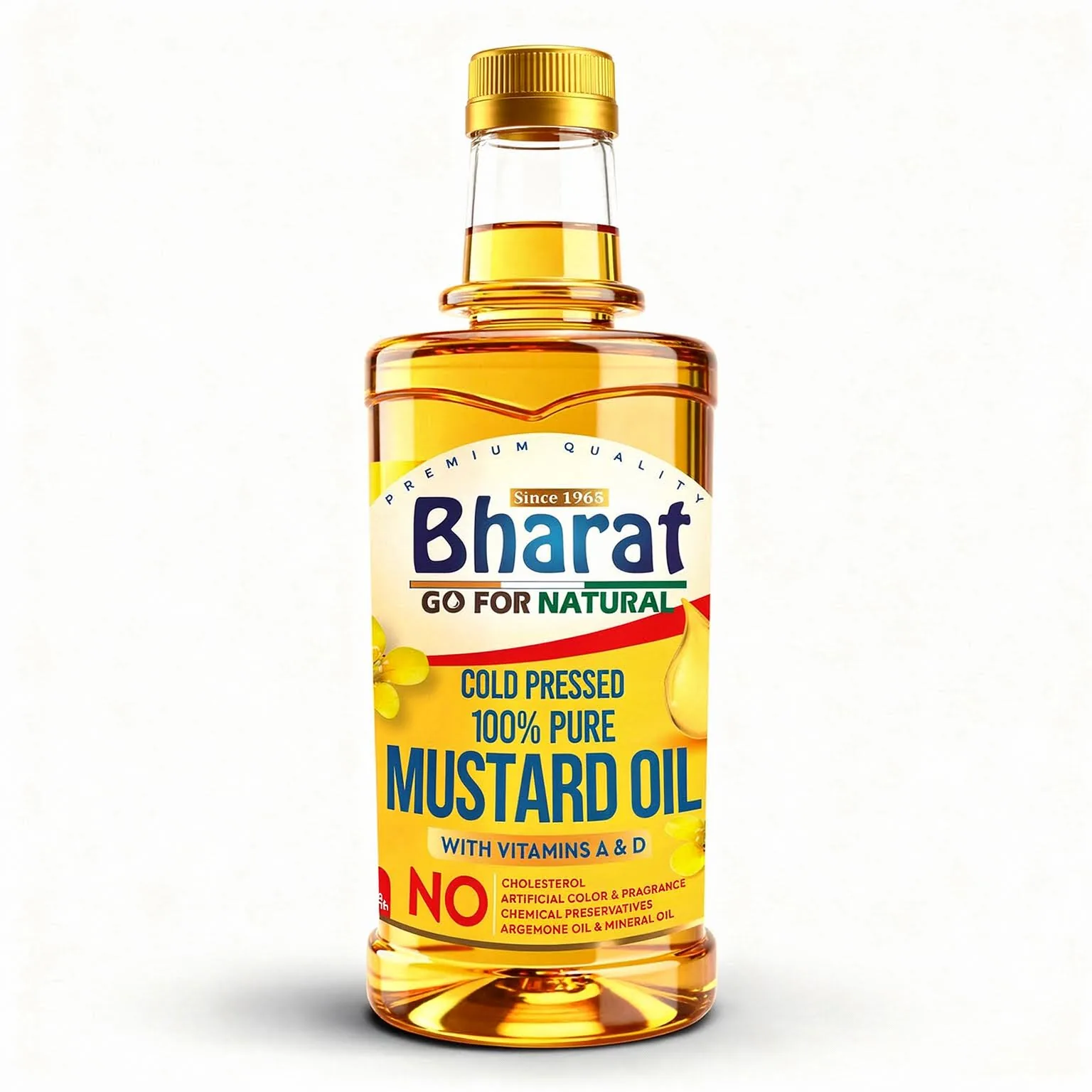
In the kitchens of Bengal, Punjab, and Bihar, mustard oil is not just an ingredient: it is a cultural identity. Known for its characteristic golden hue and bold, pungent aroma, cold pressed mustard oil cooking is central to iconic dishes like Shorshe Ilish (Hilsa fish in mustard sauce) and various bhartas. This oil is valued for its unique ability to cut through the richness of fish and vegetables while adding a "kick" that refined oils simply cannot replicate. The tradition of using kachi ghani cooking oil UAE families appreciate refers to the raw, cold-pressed extraction method where seeds are crushed at low temperatures, ensuring the allyl isothiocyanate, the compound responsible for its pungency and antibacterial properties, remains intact.
Mustard oil is a nutritional powerhouse, rich in monounsaturated fatty acids (MUFA) and polyunsaturated fats, including a balanced ratio of Omega-3 and Omega-6. These fats support heart health by helping to regulate cholesterol and improve blood circulation. Furthermore, mustard oil has a relatively high smoke point of approximately 250 degrees Celsius, making it remarkably stable for deep frying and high-heat Indian cooking. Beyond the stove, it is often used as a natural preservative in pickles, where its antimicrobial properties prevent spoilage for months. For those seeking Bharat cold pressed oil UAE, the mustard variant offers a bridge to the robust, spicy flavours of Northern and Eastern India while providing significant anti-inflammatory benefits.
Sesame oil in Indian cooking: South Indian applications and nutritional profile
Travel to Tamil Nadu, Andhra Pradesh, or Karnataka, and the dominant aroma shifts to the nutty, earthy scent of sesame oil Indian cooking. Often called "gingelly oil" or "nallennai" (which literally translates to "good oil"), sesame oil has been a staple for over 5,000 years. It is the secret behind the authentic taste of Sambar, Rasam, and the addictive "gunpowder" or Idli Podi. Unlike the toasted sesame oil found in East Asian cuisines, the Indian variety is extracted from raw seeds, resulting in a golden-brown liquid that is versatile enough for both tempering and finishing.
Cold-pressed sesame oil contains unique antioxidants like sesamol and sesamin, which are not found in other fats. These compounds help protect the body from oxidative stress and support bone and joint health, a benefit long recognised in Ayurvedic medicine. With a smoke point of approximately 210 degrees Celsius, it is perfectly suited for the quick, high-heat tadka that finishes a South Indian meal. It also acts as a natural preservative, making it the preferred medium for traditional spicy pickles like Avakaya. Its warming nature is particularly cherished in winter months, providing a grounding energy to the diet.
Coconut oil in Indian cooking: Kerala and coastal traditions
Along the coastlines of Kerala and parts of Karnataka, the coconut palm defines the culinary landscape. Cold pressed coconut oil Indian cooking imparts a creamy, tropical sweetness that is essential for dishes like Avial, Olan, and fish moilee. For many families, the transition from refined fats back to traditional coconut oil is driven by the desire for that specific, nostalgic flavour that defines coastal heritage. The difference between refined coconut oil and the cold-pressed version is stark: the latter retains the natural aroma of fresh coconuts and the full spectrum of its health-giving properties.
Coconut oil is unique because it is primarily composed of medium-chain triglycerides (MCTs), specifically lauric acid. Unlike long-chain fats, MCTs are processed by the liver as an immediate source of energy rather than being stored as fat, which can support metabolism. Unrefined, cold-pressed coconut oil has a lower smoke point than mustard or groundnut oil, sitting at about 177 degrees Celsius. This makes it ideal for the "slow and low" cooking style of many Kerala stews and for tempering at the end of the cooking process. It provides a rich mouthfeel and a subtle sweetness that balances the heat of green chillies and the tang of tamarind.
Groundnut oil in Indian cooking: high smoke point and neutral profile
In the heart of Gujarat and Rajasthan, groundnut oil (peanut oil) is the preferred choice for daily cooking. Its popularity stems from its incredible versatility and its ability to fade into the background, allowing the spices to take centre stage. Groundnut oil Indian cooking is prized for its high smoke point, which reaches approximately 232 degrees Celsius when refined, but even in its cold-pressed form, it remains one of the most stable fats for deep frying snacks like gathiya, fafda, and various stir-fries. It provides a crisp texture to fried foods without the greasy aftertaste often associated with heavier oils.
Nutritionally, groundnut oil is high in Vitamin E, an antioxidant that protects cells and supports skin health. It is also rich in monounsaturated fats, which are considered heart-healthy. Because it does not absorb the flavours of the food cooked in it, it is a favourite for households that do a lot of frying, as the oil can often be strained and reused once or twice without losing its neutral character. For Indian expats in the UAE, it serves as the perfect "all-purpose" oil that works just as well for a Maharashtrian batata vada as it does for a simple Rajasthani sabzi.
Mixing oils: when and why Indian home cooks combine different fats
The practice of mixing oils is a common, though often overlooked, tradition in Indian households. Some cooks combine a neutral oil like groundnut with a more fragrant one like mustard or sesame to temper the intensity of the aroma while still gaining the health benefits and a hint of the flavour. In other instances, a small amount of ghee is added to a vegetable oil tadka. This isn't just for taste: ghee has a very high smoke point (about 250 degrees Celsius) and adding it can help stabilise other fats while providing that unmistakable festive richness.
Mixing oils can also be a strategic way to balance the fatty acid profile of a meal. By using a variety of oils throughout the week: groundnut for frying, mustard for fish, and sesame for dals: home cooks ensure they are receiving a broad spectrum of MUFAs, PUFAs, and antioxidants. However, it is important not to mix oils with vastly different smoke points for high-heat frying, as the oil with the lower threshold will still burn and compromise the entire batch. Variety, rather than random blending, is the key to a healthy and flavorful Indian kitchen.
Cold-pressed vs refined: what is actually lost in the refining process
To understand why Bharat cold pressed oil UAE products are superior for the traditional kitchen, one must look at what happens during industrial refining. Refined oils are often extracted using high heat and chemical solvents like hexane to maximise yield. They then undergo degumming, neutralisation, bleaching, and deodorisation. While this process creates an oil with a very high smoke point and a long shelf life, it strips away the very things that make oil "food": the vitamins, the natural antioxidants, and the aromatic compounds that provide flavour.
In contrast, cold-pressing (or the kachi ghani method) involves mechanical pressure at temperatures that never exceed 49 degrees Celsius. This "slow" extraction preserves the natural molecular structure of the fat. When you use cold-pressed oil, you are consuming the natural Vitamin E, the phenols, and the essential fatty acids exactly as nature intended. For Indian cooking, this means the oil still tastes like the seed it came from, adding a layer of complexity to your dishes that refined "transparent" oils simply cannot match. You can find out more about these traditional quality standards by visiting the Bagason Group website, where heritage meets modern distribution.
The Bharat cold-pressed oil range and regional cooking styles
The Bharat cold pressed oil UAE range has been specifically curated to serve the diverse needs of the South Asian community in the Middle East. Each oil in the collection is a reflection of a specific regional heritage, allowing families to cook with the same authenticity they would have in India. The Bharat Mustard Oil, with its intense pungency, is the perfect companion for Punjabi sarson ka saag or Bengali curries. The Bharat Sesame Oil provides the essential "soul" for South Indian spice powders and tamarind-based gravies, offering a nutty depth that defines the region's palate.
For those focused on coastal flavours, the Bharat Coconut Oil captures the fresh, light essence of the tropics, making it the only choice for a traditional Kerala Sadya. Meanwhile, the Bharat Groundnut Oil serves as the reliable workhorse for the kitchen, providing the stability needed for the deep-fried snacks and everyday stir-fries of Central and Western India. By offering these oils in their cold-pressed, unadulterated form, the range ensures that the healthy cooking oil UAE residents choose is as close to the farm as possible, preserving the "life force" or Prana of the ingredients.
Practical guide: which Bharat oil to use for which dish
Choosing the right oil for the right dish is an art that balances heat, health, and heritage. Here is a quick reference guide for your kitchen:
\-
\
- \Deep Frying (Pakoras, Samosas, Puris):\ Use \Bharat Groundnut Oil\ or \Bharat Mustard Oil\. Their high smoke points ensure the snacks are crispy and the oil remains stable.\ \
- \South Indian Tadka (Sambar, Rasam, Chutney):\ Use \Bharat Sesame Oil\. The nutty aroma perfectly complements curry leaves and mustard seeds.\ \
- \Coastal Curries and Stews:\ Use \Bharat Coconut Oil\. Its low-to-medium heat stability is ideal for the simmering techniques used in Kerala and Mangalorean cuisine.\ \
- \Northern/Eastern Fish and Vegetable Curries:\ Use \Bharat Mustard Oil\. Heat it until it reaches its \cooking oil smoke point\ (light smoke) to mellow the pungency before adding spices.\ \
- \Pickles and Preserves:\ Use \Bharat Mustard Oil\ (for North Indian style) or \Bharat Sesame Oil\ (for South Indian style) to take advantage of their natural preservative qualities.\ \
- \Salad Dressings and Finishing:\ Use \Bharat Sesame Oil\ or \Bharat Coconut Oil\ for a nutrient-dense, flavorful drizzle over warm dishes.\ \
By making the conscious switch to the Bharat oils Dubai collection, you are doing more than just changing a kitchen staple. You are reclaiming a piece of your heritage, supporting your family’s cardiovascular and digestive health, and ensuring that every meal you serve is an authentic reflection of the rich, diverse flavours of India. In the vibrant, fast-paced world of the UAE, these traditional oils provide a grounding connection to home, one delicious drop at a time.