By half past four on a Friday afternoon in Sharjah, a particular smell starts to drift between the villas: onions going soft and golden in ghee, the sharp citrus-and-smoke note of a black lime cracking open in a pot, basmati rinsing under the tap until the water runs clear. Somewhere a grandmother is testing a grain of wheat between her fingers to see if it has finally surrendered into something soft enough to beat smooth. This is the hour Emirati comfort foods come into their own, when the working week winds down and the cooking is unhurried, deliberate and built for a table that will keep filling up as cousins and neighbours arrive.
These dishes are not weeknight fast food and they were never meant to be. Machboos, harees, balaleet and threed are slow by design, shaped by a climate and a history that rewarded patience, preservation and generosity. They carry the warm, layered flavour of the Gulf, the kind that comes from a tin of spices no two families fill the same way. Learn the four of them and you have, in effect, learned the architecture of an Emirati week: the celebratory one-pot, the patient porridge, the sweet-savoury breakfast and the forgiving bread-and-broth bowl. Behind all four sits a surprisingly small, surprisingly powerful pantry, and once you build it, you can cook this food all year.
Comfort, the Emirati way: what these four dishes mean at the table
Comfort food in the Gulf is rarely a solitary thing. In much of the world the phrase conjures one person, one bowl, eaten quietly. Here it points outward, toward the majlis, the sitting room where guests are received and where a host's standing is measured in part by what comes off the stove. A pot of machboos set down in the centre of a shared platter is hospitality made edible. It says: stay, eat, there is more than enough. That instinct, generosity scaled for a crowd, runs through all four of these dishes and explains why so many of them are built to feed ten as easily as four.
The calendar shapes them too. During Ramadan, the rhythm of the day inverts. The fast breaks at sunset with dates and water, then the real meal follows, and in the small hours before dawn there is suhoor, the meal meant to carry you through the next long, hot day of fasting. Different dishes suit different moments. Something rich and celebratory crowns the iftar table when family gathers; something gentle and slow-releasing anchors suhoor so that hunger holds off until the afternoon. Eid mornings, weddings, the birth of a child, a Friday lunch that stretches into the evening, these are the occasions that call these recipes out of memory and into the pot.
It helps to see the four as a quartet that maps the Emirati day and its calendar. Machboos is the celebratory one-pot, spiced rice layered with chicken, lamb, fish or shrimp, the dish that anchors a feast and that almost everyone reaches for first. Harees is the patient porridge, wheat and meat cooked for hours and beaten to a smooth, savoury cream, the texture of Ramadan and of large family gatherings. Balaleet is the breakfast that surprises newcomers, sweet saffron vermicelli crowned with a thin savoury omelette, eaten in the morning and beloved on Eid. Threed, the most forgiving of the four, layers thin flatbread under a spiced meat-and-vegetable broth and turns up reliably across Ramadan tables. Together they cover morning and evening, everyday and special, and they share a single backbone: the spices and preserved ingredients that define traditional Emirati food.
A short history: Bedouin, sea trade and the Indian Ocean spice route
To understand why this food tastes the way it does, look at where it came from. The Emirates sit at a meeting point between the unforgiving interior desert and a long, busy coastline on the Arabian Gulf and the wider Indian Ocean. Both shaped the plate. From the desert came a cuisine of grains, dates and dried meat, foods that travelled well and survived heat without refrigeration. From the coast came fish, much of it dried or salted, and the pearling and trading dhows that carried Emirati sailors out across the water and brought the world's flavours back home.
That coastal trade is the single biggest reason the Gulf pantry looks the way it does. For centuries, dhows ran with the monsoon winds between Arabia, the Indian subcontinent, Persia and the East African coast. They carried pearls and dates outward and returned laden with rice, cloth and spices. The fingerprints of those voyages are still all over a pot of machboos: basmati rice from the plains of the subcontinent, green cardamom and cinnamon traced back to the spice islands and the Malabar coast, saffron carried down from Persia, cloves and black pepper from further east. Layer those onto a base of local dried limes and dried fish and you get the distinctive Gulf flavour profile, warm rather than fiery, aromatic, gently sour, and built up in patient layers rather than thrown together.
Why dried and preserved ingredients dominate the Gulf pantry
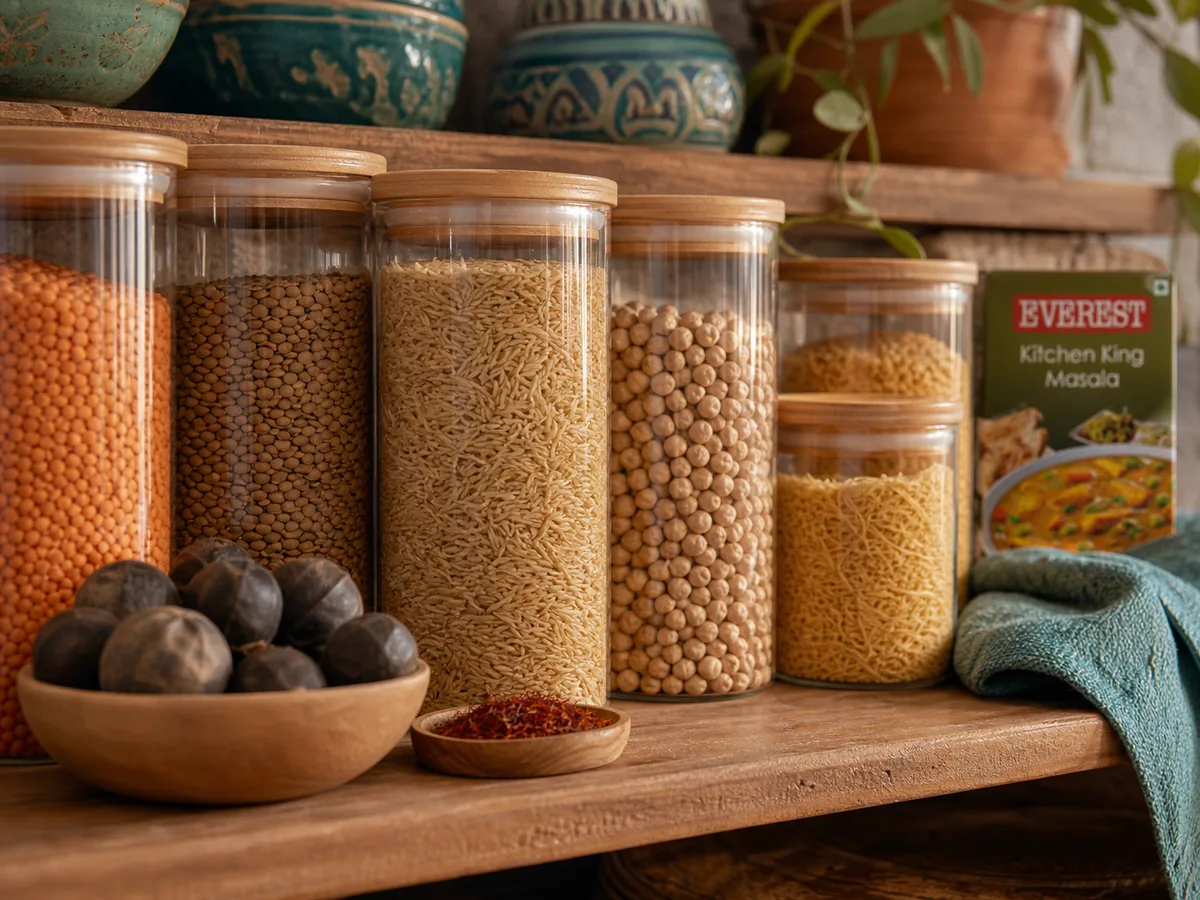
Before electricity and cold chains reached the Gulf, the climate dictated what a household could keep. Summer temperatures that push past 45 degrees and humidity that can hang heavy off the coast are merciless on fresh food. The answer, refined over generations, was to lean on ingredients that the heat could not easily spoil. Dates were pressed and stored. Fish was split, salted and dried in the sun. Limes were boiled and left to harden into the dark, rattling spheres known as loomi. Wheat was stored as a dried grain and soaked back to life when needed. Grain, ghee, dried pulses and preserved citrus formed a larder that could ride out a long, hot summer and provision a dhow for weeks at sea.
That logic still governs the modern Emirati pantry, even with a hypermarket on every corner. The staples that do the heavy lifting are overwhelmingly dry, cured or clarified, things that shrug off the heat. It is a cuisine engineered, long before the word existed, for shelf stability, and that engineering is exactly what makes it so practical for a home cook today. You can keep most of what you need on hand for months and decide on the day what to cook.
The Indian, Persian and East African threads in one spice tin
Open a well-used Emirati spice tin and you are looking at a map of the Indian Ocean. The cumin, coriander, turmeric and black pepper carry an unmistakable South Asian accent, the legacy of close ties with the subcontinent. The saffron and dried rose speak Persian. The whole dried lime and the love of cloves and cardamom carry notes you will also find along the Swahili coast, where Omani and Gulf traders settled for generations. None of these threads sits in isolation; they are blended, most famously in the house spice mix called bzar, into something that is unmistakably Gulf rather than Indian, Persian or African.
This is why Emirati cooking rewards a stocked pantry over a long shopping list of fresh produce. The flavour lives in the dry goods. Get the spices, the rice, the limes and the ghee right, and the fresh elements, an onion, a tomato, a piece of chicken, fall easily into place. It is also why the brands and importers that move these pantry essentials onto Gulf shelves matter so much to the way people actually cook. A reliable bag of basmati or a consistent bzar blend is the difference between a dish that sings and one that merely fills a plate. The work of connecting trusted makers to local stores, which is at the heart of what %the brands we bring to Gulf shelves% represents, is quietly woven into every one of these recipes.
The Emirati pantry: ten staples that do the heavy lifting
If you want to cook all four dishes, you do not need an enormous shop. You need roughly ten ingredients, most of them dry and long-lived. Master these and you have unlocked machboos, harees, balaleet and threed several times over. Here is what each one does, how it comes, and how to keep it in a UAE kitchen where humidity is the real enemy.
Loomi: the sour, smoky backbone of Gulf cooking
If one ingredient defines Gulf comfort food, it is loomi, the dried black lime. Fresh limes are boiled in salted water, then left to dry in the sun for weeks until they harden, darken and turn almost hollow, the juice inside concentrating into a complex, fermented sourness with a faint smoky, almost tea-like edge. Nothing else delivers quite the same flavour. It is tart without the brightness of fresh citrus, deeper and a little funky, and it gives machboos, threed and many Gulf stews their characteristic savoury-sour backbone.
Loomi comes two ways and the form matters. Whole limes are used by piercing them a few times with a knife and dropping them into the simmering broth, where they slowly release flavour; fish them out before serving or warn your guests, because biting into one is a memorable mistake. Ground loomi, the same lime pulverised to a khaki powder, is more intense and bitter, stirred in by the half-teaspoon for a concentrated hit. As a buying note, whole loomi keeps for many months in a sealed jar; the powder fades faster and turns bitter, so buy it in smaller quantities and use it within a few months. Store both away from light and humidity, which is non-negotiable in a coastal flat.
Bzar: the house blend no two families make the same
Bzar, sometimes written bezar, is the all-purpose Emirati spice blend, and asking for the one correct recipe is like asking for the one correct way to raise children. Every family has its own. A typical bzar leans on cumin and coriander as its base, with black pepper, cinnamon, cloves, cardamom, dried red chilli, turmeric for colour and warmth, and often dried loomi powder folded in. Some households toast and grind the whole spices fresh; many keep a ready-made jar. It is the seasoning that makes machboos taste like machboos rather than a generic spiced rice, and it carries into threed and countless stews.
The practical rule with bzar is the same as with all ground spice: it is at its best fresh and fades fast. Ground blends lose their volatile aromatics within a couple of months, faster still in heat and humidity. Whole spices, by contrast, hold their oils for a year or more. The serious approach is to keep the whole components, cumin seed, coriander seed, peppercorns, cinnamon, cloves, cardamom pods, in airtight jars in a cool cupboard or even the freezer, and grind a small batch of bzar every few weeks. If you buy it pre-ground, buy little and often, and store it in an opaque, airtight container well away from the cooker.
Basmati rice: the long grain that holds the dish together
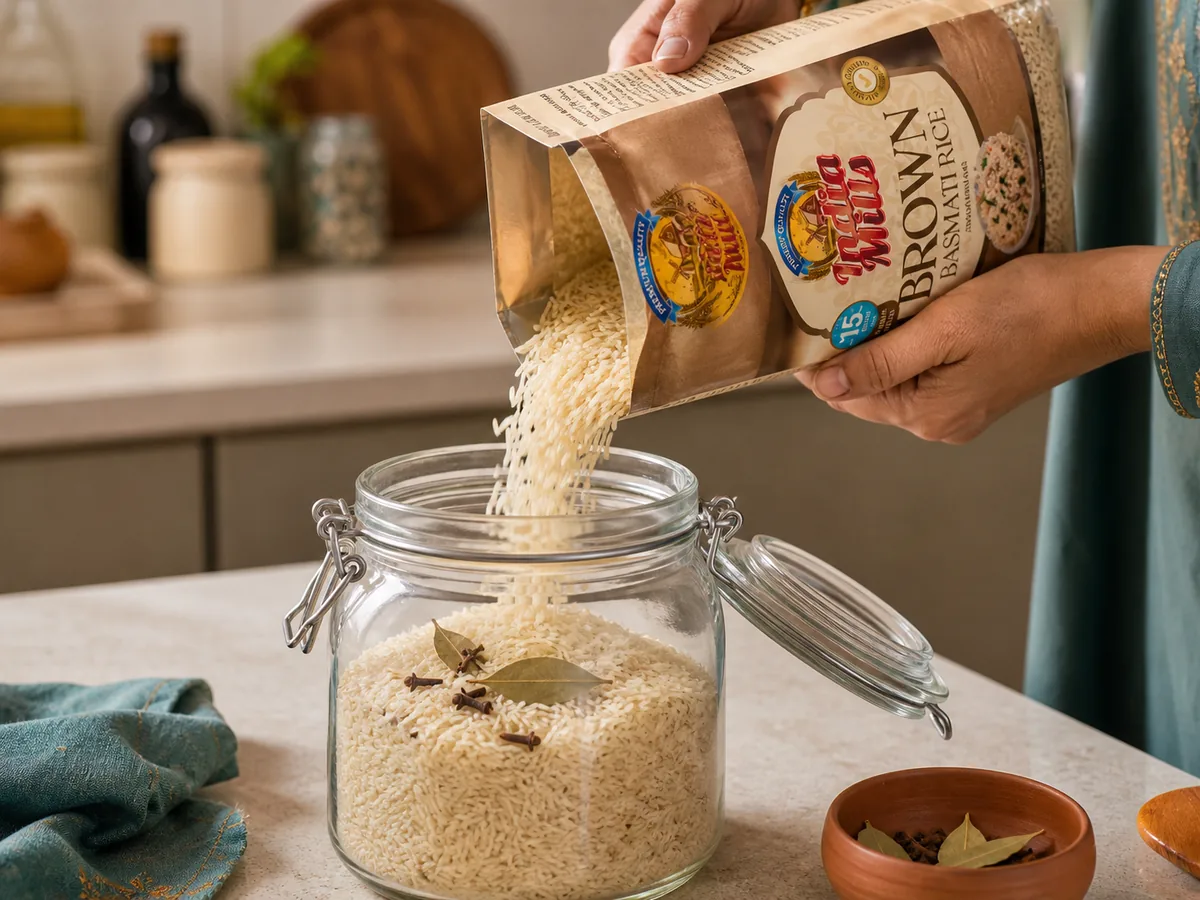
Machboos lives or dies on its rice, and the rice in question is basmati, the long, slender, aromatic grain from the subcontinent. Aged basmati, matured for a year or more before milling, is prized because it cooks up drier and fluffier with grains that stay separate, exactly what you want for a layered rice dish. Cheaper, younger or broken rice clumps and goes sticky. For machboos you want each grain distinct, glossed with spiced broth, never gluey. Buy a good aged basmati for machboos, the kind sold in the heavy cloth and paper sacks that fill the rice aisle of every UAE hypermarket, and keep it sealed against pantry moths and damp.
Wheat and jireesh: the grains behind harees
Harees depends on a specific grain: whole or coarsely cracked wheat, often sold as harees wheat or, when cracked, as jireesh. Soaked for hours and then simmered slowly with meat, the wheat breaks down into the dish's signature smooth, starchy body. It is the one ingredient you cannot easily substitute; ordinary cracked bulgur, which is parboiled, will not behave the same way. Buy wheat sold specifically for harees, store it dry and sealed, and soak it ahead of time. Jireesh also stars in its own savoury porridge of the same name, so a bag rarely goes to waste.
Ghee, saffron and the finishing touches
The remaining staples are the ones that turn good into memorable. Ghee, clarified butter with the milk solids cooked out, is the Gulf's foundational cooking fat. Because the solids are gone, it keeps for a long time without refrigeration and carries a deep, nutty richness; it browns onions for machboos, finishes harees with a glossy pour, and toasts the vermicelli for balaleet. Saffron, the dried stigmas of the crocus flower carried into the region from Persia, gives balaleet its glow and machboos its luxury; a small pinch, bloomed in a little warm water or rose water, perfumes a whole pot. Use it sparingly, both because it is costly and because too much turns medicinal.
Round out the kit with green cardamom, whose pods you bruise and add whole; cinnamon, usually as bark sticks for slow infusion; whole cloves, used with a light hand; turmeric for warmth and a golden hue; and dates, the everyday sweetener and the food that breaks the fast, dense with natural sugars and minerals. Vermicelli, the fine wheat noodle toasted for balaleet, and rose water, used by the careful drop, complete the picture. None of these is exotic in the UAE; all of them sit within easy reach in any hypermarket, neighbourhood baqala or the spice souk, and the consistency of the better-known brands among them is precisely what lets a home cook get the same result twice. Connecting those makers to the shelves where Gulf families shop is the everyday business that %how we move pantry essentials from maker to market% describes.
Machboos: the one-pot dish that anchors a Gulf feast
Machboos, also spelt majboos or makbus and close cousin to the Saudi kabsa, is the dish most people picture when they think of Emirati food. At heart it is spiced rice cooked together with meat, chicken or seafood so that the grains drink up a deeply flavoured broth. Done well, it is fragrant, the rice fluffy and separate, the protein tender, the whole thing carrying the sour lift of loomi and the warmth of bzar. It is the centrepiece of celebrations and the dish by which many a home cook is judged.
Step-by-step chicken machboos
The method has a clear shape, and once you understand the logic you can flex it. You build a flavour base, often called the hashu or the sauce, cook the protein in it, then cook the rice in the resulting broth. For a chicken machboos to feed four to six, you start with two large onions finely chopped, softened slowly in three or four tablespoons of ghee until deep golden, not pale. In go four cloves of crushed garlic and a thumb of grated ginger, then two chopped tomatoes cooked down to a paste. Now the spices: a generous tablespoon or more of bzar, a stick of cinnamon, four or five cardamom pods, a few cloves, a teaspoon of turmeric, and two or three whole loomi pierced with a knife. Salt comes early and confidently; under-seasoning at this stage is the most common reason machboos tastes flat.
Add a whole chicken cut into pieces, around 1.2 to 1.5 kilograms, and turn it in the spiced base until it colours. Pour in enough water to cover, roughly 750 millilitres to a litre, bring to a simmer, cover and cook until the chicken is tender, twenty-five to thirty-five minutes. Lift the chicken out and keep it warm; brush it with a little ghee and brown it under a hot grill or in the oven if you like a crisp finish. What remains in the pot is the spiced stock that will cook the rice, and its seasoning is the seasoning of the finished dish, so taste it now and correct the salt and sour.
Measure the broth and adjust it to roughly one and a half times the volume of your drained, soaked rice, two cups of rice for most family pots. Bring it back to a boil, tip in the rice, stir once, then cook uncovered until the liquid drops to the level of the grains. Lower the heat to its gentlest setting, lay the chicken back on top, cover the pot with a tight lid or a tea towel under the lid to trap steam, and let it steam undisturbed for fifteen to twenty minutes. The result is rice that has absorbed every bit of the broth, each grain distinct and stained gold and brown. Serve it heaped on a platter with the chicken on top, scattered with fried onions, raisins and toasted nuts, and a bowl of daqoos, the fresh tomato-and-chilli sauce, alongside for those who want heat and brightness.
The variations are where families make it their own. Swap chicken for lamb on the bone, which needs longer simmering and gives a richer broth; for fish, where firm fillets are cooked more gently and the loomi sings against the sea; or for robian, the local prawns, added near the end so they stay sweet and tender. The daqoos served alongside, blitzed tomato, garlic, green chilli and a little tomato paste simmered down, is the standard partner and brightens the rich rice on the plate.
Getting the rice right: rinsing, soaking and the steam finish
Three faults sink most home machboos: mushy rice, flat seasoning and a dish that is dry and pale. Each has a fix. Mushy rice almost always comes from skipping the prep or drowning the grain. Rinse basmati in several changes of water until it runs clear, washing away the loose surface starch that makes rice gluey, then soak it for twenty to thirty minutes so the grains hydrate evenly and cook through without overcooking on the outside. Drain it well. Then respect the ratio: roughly one and a half parts broth to one part soaked rice, never a flood. The two-stage cook, a brisk boil to absorb most of the liquid followed by a gentle covered steam, is what gives you separate, fluffy grains rather than a wet mass.
Flat seasoning is a salt-and-sour problem, and the place to fix it is the broth before the rice goes in, because the rice can only taste of the liquid it absorbs. Season the broth until it tastes properly savoury and faintly tart on its own, a little stronger than you think it should be, since the rice will dilute it. If it is dull, more salt and a touch more ground loomi will usually wake it up before any extra chilli. And if your machboos comes out pale and dry, the culprit is usually too little fat and underbrowned onions; take the onions further next time, be generous with the ghee, and finish the platter with a slick of saffron-infused ghee poured over the rice just before serving. Get these habits right and the dish becomes reliable, the kind of thing you can put on a majlis table with quiet confidence.
<
Machboos: the one-pot dish that anchors a Gulf feast
Machboos (you'll also see it as majboos or kabsa across the wider Gulf) is the dish people picture when they think of an Emirati table laid for guests. Spiced rice steamed over browned meat or fish, scented with loomi and bzar, mounded onto a platter and crowned with fried onions and nuts. It scales from a weeknight chicken pot to a whole lamb for a majlis, and the method stays the same.
Step-by-step chicken machboos
Start with the hashu, the flavour base. Soften two large sliced onions in ghee until golden, then add a spoonful of garlic and ginger paste, a chopped tomato or two, and your bzar, turmeric, a stick of cinnamon, a few cardamom pods and cloves. Let the spices cook into the onions until the mixture smells toasted rather than raw. Brown bone-in chicken pieces in this base, season with salt, then add water to not quite cover, drop in two pierced loomi, and simmer until the chicken is nearly done and you have a deeply coloured, fragrant broth.
While that cooks, rinse and soak your basmati. Lift the chicken out, measure the broth so you have the right ratio for your rice, and bring it back to a boil. Add the drained rice, let it cook in the open broth until the liquid drops to the level of the grains, then nestle the chicken back on top, cover tightly, drop the heat as low as it goes and let it steam for fifteen to twenty minutes. Some cooks finish the chicken separately under a grill for crisp skin, then lay it over the rice. Fried onions, toasted almonds or pine nuts, and a scatter of chopped coriander finish it.
Getting the rice right: rinsing, soaking and the steam finish
Mushy machboos is almost always a rice problem, not a spice problem. Rinse the basmati in several changes of cold water until the water runs clear; you're washing off surface starch that would otherwise glue the grains. Soak it for twenty to thirty minutes so the grains hydrate evenly and cook through without the outside turning to paste. Get your broth-to-rice ratio close (aged basmati usually wants a touch less liquid than you'd think) and resist stirring once the rice goes in. The final covered steam, off direct heat, is where separate, fluffy grains are made; lifting the lid to check lets the steam escape and the grains seize. Serve daqoos alongside, a loose sauce of tomato, garlic, chilli and a little loomi simmered down, which cuts the richness and lets each person sharpen their own plate.
Harees: patience, wheat and the texture of Ramadan
If machboos is the showpiece, harees is the dish that asks for your time. Hulled wheat and meat, usually lamb or chicken, simmered together for hours until the grain breaks down and the whole thing is beaten into a smooth, savoury porridge somewhere between risotto and congee. It is plain on purpose. That deliberate, comforting blandness is the point, which is why it appears at suhoor before a long fast and at the big gatherings of Ramadan and Eid, where it sits as a soft counterweight to the spiced dishes around it.
Traditionally harees cooks all night over a low fire, the cook returning to mash and stir. A modern UAE kitchen has shortcuts that respect the result. Soak the wheat for a few hours, then pressure-cook it with the meat and plenty of water and a little salt for forty-five minutes to an hour, until both are falling apart. A slow cooker does the same job overnight if you'd rather wake to it ready. Once soft, beat it hard with a wooden spoon or a hand blender used briefly, until the texture turns creamy and the meat disappears into the grain. Season carefully, then finish each bowl with a pool of melted ghee and a dusting of cinnamon, sometimes a little sugar on the side for those who like the sweet-savoury contrast. The seasoning trick is restraint; salt it enough to taste, but don't chase it with spice, or you lose the quiet that makes harees what it is.
%the markets and regions we cover across the GCC%Balaleet: the sweet-and-savoury breakfast that surprises everyone
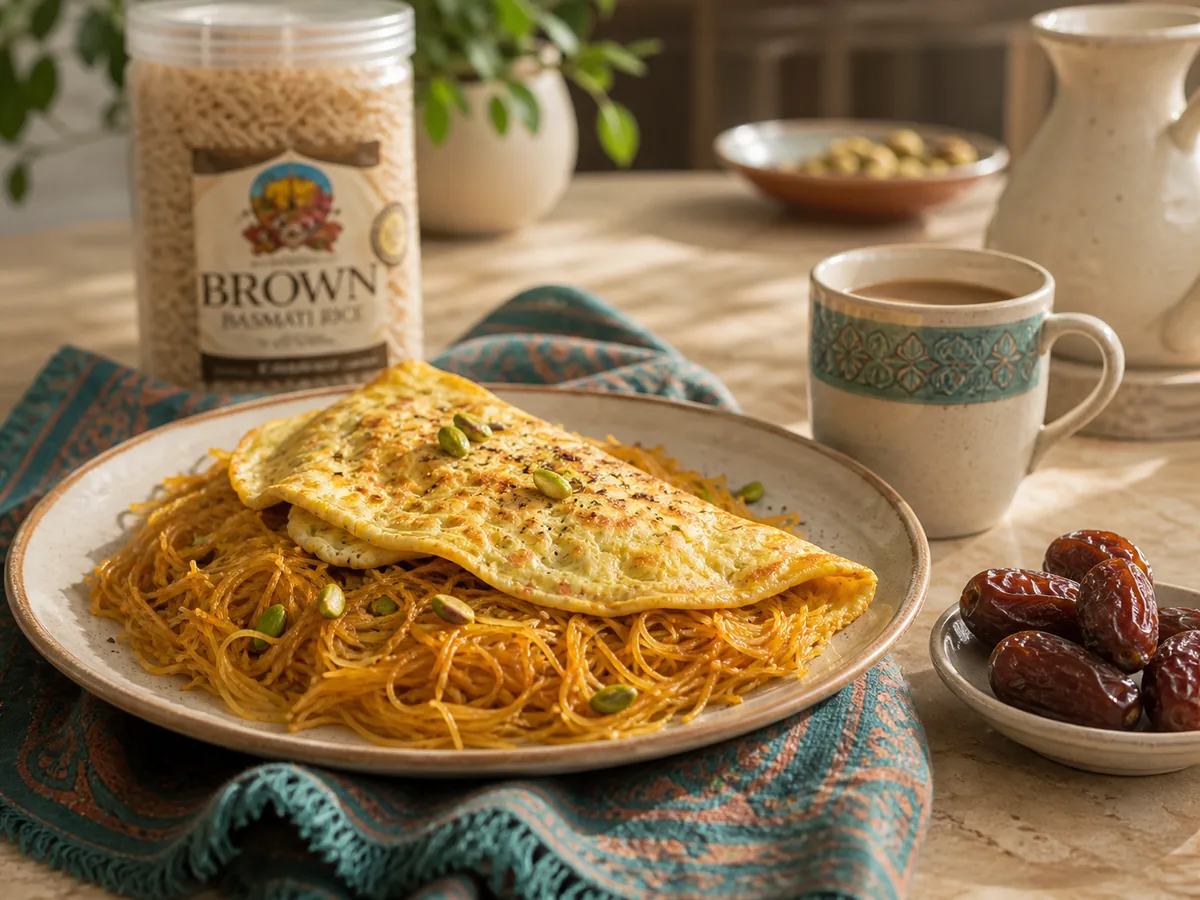
Balaleet is the dish that makes first-time guests pause mid-bite. Sweet vermicelli, scented with saffron, cardamom and rosewater, served under or alongside a thin, plain omelette. Sugar and egg on the same plate sounds wrong until you eat it, and then it makes complete sense, the savoury egg cutting the sweetness exactly the way you didn't know you wanted. It's a breakfast dish above all, and a fixture of Eid mornings, when a household wakes to something celebratory after a month of dawn meals.
Toast fine vermicelli in ghee until it turns a nutty gold, watching it closely because it goes from toasted to burnt in seconds. Add water and a pinch of saffron and a few bruised cardamom pods, cover and let the vermicelli cook and absorb until tender. Stir through sugar to taste (start modest, you can always add), a little rosewater, sometimes a pinch of salt to round it. The sugar level is personal; some families make it frankly dessert-sweet, others keep it gentle. For the omelette, beat eggs with a pinch of salt and cook a thin, soft sheet with no colour, then either fold it through the vermicelli or lay it over the top so each forkful catches both. A scatter of pistachio or toasted nuts finishes it, and a little extra saffron on top if you're serving guests.
Threed: bread, broth and the most forgiving dish of the four
Threed (also thareed or rqaq, named for the bread it's built on) is the most relaxed cook of the quartet, and arguably the most ingenious. Thin sheets of regag bread, a paper-crisp griddle bread, are torn and layered into a bowl, then drowned in a spiced meat-and-vegetable broth that softens the bread into something between a dumpling and a soaked crouton. It has deep roots across the Gulf and a permanent place on the Ramadan table, where a single big pot of broth can feed a crowd cheaply and well.
For a weeknight version, build a broth the way you'd start machboos: onion softened in ghee, garlic and ginger, tomato, bzar, turmeric and a couple of pierced loomi, then meat (lamb shoulder or chicken on the bone) simmered until tender. Add hardy seasonal vegetables, marrow, potato, carrot, pumpkin in winter, and cook until everything is soft and the broth is rich and a little sour from the loomi. The one technique that matters: keep the bread and the broth apart until the last moment. Layer the torn regag into bowls or a platter and ladle the hot broth over just before serving. Soak it too early and the bread dissolves to paste; soak it at the table and it stays tender with a little structure, which is exactly what you want.
%common questions about sourcing and supply%Nutrition and balance: what these dishes give you
Read as a group, these four dishes are better balanced than their reputation for richness suggests. Harees and threed are essentially whole-grain bowls, slow-release carbohydrate from wheat or bread carrying protein from the meat that cooked in them, the kind of steady fuel that suits a long fasting day far better than something sugary and fast. Machboos is a complete plate in one pot: spiced rice for energy, a generous serving of protein, and aromatics that do real work, turmeric and cumin among them carrying their own modest health credentials. Balaleet is the outlier, a genuinely sweet dish best treated as the occasional treat it has always been, rather than an everyday breakfast.
The practical tweaks are easy and don't cost the dishes their character. Reach for aged or brown basmati to nudge up the fibre and lower the glycaemic load of machboos. Choose leaner cuts, or trim and skim the broth, to keep the richness in check. Load the threed broth with more vegetables than meat, which stretches it further and adds fibre and micronutrients at almost no cost. Go easy on the finishing ghee in harees and the sugar in balaleet, both of which are seasoning, not structure, so a lighter hand changes little but the calorie count. And serve, as Emirati tables always have, with a sharp salad and a glass of laban, the lightly salted buttermilk that aids digestion and sits well against rich food in the heat. That last pairing isn't garnish; it's part of how the cuisine keeps itself balanced.
Cooking these in a UAE kitchen: heat, timing and Ramadan logistics
Cooking these dishes where the summer climbs past forty degrees changes a few habits worth getting right. Grains and pulses that need a long soak should soak in the fridge, not on the counter; an overnight bowl of wheat or rice left out in a warm Gulf kitchen can sour or start to ferment before morning. The fridge soak is slower, safer and gives you cleaner-cooking grain.
During Ramadan, the logistics matter as much as the cooking. Harees and threed broth both reward being made ahead, which is a gift when you're cooking around a fasting schedule and don't want to start a multi-hour dish at sunset. Cook the harees fully and the threed broth (not the bread) a day early, cool it quickly, and refrigerate or freeze in meal-sized portions. They reheat beautifully, harees with a splash of water beaten back in to loosen it, broth simply brought back to a simmer. That lets iftar come together fast and keeps suhoor, when nobody wants to be standing over a stove at three in the morning, to a matter of warming and assembling.
Scaling for a majlis crowd is mostly about pots and rice ratios, not new technique; machboos in particular scales cleanly as long as your pan is wide enough for the rice to steam in a shallow layer rather than a deep, gluey heap. When you reheat, protect the textures. Warm machboos covered with a sprinkle of water so the rice steams rather than fries; reheat harees gently, stirring, so it doesn't catch and split; bring threed broth back to heat and only then pour it over fresh bread. The dishes that took patience to make deserve a little patience to serve.
Stocking your pantry: building the kit once, cooking it all year
Here's the shopping list that unlocks all four dishes, and most of everyday Emirati cooking besides. Buy it once and you'll reach for it for months:
- Aged basmati rice, the base of every machboos and a dozen other meals.
- Jireesh (hulled wheat) for harees, plus fine vermicelli for balaleet.
- Loomi, whole and a small jar of powder.
- Bzar, either a good ready-ground blend or its components to mix your own: chilli, cumin, coriander, black pepper, cinnamon, cloves, cardamom, turmeric.
- Saffron and rosewater for the dishes that want perfume.
- Ghee, and good salt.
- Dates for the table, and laban for the side.
Where you buy it shapes how it tastes. The big hypermarkets carry reliable basmati, ghee and packaged bzar, convenient and consistent. The corner baqala covers the everyday top-ups, the bag of rice or carton of laban you forgot. But for loomi by the handful, freshly ground bzar and saffron you can smell before you buy, the spice souk still wins, where merchants weigh out exactly what you need and tell you which loomi is this season's. Many of the trusted pantry brands you'll recognise on those shelves reach the country through distributors who move pantry essentials, spices, snacks and hydration from maker to local store, the quiet logistics that mean a family in Al Ain and one in Sharjah can buy the same dependable bag of rice. Bagason works in exactly that space, connecting brands to Gulf shoppers so the staples behind these dishes stay consistent and close to home; you can read more about that work in our %the markets and regions we cover across the GCC% notes. The point for a home cook is simple: good ingredients, easy to find, year-round.
Make it your own: passing the recipes on
None of these recipes is fixed. The whole tradition runs on adjustment, your bzar a little hotter than your neighbour's, your loomi a shade more present, your balaleet sweeter or your harees plainer. Treat the methods here as templates rather than rules. Taste as you cook, write down the version your family likes, and change it again next year. That's how these dishes have travelled from open fires to pressure cookers without losing themselves.
And cook them for other people. Machboos for a weekend gathering, harees carried to a neighbour during Ramadan, balaleet on an Eid morning, threed in a pot big enough to share. The dishes were built for company, born of a culture where feeding a guest well is simply what you do. Make the pantry once, keep it stocked, and you carry a little of that hospitality into your own kitchen, ready whenever someone knocks.
]]><![CDATA[Frequently Asked Questions
Where can I buy loomi and bzar in the UAE?
Whole loomi (dried black lime) and ground bzar are sold across UAE hypermarkets, in most neighbourhood baqalas, and best of all at spice souks like Dubai's and Sharjah's, where merchants weigh out fresh quantities. Hypermarkets give you consistency and convenience; the souk gives you fresher grind and the chance to smell before you buy. Buy loomi whole and bzar in small amounts, since the ground blend loses its top notes within weeks of grinding in the Gulf heat.
What's the best rice for machboos?
Aged, long-grain basmati is the standard for machboos. The ageing drives moisture out of the grain so it cooks up separate and fluffy rather than sticky, which is the texture the dish depends on. Look for bags that state the rice is aged a year or more, rinse it until the water runs clear and soak it briefly before cooking. Store it sealed against UAE humidity, which spoils open packets quickly.
Can I make harees without an overnight fire or special pot?
Yes. Traditional harees cooked all night, but a pressure cooker does the same job in about forty-five minutes to an hour: soak the hulled wheat, then cook it with the meat and plenty of water until both fall apart. A slow cooker works overnight hands-off. Either way, beat the cooked mixture hard until it turns creamy, then finish with ghee and cinnamon. No traditional fire required for an authentic result.
Why is balaleet both sweet and savoury?
Balaleet pairs sweet, saffron-and-cardamom vermicelli with a plain savoury omelette on purpose. The egg's mild saltiness cuts the sugar and keeps the dish from being cloying, which is why it works as a substantial breakfast rather than a dessert. It's a fixture of Eid mornings in Emirati homes. Adjust the sugar to your taste; some families make it frankly sweet, others keep it gentle.
Which of these dishes are typical during Ramadan in the UAE?
All four appear during Ramadan, but threed and harees are especially associated with it. Threed's bread-and-broth bowl is a classic iftar dish that feeds a crowd from one pot, and harees is a soft, filling staple for both iftar and suhoor. Machboos anchors larger gatherings and weekend feasts, while balaleet is a beloved Eid breakfast. Cooking the harees and threed broth ahead and freezing portions makes fasting-day meals far easier to manage.
How long does dried black lime (loomi) keep?
Whole loomi keeps almost indefinitely in a sealed jar in a cool, dry cupboard, which is exactly why it became a Gulf pantry staple in the days before refrigeration. The ground powder, like all ground spice, fades faster and is best bought in small amounts and used within a few months. In the UAE's humidity, keep both well sealed; pierce whole limes before adding them to a pot so they release their sour, smoky flavour slowly.
]]>