By the third week of Ramadan, the rhythm is familiar in every flat from Al Nahda to the Marina. The fast runs long through a Gulf spring, fourteen hours or more, and the heat outside has already crept past forty by mid-afternoon. You finish work, beat the crawl on Sheikh Zayed Road, and walk in with maybe forty minutes before maghrib. The family is waiting. The table needs to look like Ramadan, not like a Tuesday. And the last thing your body wants after a day without water is to stand over a stove improvising from scratch.
This is exactly where the pantry earns its keep. The cooks who sail through the month aren't the ones doing a daily run to the hypermarket for fresh everything. They're the ones who built a shelf of dependable staples back in Sha'ban and now cook from it on autopilot: a pot of red lentil shorba that comes together while they pray, a one-pot machboos that perfumes the whole flat with dried lime and saffron, a five-ingredient plate for the nights when even twenty minutes feels like a stretch. The recipes that follow are built around what's already in the cupboard, the dishes that turn a few dirhams of lentils and rice into food that nourishes a fasting body and still feels generous.
Why the pantry wins at iftar in the UAE
A Ramadan weeknight in Dubai or Sharjah is a logistics problem before it's a cooking one. Maghrib in the 2026 season falls somewhere around 6:50pm in the early weeks and creeps later as the month goes on, which means the working day and the school run bump right up against the time you need to have food on the table. Add the climate: by April the afternoons are heavy with heat and humidity, the kind that saps you well before sunset when you haven't had so much as a sip of water since 4am. Cooking an elaborate meal in that state is a fast way to arrive at iftar exhausted and to overeat the moment the adhan sounds.
Cooking from staples solves several problems at once. It cuts the daily scramble to the shops, which during Ramadan means dodging the 5pm crush at the baqala when half the neighbourhood is buying the same bag of tomatoes. It slashes food waste, because dried lentils, rice and tinned chickpeas keep for months rather than wilting in the fridge by Thursday. And it gives you steadier energy: a bowl built on pulses and whole grains releases its sugars slowly, so you avoid the spike-and-crash that comes from breaking a long fast on something refined and sweet alone. A pantry-led kitchen also scales beautifully. The same pot of shorba that feeds four on a quiet night stretches to twelve when cousins turn up for a majlis, with nothing more than another cup of lentils and a splash more water.
The Ramadan 2026 calendar and what it means for cooking time
Ramadan 2026 begins in mid-February and runs into mid-March, which puts it in one of the kinder windows of the Gulf year. Fasting hours sit around thirteen to fourteen hours rather than the brutal fifteen-plus of high summer, and the weather is at its most forgiving: mild mornings, pleasant evenings, the brief season when you can actually set a table on the balcony. That's a gift for the cook, but the core constraint hasn't moved. Maghrib still lands in the early evening, work and school still run until late afternoon, and the gap between walking through the door and the first date is narrow.
The smart response is to do your thinking in advance, not your cooking. Knowing maghrib to the minute (every UAE prayer app and the back of every Ramadan calendar carries it) lets you reverse-engineer the kitchen. A 20-minute shorba started at 6:25 is ready and resting by 6:50. A one-pot machboos that needs 35 minutes goes on the moment you're home and finishes itself while you shower, change and lay the table. Building your repertoire around dishes with honest, short timings is what keeps the month calm.
Nourishment first: rehydration, gentle protein and fibre after the fast
What the body needs at maghrib is not a feast, it's a careful reintroduction. After fourteen dry hours you are mildly dehydrated and your blood sugar is low, and the stomach has effectively been at rest. The traditional sequence (dates and water, then soup, then a pause for prayer, then the main meal) is not just custom, it's sound physiology. The dates restore glucose and potassium fast, the water and soup rehydrate gently, and the gap before the heavy course stops you from overwhelming a system that's been idle all day.
Pantry cooking suits this perfectly because the dishes that anchor a good iftar (lentil shorba, bean-based plates, grain-and-pulse one-pots) are exactly the ones built for slow, steady refuelling. Lentils and chickpeas deliver plant protein and a heavy dose of fibre, which slows digestion and keeps you fuller through the evening prayers and into suhoor planning. Whole grains like bulgur and brown rice carry complex carbohydrates that release energy over hours rather than minutes. Get the foundation right and the rest of the table becomes a pleasure rather than a recovery mission.
Break the fast the Gulf way: dates, water and a soup that buys you time
The first minutes of iftar are governed by a simple, ancient sequence, and it happens to be the most practical one a busy cook could ask for. The Prophet, peace be upon him, broke his fast on fresh dates, or dried dates if none were fresh, or water if no dates were to be had. Across the Gulf that tradition holds in every home: a few dates and a glass of water the moment maghrib sounds, before anything else touches the table.
There's real wisdom in the order. Dates are close to pure fast-breaking fuel: roughly 65 to 75 grams of natural sugars per 100 grams, balanced with potassium, magnesium and fibre, so the glucose arrives quickly but the fibre keeps it from spiking too hard. Two or three are plenty. Khalas dates, the soft, caramel-toned Emirati favourite, are ideal for their gentle sweetness; fard, the darker Omani variety common across UAE shelves, bring a deeper, almost coffee-like note; and medjool, large and honeyed, are the showpiece for guests. Any of them does the job of stabilising your energy before you cook or eat another bite.
This is where a make-ahead soup becomes the cleverest tool in the Ramadan kitchen. With the dates and water taken at the table, you can ladle out a shorba you simmered earlier (or that's been holding warm on the lowest flame) and let the family sip while you slip away to pray. By the time you're back, bodies have rehydrated, the edge is off everyone's hunger, and you can serve the main course to a calm table rather than a ravenous one. A pot of soup, in other words, buys you the most valuable thing at iftar: time.
Choosing and storing dates through Ramadan
Buy dates in a way that matches how fast you'll get through them, and during Ramadan that's faster than you think. For everyday fast-breaking, a kilo box of khalas or fard from the hypermarket or your local baqala is economical and keeps beautifully. Look for fruit that's plump and glossy rather than dry and crystallised, with skin that's intact and not weeping sugar, which is a sign they've been sitting too long or stored too warm.
Storage in the Emirates means respecting the humidity. A sealed container in a cool cupboard is fine for a week or two of daily eating, but for any longer the fridge is your friend: dates keep for months chilled and even longer frozen, and a quick rest at room temperature brings back their softness before serving. Stuff a few each morning with an almond or a sliver of walnut, arrange them on a small dish, and you've a guest-ready fast-breaker that costs almost nothing and looks like you tried.
Laban, jallab and tamar hindi: traditional iftar drinks worth keeping stocked
The Ramadan table drinks as much as it eats, and the traditional options do more than refresh. Laban, the salted cultured buttermilk found in every UAE fridge aisle, is the quiet hero: it rehydrates, soothes a stomach that's been empty all day, and the salt helps replace electrolytes lost through a long fast. A cold glass alongside the soup is one of the most restorative things you can drink at maghrib.
Jallab, the date-and-grape-molasses syrup scented with rose water and served over ice with pine nuts and raisins, is the festive pour, deeply sweet and worth keeping a bottle of for guests. Tamar hindi, tamarind sherbet, brings a tart, cooling counterpoint that cuts beautifully through rich food. Both keep as shelf-stable concentrates you dilute to taste, so a couple of bottles in the cupboard means you can set out a proper drinks tray without a shopping trip. Stock these alongside your dates and you've covered the whole opening ritual of iftar from one well-planned pantry.
Build a 10-jar iftar pantry that does the work for you
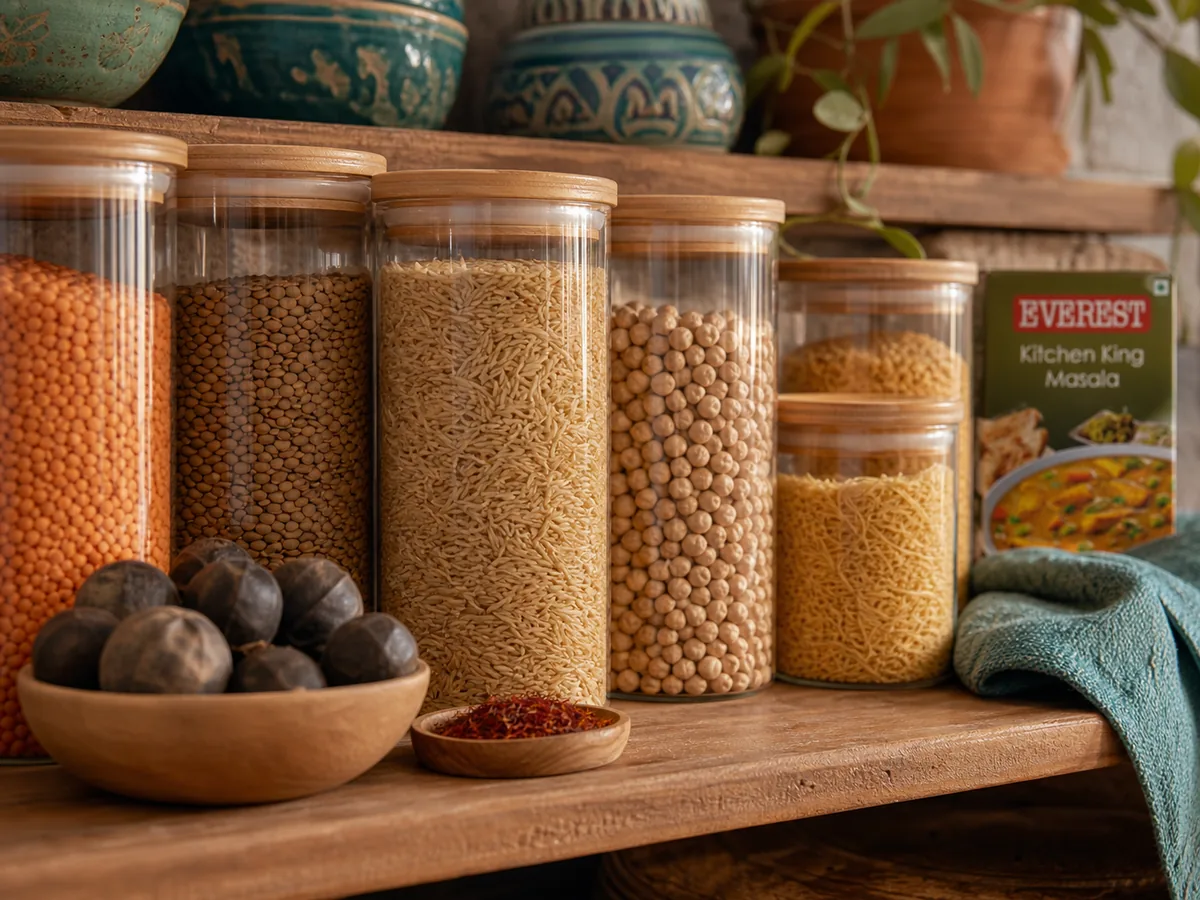
A working Ramadan pantry isn't large, it's deliberate. Ten or so core ingredients, bought once and stored well, cover the overwhelming majority of fast iftar recipes. Get these on the shelf in Sha'ban and the month's cooking turns into assembly rather than acquisition.
The non-negotiables: red lentils (the backbone of shorba, cooked soft in twenty minutes) and brown or green lentils (which hold their shape for salads and mujadara); basmati rice, the long-grain workhorse behind every machboos and pulao; chickpeas in both forms, dried for when you've planned ahead and tinned for when you haven't; vermicelli (sha'riyya) for toasting into rice and soups; bulgur for tabbouleh, kibbeh and quick pilafs; tinned chopped tomatoes as the base for countless sauces; a good ghee for blooming spices the Gulf way; and a decent extra-virgin olive oil for finishing and for Levantine dishes. Round it out with tinned white beans or tuna for five-minute protein, and you have a pantry that can produce dinner on the worst night of the month.
Buying smart in the UAE means knowing your channels. The baqala on the corner is unbeatable for a quick bag of rice or a tin of tomatoes at odd hours; the big hypermarkets reward bulk, with multi-kilo sacks of basmati and catering tins of chickpeas that bring the per-portion cost right down for a month of cooking. The range of regional and international brands on those shelves (the rice from the subcontinent, the pulses from across the Gulf and beyond, the spice blends and tinned goods) reaches you through a distribution network that keeps the staples reliably in stock, which is precisely what you're counting on when you cook from the cupboard. Bagason works across exactly these categories, connecting trusted %the pantry essentials, spices, snacks and hydration brands we carry% to Gulf shoppers so the lentils, rice and spice blends behind these recipes are there when you reach for them.
Dry goods vs tinned: what to keep in each
The dry-versus-tinned decision comes down to time and texture. Dried pulses are cheaper per kilo, keep almost indefinitely, and give you control over how soft they cook, but chickpeas and brown lentils need soaking and a longer simmer, which is planning you won't always have done. Tinned versions cost a little more and carry a softer, ready texture, but they turn a thirty-minute job into a five-minute one. The sensible move is to keep both: dried for the nights you've thought ahead, tinned as the insurance policy for the nights you haven't.
Red lentils are the exception that needs no tin, since they collapse into soup in twenty minutes straight from the bag. Rice, bulgur and vermicelli live entirely in the dry camp. Tomatoes, by contrast, are almost always better tinned for cooking: the fruit is picked and packed ripe, the flavour is consistent year-round, and a tin of good chopped tomatoes outperforms tired fresh ones for any sauce or shorba base. Keep a row of tins and a row of bags, and you're covered both ways.
Storage in a humid climate: keeping flour, spices and pulses fresh
Gulf humidity is the enemy of an open bag of anything. Flour, rice and pulses left in their paper sacks draw moisture, clump, and in the worst cases attract weevils, while ground spices left loose lose their punch within weeks. The fix is simple and worth the small upfront cost: decant everything into airtight glass or heavy plastic containers the day you bring it home. A tight seal keeps humidity and pests out and flavour in.
Store the containers somewhere cool and dark, away from the heat that radiates off the oven and out of direct sun, both of which accelerate rancidity in oils and nuts. Whole spices keep their aroma far longer than ground, so where you can, buy whole cumin and coriander and grind in small batches. Rotate your stock the way a shopkeeper does, oldest to the front, newest to the back, so nothing sits forgotten long enough to turn. A pantry treated this way stays Ramadan-ready not just for one month but right through the year.
The spice shelf that turns staples into dinner
Lentils and rice are blank canvases. What makes them taste of the Gulf, of the Levant, of home, is the spice shelf, and a surprisingly small set of jars does almost all the work. Build this core and you can take the same bag of basmati in a dozen directions.
The Emirati and wider Gulf foundation: dried lime (loomi or noomi basra), the sun-dried black limes that give Gulf cooking its haunting sour depth; saffron, the threads that colour and perfume rice and stews; baharat, the all-purpose warm blend of black pepper, cumin, coriander, cinnamon, clove and nutmeg that seasons meat and rice across the region; plus the workhorses of cumin, coriander, turmeric, cinnamon and cardamom. To that Gulf core, add the Levantine brightness of a jar of za'atar (the thyme, sumac, sesame and salt blend) and a jar of sumac on its own, deep red and lemon-sharp. With those on the shelf, almost no dish needs a special trip to the shop.
The single technique that makes twenty-minute food taste like it simmered for hours is blooming, or tempering, the spices. Heat ghee or oil in your pot, add your ground spices and let them sizzle for thirty to sixty seconds until they're fragrant and the raw edge cooks off, then build the dish on top. The heat unlocks the fat-soluble aromatic compounds in cumin, coriander and turmeric that water alone never releases, so a quick weeknight shorba ends up tasting layered and slow. It costs you under a minute and transforms everything that follows.
Loomi and saffron: the two ingredients that make food taste Emirati
If two ingredients separate authentic Gulf cooking from a generic spiced stew, they're dried lime and saffron. Loomi is unlike any other sour element in the kitchen. Made by boiling limes in salt water and drying them in the desert sun until they're hard, dark and hollow, they carry a fermented, almost smoky tartness that fresh citrus can't touch. Pierce a whole one and drop it into a machboos or shorba to release its sourness slowly through the simmer, or grind the powder to stir through at the end. It's the flavour that makes a dish taste unmistakably of the Emirates, the dried lime saffron iftar character that home cooks across the Gulf reach for without thinking.
Saffron, the world's most prized spice, does its work in tiny amounts. A pinch of threads steeped in a few tablespoons of warm water for ten minutes releases a golden colour and a floral, honeyed aroma that lifts rice from plain to celebratory. Stir the steeped liquid through machboos near the end of cooking, or drizzle it over the finished platter for those streaks of gold that signal a proper occasion. A single gram, stored airtight and dark, lasts a careful cook through the whole of Ramadan and well beyond.
Za'atar and sumac: instant brightness for fast dishes
Where loomi and saffron bring depth, za'atar and sumac bring instant lift, and on a fast night that's exactly what a plate needs. Za'atar is a finished seasoning in itself: a spoonful stirred into olive oil and brushed over flatbread, then warmed, gives you man'ousheh in minutes; scattered over labneh or roasted chickpeas, it turns a plain plate into something with herbal, nutty, tangy complexity. Among the most useful za'atar recipes for Ramadan are the no-cook ones, where the blend does the seasoning work with zero technique required.
Sumac is the secret to brightness without a wedge of lemon in hand. The deep-red powder, made from dried and ground sumac berries, tastes cleanly sour and a little fruity, and a pinch over a chickpea salad, a bowl of beans or a plate of grilled anything wakes the whole dish up. Both keep for months in sealed jars and need no cooking at all, which makes them the fastest flavour upgrades in the pantry, ready to rescue the simplest five-ingredient plate when the clock is against you.
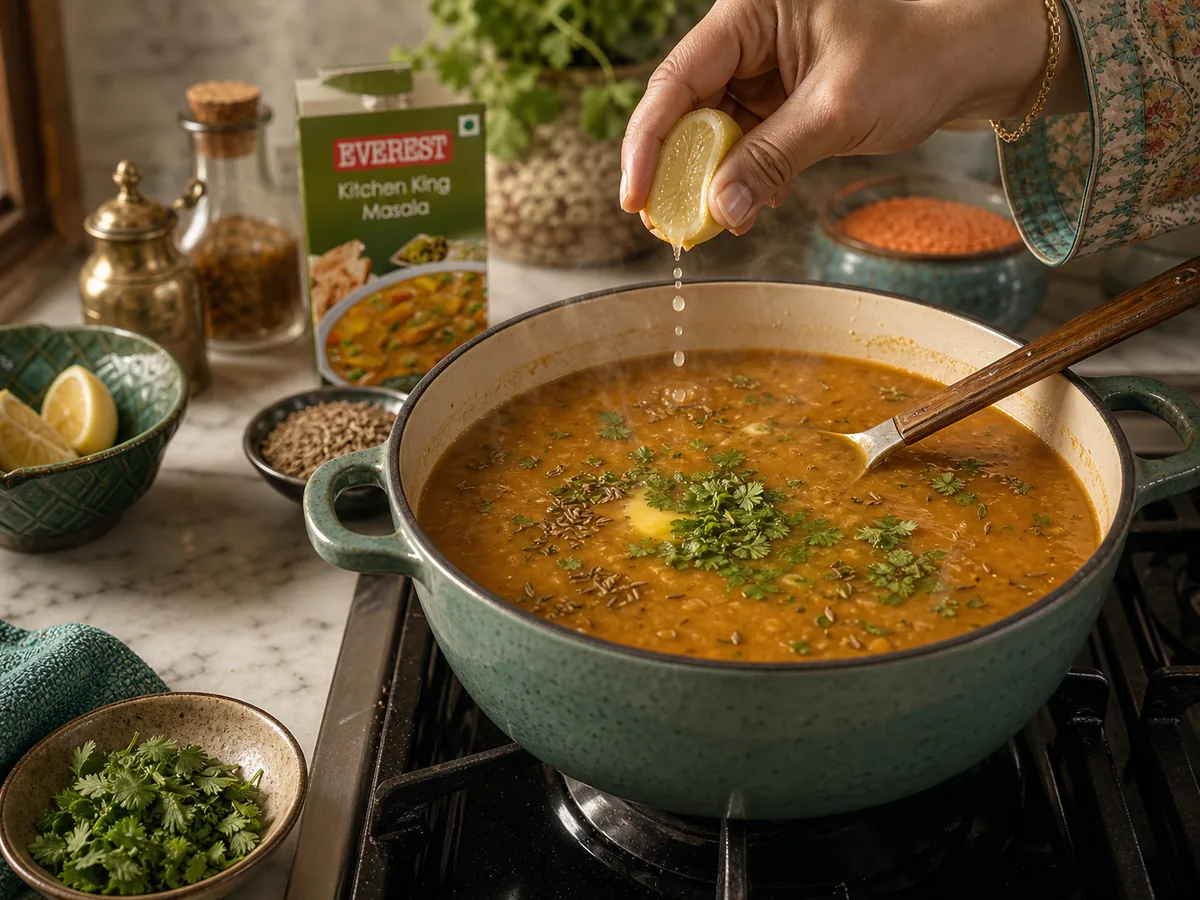
Lentil shorba: the 20-minute iftar workhorse
If one dish defines fast iftar across the Gulf, it's lentil shorba. Velvety, golden, and gentle on a fasting stomach, it's the soup that appears on tables from Kuwait to Muscat the moment maghrib sounds, and it costs only a few dirhams to make a pot that feeds the whole family. The lentil shorba recipe that follows is the base every cook should have by heart, because once you can make it without thinking, the rest of the month gets easier.
Step-by-step red lentil shorba
For a pot serving four to six, you'll need one cup of red lentils (rinsed until the water runs clear), one chopped onion, two cloves of garlic, one tablespoon of ghee or olive oil, a teaspoon of cumin, half a teaspoon of turmeric, a quarter teaspoon of cinnamon, around five cups of water or stock, salt to taste and a lemon for finishing.
- Heat the ghee in a pot over medium heat and soften the onion and garlic for three to four minutes until translucent and just starting to colour.
- Add the cumin, turmeric and cinnamon and bloom them in the fat for thirty seconds until fragrant, stirring so they don't catch. This is the step that gives the soup its slow-cooked depth.
- Tip in the rinsed lentils and stir to coat them in the spiced fat, then pour in the water or stock.
- Bring to a boil, then lower to a simmer and cook for fifteen to eighteen minutes, until the lentils have collapsed completely and the soup is thick and smooth.
- Blend until velvety with a stick blender (or leave it rustic if you prefer texture), season generously with salt, and finish with a squeeze of lemon to brighten it.
Serve hot with bread or croutons, a dusting of cumin on top, and the dates already eaten so the table is ready for the main course. Start to finish, you're looking at twenty minutes, most of it hands-off while you set the table or pray.
Three variations from one base, and a nutrition note
One base, three different soups. Stir a couple of handfuls of chopped spinach or chard into the simmering pot in the last few minutes for an iron-rich, greener bowl. Swirl a few tablespoons of laban or plain yoghurt through each serving for a tangy, creamier finish that doubles down on the rehydrating salt. Or top with crisp fried vermicelli and golden fried onions for crunch and the toasty, oniony depth that makes a humble soup feel special. Each variation costs almost nothing and keeps the workhorse from ever feeling repetitive across a long month.
The nutrition is the reason shorba comes first. A bowl of red lentil soup delivers roughly 18 grams of plant protein and a generous dose of fibre per modest serving, alongside iron, folate and potassium. After a fourteen-hour fast, that combination is close to ideal: the protein and fibre slow digestion so energy releases steadily rather than spiking, the warm liquid rehydrates gently, and the salt helps restore the electrolytes a long fast drains. It's the dish that feeds a fasting body kindly and feeds a household cheaply, which is exactly why it has earned its place at the centre of the Ramadan table. As Bagason's work across pantry essentials, spices and hydration shows in %how we keep shelves stocked across the Gulf%, keeping these everyday staples reliably on shelf is what lets cooks across the Gulf lean on dishes this simple, night after night.
<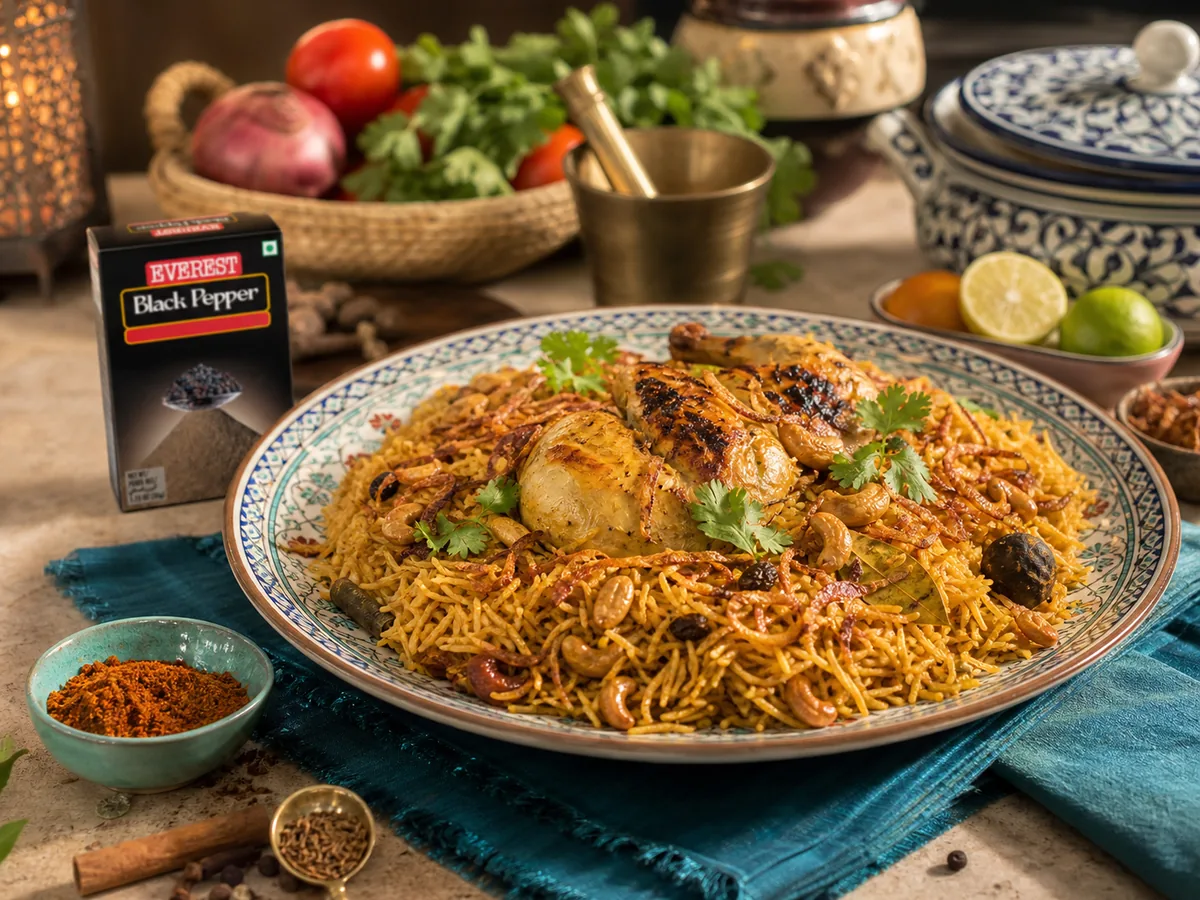
Quick chicken machboos, step by step
- Pat 6 bone-in chicken thighs dry and season with salt. In a wide pot, brown them in 2 tablespoons ghee until golden, then set aside. Do not crowd the pot.
- In the same fat, soften 2 sliced onions until deep gold. Stir in 1 tablespoon baharat, 1 teaspoon turmeric, 4 cardamom pods, a cinnamon stick and 2 pierced dried limes. Bloom for a minute.
- Add 3 chopped tomatoes (or half a tin) and cook down for 3 minutes into a thick, jammy base.
- Return the chicken, pour in 700ml hot water, cover and simmer 15 minutes until the chicken is nearly done.
- Meanwhile soak a pinch of saffron threads in 2 tablespoons warm water. Stir 350g rinsed basmati into the pot, pour the saffron water over, season, cover tightly and cook on low for 12 to 15 minutes until the rice is fluffy and the liquid absorbed.
- Rest off the heat for 5 minutes, then fork through and scatter with fried onion and coriander.
On nights with even less in the tank, two faster cousins use the same flavour logic. A chickpea and tomato pulao skips the meat entirely: bloom the spices, add tinned chickpeas and tomato, stir in rice and water, and let it steam. An egg-and-tomato skillet, somewhere between shakshuka and a quick fry-up, goes straight over leftover rice for protein in under ten minutes.
Vegetarian one-pot: chickpea pulao with dried lime
Drain and rinse two tins of chickpeas. Bloom baharat, cumin and a pierced loomi in ghee with a sliced onion, fold in the chickpeas and a chopped tomato, then add 300g rinsed basmati and 550ml water with a pinch of saffron. Cover and steam 15 minutes. The dried lime perfumes the whole pot with that sour-citrus note that makes it taste unmistakably of the Gulf, and the chickpeas bring enough protein to make it a full meal. A bowl of laban or a cucumber-tomato salad on the side, and you have fed four for the price of a single hypermarket ready-meal. %our distribution coverage across the UAE and GCC%
Five-ingredient iftar plates for the busiest nights
Some evenings the fast ends and there is simply no appetite for a project. The school run ran late, the traffic on Sheikh Zayed Road was unkind, and maghrib is twenty minutes away. These are the nights five-ingredient cooking earns its keep. Fewer ingredients means less chopping, fewer pans, and a plate on the table before the adhan finishes echoing across the neighbourhood. Each of these leans on pantry seasoning you already have, so the count covers the components, not the salt, oil and spice.
Four no-fuss plates under 15 minutes
- Za'atar labneh toast. Spread thick labneh on warm flatbread or toasted khubz, drizzle with olive oil, shower with za'atar and a few sliced cucumbers or tomatoes. The herby, tangy hit of za'atar against cool labneh is a Levantine breakfast that doubles as a fast iftar starter.
- Chickpea and sumac salad. Toss a tin of drained chickpeas with diced tomato, chopped parsley, lemon, olive oil and a heavy pinch of sumac. Five minutes, zero cooking, and a bright, protein-rich plate that holds in the fridge if guests arrive late.
- Tuna and white bean bowl. Fold a tin of tuna through a tin of cannellini or chickpeas with red onion, lemon and parsley. It needs no heat, delivers protein and fibre in one bowl, and tastes far better than the sum of four tins suggests.
- Tomato-egg skillet. Fry sliced onion, add chopped tomato until jammy, season with cumin and salt, then crack in eggs and cover until just set. Scoop up with bread. This is the kind of thing every Gulf kitchen falls back on, and it never disappoints.
Smart shortcuts: rotisserie chicken, tinned pulses and frozen herbs
There is no shame in a head start. A hypermarket rotisserie chicken shredded over rice becomes a near-instant machboos when you have a pot of spiced rice already going. Tinned chickpeas and beans save the soak-and-boil hours that dried pulses demand, and they are every bit as nourishing once rinsed. Frozen chopped coriander, parsley and dill keep their colour and most of their fragrance, so you always have a green finish on hand even when the fresh bunch wilted three days into the week. Keep a jar of crispy fried onion in the cupboard and almost any plain plate of rice or lentils gains instant texture and a savoury, caramelised top note.
Feeding a crowd: scaling pantry dishes for majlis and guests
Ramadan is the season of the open table. A cousin drops by, a neighbour is invited, the majlis fills, and suddenly you are cooking for twenty rather than four. The beauty of pantry dishes is that they scale almost effortlessly. A shorba simply needs a bigger pot and more water and lentils in the same proportion. A tray of spiced roasted chickpeas multiplies with nothing more than a larger oven tray. Machboos is the one dish that needs respect at scale, because rice cooked in too deep a layer steams unevenly, so split a very large batch across two wide pots rather than one towering one.
A make-ahead timeline for hosting iftar
The trick to a calm host is doing the heavy lifting before the fast even nears its end. The morning of, soak your saffron, measure your rice and chop your onions so they are ready in bowls. By mid-afternoon, have the shorba fully cooked and resting in its pot, ready to reheat in five minutes, since soup only improves sitting. An hour before maghrib, get the machboos to the point where chicken and base are done and the rice is stirred in, then leave it covered on the lowest heat to steam and rest. Roast the chickpeas in the last half hour so they hit the table crisp. Lay out dates, water and laban first, so the moment the adhan sounds, guests break their fast while you bring the hot dishes through. That sequencing lets the cook pray and breathe rather than sprint between pans.
Portioning rice, pulses and protein per guest
For planning, reckon on roughly 75 to 90g of uncooked rice per adult, which means about 2kg of basmati feeds twenty-five with second helpings. Allow one to one-and-a-half pieces of bone-in chicken per person, and around 60g of dried lentils each for soup, so 1.5kg of red lentils covers a large gathering. A balanced spread does not need ten dishes. One soup, one rice, one protein and one bright salad, with dates and fruit alongside, reads as generous and abundant without burying the cook under a mountain of washing up. Restraint on the table is its own kind of hospitality.
Nourishment that survives a 14-hour fast
After fourteen hours without food or water in the Gulf's heat, what you eat at iftar matters as much as how fast you can make it. The body is mildly dehydrated, blood sugar is low, and the digestive system has been idle all day. Overloading it with a wall of fried food and sugary juice the moment the fast breaks is the surest route to the sluggish, bloated heaviness that ruins the evening prayers and the rest of the night. The gentler, smarter path is to ease in.
Hydration, electrolytes and why soup comes first
Break the fast on dates and water, give it a few minutes, then take soup before anything heavier. The shorba does double duty here: it rehydrates with warm liquid the body absorbs readily, and a properly salted soup begins replacing the sodium and other electrolytes lost across a long fasting day in a hot climate. Pulses bring potassium and magnesium into the same bowl. Through the rest of the evening, keep sipping water rather than drowning the meal in sweet drinks, and lean on laban, which restores fluid and provides a little protein and calcium without the sugar load of bottled juice. Proper hydration across the night is what carries you to suhoor and through the next day's fast.
Balancing suhoor and iftar across the month
Iftar refuels, but suhoor is what sustains the long daylight fast, so the two meals work as a pair. At suhoor, slow-release carbohydrates like oats, wholegrain bread or leftover rice with a protein such as eggs, labneh or beans keep hunger at bay far longer than sugary cereal. Cooking for a whole household means reading the table: lighter, softer dishes and plenty of soup for elders, more iron and protein for active teenagers who trained or studied all day, and a watchful eye on the salt and sugar that creep up across thirty days of celebration. Pairing pulses with whole grains across both meals gives everyone complete protein on a budget, which is exactly what pantry cooking does best. %work with us to bring your brand to Ramadan tables%
Stocking your Ramadan kitchen: from baqala shelf to your pantry
Every velvety shorba and fragrant machboos begins long before the stove, at the moment a bag of lentils, a sack of basmati or a box of khalas dates lands on a UAE shelf. Ramadan is the single busiest grocery month in the country, when demand for rice, pulses, dates, dried lime and spice blends surges and any gap on the shelf is felt in kitchens across every emirate. Keeping those staples reliably in stock through the rush is a quiet feat of logistics that most shoppers never see, stretching from regional growers and international mills through importers and distribution networks to the hypermarket aisle and the corner baqala.
This is where Bagason works, connecting trusted regional and international brands to Gulf shoppers across pantry essentials, spices, snacks and hydration. The lentils for your shorba, the basmati for your machboos, the baharat and loomi on your spice shelf, the dates that break your fast and the laban that cools the table all reach the shelf through distribution that keeps them dependably available, especially when the whole country is cooking at once. The recipes in this guide work precisely because the ingredients behind them are there when you need them.
Building a one-trip Ramadan shopping list
A single well-planned shop can carry a household through most of the month. Buy your dry goods in bulk early: basmati rice, red and brown lentils, dried and tinned chickpeas, vermicelli and bulgur. Stock the tinned backbone of tomatoes, tuna and pulses for the busiest nights. Refresh the spice shelf with baharat, cumin, turmeric, dried lime, saffron, za'atar and sumac. Add the perishable anchors you will replenish weekly: dates, laban, labneh, onions, tomatoes, lemons, fresh and frozen herbs. With that list in the trolley, the daily hypermarket dash disappears and dinner is always within reach of the cupboard.
What to keep on standby for unexpected guests
Ramadan hospitality means someone will arrive unannounced, and a stocked pantry turns that from a panic into a pleasure. Keep two tins of chickpeas, a jar of za'atar, a tub of labneh and a bag of frozen flatbread on permanent standby, and you can put a respectable spread together in fifteen minutes. A reserve bag of basmati and a few extra chicken pieces in the freezer mean a quick machboos is always possible. The household that keeps a deep, well-rotated pantry never has to choose between rest and generosity.
Make it your own: adapting fast iftar to your kitchen
None of these recipes is fixed in stone. The point of cooking from staples is flexibility, bending each dish to the people at your table, the time on the clock and the equipment on the counter. A few thoughtful swaps make every recipe here work for almost any household across the UAE.
Equipment that speeds things up
The right tool shaves real minutes off a Ramadan evening. A pressure cooker or electric multi-cooker turns dried chickpeas tender in well under an hour and brings machboos together in a single sealed vessel, which matters when maghrib is closing in. An air fryer crisps spiced chickpeas, samosas or kibbeh with a fraction of the oil and none of the splatter, freeing the stovetop for soup and rice. A stick blender is the cheapest upgrade of all, taking a pot of lentils to restaurant silk in seconds. For dietary needs, the swaps are simple: use rice, bulgur-free grains or buckwheat for gluten-free tables, finish soups with olive oil or coconut laban instead of dairy, and dial the baharat right back for children who prefer their food gentle.
A repeatable weekly iftar plan
The way to stop Ramadan cooking from becoming a nightly grind is rhythm rather than novelty. Keep one soup base on rotation, a pot of red lentil shorba you can dress three different ways across the week. Anchor the table with two reliable one-pot mains, the quick machboos and a chickpea pulao, alternating so neither becomes tiring. Hold one five-ingredient plate in reserve, the za'atar labneh toast or tuna-and-bean bowl, for the hardest nights when nothing else will happen. Build the week around those few dishes and the cooking becomes muscle memory: a pot, a handful of staples, a bloom of spice in ghee, and a nourishing iftar on the table night after night, with energy left over for what the month is really about.
]]><![CDATA[Frequently Asked Questions
What is the fastest iftar I can make from pantry staples in the UAE?
A red lentil shorba is the quickest genuinely nourishing option, ready in about 20 minutes from rinse to bowl, since red lentils need no soaking. For something even faster, a tuna-and-white-bean bowl or za'atar labneh toast comes together in under ten minutes using only tinned pulses, labneh and pantry seasoning you already keep on the shelf.
Where can I buy dried lime (loomi) and saffron in the UAE?
Both are stocked widely across UAE hypermarkets like Lulu, Carrefour and Union Coop, and almost every neighbourhood baqala carries loomi loose or bagged. Spice souks in Deira and Sharjah sell them in bulk at good value. Buy saffron in small quantities so it stays fragrant, and store loomi in an airtight jar away from Gulf humidity to keep its sour-citrus punch.
How do I break my fast properly before eating a full iftar?
Follow the Sunnah of breaking the fast on dates and water first. Khalas, fard or medjool dates restore blood sugar gently, and water begins rehydrating the body after a long day. Wait a few minutes, take soup before anything heavier, then move to the rice and protein. Easing in this way avoids the bloated heaviness that comes from rushing straight to fried food.
Can I make these fast iftar recipes ahead for the whole week?
Yes. Shorba keeps three to four days refrigerated and reheats in minutes, often tasting better the next day. Spice bases and chopped onions can be prepped in the morning, and soaked saffron holds for hours. Tinned pulses and frozen herbs make weeknight cooking near-instant, which suits Ramadan meal prep in busy UAE households juggling work and school until late afternoon.
What should I keep stocked for unexpected iftar guests?
Keep two tins of chickpeas, a jar of za'atar, a tub of labneh, frozen flatbread, basmati rice and a few chicken pieces in the freezer. With those on standby you can assemble a chickpea-sumac salad, labneh toast and a quick machboos in about fifteen minutes. A deep, well-rotated pantry means Ramadan hospitality never catches you unprepared.
How many people does a pot of red lentil shorba feed?
A standard batch using 250g of red lentils and around 1.2 litres of water serves four to six as a starter. For a majlis or larger gathering, scale up in the same proportion: roughly 60g of dried lentils per guest, so a 1.5kg bag of red lentils comfortably feeds a crowd of twenty-five with second helpings, all for only a few dirhams.
]]>