Walk into any Lulu or Carrefour in Dubai on a Friday afternoon and the trolleys tell the whole story. One shopper reaches for a kilo of basmati and a bag of toor dal. Beside them, someone weighs out chickpeas and a tub of tahini for the weekend mezze. A third has a bottle of light soy sauce, a jar of gochujang and a sleeve of rice noodles balanced against a netting of limes. They are all cooking for the same Friday table, in the same building, in the same heat, and their pantries overlap far more than any of them might guess. That overlap is the quiet superpower of cooking in the Emirates, and learning to use it turns one well-stocked cupboard into a passport for the whole world.
The UAE has always been a place where ingredients arrive from everywhere and somehow find a home. Long before air freight and cold chains, dhows carried cardamom, dried limes and pepper across the Gulf, and traders in the souks of Dubai and Sharjah stocked spices that had travelled from Kerala, Zanzibar and Persia. Today that same instinct plays out across millions of households, where Indian, Pakistani, Filipino, Emirati, Lebanese, Syrian, Egyptian, Chinese and Korean cooks share the same hypermarket aisle and the same corner baqala. The phrase world foods UAE is not a marketing slogan here. It is simply what Tuesday dinner looks like.
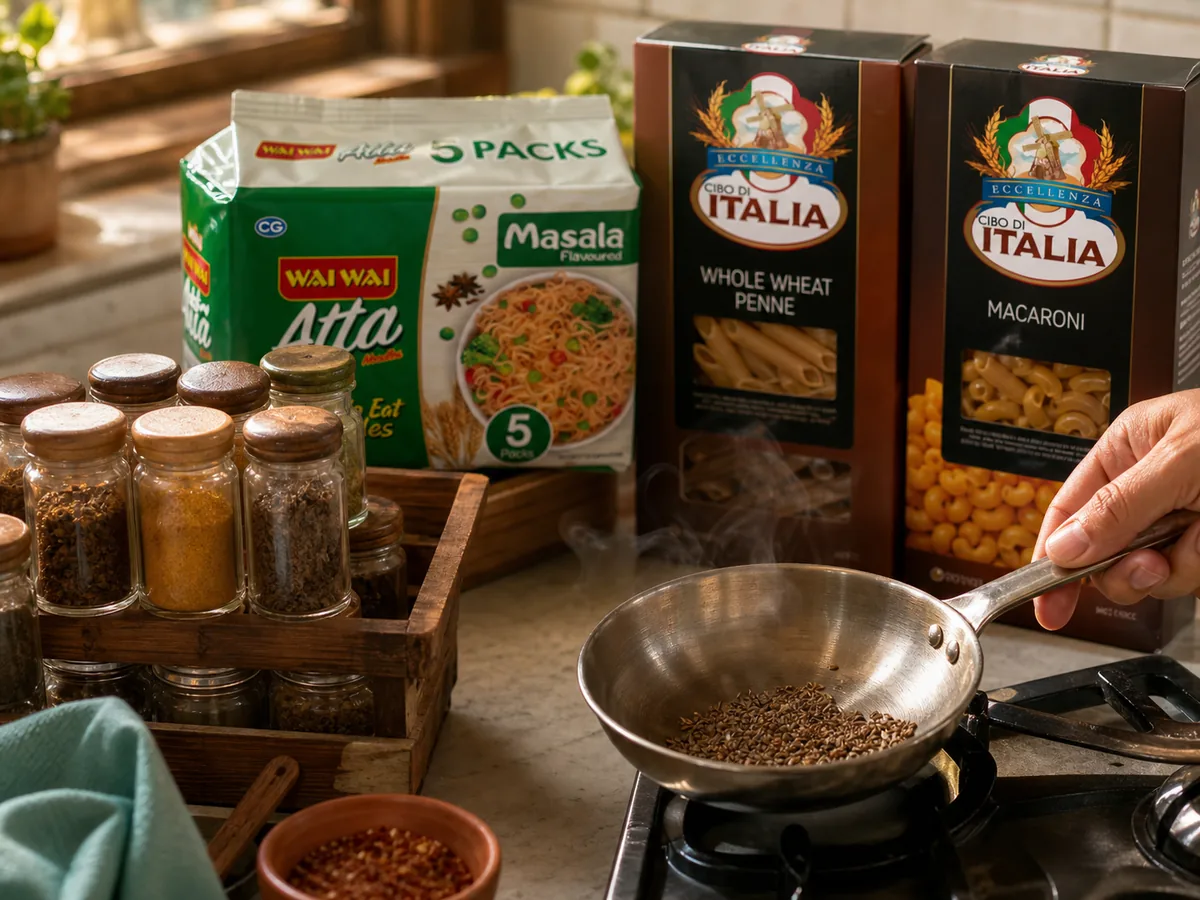
Why one UAE kitchen now cooks the whole world
The Emirates is a genuine crossroads, and the kitchen is where the crossing happens most often. Roughly nine in ten residents come from somewhere else, bringing recipes from more than 190 nationalities, and the grocery shelf has reorganised itself to feed all of them at once. A single supermarket run that once meant choosing between cuisines now means stocking for several. Hyderabadi garam masala sits two shelves from Lebanese seven-spice baharat, which sits across the aisle from Korean gochujang and Thai fish sauce. International groceries in the UAE are not tucked into a specialist corner; they are the main event.
What has shifted by 2026 is not just availability but habit. Home cooks who grew up with one culinary grammar now borrow fluently from others. A Pakistani family in Sharjah keeps a tub of miso for quick weeknight soups. A British expat in Abu Dhabi learns to bloom cumin seeds in hot ghee the way their Keralan neighbour does. An Emirati household that has cooked machboos for generations adds a Levantine fattoush to the spread because the kids asked for it. This is multicultural cooking in the UAE in its most natural form: not fusion for novelty's sake, but the ordinary result of living shoulder to shoulder with people who cook differently and eat together often.
The practical consequence is that Lebanese tahini, Korean gochujang and Hyderabadi garam masala genuinely do end up on one shelf in one cupboard. For the cook, that is liberating once you stop thinking of them as belonging to separate worlds. Tahini is a sesame paste; sesame runs through East Asian cooking too. Gochujang is a fermented chilli paste; fermented chilli appears in South Asian pickles and Levantine harissa-adjacent blends. Garam masala is a warm-spice blend; warm spices anchor Arabic coffee, Persian stews and Indian curries alike. The boundaries are real and worth respecting, but the ingredients themselves were never strangers.
This is where distribution does the unglamorous, essential work. Authentic staples only reach the everyday pantry if someone reliably moves them from origin to shelf, keeps them fresh through a brutal climate, and gets them to both the giant hypermarket and the small neighbourhood baqala. Bagason sits in exactly that gap, connecting global brands to Gulf shoppers so that the tahini is properly stone-ground, the basmati is genuinely aged, and the soy sauce is the brand a Cantonese grandmother would recognise. You can see the breadth of what that looks like across the %the range of brands and categories we bring to Gulf shelves% the company carries, spanning pantry essentials, spices, snacks and hydration, and the way that range reaches shelves is itself a story of %how we move trusted food brands across the UAE and wider GCC% across the Gulf. The point is not to sell you a brand; it is that a thoughtfully stocked, well-distributed pantry is what makes cooking across cultures possible at all.
The shared backbone: ingredients that cross every cuisine
Before the spices and sauces that make each cuisine distinct, there is a backbone that almost every kitchen on earth shares. Learn it once and you have the foundation for South Asian, Levantine and East Asian cooking simultaneously. This is the most reassuring thing a new arrival can understand: you are not building three separate pantries. You are building one, with a handful of regional flourishes on top.
Aromatics every culture leans on
Garlic, ginger, onion and chilli are the quiet workhorses of the global kitchen. In a South Asian tarka, you fry onions to a deep brown, then add ginger-garlic paste and green chilli to build the base of a curry. In a Levantine pan, a softer sweat of onion and garlic in olive oil starts a lentil soup or a tomato-based stew. In an East Asian wok, a quick blast of garlic, ginger and chilli in hot oil perfumes the whole dish in under a minute. Same four ingredients, three completely different results, governed only by the fat you use, the heat you apply and how long you let them go.
The lesson for a multicultural kitchen is to always keep these four to hand and learn their behaviour rather than memorising recipes. A knob of ginger the size of your thumb, a head of garlic, a couple of onions and a few green or red chillies will start dinner in almost any tradition. In the UAE's climate, store onions and garlic somewhere cool, dry and dark with airflow, never in the fridge where they sweat and sprout. Ginger keeps best wrapped and refrigerated, or peeled and frozen in a bag so you can grate it straight from frozen.
Fats and acids that travel
Every cuisine is, at heart, a negotiation between fat and acid, and the choices made there are what give a dish its passport. On the fat side, keep a neutral oil for high-heat cooking, sunflower or a light vegetable oil that won't smoke or impose flavour. Add a good extra-virgin olive oil for Levantine dressings and finishing, ghee for the deep nuttiness of Indian and Mughlai cooking, and toasted sesame oil as a finishing drizzle for East Asian dishes. None of these is exotic, and all earn their shelf space across multiple cuisines: olive oil dresses a tabbouleh and also makes a fine base for a quick pasta, ghee enriches a dal and also fries a perfect egg.
Acid is where regions announce themselves most clearly. Fresh lime cuts through the richness of a Thai curry and brightens a bowl of dal in equal measure. Tamarind brings a sour, fruity depth to South Indian sambar and Pad Thai alike. Sumac, the deep-red dried berry of the Levant, scatters a lemony tang over salads and grilled meats. Rice vinegar gives a clean, mellow sharpness to dressings and quick pickles across East Asia. Pomegranate molasses, thick and tangy-sweet, defines Syrian and Lebanese cooking. Stocking three or four of these means you can correct and balance almost any dish, and balancing acid is the single skill that most reliably makes home cooking taste finished rather than flat.
The umami layer
Umami, the savoury depth that makes you go back for another bite, is the layer most home cooks under-use. Every cuisine has its switches for it, and they are surprisingly interchangeable once you understand what each one does. Salt is the baseline, but the interesting players are the fermented and concentrated ones. Fish sauce delivers a funky, salty backbone to Thai, Vietnamese and Filipino dishes, and a few drops will deepen almost any savoury sauce without announcing themselves. Soy sauce, light for seasoning and dark for colour and body, anchors Chinese and broader East Asian cooking. Fermented bean and chilli pastes such as miso and gochujang carry both salt and a slow-building complexity.
The Gulf has its own umami signature, and it is one of the most distinctive in the world: dried limes, known as loomi or black lime, which are limes boiled in brine and sun-dried until they turn dark and hollow. Dropped whole or ground into a stew, they lend Emirati and Iraqi dishes a sour, almost smoky, fermented depth that nothing else replicates. Keeping salt, a bottle of fish sauce, light and dark soy, one fermented paste and a bag of dried limes turns your pantry into a savouriness console you can dial in any direction. Understanding this layer is what lets a cook take a dish that tastes thin and make it taste deep, regardless of which cuisine they are working in.
Spices: the single rack that swings three ways
If aromatics, fats and acids are the backbone, spices are the personality. The remarkable thing is how few you actually need to cook convincingly across continents. A focused rack of about a dozen spices, chosen for their reach rather than their novelty, will unlock dozens of dishes. The trap is buying twenty single-use jars that fade in the cupboard; the smarter move is buying a versatile core and learning to combine it.
Build the core 12
Start with these twelve and you can cook far more than you would expect. Cumin and coriander are the foundational duo of Indian, Middle Eastern and Mexican cooking, warm and earthy together. Turmeric brings colour, a gentle bitterness and its well-documented anti-inflammatory compound curcumin. Cardamom, green and fragrant, perfumes both a biryani and a pot of Arabic coffee. Cinnamon bridges sweet and savoury from a Levantine rice to a Sri Lankan curry. Black pepper is universal. Paprika, sweet or smoked, adds colour and mellow warmth. Sumac and za'atar carry the Levant in a single shake. Star anise gives liquorice depth to Chinese braises and Vietnamese pho. White pepper brings a cleaner, hotter note for East Asian soups where black specks would look wrong. Dried red chilli, whole or flaked, supplies heat on demand.
From those twelve, the blends fall out almost on their own. Cumin, coriander, turmeric and chilli are the heart of a curry powder. Cumin, coriander, paprika, cinnamon and pepper lean towards a Levantine baharat. Star anise, cinnamon and pepper edge towards a Chinese five-spice character. You are not memorising recipes so much as learning a palette and mixing on it. When you do want to buy spices online in the UAE rather than scoop them loose from a souk, the advantage is sealed freshness and traceable sourcing, which matters enormously in this climate where potency fades fast.
Whole vs ground and when to toast
Whole spices keep their oils locked inside their husks and stay potent for a year or more; ground spices begin losing aroma within weeks of milling. The practical rule is to buy whole what you use often, cumin, coriander, cardamom, peppercorns, and grind small batches in a cheap dedicated coffee grinder or a mortar. The difference between freshly ground cumin and a tired jar that has sat through a Dubai summer is not subtle; it is the difference between a dish that smells alive and one that smells of dust.
Technique is what releases all that stored flavour, and each cuisine has its own method. The South Asian tarka, or tempering, is the most dramatic: you heat ghee or oil until shimmering, drop in whole cumin seeds, mustard seeds, dried chilli and curry leaves, and let them crackle and bloom for a few seconds before pouring the sizzling, infused fat over a finished dal. It transforms a pot of plain lentils in ten seconds. Levantine and Arab cooks dry-toast whole spices in a bare pan before grinding them into baharat, coaxing out a deeper, rounder aroma. East Asian cooks tend to infuse aromatics and spices like star anise directly into oil or braising liquid, letting them steep rather than fry hard. The same coriander seed behaves three different ways depending on which of these you choose, and mastering all three is genuinely just a matter of a few practice dinners.
South Asian staples and the dishes they unlock
For a huge share of UAE households, South Asian pantry staples are the everyday foundation, and they are among the most economical, nourishing and versatile ingredients you can stock. A cupboard built around lentils, rice and a couple of flours feeds an Indian, Pakistani or Sri Lankan family well, and it scales beautifully for the big-batch cooking that Ramadan and large gatherings demand.
Lentils, rice and flours
Three lentils cover most of the territory. Toor dal, the split pigeon pea, is the golden, mild base of everyday South Indian and Gujarati cooking. Masoor dal, red and quick, breaks down into a soft, comforting dal in twenty minutes flat, ideal for a weeknight. Chana dal, the split brown chickpea, holds its shape and brings a nuttier bite to richer dishes. On the rice side, true basmati, aged for a year or more so the grains cook long, separate and fragrant, is the celebration grain, while sturdier sella (parboiled) basmati forgives a heavy hand and stays fluffy in a big biryani pot. For flours, atta (finely milled wholewheat) makes the daily roti and chapati, and besan (gram or chickpea flour) thickens curries, batters pakoras and binds without gluten.
That short list, three dals, two rices, two flours, is a genuinely complete everyday kitchen for millions of Gulf homes, and most of it stores well if you protect it from humidity and pantry pests, which we will come to. The economics are striking: a kilo of lentils costs a fraction of a kilo of meat and delivers serious nutrition, which is why these staples anchor so many household budgets across the Emirates.
A weeknight dal and a weekend biryani
A 30-minute tarka dal is the dish that proves the whole system. Rinse a cup of masoor dal until the water runs clear, then simmer it with about three cups of water, a teaspoon of turmeric and a little salt until soft and collapsing, roughly 20 minutes. While it cooks, make the tarka: heat two tablespoons of ghee, crackle a teaspoon of cumin seeds, add sliced garlic, a chopped green chilli and a pinch of dried red chilli, let it all turn fragrant and golden, then pour the sizzling fat over the dal. Finish with a squeeze of lime and fresh coriander. That single technique, plain lentils plus a tempered finish, is the engine behind dozens of variations.
A weekend biryani is the same pantry working harder. The ratios are what matter: cook your sella basmati to about 70 percent done in heavily salted, whole-spice-infused water (cardamom, cinnamon, bay, star anise), then layer it over a marinated, spiced meat or vegetable base, roughly one part rice to one part of a well-seasoned base by volume, seal the pot and let it steam (the dum) on the lowest heat for 25 to 30 minutes. The garam masala you blended from your core rack does the heavy lifting on aroma. Get the parcooked-rice ratio and the gentle final steam right and the rest is detail.
Nutritionally, lentils are one of the smartest things in any pantry. They deliver roughly 18 grams of protein and around 15 grams of fibre per cooked cup, plus iron and folate, at a fraction of the cost of animal protein. That combination of affordable plant protein, slow-release energy and satiety is exactly what sustains families through long Ramadan fasts, where a lentil-rich iftar or suhoor keeps energy steady far better than refined carbohydrates alone.
<
Whole vs ground and when to toast
Heat is what releases a spice's oils, and the method changes by cuisine. For dal, you make a tarka: hot ghee or oil, then whole cumin seeds, mustard seeds and dried chilli sizzled for thirty seconds until fragrant, poured over the cooked lentils at the end. For a baharat or garam masala, dry-toast the whole spices in a bare pan until they smell warm and nutty, then grind. For an East Asian base, you infuse: star anise and ginger steeped in warm oil before the aromatics go in. Whole spices keep their potency for a year or more; ground spices fade in months, faster still in Gulf heat. Buying whole and grinding small batches in a cheap blade grinder is the single biggest upgrade most home cooks can make. Bagason's spice range is built for that, sourced and turned over quickly so what reaches your jar still has its oils intact rather than sitting flat after a long shelf life.
South Asian staples and the dishes they unlock
For Indian, Pakistani and Sri Lankan kitchens, the foundation is grains and pulses, and they are among the best-value, most nourishing staples you can keep.
Lentils, rice and flours
Three lentils cover most of the repertoire: toor (split pigeon peas) for South Indian sambar and everyday dal, masoor (red lentils) for a fast, creamy dal that cooks in twenty minutes, and chana dal (split chickpeas) for heartier dishes and tempering. For rice, keep aged basmati for biryani and pulao, and sella (parboiled) basmati when you want grains that stay separate under a heavy sauce. Two flours round it out: atta (wholemeal) for roti and chapati, and besan (gram flour) for pakora batter, kadhi and binding. Stored in airtight containers away from the heat, these are the cheapest way to cook well for a family all week.
A weeknight dal and a weekend biryani
A 30-minute tarka dal is the dish to learn first. Rinse a cup of masoor dal, simmer with water, a little turmeric and salt until soft, around twenty minutes. While it cooks, heat ghee, sizzle cumin seeds, sliced garlic, a chopped onion and a green chilli until golden, add a chopped tomato and a pinch of garam masala, then pour this tarka over the dal. Finish with coriander. Serve with rice or roti and you have fed four for the price of a coffee. Biryani is the weekend project, and the ratio matters more than the mystique: cook the rice to about 70 percent done, layer it over marinated meat (yoghurt, ginger-garlic, biryani masala), use roughly equal volumes of rice and meat, seal the pot and steam on low for thirty to forty minutes. The dum, that final slow steam, is where the layers marry.
Nutritionally, lentils earn their place beyond cost. They deliver plant protein, fibre and iron in one cheap, shelf-stable package, which is exactly what you want for family cooking and for Ramadan, when a bowl of dal at iftar restores far more than it costs. %the markets and regions our distribution reaches% shows the breadth of pantry staples that make this kind of everyday cooking workable across the Gulf.
Levantine and Arab essentials for mezze and beyond
Levantine food is having a moment in Gulf kitchens, and it is easy to see why: it is plant-forward, generous, built for sharing, and most of it comes from a short, affordable shopping list.
The mezze five
Tahini, chickpeas, bulgur, freekeh and pomegranate molasses, plus a genuinely good olive oil, are the Levantine core. Tie them together with za'atar and sumac and you can build a table. Tahini is the workhorse, lending creaminess to dips and a nutty edge to dressings; chickpeas (dried and soaked, or quality tinned) anchor hummus and stews; bulgur is the base of tabbouleh and kibbeh; freekeh, smoked young wheat, brings a savoury depth to pilafs and soups that has made it a 2026 favourite. Pomegranate molasses adds the sweet-sour note that makes muhammara and salad dressings sing.
From hummus to a full spread
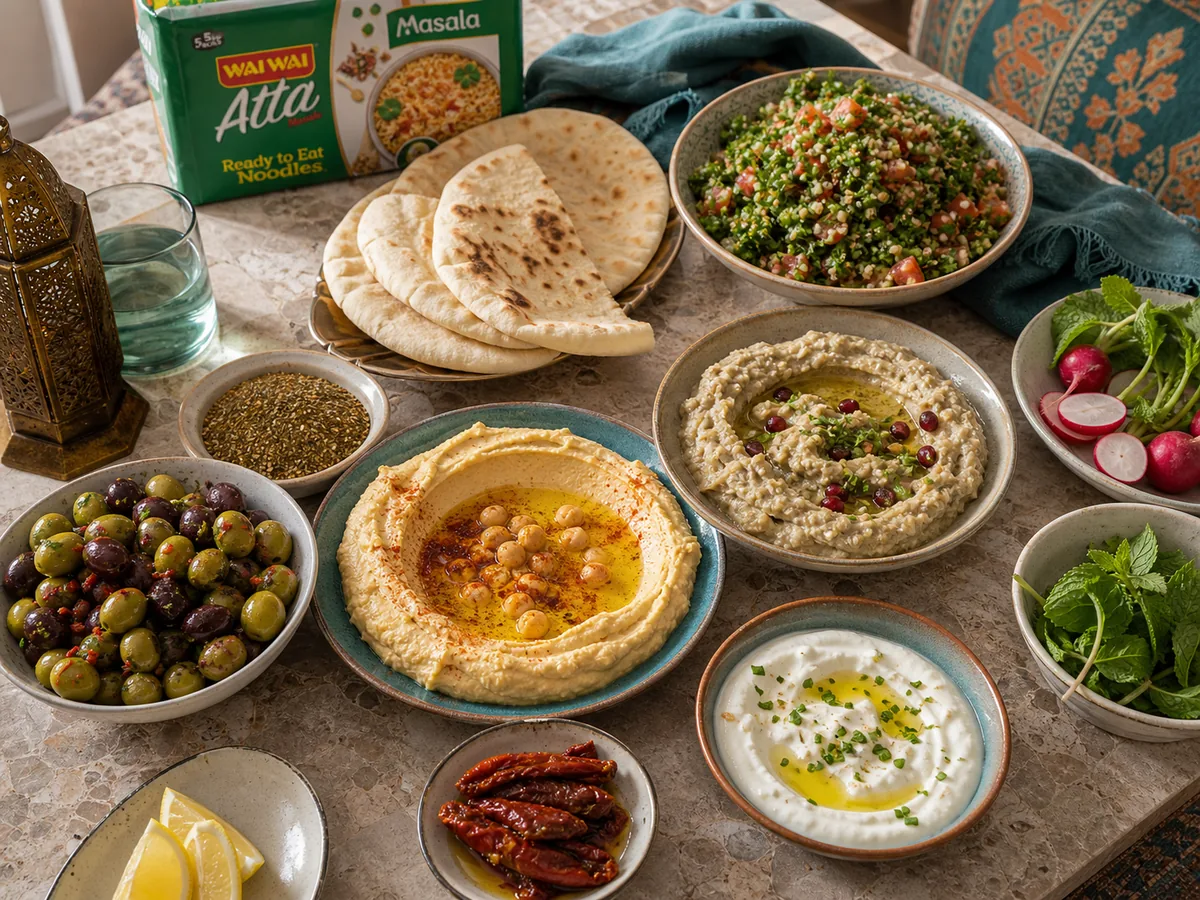
The beauty is how few ingredients build how much. Hummus is chickpeas, tahini, lemon, garlic and oil blended smooth. Mutabbal swaps in smoky grilled aubergine. Tabbouleh is mostly parsley with a little soaked bulgur, tomato, lemon and oil. Fattoush is chopped salad with toasted bread and sumac. From one short list, four dishes, and together they make a mezze that feeds a majlis. Add warm flatbread and a bowl of olives and you have hosted without breaking a sweat. This style of eating, communal, vegetable-led and light, is precisely why Levantine cuisine keeps climbing in Gulf homes, and why the staples behind it deserve permanent cupboard space.
East Asian staples that share your shelf
The East Asian section of a world pantry looks intimidating until you realise it is mostly a set of bottles that do specific jobs. Learn the switchboard and a stir-fry becomes faster than ordering in.
Sauces and pastes
Keep light soy (for seasoning and saltiness) and dark soy (for colour and a touch of sweetness) as your base. Add oyster sauce for savoury body in Chinese cooking, fish sauce for Thai and Vietnamese brightness, gochujang for Korean heat and ferment-funk, miso for Japanese depth, toasted sesame oil as a finishing drizzle, and rice vinegar for the sour note. That handful of bottles covers most of East and Southeast Asia. None is expensive, all keep for months, and most live happily in the fridge once opened.
Noodles, rice and the quick stir-fry
Stock rice noodles (flat for pad thai, thin for soups), egg noodles for stir-fries, jasmine rice for everyday Thai and Chinese meals, and short-grain sushi rice if you lean Japanese. The 15-minute stir-fry framework is worth memorising: heat a wok or wide pan very hot, fire garlic-ginger-chilli in oil for fifteen seconds, add protein and sear, add hard vegetables then soft, then your sauce (soy plus a splash of vinegar, a little sugar, a spoon of oyster or fish sauce), toss until glossy, finish with sesame oil and spring onion. The aromatics you already keep for South Asian cooking do the heavy lifting here too. %common questions about sourcing and availability% answers the practical questions home cooks ask most when they start building this kind of cross-cuisine pantry.
What unites every dish above is balance. Thai, Chinese, Korean and Vietnamese cooks all chase the same four-way harmony of salty, sweet, sour and heat, adjusted by region. Taste as you go, tip in a little more lime or vinegar if it is flat, a pinch of sugar if it is sharp, a touch more chilli if it is dull, and you are cooking the way those kitchens actually work rather than following a recipe blind.
Cross-cultural cooking: smart swaps and fusion that actually works
Fusion gets a bad name when it is novelty for its own sake. Done with respect, it is just a cook noticing that ingredients from different shelves share a logic. The good overlaps are real. Tahini, loosened with soy, lime and a little chilli oil, makes a noodle dressing with the same nutty backbone as a Sichuan sesame sauce. Gochujang, whisked with honey and garlic, is a marinade that works on chicken whether you finish it Korean-style or grill it like a shawarma. A dried lime dropped into a slow-cooked stew lends the sour depth that sumac brings to a salad, from the same family of tart-savoury notes. Sumac scattered over a finished stir-fry adds a citrus lift that limes do quietly elsewhere.
Three weeknight ideas, grounded in technique rather than gimmick. First, a gochujang dal: a standard masoor dal finished with a teaspoon of gochujang stirred into the tarka, which reads as warming and faintly smoky and leans on the same chilli-and-allium base you already use. Second, a za'atar stir-fried green: blanched long beans or pak choi tossed in hot oil with garlic, then dressed with olive oil and za'atar, where the Levantine herb mix meets a Chinese cooking method. Third, a tahini-soba bowl: cold soba or egg noodles in a tahini-soy-lime dressing with cucumber and toasted sesame, drawing on both the Levantine and East Asian halves of your shelf.
The honesty rule keeps this from going wrong. Respect each cuisine's internal logic, the way its salty, sour and aromatic elements are meant to sit, and borrow across the line only when the flavours genuinely agree. One pantry, many cuisines, but each plate still tastes like it knows where it came from.
Storing a world pantry in UAE heat and humidity
The Gulf is hard on a pantry. Summer kitchens swing from fierce outdoor heat to chilled AC and back, humidity creeps into anything not sealed, and spices and oils that would last a year in a cooler climate fade fast here. A little storage discipline protects what you have paid for.
What goes where
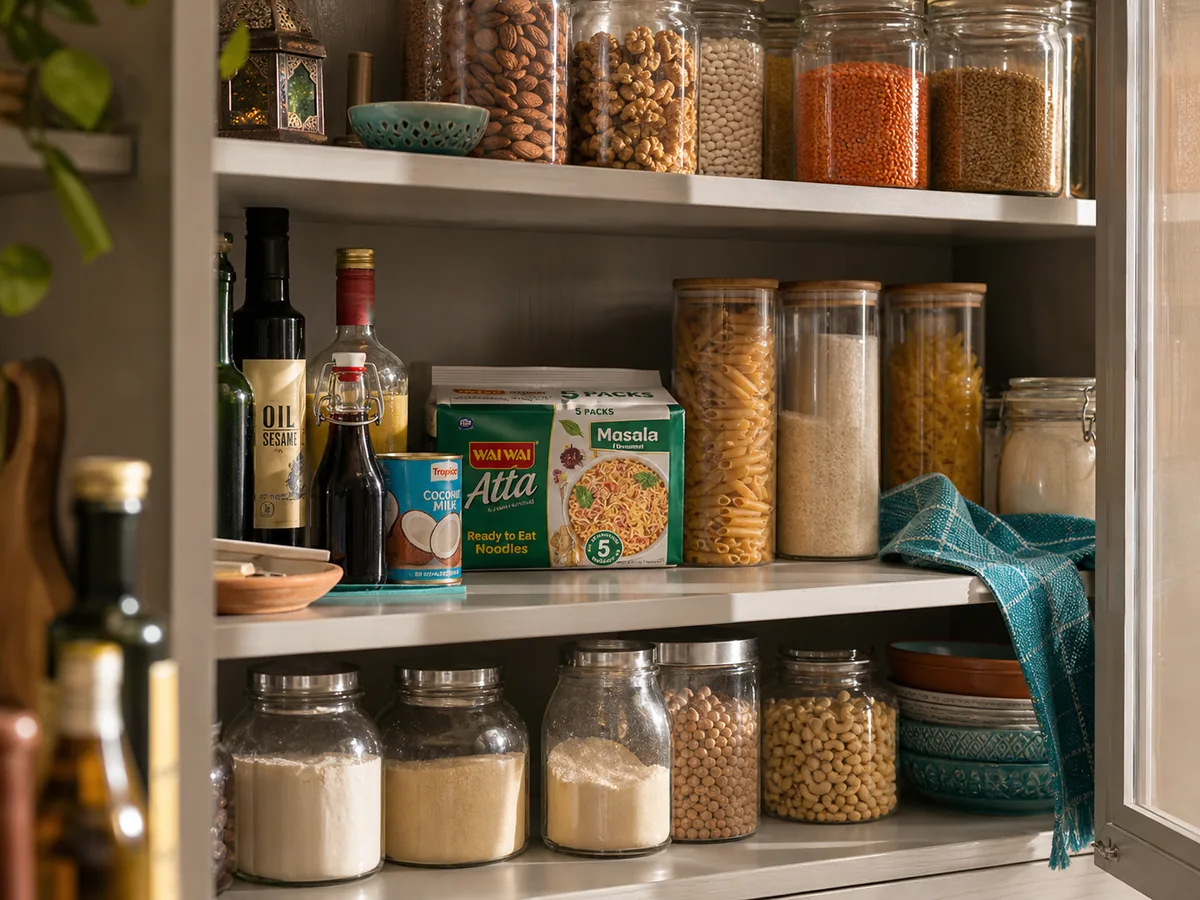
Spices belong in airtight jars in a cool, dark cupboard, never on a rack above the hob where heat and light strip their oils. Oils keep best away from the window; buy them in sizes you will finish in a couple of months rather than catering tins that go rancid half-used. Flours, nuts and chilli powder do far better in the fridge or freezer, where Gulf humidity cannot turn them stale or, worse, invite pantry weevils, a genuine problem in warm climates. Open pastes like gochujang, miso and tahini live in the fridge once cracked. Whole spices, by contrast, are happy in the cupboard for the long haul.
Shelf life and freshness
Ground spices realistically hold their punch for six to twelve months in Gulf conditions, less if stored badly; if a spice smells of dust rather than itself, it is done. Oils turn within a few months of opening, faster in heat, and rancid oil has a sharp, crayon-like smell you learn to catch. Opened sauces and pastes generally keep one to three months refrigerated. Tahini and nut-heavy products go rancid quickly once warm, so smell before you use. The simplest defence is buying in sensible quantities so nothing sits past its prime, and rotating stock front to back. For big Ramadan shops, label the month you opened things and use the oldest first, so the cupboard you filled for a busy season does not quietly spoil behind newer jars.
Building your starter pantry: a tiered shopping list
A new arrival can cook three cuisines from week one with the right twenty items, then grow the cupboard as confidence builds. Think in tiers.
The 20-item starter
Grains and pulses: basmati rice, masoor dal, tinned chickpeas, egg or rice noodles. Spices: cumin, coriander, turmeric, black pepper, paprika, za'atar, a dried chilli. Sauces and fats: light soy, a good olive oil, a neutral cooking oil, tahini, tomato paste. Aromatics and acids: garlic, ginger, onions, lemons or limes. Add salt and you have twenty items that cook a dal, a stir-fry, a hummus plate, a simple biryani and a dozen things in between. That is the foundation: pantry essentials, spices, the umami switches and the brightness, all earning their shelf space across cuisines.
Scaling to a full multicultural pantry
The intermediate tier adds cardamom, cinnamon, star anise, sumac, fish sauce, oyster sauce, gochujang, pomegranate molasses, besan, bulgur, sesame oil and rice vinegar, the jars that turn competent cooking into confident range. The complete tier brings freekeh, sella rice, miso, dried limes, atta, whole spices to grind fresh, and the snack and hydration extras. UAE shoppers find these across hypermarkets like Lulu and Carrefour, in specialist baqalas that stock a particular community's staples, and increasingly through online ordering for the items a local shop does not carry. Bagason's distribution sits behind much of that reach, putting trusted brands within an everyday trolley rather than a special trip. The budget logic is simple: prioritise ingredients that work across cuisines, because a jar of cumin or a bottle of soy that earns its place in three different dinners is worth more than a single-use specialty you buy once and forget.
Hydration, snacks and the rest of the global table
A world pantry is not only mains. The drinks and small bites around the meal carry just as much culture, and they matter doubly in the Gulf climate.
Hydration here is not an afterthought. A salted lassi or a glass of ayran cools a spiced meal and replaces what the heat takes out of you; laban does the same Emirati-style. Jasmine tea after an East Asian dinner, fresh mint tea after a Levantine spread, and during Ramadan or a long summer day, proper electrolyte hydration matters for anyone fasting or working outdoors. Keeping a few of these on hand turns a meal into a finished table rather than just a plate.
Snacks round out the picture. Indian namkeen (sev, bhujia, roasted chana) for an evening with tea, Levantine nuts and roasted chickpeas for a mezze or a majlis, Japanese rice crackers and seaweed snacks for something light and salty. These come from the same well-stocked-pantry instinct: keep a small, varied range so guests are never met with an empty bowl, and so the cuisines you cook are matched by the things you nibble alongside them.
From pantry to table: a one-week multicultural meal map
The proof of a good pantry is a week that cooks itself from one shopping list with almost nothing wasted. Here is a seven-day rotation that flexes across all three cuisines. Saturday, masoor tarka dal with rice and a quick salad. Sunday, a 15-minute chicken stir-fry over jasmine rice. Monday, a Levantine spread of hummus, fattoush and warm bread. Tuesday, a vegetable biryani using the rice and spices already in the cupboard. Wednesday, soba or egg noodles in a tahini-soy dressing, the fusion bowl. Thursday, a freekeh pilaf with roasted vegetables. Friday, a gochujang-glazed traybake with whatever protein is on hand. One trolley, three continents, very little left to throw away.
Prep-ahead anchors make it effortless. Cook a big pot of rice on the weekend and it serves the dal, the stir-fry and the biryani base. Mix a jar of your own spice blend, a simple baharat or garam masala, and it seasons several nights. Keep a base sauce, a garlic-ginger-soy mix in the fridge, and a stir-fry is minutes away. Those three anchors, a cooked grain, a spice blend and a base sauce, flex across every cuisine on the map.
That is the real payoff of stocking one thoughtful pantry. The cumin that browns in your tarka also seasons your kofta; the soy that glazes your stir-fry also dresses your noodles; the tahini in your hummus also thickens a dressing two nights later. Backed by reliable Gulf distribution that keeps trusted brands within easy reach, cooking across cultures stops being a project and becomes the ordinary, generous way a UAE kitchen feeds the people around its table.
]]><![CDATA[Frequently Asked Questions
Where can I buy authentic world food ingredients in the UAE?
Hypermarkets like Lulu and Carrefour carry a wide spread of South Asian, Levantine and East Asian staples, often with dedicated international aisles. For community-specific items, the neighbourhood baqala frequently stocks exactly what a Keralan, Filipino or Syrian household needs. Specialist shops and online ordering fill the gaps for harder-to-find pastes, freekeh or particular spice brands. Bagason's distribution network puts many trusted global brands on these shelves across Dubai, Abu Dhabi, Sharjah and the wider GCC.
How should I store spices and oils in UAE humidity and heat?
Keep spices in airtight jars in a cool, dark cupboard away from the hob, never on an open rack above heat. Store oils away from windows and buy sizes you will finish within a couple of months. Flours, nuts and chilli powder last far longer in the fridge or freezer, where Gulf humidity cannot stale them or invite weevils. Open pastes like tahini, miso and gochujang belong in the fridge once cracked.
What are the essential South Asian pantry staples for a UAE home?
Start with three lentils (toor, masoor, chana), basmati and sella rice, and two flours (atta for roti, besan for batters). Add the core spices: cumin, coriander, turmeric, cardamom, cinnamon, black pepper and garam masala. With those, plus garlic, ginger, onions and ghee, you can cook everyday dal, biryani, curries and breads for an Indian, Pakistani or Sri Lankan household. They store well and are excellent value for family and Ramadan cooking.
Can I cook Levantine, South Asian and East Asian food from one shared pantry?
Yes, and it is more efficient than keeping three separate cupboards. The aromatics (garlic, ginger, onion, chilli) and many spices like cumin and paprika cross all three. You then add a small set of region-defining items: tahini, sumac and za'atar for the Levant; soy, fish sauce and sesame oil for East Asia; whole spices and lentils for South Asia. Shared ingredients earn their shelf space across cuisines, cutting both cost and waste.
Where do I find tahini and gochujang in the UAE?
Tahini is widely stocked in any hypermarket and most baqalas, given the popularity of Levantine cooking across the Gulf. Gochujang is increasingly common in the international or Asian section of larger Lulu and Carrefour branches, alongside soy, miso and oyster sauce, with online ordering covering anything a local store lacks. Both keep for months refrigerated once opened, so they are practical to stock for a multicultural kitchen.
How do I keep ingredients fresh during a big Ramadan shop?
Buy in quantities you will realistically finish, and rotate stock front to back so older jars get used first. Label the month you open pastes and oils. Move flours, nuts and ground spices into the fridge or freezer to fend off Gulf humidity. Ground spices hold their punch for six to twelve months at best in this climate, so a large Ramadan shop is better split into items that store well and fresh produce bought closer to need.
]]>