Step out of an air-conditioned car in Sharjah at two in the afternoon in July and the heat lands on you like a wet wool blanket. The thermometer reads 44 degrees, but your phone's weather app whispers a crueller number: "feels like 52." Within ninety seconds your shirt is stuck to your back, your sunglasses fog, and the short walk from the car park to the mall entrance leaves you faintly breathless. That damp, smothering heaviness is not your imagination. It is the signature of a Gulf coastal summer, and it is the single biggest reason that hydration in the UAE behaves differently from hydration almost anywhere else on earth.
Most hydration advice travelling around the internet was written for temperate climates, gym sessions, or the occasional heatwave. It assumes your sweat evaporates, that a glass of water fixes most problems, and that thirst is a reliable alarm clock. None of those assumptions hold up well between June and September on the Arabian Peninsula. Here, the body fights a daily battle against core-temperature rise in conditions that actively sabotage its main cooling system, while losing far more than water through the skin. Understanding exactly what is happening, mineral by mineral and hour by hour, is the difference between sailing through the summer and being blindsided by an afternoon of pounding headache, leaden legs and a fog that no amount of plain water seems to clear.
This guide unpacks the real physiology of staying hydrated in the Gulf: what sweat actually carries away, why electrolytes decide whether the water you drink ever reaches your cells, when plain water can quietly do harm, and how a smartly stocked Gulf pantry of laban, dates, coconut water and water-rich produce does a surprising amount of the work for you. It is built for life as it is actually lived here, from the construction site to the majlis, from the school run to the Ramadan fasting clock.
Why hydration hits different in the Gulf
The Gulf summer is not one climate but several, and the right hydration strategy depends on which one you are standing in. Along the coastal belt where most of the population lives, Dubai, Abu Dhabi, Sharjah and Ajman, the defining feature is not simply heat but heat layered with humidity. Daytime highs routinely sit between 42 and 48 degrees, with the occasional inland spike into the high forties and beyond. The Arabian Gulf itself, shallow and bathwater-warm by late summer, pumps moisture into the coastal air. Relative humidity that climbs past 60 or 70 per cent in the early morning and after sunset turns the atmosphere into a sponge that is already nearly full.
That saturated air is the problem. Your body's primary defence against overheating is evaporative cooling: sweat forms on the skin, absorbs heat as it turns from liquid to vapour, and carries that heat away. But evaporation only works when the surrounding air has room to accept the moisture. When the air is already heavy with water, sweat cannot evaporate efficiently. It simply beads, runs and drips off you, taking very little heat with it. You are losing fluid at a punishing rate while getting almost no cooling return on the investment. This is why a humid 40-degree day on the Corniche can feel more dangerous than a dry 47-degree afternoon in the desert: the dry day, for all its ferocity, at least lets your sweat do its job.
Move inland to Al Ain, Liwa or the deep desert and the equation flips. The air is bone-dry, often below 15 per cent humidity at midday. Sweat evaporates so fast you may never feel wet at all, which fools people into thinking they are barely perspiring. In reality the desert can pull two litres of fluid out of you in an hour without leaving a single visible drop on your skin. The cooling works beautifully, but the fluid loss is invisible and relentless, and dehydration creeps up silently. A hiker in the Hajar Mountains or a worker in a Liwa date farm faces a different threat from a delivery driver in Deira, even on the same calendar day.
The practical upshot is that humid-coast hydration is about replacing heavy, visible fluid and salt loss while accepting that your cooling system is compromised, so you must lean harder on shade, pacing and air-conditioning. Desert-dry hydration is about disciplined, scheduled intake to counter losses you cannot see or feel. Both demand far more than the casual sipping that works in a Manchester or Mumbai spring. And both raise the stakes sharply: in this heat, heat exhaustion, dizziness, throbbing headache and a wall of fatigue can arrive within two to three hours of inadequate intake, not after a long day of neglect. The margin for error is thin, and it shrinks the moment you step outside.
The science of sweat: what your body loses in the heat
To hydrate intelligently you have to understand what your body is actually doing when it overheats. The process is called thermoregulation, and it is one of the most aggressive defensive responses the human body mounts. As your core temperature begins to rise, the brain's internal thermostat, sitting in the hypothalamus, triggers two main responses. First, blood vessels near the skin dilate, diverting warm blood from the core toward the surface so heat can radiate away. This is why your face flushes and your skin feels hot to the touch in the sun. Second, millions of sweat glands switch on, flooding the skin with fluid that will, in theory, evaporate and carry heat with it.
That diversion of blood to the skin has a hidden cost. With more blood pooled at the surface, there is relatively less circulating to your muscles and brain, which is part of why heavy heat leaves you feeling sluggish and slow-witted long before you are seriously dehydrated. Add genuine fluid loss on top, and blood volume itself starts to drop, forcing the heart to work harder to push a thinner supply around the body. Your pulse climbs, your blood pressure can wobble when you stand, and the dizziness of early heat exhaustion sets in.
Crucially, what leaves your body in sweat is not pure water. Sweat is water carrying a payload of dissolved minerals, the electrolytes your body depends on. The most abundant is sodium, lost in significant quantities and responsible for that salty sting when sweat runs into your eyes or dries into white crusty marks on a dark shirt or cap. Alongside sodium goes chloride, its constant partner. Sweat also carries potassium, magnesium and small amounts of calcium. Every one of these has a job, and losing them in quantity, then replacing only the water, is the root of a great deal of summer misery in this region.
How humidity sabotages evaporative cooling
Picture two identical workers, each producing a litre of sweat in an hour. The first is in the dry desert; nearly all of that litre evaporates, and with it goes a substantial chunk of body heat. He is cooled, even as he must drink steadily to replace what he has lost. The second is on a humid coastal site; perhaps only a third of his sweat evaporates while the rest drips off his chin, arms and back onto the ground. He has lost exactly the same litre of precious fluid and salt, but received only a fraction of the cooling. His core temperature keeps climbing despite drenching sweat.
This is the cruel arithmetic of Gulf humidity: the wetter you look, the worse your cooling may actually be performing. Dripping sweat is wasted sweat, fluid spent for almost no thermal return. It also explains why people on the coast can edge toward heat exhaustion while still sweating heavily, which contradicts the popular belief that someone in trouble "stops sweating." That sign comes only in the very late, dangerous stage of heat stroke. Long before then, profuse, useless dripping in humid air is the more common and more deceptive warning. When the air cannot take your sweat, you must take the heat off yourself by other means, shade, fans, cool water on the skin and air-conditioning, because your evaporative system has been switched off by the weather.
Sweat rate vs fluid replacement
The volumes involved surprise most people. A moderately active adult in Gulf summer heat can lose between one and 1.5 litres of sweat per hour. A construction worker, a footballer or a runner pushing hard in the heat can exceed two litres an hour, and sustain it. Over a working morning that adds up to four, five, even six litres of fluid leaving the body, a figure that would have seemed absurd in a cooler climate.
The trap is that the gut can only absorb water at a limited rate, roughly 0.8 to one litre per hour under good conditions, and often less when you are hot, stressed and your blood has been diverted away from the digestive system. You physically cannot drink your way out of a two-litre-per-hour sweat rate in real time. This is why front-loading fluids before heat exposure and pacing your intake matter so much, and why simply gulping a litre of cold water when you finally feel desperate often leaves you bloated, sloshing and still under-hydrated. It is also a powerful argument for getting the composition of what you drink right, because when you can only absorb a finite volume, every millilitre needs to pull its weight. Water alone, drunk in the volumes this climate demands, can tip into a different and underappreciated problem, which is where electrolytes come in.
Electrolytes explained: the minerals that move your water
Electrolytes have become a wellness buzzword, slapped on bottles and sachets across every baqala and hypermarket shelf, but the underlying science is concrete and worth understanding properly. Electrolytes are minerals that carry an electrical charge when dissolved in the body's fluids. That charge is the whole point: it lets these minerals do jobs that plain, uncharged water cannot. They regulate how fluid is distributed between the inside and outside of your cells, they carry the electrical signals that fire your nerves, and they trigger and relax every muscle contraction, including the steady beat of your heart.
The principle that ties hydration to electrolytes is osmosis: water moves across cell membranes toward the side with the higher concentration of dissolved particles. Sodium is the main particle controlling water in the fluid outside your cells, while potassium does the same job inside them. The balance between these two, held in careful proportion, is what determines whether the water you drink is held where the body needs it or simply flushed straight through to your bladder. Drink water with the right electrolytes alongside it and the fluid is drawn into circulation and into your cells. Drink large volumes of plain water after heavy sweating and you can dilute these minerals to the point where your body, sensing the imbalance, starts shedding the very water you just drank. Volume without balance is wasted, and in extreme cases worse than wasted.
Sodium and potassium: the core pairing
Sodium is the headline electrolyte for anyone sweating in the Gulf, because it is lost in the largest amounts and because it governs fluid balance in the bloodstream. Sodium is what allows your body to hold on to the water you drink rather than passing it straight out. It also drives the absorption of water and glucose in the small intestine, a mechanism that underpins every effective rehydration drink ever designed. Replace heavy sweat losses with water but no sodium, and blood sodium falls, fluid balance tips, and you can feel headachy, nauseous and strangely flat despite drinking plenty. Natural dietary sources are easy to come by here: a pinch of salt, salty laban, olives, cheese, a bowl of lentil shorba or the brine of pickled vegetables on a Gulf table all top up sodium.
Potassium is sodium's essential counterweight, the mineral that works inside your cells and is vital for a steady heartbeat and properly functioning muscles. Low potassium after heavy sweating shows up as muscle cramps, weakness and that hollow, wrung-out fatigue. This is the mineral abundant in many of the Gulf's most loved foods: dates, bananas, tomatoes, leafy greens, coconut water, laban and yoghurt are all rich sources. The art of hydration is keeping sodium and potassium in proportion. Too much of one without the other throws off the balance, which is why a good electrolyte drink, or a smartly composed plate, supplies both together rather than chasing a single mineral in isolation. explore the hydration and pantry brands we represent%">A well-formulated electrolyte drink is essentially this balance, dissolved and ready to absorb.
Magnesium, chloride and the supporting cast
Beyond the headline pair sit minerals that do quieter but indispensable work. Magnesium is involved in hundreds of enzyme reactions, in energy production and in the relaxation phase of muscle movement; a shortfall after prolonged sweating can leave you with twitches, night cramps and restlessness. Nuts, seeds, dark leafy greens, whole grains and dark chocolate are reliable sources, and many of these sit naturally in a well-stocked Gulf pantry. Chloride, sodium's near-constant companion, travels out in sweat alongside it and helps maintain fluid balance and the acid-base equilibrium of the blood; it rides in on the same salty foods that supply sodium, so replacing one tends to replace the other.
Calcium, while best known for bone health, also plays a role in muscle contraction and nerve signalling and is lost in small amounts through sweat; dairy, sesame and leafy greens keep it topped up. The lesson across all of these is that hydration is a team effort among minerals, not a solo act by water. A body that is well fed across a varied diet of pantry staples, fresh produce, dairy and the odd salted snack arrives at summer with most of its electrolyte reserves already in good order, needing only sensible top-ups around heavy sweating rather than a panicked scramble to replace everything at once.
Why drinking only water can backfire
It sounds like heresy in a desert climate, but it is possible to drink too much plain water, and the consequences are not trivial. The condition is called hyponatremia, literally low blood sodium. When you sweat heavily for an extended period, losing both water and a substantial load of sodium, and then replace those losses with large volumes of plain water alone, you dilute the sodium remaining in your bloodstream. The concentration drops below the narrow range your body tolerates. Water, following the osmotic gradient, begins moving from the blood into your cells, swelling them. In the brain, where there is no room to expand, that swelling is what makes hyponatremia dangerous.
Mild hyponatremia masquerades as the very thing you were trying to prevent: headache, nausea, fatigue, a thick mental fog and a vague unwell feeling. The cruel twist is that a person who feels rough after a hot day and assumes they are dehydrated may respond by drinking even more plain water, deepening the imbalance instead of fixing it. As it worsens, symptoms escalate to vomiting, confusion, disorientation and, in severe cases, seizures, and it becomes a genuine medical emergency. It is rarer than ordinary dehydration, but it is real, and it tends to strike precisely the people who are conscientious about drinking.
The highest-risk group is anyone sweating heavily for more than an hour and then over-drinking water to compensate: outdoor and construction workers through a long shift, endurance runners and cyclists, footballers training in the heat, and enthusiastic newcomers to the Gulf who have been told to "drink lots of water" and take it literally without replacing salt. The fix is not to drink less and risk dehydration, but to drink smarter. After sustained, heavy sweating, water should come paired with electrolytes, especially sodium, so that the fluid is balanced as it goes in. For most people on a normal day with moderate activity, plain water and a normally salted diet are perfectly adequate. It is the long, sweat-drenched hours, exactly the ones this climate specialises in, that call for water and salt together rather than water alone.
Reading your own hydration: signs, signals and the urine test
Your body broadcasts its hydration status constantly, if you know how to read the signals. Early dehydration announces itself with a dry mouth and sticky saliva, a dull headache, tiredness that feels heavier than the hour justifies, and a noticeable dip in concentration, the moment when emails stop making sense and simple decisions feel like hard work. As it deepens, you may feel lightheaded when you stand, your muscles may cramp or feel weak, your skin loses some of its bounce, and your urine output falls. In serious heat illness these stack on top of one another: rapid pulse, clammy or oddly flushed skin, nausea and confusion, signs that demand shade, cooling and rehydration immediately, and medical help if they do not ease.
The single most practical daily gauge costs nothing and takes a glance: the colour of your urine. Pale straw or light yellow, like watered-down apple juice held to the light, signals good hydration. A deeper amber, the colour of strong apple juice or honey, means you are running a deficit and should catch up steadily over the next hour or two. Dark, concentrated urine is a clear instruction to drink, ideally with some electrolytes if you have been sweating. A useful habit in this climate is simply to check, especially first thing in the morning and after any spell outdoors, because that one observation tells you more about your real status than how thirsty you happen to feel. A caveat worth knowing: certain vitamin supplements, particularly B vitamins, can turn urine bright yellow and throw off the reading, so judge against your normal baseline.
Which brings us to the most persistent myth in hydration: that thirst is a reliable alarm. It is not, particularly not in heat and not as we age. By the time the thirst signal fires strongly, you are typically already carrying a fluid deficit of one to two per cent of body weight, enough to begin nicking your concentration, mood and physical performance. Thirst is a lagging indicator, a warning light that comes on after the problem has started. In the Gulf summer the deficit can open up faster than thirst can track it, especially in dry desert air where you may not even feel sweaty. The winning strategy is consistent, proactive sipping through the day rather than reactive gulping when you finally feel parched, staying steadily ahead of losses instead of forever chasing them. Build the habit into the rhythm of the day, and you rarely give thirst the chance to sound its late and unreliable alarm.
Why hydration hits different in the Gulf
Step out of an air-conditioned car in Dubai in August and the air greets you like a warm, wet towel. That sensation is not just discomfort; it is your cooling system being switched off at the worst possible moment. Daytime highs across the UAE routinely climb to 45-50C, and along the coast in Dubai, Abu Dhabi and Sharjah that heat arrives wrapped in coastal humidity that can push past 80 per cent. The combination is the real adversary. Heat alone is manageable; heat plus humidity sabotages the very mechanism your body relies on to stay cool.
The Gulf is not one climate but two, and your hydration strategy should bend to whichever you are standing in. Inland, in Al Ain, Liwa and the deep desert, the air is bone-dry. Sweat evaporates almost the instant it forms, which cools you efficiently but quietly. You can lose litres without ever feeling visibly wet, and the deception is dangerous: you assume you are fine because your shirt is dry. On the humid coast, the opposite trap waits. Sweat pours off you in visible streams, dripping from your brow and soaking your collar, yet most of it never evaporates. You feel like you are drowning in your own perspiration while your core temperature keeps creeping upward. Dry inland heat demands steady, disciplined fluid replacement before symptoms surface. Humid coastal heat demands that plus active cooling strategies, because sweat cannot do its job alone.
The stakes climb quickly. In this climate, heat exhaustion, fatigue and dizziness can appear within hours of inadequate intake, not days. A morning of underdrinking before an afternoon walk to the baqala, a school run in a hot car, or an hour on a construction site can tip a healthy adult into genuine trouble. Understanding why means understanding what your body is actually doing when it sweats.
The science of sweat: what your body loses in the heat
Your body holds its core temperature within a narrow band around 37C, and it defends that band fiercely. When the mercury outside rises, your nervous system widens the blood vessels near your skin, sending warm blood to the surface to shed heat. At the same time, millions of sweat glands open and release fluid onto your skin. As that moisture evaporates, it carries heat away with it. Evaporative cooling is the body's primary, most powerful defence against a rising core temperature, and in the Gulf it works overtime.
What leaves your body in sweat is far more than water. Sweat is saline, and it carries dissolved minerals: sodium and chloride in the largest quantities, along with potassium, magnesium and small amounts of calcium. These are the electrolytes your cells depend on to function. Lose enough of them and replacing only the water you sweated out leaves you mineral-depleted, which is its own kind of trouble. The cramp that seizes your calf at 3pm, the dull headache that builds through a hot afternoon, the heavy-limbed fatigue that no amount of plain water seems to fix, all trace back to electrolytes walking out the door with your sweat.
How humidity sabotages evaporative cooling
Evaporation only works if the surrounding air can absorb more moisture. When humidity is high, the air is already saturated and refuses to take on much more. Your sweat glands keep firing on schedule, but the sweat simply sits on your skin, then rolls off and drips to the ground. That dripping sweat is doubly wasteful: you have spent the fluid and the minerals to produce it, yet received almost none of the cooling payoff. This is why a humid 38C day on the Corniche can feel more punishing and more dangerous than a dry 45C afternoon in the desert. Your body is bleeding fluid and electrolytes without getting cooler in return, and the fluid deficit accelerates.
Sweat rate vs fluid replacement
In extreme heat and during physical exertion, sweat rates can reach one to two litres per hour for a working adult, and trained or heat-acclimatised people can lose even more. Few people drink at that pace, and fewer still replace the lost sodium. The gap between what you lose and what you take back in is where dehydration grows, often invisibly. The practical lesson is to replace fluid steadily and proactively, treating intake as a scheduled habit rather than a response to discomfort. Once you feel parched, the deficit is already meaningful.
Electrolytes explained: the minerals that move your water
Electrolytes sound clinical, but the idea is simple. They are minerals that carry an electrical charge once dissolved in your body's fluids, and that charge lets them do remarkable work: regulating where water sits in your body, firing the signals that run along your nerves, and triggering the contractions of every muscle from your eyelids to your heart. Water is the river; electrolytes are the current that directs where it flows.
Sodium and potassium: the core pairing
Sodium is the master regulator of fluid balance. It governs how much water stays in your bloodstream and the spaces around your cells, and it is the electrolyte you lose most heavily in sweat. Without adequate sodium, the water you drink struggles to stay where your body needs it and is flushed out instead. You find it in table salt, in laban and salty cheeses, in olives and pickles, and deliberately added to proper rehydration drinks. Potassium is sodium's partner and counterweight. It works inside your cells, keeping your heartbeat steady and your muscles responsive, and a shortfall shows up as cramps, weakness and palpitations. Bananas are the famous source, but in the Gulf pantry you will find it generously in dates, dried apricots, tomatoes, leafy greens, yoghurt and coconut water. The two minerals work as a pair: the balance between them, more than the amount of either alone, is what keeps your fluid and nerve systems steady.
Magnesium, chloride and the supporting cast
Magnesium is the quiet workhorse behind hundreds of bodily processes, including muscle relaxation and energy production, and heavy sweating depletes it too. Nuts, seeds, wholegrains, leafy greens and dark chocolate top up your stores. Chloride travels alongside sodium, helping maintain fluid balance and the acid base equilibrium your blood depends on. Calcium, beyond bone health, plays a role in muscle contraction and nerve signalling. None of these works in isolation. The reason a proper electrolyte drink outperforms plain water after heavy sweating is that it restores the whole mineral team, not just the water they were dissolved in. Balance, not volume, decides whether the water you drink actually reaches and rehydrates your cells, or simply passes through.
Why drinking only water can backfire
There is a counterintuitive truth that surprises many people: it is possible to drink too much water, and in the Gulf heat the consequences can be serious. The condition is called hyponatremia, and it happens when you flood your body with plain water after heavy sweating without replacing the sodium you lost. The incoming water dilutes the sodium already in your blood to dangerously low levels. Because sodium governs where water goes, that dilution lets fluid seep into places it should not, including your brain cells. The early signs, headache, nausea, bloating and confusion, mimic dehydration, which tempts people to drink even more water and make the problem worse. In severe cases hyponatremia is a genuine medical emergency.
The people most at risk are precisely those working and exercising hardest in the heat: outdoor and construction workers putting in long shifts, endurance runners and footballers training through the summer, and anyone sweating heavily for more than an hour who then tries to catch up with litre after litre of plain water. The body's thirst and the volume of water it craves can outrun its need for sodium, and that mismatch is the danger.
The fix is not to drink less; dehydration remains the far more common threat in the UAE. The fix is to drink smarter. After sustained, heavy sweating, pair your water with electrolytes rather than chasing thirst with plain water alone. A pinch of sodium and potassium turns a glass of water from a dilution risk into a rehydration tool. This is exactly where a properly formulated electrolyte drink earns its place, and where the science of oral rehydration, which we will come to shortly, becomes practical knowledge worth keeping at home and on the worksite. For families restocking the fridge, our range of %where Bagason reaches across the UAE and GCC% is built around this balance, not just flavour.
Reading your own hydration: signs, signals and the urine test
Your body broadcasts its hydration status constantly, if you know how to read the signals. The early warnings of dehydration are easy to dismiss in a busy day: a dry, tacky mouth, a headache that builds through the afternoon, a fog that settles over your concentration, fatigue out of proportion to your activity, and muscle cramps that grip without warning. Darker, stronger-smelling urine is one of the most reliable tells. Left unchecked, these escalate into dizziness, a racing heart, nausea and the disorientation that signals heat exhaustion taking hold.
The single most practical daily gauge needs no equipment beyond your own eyes. Check the colour of your urine. Pale straw, the shade of light lemonade, means you are well hydrated. A deeper yellow, closer to apple juice, is your cue to catch up, and quickly. Dark amber is a clear warning that you are already running a meaningful deficit. Glance at it through the day and you have a running readout of your hydration that no app can match for honesty.
One myth deserves dismantling: thirst is not an early-warning system. By the time you feel genuinely thirsty, you are often already mildly dehydrated, because the thirst signal lags behind your actual fluid deficit. In the Gulf summer, waiting for thirst is waiting too long. Consistent, scheduled sipping through the day beats reactive gulping every time, because it keeps you ahead of the deficit rather than forever chasing it.
Oral rehydration science and the WHO isotonic standard
Some of the most important hydration science of the last century came not from sports labs but from treating life-threatening dehydration in the developing world, and it produced a formula so effective the medical community called it one of the great advances of modern medicine: oral rehydration salts.
Isotonic vs hypotonic vs hypertonic
The key concept is tonicity, the concentration of dissolved particles in a drink compared with your blood. A hypotonic drink is more dilute than blood, plain water being the extreme case. A hypertonic drink, like a sugary fizzy soda or undiluted cordial, is more concentrated, and it can actually pull water into your gut and slow absorption, which is why a sweet cola never truly quenches a deep thirst. An isotonic drink matches the concentration of your blood, and that match is the sweet spot. The WHO isotonic ORS standard sets a precise, evidence-based ratio of sodium, potassium and glucose designed for the fastest, most complete rehydration.
What makes it work is an elegant piece of biology called sodium-glucose co-transport. The cells lining your intestine have molecular pumps that absorb sodium and glucose together, and water follows them across the gut wall by osmosis. By delivering sodium and glucose in the right proportions, an isotonic solution effectively opens a fast lane for water into your bloodstream, pulling it in far quicker than plain water ever could. That is the principle behind every well-made rehydration drink.
When to reach for a clinical ORS sachet
It helps to distinguish two situations. A clinical ORS sachet, dissolved in clean water to the stated dilution, is the reactive tool: reach for it during acute dehydration from a stomach bug, a bout of vomiting or diarrhoea, or after severe heat exposure that has left someone genuinely depleted. These restore a serious deficit fast. Proactive daily electrolyte drinks, by contrast, are for steady top-ups, keeping a healthy person ahead of routine summer losses during work, sport or simply a long day in the heat. You do not need a clinical sachet for an ordinary hot afternoon, but you should know how to use one when illness or extreme heat strikes, and keep some in the cupboard. Oral rehydration salts are widely stocked across UAE pharmacies and baqalas, and a small box belongs in every home and worksite first-aid kit.
This is not merely good advice; it underpins labour-safety practice. UAE worksite regulations require employers to provide approved rehydration materials to outdoor workers during the summer months, and the science of sodium-glucose co-transport is exactly why those materials matter. A worker who has sweated through a morning shift needs sodium with his water, not water alone.
Hydrating through food: the Gulf pantry that works for you
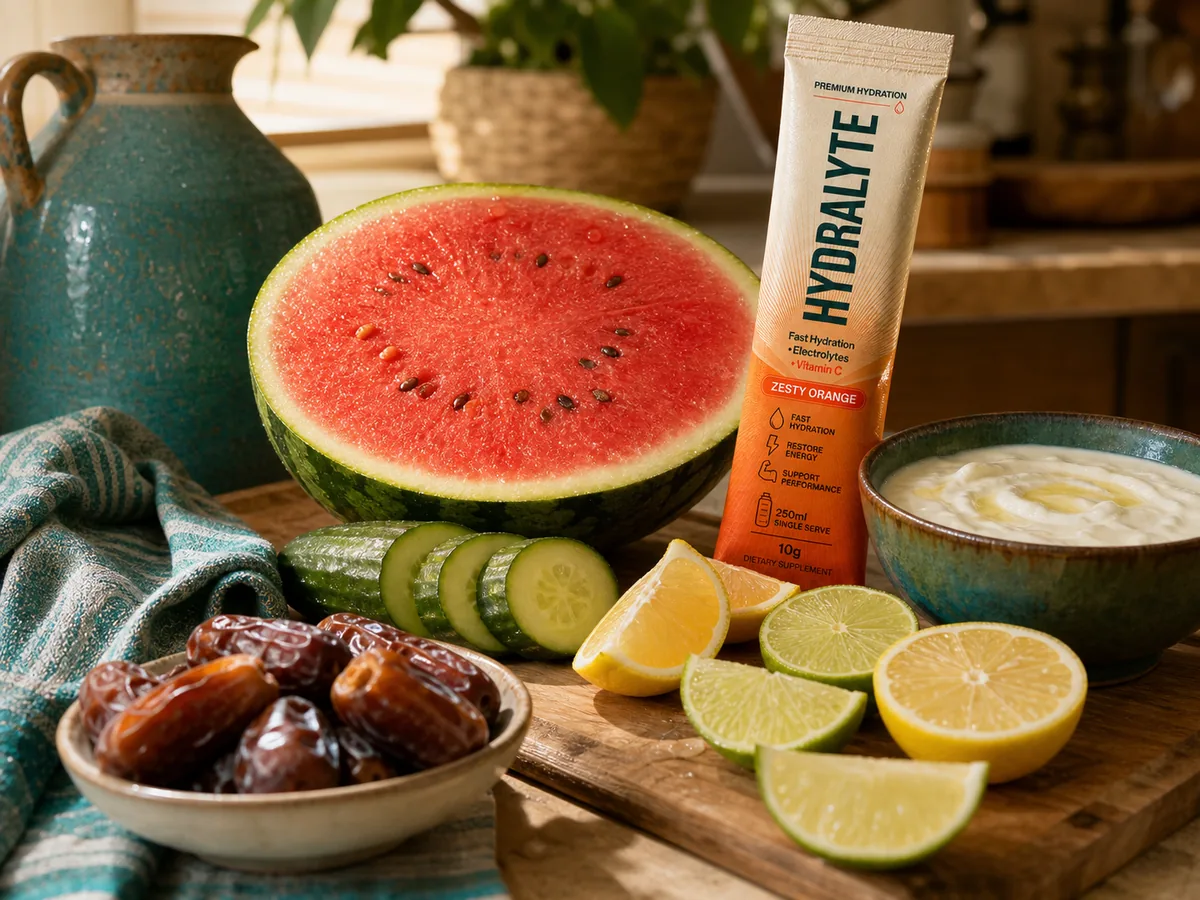
Hydration is not only what you pour into a glass. A meaningful share of your daily fluid arrives on your plate, and the UAE's markets and hypermarkets are generously stocked with the produce to make that effortless. Watermelon is more than 90 per cent water and a Gulf summer staple for good reason. Cucumber, tomato, citrus fruits, and leafy greens all carry high water content alongside vitamins and minerals. Yoghurt and laban add fluid plus a useful dose of potassium and calcium, which is why a cold glass of laban with lunch does double duty in the heat.
Coconut water, laban and the natural electrolyte drinks
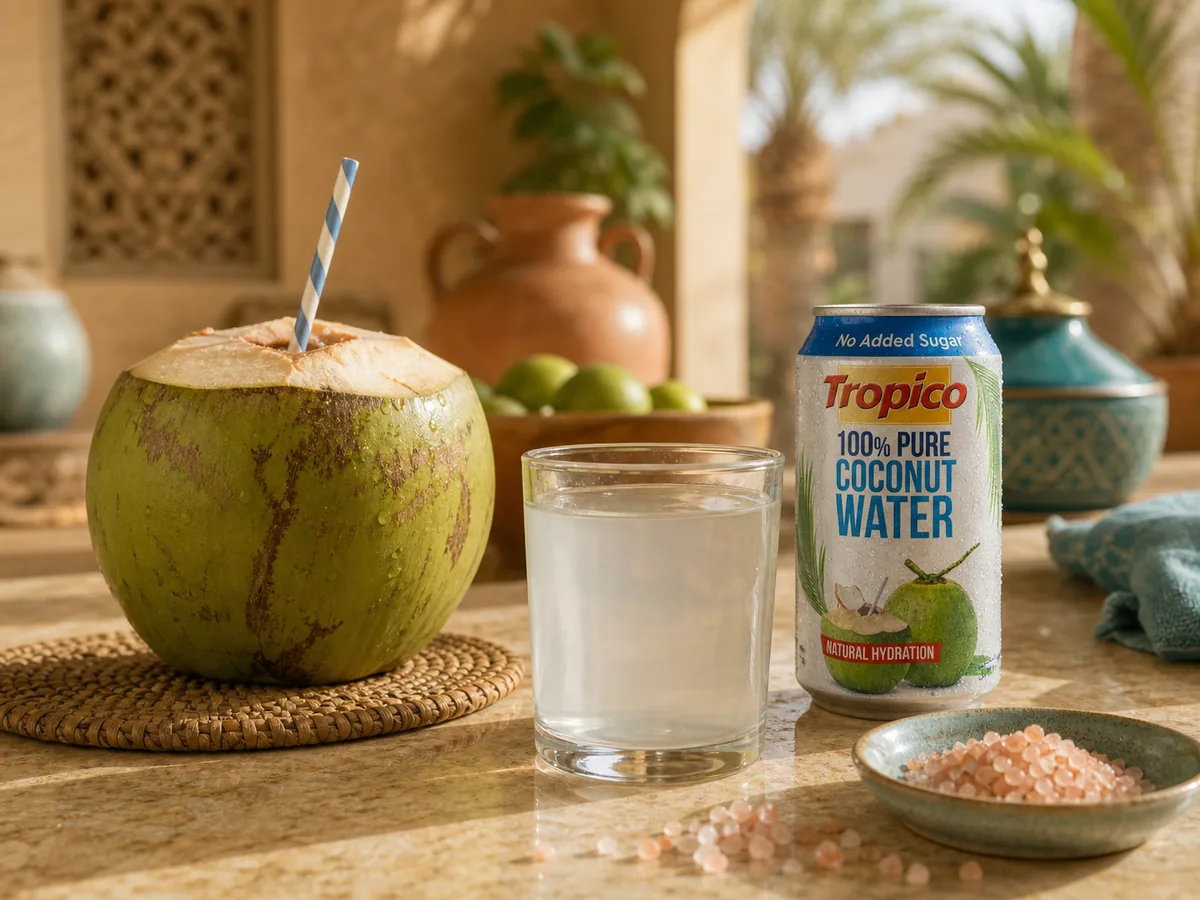
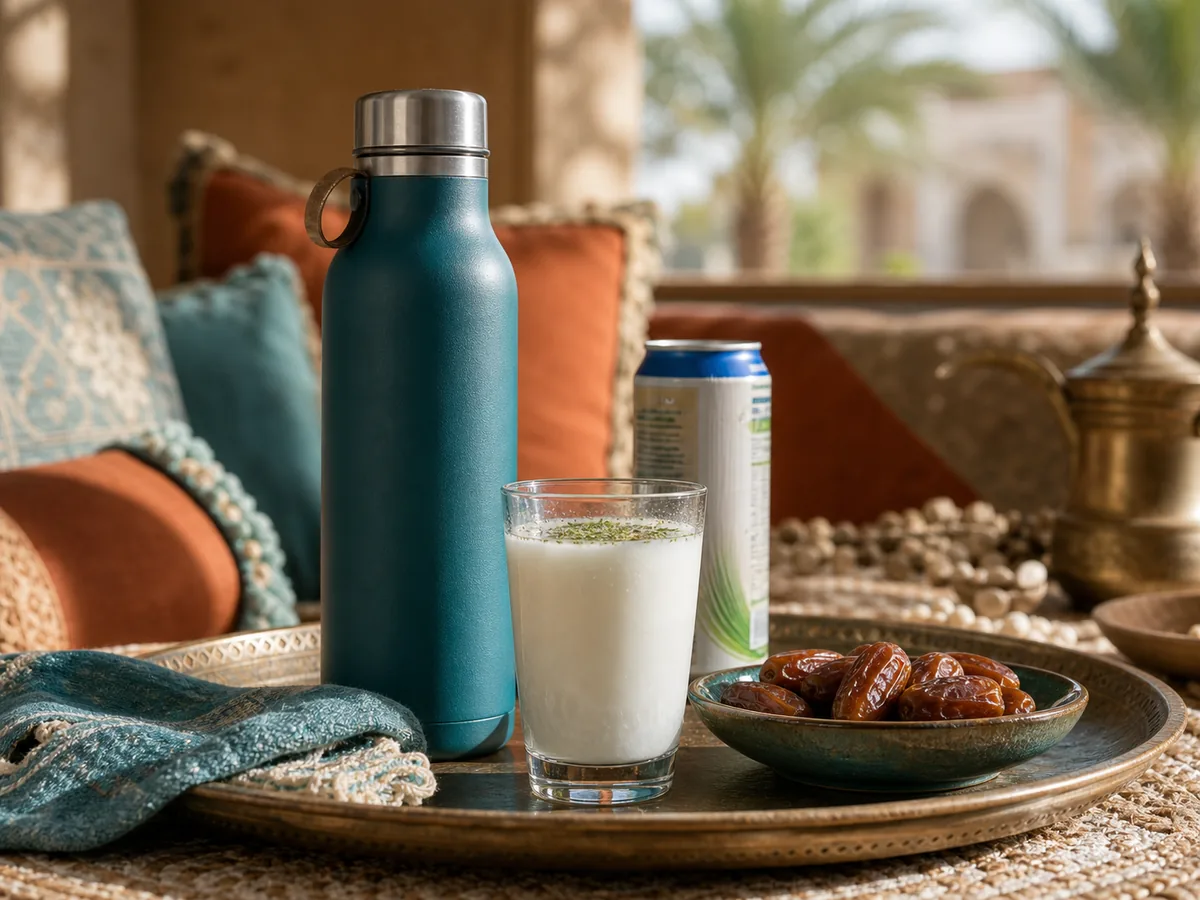
Coconut water has earned its reputation honestly. It is naturally rich in potassium and contains useful magnesium, making it a refreshing natural source of electrolytes that suits a hot afternoon well. Laban, the salted cultured buttermilk that anchors Gulf and South Asian tables, delivers fluid, sodium and potassium together, which is close to what your body wants after sweating. These traditional drinks were not designed in a laboratory, yet they align neatly with the science: fluid carried alongside the minerals that help it stay in your body. Served chilled, they are both a pleasure and a strategy.
Dates, nuts and potassium-dense snacks
The date is the Gulf's perfect hot-climate food. A few dates deliver quick, natural energy along with a genuine hit of potassium and magnesium, which is precisely why breaking a fast with dates is physiological wisdom dressed as tradition. Nuts and seeds add magnesium and a steadier release of energy, and dried apricots are quietly potassium-dense. A bowl of mixed nuts and dried fruit in the majlis is hospitality and hydration support in one. Build a plate that combines pantry essentials, fresh water-rich produce and dairy, and you will find a balanced meal quietly contributes a meaningful portion of your daily fluid before you have even reached for your water bottle. Our %stock your shop or worksite with us% spans exactly these staples, the dates, nuts, grains and dairy that turn everyday meals into hydration allies.
A practical UAE hydration routine, hour by hour
Knowing the science is one thing; building it into a Gulf summer day is another. The shape of a smart routine follows the heat. Front-load your fluids in the cooler morning hours, when your body absorbs them comfortably and you bank a head start before the sun climbs. A glass of water with breakfast, another before you leave the house, sets the tone. Through the air-conditioned indoor hours, keep up a steady rhythm of sips rather than waiting for a thirst that will arrive too late. Then, around any outdoor exposure, the commute, the school run, a walk to the shops, a worksite shift, build in a deliberate electrolyte top-up both before and after, not just plain water.
Small tactics make the habit stick. Carry an insulated bottle that keeps water cold in a car that hits oven temperatures within minutes; warm water is a habit-killer. Make plain water more inviting by infusing it with fresh mint, cucumber and a squeeze of lemon or lime, a trick that costs almost nothing and dramatically increases how much most people drink. Pre-hydrate before you step into the heat rather than trying to claw back the deficit afterwards. And go easy on the dehydrating culprits: heavy caffeine and sugary aerated drinks both work against you, the first as a mild diuretic and the second by being hypertonic and slow to absorb.
One paradox catches almost everyone. Air-conditioning is itself dehydrating. The cool, dried air of a Dubai office or a Sharjah flat steadily pulls moisture from your skin and breath, and because you feel comfortable rather than hot, you forget to drink. Cool does not mean covered. Some of the quietest dehydration in the UAE happens to people who never set foot in the sun all day, sitting in chilled offices, sipping nothing but coffee. Keep that bottle on the desk and drink from it indoors too.
Ramadan, the majlis and hydration on a fasting clock
Ramadan in summer is the toughest hydration test the Gulf calendar offers. With no food or drink from dawn to sunset, the entire day's fluid load must be carried by two windows: suhoor before dawn and iftar after sunset. The challenge is to use those hours wisely rather than simply drinking a litre at once, which the body cannot bank.
At suhoor, lean on water-rich, slow-releasing foods that keep you hydrated deep into the fasting day. A bowl of laban, a yoghurt-based dish, soups, and plenty of cucumber, tomato and melon do more lasting good than a quick coffee. Easing off heavily salted and caffeinated foods at suhoor reduces the thirst and fluid loss they trigger later. At iftar, break the fast as tradition wisely dictates, with dates and water, restoring potassium and gentle energy before the meal, then space your fluid intake steadily across the non-fasting evening hours rather than gulping it all at once. Soups, fresh juices and laban between iftar and suhoor quietly rebuild your reserves. The body absorbs a steady stream far better than a sudden flood.
Ramadan is also a season of hospitality, and the majlis carries its own hydration duty of care. Keeping guests refreshed with chilled water, glasses of laban, and fresh seasonal juices is both gracious entertaining and genuine welfare, especially for older relatives and anyone who has fasted through a long, hot day. A well-stocked majlis fridge is part of looking after the people in your home.
Hydration for the people who work and play in the heat
Some lives run straight through the worst of the Gulf summer, and they need more than general advice. Outdoor and construction workers face the highest exposure, and the UAE's midday work ban exists precisely to remove them from the most dangerous hours. Around that, the protective routine is scheduled electrolyte breaks rather than occasional ones, isotonic rehydration alongside plain water, shaded rest, and pacing that respects the heat rather than fighting it. A worksite cooler stocked with water and ORS is not a luxury; it is basic safety infrastructure.
Athletes carry their own demands. Runners, footballers and anyone training through the UAE summer sweat at high rates for sustained periods, the exact profile that calls for electrolyte replacement, not water alone, and for the hyponatremia caution covered earlier. Hydrate before, during and after, and weigh the wisdom of training in the cooler edges of the day. Families heading to the beach, the desert or the park should pack as if hydration is part of the kit, because under a Gulf sun it is: cold water, electrolyte drinks, water-rich snacks and shade.
Certain groups dehydrate faster and deserve closer watching. Young children have a higher surface-area-to-body ratio and lose fluid quickly, yet are poor at flagging their own thirst, so offer them drinks proactively. Older adults feel thirst less keenly and may be on medications that affect fluid balance, making scheduled intake important rather than optional. Anyone managing a chronic condition should treat summer hydration as part of their care and seek medical guidance on their specific needs. In each case the principle holds: do not wait for thirst, and do not rely on water alone when the sweating is heavy.
Stocking a hydration-ready home, shop or worksite
Turn the science into a shopping list and the whole summer gets easier. For a hydration-ready home, keep the fridge and cupboard stocked with: a few well-formulated electrolyte drinks and a box of ORS sachets for illness or heavy heat; coconut water for a natural potassium top-up; laban and plain yoghurt; a steady supply of fresh water-rich produce such as watermelon, cucumber, citrus and tomatoes; and a jar each of dates and mixed nuts for potassium-dense, energy-steadying snacks. Add an insulated bottle per family member and the habit almost builds itself.
For retailers and baqala owners, summer is the season to build a hydration shelf that earns its space. Group the essentials together so a shopper grabs the whole solution in one reach: electrolyte drinks and ORS at eye level, coconut water and laban chilled and visible, dates and nuts nearby, water-rich produce well stocked. A clearly merchandised hydration corner moves fast through the hot months because it answers a need every customer feels daily. This is where Bagason works behind the scenes, connecting trusted hydration brands, pantry essentials, spices and snacks to shops across the UAE and the wider GCC, so the products that keep families safe in the heat are reliably on the shelf where they are needed.
A simple seasonal checklist to act on today: keep an insulated bottle within reach indoors and out; check your urine colour as your daily hydration gauge; sip steadily rather than waiting for thirst; pair water with electrolytes after any heavy sweating; lean on water-rich foods, laban and coconut water alongside what you drink; keep ORS sachets on hand for illness or severe heat; and watch over the children, older relatives and outdoor workers in your circle who feel the Gulf summer hardest. Stock smart, sip ahead, and the heat becomes something you manage rather than something that manages you.
Learn more about see how we keep shelves stocked across the Gulf.
Frequently Asked Questions
How much water should I drink per day in the UAE summer?
There is no single magic number, because your needs rise and fall with how much you sweat. In the Gulf summer, an active adult or anyone spending time outdoors will need considerably more than the often-quoted two litres, sometimes three to four litres or more on a heavy day. Rather than chasing a fixed target, use your urine colour as a live gauge: pale straw means you are on track, while darker yellow means drink more. Crucially, on days of heavy sweating, pair some of that water with electrolytes rather than relying on plain water alone.
Are electrolyte drinks better than plain water in the heat?
For light activity and short spells in the heat, plain water is perfectly fine. But after sustained, heavy sweating, for more than an hour outdoors, a hot worksite shift, or intense training, electrolyte drinks are genuinely better, because they replace the sodium and potassium you lose in sweat. Those minerals help the water you drink actually stay in your body and reach your cells. They also protect against hyponatremia, the dilution of blood sodium that can result from drinking large volumes of plain water after heavy sweating.
Can you really drink too much water?
Yes, though dehydration is far more common in the UAE. Drinking excessive plain water after heavy sweating, without replacing sodium, can dilute the sodium in your blood and cause hyponatremia, with symptoms including headache, nausea, bloating and confusion that can become serious. The people most at risk are outdoor workers and endurance athletes who sweat heavily then over-drink water alone. The solution is not to drink less overall but to pair water with electrolytes after sustained sweating.
Is coconut water good for hydration?
Coconut water is a genuinely good natural source of hydration, rich in potassium and containing useful magnesium, which makes it a refreshing choice on a hot Gulf afternoon. It is lower in sodium than a clinical rehydration solution, so for severe dehydration from illness or extreme heat an ORS sachet is more complete. For everyday refreshment and topping up after moderate sweating, though, chilled coconut water is both pleasant and effective, and it sits comfortably alongside laban among the Gulf's natural electrolyte drinks.
How should I stay hydrated while fasting during Ramadan?
With no daytime intake, suhoor and iftar must carry the full hydration load. At suhoor, choose water-rich, slow-releasing foods such as laban, yoghurt, soups, cucumber and melon, and go easy on salty and caffeinated items that increase later thirst. Break your fast at iftar with dates and water to restore potassium and gentle energy, then space your fluids steadily across the evening rather than gulping large amounts at once. Soups, fresh juices and laban between iftar and suhoor help rebuild your reserves for the next fasting day.
What are the early signs of dehydration in the heat?
Watch for a dry or tacky mouth, headache, fatigue out of proportion to your activity, difficulty concentrating, muscle cramps and darker, stronger-smelling urine. If ignored, these can progress to dizziness, a racing heart, nausea and the disorientation of heat exhaustion, which needs prompt attention and cooling. Because thirst lags behind your actual fluid deficit, do not wait to feel thirsty before drinking. The urine-colour check is the simplest reliable daily test: aim for pale straw, and catch up whenever it turns apple-juice dark.
<div class="bgn-blog-cta" style="margin-top:36px;padding:24px 26px;border-radius:14px;background:#f5f2ee;border:1px solid rgba(0,0,0,0.07);border-left:4px solid #CA7345;"><p style="margin:0 0 10px;font-weight:700;color:#1a6985;font-size:1.02rem;">Distribution solutions from Bagason Group</p><p style="margin:0 0 12px;color:#555;font-size:0.92rem;">Bagason Group distributes 700+ products to 30,000+ retail outlets across the UAE and GCC. Explore the pages most relevant to this article:</p><ul style="margin:0;padding-left:1.1rem;line-height:1.9;"><li><a href="/fmcg-distributor-uae">FMCG Distributor UAE</a></li><li><a href="/fmcg-distributor-abu-dhabi">FMCG Distributor in Abu Dhabi</a></li><li><a href="/fmcg-distributor-sharjah">FMCG Distributor in Sharjah</a></li><li><a href="/fmcg-distributor-northern-emirates">FMCG Distributor Northern Emirates</a></li></ul></div><div class="bgn-author-eeat" style="margin-top:28px;padding:20px 24px;border-radius:14px;display:flex;gap:16px;align-items:flex-start;background:#fff;border:1px solid rgba(0,0,0,0.08);"><div style="flex:0 0 52px;height:52px;border-radius:50%;background:linear-gradient(135deg,#1a6985,#CA7345);display:flex;align-items:center;justify-content:center;color:#fff;font-weight:800;font-size:1.1rem;">BG</div><div><p style="margin:0;font-weight:700;color:#2b2b2b;">Bagason Editorial Team</p><p style="margin:2px 0 8px;font-size:0.82rem;color:#888;text-transform:uppercase;letter-spacing:0.05em;">FMCG Distribution Editorial Desk · Bagason Group, Dubai</p><p style="margin:0;font-size:0.92rem;color:#555;line-height:1.6;">Written by the editorial desk of <a href="/about-us" style="color:#1a6985;font-weight:600;text-decoration:none;">Bagason Group</a>, a Dubai-based FMCG distributor operating since 2007 with 700+ products, 30,000+ retail outlets and coverage across all seven emirates and the GCC. Learn more about <a href="/what-we-do" style="color:#1a6985;font-weight:600;text-decoration:none;">how we distribute</a>.</p></div></div>