The first week of Ramadan in the UAE has a particular kind of chaos. By four in the afternoon, the car park at the hypermarket in Mirdif or Al Wahda is full, trolleys are colliding in the dates aisle, and someone is standing in front of an empty shelf where the vermicelli was an hour ago. You have not eaten or drunk since before dawn. The maghrib call is creeping closer. And you are trying to make decisions about a month's worth of cooking on a body running on nothing. That is the moment a stocked pantry quietly saves you from.
Prepping a Ramadan pantry is not about hoarding. It is about buying back your evenings. When the loomi, the lentils, the sella rice, the ghee and the good dates are already in the cupboard, the hour before iftar becomes about ladling soup and arranging a tray, not about a frantic run to the baqala for the one thing you forgot. This guide walks through exactly what to stock, in what quantities, and when to buy it, shaped around how fasting actually works in the Gulf heat and how the UAE iftar table really looks, with its layers of Emirati, South Asian, Levantine, Egyptian and Filipino dishes all sharing one spread.
Why a Stocked Pantry Changes the Whole Month
Fasting is the easy part to romanticise. The harder, less talked-about reality is the logistics. You wake before fajr half-asleep and need food that will carry you through a fourteen-plus hour fast. You break that fast at sunset, often with guests, and then somehow produce a full meal. Do that for thirty days while also working, parenting, praying taraweeh and sleeping in fragments, and the weak link is almost never your willpower. It is your kitchen running out of things at the worst possible moment.
The first ten days are when UAE hypermarkets feel the squeeze hardest. Spinneys, Lulu, Carrefour and Union Coop all see a spike, shelves of dates and dairy empty faster than they restock, and the queues at the tills stretch past the freezers. If your dry goods are already home before Ramadan begins, you skip that scrum entirely. You are not one of the thousand people fighting over the last bag of basmati at five o'clock with low blood sugar and a short temper.
There is a quieter benefit too, and it is the real point of the month. A planned pantry shifts your energy away from acquisition and towards everything Ramadan is supposed to be about. Time you would have spent circling a car park you instead spend setting the majlis, calling family back home, hosting neighbours, or simply sitting in the last ten minutes before maghrib in the kind of stillness the season is meant to hold. The fridge is full, the spice shelf is ready, and the cooking becomes a calm ritual rather than a daily emergency.
It is kinder to the household budget, as well. Shopping hungry and unplanned is how the trolley fills with things you did not need and forgets the things you did. A pantry built from a proper Ramadan grocery list cuts the impulse buys, the duplicate jars of cumin, the third tub of dates because you could not remember whether you had any. It also cuts waste, which matters enormously in a month that is, at its heart, about restraint and gratitude. When you know what you have and what each meal needs, far less food ends up scraped into the bin at the end of a long, generous iftar. Steadier spending, less waste, calmer evenings: that is what a well-stocked cupboard buys you, and it pays out every single day for a month.
The Rhythm of Suhoor and Iftar: What Your Pantry Actually Has to Do
A Ramadan pantry is not one pantry. It is two jobs sharing a cupboard, and they pull in opposite directions across the twenty-four hour cycle. Understand the two jobs and the shopping list almost writes itself.
The pre-dawn suhoor job: slow energy and hydration
Suhoor is the meal that has to do the impossible: keep you steady through a Gulf daytime fast that, depending on where Ramadan falls in the year, can run from roughly fourteen hours in winter to over fifteen in high summer. The goal is not to eat as much as you can. It is to eat the right things, the ones that release energy slowly and hold water in the body.
That means your suhoor stores lean on slow-release carbohydrates and protein rather than fast sugar. Rolled oats cooked into a warm porridge with milk and a few dates. Wholegrain bread, foul medames, eggs, labneh, cheese. A bowl of overnight oats with banana. South Asian households might reach for a paratha with yoghurt, or leftover daal and rice that sits heavy and slow in the stomach in the best way. The pantry items that serve suhoor are oats, eggs, pulses, wholegrain flours, dairy and the dates that go into almost everything. Water-rich foods matter too, because hydration is the silent battle of a summer fast. Cucumber, watermelon, yoghurt-based dishes and laban all help you carry water into the long day ahead, and a salty-leaning suhoor holds onto that water better than a sweet one.
The iftar job: gentle break, then a full meal
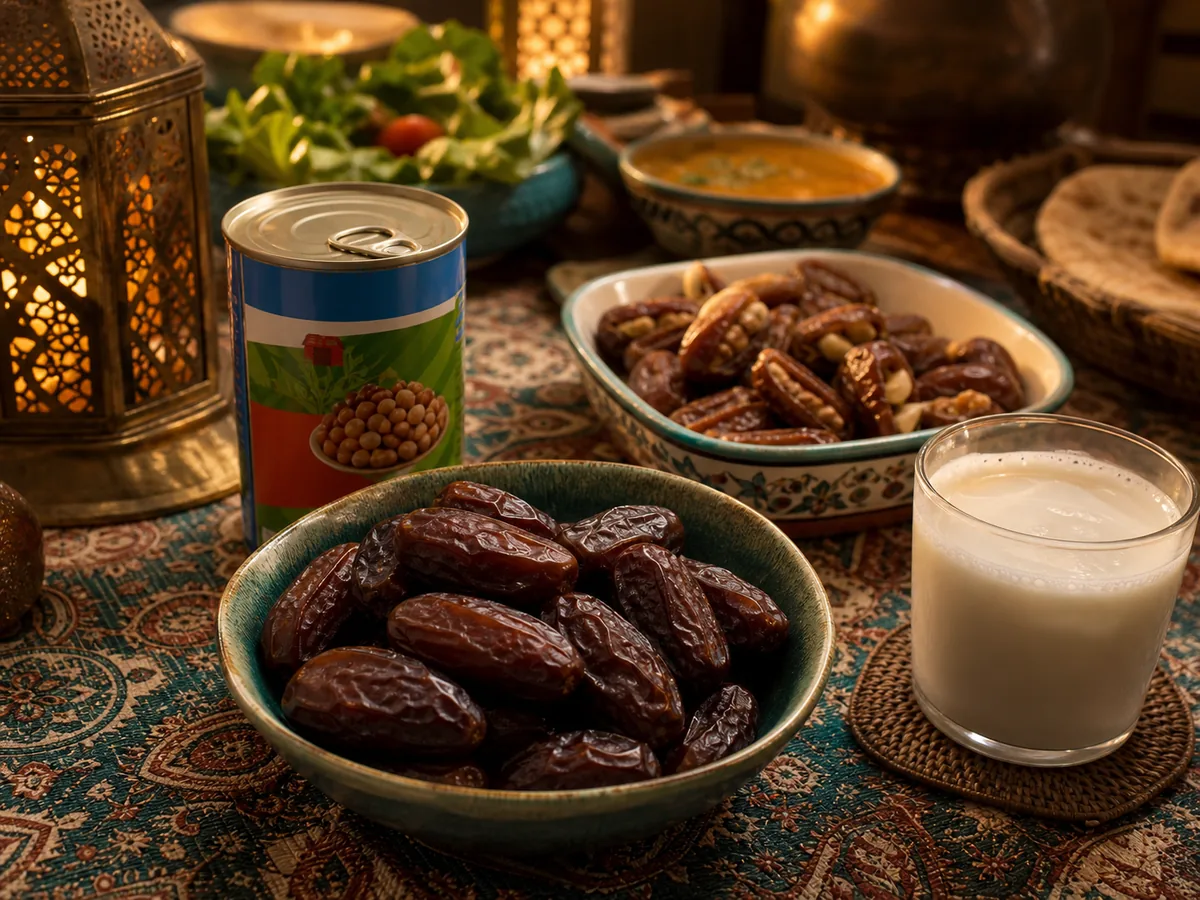
Iftar runs in two movements. First, the gentle break. After a long fast, you do not slam the body with a heavy plate. You open with dates and water, the way the tradition prescribes and the way physiology agrees with: a couple of dates lift your blood sugar fast and gently, water rehydrates, and a warm soup, a shorba or a lentil-based harira, eases the stomach back into action. Then, after maghrib prayer, comes the full meal, the biryani or the machboos or the grilled meats and rice, the salads, the samboosa, the spread that turns iftar into a gathering.
Your pantry has to support both movements. For the gentle opening it needs dates, the makings of soup (lentils, vermicelli, stock, loomi), and traditional drinks. For the main event it needs the grains, the spice base, the oils for frying, the flours for breads and pastries. The summer heat shapes all of it. When iftar falls late and the day has been forty-plus degrees, portions at the break should stay light and hydrating, because overloading a dehydrated body is what causes the post-iftar slump everyone in the UAE knows. Stock so that the first plate can be small and smart, and the table can still be generous after.
A Short History of the Ramadan Table in the Gulf
The staples in a UAE Ramadan pantry are not arbitrary. They carry centuries of Gulf life in them. Long before the malls and the hypermarkets, the Emirati Ramadan table was built around what the land, the sea and the trade routes provided: dates from the palms, fish from the creek, rice and spices carried in on dhows from India and East Africa, and slow, nourishing dishes designed to feed many mouths from simple ingredients.
Harees is the clearest example, wheat and meat pounded together for hours into a smooth, comforting porridge that is pure Ramadan in the Emirates and across the Gulf. Thareed, layers of thin regag bread soaked in a rich meat and vegetable stew, is so beloved it has its own place in Emirati cultural memory. Then there are the Ramadan soups, the shorba and the lentil-based broths that open nearly every iftar, and the dates and laban that have broken fasts here for as long as anyone can trace. These are not nostalgia foods. They are the practical answer to feeding a fasting household well, and they remain the backbone of the table.
What makes the UAE iftar spread so distinctive today is everything that has been layered on top of that Gulf foundation. The Emirates is built from communities, and each one brought its Ramadan to the table. South Asian families set down biryani, haleem, pakora, chana and sweet sheer khurma and jalebi. Levantine households brought fattoush, hummus, fatteh, stuffed vine leaves and the syrup-soaked qatayef of the region. Egyptian kitchens contributed koshari, molokhia and konafa. Filipino families added their own dishes to shared iftars among colleagues and friends. Walk into a mixed UAE household or a community iftar and you will find samboosa next to spring rolls next to kibbeh next to a tray of dates, all on one table.
This is why a UAE pantry has to be broader than any single cuisine. The same cupboard might need basmati for biryani, bulgur for kibbeh, vermicelli for sheer khurma, chickpeas for hummus and red lentils for shorba, because over a month the cook is moving fluidly between all of these traditions. Understanding that heritage is what tells you which staples genuinely belong in your kitchen rather than which ones a generic list assumes. The ingredients are the inheritance; stocking them well is how the table keeps its memory.
Pantry Foundations: Grains, Pulses and Flours
Everything else is seasoning on top of this layer. Grains, pulses and flours are the carbohydrate and protein engine of the whole month, the bulk of what fills plates at both suhoor and iftar, and the things you most want bought early and stored well before the rush.
Rice, oats and grains for energy
Rice is the centre of gravity. For a UAE household you genuinely want two kinds. Basmati, long and aromatic, is your biryani and pulao rice, the one for the celebratory plates. Sella rice, the parboiled grain that stays separate and firm, is the workhorse for machboos and large-batch cooking where you do not want the grains to break or clump. Buy both. A family of four to five cooking most iftars at home will move through a serious amount of rice across thirty days, and a five-kilo bag of each, sometimes more for a household that hosts, is not excessive when you reckon the whole month.
Beyond rice, the grain shelf earns its keep. Rolled oats are the quiet hero of suhoor, cooked into porridge that holds you for hours. Vermicelli, the fine roasted seviyan, is non-negotiable for sheer khurma and a dozen other sweet and savoury dishes. Bulgur (burghul) brings the Levantine side of the table to life in tabbouleh, kibbeh and pilafs. Semolina (sooji or smeed) turns into halwa, basbousa and the dusting on fried sweets. And ordinary all-purpose flour underpins everything from samboosa wrappers to rotis to the thickening of a stew. Keep wheat for harees if your household makes it, and you have covered the grain map of a UAE Ramadan.
Lentils, chickpeas and beans
Pulses do double duty: they are protein and they are the soul of the soups that open iftar. Red lentils (masoor daal) cook down fast and silky and are the base of countless shorba and the celebrated harira that breaks fasts across the region. Chana, both the chickpeas and the split chana daal, run through South Asian Ramadan cooking, from chana chaat at iftar to the daals of suhoor. White beans and chickpeas for hummus, foul and fatteh bring in the Levantine and Egyptian dishes. Whole dried chickpeas soaked overnight, or the convenience of tinned ones for the nights you have no time, both deserve a place.
For quantities, think in kilos, not handfuls. A kilo or two of red lentils, a kilo of chana daal, chickpeas and white beans each, scaled up if your house feeds many or hosts often, will see most families comfortably through. Pulses are cheap, they keep for ages, and they are exactly the kind of dry good you want sitting in the cupboard before the first crowds hit the shops.
Storage matters more in the UAE than the packets suggest, because the enemy here is humidity and pantry pests. Flour, rice, semolina and pulses all attract weevils and go off faster in a warm, damp Gulf kitchen than in a cooler climate. Decant your grains and pulses into airtight containers rather than leaving them in their bags, keep them out of the cupboard above the stove where heat builds, and if you have the fridge or freezer space, chilling flour and rice for a day or two before storing kills off any eggs already in the grain. A few bay leaves or dried loomi tucked into the rice tin is the old trick that genuinely helps. Stored properly, your foundations will hold flawless quality from the week before Ramadan right through to Eid, which is exactly the point of buying them early. These pantry essentials are the ones to lock in first, while the shelves are still calm and the %the brands we bring to Gulf shelves% on staple lines is at its best.
Dates: The Heart of Every Iftar Table
If one ingredient defines the Ramadan pantry, it is dates. They are the first thing to touch your lips at maghrib and, in the UAE, they are a category unto themselves, an aisle rather than a shelf, with a range and quality you will not find easily anywhere else in the world.
Choosing varieties: Khalas, Khidri, Sukkari, Medjool, Ajwa
Breaking the fast with dates is both tradition and quietly brilliant nutrition. After a long fast, the body needs energy that arrives fast but not violently, and dates deliver exactly that: natural sugars for a quick lift, alongside fibre, potassium and magnesium that a depleted body is crying out for. It is the rare case where the sunnah and the sports scientist agree completely.
The UAE gives you a genuine spread of varieties to choose between, and they are not interchangeable. Khalas, the everyday Emirati favourite, is balanced, caramel-sweet and not too soft, the all-rounder you can buy by the kilo for daily iftars. Khidri is darker, chewier and a touch less sweet, great value for a household getting through a lot. Sukkari, the name itself meaning sugary, is soft, pale and melt-in-the-mouth indulgent, the date you bring out when you want to impress and the one many keep for hosting. Medjool is the large, plump, luxurious date, ideal for stuffing and for a tray that needs to look as good as it tastes. And Ajwa, the prized variety from Madinah, carries deep religious significance and a soft, fig-like richness that puts it in a class of its own, often reserved for special moments and gifting.
A smart pantry holds at least two tiers: an everyday date like Khalas or Khidri bought generously for daily breaking of the fast, and a finer date like Sukkari, Medjool or Ajwa kept for guests and for the iftar table you want to feel special. Price tracks that logic, with the everyday varieties friendly by the kilo and the premium ones worth the extra for the nights that matter.
Storing dates in UAE heat
Dates are forgiving, but the Gulf summer tests them. Soft varieties like Sukkari and Medjool will sweat, ferment at the surface or crystallise if left in a warm kitchen, so the fridge is their friend, kept in a sealed container where they will stay perfect for months. Drier dates like Khidri keep happily in a cool cupboard but still prefer to be sealed against humidity. Buy more than you think you need, because dates disappear faster than any other item in a Ramadan house, and they store so well that nothing is wasted.
Dates are also a launchpad, not just a fruit you eat plain. Stuffing them is a Ramadan ritual in itself: a whole almond, a walnut half, a sliver of orange peel or a smear of tahini pushed into a pitted Medjool turns a simple date into a petit-four worthy of any majlis. Beyond that, dates sweeten and thicken a huge sweep of the table, blended into date balls rolled with nuts and sesame, simmered into the rich date syrup (dibs) drizzled over regag bread or stirred into laban, chopped into cakes and the date-stuffed maamoul of Eid. A generous date stock is one of the most versatile things in the whole pantry, feeding the fast-break, the dessert tray and the gift box all at once.
Cooking Fats, Oils and the Flavour Base
Grains and pulses give you bulk; fats and aromatics give you flavour. This is the layer that turns ingredients into the smells that fill a building at iftar time, and it is worth stocking with the same care as the dates.
Ghee, olive oil and the everyday fats
A UAE Ramadan kitchen really wants three fats on hand, each doing a different job. Ghee (samn) is the soul of the heritage dishes, the richness folded into harees, drizzled over machboos, browned into the base of halwa and the sweets. Nothing else gives that nutty, golden depth, and a tin of good ghee is among the most-used things in the cupboard all month. Olive oil is the Levantine and Mediterranean register, the dressing for fattoush and tabbouleh, the pool around the hummus, the finish on foul and labneh. Keep a decent extra-virgin for finishing and a lighter one for cooking. And a neutral oil, sunflower or a good vegetable blend, is what you actually fry in, because the volume of frying a Ramadan house does, samboosa, spring rolls, luqaimat, kibbeh, pakora, demands an oil with a high smoke point that you can use generously without breaking the budget.
Quantities here run higher than the rest of the year. The frying alone means a household can move through several litres of neutral oil across the month, so buying the larger format early is sensible. The one real caution is rancidity. Warm Gulf kitchens turn oils and ghee faster than cooler climates, so store oils away from the hob and out of direct light, keep them sealed, and trust your nose: any sharp, paint-like or stale smell means it has turned and should go. Buying the right amount rather than a year's supply, and keeping it cool, is how you avoid an off note ruining a tray of sweets.
Onions, garlic, tomato paste and aromatics
Almost every savoury dish on the UAE iftar table starts the same way: onions softened in fat, garlic and ginger added, tomato bringing body and colour. This is the flavour base, and stocking it well means the cooking flows. Onions and garlic you will buy fresh and in quantity, because they go into everything from the biryani to the shorba. Ginger-garlic paste, whether you make a batch and freeze it in cubes or keep a good jar, saves precious minutes on a tight pre-iftar clock. Tomato paste, the concentrated kind in tins or tubes, deepens stews, curries and the tomato base of countless dishes, and it keeps brilliantly. Round it out with stock, cubes or homemade and frozen, so a pot of soup is never more than a few minutes from starting.
These aromatics are also where a little prep pays off enormously. A few hours spent before Ramadan blitzing and freezing onion paste, ginger-garlic paste and portions of stock means that even on the most exhausted evening, the foundation of a proper meal is already waiting. The fresh items, onions, garlic, ginger, tomatoes, are the one part of the flavour base you will keep replenishing through the month, but the concentrates and pastes are pure pantry, bought once and drawn on daily. With the fats and the flavour base stocked, the cupboard is now ready to do the heavy lifting of the cooking; what comes next, the spices, the drinks, the sweets and the week-by-week plan to pull it all together, is what turns a stocked kitchen into an effortless month.
Why a Stocked Pantry Changes the Whole Month
There is a particular kind of tired that only Ramadan brings: you have fasted since before fajr, the temperature outside is somewhere north of forty, and at five in the afternoon you open the fridge to start iftar with a brain running on no fuel and no water. That is the worst possible moment to discover you are out of cumin, the lentils ran dry yesterday, and the dates have gone sticky and fermented at the back of the cupboard. Multiply that by thirty evenings and you understand why so many households spend the first week of Ramadan circling the hypermarket car park in Mirdif or Al Barsha, jostling trolleys with everyone else who left it to the last minute.
A planned pantry quietly removes that whole layer of stress. When the dry goods are already in the cupboard, the spices are fresh and labelled, and the freezer holds a tray of samboosa ready to fry, the question each afternoon shrinks from "what on earth do I cook and where do I buy it" to simply "what shall we make tonight". That shift is enormous. It moves your energy away from logistics and back towards the things the month is actually for: breaking bread with family, hosting neighbours, sitting in the majlis after taraweeh, and worship. You stop being a harried shopper and start being a host.
The budget benefits are just as real. Shopping while hungry and rushed is how impulse buys multiply, two extra trolleys of things you did not need and half of which spoil. A considered Ramadan grocery list, bought mostly in advance and in sensible quantities, means fewer panicked top-up runs, far less food waste at the end of the month, and a household budget that does not lurch from week to week. Buy the staples once, buy them well, and the rest of the month runs on autopilot.
The Rhythm of Suhoor and Iftar: What Your Pantry Actually Has to Do
A Ramadan pantry is not a normal pantry. It has to serve two completely different meals at two opposite ends of a twenty-four-hour cycle, each with its own job, and in the UAE it has to do it through fasting hours that stretch long and a climate that pulls water out of you by the hour. Understanding those two jobs is what turns a random shopping list into a kitchen that genuinely works.
The pre-dawn suhoor job: slow energy and hydration
Suhoor is the meal that has to carry you. Eaten in the quiet dark before fajr, often half-asleep, it sets up whether your day is bearable or brutal. The pantry's job here is slow-release energy and water retention, not a quick sugar hit that abandons you by mid-morning. That means complex carbohydrates that digest gently: rolled oats simmered into porridge, wholegrain breads, leftover rice, foul medames with olive oil. It means protein to keep you full: eggs, laban, labneh, a handful of nuts. And it means water-rich foods that hold hydration through a long Gulf day, cucumber, watermelon when in season, soups and yoghurt-based dishes. A suhoor built on white sugar and refined bread leaves you parched and shaky by ten. A suhoor built on oats, dates, dairy and water carries you to sunset.
The iftar job: gentle break, then a full meal
Iftar works in two movements. First the gentle break, the moment the maghrib call sounds and you reach for dates and water, exactly as tradition prescribes and exactly as physiology rewards. You are not breaking a fast so much as waking a digestive system that has been idle all day, so it starts soft: dates, water, perhaps laban or a bowl of shorba. Then, after maghrib prayer, comes the full meal, and this is where the pantry earns its keep, rice and stew, grilled meat, fresh salads, the samboosa and fritters. Stagger it this way and you avoid the heavy, bloated crash that comes from hitting an empty stomach with a mountain of fried food at speed.
The UAE context sharpens all of this. When Ramadan falls in the hotter months, fasting can run thirteen, fourteen, fifteen hours, and the heat between iftar and suhoor is relentless even after dark. Hydration stops being a nice idea and becomes the organising principle of the whole window, which is why a Gulf Ramadan pantry leans so heavily on laban, soups, juicy fruit and proper rehydration, far more than a pantry in a cooler climate ever would.
A Short History of the Ramadan Table in the Gulf
The food that lands on a UAE iftar table carries centuries in it. Long before the towers and the hypermarkets, Emirati and wider Gulf households broke their fast on dates and laban, then moved to harees, that patient dish of wheat and meat pounded for hours into something between a porridge and a stew, and thareed, layers of thin regag-style bread soaked in a rich meat-and-vegetable broth. Ramadan soups, shorba in its many forms, anchored the table because a long fast asks first for something warm, gentle and restoring. These are not nostalgia dishes. They survive because they answer the exact physiological question the fast poses.
Then the UAE became the UAE, and the iftar table opened outward. Waves of expat communities layered their own Ramadan onto the Emirati foundation. South Asian households brought haleem, pakoras, fruit chaat and the silky sweetness of sheer khurma. Levantine families set down fattoush, lentil soup, qatayef and the whole ceremony of jallab and apricot leather. Egyptian kitchens contributed konafa and koshari-adjacent comfort food. Filipino communities added their own sweet and savoury rhythms. Today a single Dubai building can carry a dozen Ramadan traditions up and down its corridors at maghrib, and the baqala downstairs stocks for all of them.
That layered heritage is precisely why certain staples belong in every UAE pantry regardless of where the cook is from. Dates, lentils, rice, vermicelli, ghee, the core spices, these are the shared vocabulary. They sit at the meeting point of Emirati harees, Hyderabadi haleem, Lebanese shorba and Egyptian sweets. Stock them and you are equipped not just for your own table but for the genuinely cross-cultural one that defines Ramadan in the Emirates.
Pantry Foundations: Grains, Pulses and Flours
Everything else is seasoning. The grains, pulses and flours are the structural load-bearing wall of the Ramadan pantry, the foundation that turns thirty days of cooking from a scramble into a system. Get these right and in the right quantities, and most iftars assemble themselves.
Rice, oats and grains for energy
Rice is non-negotiable. Long-grain basmati for biryani, machboos and the everyday pilaf, plus sella (parboiled) basmati if your household cooks large pots that need to hold their grain without going sticky, which most Ramadan kitchens do. Rolled oats earn a permanent shelf spot for suhoor, the single best slow-release breakfast for a long fast. Keep vermicelli (seviyan) for sheer khurma and the toasted rice-and-vermicelli base of many pilafs. Bulgur for tabbouleh and kibbeh, semolina (sooji) for halwa and upma, and a good all-purpose flour plus a bag of fine atta for fresh chapati and the wraps your samboosa will need. %the regions and markets we cover%
Lentils, chickpeas and beans
Pulses are the quiet heroes of Ramadan: cheap, filling, protein-dense and central to the soups that open nearly every iftar across the region. Red lentils (masoor dal) cook down fast into the classic shorba and into Levantine lentil soup. Chana dal and whole chickpeas serve haleem, channa masala and hummus. White beans and chickpeas anchor harira, the Maghrebi tomato-and-pulse soup that has spread across Gulf tables. Foul (fava beans), tinned or dried, feed countless suhoors with foul medames. Keep two or three varieties at minimum, soups change every night, but the lentil pot is the constant.
For a family of four to five cooking most meals at home, a realistic month looks roughly like 10 to 15 kg of rice, 3 to 4 kg of mixed lentils and pulses, a couple of kilos of oats, plus flour, vermicelli and semolina to taste. Buy a little extra rather than a little less, dry goods keep, and a late-night run for lentils is the kind of small misery a stocked pantry exists to prevent. Storage matters more than people expect in this climate. UAE humidity turns flour weevilly and oats musty if you leave them in their paper bags. Decant everything into airtight containers, glass or heavy plastic with proper seals, keep them out of direct sun and away from the cooker's heat, and tuck a few bay leaves into the rice and flour to deter pantry moths. A cool, dark cupboard is your best friend in a Gulf kitchen.
Dates: The Heart of Every Iftar Table
If one item defines the Ramadan pantry, it is dates. Breaking the fast with dates is sunnah, following the Prophet's own practice, and it happens to be quietly brilliant nutrition. After a long fast your blood sugar is low, and a date delivers fast, natural energy alongside fibre, potassium and a little magnesium, the gentlest possible way to wake the body before the main meal. Tradition and physiology arrive at the same answer.
Choosing varieties: Khalas, Khidri, Sukkari, Medjool, Ajwa
The UAE is spoilt for choice, and the varieties genuinely differ. Khalas is the everyday Emirati favourite, balanced, caramel-toned, firm enough to handle. Khidri is darker, chewier and well-priced, a sensible choice for a household working through kilos across the month. Sukkari, the name means "sugary", is soft, pale-golden and intensely sweet, beloved for snacking and for offering to guests. Medjool is the large, glossy, almost toffee-like date that hosting tables reach for and that takes a nut stuffing beautifully. Ajwa, the prized dark date of Madinah, carries deep religious significance and a price to match; most families keep a small box for its barakah and for special offering rather than daily eating. A practical pantry holds two tiers: a generous quantity of an everyday variety like Khidri or Khalas for nightly iftar, and a smaller box of something special, Medjool, Sukkari or Ajwa, for guests and gifting.
Storing dates in UAE heat
Dates are forgiving but the Gulf summer is not. Soft varieties like Sukkari and Medjool will ferment and sweat if left on a warm counter, so keep the bulk in the fridge in an airtight container and bring out only what you will use in a day or two. Drier dates like Khidri are happier at room temperature in a sealed tub. Beyond plain eating, dates are a whole sub-pantry of their own: stuff Medjools with almonds, walnuts or a curl of orange peel; blend soft dates into milkshakes and date-and-banana smoothies for suhoor; simmer them into date syrup (dibs) to drizzle over labneh; and fold chopped dates through the sheer khurma and the maamoul. A box of good dates is the most versatile thing in the entire cupboard.
Cooking Fats, Oils and the Flavour Base
Fat is flavour, and Ramadan cooking leans on it across every register, from the richness of festive sweets to the crisp shell of a perfectly fried samboosa. Getting the fats and the savoury base right is what separates food that tastes like Ramadan from food that merely fills a plate.
Ghee, olive oil and the everyday fats
Three fats cover almost everything. Ghee (samn) is the soul of Gulf cooking, the nutty depth in harees and machboos, the richness in halwa, sheer khurma and luqaimat. A good tub of ghee, whether traditional samn or a quality clarified butter, is essential. Olive oil handles the Levantine half of the table: drizzled over hummus and foul, dressing fattoush and tabbouleh, finishing a lentil soup. Keep a robust extra-virgin for finishing and a lighter olive oil for cooking. And you will want a neutral, high-smoke-point oil, sunflower or a quality vegetable blend, for the serious frying that Ramadan demands: samboosa, pakora, luqaimat and spring rolls all want clean, hot oil that will not burn or impart flavour.
Onions, garlic, tomato paste and aromatics
Behind every shorba, machboos and daal sits the same quiet foundation. Onions in quantity, a Ramadan kitchen gets through them, plus plenty of garlic and ginger, ideally also as a jar of ginger-garlic paste for the nights when you simply do not have the energy to peel and pound. Tomato paste in tins or tubes builds the body of soups and stews, and a few tins of chopped tomatoes earn their place too. Keep stock cubes or bouillon for quick broth, and tamarind paste for the sour note in haleem and certain shorbas. This handful of aromatics is the difference between a stew that tastes flat and one that tastes built.
On quantity and storage: buy ghee and oils in sizes you will actually finish within a month or two, because warm kitchens turn fats rancid faster than cool ones. Store oils away from the cooker and out of light, keep opened ghee sealed, and trust your nose, any sharp, crayon-like or stale smell means it has turned and should go. A 5 kg sack of onions, a couple of garlic nets, a clutch of tomato paste tins and your three core fats will carry most households comfortably through the month. %common questions about sourcing and supply%
Spices, Seasonings and the Smell of Ramadan
Walk past a building at iftar and you can smell the month before you see a single table, cumin blooming in hot ghee, cardamom in the coffee, cinnamon in the sweets. Spices are not an afterthought in the Ramadan pantry; they are the thing that makes everything taste like Ramadan, and a well-stocked spice shelf does more work for the money than any other category.
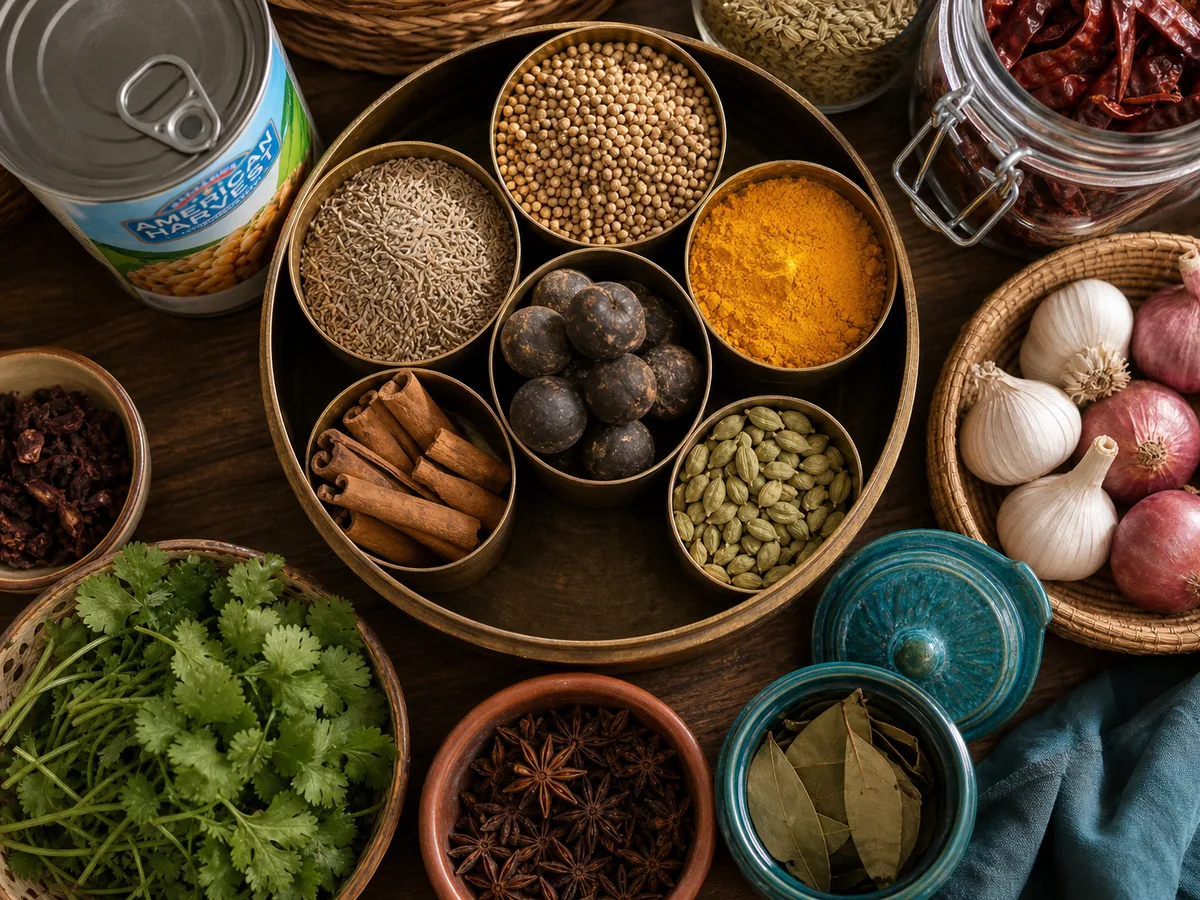
The essential shelf is shorter than people fear. Cumin and coriander, whole and ground, form the backbone of nearly every savoury dish. Turmeric for colour and earthiness. Cinnamon and cardamom, the twin aromatics that cross effortlessly from machboos to sheer khurma to gahwa. Black pepper, cloves, bay leaves. And the two that mark the cooking as genuinely Gulf: loomi (dried black lime), whose sour, smoky funk defines Emirati machboos and shorba, and bezar, the regional spice blend, every family has its own, that seasons the local stews. Add chilli to taste, a jar of garam masala for the South Asian dishes, and you can cook across four cuisines from one shelf.
The economy of spices is in their double duty. The same cardamom that perfumes your rice sweetens your sheer khurma; the same cinnamon that warms a meat stew scents your luqaimat syrup; saffron colours both a festive biryani and a bowl of milk pudding. A small, considered spice collection stretches across the savoury and the sweet without you noticing the seam. On buying: whole spices keep their oils far longer than ground, so buy cumin seeds, coriander seeds, cardamom pods and cinnamon sticks whole where you can and grind in small batches, the difference in a fresh-ground machboos is night and day. Spices do not spoil so much as fade; if a jar smells of nothing, it is doing nothing, and a tired batch is worth replacing before the month begins. Across UAE shelves, the trusted spice brands that Bagason helps distribute, from everyday cumin and turmeric to ready-blended bezar and biryani mixes, are what keep this shelf stocked when half the country is buying the same jars in the same fortnight.
Hydration and Drinks: Surviving a Gulf Summer Fast
In a UAE Ramadan, the drinks shelf is not a luxury, it is survival kit. The hours between iftar and suhoor are when you reclaim a full day's lost water in a climate that keeps pulling it back out, and the traditional Ramadan drinks evolved precisely to make that rehydration both effective and joyful.
Stock the classics. Laban, the salty cultured buttermilk, is the quintessential Gulf iftar drink, cooling, hydrating and gentle on a fasting stomach. Vimto holds an almost ceremonial place on the Ramadan table across the Gulf, its dark fruit syrup poured generously the moment maghrib sounds. Jallab, with its dates, grape molasses, rosewater and a float of pine nuts and raisins, is the Levantine table's centrepiece. Tamarind (tamr hindi) makes a tart, thirst-quenching cordial. Qamar al-din, the apricot leather dissolved into a thick nectar, is Ramadan in a glass for many households. Rose syrup and rooh afza tint the milk drinks pink and fragrant. A few bottles of these turn an ordinary iftar into the real thing.
Behind the celebration drinks sits the serious business of hydration. Keep plenty of water, more than you think, and consider rehydration salts or an electrolyte sachet or two for the long hot days, particularly for anyone working outdoors or training. The smart strategy is to sip steadily across the whole window rather than drowning yourself at iftar and again at suhoor, which only leaves you sloshing and still thirsty by noon. Go easy on the heavily sugared and caffeinated drinks: a giant sweet karak at iftar feels wonderful and then drops your energy off a cliff, and too much caffeine before a fast guarantees a brutal afternoon headache. Lean on laban, water and the lighter traditional drinks for the bulk of your hydration, and keep the sweet stuff as a treat rather than the main event.
Snacks, Sweets and the Iftar Spread
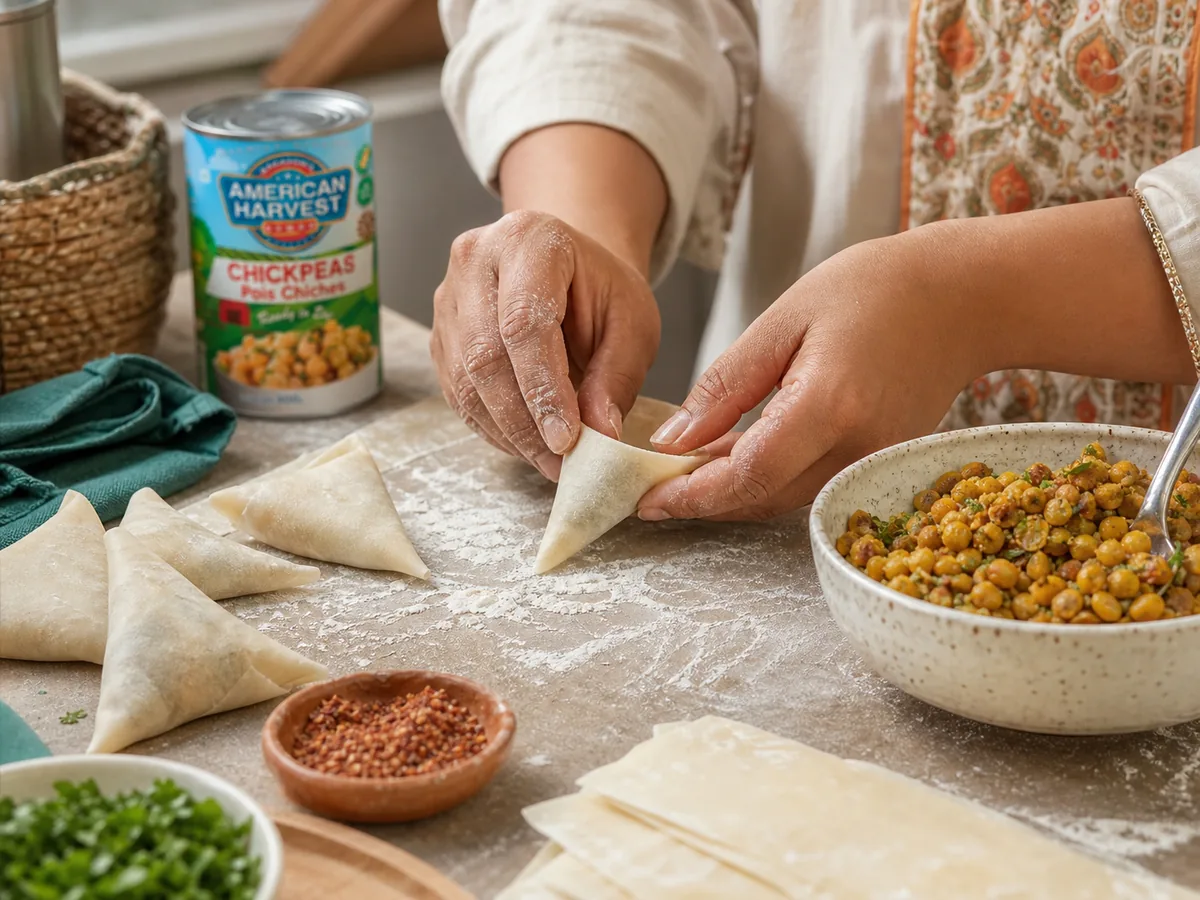
The spread is where Ramadan shows off, and a stocked pantry lets you produce it without a daily emergency. The savoury side starts with samboosa wrappers (spring-roll pastry), bought by the pack and stashed in the freezer, ready to be filled with spiced mince, cheese or vegetables and fried crisp. Keep gram flour for pakoras and bhajiya, and breadcrumbs for kibbeh and cutlets. On the sweet side, vermicelli for sheer khurma, kunafa (kataifi) dough and a block of mozzarella or akkawi for the cheese pull, a good honey and a bag of sugar for syrups, and the nuts and dried fruit that crown nearly every dessert, pistachios, almonds, walnuts, cashews, plus raisins, dried apricots and shredded coconut. With those in the cupboard, qatayef, luqaimat, basbousa and maamoul are all within reach on any given evening.
The trick is balance. An iftar spread that is wall-to-wall fried and syrup-soaked looks magnificent and leaves everyone heavy and sluggish for taraweeh. Set the indulgent treats, the samboosa, the kunafa, the luqaimat, against lighter options that carry their own pleasure: a platter of fresh fruit, a bowl of dates, a dish of mixed nuts, some cut vegetables with hummus. Let the heavy things be the highlight rather than the whole table, and both your guests and your digestion will thank you. Much of this can be kept ready to go, and the reason those samboosa wrappers, kunafa dough and tubs of nuts are reliably on UAE shelves through the demand spike is distributors stocking them deep and early. Bagason's snacks range, alongside the pantry, spice and hydration lines, is part of how the iftar spread stays achievable even in the busiest fortnight of the year.
A Week-by-Week UAE Stocking and Prep Plan
Knowing what to buy is half the battle; knowing when to buy it is what keeps you out of the first-week crush. Here is a realistic timeline for a UAE household.
Two weeks before: bulk dry goods
This is your big shop, and doing it early is the single best decision you will make. A fortnight out, the hypermarkets are calm, the shelves are full, and the Ramadan promotions and Price Lock deals on rice, oil, dates, lentils and spices are live before stock thins. Buy the entire dry foundation now: the rice and flour, the lentils and pulses, the oats and vermicelli, the ghee and oils, the full spice shelf, the tinned tomatoes and pastes, the long-life laban and the drinks. Decant everything into airtight storage as you unpack. Done properly, this one trip means you spend the rest of Ramadan buying only fresh produce, dairy and bread, never fighting a Thursday-night crowd for a bag of red lentils.
The final week: fresh, dairy and freezer prep
With the cupboard already full, the last week before Ramadan is for the perishables and the prep. Top up on fresh laban, labneh, eggs, milk and cheese, and the vegetables and fruit for the first few days. Then put in the batch work that makes the whole month easier: fold and freeze trays of samboosa so they go straight from freezer to fryer; cook and freeze a base of caramelised onions or a tomato-onion masala for instant stews; freeze portions of homemade stock; soak and freeze pre-cooked chickpeas and lentils; and grind your spice blends into labelled jars, your own bezar and biryani mix, ready to scoop. An hour of prep now buys you a dozen calmer evenings later.
It helps to keep a simple checklist taped inside the cupboard door, organised by the way you actually shop: pantry essentials (rice, lentils, flour, oats, oils, ghee, tinned goods), spices (the core shelf plus loomi and bezar), snacks and sweets (samboosa wrappers, vermicelli, kunafa, nuts, dried fruit, honey), and hydration (laban, Vimto, jallab, qamar al-din, water, electrolytes). Tick the dry section off two weeks out, the fresh and freezer section in the final week, and you arrive at the first iftar with a kitchen that is genuinely ready.
Keeping Shelves Full: How Brands and Distributors Power Your Ramadan
None of this works if the shelves are empty when you arrive, and keeping them full through the single most intense retail fortnight of the UAE year is a quiet feat of logistics most shoppers never see. Demand for dates, ghee, rice, spices and laban does not rise gently in Ramadan; it spikes, and it spikes everywhere at once, from the big-box hypermarkets in Dubai and Abu Dhabi down to the corner baqala that the whole neighbourhood relies on at nine at night. Meeting that surge means forecasting it months ahead, importing and warehousing deep, and feeding stock onto shelves fast enough that the cumin and the Khidri dates are still there in week three.
That behind-the-scenes work is exactly where a distributor earns its place. Bagason sits between trusted brands and Gulf shoppers across the four categories this whole guide is built on, the pantry essentials, the spices, the snacks and the hydration, working to keep them reliably stocked across UAE and wider GCC retail through the peak. The dates on your iftar table, the bezar in your machboos, the samboosa wrappers in your freezer and the laban in your fridge all travelled a long, well-managed road to reach the shelf you grabbed them from.
Do the planning, stock the foundations early, prep the freezer, and the rest takes care of itself. A Ramadan pantry that is properly set up gives you back the only thing the month really asks for, time and presence, so that when maghrib sounds and you reach for that first date, the kitchen behind you is calm, the cupboard is full, and there is nothing left to do but gather, eat and give thanks.
Learn more about how we keep UAE shelves stocked.
Frequently Asked Questions
When should I start stocking my Ramadan pantry in the UAE?
Do your big dry-goods shop about two weeks before Ramadan begins. The hypermarkets are far calmer then, shelves are fully stocked, and the best Ramadan promotions on rice, dates, oil and lentils are usually live before stock thins out. Leave only fresh produce, dairy and bread for the final week. Shopping early is the single most effective way to avoid the notorious first-week crush at stores in Dubai and Abu Dhabi.
Which dates are best for iftar in the UAE?
For everyday iftar, Khidri and Khalas offer excellent value, good texture and balanced sweetness for working through kilos across the month. For hosting and gifting, reach for soft, toffee-like Medjool, intensely sweet Sukkari, or the prized Ajwa from Madinah, which many families keep in a small box for its religious significance. A practical approach is to stock a generous amount of an everyday variety and a smaller box of something special for guests.
How do I store dates and dry goods in UAE heat and humidity?
Keep soft dates like Sukkari and Medjool in the fridge in an airtight container, as they ferment and sweat in warm rooms; drier dates like Khidri are fine sealed at room temperature. Decant flour, rice, oats, lentils and spices into airtight containers rather than leaving them in paper bags, store them in a cool, dark cupboard away from the cooker, and tuck a few bay leaves into the rice and flour to deter pantry moths.
What should I eat at suhoor to stay full and hydrated all day?
Build suhoor around slow-release carbohydrates and water-rich foods rather than sugar. Rolled oats, wholegrain bread, foul medames, eggs, laban, labneh, a handful of nuts and hydrating foods like cucumber and yoghurt will carry you far further than refined bread and sweet drinks, which leave you parched and shaky by mid-morning. Finish suhoor with water sipped steadily rather than gulped all at once.
What are the essential spices for Ramadan cooking?
The core shelf is cumin, coriander, turmeric, cinnamon, cardamom, black pepper, cloves and bay leaves, plus two that mark Gulf cooking specifically: loomi (dried black lime) for machboos and shorba, and bezar, the regional blend. Add chilli and a garam masala for South Asian dishes. Buy whole spices where you can and grind in small batches for far better flavour, and replace any jar that has lost its aroma before the month starts.
What traditional drinks should I stock for iftar in the Gulf?
Stock laban for cooling, gentle hydration, plus Vimto, which holds a near-ceremonial place on Gulf iftar tables. Add jallab, tamarind cordial, qamar al-din (apricot nectar) and rose syrup for variety. Behind these, keep plenty of water and a few electrolyte or rehydration sachets for the long hot days, and go easy on heavily sugared and caffeinated drinks to avoid energy crashes and afternoon headaches.
<div class="bgn-blog-cta" style="margin-top:36px;padding:24px 26px;border-radius:14px;background:#f5f2ee;border:1px solid rgba(0,0,0,0.07);border-left:4px solid #CA7345;"><p style="margin:0 0 10px;font-weight:700;color:#1a6985;font-size:1.02rem;">Distribution solutions from Bagason Group</p><p style="margin:0 0 12px;color:#555;font-size:0.92rem;">Bagason Group distributes 700+ products to 30,000+ retail outlets across the UAE and GCC. Explore the pages most relevant to this article:</p><ul style="margin:0;padding-left:1.1rem;line-height:1.9;"><li><a href="/fmcg-distributor-uae">FMCG Distributor UAE</a></li><li><a href="/fmcg-distributor-abu-dhabi">FMCG Distributor in Abu Dhabi</a></li><li><a href="/fmcg-distributor-dubai">FMCG Distributor in Dubai</a></li><li><a href="/traditional-trade-van-sales-uae">Traditional Trade and Van Sales</a></li></ul></div><div class="bgn-author-eeat" style="margin-top:28px;padding:20px 24px;border-radius:14px;display:flex;gap:16px;align-items:flex-start;background:#fff;border:1px solid rgba(0,0,0,0.08);"><div style="flex:0 0 52px;height:52px;border-radius:50%;background:linear-gradient(135deg,#1a6985,#CA7345);display:flex;align-items:center;justify-content:center;color:#fff;font-weight:800;font-size:1.1rem;">BG</div><div><p style="margin:0;font-weight:700;color:#2b2b2b;">Bagason Editorial Team</p><p style="margin:2px 0 8px;font-size:0.82rem;color:#888;text-transform:uppercase;letter-spacing:0.05em;">FMCG Distribution Editorial Desk · Bagason Group, Dubai</p><p style="margin:0;font-size:0.92rem;color:#555;line-height:1.6;">Written by the editorial desk of <a href="/about-us" style="color:#1a6985;font-weight:600;text-decoration:none;">Bagason Group</a>, a Dubai-based FMCG distributor operating since 2007 with 700+ products, 30,000+ retail outlets and coverage across all seven emirates and the GCC. Learn more about <a href="/what-we-do" style="color:#1a6985;font-weight:600;text-decoration:none;">how we distribute</a>.</p></div></div>