Open any kitchen drawer in a Dubai flat at half past four in the afternoon and you'll find the story of how Gulf snacking is changing. A few years ago the drawer held a sleeve of cream-filled biscuits, a multipack of chocolate wafers and a bottle of fizzy orange for the kids' return from school. Today, next to the dates, you're as likely to find a foil pouch of roasted chickpeas, a single-serve tub of unsweetened laban, a high-protein bar tucked behind the car keys for the gym, and a bag of lentil puffs that the seven-year-old genuinely prefers to crisps. Nobody threw the old drawer away. The dates stayed. The cardamom-spiced nuts stayed. What happened is that the drawer grew up.
This shift is one of the most concrete consumer trends in the Emirates right now, and it isn't a fad imported wholesale from a Western wellness aisle. It's the Gulf household quietly recalibrating around its own climate, its own meal rhythms, its own faith calendar and its own crowded, competitive retail shelves. If you're trying to feed a family well in the UAE in 2026 — through forty-five-degree summers, long working days, late majlis evenings and the discipline of Ramadan — knowing how to read a snack, not just grab one, has become a genuinely useful skill. This guide is built to give you that skill, shelf by shelf.
How the Gulf snack drawer changed
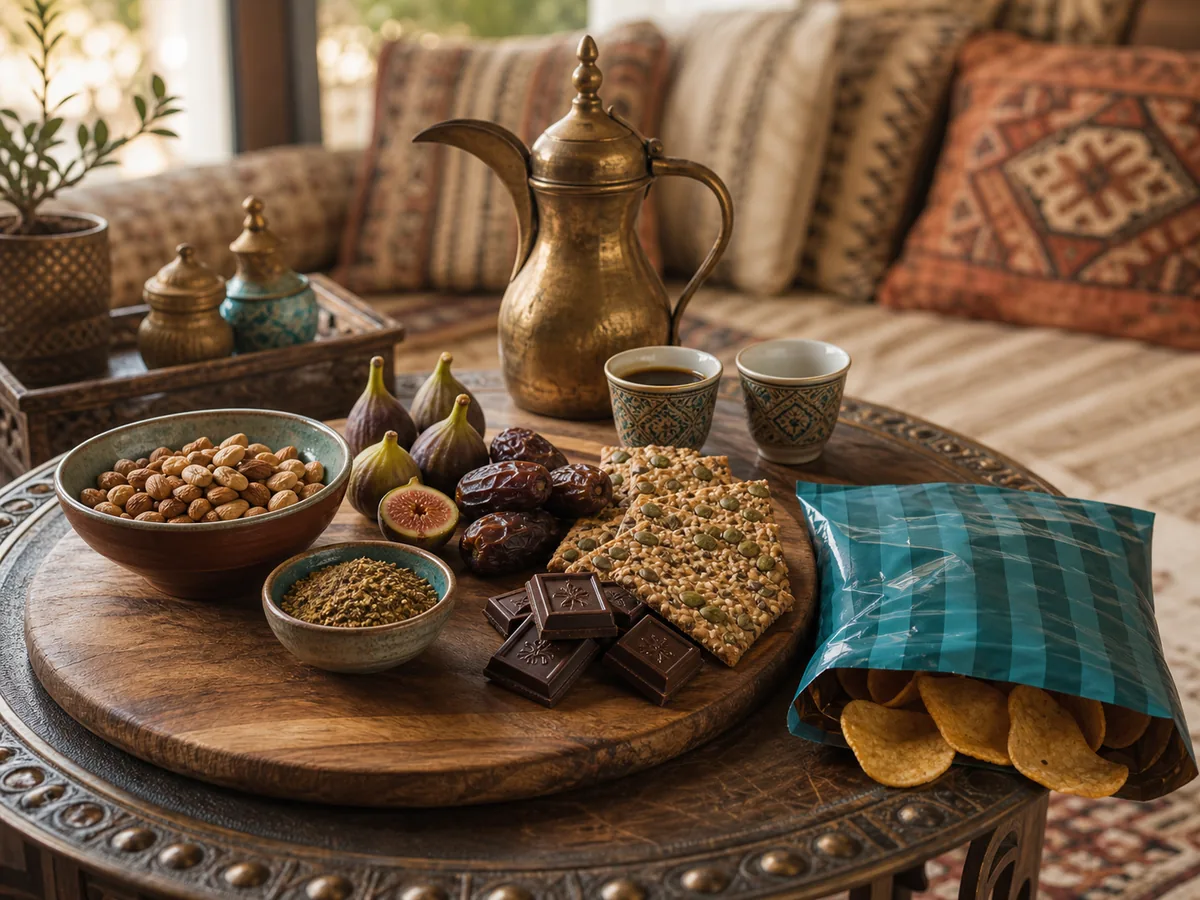
To understand where snacking in the Emirates is heading, it helps to remember where it sat for generations. The classic majlis spread is a thing of real beauty and hospitality: a brass tray of plump Khalas and Khenaizi dates, bowls of salted pistachios and almonds, dried apricots and figs, Arabic coffee scented with cardamom and saffron, and — somewhere in the mix — a row of cold soft drinks for guests and children. That spread fed weddings, condolences, Eid mornings and ordinary Friday gatherings. It was never unhealthy in spirit. Dates and nuts are nutrient-dense whole foods. The drift toward trouble came later, with the fizzy drinks, the boxed wafers and the syrupy bottled juices that crept in alongside the tradition.
What's striking about 2026 is that the better-for-you wave isn't asking Gulf families to abandon any of that. It's adding to it. The same tray now often carries a bowl of unsweetened dried mango next to the sugared apricots, a dish of dukkah for dipping warm bread, dark chocolate at seventy per cent cocoa beside the milk chocolate, and pulse-based crackers alongside the regular ones. The protein bar in the car, the labneh cup at the office, the seed crackers in the pantry — these are extensions of an existing culture of generous, frequent snacking, not a rejection of it. That framing matters, because trends that fight a region's food heritage rarely last. Trends that work with it tend to stick.
The numbers behind the shift are not trivial. UAE demand for healthy snacks sat near USD 810 million in 2025 and is forecast to climb past USD 1.1 billion by 2032, a trajectory that distributors and retailers across the country are actively building shelves around. Roughly two in three UAE adults — about 66 per cent — now describe themselves as health-concerned when they shop for food, and buying behaviour around organic and free-from products has measurably risen year on year. Put plainly, a clear majority of the people standing next to you in the Carrefour snack aisle are at least glancing at the back of the pack before it goes in the trolley. The %the snack, pantry, spice and hydration brands we distribute% that fill those aisles have responded, reformulating recipes, cutting added sugar and adding protein and fibre claims that would have been niche a decade ago.
What counts as a better-for-you snack
"Healthy" on a snack pack is a slippery word with no single legal definition, which is exactly why marketers love it. A more useful frame is "better-for-you" — a comparative idea rather than an absolute one. A better-for-you snack is one that delivers more of what your body actually needs between meals (protein, fibre, slow-release energy, useful fats, vitamins and minerals) and less of what tends to be over-consumed in a Gulf diet heavy on refined carbohydrates and sugar (added sugars, refined starches, excess sodium and the kind of fats that come along for free in deep-fried packaged goods).
In practical terms, a snack earns the better-for-you label when it does a job beyond simply tasting nice and filling a gap. Roasted chickpeas bring protein and fibre. A handful of almonds brings protein, healthy fat and magnesium. Unsweetened Greek-style labneh brings protein and gut-friendly cultures. Seed crackers bring fibre and minerals. None of these are miracle foods, and none of them are calorie-free. The point isn't sainthood. It's that each one earns its place in the drawer by doing something for you, rather than quietly working against the long, hot, demanding shape of a Gulf day.
Who is driving the change: Gen Z, young parents and the fitness crowd
Three groups are doing most of the pulling. The first is Gen Z — UAE residents in their late teens and twenties who grew up with nutrition apps, fitness influencers and an instinct to photograph a label before buying it. They drive demand for high protein snacks in Dubai's gym culture, for plant based snacks UAE retailers now stock as standard, and for clean label snacks Gulf brands market on transparency rather than indulgence. They read ingredient lists the way an earlier generation read football scores.
The second group is young parents, often expats juggling two careers and a school run, who want kids healthy snacks UAE shops can supply without a fight at the checkout. They're the ones scanning lunchbox-friendly options, hunting for lower-sugar yoghurts and quietly despairing at cartoon packaging. The third is the fitness and wellness crowd — a large, visible community in a country obsessed with padel courts, Spartan races, long-course swimming and the Dubai Fitness Challenge every autumn. For them, a snack is fuel with macros, and a bar that doesn't list its protein-to-sugar ratio simply doesn't get bought. Together, these three groups have made better-for-you snacking trends UAE-wide a mainstream commercial force, not a corner of the health-food shop.
Reading the label like a Gulf shopper
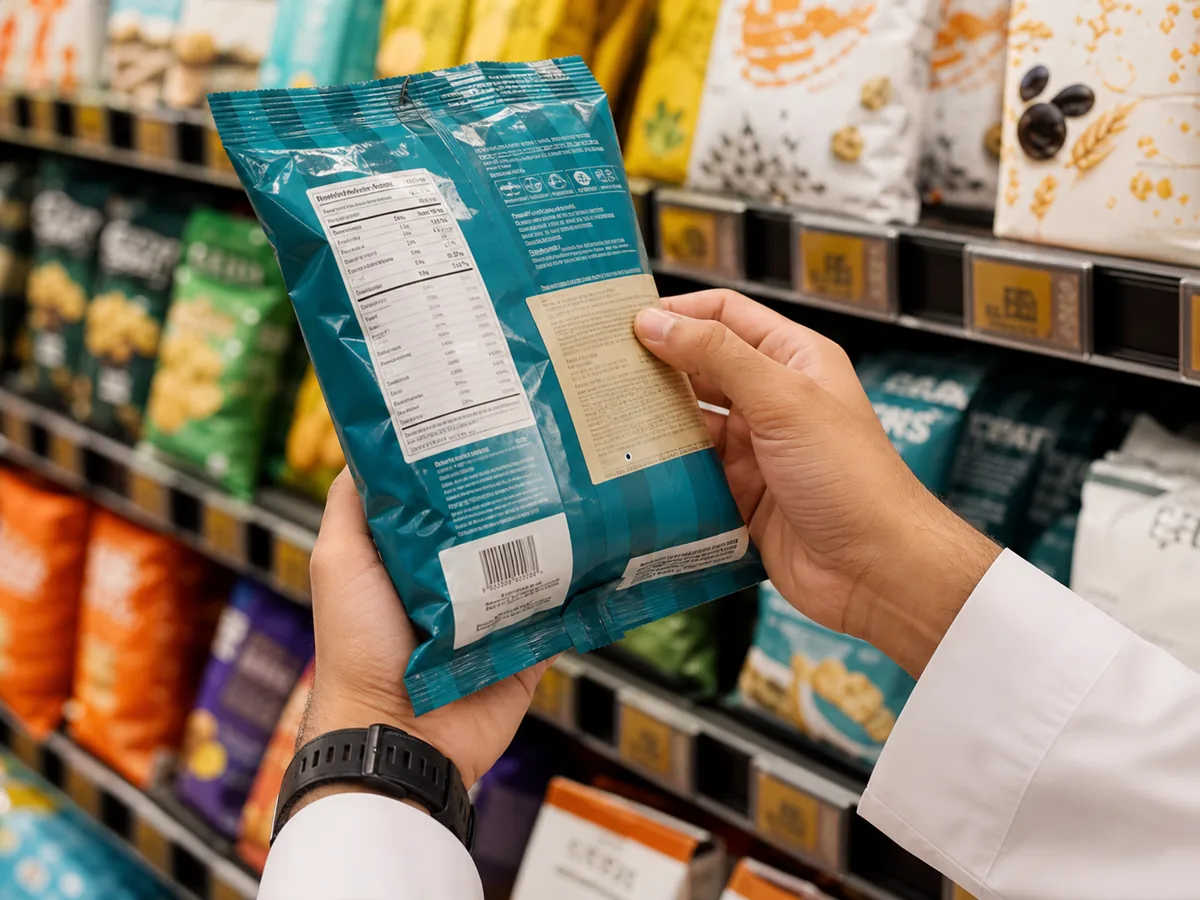
The single most useful habit you can build is turning the pack over. Every legitimately imported and locally produced snack on a UAE shelf carries a regulated label, and once you know what the regulations require, you know exactly which panel to trust and which marketing to ignore. The Emirates Authority for Standardization and Metrology (ESMA) sets the rules for food labelling in the UAE, and they're more shopper-friendly than many people realise.
Under ESMA food labelling UAE requirements, a packaged snack must declare its nutrition information in a standardised panel, with energy, fat, saturated fat, carbohydrate, sugars, protein and salt laid out clearly. Crucially, the label must show values per 100g (or per 100ml) as well as, often, per serving. The pack must carry both Arabic and English — the Arabic isn't decorative, it's a legal requirement — and the ingredients must be listed in descending order by weight, so whatever appears first is what there's most of. Most snacks sold to the Muslim-majority market also carry a Halal mark from an approved certifier, and many display country of origin, a production and expiry date, and storage instructions that genuinely matter in this climate.
Knowing how to read nutrition labels UAE-style means using these rules as tools. Ingredient order tells you the truth that the front of the pack often softens: if a "fruit" bar lists glucose syrup before the fruit, you're holding a sweet wrapped in fruit's reputation. The per-100g column lets you compare two packs of wildly different sizes on equal terms. And the dual-language requirement means nothing important can hide — if a claim only appears in glossy English on the front and never in the regulated Arabic-and-English panel on the back, treat it as marketing, not fact.
Per 100g versus per serving
Here's where most shoppers get quietly fooled, and it's worth slowing down for. Manufacturers are allowed to define their own "serving size," and they choose it strategically. A bag of pitta chips might declare a serving of 25g — about a third of the bag — so the sugar, salt and calorie figures on the front look modest. Nobody opens that bag and eats exactly one-third. You eat the bag.
The per-100g column is your defence. Because it's a fixed reference, it lets you compare any two products honestly regardless of how each brand has gamed its serving size. A quick rule of thumb worth memorising for solid snacks: per 100g, low sugar is roughly 5g or less and high sugar is around 22.5g or more; low salt is about 0.3g or less and high is 1.5g or more; low saturated fat is about 1.5g or less and high is 5g or more. Glance at the per-100g sugar figure first. If it's north of 20g, you're holding a confection no matter what the front says about oats, fruit or protein. Then sanity-check the serving size against how much you'll realistically eat, and multiply the per-serving figures up if the brand has been optimistic about your self-control.
This single habit — read per 100g, then reality-check the serving — does more to separate genuine low sugar snacks UAE shelves from cleverly-marketed sweets than any front-of-pack badge. It takes about ten seconds once it's automatic.
Spotting hidden sugars and oils
Added sugar is a master of disguise, and the ingredient list is where it hides in plain sight. Sugar shows up under dozens of aliases: glucose syrup, glucose-fructose syrup, dextrose, maltodextrin, invert sugar, cane juice, fruit-juice concentrate, date syrup, honey, agave and rice malt among them. A favourite trick is splitting sugar across several of these names so that no single one rises to the top of the ingredient list, even though their combined weight would. If you see three or four different sweeteners scattered through a short ingredient list, mentally add them together — collectively they may well be the main event.
"Fruit-juice concentrate" deserves special suspicion. It lets a bar claim "no added sugar" or "sweetened only with fruit" while delivering a sugar hit barely distinguishable from table sugar in your bloodstream. The dried-fruit-and-juice-concentrate combination is the workhorse of the "healthy" snack-bar category, and it's why so many of them carry 20g-plus of sugar per 100g while wearing green packaging.
Oils tell a quieter story. The ingredient list will name the fat used, and there's a meaningful difference worth understanding. Palm oil and palm kernel oil are cheap, shelf-stable and high in saturated fat, which is why they dominate mass-market baked and fried snacks. Seed and nut oils — sunflower, rapeseed, olive, the fat that's naturally inside almonds and pistachios — generally bring a more favourable fat profile. None of this makes palm oil poison or olive oil a health tonic, but when you're choosing between two similar crisps, the one fried in sunflower oil rather than palm usually edges it. The label tells you which is which; the front of the pack rarely volunteers it.
Nutri-Mark: Abu Dhabi's A-to-E front-of-pack rating
For all the value of turning a pack over, sometimes you've got a trolley to fill and three minutes to do it. This is where Abu Dhabi's Nutri-Mark system earns its keep. Live and mandatory from June 2025, the Nutri-Mark front of pack label is a colour-coded A-to-E rating designed to give shoppers a three-second verdict on a product's overall nutritional quality, with A (dark green) at the healthy end and E (red) at the indulgent end.
What makes Nutri-Mark more useful than a generic imported scoring system is that it has been tuned for the region. The algorithm behind the letter weighs the nutrients that matter most in Gulf diets and is designed to sit comfortably alongside Halal context and regional eating patterns, rather than judging a date-and-nut bar by criteria built for a different cuisine. Used well, it's a brilliant triage tool. Standing in front of a wall of cereal bars, you can sweep the grades, push the D and E options aside, and concentrate your label-reading energy on the As, Bs and Cs. It turns an overwhelming shelf into a shortlist in seconds.
The caution — and it's an important one — is that a single letter can never carry the full story. Nutri-Mark scores a product holistically, balancing the good (fibre, protein, fruit, nut and pulse content) against the less good (sugar, saturated fat, salt, calorie density). That balancing act means a snack can earn a respectable B while still being higher in sugar per serving than you'd want for, say, a child right before bed. A B-rated granola bar is genuinely better-composed than an E-rated chocolate one, but it isn't automatically "low sugar." Treat the front grade as your first filter and the back panel as your final check. The letter tells you which packs deserve a closer look; the per-100g sugar, salt and protein figures tell you whether to actually buy. Front grade to shortlist, back panel to decide — that's the workflow that consistently puts genuinely healthy snacks UAE 2026 shelves offer into your trolley.
Protein, fibre and the satiety maths
Once you can read a label and triage a shelf, the next question is what a snack should actually contain to be worth eating. The honest answer for most adults comes down to two nutrients that do the heavy lifting on fullness: protein and fibre. A snack built around them keeps you satisfied for hours. A snack built around refined carbohydrate and sugar spikes your blood glucose, drops it forty minutes later, and leaves you hungrier than before — which is precisely why a mid-morning pastry has you raiding the pantry by noon.
A practical target worth carrying in your head: aim for snacks offering at least 5g of protein and at least 3g of fibre per serving, with a sugar figure that sits below the protein figure. That last rule is elegantly simple. If a bar has 12g protein and 6g sugar, the maths works and it's doing its job. If it has 4g protein and 18g sugar, it's a sweet in athletic clothing, no matter what the wrapper claims. This "sugar below protein" check, paired with the per-100g habit from earlier, filters out a remarkable proportion of pretenders in the high protein snacks Dubai gyms and supermarkets now stock by the dozen.
Some worked examples make it concrete. Roasted chickpeas deliver roughly 6 to 7g of protein and 5 to 6g of fibre per 30g handful, with negligible sugar — close to a perfect score. Shelled edamame brings about 11g protein and 5g fibre per 100g, plus the satisfying ritual of eating something pod by pod. Unsweetened Greek-style labneh or thick laban can carry 8 to 10g of protein per serving with gut-friendly cultures and very little sugar if you skip the fruit-flavoured tubs. A mixed handful of almonds, pistachios and walnuts gives you protein, fibre and heart-friendly fats in one grab. Each of these is a snack that earns its calories.
Building a balanced snack plate
The most satisfying snacks rarely come from a single packet — they're little plates that combine a protein, a fibre and a bit of flavour. Think of it as a three-part formula you can assemble from staples in any UAE pantry. Start with a protein anchor: labneh, a boiled egg, a slice of cheese, hummus, roasted chickpeas or a small handful of nuts. Add a fibre carrier: seed crackers, a wholegrain cracker, carrot or cucumber sticks, an apple or a few dates. Then add a flavour lift that costs little nutritionally: a sprinkle of dukkah, a dusting of za'atar, a drizzle of olive oil, a few olives, a scatter of sesame.
A bowl of labneh dragged through dukkah with cucumber batons is a textbook balanced snack — protein, fibre, healthy fat, genuine flavour — and it draws directly on the Gulf table rather than importing anything foreign. Hummus with seed crackers and a handful of cherry tomatoes does the same job. Two or three dates stuffed with almond butter or walnut halves turns the region's most iconic snack into a protein-and-fibre package that steadies rather than spikes your energy. The pantry staples and spices that already define %how we move products from brand to shelf across the Gulf% are, conveniently, exactly the building blocks of better snacking.
Protein and fibre swaps that actually fill you up
The easiest way to upgrade a drawer is swap by swap, keeping the habit and changing the contents. Trade the mid-afternoon chocolate wafer for a couple of squares of 70 per cent dark chocolate with a small handful of almonds — similar indulgence, far more staying power. Swap the sleeve of cream biscuits for wholegrain or seed crackers with cheese or labneh. Replace the sugary fruit-flavoured yoghurt with plain Greek-style yoghurt you sweeten yourself with fresh fruit or a single chopped date, cutting the added sugar dramatically while keeping the protein.
For crunch, swap potato crisps for pulse or chickpea puffs or air-popped popcorn, both of which bring fibre that fried potato can't. For the sweet tooth, swap a chocolate bar for a homemade energy bite of dates, oats, nut butter and seeds. For drinks, swap fizzy soda or syrupy bottled juice for unsweetened laban, sparkling water with lemon and mint, or plain water with a few cucumber slices. None of these swaps demands willpower of the white-knuckle variety. Each keeps the ritual — the afternoon crunch, the after-dinner sweet, the cold drink with guests — and quietly improves the nutrition underneath. That's how high fibre snacks GCC households actually adopt them: not by deprivation, but by trading like for better.
]]>Better-for-you formats winning UAE shelves
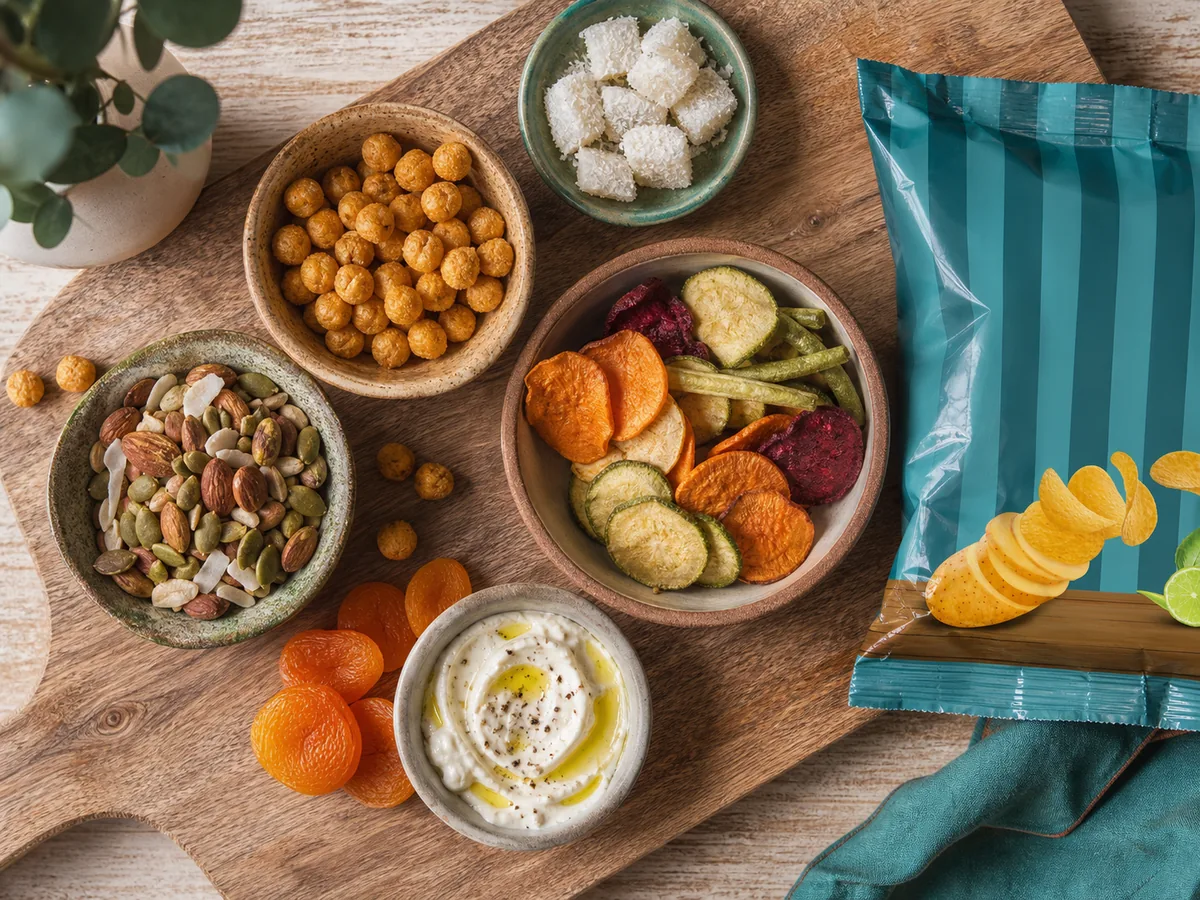
The snack aisle in a Dubai hypermarket looks nothing like it did five years ago. Where the shelf was once a wall of potato crisps and chocolate-coated wafers, you now find a wider, stranger, more interesting spread: chickpea puffs in matte pouches, seed crackers studded with linseed and sesame, baked lentil chips, coconut bites and unsweetened mango cheeks bagged without a dusting of sugar. These formats earned their facings because shoppers kept reaching for them, and understanding what each one actually delivers helps you buy with intent rather than on packaging alone.
Pulse and chickpea puffs are the breakout category. Built from chickpea, lentil or fava flour rather than potato or maize, they carry meaningfully more protein and fibre per serving than a standard corn puff, often landing around 5 to 8g of protein per 30g bag. The texture mimics the airy crunch people crave from cheese puffs, which is why kids accept them without negotiation. Seed and grain crackers bring slow-burning carbohydrate plus the fibre and healthy fats of flax, chia, sunflower and pumpkin seeds, and they pair beautifully with labneh, hummus or a wedge of cheese for a snack that holds you. Air-popped and baked crisps trade the deep-fry for hot air or an oven, cutting fat without the cardboard taste that sank early versions of the format.
Coconut-derived bites and unsweetened dried fruit round out the shelf. Coconut chips and date-and-coconut bites lean on natural sweetness and fat for satiety, though they are calorie-dense, so portion matters. Unsweetened dried apricots, figs, mango and dates deliver fibre and potassium, but the word to hunt for is unsweetened: plenty of dried-fruit packs add sugar or glucose syrup to plump and gloss the fruit, which defeats the point.
Plant-based and pulse snacks
Plant-based snacking has moved from a niche health-food-shop corner to a genuine mainstream category across the Gulf, driven by a mix of flexitarian eating, a large South Asian vegetarian community and curiosity from younger shoppers. Roasted chickpeas, edamame, fava-bean crisps, lentil chips and seed bars all sit in this space, and the best of them stack protein and fibre in the same handful. Roasted chickpeas are the quiet champion: a 40g serving brings roughly 6g protein and 5g fibre, travels well in a hot car and comes in flavours from za'atar to chilli-lime that feel native to the region rather than imported.
The trap with plant-based is the marketing halo. Vegan, gluten-free and natural are claims about what a product lacks or how it is positioned, not promises that it is low in sugar or salt. A vegan chocolate-coated date bar can carry as much sugar as a regular confectionery bar. A gluten-free cracker can be higher in refined starch and salt than a wholegrain one. Flip the pack and read the panel every time. The claim on the front tells you who the product is for; the back tells you what it actually contains.
Nuts, seeds and dried fruit done right
Nuts and seeds are the original better-for-you snack, central to the Gulf table long before the term existed. Almonds, pistachios, walnuts and cashews bring protein, healthy fats, magnesium and a satisfying chew that blunts the urge to keep grazing. The smart move is to buy them unsalted or lightly salted and unflavoured, because honey-roasted and heavily seasoned versions sneak sugar and sodium back in. A small handful, around 30g, is a sensible portion; these are nutrient-dense and calorie-dense at once, so a fistful is a snack and a bowlful is a meal.
Mixed nuts blended with seeds and a modest amount of unsweetened dried fruit make a balanced trail mix you can portion into small containers for the week. Keep an eye on the ratio: when dried fruit and chocolate dominate the mix, the sugar climbs fast. A blend that leans on almonds, walnuts and pumpkin seeds with a scatter of raisins behaves very differently in your body than one that is mostly yoghurt-coated raisins and candied pieces.
Snacking through heat, humidity and the Gulf day
Snacking advice written for a temperate climate falls apart the moment you leave it in a parked car in July. The Gulf summer reshapes what a practical snack is. Chocolate becomes a melted smear, soft bars turn to paste, and anything with a cream filling separates. Building a snack drawer that survives the climate is as much about format and storage as it is about nutrition.
For the car, the school bag and the gym holdall, choose shelf-stable, melt-resistant options. Roasted chickpeas, nut-and-seed bars with a firm rather than gooey texture, seed crackers, rice cakes and individually wrapped nut packs all tolerate heat. Anything chocolate-coated or yoghurt-coated is for the fridge and the home, not the glovebox. A small insulated pouch with an ice block transforms what you can carry, keeping cheese portions, labneh tubs and fruit safe through a long day of errands.
Hydration-smart snacking in summer
In a climate where you can lose litres to sweat before lunch, snacking and hydration belong in the same conversation. Water-rich snacks pull double duty: cucumber spears, watermelon, fresh dates with a glass of water, and unsweetened laban all contribute fluid alongside nutrients. Laban and other cultured drinks also deliver protein and a hit of electrolytes, which is why they have anchored Gulf summers for generations. When you have been outdoors or training, an electrolyte sachet stirred into water does more for genuine rehydration than a sugary soft drink, which can actually slow fluid recovery. This is where the hydration category earns its place in the drawer next to the snacks, rather than as an afterthought. Salted nuts and seeds can help on heavy-sweat days by replacing some of the sodium you lose, a rare moment when a little salt works in your favour.
Storing snacks in a humid climate
Humidity is the silent enemy of a good snack drawer. Nuts and seeds are rich in unsaturated fats that turn rancid when exposed to warmth, air and moisture, and rancidity is a real flavour and nutrition problem, not just a best-before technicality. Store nuts, seeds and trail mixes in airtight containers, keep larger quantities in the fridge or freezer, and buy in sizes you will finish within a few weeks rather than catering tubs that go stale before you reach the bottom. Crackers and crisps lose their crunch fast once a coastal-summer pack is opened, so reseal with a clip or decant into a sealed jar. Dried fruit can sweat and clump in humidity, which is another reason to keep packs small and tightly closed.
Mapped to the real rhythm of a Gulf day, the picks fall into place. Pre-gym, reach for a banana with a few nuts or a protein-forward bar for steady fuel. The 4pm slump calls for something with protein and fibre rather than a sugar spike that fades by 5: roasted chickpeas, a labneh-and-cracker plate, or an apple with a spoon of peanut butter. The post-school pickup wants portable and spill-proof, so think wholegrain crackers and cheese or a small trail mix. Late majlis hosting is where dates, nuts, dukkah and fresh fruit shine, generous and traditional while still being genuinely good food.
Healthier snacking in Ramadan and at the majlis
Ramadan is the most snack-intensive stretch of the Gulf year, and the holy month is exactly where better-for-you thinking pays the biggest dividends without asking anyone to abandon tradition. The challenge is the sugar load. Suhoor and iftar tables lean heavily on syrupy juices, sweets and refined carbohydrates that spike blood sugar and leave you flagging hours before the next meal. Small swaps keep the spirit and the spread while smoothing out the energy crashes.
At suhoor, the meal that has to carry you through a long fasting day, protein and fibre are your allies. Pairing dates with a handful of nuts or a spoon of labneh slows the sugar release compared with dates alone, and a bowl of overnight oats with seeds and unsweetened yoghurt holds far longer than white bread and jam. At iftar, after the traditional dates that break the fast, savoury protein bites such as grilled halloumi, hummus with seed crackers, or spiced roasted chickpeas steady the appetite before the main meal and discourage the over-eating that a sugar rush invites. Swapping syrupy bottled juices for water, laban, or fresh fruit infused water cuts a startling amount of added sugar across a month of evenings.
The majlis board is where hosting tradition and better-for-you eating meet most naturally, because the classic spread was always built around whole foods. A generous board of mixed nuts, seed crackers, a bowl of dukkah with good olive oil for dipping, fresh dates alongside figs and grapes, a wedge of cheese or a dish of labneh, and a few squares of dark chocolate feels abundant and welcoming while quietly being a genuinely nourishing offering. Guests rarely notice they are eating well; they notice the board is generous and the flavours are right. That is the whole trick of healthier Gulf snacking, keeping the warmth and the ritual while upgrading what sits on the plate.
Snacks kids and teens will actually eat
A healthy snack a child refuses is not a healthy snack; it is a wasted purchase and a battle at the lunchbox. The real test is the taste test, and the swaps that survive it tend to keep the texture and the fun while improving the nutrition underneath. Fruit-and-nut bites and date balls land far better than parents expect because they read as a treat. Cheese with wholegrain crackers, yoghurt tubes, fresh fruit with a portion of nut or seed butter, and pulse puffs that crunch like the cheesy snacks kids already love all pass without complaint.
School rules add a constraint worth planning around. Many UAE schools operate no-nut policies for allergy safety, so the lunchbox staples become seed-based bars, sunflower or pumpkin seed butter, cheese, yoghurt and fruit rather than peanut or almond products. Portion-controlled single-serve packs help here, both for the rules and for keeping quantities sensible, though they cost more per gram than buying larger and dividing into reusable containers at home.
Reading kids'-snack labels demands extra scepticism, because this is the category where marketing works hardest. Cartoon characters, bright packaging and phrases like made with real fruit or a source of calcium often sit on products that are high in sugar. A fruit snack made with real fruit can still be most of the way to a child's daily sugar allowance in one pouch. Flip the pack, read the per-serving sugar, and treat the front-of-pack cheer as decoration rather than information. The Nutri-Mark letter and the back panel together tell you what the cartoon never will. Teens, snacking with their own money and largely beyond a parent's oversight, respond better to being shown how to read a label than to a ban; protein bars, laban, nuts and pulse crisps give them genuinely appealing options that happen to be better choices. %the markets and retail channels we cover across the GCC% covers the snack and hydration brands we help bring to shelves across the region, which is a useful starting point for parents trying to recognise the better-for-you names amid the noise.
Where to shop: baqala, hypermarket and online
UAE families snack across three very different channels, and each rewards a different shopping habit. The corner baqala is built for speed and proximity, the place you grab a laban and a pack of nuts on the way home. Its range is narrow and prices per gram run higher, but the convenience is real and the better-for-you selection has genuinely improved as suppliers push roasted chickpeas, seed bars and unsweetened drinks into these small stores. For a quick, sensible grab it works; for stocking the drawer, it is rarely the best value.
Hypermarkets like Carrefour, Lulu and Spinneys are where serious snack shopping happens. The range is wide enough to compare formats side by side, and crucially the shelf labels carry the unit price, usually per 100g, which is the single most useful number for an honest comparison between a small premium pack and a value-size bag. This is also where the Nutri-Mark letters and full nutrition panels are easiest to scan across competing products, letting you triage by front-of-pack grade and then confirm on the back. Buying staples here in sensible sizes, and using the per-100g figure rather than the headline pack price, is the value play.
Direct-to-consumer and social-commerce brands are the fast-growing third channel, and they shine for niche free-from lines that hypermarkets stock thinly, things like specific allergen-free bars, specialist protein snacks and small-batch regional makers. Subscriptions suit the staples you reorder on a rhythm, sparing you the repeat trip. The channel-smart playbook is simple: scan the unit price rather than the pack price, buy perishables like opened nuts and fresh items small and fast-moving so they never go rancid in the humidity, and reserve online subscriptions for the shelf-stable items you know you will keep buying.
Stocking a better-for-you pantry
Rebuilding the snack drawer is genuinely a one-trip job once you know what to put in the basket. The aim is a shelf that spans the categories Gulf homes already lean on, so that the easy reach is also the better choice. Across pantry staples, spices, ready snacks and hydration, a starter shelf covers the bases without turning into a project.
A one-trip starter list
- Protein and fibre anchors: a tub of unsalted mixed nuts, a bag of roasted chickpeas, edamame, and a couple of seed-based or nut-based bars with sugar below the protein figure.
- Crunch and crackers: wholegrain or seed crackers, baked pulse crisps or air-popped corn, and a pack of plain rice cakes for a neutral base.
- Fridge fillers: labneh, a block of halloumi or a good cheese, plain unsweetened yoghurt, and laban for protein and hydration in one.
- Fruit, fresh and dried: dates, fresh seasonal fruit, and unsweetened dried apricots, figs or mango, checking the dried packs carry no added glucose syrup.
- Pantry and spice for homemade: chickpeas or canned pulses, oats, sesame, cumin, coriander, sumac and za'atar, plus good olive oil, the building blocks of dukkah and spiced nuts.
- Hydration support: electrolyte sachets for heavy-sweat summer days and a habit of water or infused water in place of bottled sugary juice.
Homemade beats packaged: dukkah, spiced nuts and energy bites
The cheapest, cleanest snacks in any Gulf kitchen are the ones you make, because you control the sugar, salt and oil entirely, and the spice cupboard does most of the work. Dukkah is the obvious starting point: toast and coarsely crush nuts with sesame, cumin, coriander and a little salt, and you have a dip-and-scatter that turns labneh and flatbread into a proper plate. Spiced roasted nuts take ten minutes, a hot oven, a slick of olive oil and whatever spice you favour, from chilli and lime to sumac and cumin, and they cost a fraction of a flavoured branded pack while tasting fresher. Energy bites blitzed from dates, oats, nuts and seeds need no baking, hold in the fridge for a week, and give kids and adults a sweet hit without the additives of a confectionery bar.
The better-for-you shift only reaches your shelf if those products actually make it to the baqala and hypermarket near you, and that supply chain is the quiet machinery behind every healthier choice. Bagason's role sits exactly there, connecting trusted regional and global snack and hydration brands to the stores Gulf families shop in, so the roasted chickpeas, seed crackers, unsweetened laban and clean-label bars are genuinely on the shelf rather than stuck in a catalogue. Brands looking to reach Gulf shoppers with better-for-you ranges can explore %bring a better-for-you snack brand to UAE shelves with us% to get those products in front of the households actively trading up. Stock the drawer once with intent, learn to read the panel and the Nutri-Mark letter in a few seconds at the shelf, and healthier snacking stops being a resolution and becomes the default reach for whatever is in arm's length.
Frequently Asked Questions
What does the Nutri-Mark letter on UAE snack packs actually mean?
Nutri-Mark is Abu Dhabi's mandatory front-of-pack rating, live since June 2025, scoring foods from A to E by colour on their overall nutritional profile, tuned to regional diets and Halal context. A is the healthier end, E the least. Use it as a three-second triage at the shelf, then confirm against the back panel, because a B-rated bar can still be high in sugar per serving.
How do I spot hidden sugar on a UAE snack label?
Read the ingredient list, which ESMA requires to be ordered by weight, and watch for sugar's aliases: glucose syrup, dextrose, fructose, fruit-juice concentrate, maltose and honey. Several can appear separately so sugar avoids the top spot. Then check the per-100g sugar figure, not just the flattering per-serving number, since a small printed serving size can disguise a high-sugar product.
What makes a snack genuinely high-protein in the UAE market?
A useful rule for Gulf shoppers is at least 5g protein and 3g fibre per serving, with the sugar figure sitting below the protein figure. Roasted chickpeas, edamame, Greek-style labneh, mixed nuts and pulse crisps clear that bar. Protein and fibre together steady blood sugar through a long working day and the late Gulf dinner hour far better than low-fat but sugary options.
Which snacks survive the UAE summer heat in a car or school bag?
Choose shelf-stable, melt-resistant formats: roasted chickpeas, firm nut-and-seed bars, seed crackers, rice cakes and individually wrapped nut packs. Keep chocolate-coated and yoghurt-coated items for the fridge. An insulated pouch with an ice block lets you carry labneh, cheese and fresh fruit safely. Store nuts and seeds airtight, ideally chilled, so the humidity does not turn their fats rancid.
Are vegan or gluten-free snacks automatically healthier?
No. Vegan, gluten-free and natural describe what a product lacks or how it is positioned, not whether it is low in sugar or salt. A vegan date bar can carry as much sugar as regular confectionery, and a gluten-free cracker can be high in refined starch and salt. Treat front-of-pack claims as who the product is for, and read the back panel to learn what it actually contains.
How can I make Ramadan snacking healthier without losing tradition?
Keep the rituals and adjust the load. Pair suhoor dates with nuts or labneh to slow the sugar release, lean on savoury protein bites like hummus with seed crackers at iftar, and swap syrupy bottled juices for water, laban or fruit-infused water. A majlis board of mixed nuts, dukkah, seed crackers, fresh and dried fruit and dark chocolate stays generous while being genuinely nourishing.
<div class="bgn-blog-cta" style="margin-top:36px;padding:24px 26px;border-radius:14px;background:#f5f2ee;border:1px solid rgba(0,0,0,0.07);border-left:4px solid #CA7345;"><p style="margin:0 0 10px;font-weight:700;color:#1a6985;font-size:1.02rem;">Distribution solutions from Bagason Group</p><p style="margin:0 0 12px;color:#555;font-size:0.92rem;">Bagason Group distributes 700+ products to 30,000+ retail outlets across the UAE and GCC. Explore the pages most relevant to this article:</p><ul style="margin:0;padding-left:1.1rem;line-height:1.9;"><li><a href="/fmcg-distributor-uae">FMCG Distributor UAE</a></li><li><a href="/fmcg-distributor-abu-dhabi">FMCG Distributor in Abu Dhabi</a></li><li><a href="/fmcg-distributor-dubai">FMCG Distributor in Dubai</a></li><li><a href="/horeca-food-distributor-uae">HORECA Food Distributor UAE</a></li></ul></div><div class="bgn-author-eeat" style="margin-top:28px;padding:20px 24px;border-radius:14px;display:flex;gap:16px;align-items:flex-start;background:#fff;border:1px solid rgba(0,0,0,0.08);"><div style="flex:0 0 52px;height:52px;border-radius:50%;background:linear-gradient(135deg,#1a6985,#CA7345);display:flex;align-items:center;justify-content:center;color:#fff;font-weight:800;font-size:1.1rem;">BG</div><div><p style="margin:0;font-weight:700;color:#2b2b2b;">Bagason Editorial Team</p><p style="margin:2px 0 8px;font-size:0.82rem;color:#888;text-transform:uppercase;letter-spacing:0.05em;">FMCG Distribution Editorial Desk · Bagason Group, Dubai</p><p style="margin:0;font-size:0.92rem;color:#555;line-height:1.6;">Written by the editorial desk of <a href="/about-us" style="color:#1a6985;font-weight:600;text-decoration:none;">Bagason Group</a>, a Dubai-based FMCG distributor operating since 2007 with 700+ products, 30,000+ retail outlets and coverage across all seven emirates and the GCC. Learn more about <a href="/what-we-do" style="color:#1a6985;font-weight:600;text-decoration:none;">how we distribute</a>.</p></div></div>