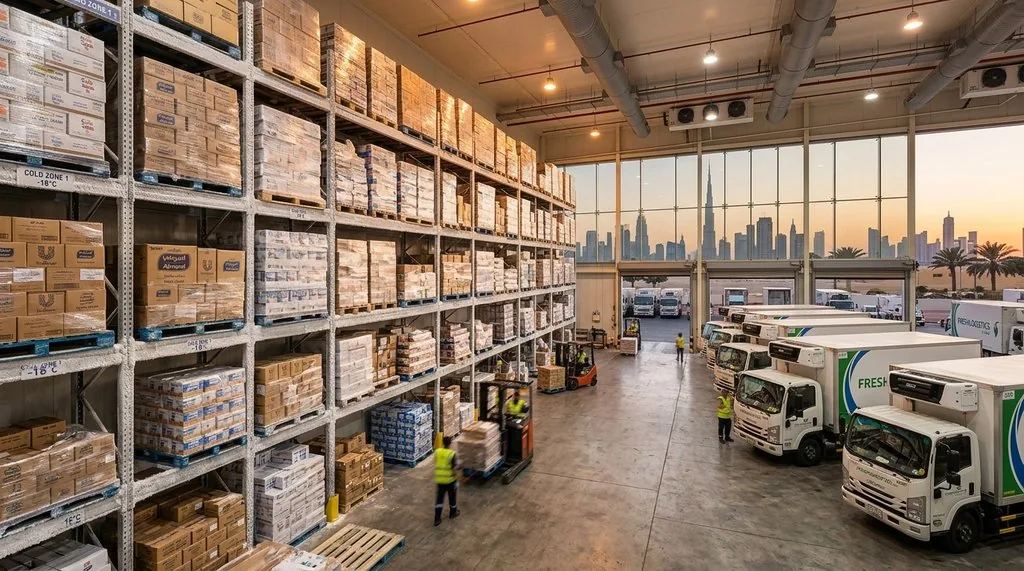
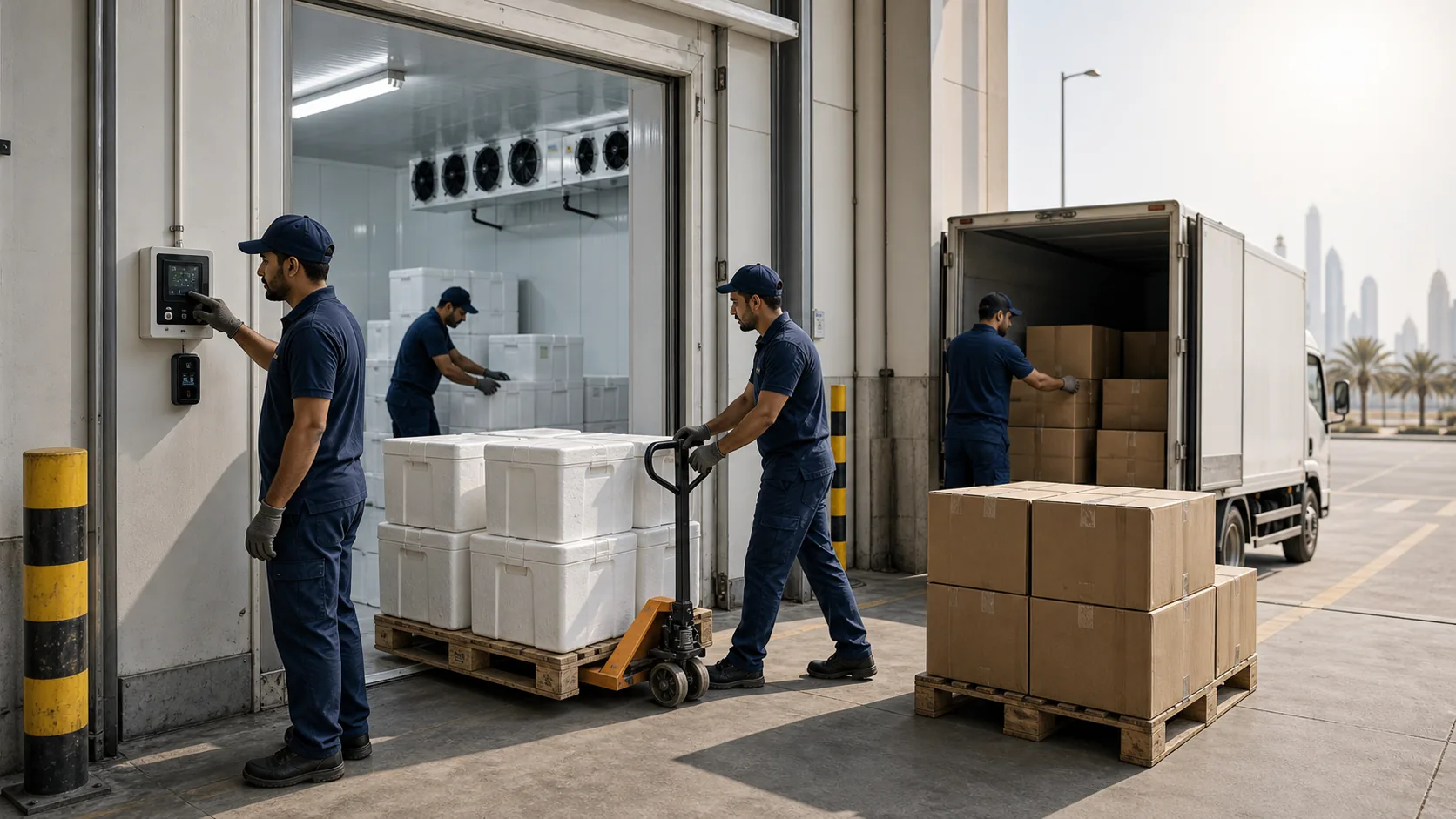
Cold chain logistics — the temperature-controlled supply chain that keeps perishable foods safe from farm to fork — is one of the most complex and high-stakes aspects of FMCG distribution in the UAE. With ambient temperatures regularly exceeding 45°C in summer, and the UAE importing over 90% of its food supply, maintaining cold chain integrity is not optional. It is the foundation of consumer safety and brand reputation.
This guide explores the key challenges of cold chain logistics in the UAE's FMCG sector and the practical standards that brands and distributors must meet to protect product quality.
Why Cold Chain Matters More in the UAE
Three factors make cold chain management uniquely challenging in the UAE:
- Extreme ambient heat: Summer temperatures of 40–48°C mean that even brief unrefrigerated exposure can compromise temperature-sensitive products. A product stored at 4°C that spends 20 minutes on a loading dock in July may have already exceeded its safe temperature threshold.
- Long import distances: Most FMCG products travel significant distances — from India, Europe, Southeast Asia, or the Americas — before reaching UAE shelves. Each logistics handoff is a potential cold chain break.
- UAE retail standards: Major UAE retailers (Carrefour*, LuLu, Spinneys*, Waitrose) have exacting supplier compliance standards for cold chain documentation. Failure to provide temperature logs can result in rejected deliveries.
Cold Chain Product Categories in UAE FMCG
UAE food import cold chain requirements vary by product type:
- Chilled (0–4°C): Dairy, processed meats, fresh juices, ready-to-eat meals, certain condiments
- Frozen (-18°C or below): Frozen meats, seafood, ice cream, frozen vegetables, frozen ready meals
- Controlled ambient (15–25°C): Chocolate, certain confectionery, wine and spirits — products that don't require refrigeration but are damaged by heat
UAE Cold Chain Infrastructure
The UAE has invested heavily in cold chain infrastructure over the past decade. Key facilities include:
- Dubai Logistics City / DWC: Temperature-controlled warehousing adjacent to Al Maktoum International Airport — ideal for air-freight cold chain imports
- Jebel Ali Free Zone (JAFZA): UAE's primary import hub, with extensive cold storage capacity for sea freight
- Dubai Investment Park (DIP) / Al Quoz: High-density cold storage and distribution hub serving Dubai retail
- Abu Dhabi Food Control Authority facilities: Regulated cold storage for products requiring ADAFSA inspection
Key Cold Chain Standards and Certifications
Brands entering the UAE cold chain should ensure their supply chain partners hold:
- HACCP certification: Hazard Analysis and Critical Control Points — the fundamental food safety management standard
- ISO 22000: International food safety management system — increasingly required by major UAE retailers
- ESMA conformity: Products must meet Emirates Authority for Standardisation and Metrology standards for temperature labelling and storage instructions
- GDP (Good Distribution Practice): Particularly relevant for pharmaceutical-adjacent food products and nutraceuticals
Common Cold Chain Failures and How to Prevent Them
- Loading dock exposure: Always minimise time between refrigerated transport and refrigerated storage. Insulated loading bays and rapid loading procedures are standard at professional UAE 3PL operators.
- Temperature logger gaps: Continuous temperature logging (data loggers in every shipment) is essential for retailer compliance and insurance purposes. Never ship temperature-sensitive products without a logger.
- Last-mile breakdown: The final delivery leg — from distribution centre to store — is where most cold chain failures occur. Refrigerated delivery vehicles must be pre-cooled before loading. Door-opening discipline during multi-drop routes is critical.
- Power outage contingency: UAE cold storage operators must have generator backup with automatic switchover. Ask your 3PL for their power outage protocol before signing a storage contract.
Choosing a UAE Cold Chain Distribution Partner
For FMCG brands without UAE infrastructure, selecting the right distribution partner is the most critical cold chain decision you will make. Look for:
- HACCP and ISO 22000 certified warehousing
- Temperature-controlled fleet with real-time GPS and temperature monitoring
- Established retailer relationships and supplier compliance track record
- Transparent temperature log reporting per delivery
- Experience with your specific product category
Bagason Group operates temperature-controlled storage and distribution across the UAE, with full cold chain documentation for every delivery. Partner with us to protect your product quality from warehouse to shelf.