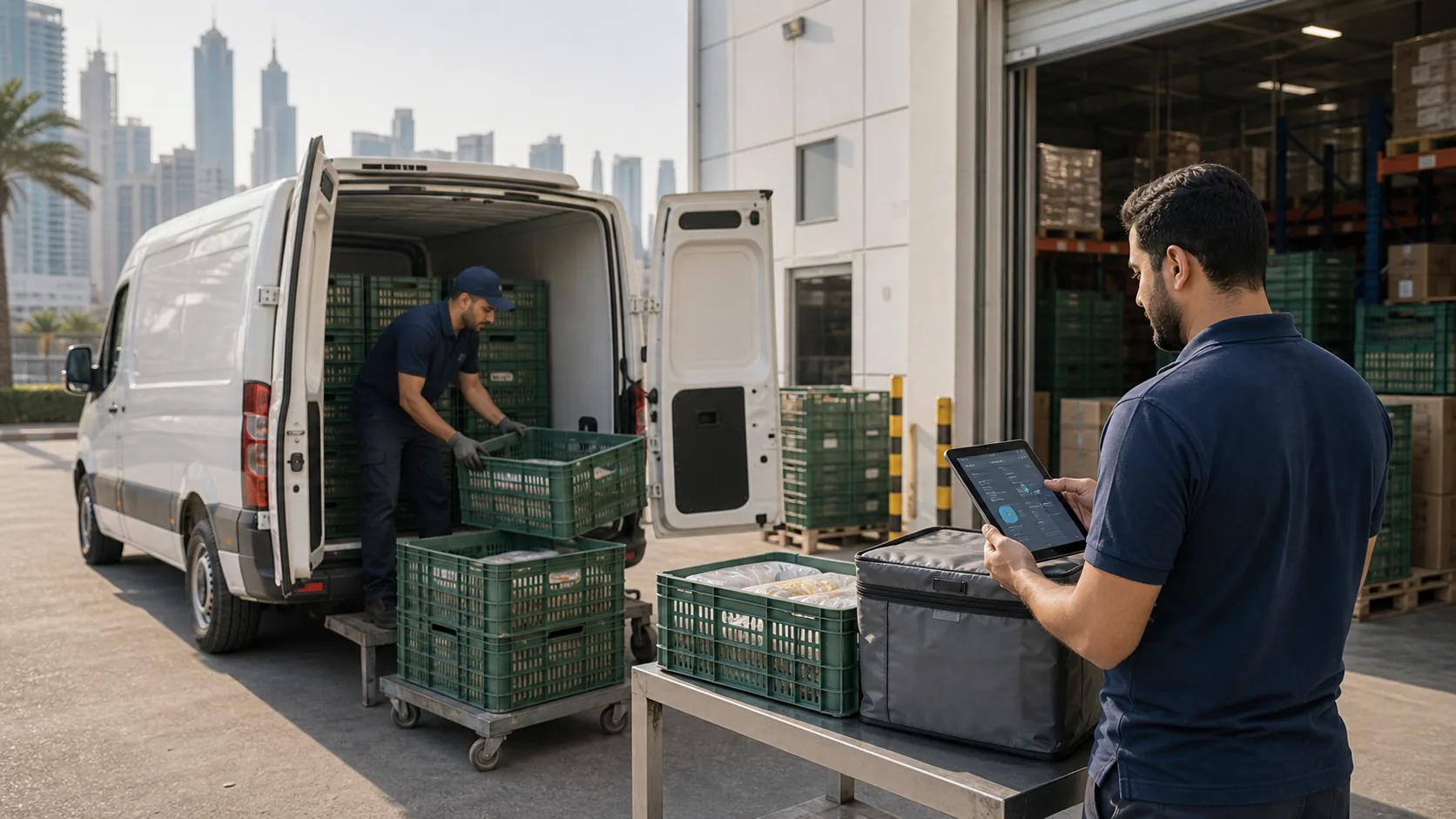
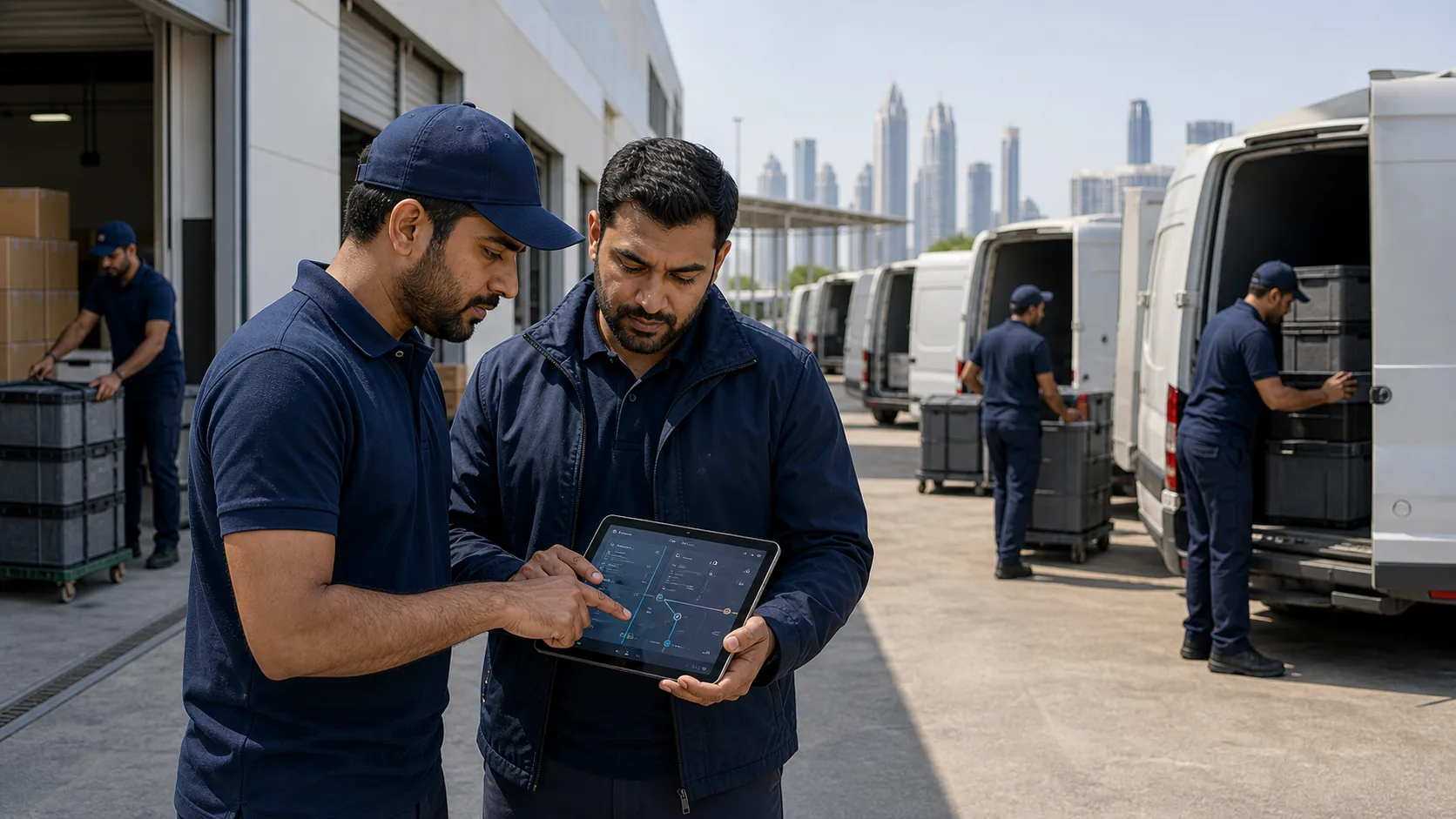
In FMCG distribution, last-mile delivery — the final leg from distribution centre to retail shelf — accounts for up to 30% of total supply chain costs while generating the most customer-facing failures. In the UAE, a market with one of the world's highest e-commerce penetration rates, a complex urban geography, and extreme summer temperatures, last-mile excellence is a genuine competitive differentiator.
The UAE Last-Mile Landscape
The UAE presents a unique combination of last-mile challenges. Dubai alone spans over 4,000 square kilometres with delivery destinations ranging from hypermarket loading bays in Deira to boutique organic stores in Jumeirah and labour camp canteen stores in Al Quoz Industrial. A single distribution route may service 15–25 stops across 40 kilometres of mixed urban, suburban, and industrial terrain.
Add to this the reality that UAE summers (June–September) see temperatures exceeding 45°C, creating time pressure on temperature-sensitive deliveries, and the complexity becomes clear.
Key Last-Mile Challenges in UAE FMCG
- Traffic congestion: Dubai's Sheikh Zayed Road, Abu Dhabi's arterial routes, and Sharjah's industrial areas experience severe congestion during morning and evening peaks. Poor route planning can double delivery times.
- Delivery window compliance: Major UAE retailers (LuLu, Carrefour*, Spinneys*) have strict receiving windows — typically 8am–12pm. Missing a window means a rejected delivery, rescheduling costs, and potential out-of-stock penalties.
- Multi-channel complexity: Distributors must simultaneously serve hypermarkets (pallet deliveries), traditional trade (case-level drops), restaurants and hotels (mixed SKU orders), and dark stores for e-commerce fulfilment — each with different delivery formats and documentation requirements.
- Temperature maintenance on multi-drop routes: A refrigerated van making 20 stops has its doors opened 20 times per route. Each opening raises the internal temperature. Without disciplined loading sequence planning (coldest products loaded last, closest to door), cold chain integrity fails.
Solutions That Work in the UAE Market
1. Dynamic Route Optimisation
Modern UAE distributors use route optimisation software that accounts for real-time traffic (Google Maps API, Waze), retailer delivery windows, vehicle capacity, and temperature zone requirements. Dynamic re-routing during the day — responding to traffic incidents or cancelled stops — saves 15–25% of fuel costs and significantly improves on-time delivery rates.
2. Hub-and-Spoke Distribution
Rather than servicing all of the UAE from a single warehouse, leading distributors operate a hub-and-spoke model: a central hub in Dubai (typically Al Quoz or DIP) with smaller spoke facilities in Abu Dhabi, Sharjah, and RAK. This reduces last-mile distances dramatically for each emirate's deliveries.
3. Proof-of-Delivery (POD) Technology
Electronic POD systems — mobile apps used by delivery drivers — capture GPS-confirmed delivery location, timestamp, recipient signature or barcode scan, and exception notes in real time. This data integrates with the retailer's GRNI (Goods Received Not Invoiced) process and eliminates the invoice disputes that plague paper-based delivery systems.
4. Dedicated E-Commerce Fulfilment
UAE's grocery e-commerce growth (driven by Talabat*, Noon* Food, Careem Groceries) demands a separate last-mile operation to dark stores and quick-commerce hubs — with smaller order quantities, faster cycle times, and barcode-level accuracy. Leading distributors operate dedicated e-commerce fulfilment teams separate from traditional trade delivery.
The Cost of Last-Mile Failure
A single failed delivery to a major UAE retailer carries real consequences: rescheduling cost, potential out-of-stock fine (major chains levy AED 500–2,000 per OOS incident per week), and relationship damage with the buyer. For high-frequency FMCG categories (beverages, snacks, dairy), delivery reliability is often more important than price in retailer supplier evaluations.
Bagason Group operates a dedicated last-mile fleet across the UAE, with route-optimised delivery scheduling, electronic POD, and retailer-specific compliance for all major chains. Learn about distributing your brand through our network.
Sources and References
This article draws on publicly available government data, industry body reports, and Bagason Group operational experience. All figures are estimates and should be treated as directional.
- UAE Ministry of Economy — National economic indicators and trade data
- Dubai Chambers — Dubai Economic Report
- UAE Federal Competitiveness and Statistics Centre (FCSA) — Consumer spending and trade statistics
- Gulfood — Industry Insights and Market Reports
- UAE Ministry of Human Resources (MOHRE) — Labour and workplace regulations
- Bagason Group — Internal distribution operations and market coverage data