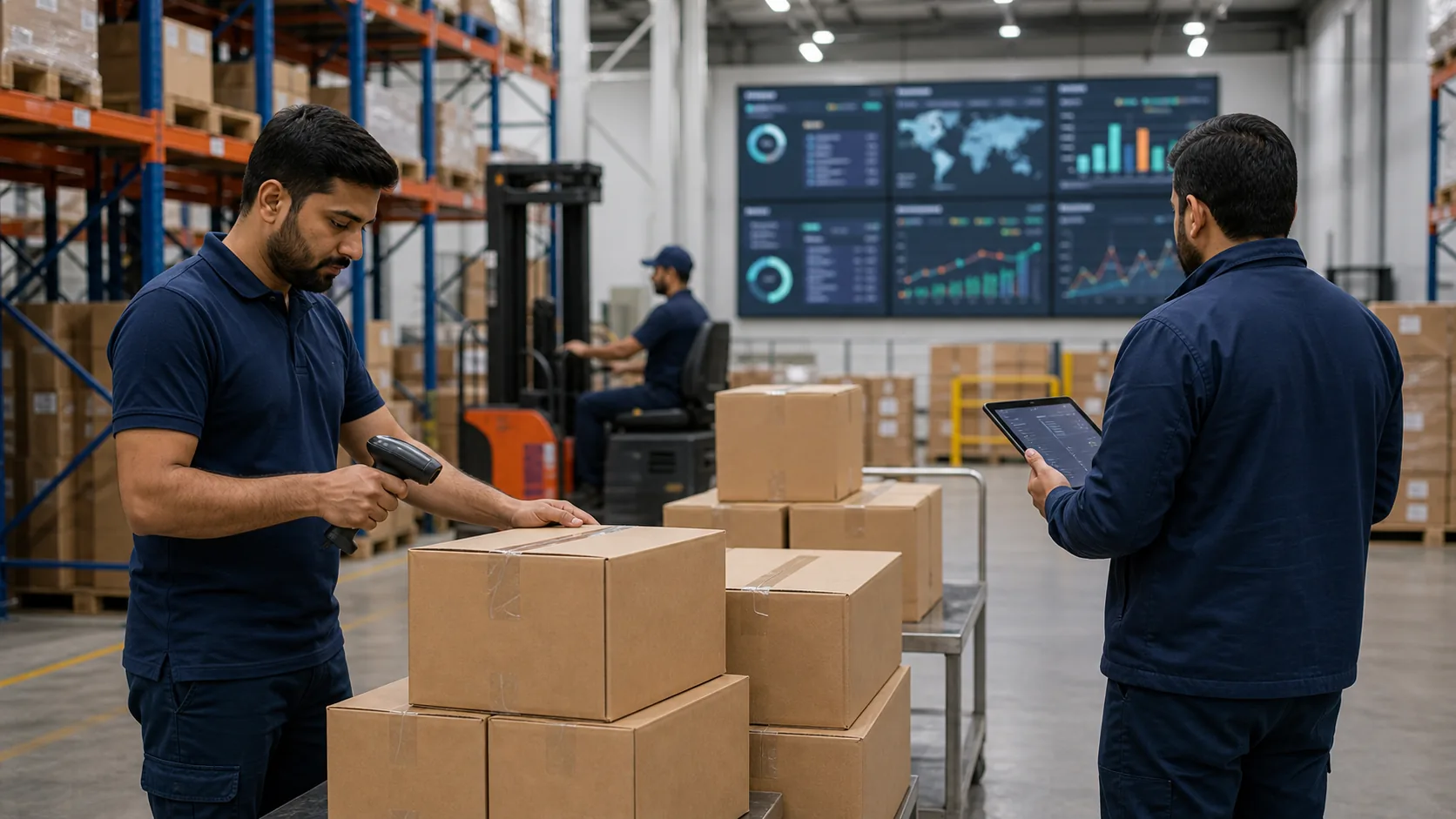
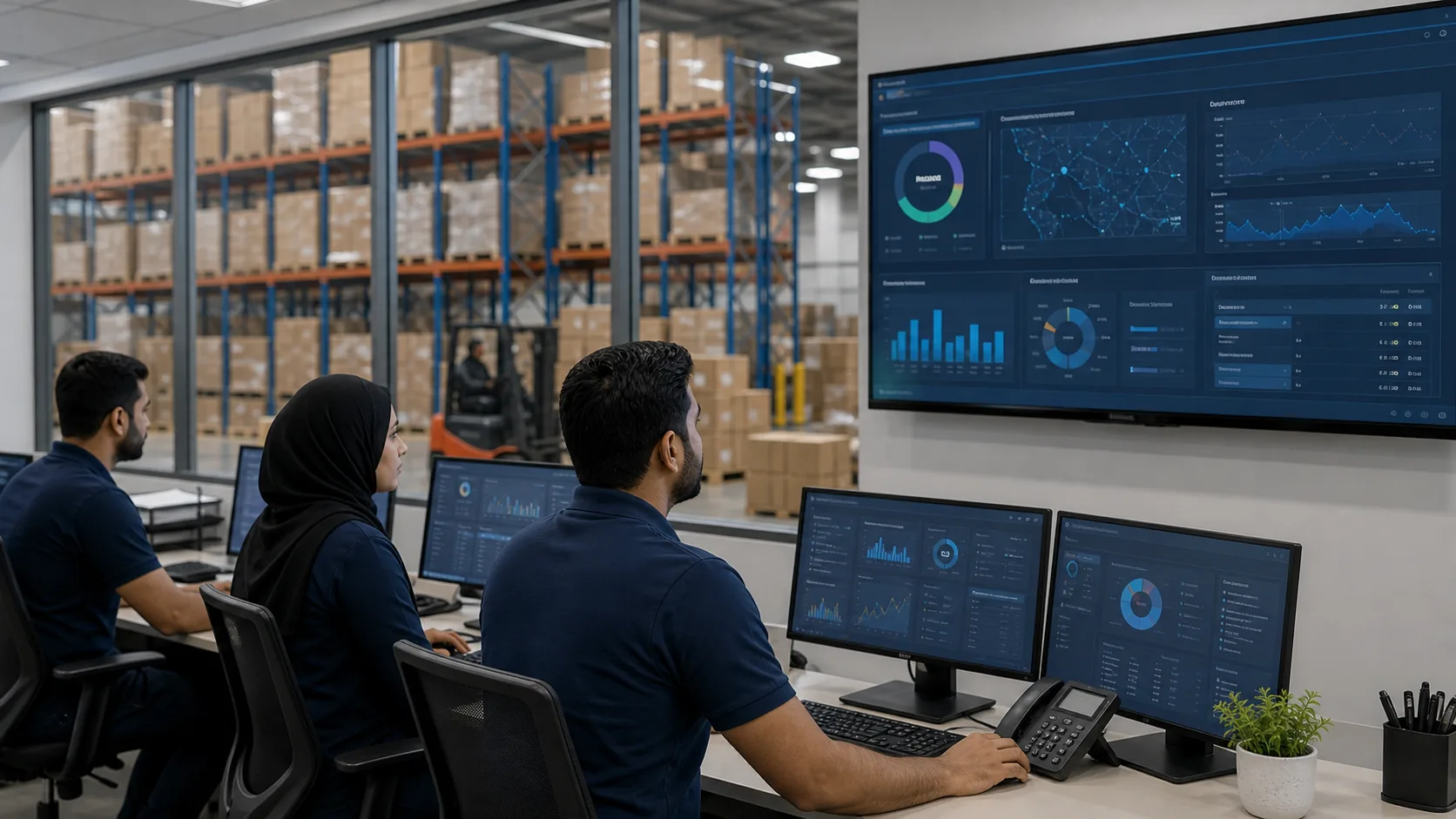
A decade ago, UAE FMCG distribution was largely paper-based. Delivery orders were printed, invoices were handwritten, and inventory was tracked in spreadsheets. Today, the UAE's most competitive distributors run fully integrated ERP (Enterprise Resource Planning) systems that connect warehouse management, route planning, sales tracking, and retailer compliance into a single real-time data environment.
For FMCG brands evaluating distribution partners in the UAE, the presence or absence of ERP-driven operations is one of the most important — and most underappreciated — due diligence criteria.
What ERP Integration Means in FMCG Distribution
A modern UAE FMCG distributor's ERP system typically covers:
- Inventory management: Real-time stock levels by SKU and warehouse location, automatic reorder triggers, batch/lot tracking, and expiry date management
- Order management: From purchase order generation to sales order processing, pick-pack-ship, and delivery scheduling — all in one system
- Route planning and delivery: Integration with route optimisation software and driver mobile apps for electronic proof of delivery
- Retailer EDI: Electronic data interchange with major UAE retailers (Carrefour*, LuLu) for automated purchase orders, advance shipping notices (ASN), and invoices
- Financial management: Accounts receivable, credit limit management, and distributor margin tracking per brand and SKU
- Brand reporting: Sales-out data by SKU, outlet, and region — available to brand principals in real time
Why Brands Should Care About Their Distributor's ERP
Your distributor's technology capability directly affects your brand's performance in the UAE:
Inventory Accuracy = Zero Stockouts
Poor inventory management leads to stockouts — the single biggest driver of brand switching in FMCG. A distributor without real-time inventory visibility may not know a SKU is out of stock until a delivery driver arrives at a retailer with an empty van. With ERP, stock alerts trigger automatically when levels fall below safety stock thresholds, preventing stockouts before they happen.
Expiry Management = Brand Protection
The UAE food regulatory environment has zero tolerance for expired products on shelf. Regulatory fines, product seizures, and retailer de-listing can result from a single incident of expired product. ERP-driven FEFO (First Expired, First Out) picking eliminates this risk by ensuring the oldest stock always ships first.
Retailer Compliance = Listing Security
Major UAE retailers increasingly require EDI-compliant suppliers — automated ASNs, GS1-standard barcodes, and digital invoice processing. Distributors without EDI capability create manual workarounds that are error-prone and slow, risking delivery rejections and supply disruptions.
Brand Visibility = Strategic Decision Making
Brands partnered with ERP-enabled distributors receive sell-through reports by outlet, region, and SKU on a weekly or monthly basis. This data enables evidence-based range decisions, promotional effectiveness measurement, and distribution gap identification — intelligence that is simply unavailable from non-technology distributors.
The Odoo Advantage in UAE FMCG
Bagason Group operates on the Odoo ERP platform — a comprehensive, cloud-based system that integrates all distribution operations into a single environment. This means brand principals benefit from:
- Real-time inventory visibility across all UAE warehouses
- Automated replenishment based on sell-through velocity
- Electronic proof of delivery for all retailer deliveries
- Monthly brand performance dashboards covering sell-in and sell-through
- Full expiry date tracking and FEFO picking discipline
In an increasingly competitive UAE FMCG landscape, technology-backed distribution is no longer a premium option — it is the baseline standard for brands serious about shelf performance. Learn how Bagason Group's ERP-driven operations can support your brand's UAE growth.