Diwali snacks recipes usually bring mithai to mind first, but ask around any UAE kitchen the week before the festival and you will hear a different word: namkeen. The savoury table is where guests actually linger, picking at farsan, dunking papdi into chutney, building their own bowl of chaat between conversations. If your Diwali spread is all sugar and no salt, something is missing.
This guide gathers savoury Diwali snacks recipes for exactly that half of the table. You will find a full chaat recipe you can scale for a crowd, guidance on building a namkeen party spread that does not need last-minute frying, and tips for laying out a farsan platter that looks generous without costing you a whole afternoon in the kitchen. Everything here works with what is sitting on Carrefour, Lulu, or Nesto shelves right now.
Why your Diwali snacks recipes need a savoury half
Mithai is sweet, dense, and best in small pieces. Guests taste one or two pieces and move on. Savoury snacks work differently. People come back for seconds, stand around the bowl, and talk while they eat. That makes the namkeen table the social centre of most Diwali evenings in Dubai and Sharjah homes.
There is also a practical reason to plan the savoury side properly. Diwali guests arrive across a wide window, from early evening visitors to a late-night crowd after temple or community events. A well-built namkeen and farsan spread can sit out for hours without drying up or losing its crunch, which is more than you can say for most fried sweets.
Here's the thing: you do not need to fry everything from scratch to pull this off. A smart Diwali savoury table mixes a few homemade items with good bought namkeen, arranged so nothing looks like an afterthought.
Building a namkeen party spread that works for guests all evening
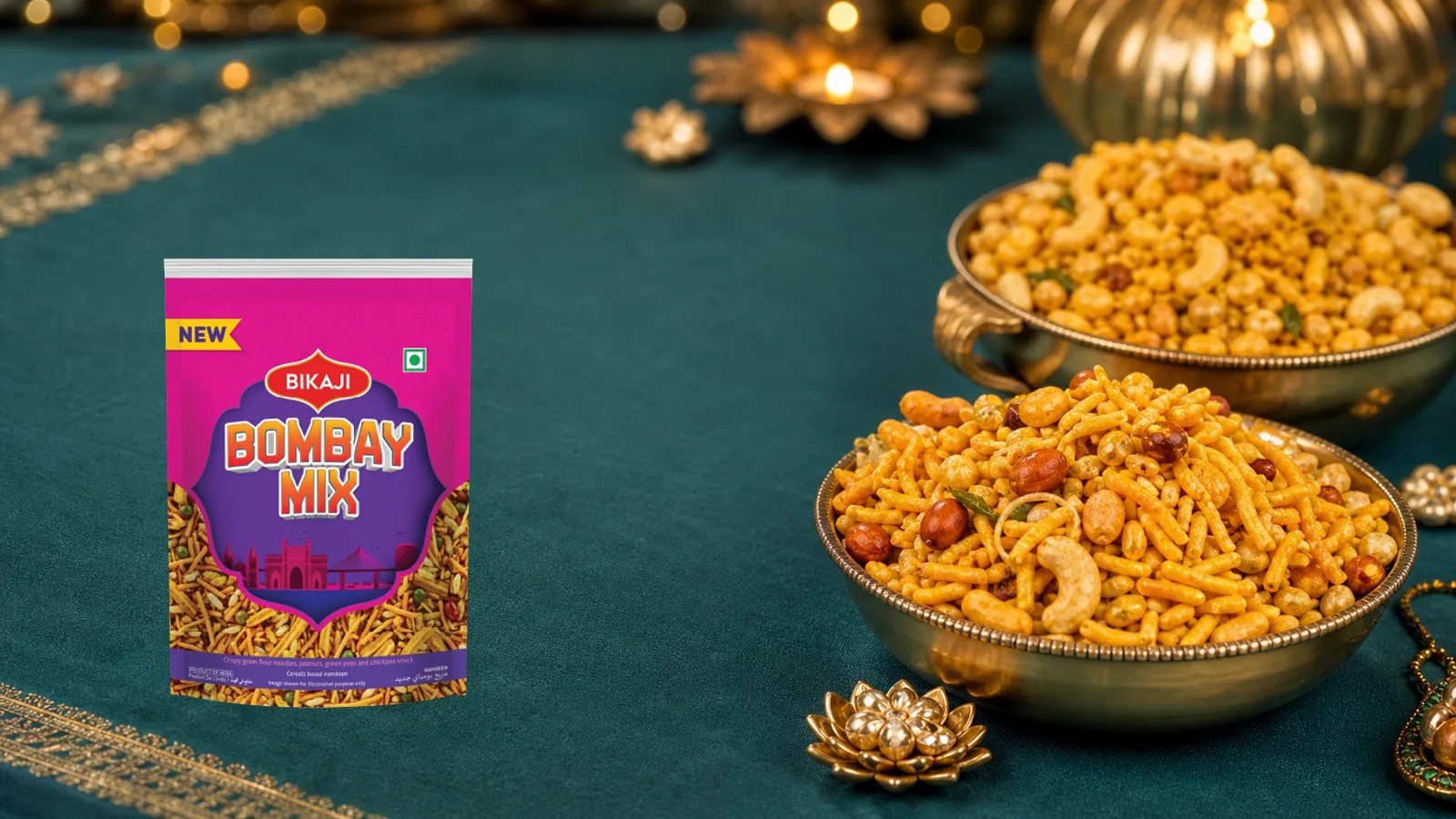
A namkeen party spread is a small buffet of textures. You want something crunchy and plain, something with a bit of heat, something sweet-savoury, and something with nuts or lentils for bite. Ready-made mixes from brands like Bikaji cover this ground well and save you from deep-frying six different things on the day guests are due.
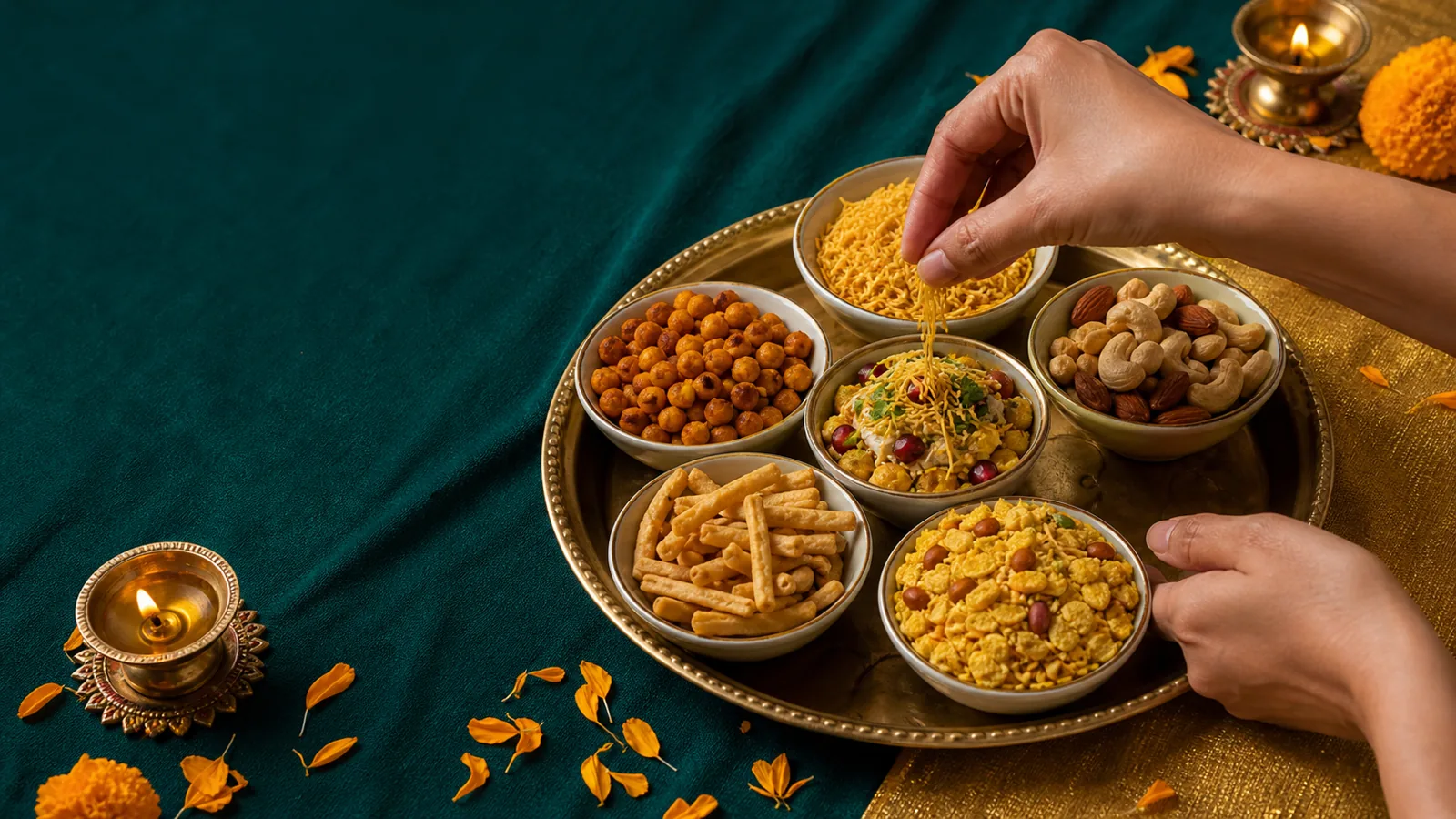
Lay out three or four varieties rather than one giant bowl. A classic bhujia, a spiced chana mix, a bhelpuri-style mix, and a nut-and-raisin namkeen give guests real choice. Keep bowls small and refill often; a half-empty giant bowl looks tired by nine in the evening, while a small bowl topped up looks fresh all night.
- One plain, crunchy mixture (bhujia or sev) for guests who want something simple
- One spicier chana or dal-based mix for those who like heat
- One sweet-savoury mix with curry leaf, raisin, or jaggery notes
- One nut-forward mix for older guests and anyone skipping the fried items
Serve namkeen in small steel or ceramic bowls rather than the packet itself. It sounds like a small thing, but guests eat more, and less politely, from a packet left on the table. A bowl signals that you made an effort, even when the contents came straight off a shelf.
What counts as a proper farsan recipe for Diwali
Farsan is the Gujarati and wider Western Indian word for the savoury snack course, and it covers everything from steamed dhokla to fried khaman to crisp chakli. A good farsan recipe for a Diwali evening should be something you can make a day ahead, since nobody wants to be frying at six while guests arrive at seven.
Dhokla is the easiest starting point if you want something homemade on the table. Steamed, not fried, it holds its texture for a full day in the fridge and only needs a quick tempering of mustard seed, curry leaf, and green chilli in hot oil just before serving. Besan quality makes a visible difference here, and a fine, pale besan such as the one India Mills stocks for UAE pantries gives the steamed batter a smoother rise than a coarser grind.
Simple steamed dhokla, made the day before
- 1.5 cups besan (gram flour), sifted
- 1 tablespoon semolina
- 1 cup yoghurt, whisked smooth
- Water as needed to make a thick, pourable batter
- 1 teaspoon ginger-green chilli paste
- 1 teaspoon fruit salt (Eno) or 1 teaspoon baking soda
- 2 tablespoons oil, plus more for tempering
- Mustard seeds, curry leaves, and a slit green chilli for tempering
- Whisk besan, semolina, yoghurt, and water into a smooth, thick batter and rest it for 15 minutes.
- Stir in the ginger-chilli paste and 2 tablespoons oil.
- Grease a shallow steaming tin. Add the fruit salt or baking soda to the batter, stir gently, and pour immediately.
- Steam for 15 to 18 minutes, until a knife comes out clean.
- Cool, then cut into squares and store covered in the fridge overnight.
- Just before guests arrive, heat oil, crackle mustard seeds and curry leaves, and pour the tempering over the dhokla.
If frying is not something you want to manage on Diwali day, buy your chakli, khaman, or bhakarwadi ready-made and only handle the tempering or a quick warm-through in the oven. Many home cooks in the UAE do a mix of one homemade farsan and two or three bought ones, and nobody at the party can tell the difference once everything is plated together.
A full chaat recipe for a crowd: quick sev puri
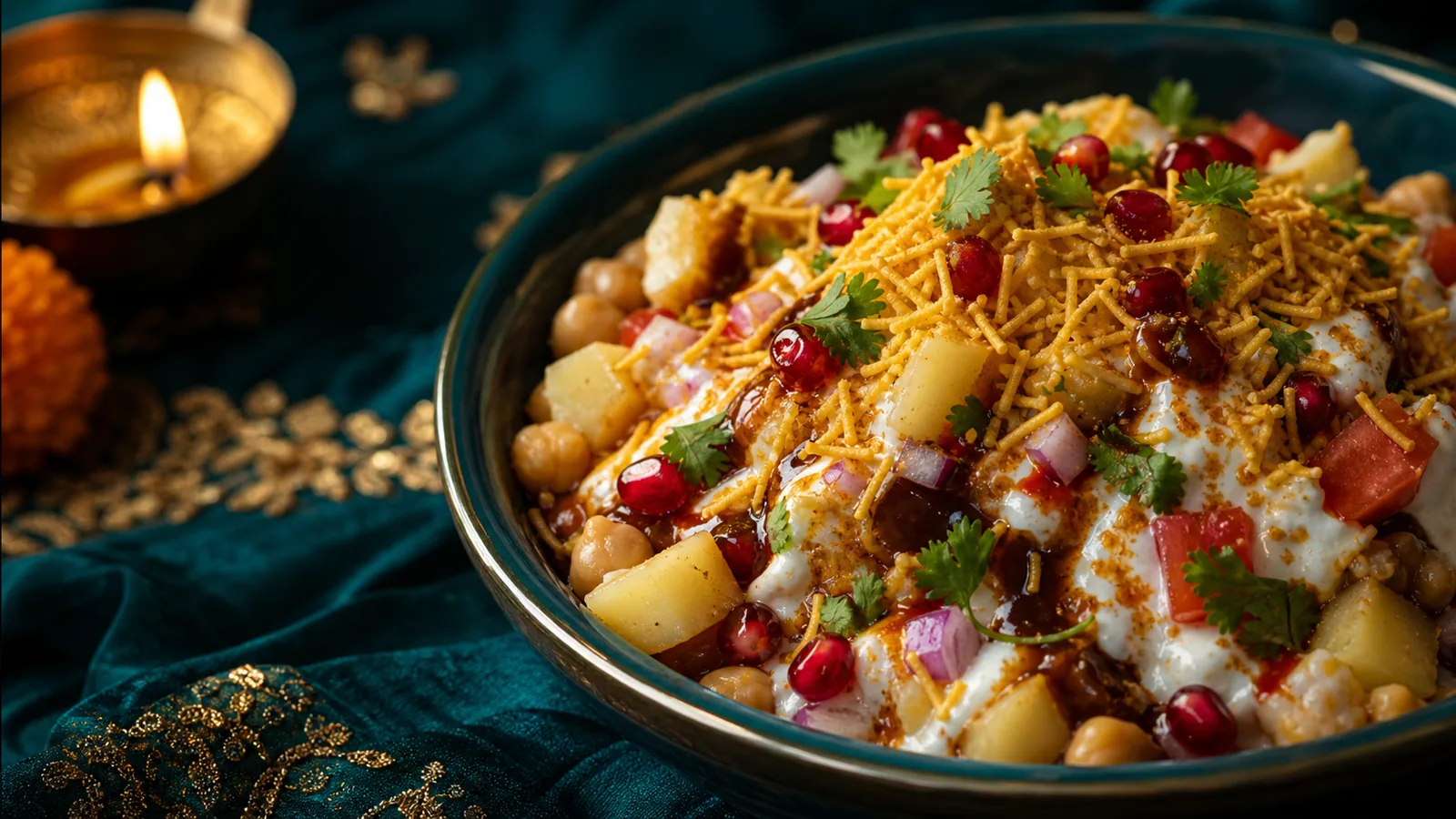
Chaat is the one savoury Diwali food that people build themselves, which makes it a good centrepiece if you want an interactive element on the table. Sev puri is the easiest chaat to scale, because every component can be prepped hours ahead and assembly takes two minutes per plate.
Quick sev puri for a Diwali crowd (serves 8 to 10 as a snack)
- 30 to 35 flat papdi (store-bought puri, the flat kind used for sev puri)
- 2 medium potatoes, boiled and diced small
- 1 small red onion, finely chopped
- 1 medium tomato, seeds removed, finely chopped
- 1 cup tamarind chutney
- 1 cup green coriander-mint chutney
- 1/2 cup whisked plain yoghurt, lightly sweetened
- 1.5 cups fine sev
- 2 tablespoons chopped coriander leaves
- 1 teaspoon chaat masala
- 1/2 teaspoon roasted cumin powder
- Arrange the papdi in a single layer across two or three large platters.
- Top each papdi with a small spoon of diced potato.
- Drizzle tamarind chutney, then green chutney, over every piece.
- Add a small drizzle of the sweetened yoghurt over each puri.
- Scatter chopped onion and tomato evenly across the platter.
- Finish with a generous layer of sev, a dusting of chaat masala and roasted cumin, and the chopped coriander.
- Serve within 10 minutes of assembly, since papdi softens quickly once dressed.
The trick to serving chaat at a party is timing, not skill. Keep every component ready in separate bowls, then assemble in small batches every 20 minutes rather than dressing one giant platter at the start. This is also how most chaat platter ideas work in restaurants: components sit ready, assembly happens right before the plate reaches the table.
Chaat platter ideas beyond sev puri
Once you have the sev puri method down, the same components can build two or three other chaats with almost no extra shopping. Bhel puri uses puffed rice instead of papdi, tossed loosely with the same chutneys and onion-tomato mix. Dahi puri uses round puri shells filled with potato and a spoon of chutney-laced yoghurt, eaten in one bite.
For a Diwali table specifically, a build-your-own chaat station works well if you have counter space. Set out bowls of puri, sev, chutneys, yoghurt, and chopped vegetables, with a small card explaining the order. Guests enjoy assembling their own, and it takes the pressure off you to keep plating fresh batches all evening.
- Sev puri: flat papdi base, best for a crunchy, dry chaat
- Bhel puri: puffed rice base, lighter and good for large batches
- Dahi puri: round puri shells, best served immediately, not left to sit
- Papdi chaat: broken papdi with boiled chickpeas, layered like a small salad
On the flip side, if a chaat station feels like too much for the evening you have planned, a single pre-assembled bhel puri in a large bowl, tossed just before serving, gives you most of the effect with a fraction of the setup.
Layering a savoury Diwali food table so it looks abundant
Savoury Diwali food photographs and reads as generous when it is arranged in layers and heights, not spread flat across one table. Use a mix of bowl sizes, a cake stand or two for farsan, and small plates for chaat components so the eye reads variety even with a modest number of dishes.
Group by temperature and texture rather than by dish name. Put all the crunchy dry items together, all the chutney-based wet items together, and keep anything meant to be eaten immediately, like dahi puri, close to where you plan to serve it rather than at the far end of a long table.
Colour matters too. A plate of pale besan-based farsan next to a bright green coriander chutney and deep red tamarind chutney looks far more festive than the same items scattered without any thought to contrast.
What to prep the day before Diwali
Most of the stress around a savoury Diwali spread comes from trying to do it all on the day. Split the work across two days instead, and the evening itself becomes about serving, not cooking.
- Two days before: shop for namkeen, papdi, sev, and any farsan you plan to buy ready-made.
- The day before: steam the dhokla, boil and dice potatoes for chaat, chop onions and tomatoes and refrigerate them separately, and make both chutneys.
- On Diwali day: temper the dhokla, whisk the yoghurt for sev puri, arrange namkeen bowls, and assemble chaat in small batches as guests arrive.
Chutneys, in particular, taste better after resting overnight in the fridge. Making them a day ahead sharpens the flavour as much as it saves you time on the day. Store tamarind chutney and green chutney in separate airtight containers and give both a good stir before serving, since they can separate slightly on standing.
Regional touches worth adding to your platter
Farsan is a Gujarati word, but most UAE Diwali tables borrow from across India without worrying too much about strict boundaries. A Maharashtrian chakli sits next to a Rajasthani mathri without any conflict, and that mixing is part of what makes a Diwali spread feel abundant rather than themed.
If your household has roots in a particular region, this is the evening to lean into it. A South Indian household might add murukku alongside the more common bhujia. A Punjabi table often brings out mathri with a side of tangy pickle rather than chutney. These additions do not need to be homemade. A single regional item bought specially for the occasion tells guests something about your family, even in a spread built mostly from ready-made namkeen.
Consider, too, that many guests will be tasting a mix of familiar and new items on the same table. Label anything unusual with a small card, especially if spice levels vary a lot between bowls. A guest who does not expect heat from a chana mix will remember it, and not always for the right reasons.
How much to make for a Diwali guest list
Portioning savoury snacks for a festival evening is different from portioning a sit-down meal. Guests graze over two or three hours instead of eating one plate, so plan by weight per guest rather than by dish count.
As a rough guide, 80 to 100 grams of mixed namkeen per guest covers a typical evening when farsan and chaat are also on offer. For chaat specifically, sev puri or bhel puri portions run smaller, closer to 40 to 50 grams per guest, since the dish is rich and guests tend to sample rather than fill a plate.
- For 15 to 20 guests: roughly 1.5 kg mixed namkeen, one full dhokla batch, and a sev puri recipe doubled from the one above
- For 30 to 40 guests: roughly 3 kg mixed namkeen, two dhokla batches, and the sev puri recipe tripled, assembled in three separate rounds through the evening
- For a small gathering of 6 to 8: the recipe quantities above, as written, are close to right without much adjustment
Buying slightly more namkeen than you expect to need rarely goes to waste. Sealed packets keep well past Diwali night, and most households find a use for extra bhujia or chana mix within the week regardless.
Storing leftovers without losing the crunch
Namkeen loses its texture fast once exposed to Dubai's humidity. The air conditioning cycling on and off near an open bowl does more damage than the guests ever will. Keep spare stock sealed in its original packaging until just before you need it, and decant only what you plan to serve in the next hour or two.
Leftover dhokla keeps well refrigerated for two to three days in an airtight box, and reheats gently in a microwave for 20 seconds without turning rubbery. Chutneys freeze surprisingly well too, so if you have made more tamarind or green chutney than the evening needs, portion the extra into small containers for a quick chaat craving weeks later.
Fried farsan bought a few days ahead should stay in its sealed bag or an airtight tin, away from direct sun on a kitchen counter. Once opened and exposed to air for an evening, most fried snacks are best finished within two or three days rather than saved for a second party.
Key takeaways
- Balance your Diwali table with a real savoury spread, not just mithai; namkeen and chaat keep guests at the table longer.
- Mix homemade farsan like steamed dhokla with a couple of good bought items to save time without losing the personal touch.
- Build sev puri or bhel components ahead and assemble in small batches so nothing goes soft before guests eat it.
- Layer bowls and plates by height and colour so a modest spread still looks generous.
- Prep chutneys and boiled potatoes a day early; both taste and behave better once rested.
A savoury table done well does not need a long list of dishes. It needs a few good textures, a plan for timing, and chutneys that were made the day before. Try one new addition from these Diwali snacks recipes alongside your usual mithai, and see which bowl empties first. For more seasonal recipes and pantry notes, visit our recipe blog, or explore what Bagason brings to UAE shelves on our homepage. If you are a retailer or foodservice buyer looking to stock namkeen and farsan brands for the festival season, get in touch with our team.
Frequently asked questions
What is the difference between farsan and namkeen?
Farsan is a Gujarati term for savoury snacks, often steamed or fried items like dhokla, khaman, or chakli, usually eaten fresh. Namkeen refers more broadly to packaged savoury mixtures such as bhujia or chana mix, made to be stored and served straight from the packet or a bowl.
Can I make chaat ahead of time for a Diwali party?
You can prep every component ahead: boil and dice potatoes, chop onion and tomato, and make both chutneys a day early. Do not assemble sev puri, bhel puri, or dahi puri until close to serving, since papdi and puri soften within minutes once dressed with chutney and yoghurt.
How do I keep namkeen crunchy during a Diwali party?
Keep extra namkeen sealed in its original packaging and only decant small amounts into serving bowls at a time. Dubai's humidity softens open namkeen quickly, so refilling small bowls often works better than putting out one large bowl for the whole evening.
How much namkeen and farsan should I prepare per guest?
A rough guide is 80 to 100 grams of mixed namkeen per guest when chaat and farsan are also on the table. Chaat portions run smaller, around 40 to 50 grams per guest, since sev puri and bhel puri are rich and guests tend to sample rather than fill a plate.
What can I buy ready-made instead of cooking everything at home?
Namkeen mixes, papdi and puri shells, sev, and most fried farsan like chakli or bhakarwadi are easy to buy ready-made without guests noticing. Save your homemade effort for something simple like steamed dhokla or fresh chutneys, which taste noticeably better made at home.
Is chaat spicy, and can I make a milder version for guests?
Chaat can be adjusted easily. Reduce or skip the green chilli in the coriander chutney, and offer a separate bowl of plain sweetened yoghurt on the side so guests who prefer less heat can add more of it to their own plate.