
Every December, kitchens across the UAE start smelling like cardamom and hot oil, and that means one thing: National Day is close. If you are hosting this year and want a proper luqaimat recipe alongside a few other Emirati favourites, you are in the right place. This is a full sharing menu built for a home gathering, not a restaurant kitchen, so every dish here works on a normal stovetop with ingredients you can find at your usual supermarket run.
A National Day table does not need to be complicated to feel special. Golden dumplings drizzled with date syrup, a bowl of sweet saffron vermicelli, small cups of gahwa, and a few savoury bites to balance the sugar. That is the whole plan. Below you will find the timing, the shopping list, the full luqaimat method, a balaleet recipe, gahwa service notes, and a handful of sharing plates that round out the spread.
Special equipment is not the challenge here. A heavy pot for frying, a whisk, a few small serving bowls, and the usual pantry staples get you most of the way there. Timing is what takes the real thought: knowing when to mix, when to rest, and when to fry, so nothing sits around going cold while you are still busy in the kitchen.
Why luqaimat sits at the centre of an Emirati National Day table
Luqaimat are small deep-fried dumplings, crisp outside and soft inside, usually finished with date syrup and a scatter of sesame seeds. They show up at Ramadan iftars, weddings, and national celebrations alike, which tells you something about how central they are to home cooking in the Emirates. They are also one of the easier fried desserts to pull off at home once you get the batter consistency right.
For National Day specifically, luqaimat work well because they are shareable by nature. Guests pick up a few at a time, dip them, talk, go back for more. There is no plating pressure, no need for a formal dessert course. You just keep a warm batch coming out of the kitchen while the gathering carries on around it.
What you need before you start cooking
A short shopping list makes the whole day easier, especially if you are combining a supermarket run with school pickup or work. Most of what goes into this menu sits in the baking aisle and the dried goods section, so one trip usually covers everything.
- All-purpose flour, cornstarch, sugar, and instant yeast for the luqaimat batter
- Ground cardamom and a small packet of saffron threads, used across both the luqaimat and the balaleet
- Date syrup, plus a box of fresh dates for the gahwa service
- Vermicelli noodles, ghee or butter, and eggs for the balaleet
- Cardamom-ground coffee for gahwa, or whole beans and cardamom pods if you prefer to brew from scratch
- Ingredients for one or two savoury plates, such as samboosa pastry, labneh, or hummus
Buy your saffron and cardamom in slightly larger amounts than you think you need. Both dishes lean on the same two spices, and having extra on hand means you are not stopping mid-recipe to measure carefully from a nearly empty jar.
Planning the sharing menu: what goes with what
Picture the table in three parts: something warm and savoury to start, a couple of sweet dishes, and gahwa with dates to finish. A National Day party menu does not have to include every classic dish in the book. Pick two or three you can execute well rather than five you are rushing through.
- Savoury opener: samboosa or a simple mezze plate with labneh, olives, and warm khubz
- Sweet centrepiece: luqaimat, made fresh and served warm
- Second sweet or breakfast-style dish: balaleet, served in small bowls
- Drinks: gahwa (Arabic coffee) with dates, plus karak or regular tea for those who prefer it
- A fresh element: sliced fruit or a simple salad to cut through the richness
If you are hosting a bigger group, double the luqaimat batter rather than trying to add more dish variety. A big bowl of warm luqaimat disappears fast, and running out is the one thing that dampens the mood at a dessert table.
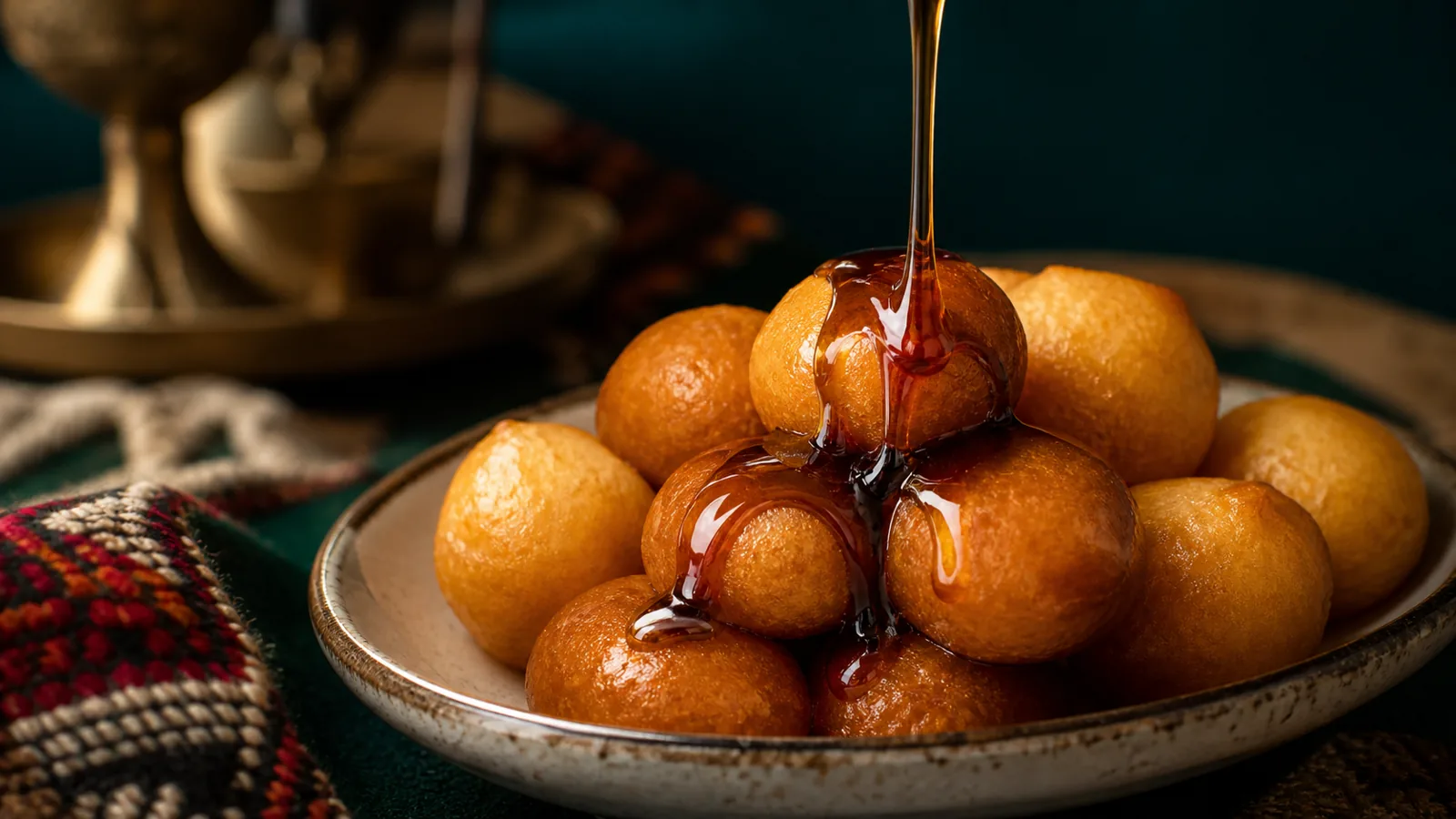
The full luqaimat recipe
This version uses a yeasted batter, which gives the dumplings their light, slightly chewy centre. It needs a short rest time, so plan for that in your prep schedule. The method below makes enough for a gathering of six to eight people as part of a wider spread.
Ingredients
- 2 cups all-purpose flour
- 1 tablespoon cornstarch
- 2 tablespoons sugar
- 1 teaspoon instant yeast
- 1/2 teaspoon ground cardamom
- 1/4 teaspoon saffron strands, soaked in a tablespoon of warm water
- 1 1/4 cups warm water (plus a little extra if the batter looks too thick)
- 1/2 teaspoon salt
- Vegetable oil, for deep frying
- Date syrup, for drizzling
- Toasted sesame seeds, for garnish (optional)
Method
- In a large bowl, whisk together the flour, cornstarch, sugar, yeast, cardamom, and salt.
- Add the warm water and the saffron water, then whisk until you have a smooth, thick batter, roughly the texture of pancake batter. It should fall from a spoon in a slow ribbon.
- Cover the bowl with a clean cloth and set it somewhere warm for about an hour, until the batter has bubbled up and roughly doubled in size.
- Heat about 5cm of vegetable oil in a heavy pot to 170-175°C. If you do not have a thermometer, drop a small bit of batter in: it should sizzle gently and rise to the surface within a few seconds without browning too fast.
- Wet your hand or a small spoon with water, scoop a walnut-sized piece of batter, and slide it into the oil. Work in small batches so the oil temperature does not drop.
- Fry for 3-4 minutes, turning occasionally, until the luqaimat are deep golden brown all over and cooked through in the centre.
- Lift them out with a slotted spoon onto a wire rack or paper towels to drain briefly.
- While still warm, drizzle generously with date syrup and scatter over sesame seeds. Serve immediately.
A quick note on troubleshooting this luqaimat recipe: if your luqaimat brown too fast on the outside but stay raw inside, your oil is too hot. If they soak up oil and turn pale and greasy, the oil is too cool. Both are easy to fix mid-batch, just adjust the heat and test again with a small piece before committing the rest of the batter.
Balaleet recipe for a sweet-and-savoury breakfast course
Balaleet is sweet vermicelli, often served with a folded omelette either mixed through or served alongside. It is traditionally a breakfast dish, but on a National Day table it works beautifully as a smaller course between savoury bites and the main dessert spread. Here is a simple balaleet recipe that scales easily.
Ingredients
- 200g vermicelli noodles, broken into short pieces
- 2 tablespoons ghee or butter
- 3 tablespoons sugar
- 1/2 teaspoon ground cardamom
- A pinch of saffron, soaked in 2 tablespoons warm water
- 1/4 teaspoon rose water (optional)
- 4 eggs
- Salt and pepper, to taste
Method
- Cook the vermicelli according to the packet instructions, then drain well.
- Melt the ghee in a pan over medium heat, stir in the sugar, cardamom, and saffron water, and let the sugar dissolve for a minute.
- Add the cooked vermicelli and toss until every strand is coated. Stir in the rose water if using, then set aside and keep warm.
- In a separate pan, whisk the eggs with a pinch of salt and pepper and cook a thin omelette on low heat until just set.
- Slice the omelette into thin strips.
- Serve the sweet vermicelli in small bowls topped with the omelette strips, or fold the strips through if your guests prefer it mixed.
Some households like their balaleet on the sweeter side, others prefer it closer to a savoury dish with only a light hint of sugar. There is no wrong version, so taste the vermicelli mixture before plating and adjust the sugar to suit your table.
If you are short on time, this balaleet recipe also works as a make-ahead dish. Cook the vermicelli and the omelette a couple of hours before guests arrive, then warm the vermicelli gently in a covered pan with a splash of water before serving. Add the omelette strips fresh so they do not turn rubbery from reheating.
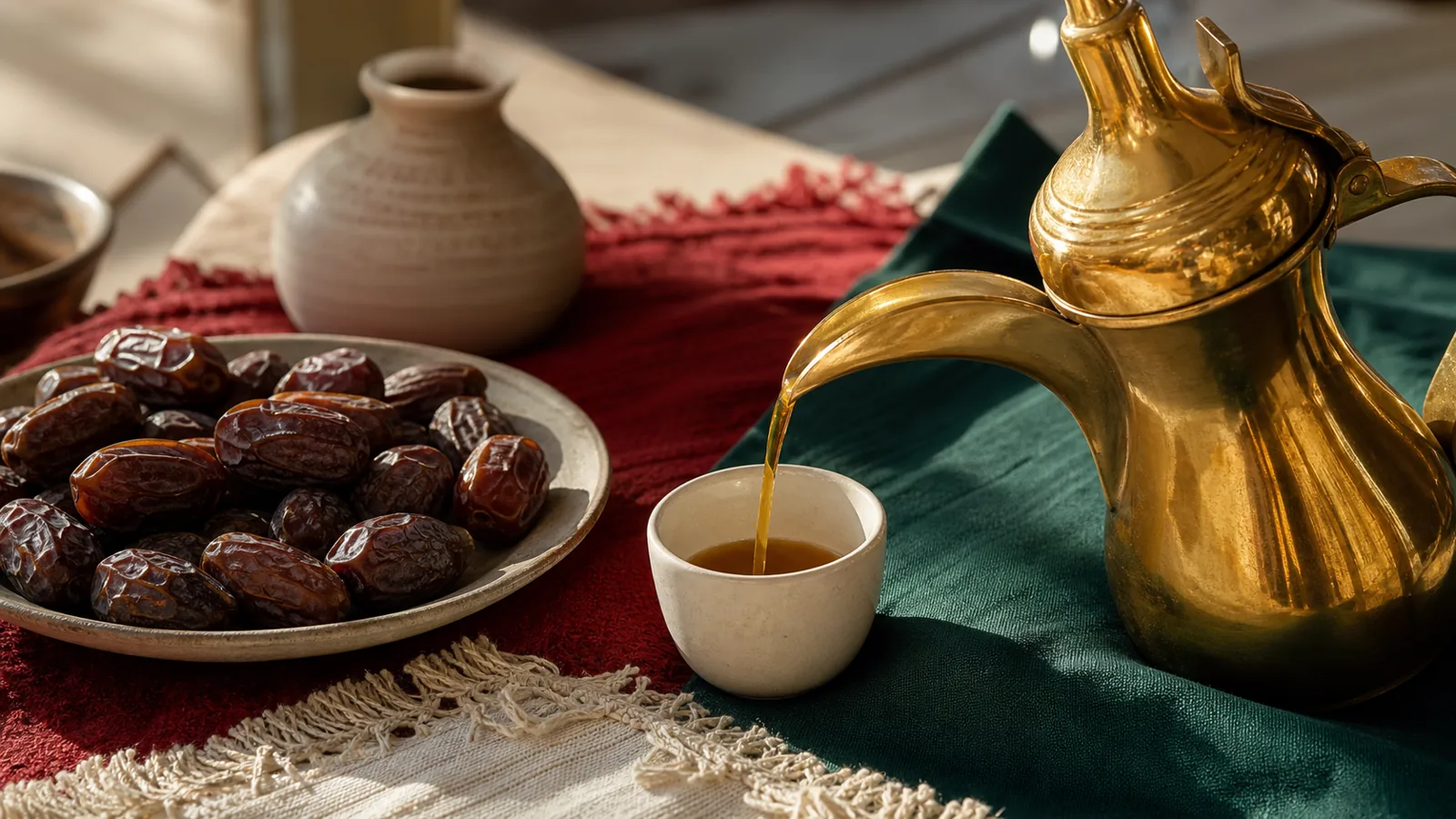
How do you serve gahwa properly for guests?
Gahwa is Arabic coffee, lightly spiced with cardamom and usually poured into small handleless cups called finjan. It is served in small amounts, refilled often, and always alongside dates. Here is the short version of doing it well at home.
- Brew lightly roasted coffee with crushed cardamom pods, sometimes with a thread of saffron or a pinch of cloves
- Pour only a small amount into each cup, about a third full, and refill as guests finish
- Hold the pot in your left hand and pour with your right when serving guests directly, following the usual etiquette
- Always pair it with dates, ideally on a small dish that circulates alongside the coffee tray
- A gentle shake of the cup by the guest signals they have had enough, no need to keep asking
If you are new to making gahwa, pre-ground cardamom coffee blends sold in most UAE supermarkets make this far easier. You do not need to grind your own spices to get a table-ready pot.
Savoury sharing plates that balance the sweet dishes
A table full of only sweet dishes gets tiring fast, so a few savoury plates keep the balance right. These do not need to be elaborate. Warm samboosa (the Gulf take on samosas), a simple hummus and labneh plate with olive oil, and grilled or pan-fried kebabs all work well as shared starters.
Keep portions small and let people build their own plate as they move around the room. A National Day gathering tends to be informal, with guests moving between rooms and conversations, so food that holds up at room temperature for a while is more practical than something that needs to be served piping hot the instant it is ready.
Pantry staples make this part of the menu much easier to pull together on a busy day. A tin of good olives, a packet of quality pasta or noodles for a quick side, or a jar of pickles can round out a savoury plate without any real cooking. If you keep a well-stocked pantry with brands from Carrefour or Lulu, this is the moment those staples earn their place.
UAE National Day food ideas beyond the classics
If you want to widen the spread a little, there are a few easy additions that fit the same warm, homely feel without adding much extra work. A bowl of mixed nuts and dried fruit gives guests something to snack on between courses. A simple date and nut platter looks generous with almost no cooking involved. Fresh fruit, cut and arranged on a plain platter, gives the table a lighter note next to the fried and sweet dishes.
These extras matter more for the feel of the table than the taste. A National Day spread should look full and welcoming from the moment guests walk in, and a few low-effort additions help achieve that without stretching your time in the kitchen on the day itself.
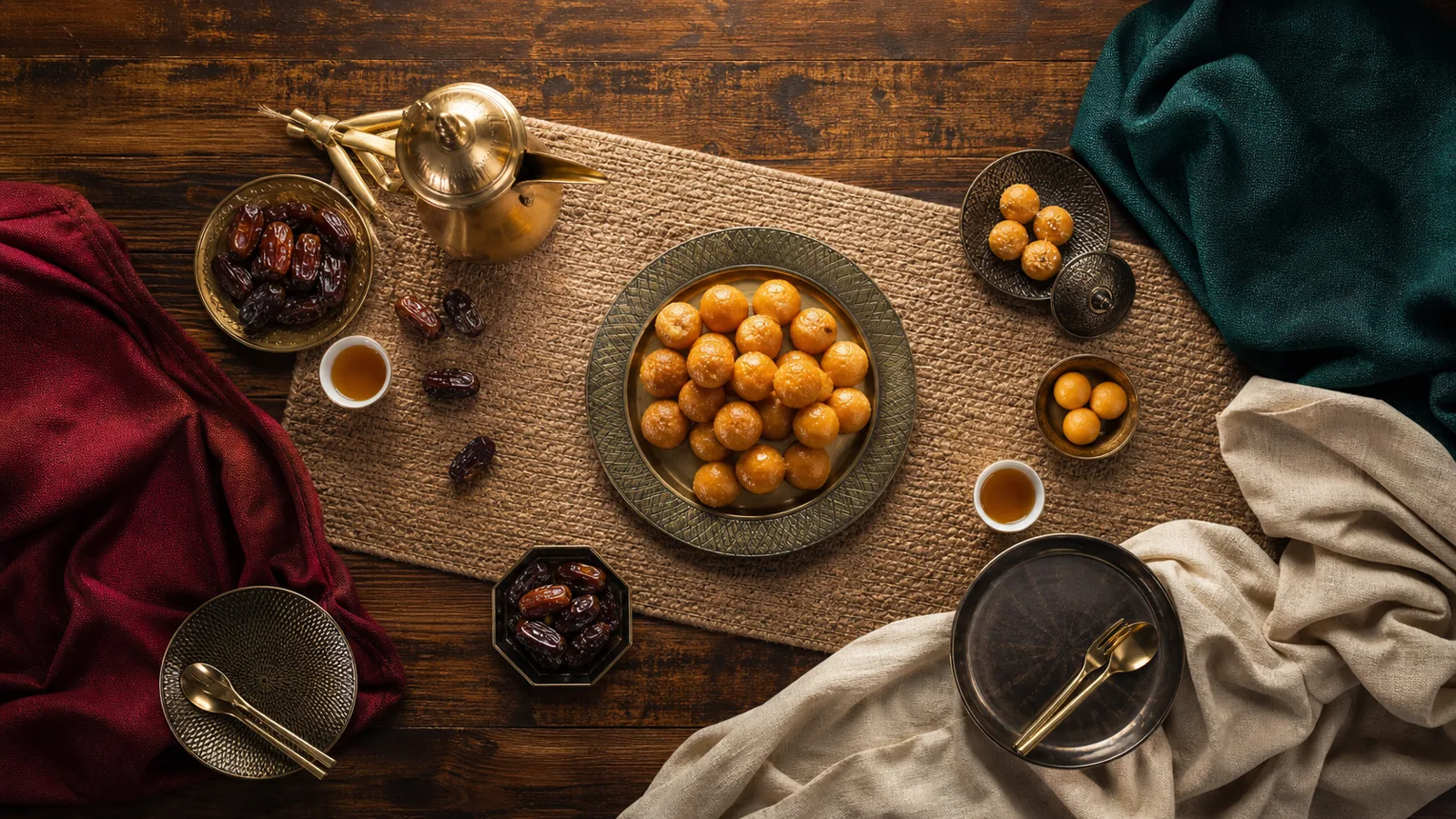
A simple timeline for hosting on the day
Here is roughly how the prep breaks down if your gathering starts in the evening.
- Morning: make the luqaimat batter and let it rest, then refrigerate it if your gathering is hours away. Bring it back to room temperature before frying.
- Early afternoon: prepare the balaleet vermicelli mixture and the omelette, cover both and set aside. Reheat gently before serving.
- An hour before guests arrive: set up the savoury plates and platters, arrange dates and nuts, and get your gahwa pot and cups ready.
- As guests arrive: fry the luqaimat in batches, serving them warm rather than trying to fry the entire batch in advance.
- Through the evening: keep the gahwa and dates circulating, and top up the fried dumplings as trays empty.
Frying the luqaimat close to serving time pays off. They lose their appeal fast once they cool and sit, so a steady rhythm of small batches beats one giant pile made hours ahead.
Emirati desserts worth knowing beyond luqaimat
Luqaimat gets most of the attention, and rightly so, but other Emirati desserts are worth exploring if you want to build out your repertoire over time. Chebab, a soft pancake often eaten with cheese and date syrup, and khabees, a date-based sweet paste, both show up regularly at family gatherings. Try one on a quieter weekend before adding it to a busy hosting day.
For now, though, a focused table of luqaimat and balaleet, done well and served warm, will carry a National Day gathering on its own. Adding more dishes only helps if you have the time to execute each one properly.
Hosting kids and mixed-age groups on the day
National Day gatherings often bring together several generations at once, from grandparents to toddlers, and the menu can work for all of them with a little planning. Luqaimat, served without too much date syrup on top, tends to be popular with younger guests who are not used to strongly spiced food. Keep a small bowl of syrup on the side rather than drizzling every piece, so people can add as much or as little as they like.
Balaleet is a gentle dish for kids too, since the sweetness is mild and the texture is soft and familiar. If you are cooking for a mixed group, consider making a second, plainer omelette without pepper for younger palates, and keep one platter of savoury bites free of anything too spicy. Small adjustments like these mean fewer special requests once everyone sits down.
Rotate who is minding the frying pot if you have another adult helping in the kitchen. Hot oil and a busy, crowded kitchen do not mix well when children are moving around, so it helps to fry in a slightly quieter corner of the kitchen, away from the main flow of guests.
Key takeaways
- Luqaimat batter needs a short proofing rest, so plan your timing around it rather than rushing the fry.
- Fry in small batches and serve warm; luqaimat lose their appeal quickly once they cool down.
- Balaleet works well as a lighter, sweet-savoury course between the savoury starters and the main dessert.
- Gahwa is served in small pours with dates, refilled often through the evening.
- A focused menu of two or three dishes, done properly, beats a long list rushed on the day.
Hosting for National Day is about warmth more than complexity. Get the luqaimat right, keep the gahwa flowing, and the rest of the table tends to take care of itself. If you are stocking up for a bigger gathering, check the Bagason blog for more recipe ideas, or visit our homepage to see the range of pantry brands we bring into UAE supermarkets. For sourcing or trade enquiries, our team is easy to reach through our contact page.
Frequently asked questions
What is the best oil temperature for frying luqaimat?
Aim for around 170-175°C. If you do not have a thermometer, drop a small piece of batter into the oil first. It should sizzle steadily and rise to the surface within a few seconds without turning dark too quickly. Too hot browns the outside before the centre cooks; too cool leaves them greasy.
Can I make the luqaimat batter ahead of time?
Yes. Mix the batter, let it rest until it bubbles up, then refrigerate it if you are not frying right away. Bring it back to room temperature before shaping and frying, since cold batter fries less evenly and can leave the centres undercooked.
Is balaleet supposed to be sweet or savoury?
Both versions exist, and households differ. Most balaleet leans sweet with cardamom, saffron, and a touch of sugar, served alongside a plain or lightly seasoned omelette. Taste your vermicelli mixture before serving and adjust the sugar so it suits your guests.
What should I serve alongside luqaimat and balaleet at a National Day gathering?
Balance the sweetness with a few savoury plates such as samboosa, hummus, or labneh, plus gahwa and dates. A simple fruit platter also helps lighten the table. Two or three dishes done well tend to work better than a long, rushed list.
How do I serve gahwa the traditional way?
Pour small amounts into finjan cups, about a third full, and refill often rather than filling each cup to the top. Serve it with dates on the side, and pour with your right hand when serving guests directly. A gentle cup shake from a guest signals they have had enough.
Can I prepare a National Day menu for a large group without doubling every dish?
Yes. Luqaimat and gahwa scale easily since they are made and served continuously through the evening. Rather than adding more dish varieties for a bigger crowd, double the luqaimat batter and gahwa quantities and keep the savoury plates simple and generous.