By two in the afternoon in late June, the air conditioning in a Sharjah flat is working overtime, the marble floor is still warm underfoot, and the walk from the car park to the lift has left a film of salt drying on your skin. You reach for the fridge. There is a bottle of cold water, sure, but your grandmother's instinct, or your flatmate's, or the man at the baqala downstairs, all point somewhere else: a tall glass of salted laban, a chilled jug of tamarind water, a smoky pour of jallab over crushed ice. These are not novelty drinks. They are the Gulf's working answer to a climate that takes more out of you than plain water can put back, and they have been doing the job for a very long time.
This guide walks through the coolers that actually keep Gulf households upright through summer and Ramadan: how to make them properly, why they work on the body, and how to stock a home drinks station so you are never caught out at 45C with nothing but a fizzy can in the door. We will start with the science of why you wilt in this heat, the history of the glass you are about to fill, and the everyday staples like salted laban and jallab. The recipes are specific, the quantities are real, and the context is the one you live in.
Why hydration hits different in the Gulf summer
Hydration in a temperate climate is a gentle background task. In the Gulf it becomes a daily operational problem, and the reason is the combination of two numbers that rarely appear together anywhere else: ambient temperatures that push past 45C inland and coastal humidity that sits stubbornly above 60 per cent through July and August. Dubai, Abu Dhabi, Sharjah and the whole coastal strip live under that double load. Inland, in Al Ain or out toward the Empty Quarter, the mercury climbs even higher but the air is drier, which changes the maths in an important way.
Your body cools itself by sweating, and sweat only cools you when it evaporates off the skin. In dry desert air, evaporation is brutally efficient: you can lose well over a litre of fluid an hour without ever feeling wet, because the moisture is gone the instant it surfaces. On the humid coast the opposite trap waits. The air is already so saturated that sweat pools on your skin and drips rather than evaporating, so you lose the fluid without getting the cooling benefit. You are paying the water cost without receiving the temperature refund. That is why a humid 42C day in Dubai Marina can feel more punishing, and dehydrate you faster in practice, than a dry 47C afternoon in the interior.
Here is the part most people miss. Sweat is not pure water. It carries dissolved electrolytes, chiefly sodium, along with smaller but meaningful amounts of potassium, magnesium, calcium and chloride. A litre of sweat can carry roughly half a gram to a gram and a half of sodium depending on how heat-adapted you are. When you replace that loss with plain water alone, you dilute the sodium still circulating in your blood. The body, sensing thinned-out blood, triggers urination to rebalance concentration, and you end up flushing out fluid you just drank. That is the mechanism behind the light-headedness, the slight nausea and the strange feeling of being thirsty no matter how much water you pour down. You drank, but you did not rehydrate.
The afternoon slump that Gulf residents know so well, the dull headache that arrives around the time of Asr prayer, the calf cramp that grips you in the night, the heaviness in the legs climbing out of the pool, are very often electrolyte stories rather than pure water stories. Magnesium and potassium losses interfere with the way muscles contract and relax, which is why cramp is the classic warning sign of running low. Sodium depletion shows up as the foggy, faintly seasick feeling and the headache. None of this means you should reach for a salt cellar and a spoon. It means the fluid you drink in summer works far better when it carries a little of what you are sweating out.
This is precisely where homemade coolers earn their place over the alternatives crowding the supermarket chiller. A regular cola or fizzy orange drink runs around 35 to 40 grams of sugar in a single 330ml can, roughly ten teaspoons, with effectively zero useful electrolytes and a slug of caffeine that mildly nudges fluid loss in the wrong direction. Many boxed juices sold as healthy are concentrate reconstituted with added sugar, landing in the same territory. A high sugar concentration in the gut actually slows the rate at which your body absorbs the accompanying water, because the intestine has to draw fluid inward first to dilute the sugar before anything moves into your bloodstream. So the very drinks marketed at thirsty people in hot countries can leave you absorbing water more slowly while loading you with calories you did not need. A glass of salted laban or a lightly sweetened lime-mint cooler does the opposite job: modest sugar, real sodium and potassium, and fluid your body can actually take up. That is the whole argument for making your own, and the rest of this guide is the practical how.
A short history of the Gulf glass: drinks built for the heat
The coolers in a UAE fridge today are not a marketing invention. They are the surviving, refined answers that desert and Levantine communities worked out over centuries, when there was no refrigeration, no electrolyte sachet and no choice but to drink smart. Understanding where they come from makes them easier to make well, because the old logic still holds.
Tamar hindi, tamarind water, is one of the oldest. Tamarind travelled the Indian Ocean trade routes that the Gulf has sat astride for millennia, and the sour pulp made a drink that was cooling, faintly tart and naturally rich in potassium. Jallab came down from the Levant, built on grape or date molasses scented with rose water and a breath of incense smoke, a drink as much about ritual as refreshment. Qamar al din, the apricot leather pressed into sheets and soaked back into a thick nectar, carries the name of the season it owns: it is the drink of Ramadan across Syria, Lebanon and the wider region, and it found a permanent home on Gulf iftar tables. Each of these solved the same problem differently, sour or sweet or floral, but all of them packed energy and minerals into a form that kept without a fridge and revived a body emptied by the sun.
From majlis to baqala fridge
These drinks first lived in the home and the majlis, the sitting room where guests are received and hospitality is a serious matter. Offering a cold, considered drink to someone who has crossed the heat to see you is a courtesy older than the air conditioner. What changed in the modern UAE is the cast of characters around the glass. The Emirates became home to communities from across South Asia, the Levant, the Philippines, East Africa and beyond, and each brought a cooler of its own. South Asian nimbu pani, lime and salt and sometimes roasted cumin, sits in the same fridge as Filipino calamansi juice, as Iranian sharbat, as the Levantine classics. Walk into any baqala, the corner grocery that anchors every UAE neighbourhood, and the chiller tells the whole story in one glance: laban beside mango nectar beside fresh lime soda beside the rose-pink bottle of jallab syrup.
That everyday availability is the quiet engine behind the whole category. The reason a family in Ajman or Al Quoz can make jallab on a Tuesday in August is that the molasses, the rose water, the tamarind block and the dried mint are reliably on the shelf, restocked through the hottest months by a distribution network that keeps the baqala and the hypermarket chiller full. %the brands and ingredients we bring to Gulf shelves% range across exactly these pantry essentials, spices and hydration lines, which is part of how a centuries-old majlis drink stays a casual midweek habit rather than a special-occasion project.
Ramadan, the season that defines the category
If summer sets the physical demand, Ramadan sets the cultural rhythm. When the fasting month falls across the long Gulf summer, as it does for years at a stretch in its cycle, the stakes of rehydration rise sharply. A person fasting from before dawn to sunset goes fifteen hours or more without a sip of water in a climate that drains a litre an hour from anyone working outdoors. The drinks that break the fast are not chosen at random. Jallab and qamar al din open the iftar because their natural sugars lift blood sugar gently after the long fast, and their minerals begin the slow work of refilling what the day emptied. Tamar hindi cuts the richness of fried savouries. Laban steadies the stomach and carries the protein and calcium that a fasting body has been waiting for. These are not garnishes on the table. They are the rehydration strategy, refined over generations, that lets people fast through a desert summer and stay on their feet.
Salted laban: the Gulf's everyday rehydrator
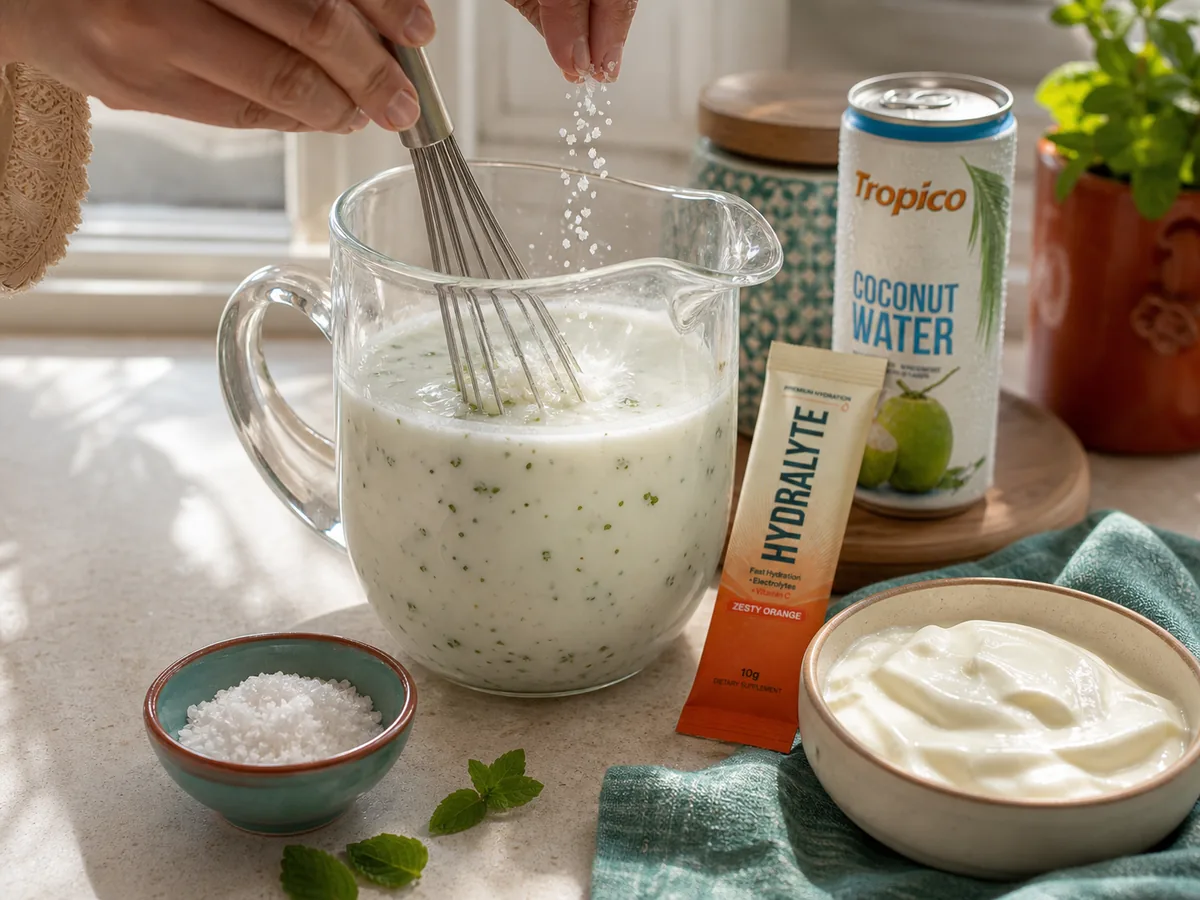
If you make only one drink from this guide a regular habit, make it salted laban. It is the closest thing the Gulf has to a default summer beverage: cheap, fast, genuinely restorative, and at home equally on a casual weekday and a Ramadan suhoor table. Laban here means cultured, drinkable yoghurt, thinner than the thick set yoghurt you eat with a spoon, slightly sour, and sold in cartons in every shop. Salted and chilled, it does three jobs at once: it rehydrates, it replaces sodium and potassium, and it delivers protein and calcium that plain drinks cannot.
The base recipe
The classic salted laban could not be simpler, and the simplicity is the point. For two generous glasses you need roughly 400ml of full-fat laban or fresh natural yoghurt, around 200ml of chilled water, a quarter teaspoon of fine salt, and an optional half teaspoon of dried mint crushed between your fingers. If you are starting from thick set yoghurt rather than drinkable laban, you will need more water to loosen it.
- Spoon the laban or yoghurt into a jug and add the salt while it is still undiluted, so it disperses evenly into the thicker liquid.
- Whisk in the chilled water a little at a time. Stop when the laban pours like single cream and coats the back of a spoon without clinging. Too thin and it tastes washed out; too thick and it sits heavy in the heat. Pourable but with body is the target.
- Crush the dried mint between your palms to release its oil and whisk it through, or leave it out for the plain version many people prefer.
- Chill thoroughly and serve over a couple of ice cubes. It separates on standing, which is normal, so give it a stir before pouring.
That quarter teaspoon of salt is not seasoning for its own sake. It is the electrolyte engine of the drink. Without it you have thinned yoghurt; with it you have a rehydration drink that puts back the sodium you have been sweating out, while the laban itself brings potassium, around 6 to 8 grams of protein per glass, and a solid dose of calcium. The protein and the slight fat content mean it sits with you and blunts hunger, which is exactly why it earns its place at suhoor. A glass of salted laban before the dawn cut-off keeps you fuller and better hydrated through the fasting day than a sugary drink that spikes and fades within the hour. The live cultures are an easy bonus for the gut, useful after a month of heavy iftar eating.
Three regional twists
The base is a platform, and the region has spent generations decorating it. Three variations are worth keeping in rotation through the summer.
Cucumber-mint laban. Grate or finely blend half a small cucumber, squeeze out some of the water so it does not over-dilute, and whisk it through the base with extra fresh mint. The cucumber adds its own cooling sweetness and a little more potassium, and the result is closer to a thin, drinkable raita. This is the version to serve alongside a fiery biryani or grilled meat, where its job is to cool the palate as much as the body.
Cumin-spiked savoury laban. Toast a quarter teaspoon of cumin seeds in a dry pan until they smell nutty, crush them, and stir them in with the salt. This is the South Asian chaas or buttermilk tradition that thousands of Gulf households grew up on, and the toasted cumin is quietly excellent for digestion after a rich meal. A pinch of black salt, if you have it, deepens the savoury edge.
The kids' dilution. Children need the hydration as much as anyone running between a hot school car park and a football pitch, but they rarely want a strongly salty, sour drink. Halve the salt, push the water up so it is lighter and milder, and lean on a little more dried or fresh mint for freshness rather than salt for bite. A faint sweetness from a teaspoon of honey for over-ones can make it an easy after-school refill that still carries real protein and calcium rather than the sugar of a juice box.
Laban rewards keeping a carton in the door at all times. It is the drink you reach for without thinking, the one that turns a thirsty, headachy three o'clock into a steadied one in the time it takes to whisk a jug, and it costs a fraction of anything you would buy ready-made.
Jallab: smoky date-and-rose syrup over crushed ice
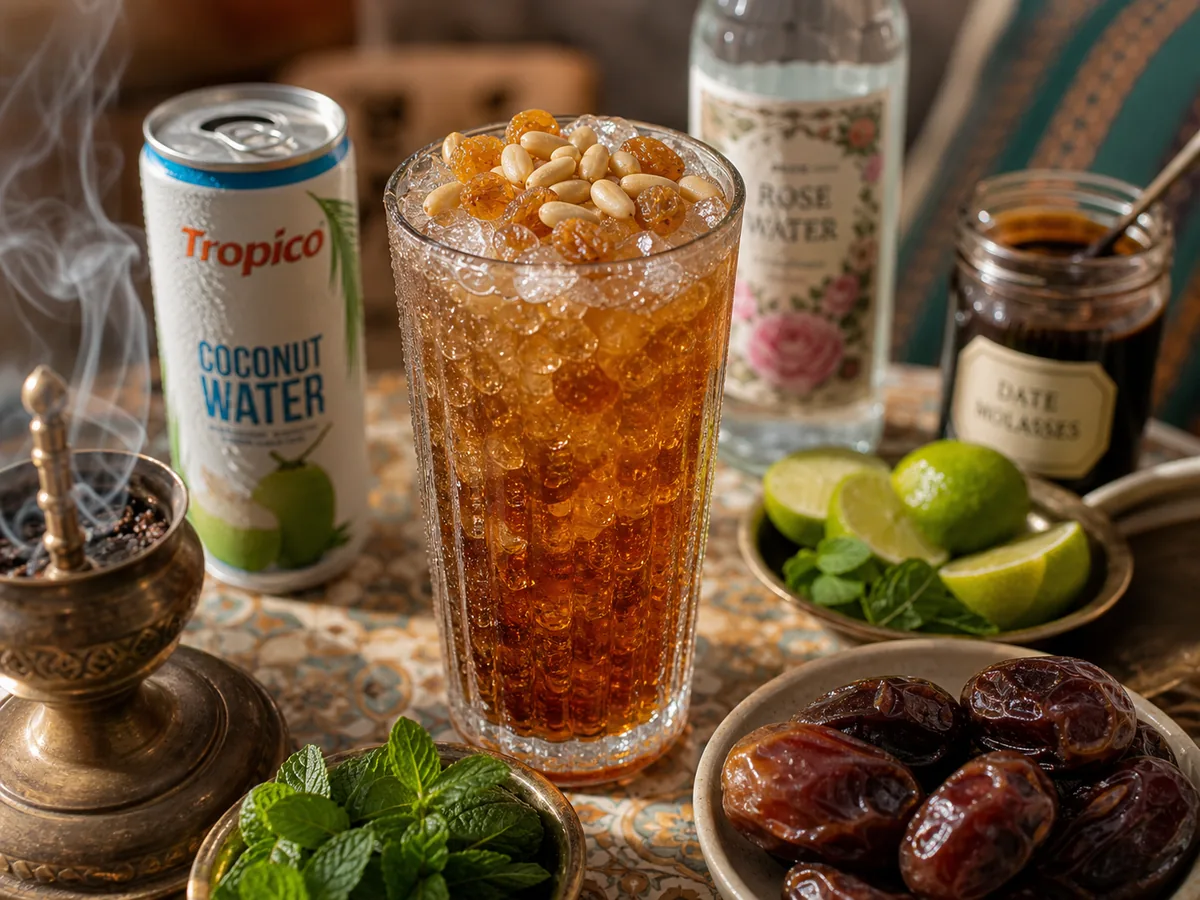
If laban is the everyday workhorse, jallab is the showpiece, the drink that makes an iftar table or a majlis gathering feel like an occasion. Deep ruby-brown, scented with rose and a haunting whisper of smoke, finished with floating pine nuts and golden raisins, it is built as much for the eye and the nose as for thirst. It is also, underneath the theatre, a serious rehydrator: the molasses base is dense with the natural sugars and minerals that revive a fasting body fast.
The heart of jallab is molasses. Traditionally it leans on grape molasses, sometimes carob, and in the Gulf date molasses is a natural and very local choice, since dates are the region's own crop and their syrup is iron-rich and intensely sweet. Rose water lifts the whole thing with floral perfume, and the signature touch is a breath of incense smoke, bakhoor or mastic, captured in the syrup so the drink carries a faint, almost mysterious smokiness that sets real jallab apart from a plain sweet cordial.
To build a jallab syrup at home, combine roughly 250ml of grape or date molasses with about 100ml of water and a tablespoon of rose water, and warm gently to loosen and marry them, without boiling off the perfume. For the traditional smoke, the old method is to take a piece of glowing natural charcoal, place it in a small heatproof bowl, set that bowl into your syrup container, drop a little mastic or incense onto the charcoal and immediately cover the whole vessel for a few minutes so the smoke infuses the syrup. It is a ritual, and it is what makes people who grew up on jallab nod in recognition. If smoking at home feels like a step too far, a good bottled jallab syrup from the baqala carries the smoke already and is a perfectly honourable shortcut.
To serve, fill a tall glass with plenty of crushed ice, not cubes. Pour over two to three tablespoons of the syrup, top with chilled water to taste and stir. Then comes the finishing ritual that is half the pleasure: a scattering of pine nuts, which have been soaked in water so they float rather than sink, and a few golden raisins. As you drink, you get the cold sweet liquid and then the soft pine nuts and chewy raisins at the bottom, so texture and flavour both build. Skip the garnish and you have a nice cold drink; include it and you have jallab.
The make-ahead advantage is real and worth planning around. The syrup keeps for weeks in a sealed bottle in the fridge, so a single afternoon of preparation means you can pour iftar drinks for a houseful of guests in the seconds it takes to add water and ice. For anyone watching sugar, jallab is honestly a high-sugar drink by nature, so the sensible adjustment is dilution rather than pretending otherwise: use a touch less syrup, lengthen with more water and ice, and let the rose and smoke carry the impression of richness while the actual sugar load drops. %how our distribution network keeps shelves stocked across the region% means the molasses, rose water and pine nuts that jallab depends on stay reliably stocked through the demand spike of Ramadan, when every household wants them at once.
Salted laban: the Gulf's everyday rehydrator
Open any baqala fridge from Deira to Khor Fakkan and you will find tall bottles of laban lined up next to the water. There is a reason it has outlasted every fizzy import: a salted glass of laban does the rehydration job that plain water cannot, and it does it with protein, calcium and a cooling tang that suits a 45C afternoon. Emirati households have leaned on it for generations, and South Asian and Levantine families adopted it the moment they arrived, recognising a cousin of their own buttermilk and ayran.
The science is simple. Sweat carries out water and sodium together. Replace only the water and you dilute the sodium still in your blood, which is exactly what brings on that wobbly, light-headed feeling after a long morning outdoors. A pinch of salt in laban puts the sodium back, while the drink's natural potassium and the lactic tang make it easier to keep sipping than warm tap water.
The base recipe
You need almost nothing. Start with full-fat laban or thick fresh yoghurt, the kind sold in every co-op and hypermarket across the Emirates. Spoon about 250ml of yoghurt into a jug, add 250ml of chilled water, and whisk until the lumps disappear and it pours like single cream. Add a quarter teaspoon of fine salt, taste, and adjust. The finished drink should be savoury and barely tart, never sweet.
- Yoghurt to water: roughly 1:1 for a classic pourable laban; use more water for a lighter drink on the hottest days.
- Salt: a quarter teaspoon per large glass is the everyday measure. Outdoor workers who have been sweating since dawn can go a touch higher.
- Dried mint: a generous pinch rubbed between your palms before it goes in releases far more flavour than tossing it in whole.
- Chill, do not warm: always whisk with cold water and serve over a couple of ice cubes. Laban loses its appeal the moment it goes lukewarm.
This is the drink to keep in a jug in the fridge through Ramadan. At suhoor, a glass of salted laban with your paratha or biryani leftovers gives you slow-digesting protein and a sodium top-up that helps you hold water through the long fasting hours far better than a sugary juice would.
Three regional twists
Cucumber-mint laban. Grate half a Lebanese cucumber, squeeze out the excess water, and stir it through the base with extra fresh mint. This is closer to a thin Persian-style yoghurt drink and pairs beautifully with grilled meats off the majlis coals.
Cumin-spiked savoury laban. Toast half a teaspoon of cumin seeds in a dry pan until fragrant, grind them, and whisk in with a pinch of black salt. South Asian families across the UAE will recognise this immediately as the cousin of chaas or salted lassi, the drink that makes a heavy lunch sit lightly.
Kids' dilution. Children rarely take to a strongly salted drink. Cut the salt to the barest pinch, lift the water ratio so it is thinner and milder, and add a teaspoon of honey for under-twos only if they are over one year old. For most kids, a lightly sweetened, lightly salted laban is the easiest homemade rehydrator to get them to actually finish.
Jallab: smoky date-and-rose syrup over crushed ice
If laban is the everyday workhorse, jallab is the showpiece. Walk past a juice stall in Bur Dubai or Sharjah during Ramadan and you will spot it: a deep mahogany drink crowned with floating pine nuts and golden raisins, the glass beaded with condensation. It arrived with Levantine and Palestinian families and settled permanently into the UAE iftar table, where its dark sweetness is the traditional way to break a fast.
Real jallab is built on grape or date molasses (dibs), rose water, and the faintest breath of incense smoke. That smoke is the secret that separates a homemade jallab from the bottled cordial. You catch it by inverting a jug over smouldering Arabic incense for a few seconds before you mix, so the glass holds a whisper of bukhoor that perfumes every sip.
Building the syrup
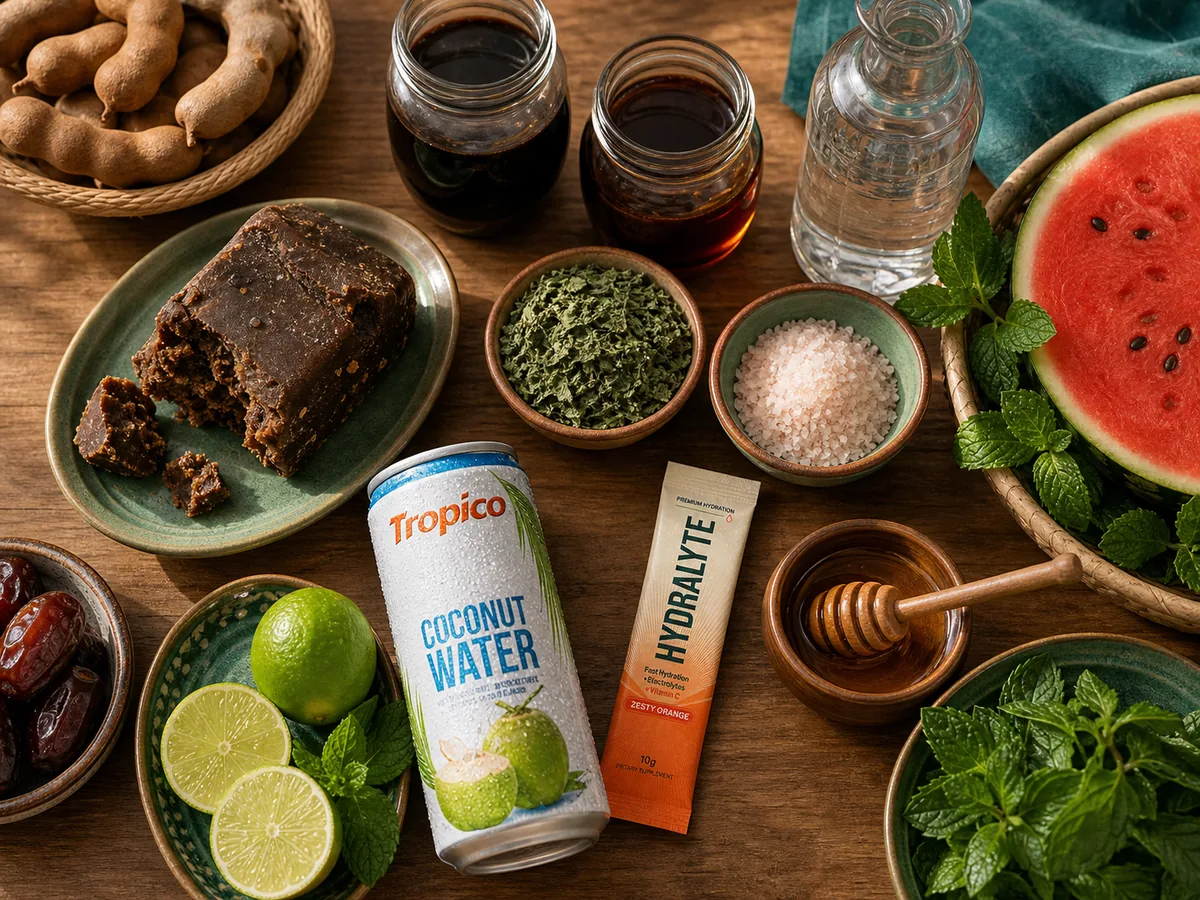
- Make the base. Combine 4 tablespoons of grape or date molasses with 1 tablespoon of pomegranate molasses for depth. Stir in 1 tablespoon of rose water. Taste and balance: the molasses carries the sweetness, the rose lifts it, and a tiny pinch of salt stops it going flat.
- Smoke it (optional but worth it). Light a piece of mastic or oud incense, invert your serving jug over it for ten seconds to catch the smoke, then mix the syrup in the smoked vessel.
- Pour and dilute. Spoon the syrup over a glass packed with crushed ice and top with very cold water. The ratio is roughly one part syrup to four parts water, adjusted to taste.
- Finish. Scatter a teaspoon of pine nuts and a few golden raisins on top. They sink slowly, soften in the cold liquid, and give you something to chew at the end. Texture is half the pleasure of jallab.
The make-ahead trick that saves you during a busy iftar: prepare a large jar of the molasses-and-rose syrup base and keep it in the fridge for up to two weeks. When guests arrive, all you do is pour syrup over crushed ice, add water, and garnish. Twenty seconds a glass, and you can serve a full majlis without breaking conversation.
For a lower-sugar version, lean harder on the pomegranate molasses for its tartness and cut the grape molasses back, then stretch the dilution with extra ice and a squeeze of fresh lemon. You lose none of the colour or aroma and shave a meaningful amount off the sugar load, which matters when jallab is the first thing hitting an empty stomach at sunset.
Tamar hindi: tangy tamarind water for the hottest afternoons
Tamar hindi, the tamarind drink whose Arabic name literally means "Indian date", is the answer Gulf kitchens reach for when the heat is at its most punishing. It is sour, faintly sweet, deeply refreshing, and it has the kind of mouth-watering tang that genuinely makes you want to keep drinking, which is exactly what you need when dehydration has dulled your thirst.
Start with a block of seedless tamarind, sold in every UAE grocery in the South Asian and Arabic aisles alike. Break off about 100g and soak it in 500ml of hot water for twenty minutes until it softens into a pulp. Work it with your fingers or the back of a spoon, then push it through a sieve, scraping the underside to capture all the thick concentrate. Discard the fibres and seeds. What you have left is a glossy, intensely sour base.
- Balance the concentrate: sweeten gradually with sugar or date syrup until the sourness is bright rather than puckering. Stop before it turns cloying; tamar hindi should stay sharp.
- Spice it: a crushed cardamom pod and a pinch of salt is the classic Gulf finish. The salt is not optional on a hot day, it is part of what makes the drink rehydrate.
- Chilli-salt rim: for the South Asian street style sold across UAE souks, rim the glass with a mix of chaat masala, chilli powder and salt. It sounds odd against a cold drink and tastes electric.
The concentrate is your friend across a busy week. Keep the strained, sweetened base in a sealed jar in the fridge for up to five or six days, then dilute a few spoonfuls into a glass of cold water whenever you need it. One Friday afternoon of soaking and straining gives you a homemade cooler ready for the school run, the commute home, and the worst of the late-afternoon glare without touching a single canned drink.
Lime-mint and other citrus coolers
The fresh lime mint that lands on your table at almost every UAE restaurant is deceptively simple, and most home versions get it wrong by leaving it too long or blending it too hard. Done right, it is luminous green, sharply citric, and barely sweet, the drink that resets your palate after a plate of mixed grill.
Classic fresh lime mint
For two tall glasses, blend the juice of 4 to 5 fresh limes with a large handful of mint leaves, 2 tablespoons of sugar or honey, and about 400ml of cold water and ice. Blend just long enough to break down the mint, then strain immediately. The two rules that matter: blend briefly so the mint does not turn bitter and grassy, and strain straight away so the drink stays clear and vivid rather than muddy. Serve over fresh ice with a single mint sprig.
Lime quality makes or breaks it. The small, thin-skinned green limes common in UAE groceries are more aromatic and less bitter than thick-skinned ones; choose firm, heavy fruit that yields slightly when pressed. To keep mint vivid and green, store the bunch upright in a glass of water in the fridge, loosely covered, and it will hold for the better part of a week even in the height of summer.
Citrus variations worth keeping on rotation
Calamansi cooler. The Filipino community across the Emirates swears by calamansi, the tiny citrus that lands somewhere between lime and mandarin. A dozen calamansi, a little honey and cold water make a softer, rounder cooler than lime, and it is sold in most baqalas with a large Filipino clientele.
Lemon-ginger. Steep a few slices of fresh ginger in hot water, cool it, then mix with lemon juice and honey. The ginger gives a warming edge that, counterintuitively, helps on a sweltering day by encouraging a light sweat that cools the skin.
Sparkling lime mint. For non-fasting afternoons and gatherings, top the strained lime-mint base with chilled soda water instead of still water. The fizz makes it feel celebratory and stretches a small batch across more guests.
To stop any citrus cooler going bitter, never blend the peel or pith, keep the sugar slightly higher than you think you need to round the acid, and drink it fresh. Citrus oils oxidise quickly, so a lime cooler made an hour ago always tastes brighter than one that has sat overnight.
Watermelon, coconut and fruit-forward coolers
Summer fruit at its cheapest is also some of the best natural hydration you can put in a glass. From June onward, watermelons pile up at the souk and the hypermarket at a price that makes a fresh cooler genuinely economical.
Watermelon-mint cooler. Three ingredients, nothing more. Blend roughly 500g of deseeded watermelon flesh with a small handful of mint and a squeeze of lime, then strain if you prefer it smooth. Watermelon is more than 90 percent water and carries natural potassium and a little natural sugar, which makes this a gentle electrolyte drink dressed up as a treat. A pinch of salt sharpens the sweetness and pushes it further toward genuine rehydration.
Fresh coconut water. The young green coconuts sold chilled across the UAE are one of the best pre-fast hydrators going, naturally rich in potassium. Drink it straight, or dress it up with a squeeze of lime and a teaspoon of chia seeds left to swell for ten minutes. The chia adds a slow-release, gel-like hydration that sits well before a long day.
Qamar al din. This thick apricot nectar, made from sheets of dried apricot paste dissolved in water, is a Ramadan fixture across the Gulf. Tear a sheet of qamar al din into a bowl, cover with warm water, and leave it for a few hours or overnight until it softens, then blend smooth and chill. It is sweet and substantial, almost a drinkable dessert, and a small glass at iftar settles an empty stomach gently.
Mango-cardamom lassi. For variety across the week, blend ripe mango with yoghurt, a splash of water, a pinch of ground cardamom and ice. It bridges the laban and fruit categories, giving you protein and fruit sugar in one glass, and it is a firm favourite with kids who turn their noses up at the savoury drinks.
Build your own electrolyte drink (no sachets needed)
You do not need a foil sachet from the pharmacy to make a proper rehydration drink. The ingredients are already in your kitchen, and making your own lets you control the sugar and sodium that commercial versions load up. This is where the spices and pantry essentials %what we do as an FMCG distributor% that move through the Gulf supply chain earn their place on your shelf: a jar of pink salt, a bottle of date syrup and a few limes are all the raw material a homemade electrolyte drink needs.
The master ratio
The balanced base, per 500ml of cold water:
- Water: 500ml, the foundation.
- Citrus: the juice of half a lemon or a whole lime, for potassium and flavour.
- Salt: a measured pinch, around an eighth of a teaspoon, of fine sea salt or pink salt for sodium.
- Sweetener: a teaspoon or two of honey or date syrup, which provides a little glucose to help the body absorb the sodium and water.
- Bicarbonate: an optional tiny pinch of bicarbonate of soda for a more complete electrolyte profile, especially after heavy sweating.
Stir until everything dissolves and taste. A good homemade electrolyte drink should taste like a slightly salty, lightly sweet lemonade, not a salt bomb. If it tastes strongly of salt, you have overdone it; dilute.
Tuning it for fasting, sport and kids
The sporty teen. A teenager playing football on a school field in May is losing sodium fast. Keep the salt at a full eighth teaspoon, push the sweetener up slightly for the working energy, and add a squeeze more citrus. Serve it cold, before and after, not just after.
The outdoor worker. Someone labouring outdoors through the Gulf summer needs the most generous sodium of the three. Lean the salt up, keep the sugar moderate to avoid an energy crash, and make the batch big enough to sip steadily through the shift rather than gulping once.
Fasting through suhoor and iftar. During Ramadan, the goal is gentle, sustained hydration, not a sugar spike. Keep the sweetener light, the salt present but modest, and drink the base at suhoor and again after iftar. A homemade electrolyte drink at suhoor does far more to carry you through the day than a final glass of plain water.
For slow-release hydration, stir a teaspoon of chia or basil seeds (sabja) into any of these. Left for ten minutes they swell into a soft gel that releases water gradually, which is why sabja-laced drinks are a Ramadan staple. A word of honesty on limits: keep added sugar modest, keep added salt to a genuine pinch, and if anyone in the household manages diabetes or blood pressure, build the drink around fruit and dilution rather than added sweetener and lean salt down.
Pantry and chiller: stocking a Gulf summer drinks station
The difference between making these drinks once as a novelty and folding them into daily life is having the right things on hand. None of the core ingredients are perishable, and most sit happily in a cupboard for months, which is exactly why they became Gulf staples in the first place.
The summer cooler shopping list
- Grape and date molasses (dibs): the backbone of jallab and a natural sweetener for everything else.
- Pomegranate molasses: for tartness and depth in jallab and dressings.
- Tamarind block: seedless, for tamar hindi concentrate.
- Rose water: a little goes a long way; one bottle lasts a whole summer.
- Dried mint and a fresh bunch: dried for laban, fresh for lime coolers.
- Limes and lemons: bought weekly, the busiest item on the list.
- Pink or sea salt: for every electrolyte and savoury drink.
- Honey and a jar of date syrup: your two natural sweeteners.
- Chia and basil seeds: for slow-release hydration.
- Qamar al din sheets and pine nuts: the Ramadan extras.
The reason these ingredients are reliably on the shelf through the punishing summer months, when demand spikes and the heat tests every cold chain, is the distribution network that connects regional and international brands to UAE retailers. Keeping pantry essentials, spices, snacks and hydration products consistently stocked from the baqala on the corner to the largest hypermarket is the unglamorous work %retailers and suppliers can partner with us% that makes a 20-second homemade jallab possible at all. When you find tamarind blocks and rose water in stock in August, that is the supply chain doing its job.
Batch once, sip all week
A simple weekly routine turns the shopping list into actual drinks without daily effort:
- One batch of syrup. On the weekend, make a jar of jallab base or a jar of sweetened tamarind concentrate. Both keep for one to two weeks in the fridge.
- One jar of electrolyte base. Mix a larger quantity of the master-ratio base, minus the citrus, and keep it ready; add fresh lime per glass so it stays bright.
- Fresh fruit topped up twice. Buy watermelon, mint and limes on two separate trips so the perishables are always fresh, and blend coolers on demand.
With those three jobs done, every member of the household can pour a proper cooler in under a minute, which is the only way a homemade-drinks habit survives a real Gulf summer.
Serving, food pairings and Ramadan tips
The right cooler with the right dish is half the enjoyment. Salted laban is the natural partner to biryani, machboos and anything off the grill; its cool tang cuts through spice and rich rice better than any soft drink. Jallab and qamar al din are the traditional openers at iftar, their sweetness gently waking a fasting body. Tamar hindi sits brilliantly alongside fried savouries, samboosa and pakora, its sourness slicing through the oil.
Hydration timing through Ramadan deserves real thought. Front-loading fluids the moment you break your fast floods the system and most of it passes straight through. Spacing your drinks across the hours between iftar and suhoor, a glass of water here, laban with the meal, an electrolyte base before sleep, a final fruit cooler at suhoor, holds you far better through the next day's fast. Slow and steady beats one big gulp.
For majlis and gatherings, presentation that survives the heat matters. Serve jallab and tamar hindi from chilled glass dispensers packed with ice so guests refill themselves. Garnish that holds up in 40C weather means sturdy mint sprigs, lime wheels and the pine-nut-and-raisin float on jallab rather than delicate herbs that wilt in minutes. Keep a covered jug of salted laban in the fridge and a jar of syrup on the counter, and you can host a full evening without ever being caught short.
Bring the Gulf glass home
The drinks that have kept this region cool for centuries ask very little of you: a block of tamarind, a bottle of molasses, a bunch of mint, a pinch of salt. Master the salted laban for everyday rehydration, keep a jar of jallab syrup for guests, soak your tamarind on a Friday, and you will outdrink the entire fizzy-drinks aisle on both refreshment and genuine hydration. The kit lives in your cupboard year-round, the fruit changes with the season, and the glass in your hand carries the same answer to the heat that Gulf households have trusted for generations.
Frequently Asked Questions
How much sugar is in homemade jallab and tamar hindi, and can I make them diabetic-friendly?
Traditional jallab and tamar hindi lean heavily on molasses and sugar, so a standard glass carries a meaningful sugar load, which matters most at iftar on an empty stomach. To make them diabetic-friendly, build the drink around the sour and aromatic elements instead: lean on pomegranate molasses and fresh lime for brightness, stretch the dilution with extra ice and water, and cut added sweetener right back. For tamar hindi, a well-balanced tart concentrate needs far less sugar than most recipes claim. Always check with your doctor on individual limits.
What dilution of laban or electrolyte drink is safe for young children in the UAE heat?
For children, thin the drink and go very light on salt. A kids' laban should use more water than the adult 1:1 ratio and only the barest pinch of salt, with a teaspoon of honey for variety in children over one year old. For homemade electrolyte drinks, halve the salt in the master ratio and keep sweetener modest. Babies under six months should only ever have breast milk or formula; for any unwell or severely dehydrated child, use a pharmacy oral rehydration solution and seek medical advice rather than a homemade mix.
How long do homemade syrups and concentrates keep in a UAE fridge?
A jallab molasses-and-rose syrup base keeps well for up to two weeks refrigerated because the sugar content acts as a preservative. Sweetened tamarind concentrate holds for around five to six days. Fresh fruit coolers and lime-mint drinks are best consumed the same day, as citrus oils oxidise and turn bitter overnight. Always store in clean, sealed glass jars, keep them at the back of the fridge where it is coldest, and discard anything that smells fermented or off, since UAE kitchen temperatures are unforgiving of slip-ups.
Where can I buy ingredients like tamarind block, rose water and qamar al din in the UAE?
All of these are widely stocked. The corner baqala carries dried mint, limes, tamarind blocks and rose water year-round, while larger co-ops and hypermarkets stock grape and date molasses, qamar al din apricot sheets, pine nuts and pink salt in their Arabic and South Asian aisles. The reliable supply through peak summer comes from the distribution networks that keep pantry essentials and spices on shelves regardless of season, so even in August you should find what you need without specialist hunting.
What are the best limes for summer coolers, and how do I store mint in UAE humidity?
Choose the small, thin-skinned green limes common across UAE groceries; they are more aromatic and less bitter than thick-skinned varieties. Pick fruit that feels heavy for its size and yields slightly when pressed, a sign of plenty of juice. For mint, the enemy is humidity-driven wilting: stand the bunch upright in a glass with a little water, cover the leaves loosely with a bag, and keep it in the fridge. Refreshed this way, mint stays vivid and green for the better part of a week even in peak Gulf summer.
Are these homemade coolers genuinely better for rehydration than canned juice or soft drinks?
For real rehydration, yes. Sugary fizzy drinks and many canned juices carry a heavy sugar load with no sodium, which does little to replace what you lose sweating at 45C. Salted laban, a homemade electrolyte base or a watermelon-mint cooler with a pinch of salt put back the sodium and potassium your body actually needs, with far less added sugar and no artificial additives. They also taste of real fruit, herbs and spice, which makes you keep sipping, and steady sipping is what genuine rehydration through a Gulf summer demands.