Open a fresh sack of basmati in a Dubai kitchen in August, leave it half-sealed in the cupboard beside the hob, and by October you may find it walking. Small reddish-brown beetles, a fine dusting of powder at the bottom of the bag, the unmistakable musty smell of grain gone wrong. Every Gulf household knows this quiet defeat: the tin of ghee that turned, the cardamom that lost its perfume, the cream crackers that went soft in the packet overnight. It isn't carelessness. It's physics. The same climate that makes the UAE one of the most comfortable places on earth to live indoors makes it one of the most punishing places anywhere to keep a pantry.
Getting food storage in humid climate UAE right is not fussiness. It is the difference between a deep, reliable store cupboard that carries a family through Ramadan and a slow leak of dirhams into the bin. The good news is that the rules are knowable, the kit is cheap and available in every hypermarket and baqala, and a single afternoon of reorganising can change how long your staples last. This guide walks through the why and the how, ingredient by ingredient, with the Gulf summer in mind at every step.
Why the Gulf is the hardest place on earth to run a pantry
The instinct is to blame the heat, and the heat is certainly part of it. But the real enemy in a UAE kitchen is the swing. Step outside in July and you meet 45C and air thick enough to fog your sunglasses. Step back inside and the air conditioning has chilled the room to 22C. Every time warm, moisture-laden air meets a cold surface, water condenses out of it. That cold surface might be a glass jar just out of an air-conditioned cupboard, the inside of a flimsy plastic bag, or the grains of rice themselves. Condensation is invisible and relentless, and it is the single biggest reason open packets of dry goods spoil faster here than almost anywhere else.
To understand what you are fighting, picture a triangle: humidity, temperature and pests, each feeding the others. Rice and flour weevils, the curse of the Gulf pantry, breed happily anywhere between roughly 10C and 40C, which describes essentially every kitchen in the country year-round. Their eggs often arrive already inside the grain, laid at the mill long before the sack reached the shelf, invisible until the warmth of your cupboard hatches them. Mould is the second point of the triangle. Most food-spoiling moulds bloom once the relative humidity around the food climbs above about 65 percent, and coastal Dubai, Abu Dhabi and Sharjah routinely sit well above that outdoors for months on end. The third point is oxidation, the chemical rancidity that turns oils, nuts and wholegrains stale and sour. Oxidation roughly doubles its pace for every 10C rise in temperature, so a tin of ghee or a bottle of walnut oil ages far faster in a warm cupboard than the date on the label assumes.
Put the three together and you have a kitchen environment that actively works against you. Warmth wakes the weevils, humidity feeds the mould, and heat accelerates the rancidity, all at once, all summer. This is why storage habits that work fine in a temperate climate quietly fail in the Emirates.
It is worth counting the cost in dirhams, because that is what makes the case for doing this properly. A 5kg sack of good basmati is real money. A large tin of pure cow ghee is more. A well-stocked Gulf spice drawer, with its saffron, baharat, whole cardamom and dried limes, represents a serious investment in flavour. A single bad summer can write off a chunk of all of it: the rice infested and binned, the ghee gone rancid and poured away, the spices faded to sawdust. Multiply that across a year and across the deep pantries most UAE families keep, and careless storage is one of the quietest, steadiest forms of household waste there is. Storage discipline is simply money you stop throwing away.
How Gulf households have always done it: from majlis stores to the modern baqala run
None of this is new, and the old Gulf solutions were clever. Long before air conditioning, Emirati and wider Khaleeji households stored their staples in heavy clay jars and brass and tinned-copper vessels, kept in the coolest, darkest corner of the house. Thick walls of coral stone and mud, and the deep shade of a windowless storeroom, held temperatures far steadier than the air outside. Dates were pressed into woven palm-leaf baskets and earthenware pots, the natural sugars and low moisture letting them keep for months. Grain and flour went into sealed metal drums. Clarified butter, samn, was rendered precisely because removing the milk solids and water made it shelf-stable in a climate that would spoil fresh butter in hours. The wisdom was the same one we are chasing with modern containers: keep it cool, keep it dark, keep the air and moisture out.
Buying rhythms followed the seasons. Families stocked up on stable staples before the worst of the summer arrived, laying in rice, pulses, oil and dates while the weather still allowed safe storage, then drawing them down through the hottest months. That instinct to buy deep ahead of summer survives today, layered now over two very different shopping habits that coexist in nearly every UAE home.
The first is the baqala run: the quick top-up at the corner grocery that anchors daily life across the Emirates, where you pick up a kilo of this and a packet of that as you need it. The second is the monthly hypermarket haul, the trolley piled with 5kg and 10kg sacks of rice, catering tins of oil and multipacks of everything, bought because the per-kilo price is so much better in bulk. The two habits pull in opposite directions. The baqala run keeps quantities small and turnover fast, which is ideal for perishables. The hypermarket haul brings home more than a household can use before the climate gets to it, which is where expat families in particular come unstuck, over-buying the wholegrains, ground spices and nuts that spoil fastest and then losing them at the back of a warm cupboard.
There is a cultural reason Gulf pantries run so deep, and it is worth honouring rather than fighting. Hospitality is not optional here. A majlis must be ready to receive guests at short notice, with coffee, dates, nuts and sweets to hand. Ramadan turns the whole calendar towards the store cupboard, with families stocking weeks of staples for nightly iftars and the steady stream of visitors. Eid, weddings and the constant open-door generosity of Gulf life all assume a kitchen with reserves. The goal is never to stock less. It is to stock smart, so that a deep, generous pantry stays a fresh one.
Read your kitchen first: mapping heat, light and damp zones
Before buying a single container, walk your own kitchen and read it like a map. Every flat has microclimates, pockets that run hotter, brighter or damper than the rest, and the staples you lose are almost always the ones stored in the wrong pocket. Spend ten minutes with your hand, feeling cupboard interiors at different times of day, and the danger zones reveal themselves quickly.
Heat traps are the first thing to find. The cupboard immediately beside or above the oven bakes every time you cook and stays warm for hours after. The shelf above the kettle or the coffee machine catches a plume of steam and warmth several times a day. Any cabinet sharing a wall with the outdoors, especially a west-facing wall that takes the brutal afternoon sun, runs warmer than you would ever guess from inside the cool room. The space on top of the fridge, warmed by the motor venting its heat, is another classic trap that looks like convenient storage and quietly cooks whatever sits there.
Moisture is the second hazard, and it gathers in predictable places. The under-sink cupboard is the worst offender in most UAE apartments, sitting directly beneath the plumbing where the slightest unseen drip, or simply the cold of the pipes pulling condensation out of humid air, keeps the space permanently damp. It is a magnet for both mould and pests, and it is no place for food. Storage near a window invites trouble too, with daytime sun heating the spot and night-time condensation forming on the glass and the cool surfaces around it. Anywhere near the door to a balcony or the building corridor sees the humidity swing every time it opens.
Then there is the air conditioning reality check, the one most people miss. A pantry is only as stable as the room around it, and many UAE households switch the AC off in unused rooms to save on the summer electricity bill, or shut it down entirely when they travel. A cupboard that holds a steady 23C while you are home can climb past 35C within hours of the cooling going off, then swing back when it returns. That repeated expansion and contraction of warm and cool air is exactly what drives condensation into your packets and accelerates spoilage. If you stock a store cupboard in a spare room, a maid's room or anywhere the AC is not constant, treat it as a hot zone and seal everything accordingly, especially before a summer holiday away.
The worst three spots in a typical Dubai apartment
If you change nothing else, move your food out of these three. First, the under-sink cupboard: damp, dark in the wrong way, and the prime spot for weevils and mould. Reserve it for cleaning supplies and bin bags, never food. Second, any cupboard touching the oven or hob: the daily heat cycling there will stale your spices and oils months ahead of schedule, and it is the last place a tin of ghee should live. Third, the open shelf or rack above the cooker, beloved of stylish kitchens and lethal to spices, where rising steam and heat strip flavour from the very jars you reach for most. Treat these three as off-limits for anything you intend to eat, and you have already solved a large share of the problem.
Why the fridge is not a free pantry
It is tempting to treat the fridge as the answer to everything, but cold storage carries its own humid-climate trap. A domestic fridge runs at high humidity by design, and every time you open the door in a hot kitchen, warm moist air rushes in and condenses on the cold contents. Decant flour or a half-used bag of crisps straight into the fridge in their original packaging and you may find them damper, not drier. The fridge is genuinely the right home for some things in the Gulf, including nut flours, opened nut and seed oils, fresh curry leaves and herbs, and dates you want to keep for months. But it only works if the food goes in properly sealed in airtight containers, never loose, so the moisture stays out. The fridge buys you cold, not dryness, and in this climate dryness is half the battle.
The container rulebook for humid air
Once you know where to store food, the container becomes the front line. The packaging your staples arrive in is built for the shop shelf and the journey home, not for months in a humid kitchen. Paper sacks of flour and atta, thin plastic rice bags and cardboard spice boxes are all porous, and worse, weevils chew straight through paper and thin film without difficulty. Re-sealing the original bag with a clip helps a little, but it is a stopgap, not a solution. The rulebook is simple: get your staples out of their selling packaging and into proper airtight storage as soon as they come home, especially anything that will not be used within a week or two.
There is a clear hierarchy of containers. At the top sit airtight glass jars and thick food-grade plastic canisters with proper sealing lids. Below them, the original packaging. The gap between the two is enormous in this climate. What makes a container genuinely airtight is the seal, not the thickness of the walls, so pay attention to the lid. A silicone gasket that compresses when you close it, or a clip-lock mechanism with a rubber ring, creates a real barrier against humid air and pests. A lid that simply rests on top, or screws on loosely, is close to useless. In fact a loose lid can be worse than none, because it traps a pocket of humid air against the food and lets condensation cycle inside with nowhere to escape. If the lid does not seal with a slight resistance, it is not doing its job.
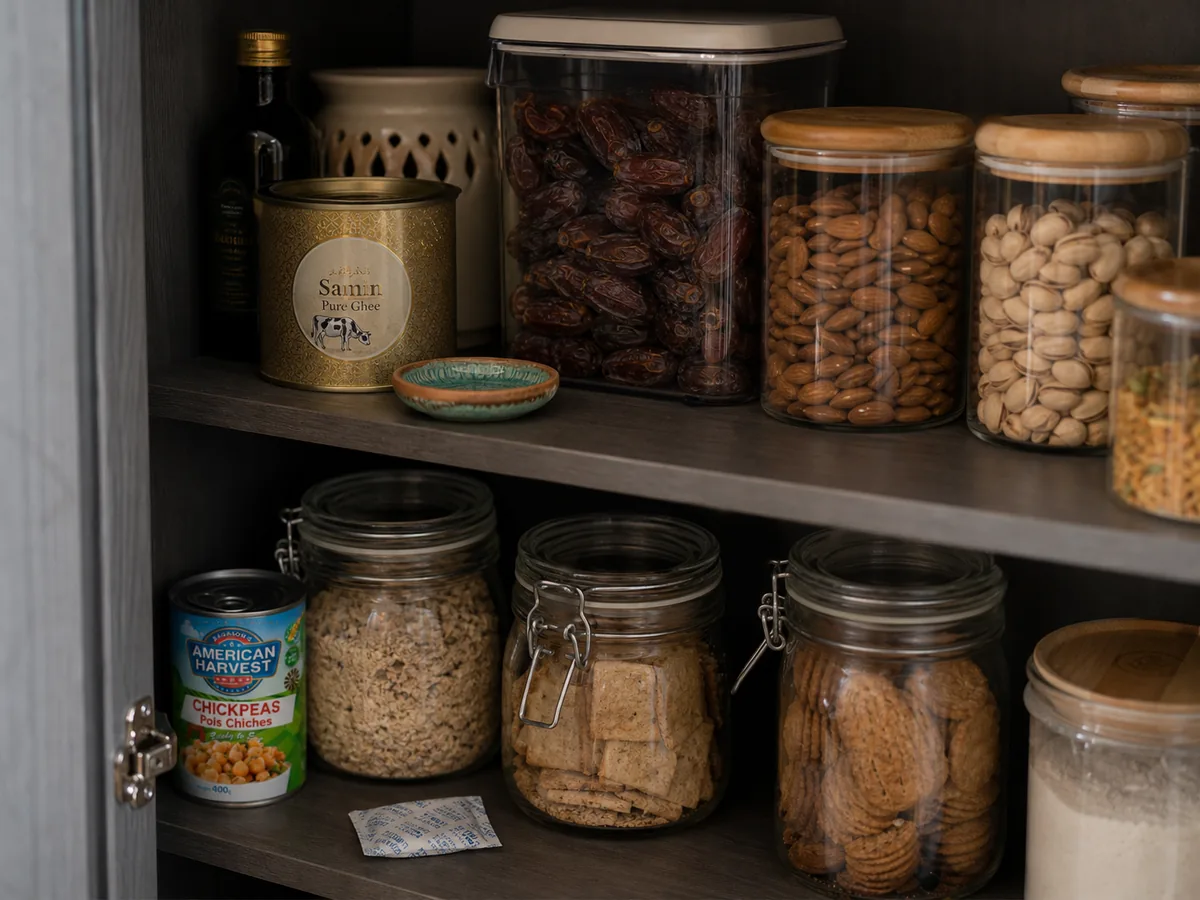
The kit to do this well is cheap and everywhere in the UAE. Stackable cereal dispensers and square clip-lock canisters from any hypermarket homeware aisle turn a chaotic cupboard into a tidy, sealed system and use the vertical space a small Dubai kitchen cannot waste. Clip-top glass jars, the kind with a hinged lid and a rubber gasket, are ideal for spices, pulses and smaller quantities. Vacuum canisters that pump the air out go a step further for things you want to protect hardest, like coffee, nuts and ground spices. And the quiet hero of Gulf storage is the desiccant: small food-safe silica gel sachets, or food-grade calcium-based moisture absorbers, tucked into a jar of flour or a tin of biscuits to pull stray humidity out of the trapped air. Keep a stock of them; they cost almost nothing and they earn their place every summer. The same role connecting trusted brands and everyday kit to Gulf shelves is the work Bagason does behind the scenes, %the pantry essentials, spices, snacks and hydration ranges Bagason moves across the Gulf%, so the containers and staples you rely on arrive in good condition.
None of this works without decanting and labelling discipline. The moment you tip a sack into a jar, you lose the printed date and the cooking instructions, so write them on. A strip of masking tape with the contents and the best-before date, or a wipe-clean label on the front, means nothing hides anonymously at the back past its prime. Decant fully rather than tipping new stock on top of old, and you will not end up with a forgotten layer of stale flour fossilising at the bottom of the canister. The discipline is small; the payoff is a pantry where you can see, at a glance, what you have and how fresh it is.
Glass vs plastic vs steel in Gulf conditions
Each material has its place. Glass is the all-rounder: it is completely non-porous, holds no smells, lets you see the contents and the freshness at a glance, and never taints delicate spices or oils. Its only drawbacks are weight and the risk of breakage, and that it lets light through, so keep glass jars of spices and oils inside a dark cupboard rather than on display. Thick food-grade plastic, the rigid kind with a real gasket lid, is light, unbreakable and ideal for bulk staples like rice and flour and for high shelves where a heavy glass jar would be a hazard; avoid thin, flimsy tubs that flex and seal poorly. Stainless steel, long a Gulf and South Asian kitchen staple, is tough, light-proof and excellent at keeping contents cool and pest-free, with the one limitation that you cannot see inside, so labelling matters more. A practical Gulf cupboard mixes all three: steel and thick plastic for the bulk staples up high, glass for the spices and the things you want to watch.
Desiccants, bay leaves and natural deterrents that actually work
Beyond the container itself, a few additions genuinely help. Food-safe silica gel sachets are the most effective humidity control there is for a sealed jar, and they can be dried out in a low oven and reused for a season or two. For pests, the old kitchen remedies have real merit because weevils and grain moths dislike certain strong aromatics. A few dried bay leaves tucked into a jar of rice or flour, whole cloves scattered through grain, or a small muslin pouch of neem leaves are all time-tested Gulf and subcontinental deterrents that work by smell rather than poison, so they are safe around food. A head of garlic pushed into a rice bin does the same job. None of these will rescue grain that is already infested, and none replaces a proper airtight seal, but as a second line of defence inside a well-sealed jar they tilt the odds firmly in your favour. The combination to remember is mechanical plus natural: a real gasket lid to keep the air and the bugs out, a desiccant to manage moisture, and a bay leaf or two as insurance. Pair that with buying well-handled stock in the first place, the kind of properly distributed pantry essentials and spices %the brands we bring to UAE shelves% that reach the shelf fresh, and your staples start their life in your kitchen with every advantage.
The container rulebook for humid air
Walk into any kitchen that survives a Gulf summer with its pantry intact, and you'll find the same thing: containers that actually seal. Not the bag the rice came in, twisted shut and clipped with a peg. Not the original cardboard box of cornflour with its flap tucked under. Proper, gasket-sealed, air-locked vessels that treat the kitchen air as the enemy it is. The packaging your staples arrive in was built for a temperate warehouse and a quick sale, not for sitting open in a Dubai flat where the AC cycles on and off and the air carries enough moisture to fog a cold glass in seconds.
The hierarchy is simple. Airtight glass and thick food-grade plastic sit at the top. Thin plastic produce bags and paper sacks sit at the bottom, because weevils chew through both and humidity passes through them as if they weren't there. In between you have your everyday clip jars and dispensers, which are fine for fast-moving stock but only if the seal is genuine. A container that merely clicks shut is not the same as one that compresses a rubber gasket against the rim. In humid air, a loose lid is arguably worse than no lid, because it traps a pocket of damp air against the food and holds it there, warm and still, exactly the conditions mould and insects want.
Glass vs plastic vs steel in Gulf conditions
Glass wins for spices, oils and anything you want to keep away from light only if you store it in a dark cupboard, because clear glass on an open shelf invites the very light damage you're trying to avoid. It doesn't absorb odours, doesn't stain from turmeric, and you can wash it at high heat to reset it between batches. The downside is weight and the risk of a dropped jar on a tiled kitchen floor. Thick food-grade plastic with a silicone gasket is lighter, stacks better and survives the school-run chaos of a family kitchen, which is why most UAE households build their core pantry around clip-lock plastic and reserve glass for spices and oils. Stainless steel is brilliant for blocking light and surviving heat, the traditional choice for flour and rice in many South Asian and Arab homes, but you can't see inside, so steel demands disciplined labelling or you'll forget what's in the back of the cupboard.
Desiccants, bay leaves and natural deterrents that actually work
The little silica gel sachets that come tucked into shoe boxes and vitamin bottles aren't food-safe, but food-grade desiccant sachets are sold cheaply across UAE supermarkets and online, and one dropped into a jar of flour or a tin of biscuits soaks up the ambient moisture that would otherwise cake the contents. Reactivate them in a low oven when they feel heavy and reuse them for months. Alongside the science, the old kitchen wisdom holds: a few dried bay leaves laid in a rice container genuinely repel weevils, whole cloves discourage them too, and a couple of dried neem leaves are a South Asian standby that works in a Sharjah flat as well as it ever did in a Kerala storeroom. None of these replace an airtight seal, but layered on top of one they give you a second line of defence through the worst of July and August.
Rice and grains: the Gulf staple, kept weevil-free
Rice is the backbone of Gulf cooking, from a Friday machboos to a weeknight biryani to plain steamed basmati alongside dal, and it's also the staple most likely to be quietly destroyed from the inside. The horror of opening a five-kilo sack to find it crawling is a near-universal Gulf kitchen experience, and the cause is almost never the shop. Rice weevil eggs are laid inside the grain before it's milled and packed, invisible to the eye, dormant until warmth wakes them. A UAE pantry sitting at 28 to 35 degrees is a hatchery.
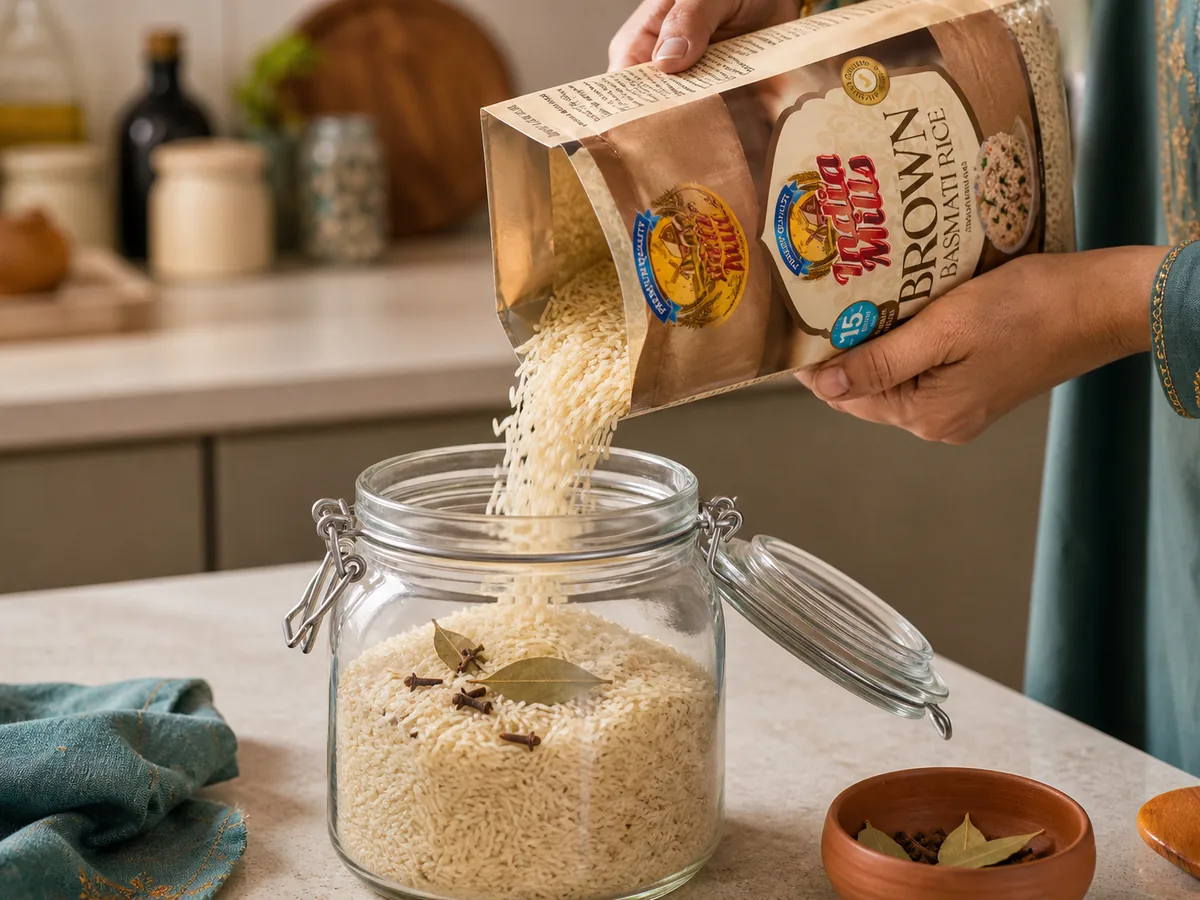
The single most effective trick costs nothing but freezer space. Freeze new rice for 48 hours before you decant it. The cold kills any hidden eggs and larvae, and once you transfer the rice to an airtight jar, nothing new can get in. This one habit, freeze then seal, prevents the overwhelming majority of infestations and is worth building into your routine the moment a sack comes home from the hypermarket. Tuck two or three bay leaves into the jar afterwards as insurance.
Basmati, sella and jasmine: storing the varieties Gulf kitchens love
Aged basmati, the long-grain pride of every Gulf rice cupboard, is wonderfully forgiving. White basmati that's been milled and dried properly will hold for a year or more in an airtight container kept cool and dark, and many cooks insist it improves with age, the grains drying further and cooking longer and fluffier. Sella, the parboiled basmati that holds its shape in a heavy biryani, is just as stable and arguably even hardier because the parboiling toughens the grain. Jasmine and other fragrant white rices keep their perfume far better sealed away from light and heat; left in an open bag near a sunny window, that delicate aroma fades within weeks. For all three, the rule is the same: cool, dark, airtight, and freeze-first if there's any doubt.
Brown rice, freekeh and bulgur: the wholegrains that won't wait
Wholegrains are a different animal entirely. Brown rice, red rice, freekeh, bulgur and wholewheat grains keep their bran and germ, and that germ is full of oils that turn rancid in warmth. Where white basmati shrugs off a year on the shelf, brown rice can develop a stale, oily, almost crayon-like smell within two to three months in UAE heat. Buy wholegrains in smaller quantities, store them airtight, and if you eat them slowly, keep the jar in the fridge or even the freezer. A rancid wholegrain won't make you ill, but it tastes flat and faintly bitter, and it can spoil a dish you've put real effort into.
For the bulk buyer who picks up 5kg and 10kg sacks of white rice before summer prices climb, the smart move is split-and-seal. Don't open the whole sack and let it breathe in the kitchen. Portion it into several sealed jars, freeze each batch first, and keep one in rotation while the rest stay closed. You get the savings of bulk buying without exposing 10 kilos of rice to months of humid air at once.
Flour, sugar and baking staples that clump and turn
Flour is the staple that shows humidity damage fastest and least forgivingly. Atta for chapatis, maida for parathas and pastries, plain and self-raising flour for cakes and the Friday batch of pancakes, all of them cake into stubborn lumps when damp air gets in, and all of them attract the same weevils and flour moths that go after rice. The fix is the same partnership that protects everything else: an airtight container plus a food-grade desiccant sachet to mop up the moisture that sneaks in every time you open the lid. Freeze new flour for 48 hours, just like rice, to kill anything that arrived with it.
Wholemeal flour, atta included, and nut flours like almond and coconut flour carry the same rancidity risk as wholegrains, because they keep their oils. These belong in the fridge or freezer if you bake only occasionally, and a tightly sealed bag will keep them sweet for months rather than weeks. Before any bake, do the smell-and-sieve check: a quick sniff tells you if the oils have turned, and sieving reveals any lumps or, less happily, any movement that means it's time to bin the bag.
Sugar has its own humid-climate quirk. Caster and granulated sugar set rock-hard when moisture gets in and then dries unevenly, leaving you chiselling at a solid brick. Keep it airtight and it stays loose. Brown sugar does the opposite, drying out and hardening as it loses moisture; the old trick of dropping a slice of fresh bread or a damp paper towel into the container for a few hours softens it again, and a terracotta brown-sugar disc, soaked and added to the jar, keeps it pliable through a Gulf summer. %how far our distribution network reaches across the Emirates and wider GCC% across the region shows how much these everyday staples move through Gulf kitchens, and why keeping them in good condition from shelf to store cupboard matters to real households.
Spices: protecting the flavour your cooking is built on
Spices are where the Gulf's heat, light and damp do their quietest, most expensive damage. A jar of cumin, a tin of turmeric, a hand-blended baharat, a precious pinch of cardamom: these are the difference between flat food and food that tastes of somewhere. And they fade. Heat drives off the volatile oils that carry aroma, light bleaches colour from turmeric and chilli, and damp clumps ground spice into a dull paste of its former self. A spice that smelled electric when you opened it can go muted and dusty within a few months on a warm shelf.
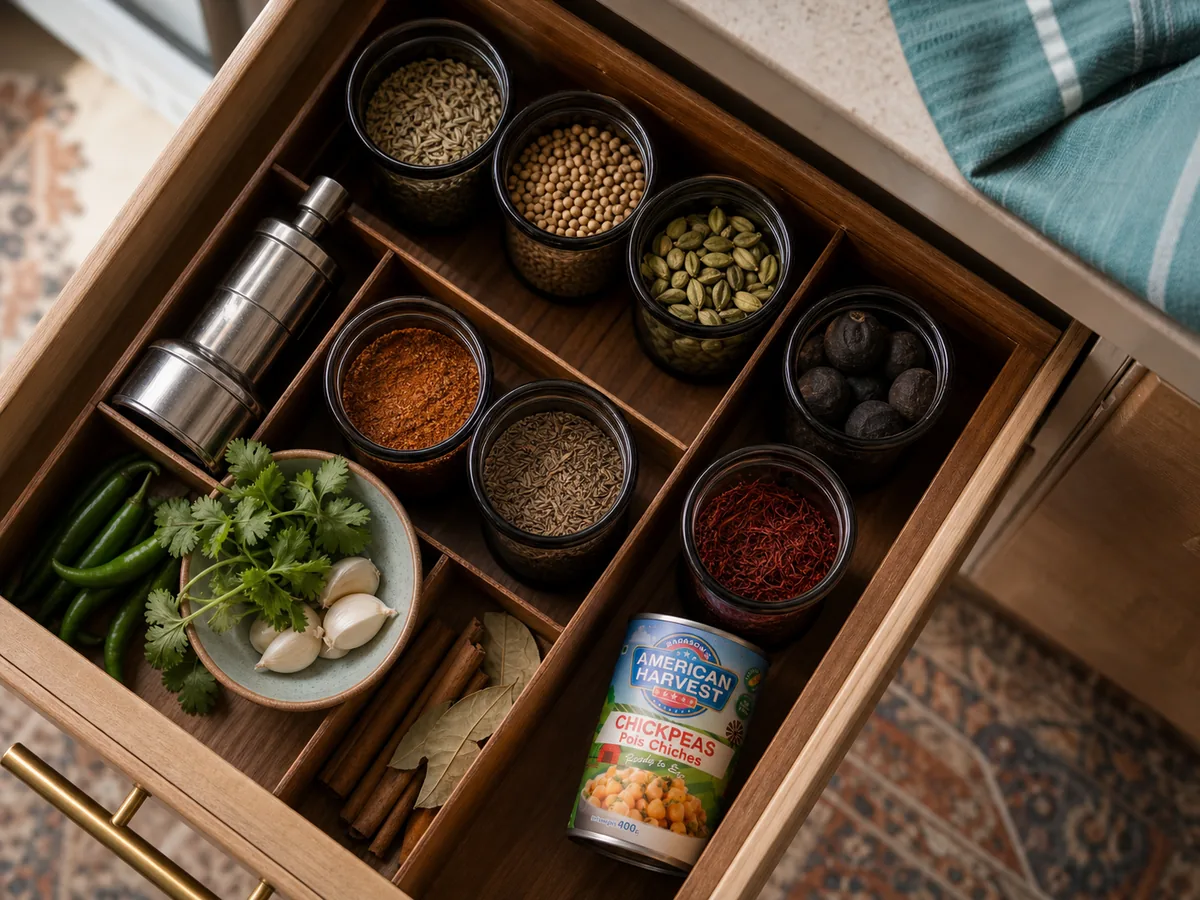
The most useful habit you can build is to buy whole and grind small. Whole cumin, coriander, peppercorns, cardamom pods and cinnamon sticks hold their oils locked inside until you crack them, and they keep their punch for a year or more. Ground spices, with all that surface area exposed, fade three to four times faster in Gulf conditions. A small spice grinder or even a heavy pestle and mortar pays for itself in flavour. Grind what you need for the week, keep the whole spices sealed, and your cooking stays vivid.
Whole vs ground: a freshness timeline for Gulf kitchens
As a working rule for UAE storage: whole spices kept airtight and dark hold their best for around a year, sometimes well beyond. Ground spices are at their peak for two to three months and noticeably tired by six. Delicate ground spices like cardamom and clove fade fastest of all. This isn't about food safety, old spices won't hurt you, it's about whether the baharat in your machboos still tastes like baharat. When a spice has lost its smell, it has lost its job, and no quantity of it will rescue a dish.
The over-the-stove spice rack mistake
The most common storage error in the entire kitchen is the spice rack mounted on the wall above the hob. It looks tidy and keeps everything to hand, and it sits in the worst possible spot: directly in the rising heat and steam of everything you cook. Every time a pot simmers, that rack bakes and humidifies your whole spice collection at once. The cousin of this mistake is shaking spice straight from the jar into a steaming pot, which sends a plume of moisture back up into the container to clump and spoil what's left. Store spices in a cool cupboard away from the stove, and spoon them into your hand or a small dish before they go anywhere near the steam.
The Gulf's signature flavourings need their own care. Saffron keeps best in a small airtight tin in a dark cupboard, where its threads hold colour and aroma for a couple of years. Dried limes, the loomi that gives so many Gulf stews their sour backbone, store almost indefinitely somewhere cool and dry and only need protection from damp, which can soften and mould them. Whole dried chillies hold far better than chilli powder. Fresh aromatics, curry leaves, coriander, mint and the herbs that finish so many dishes, belong in the fridge, wrapped loosely in kitchen paper inside a container, or frozen if you've bought more than a few days' worth.
Oils and ghee: stopping rancidity before it starts
Oil goes off, and most kitchens don't notice until it's well gone. Rancidity is oxidation, the slow reaction of fat with oxygen, and it's accelerated by exactly the three things a Gulf kitchen has in abundance: light, heat and air. An oil bottle left on the counter beside the hob, half-empty so it's mostly air, catching the afternoon sun, is being attacked on all three fronts. The result is a stale, waxy, faintly bitter taste that drags down everything you cook in it, often without the cook quite realising why the food tastes off.
Different oils need different care. Extra virgin olive oil, the most delicate of the everyday oils, should live in dark glass or tin in a cool, dark cupboard, never on a sunny windowsill no matter how pretty the bottle. Neutral cooking oils, sunflower, canola and the blended vegetable oils that do the heavy lifting in most Gulf kitchens, are hardier but still belong away from the hob's heat. Nut and seed oils, walnut, sesame, flaxseed and the cold-pressed oils prized for finishing rather than frying, are the most fragile of all and keep best in the fridge, where they may cloud or thicken harmlessly and clear again at room temperature.
Ghee and samn, the clarified butter at the heart of so much Gulf and South Asian cooking, are far more forgiving because clarifying removes the milk solids and most of the water that would otherwise spoil. A tin of good ghee keeps for many months in a cool cupboard, and that stability is exactly why generations of Gulf households have relied on it. Forgiving isn't the same as immune, though: keep the spoon you use dry, never introduce water, and store it away from heat, and it will reward you. Learn the rancidity smell-test, a sharp, stale, crayon-or-paint note quite unlike the clean smell of fresh oil, and trust your nose. And buy oil in volumes you'll actually finish in a few months. A bargain catering tin is no bargain if half of it turns before you reach the bottom.
Snacks, nuts, dates and dried goods that lose their crunch
Humidity is the enemy of crunch. Crisps go limp, biscuits soften, namkeen and Bombay mix lose their snap, and the papad you were saving turns leathery, all because the dry, crisp structure of these foods soaks moisture straight out of the air the moment a packet is open. Clip-seal the bag the instant you've taken what you want, decant party-sized packets into airtight containers, and drop in a food-grade desiccant sachet for anything you want to keep crisp for weeks. An open packet folded over and forgotten in the cupboard is soggy by the next afternoon in a humid kitchen.
Nuts and seeds carry the wholegrain problem, oils that turn rancid, and they hold it in concentrated form. Almonds, cashews, pistachios, walnuts and pumpkin or sunflower seeds all taste flat and bitter once their oils oxidise, and the warmer the storage, the faster it happens. For nuts you'll get through in a few weeks, an airtight jar in a cool cupboard is fine. For bulk buys and anything you eat slowly, the fridge or freezer is the right home, and frozen nuts thaw in minutes with no loss of quality. Toasting nuts fresh as you need them, rather than buying them pre-roasted and storing them, also helps, because roasting speeds up the oxidation clock.
Dates deserve their own paragraph in any Gulf pantry, woven as they are into daily life, hospitality and the breaking of the Ramadan fast. Fresh soft dates like khalas and barhi keep best chilled and will hold for weeks in the fridge, while drier varieties are happy in a cool, dark cupboard for daily eating. For long keeping, dates freeze beautifully, staying soft and sweet for many months without the sugar crystallising into that grainy crust you sometimes see on cheaper stock. Bring them back to room temperature before serving and they're as good as the day you bought them.
Chocolate and confectionery are the summer casualties everyone recognises: the bloomed, greyish, chalky surface on a bar that got warm and then cooled. That bloom is fat or sugar that migrated and recrystallised, harmless to eat but unappealing, and it's almost guaranteed if chocolate sits in a hot car or a switched-off kitchen. Keep chocolate in a cool, stable spot, and through the deep summer the fridge is the safest home, sealed against odours so it doesn't pick up the smell of last night's curry. Wrap it well, because chocolate is a sponge for fridge smells.
A humidity-proof system: rotation, batching and the smart shop
Containers and tricks only work inside a system, and the system that keeps a Gulf pantry honest is older stock at the front, newer stock behind. First in, first out. The reason most food is wasted isn't dramatic infestation; it's the forgotten bag of flour that quietly went stale at the back, the spice jar bought twice because nobody could see the first one. Arrange your shelves so the oldest jar is always the one your hand reaches first, and date your decanted containers with a marker or a sticker so nothing hides past its prime.
The other half of the system is buying the right amount of the right things. Match your shop to how each food ages. Buy wholegrains, nuts, nut flours and ground spices little and often, because they don't keep, and there's no economy in a bulk bag that turns rancid before you finish it. Reserve bulk buying for the genuinely stable staples: white basmati, sugar, sealed tins of ghee, unopened bottles of neutral oil. This is the rhythm Gulf households have always known instinctively, the deep pantry built on stable staples, topped up by the regular baqala run for the things that need to be fresh.
A four-week pantry reset for a UAE kitchen
Week one, audit. Empty every cupboard, smell every oil and spice, bin anything rancid, clumped or moving, and note what you actually use versus what's been sitting untouched since you moved in. Week two, contain. Decant your staples into airtight jars, freezing rice and flour for 48 hours as you go, and add desiccant sachets and bay leaves where they earn their place. Week three, zone. Move oils and spices into a cool, dark cupboard away from the hob, get nuts and wholegrains into the fridge or freezer, and clear the heat-trap shelves beside the oven and above the kettle. Week four, label and rotate. Date everything, line it up oldest-to-front, and set the habit of restocking from behind. A month of this turns a chaotic, lossy pantry into one that quietly survives summer.
Building a Ramadan and summer stock plan
Ramadan and the deep summer are when Gulf pantries swell, and they're also when storage discipline matters most, because you're holding more food through the hottest, most humid stretch of the year. Stock the stable staples ahead, white rice, sugar, sealed oils, ghee, tinned and dried goods, while prices are good and shelves are full, and store them sealed and zoned from day one. Hold off on bulk-buying the perishables: the dates you'll get through quickly, the nuts and the ground spices, are better bought in waves so each batch is fresh when you open it. Build your iftar and suhoor staples around foods that store well, and keep a small fridge and freezer reserve for the fragile things. A pantry planned this way carries a household through Ramadan and the long summer without the late-August clear-out of spoiled stock that catches so many kitchens out. Well-handled stock that arrives fresh and properly stored from the start lasts longer at home, which is why the journey from brand to Gulf shelf, and the people who %talk to us about stocking your shelves% to keep that supply chain in good condition, shapes how well your pantry holds up long after the shopping is done.
Frequently Asked Questions
Why does my rice keep getting weevils in Dubai even when the kitchen looks clean?
The weevils almost always arrive inside the rice, not from your kitchen. Their eggs are laid in the grain before milling and stay dormant until warmth wakes them, and a UAE pantry sitting at 28 to 35 degrees is the perfect hatchery. Cleaning won't stop them. Freeze every new bag of rice for 48 hours to kill any hidden eggs, then decant it into an airtight jar with a few bay leaves. Sealed and frozen first, your rice stays clear of infestation through the worst of summer.
What is the best way to store flour in the UAE's humidity?
Keep flour airtight with a food-grade desiccant sachet inside, and freeze every new bag for 48 hours to kill any pests that came with it. This stops both the clumping that humidity causes and the weevils and flour moths that target it. Wholemeal atta and nut flours hold oils that turn rancid in heat, so store those in the fridge or freezer if you bake only occasionally. Always do a quick smell-and-sieve check before baking to catch anything that's turned or moved.
Where should I keep spices so they don't lose flavour in Gulf heat?
In a cool, dark cupboard well away from the hob, never on a rack above the stove where rising heat and steam bake them. Buy whole spices and grind small batches, because whole cumin, coriander and cardamom hold their oils for a year or more while ground spices fade in two to three months in UAE conditions. Don't shake spice straight from the jar into a steaming pot; the moisture clumps what's left. Saffron and dried limes keep best sealed and dry.
How do I stop cooking oil going rancid in the Gulf climate?
Keep light, heat and air off it. Store extra virgin olive oil in dark glass in a cool cupboard, keep all oils away from the hob, and refrigerate fragile nut and seed oils. Buy volumes you'll finish within a few months so a big tin doesn't turn before you reach the bottom. Ghee and samn are far more forgiving thanks to their low moisture, but keep the spoon dry and store them cool. Learn the stale, paint-like rancidity smell and trust your nose.
How should I store dates so they last through Ramadan and summer?
For daily eating, keep drier dates in a cool, dark cupboard and soft varieties like khalas and barhi in the fridge, where they hold for weeks. For long keeping through the hot months, freeze them; dates freeze beautifully and stay soft and sweet for many months without the sugar crystallising into a grainy crust. Bring them back to room temperature before serving. Always store dates sealed, because they readily pick up odours from anything stored nearby.
Can I just keep everything in the fridge to beat the humidity?
The fridge is right for some foods, wholegrains, nuts, nut flours, fragile oils, fresh herbs and soft dates, but not a free pantry for everything. Storing white rice, sugar or whole spices in the fridge wastes space and risks them picking up moisture and odours when you take them in and out, with condensation forming on cold jars in the humid kitchen air. The better system is airtight containers in a cool, dark cupboard for stable staples, and the fridge or freezer reserved for the oil-rich, perishable foods that genuinely need cold.
<div class="bgn-blog-cta" style="margin-top:36px;padding:24px 26px;border-radius:14px;background:#f5f2ee;border:1px solid rgba(0,0,0,0.07);border-left:4px solid #CA7345;"><p style="margin:0 0 10px;font-weight:700;color:#1a6985;font-size:1.02rem;">Distribution solutions from Bagason Group</p><p style="margin:0 0 12px;color:#555;font-size:0.92rem;">Bagason Group distributes 700+ products to 30,000+ retail outlets across the UAE and GCC. Explore the pages most relevant to this article:</p><ul style="margin:0;padding-left:1.1rem;line-height:1.9;"><li><a href="/fmcg-distributor-uae">FMCG Distributor UAE</a></li><li><a href="/fmcg-distributor-abu-dhabi">FMCG Distributor in Abu Dhabi</a></li><li><a href="/fmcg-distributor-sharjah">FMCG Distributor in Sharjah</a></li><li><a href="/fmcg-distributor-dubai">FMCG Distributor in Dubai</a></li></ul></div><div class="bgn-author-eeat" style="margin-top:28px;padding:20px 24px;border-radius:14px;display:flex;gap:16px;align-items:flex-start;background:#fff;border:1px solid rgba(0,0,0,0.08);"><div style="flex:0 0 52px;height:52px;border-radius:50%;background:linear-gradient(135deg,#1a6985,#CA7345);display:flex;align-items:center;justify-content:center;color:#fff;font-weight:800;font-size:1.1rem;">BG</div><div><p style="margin:0;font-weight:700;color:#2b2b2b;">Bagason Editorial Team</p><p style="margin:2px 0 8px;font-size:0.82rem;color:#888;text-transform:uppercase;letter-spacing:0.05em;">FMCG Distribution Editorial Desk · Bagason Group, Dubai</p><p style="margin:0;font-size:0.92rem;color:#555;line-height:1.6;">Written by the editorial desk of <a href="/about-us" style="color:#1a6985;font-weight:600;text-decoration:none;">Bagason Group</a>, a Dubai-based FMCG distributor operating since 2007 with 700+ products, 30,000+ retail outlets and coverage across all seven emirates and the GCC. Learn more about <a href="/what-we-do" style="color:#1a6985;font-weight:600;text-decoration:none;">how we distribute</a>.</p></div></div>