Step into any Emirati home as a guest and the sequence is older than the country itself: a bowl of dates set within arm's reach, a thermos of qahwa breathing cardamom into the room, and a small dish of almonds or pistachios pushed gently in your direction before you have even settled into the majlis cushions. Nobody asks if you are hungry. The food simply appears, because offering it is the point. This is karam, the deep-rooted Gulf instinct for generosity, and it lives most vividly in the things passed from hand to hand between conversations.
That ritual is the beating heart of Gulf snacks UAE shoppers still reach for today, even as the supermarket aisle around it transforms into rows of date energy bars, single-serve nut packs and za'atar seed crackers in resealable pouches. To understand where snacking in the Emirates is heading, you have to start where it began: not with hunger, but with hospitality. This piece traces that arc, from the date palm and the roasting pan to the modern packaged shelf, and shows how a household can build a pantry that honours both.
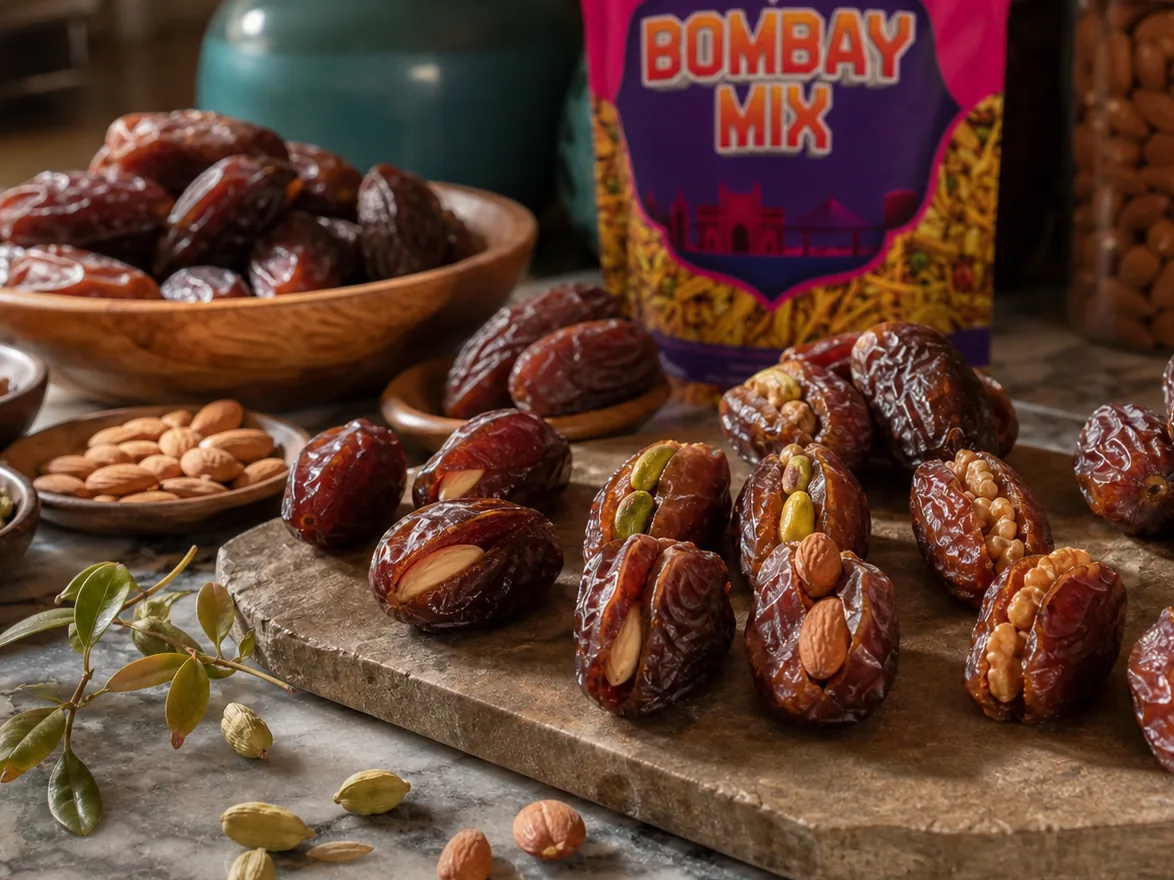
The Majlis Bowl: Where Gulf Snacking Begins
In much of the Western world, a snack is a stopgap, something grabbed with one hand while the other steers a car or scrolls a phone, eaten alone and forgotten. Gulf snacking grew from the opposite impulse. Here, the small foods between meals were never an afterthought. They were the social fabric itself, woven into the rhythm of prayer times, the long afternoon visits, the evenings when neighbours and relatives drifted in without warning and were received as a blessing rather than an intrusion.
Picture the classic welcome. You arrive, and before a single question about your journey or your family, a date is in front of you and qahwa is being poured from a dallah into a tiny finjan held in the host's left hand. You take the cup with your right. The host keeps refilling until you tilt the cup side to side to signal you have had enough. Around this exchange sit the supporting players: a bowl of Khalas dates glistening with their own sugar, a scatter of roasted almonds, perhaps dried apricots or figs, sometimes halwa for those with a sweeter tooth. The dates and nuts are not garnish. They are the language of welcome spoken without words.
This grew naturally from how life was lived in the Gulf. The desert and the coast demanded foods that travelled well and lasted long: dates that could be pressed and stored for months, nuts that carried dense energy in a small palmful, dried fruit that survived the heat. When the call to prayer structured the day into five anchored points, eating fell into the gaps around them, often light and shared rather than heavy and solitary. A handful of nuts after Asr, a few dates with qahwa when a cousin dropped by, sweets brought out when the gathering grew. Food marked the passage of company through a home.
What is remarkable is how firmly this heritage still anchors what UAE households reach for, even as the shelf around it changes beyond recognition. Walk through any hypermarket in Dubai or Abu Dhabi and you will find an entire wall devoted to dates, graded and boxed and priced from everyday to luxury, sitting a few aisles from imported protein bars and Korean seaweed crisps. The baqala on the corner still stocks loose nuts by the scoop alongside the packaged crisps. The instinct to offer something generous to a guest has not faded; it has simply gained new options. A young Emirati professional might keep a box of Medjool dates for visitors and a drawer of single-serve almond packs for the commute, and see no contradiction between them. The bowl endures. Only its contents have multiplied.
Dates: The Original Gulf Superfood
No food carries the weight of the date in Gulf life. It is the fruit of the desert, the first thing eaten to break a fast, the gift exchanged at Eid, the snack that needs no preparation and never goes out of season. Long before anyone marketed a food as a superfood, the date was doing the work: dense, portable, nourishing, and woven into religious and social practice so completely that it stopped being remarkable. Understanding the major varieties is the first step toward snacking well in the UAE, because not all dates do the same job.
Khalas is the everyday hero across the Emirates, grown widely in the region and prized for its balanced, caramel-toffee flavour and a texture that is soft without being sticky. It is the date you are most likely to be handed in a majlis, the one that pairs cleanly with bitter qahwa. Medjool is the showpiece: large, plump, fudgy and honeyed, the variety that fills premium gift boxes and stuffs beautifully with nuts. Sukkari, the name rooted in the Arabic for sugar, lives up to it with a light golden flesh and a soft, almost crumbly bite that melts quickly; it is a favourite for those who want sweetness without heaviness. Fard and Lulu, common in Oman and the wider Gulf, bring a darker, deeper, less sugary profile that suits those who find the sweetest varieties cloying. And Ajwa, the dark, fine-textured date from Madinah, holds a revered place for its religious significance and commands the highest respect and price among the dates many UAE households keep for special moments.
The nutrition behind the reverence is real. Dates deliver natural fructose and glucose in a fast-releasing form, which is precisely why they break a fast so effectively, lifting blood sugar gently after a long day without food. But they are far more than sugar. A handful of dates carries meaningful potassium and magnesium, both minerals the body sheds through sweat in the Gulf climate, along with a useful dose of fibre that slows digestion and softens the sugar spike. That fibre is the reason dates feel satisfying rather than fleeting. The practical portion for everyday snacking is modest: one to three dates is plenty for most people, enough for an energy lift and the minerals without tipping into a heavy sugar load. Paired with a few nuts, that small handful becomes a genuinely balanced snack, protein and fat slowing the sugar further.
Storing dates well matters more in the UAE than almost anywhere, because heat and humidity are constant adversaries. Soft, high-moisture varieties like Medjool are happiest in the fridge, where they stay plump and resist fermenting; left in a warm kitchen they can turn sticky and sour within days. Drier varieties tolerate the cupboard better but still belong in an airtight container, kept away from the humidity that seeps in every time a door opens onto the summer outside. A sealed glass jar or a proper food-grade tub does more for a box of dates than any amount of careful buying. If you notice a date weeping syrup or developing a fermented edge, the moisture has won; cool storage from the start prevents it.
Reading a date label: variety, grade and origin
The premium date market in the UAE rewards shoppers who read the box. Three things tell you most of what you need. The variety sets the flavour and texture expectation, so knowing whether you want the balance of Khalas or the fudge of Medjool saves disappointment. The grade, often marked as a class or a star rating, reflects size, uniformity and the proportion of perfect fruit; the top grades cost more and shine in a gift box, while a mid-grade is perfectly good for everyday eating and home cooking. And the origin carries genuine weight here, with UAE and wider Gulf-grown dates often fresher for having travelled less, and certain origins like Madinah carrying real prestige for Ajwa in particular. A good label will also hint at moisture and pressing; loosely packed whole dates eat differently from the dense pressed blocks sold for baking and date syrup.
Stuffed dates: almonds, pistachios, walnuts and tahini
The single most rewarding thing you can do with a good date takes thirty seconds and turns a humble fruit into something worthy of a guest. Slit a Medjool or large Khalas down one side, lift out the stone, and press a whole roasted almond, a few pistachios or half a walnut into the cavity. The contrast does the work: the date's honeyed softness against the nut's salt and crunch, sugar and fat balancing on the tongue. For a richer version, spoon in a little tahini before the nut, letting its bitter, sesame depth cut through the sweetness; the combination is a quiet staple across Gulf and Levantine homes. A platter of stuffed dates, some with almonds, some with pistachios, a few with tahini and a sprinkle of sesame, is one of the most generous and least effortful things you can set before company. It is also a far better answer to an afternoon sugar craving than anything from a wrapper. For households that keep a well-stocked shelf of %explore what Bagason does as a Gulf FMCG distributor%, the stuffed date is where dates and nuts meet to best effect.
Nuts and Seeds: The Daily Handful
If the date is the ceremonial heart of Gulf snacking, the nut is its daily workhorse. The handful of almonds at the majlis, the bag of pistachios cracked open during an evening of conversation, the cashews set out at a gathering, the walnuts folded into sweets, these are constants across Emirati and expat kitchens alike. The Gulf staples are familiar and forgiving: almonds with their clean crunch, pistachios prized enough to be served in their shells as a slow, sociable snack, cashews for their buttery softness, and walnuts for their richness and their role in baking and stuffing. Around them sit the seeds, often overlooked but deeply woven into regional habit: pumpkin and sunflower seeds, roasted and salted, sold by the scoop and nibbled by the handful, sometimes tossed with za'atar for a savoury, herbal hit that turns a plain seed into something moreish.
How you buy and prepare them shapes how well they serve you. Raw nuts are the blank canvas, lowest in sodium and most flexible, ideal for those watching salt or wanting to roast their own at home. Roasted nuts deepen in flavour as the oils develop under heat, and dry-roasting at home lets you control everything that touches them. Salted nuts are the most moreish and the easiest to overeat, and the salt adds up quickly across a few handfuls. The balance worth striking is to enjoy the healthy fats nuts are genuinely rich in, the unsaturated fats that support heart health, while keeping a sensible eye on sodium, especially for anyone managing blood pressure in a climate that already taxes the body. A small palmful, roughly thirty grams, is the practical portion for a snack: enough to deliver the fats, fibre and protein that make nuts satisfying, without turning a healthy handful into a meal's worth of calories eaten unnoticed in front of a screen.
The UAE storage problem bites hardest with nuts, and it is worth stating plainly: nuts go rancid fast in heat and humidity. The same unsaturated fats that make them healthy also make them fragile, oxidising and turning stale or sharply off when left exposed to warm air. A bag of cashews bought in bulk and left open on a worktop through a Dubai summer can sour within weeks. The defences are simple. Buy in quantities you will actually finish within a month or two rather than stocking a vast jar that ages badly. Keep nuts sealed in airtight containers, and for longer storage, the fridge or even the freezer dramatically extends their life, locking the oils against the heat. Roasted and salted nuts spoil a little faster than raw, so they reward being eaten sooner. Treated this way, a handful of nuts stays exactly what it should be: fresh, crisp and genuinely good for you, the everyday counterpart to the ceremonial date.
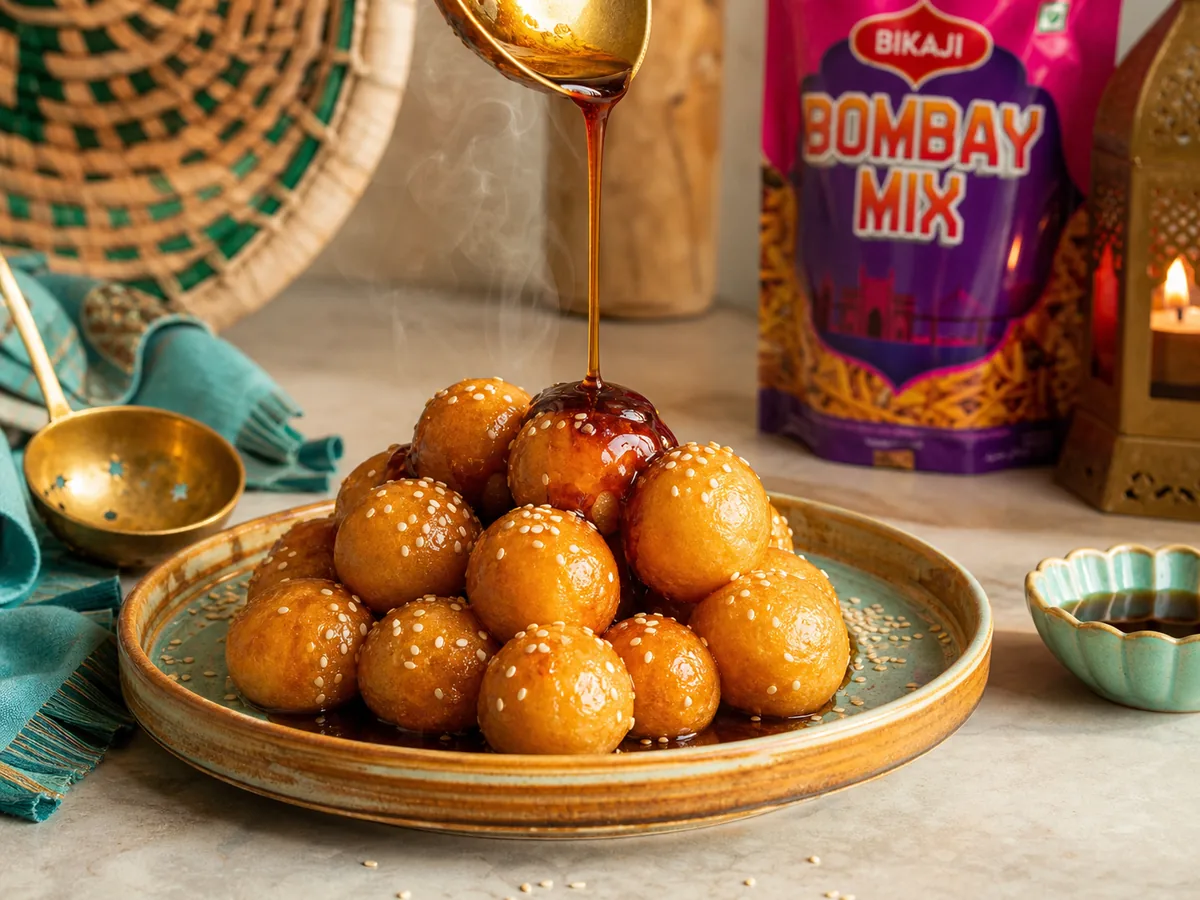
Luqaimat and the Sweet Side of Tradition
Not all Gulf snacking is virtuous, nor should it be. The sweet side of the tradition is where celebration lives, and nothing embodies it like luqaimat. These are small dough dumplings, fried until the outside turns deep gold and shatters with a crisp snap, while the inside stays soft, airy and faintly chewy. The moment they leave the oil they are drenched in dibs, the dark date syrup that is the soul of the dish, and often finished with a scatter of sesame seeds. The name itself means little bites, and that is exactly how they are eaten: warm, sticky, by the handful, usually shared.
Luqaimat belong to occasion rather than routine. Their great season is Ramadan, when they appear at iftar tables across the Emirates, fried fresh as the fast breaks and the family gathers. They are a fixture at weddings and Eid, at the food stalls of souks and the great food festivals, where vendors drop spoonfuls of batter into bubbling oil and serve them by the dozen in paper cones, the date syrup running over the cook's fingers. The pleasure is bound up in the gathering, the smell of frying dough mingling with qahwa and conversation. This is a food tied to togetherness, not to a solitary afternoon craving, and that framing matters to how it fits a balanced life.
Nutritionally, luqaimat are exactly what they appear to be: a fried, syrup-soaked treat, generous with sugar and oil, and best enjoyed as an occasional indulgence rather than a daily habit. There is no need to dress them up as anything else; their honesty is part of their charm. They sit within a wider family of beloved Gulf sweets that follow the same logic of celebration over routine. Aseeda is a smooth, dense cooked-flour pudding, often served with date syrup or butter and brought out for births and special days. Khabeesa is a toasted-flour sweet, rich with ghee and sugar and scented with saffron and cardamom. Together with luqaimat they form a repertoire of festive sweets that reward being made and eaten the traditional way: in good company, on the days that call for them, balanced through the rest of the week by the dates and nuts and lighter snacks that carry everyday life.
The Majlis Bowl: Where Gulf Snacking Begins
Step into any Emirati home and the welcome arrives before words do: a wide bowl of glossy dates, a thermos of qahwa scented with cardamom and a clove or two, and handfuls of nuts pressed into your palm whether you asked or not. The gesture is karam, generosity, and it sits at the heart of how the Gulf has always eaten between meals. Nobody in a majlis is grabbing a snack on the run. They are sitting cross-legged on cushions, pouring rounds of coffee for the person beside them, and reaching into the shared bowl as conversation loops from family news to football to the price of fish at the souk.
That is the quiet difference between Gulf snacking and the Western model most packaged products were built around. In much of the world, a snack is a stopgap, something eaten standing at a kitchen counter or behind the wheel to silence hunger until the next proper meal. In the Emirates, snacking grew out of hospitality and the rhythm of the day, the pauses between the five prayers, the long afternoon lull when the heat made heavy food unthinkable, the evening gatherings that stretched past midnight. Dates and nuts were never an afterthought. They were the medium through which a host said, you are welcome here, stay a while.
That heritage still anchors what UAE households reach for, even as the shelf around it transforms beyond recognition. A young Emirati professional might keep date energy bars in a gym bag and za'atar seed crackers at her desk, yet the bowl her mother sets out for guests has not changed in a generation. Understanding the modern UAE snack aisle means understanding that it is layered over something much older, and that the most successful products are the ones that honour the bowl rather than replace it.
Dates: The Original Gulf Superfood
No single food carries the Gulf the way the date does. The UAE grows millions of palms, and the regional varieties differ as sharply as apple cultivars, each with its own loyal following and best use. Knowing them turns a vague purchase into a confident one.
Khalas, the everyday favourite, tastes of soft caramel with a balanced, not-too-sweet finish, which is why it is the default in most majlis bowls and the safest gift if you do not know a host's preference. Medjool is the showpiece, large, plump and honeyed, with flesh so soft it almost spreads, ideal for stuffing and for anyone new to dates. Fard and Lulu lean darker and chewier, holding up well in cooking and date paste. Sukkari lives up to its name, light golden and frankly sugary, beloved fresh and slightly crisp. And Ajwa, the dark, prized Madinah variety, carries deep almost-fudgy notes and a reverence that pushes its price well above the rest; it is the date you bring out for special guests and Ramadan.
Nutritionally, dates earn their superfood reputation honestly. Their sweetness is a natural fructose-glucose blend that delivers quick, usable energy, which is precisely why they break the fast at iftar, lifting blood sugar gently after a long day. They carry meaningful potassium and magnesium, minerals that matter in a climate where sweat strips electrolytes fast, plus fibre that slows digestion and softens the sugar spike. They are not, however, a free food. A practical portion is one to three dates at a sitting, enough for a genuine energy lift without tipping into a sugar load, especially for anyone watching blood glucose.
Storing dates well in UAE heat is its own small skill. Humidity is the enemy: it invites stickiness, fermentation and the occasional uninvited insect. Keep dates in an airtight container away from steamy kitchen corners, and move soft varieties like Medjool to the fridge, where they firm up pleasantly and last for months. Drier varieties are forgiving at room temperature in a sealed jar. When buying, the pack tells you more than the price does.
Reading a date label: variety, grade and origin
A good date pack names the variety first, because that drives taste and texture more than anything else. Look for grade markers, often described by size and uniformity, with the plumpest, most unblemished fruit commanding the premium. Origin matters for both flavour and gifting prestige, UAE-grown Khalas, Saudi Ajwa and Sukkari each carry their own cachet. Check the moisture cues too: a label or window showing glossy, intact skin signals freshness, while a date that looks crystallised with sugar on the surface is older, though still perfectly good for cooking and paste. Production and best-before dates round out a smart purchase.
Stuffed dates: almonds, pistachios, walnuts and tahini
Stuffing dates is the easiest way to turn a humble fruit into a guest-worthy bite, and it balances the sugar with protein and healthy fat so the snack sits lighter. Slit a Medjool or large Khalas, lift out the stone, and tuck in a whole roasted almond for crunch, a cluster of slivered pistachios for colour and richness, or a walnut half for a deeper, slightly bitter contrast. A thumb-smear of tahini inside before the nut adds a savoury, sesame edge that cuts the sweetness beautifully and nods to the wider Levantine pantry. Arrange them on a plate, scatter a few crushed pistachios over the top, and you have a platter that looks far more considered than the five minutes it took.
Nuts and Seeds: The Daily Handful
If dates are the ceremony, nuts are the everyday. The Gulf staples are easy to name, almonds, pistachios, cashews and walnuts form the backbone of every mixed bowl, joined increasingly by seeds like pumpkin and sunflower, roasted with a little salt or dusted with za'atar for a herby, distinctly regional twist. These are the textures a host reaches for without thinking, scattered alongside the dates, refilled as the evening runs on.
The choice between raw, roasted and salted shapes both flavour and nutrition. Raw nuts keep every bit of their unsaturated fat and minerals intact and suit anyone managing sodium. Dry-roasting deepens flavour and crunch with no added oil, a good middle path. Salted and oil-roasted versions taste moreish but stack up sodium and extra fat fast, so they are best treated as the occasional indulgence rather than the daily handful. As a portion, a small palmful, roughly 30 grams, delivers the satisfying protein, fibre and healthy fats that keep hunger at bay between meals without overshooting on calories. The healthy fats in almonds and walnuts genuinely support heart health; the trick is balancing them against the salt that often rides along.
Storage is where UAE shoppers lose more nuts than they realise. The same unsaturated fats that make nuts good for you turn rancid quickly in heat and humidity, taking on a stale, slightly paint-like smell and a flat taste. Buy in sensible quantities you will actually finish within a few weeks rather than bulk sacks that sit going off in a warm cupboard. Keep them sealed and cool, ideally in the fridge for longer storage, and trust your nose, a bitter or musty whiff means it is time to let them go. Treated well, a good mix of nuts and seeds is the single most useful thing on a balanced snack shelf.
Luqaimat and the Sweet Side of Tradition
Luqaimat are the Gulf's most beloved sweet, small golden dumplings of yeasted dough, fried until the outside crackles and the inside stays cloud-soft, then drenched in dibs, the dark date syrup that gives them their soul, and often finished with a scatter of sesame seeds. Bite into one warm and you get crisp, chew and a flood of caramel-date sweetness in a single mouthful. They are messy, generous and impossible to eat just one of.
Their cultural weight outstrips their size. Luqaimat are fried fresh at iftar across the Emirates during Ramadan, the smell of hot oil and date syrup as much a signal of the season as the call to maghrib prayer. They appear at weddings and Eid, sold by the bagful at heritage souks and food festivals where you watch them tumble straight from the fryer into syrup. They belong to gathering, not to everyday eating, the food of a shared table rather than a solitary snack.
Nutritionally, that occasional framing is exactly right. Fried dough soaked in syrup is a treat by any measure, rich in refined carbohydrate and sugar, best enjoyed in a small handful at a celebration rather than as a daily habit. They sit within a wider family of Gulf sweets worth knowing, aseeda, a smooth cooked-flour pudding often pooled with date syrup and ghee, and khabeesa, a toasted-flour sweet fragrant with saffron and cardamom. Each tells the same story: sugar, dates and warm spice, made for company.
A simple home luqaimat method, step by step
Making luqaimat at home is more forgiving than its festival reputation suggests, and the reward is a plate of dumplings that beats anything from a packet. The method comes down to a well-proved batter, oil at the right heat, and a confident hand with the syrup, all of which are covered in detail just below.
How to Make Luqaimat at Home
You need very little: plain flour, a teaspoon of active yeast, a pinch each of ground cardamom and a few threads of saffron bloomed in warm water, a spoon of yoghurt or milk for tenderness, a little sugar to feed the yeast, and a good neutral oil for frying. To finish, you want date syrup (dibs) or a simple sugar syrup, and sesame seeds if you like them. These are the same pantry essentials many UAE kitchens already keep, and the rest comes together from the cupboard.
Start by whisking the flour, yeast, sugar, cardamom and bloomed saffron with enough warm water and the yoghurt to make a thick, smooth batter, looser than a dough but thick enough to drop from a spoon. Cover it and let it prove somewhere warm until visibly bubbly and risen, around an hour; the bubbles are what give luqaimat their light interior. Heat your oil to a medium-high frying temperature, hot enough that a test drop of batter rises and sizzles steadily without browning instantly. Using two wet spoons or a wet hand, drop small spoonfuls of batter into the oil, working in batches so the pan stays hot, and fry, turning, until each dumpling is deep gold and crisp all over. Lift them out with a slotted spoon, drain briefly on kitchen paper, then pile them into a bowl and drizzle generously with warmed date syrup, finishing with sesame seeds.
A few UAE-specific tips smooth the way. Source good dibs and saffron from any baqala or hypermarket spice aisle, where regional date syrup and Iranian saffron are easy to find and far better value than novelty imports. And mind your kitchen temperature: in a warm Emirati kitchen the batter proves fast, so keep an eye on it and slacken it with a splash of warm water if it tightens up while you fry. Serve them the moment they are syruped, when the contrast between crisp shell and soft centre is at its best. You can find more seasonal sweets and pantry ideas in the %where our distribution network reaches across the GCC%.
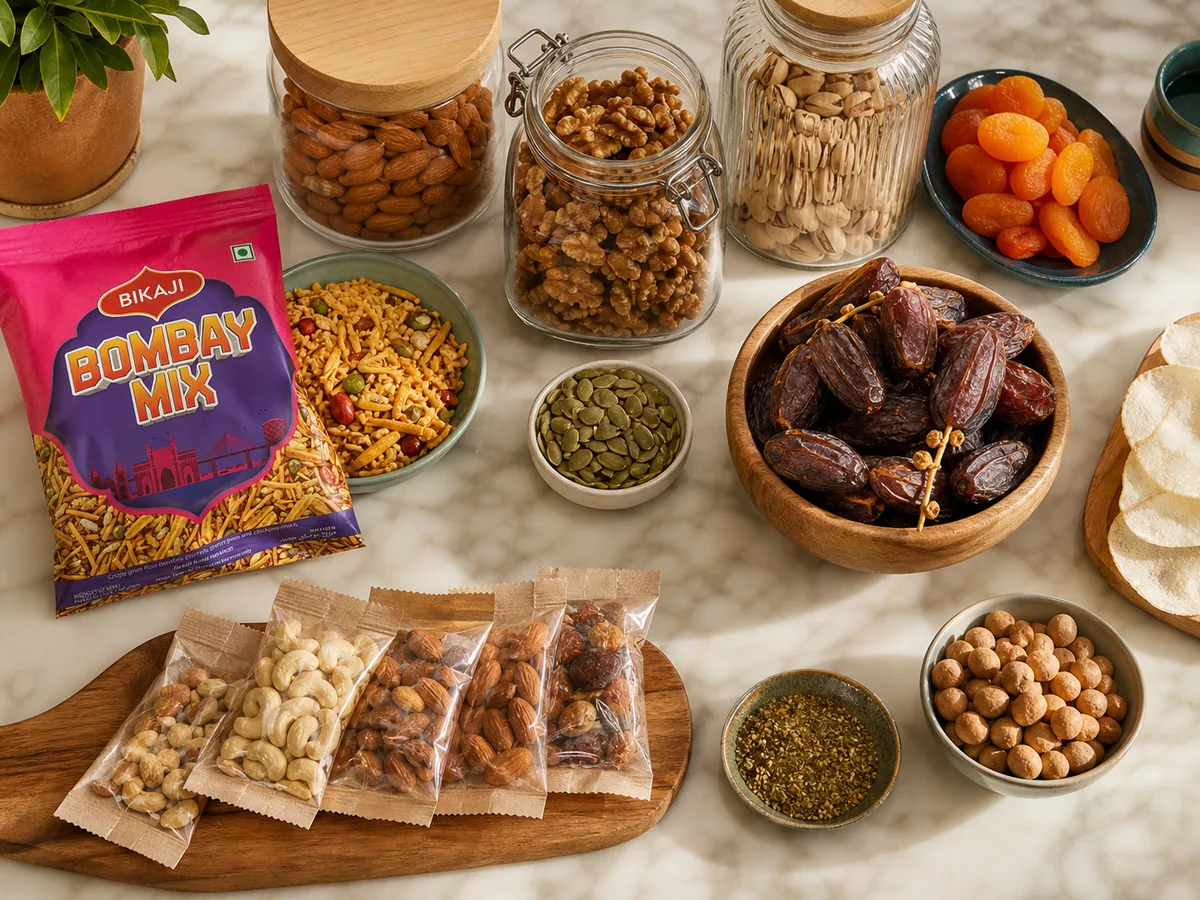
The Shift to Packaged Convenience
The bowl has not gone anywhere, but a whole new aisle has grown up beside it. Packaged snacks have surged across the UAE for reasons written into daily life here: long commutes between emirates, dual-income households where nobody has time to roast nuts on a weeknight, a serious fitness culture that reads labels closely, and a population skewed strikingly young, with a large share under 30, all hungry for grab-and-go options that fit a busy schedule. The on-the-go snack, once foreign to Gulf rhythms, now rides in gym bags, school lunchboxes and car cup-holders across the country.
The market reflects it. The UAE's healthy-snack category runs into the hundreds of millions of dollars and keeps growing year on year, with fruit, nuts and seeds standing as the single largest segment, proof that shoppers want convenience without abandoning the ingredients they trust. Demand pulls hardest toward products that feel both modern and familiar.
That is exactly what the smartest brands deliver, taking traditional Gulf ingredients and repackaging them for the shelf. Dates reappear as date energy bars and nut-butter-stuffed dates in single wrappers. Tahini turns up in protein bites. Za'atar seasons seed crackers that taste of home but travel in a handbag. The heritage ingredients stay the same; only the format has caught up to how people now live. For the retailers and distributors stocking these lines, the challenge is range, keeping both the heritage staples and the new convenience formats on shelves across the Emirates, which is precisely the connecting role distributors like Bagason play between trusted brands and Gulf shoppers.
Reading the Label: Snacking Smarter in the UAE
A packet calling itself healthy is making a claim, not a promise, and the back of the pack is where you check it. UAE labelling rules, overseen by ESMA, require a nutrition panel showing values both per 100g and per serving, plus Arabic labelling alongside English. That panel is your most honest source of truth, telling you the real sugar, sodium and fat content behind the marketing on the front.
Two traps catch even careful shoppers. The first is hidden sugar, which hides under many names, syrups, concentrates, dextrose, and clusters near the top of the ingredient list in products sold as wholesome. Because ingredients are listed in order of weight, the first three or four tell you what the product mostly is; if a sweetener or refined flour leads, the health halo is thinner than it looks. The second trap is cheap fat, often palm oil bulking out bars and spreads, which adds saturated fat with little nutritional return. A genuinely good snack lists recognisable whole foods first: dates, nuts, seeds, oats.
Beyond nutrition, certain assurances now drive purchase in the UAE. Halal certification is a baseline expectation rather than a selling point, and its absence is a deal-breaker for most households. On top of that, free-from, vegan and high-protein claims increasingly tip the basket, especially among younger, fitness-minded shoppers comparing two similar packs.
Red-flag ingredients vs genuine value
Train your eye on the first few ingredients. Red flags include glucose-fructose syrup or other added sugars in the lead position, palm oil or generic vegetable fat high on the list, long strings of additives and flavourings, and a sodium figure that climbs steeply per serving. Genuine value reads simply: whole dates, named nuts and seeds, whole grains, with a short ingredient list and sugar and salt sitting low. A bar with five recognisable ingredients almost always beats one with twenty you cannot pronounce.
Single-serve packs and portion control
Single-serve packs earn their slightly higher price by solving the hardest part of snacking, stopping. A 30g sachet of mixed nuts or a single date bar settles the portion question before you open it, which matters when an open family bag tends to empty itself during one film. For lunchboxes, desks and gym bags, the pre-measured pack is a quiet ally for anyone watching intake, turning a vague handful into a known quantity.
Snacking Through the UAE Year
Snacking in the Emirates follows the calendar as much as the clock, and a well-stocked home shifts with it. Ramadan sets the clearest pattern: the fast breaks with dates first, following prophetic tradition and sound physiology, easing the body back to food with gentle natural sugar before the maghrib meal. Around them sit dried apricots, mixed nuts and, on celebratory evenings, a plate of fresh luqaimat. The art lies in balance, those same energy-dense foods are easy to overindulge after a long fast, so a few dates and a small handful of nuts serve far better than a tableful.
Summer rewrites the rules again. When temperatures push past 45 degrees and humidity hangs heavy, heavy snacks lose their appeal and the body needs water more than calories. Lighter, water-rich options come into their own, and lightly salted nuts earn their place by replacing the sodium and electrolytes lost to constant sweating. The key is pairing, no snack substitutes for proper fluids, so the smart move is matching salted nuts or dried fruit with plenty of water or a hydration drink rather than relying on the snack alone. This is where pantry and hydration choices meet, a theme explored across the %partner with us to stock your snack range%.
Then comes the season of gathering, the majlis evenings, Eid visits and gifting that fill the social calendar. Here generosity is the brief. A good guest platter is varied and abundant: several date varieties, a mix of nuts and seeds, dried fruit and a sweet or two, arranged with enough colour to feel considered. Eid gifting boxes, often beautifully presented assortments of premium dates and nuts, carry their own etiquette, offered with the right hand, pressed warmly on guests, never quite taken no for an answer. The snack, once again, is the language of welcome.
Building the Modern UAE Snack Pantry
A snack cupboard that works for both a rushed Tuesday and a Friday majlis is built in layers. The base is non-negotiable: a couple of date varieties, a balanced Khalas for every day and something special like Ajwa or Medjool for guests, alongside a generous jar of mixed nuts and seeds. These cover hospitality, energy and everyday nibbling in one stroke.
The second layer is seasoning, the spices that let you make your own snacks cheaply and well, za'atar for dusting roasted seeds, ground cardamom for sweets and coffee, a little chilli for nuts with bite. A small spice-and-seasoning shelf turns plain ingredients into something that tastes deliberately Gulf. The third layer is a curated set of packaged options for the days with no time at all: a box of date energy bars, single-serve nut packs, a tub of tahini protein bites, chosen using the label-reading instincts above so convenience does not cost you nutrition.
The cupboard works best when snacks sit alongside the rest of the pantry, paired with hydration for the heat and with the pantry essentials, spices and grains that carry the kitchen day to day, so the same shelf serves a quiet evening and a houseful of guests. Behind that shelf sits an entire supply chain, and distributors like Bagason are the connective tissue, linking Gulf shoppers and the retailers they buy from to trusted brands across dates, nuts, spices, snacks and hydration, keeping the staples and the new arrivals reliably in stock from Abu Dhabi to Ras Al Khaimah.
A starter shopping list for two weeks
To stock a balanced snack shelf from scratch, a fortnight's starter list looks like this: 500g Khalas dates for everyday and a small box of Medjool or Ajwa for guests; a mixed bag of raw or dry-roasted almonds, pistachios, cashews and walnuts, kept in the fridge; pumpkin and sunflower seeds for roasting; a small tub of tahini for stuffing dates and quick bites; za'atar, ground cardamom and chilli for homemade roasts; a jar of date syrup (dibs) for drizzling and for luqaimat; a box of single-serve date or nut bars for busy days; and dried apricots or figs for variety. Add a hydration option for the heat and you have a shelf that feeds a quiet weeknight and a full majlis with equal ease.
You can also explore see the brands we bring to UAE shelves.
Frequently Asked Questions
Are dates good for you if you are watching your sugar, and how many a day is sensible?
Yes, in sensible portions. Dates are naturally high in sugar, but it comes packaged with fibre, potassium and magnesium, and the fibre slows how quickly that sugar hits your bloodstream compared with refined sweets. For most people one to three dates a day is a practical, satisfying amount, ideal at iftar or as a pre-workout lift. If you are managing diabetes or watching blood glucose closely, keep to the lower end, pair dates with a few nuts to blunt the sugar spike, and check with your doctor about what fits your numbers.
Which nuts are the healthiest, and how should I store them in UAE heat?
There is no single best nut, variety is the win. Almonds bring fibre and vitamin E, walnuts add plant omega-3 fats, pistachios offer protein and a satisfying chew, and cashews give a creamy richness; a mix covers more bases than any one alone. Favour raw or dry-roasted over oil-roasted and heavily salted versions to keep sodium in check, and stick to a small palmful (around 30g) a day. Crucially in the UAE, nuts go rancid fast in heat and humidity, so buy amounts you will finish in a few weeks, keep them sealed, and store them in the fridge or freezer for the longest life.
Can luqaimat be made ahead of time?
Luqaimat are at their glorious best fresh from the fryer, crisp outside and soft within, so they are not an ideal make-ahead dish. You can, however, prepare the batter a little in advance and keep it covered in the fridge, bringing it back to room temperature before frying. If you must fry early, hold the dumplings unsyruped and reheat them briefly in a hot oven to re-crisp before drizzling with date syrup at the last moment; syruping early leaves them soggy. For a gathering, frying in batches as guests arrive keeps the texture right.
What are the best store-bought healthy snacks for kids and lunchboxes in the UAE?
Look for single-serve packs built on whole ingredients: date and nut bars with a short ingredient list, small sachets of mixed nuts and seeds (mind allergy rules at your child's school), dried fruit like apricots and raisins without added sugar, and plain or lightly seasoned seed crackers. Read the label for hidden sugars and palm oil, check for halal certification as standard, and favour pre-portioned packs that travel well and survive a warm school bag. Pair them with water or a hydration drink rather than sugary juice to round out the lunchbox.
What is the difference between the main date varieties sold in the UAE?
Each has a personality. Khalas is the balanced everyday date, soft and caramel-like, perfect for the majlis bowl. Medjool is large, plump and honeyed, the easiest for newcomers and the best for stuffing. Sukkari is lighter and frankly sugary, often eaten slightly crisp. Fard and Lulu run darker and chewier, good for cooking and date paste. Ajwa, the dark Madinah variety, is the prized, premium choice reserved for special guests, Ramadan and gifting. For most kitchens, a balanced Khalas for daily use plus a box of Medjool or Ajwa for guests covers every occasion.
How should I build a generous snack platter for guests?
Aim for variety and abundance, the Gulf hallmark of a welcoming host. Start with two or three date varieties, add a mound of mixed nuts and seeds, include some stuffed dates with almonds or pistachios for a finished touch, and bring in dried fruit like apricots or figs for colour. Offer a small sweet such as luqaimat or a handful of dates rolled in sesame for the celebratory note. Serve qahwa alongside, keep the bowls topped up, and present everything with the easy generosity that says guests are welcome to stay.
<div class="bgn-blog-cta" style="margin-top:36px;padding:24px 26px;border-radius:14px;background:#f5f2ee;border:1px solid rgba(0,0,0,0.07);border-left:4px solid #CA7345;"><p style="margin:0 0 10px;font-weight:700;color:#1a6985;font-size:1.02rem;">Distribution solutions from Bagason Group</p><p style="margin:0 0 12px;color:#555;font-size:0.92rem;">Bagason Group distributes 700+ products to 30,000+ retail outlets across the UAE and GCC. Explore the pages most relevant to this article:</p><ul style="margin:0;padding-left:1.1rem;line-height:1.9;"><li><a href="/fmcg-distributor-uae">FMCG Distributor UAE</a></li><li><a href="/fmcg-distributor-abu-dhabi">FMCG Distributor in Abu Dhabi</a></li><li><a href="/fmcg-distributor-northern-emirates">FMCG Distributor Northern Emirates</a></li><li><a href="/fmcg-distributor-dubai">FMCG Distributor in Dubai</a></li></ul></div><div class="bgn-author-eeat" style="margin-top:28px;padding:20px 24px;border-radius:14px;display:flex;gap:16px;align-items:flex-start;background:#fff;border:1px solid rgba(0,0,0,0.08);"><div style="flex:0 0 52px;height:52px;border-radius:50%;background:linear-gradient(135deg,#1a6985,#CA7345);display:flex;align-items:center;justify-content:center;color:#fff;font-weight:800;font-size:1.1rem;">BG</div><div><p style="margin:0;font-weight:700;color:#2b2b2b;">Bagason Editorial Team</p><p style="margin:2px 0 8px;font-size:0.82rem;color:#888;text-transform:uppercase;letter-spacing:0.05em;">FMCG Distribution Editorial Desk · Bagason Group, Dubai</p><p style="margin:0;font-size:0.92rem;color:#555;line-height:1.6;">Written by the editorial desk of <a href="/about-us" style="color:#1a6985;font-weight:600;text-decoration:none;">Bagason Group</a>, a Dubai-based FMCG distributor operating since 2007 with 700+ products, 30,000+ retail outlets and coverage across all seven emirates and the GCC. Learn more about <a href="/what-we-do" style="color:#1a6985;font-weight:600;text-decoration:none;">how we distribute</a>.</p></div></div>