Retail media UAE is no longer a side conversation at grocery meetings. Open Noon, Amazon.ae, or a delivery app like Talabat and you will see sponsored products sitting above the organic search results, banners on the home screen, and "featured" tags on category pages. These are paid placements, sold the same way a billboard or a magazine ad is sold, except the storefront is the app itself. For brand owners selling into the UAE, that shift changes how visibility gets earned and who gets seen first.
This matters most for the brands that used to rely on a good shelf position and a helpful merchandiser. In a physical LuLu or Carrefour aisle, eye-level placement and a clean planogram still count. Inside an app, the "shelf" is a search results page, and a brand can now pay to sit at the top of it regardless of how the algorithm would have ranked it organically. That is retail media, and it has arrived in the UAE grocery market at real scale.
We work across modern trade, HORECA, and e-commerce for both owned and distributed brands, so we see the online and offline shelf side by side every week. This piece walks through what retail media actually looks like inside UAE grocery apps, why it is spreading, and what it means for brands of every size trying to get noticed.
What does retail media UAE actually mean?
Retail media is advertising sold by the retailer itself, placed directly inside the retailer's own digital storefront. Instead of a brand buying a billboard near a mall or a slot on a TV channel, it buys a sponsored spot inside Noon's search results, a banner on Amazon.ae's grocery category page, or a promoted tile in Talabat's mart section. The retailer already owns the customer's attention at the exact moment of purchase intent, and it sells access to that attention.
The concept is not new globally. What is newer is how fast UAE grocery and quick-commerce platforms have built out their own advertising products around it. A shopper searching for oats, rice, or snacks on a marketplace app in Dubai today is likely to see at least one sponsored result before reaching the first organic listing. That single design choice, repeated across millions of searches, is what makes retail media UAE such a practical topic for anyone selling FMCG here.
For a brand, this means the online shelf now has two separate games running at once: organic ranking, driven by sales velocity, reviews, and content quality, and paid ranking, driven by advertising budget and bidding. Winning one does not guarantee winning the other.
How is this different from traditional trade marketing?
Anyone who has negotiated end-cap space or a gondola position with a modern trade buyer will recognise the underlying idea. Retailers have always sold prime placement, whether that meant a checkout-lane display, a shelf-talker, or a listing fee for a new SKU entering the range. Retail media is the same commercial instinct, moved onto a screen.
A few differences matter in practice, though. Physical slotting deals are usually negotiated once a quarter or once a year, agreed between a category buyer and a key account manager, and tied to a fixed period on the calendar. A sponsored listing on Noon or Amazon.ae, by contrast, can be switched on or off within minutes, adjusted daily, and priced through an automated auction rather than a face-to-face negotiation. There is no annual planogram meeting; there is a dashboard a brand manager can log into on a Sunday evening.
Another difference: a physical end-cap is visible to every shopper who walks past it, regardless of what they are searching for. A sponsored digital listing only appears to someone who has typed a relevant search term or opened a relevant category, which means the targeting is sharper but the audience for any single placement is narrower. Brands used to buying broad physical visibility sometimes need to adjust their expectations when they first look at digital impression numbers, since a well-targeted digital campaign reaches fewer people overall but reaches them at a more relevant moment.
Why are grocery apps turning into advertising platforms?
Grocery and marketplace apps hold something advertisers have always wanted: a shopper who has already opened their wallet. Someone browsing a grocery app is closer to a purchase decision than someone scrolling a social feed. That proximity to the actual transaction is what makes retail media attractive to platforms and brands alike, and it is why grocery app advertising has grown from an afterthought into a dedicated business line for these companies.
There is also a simple commercial logic at play. A marketplace already has the traffic, the checkout data, and the technology to place ads without needing a separate publisher. Selling a sponsored slot on its own search page costs the platform little to build once the storefront exists, and it creates a new stream of revenue that sits apart from commission on each sale. Once one major platform in a market builds this out, competitors tend to follow, because merchants start asking why option A offers sponsored placement and option B does not.
Here's the thing: this is not only about the big multinational marketplaces. Regional delivery apps and even some supermarket chains' own apps in the UAE have started experimenting with similar paid-placement tools, from featured banners to "recommended" tags on category pages. The direction of travel is the same everywhere, even if the maturity differs from one platform to the next.
Does retail media change how a new product gets listed?
Launching a new SKU on a UAE grocery app used to be mostly a listing exercise: upload the images, write the description, set the price, and wait for sales history to slowly build organic ranking. Retail media changes the early weeks of that process. A brand can now buy visibility from day one, before a single review or repeat purchase exists, which shortens the gap between a listing going live and shoppers finding it.
That speed comes with a catch. A new product with sponsored placement but a weak listing, blurry photography, a thin description, missing pack-size information, will still convert poorly, no matter how much the brand spends on clicks. The ad buys attention; it does not fix a listing that was rushed out the door. Brands that treat the first two weeks after launch as a listing-quality sprint, checking every image and every line of copy against a competitor's best listing in the same category, tend to get far more out of the advertising budget that follows.
Timing raises its own question in the UAE market. Launch windows around Ramadan, back-to-school, and the winter shopping season see a noticeable rise in grocery app traffic, and sponsored slots in popular categories get more competitive during those windows. A brand planning a launch has to decide whether to enter early and pay a premium for attention during a busy period, or wait for a quieter stretch when clicks cost less but overall shopper volume is lower too.
What does the digital shelf look like right now?
FMCG placement on the digital shelf works differently from a physical aisle. It helps to walk through what a shopper sees, step by step. Open a grocery app, search "instant noodles" or "basmati rice," and the results page usually shows, in order: one or two sponsored listings marked with a small "Ad" or "Sponsored" tag, then the organic ranking based on relevance and sales history, then filters for brand, price, and rating.
A few things stand out once you look closely at this layout across different UAE apps.
- Sponsored tags are usually small and easy to miss, so many shoppers do not consciously register that the top result is paid.
- The same product can appear twice on one page, once as a sponsored listing and again lower down in the organic results.
- Category pages, not just search results, increasingly carry banner or carousel ad space near the top.
- Product detail pages sometimes carry "customers also viewed" or "sponsored" carousels from competing brands, right next to the item the shopper already chose.
This layout is not unusual by international marketplace standards. What matters for a UAE-based brand is that the digital shelf now behaves like real estate with a price tag attached, and the price is set by an auction, not by a merchandising team walking the aisle with a planogram.
How do sponsored products work on Noon and Amazon?
Sponsored product campaigns on Noon and Amazon generally follow a similar auction model, even though the two platforms are separate businesses with their own advertising consoles. A brand or its distributor sets up a campaign, chooses which product listings to promote, decides on keywords or categories to target, and sets a maximum bid for each click. When a shopper searches a matching term, the platform runs an instant auction among all the brands bidding on it, and the winning ad appears in a sponsored slot.
Three details matter before any brand jumps into this.
- You pay per click, not per view. A sponsored listing can sit at the top of a search page for free in terms of impressions; the cost only applies once a shopper actually taps on it.
- Keyword relevance still matters. A poorly written product title or missing keywords in the listing content will waste ad spend, because the algorithm will not match the ad to the searches that matter.
- Ad performance depends on the underlying listing. Clean images, accurate descriptions, and a competitive price convert a paid click into a sale. An ad gets the shopper to look; it does not close the sale on its own.
What's more, both platforms report performance in real time, down to impressions, click-through rate, and conversion by keyword. That level of visibility is new for many FMCG brands that grew up buying traditional media, where results arrived weeks later in a summary report.
What does this mean for brand visibility?
The immediate effect is that visibility is now something a brand can buy in the moment, rather than something it has to earn slowly through sales history and reviews. That is useful for a new product launch, where there is no sales track record yet to drive organic ranking. It is less useful, and can get expensive, for an established product that already ranks well organically and now has to pay to defend a position it used to hold for free.
A second, quieter effect follows close behind. As more brands buy sponsored placement in the same category, the organic section of the results page gets pushed further down the screen. On a phone, that can mean a shopper scrolls past three or four sponsored listings before reaching a single organic result. So even a brand with strong organic ranking can lose visibility because its competitors are paying to sit above it, not because its own product performance has changed.
There is an opportunity hiding in that same shift. A brand that understands its own margin, and knows which SKUs can absorb an advertising cost, can use retail media tools built for grocery brands to win visibility in categories where it has historically struggled to get shelf space, whether that is because of limited distribution reach or a smaller marketing budget than the category leader.
Where do smaller brands get squeezed, and how can they still compete?
Smaller brands face a real disadvantage here, and it needs saying plainly. Retail media auctions reward whoever can sustain the highest bid over time, and larger companies with bigger marketing budgets can outbid a smaller competitor on the exact keywords that matter most, such as the category name itself. A small brand bidding on "breakfast cereal" is competing against companies with marketing budgets many times its size.
That said, a smaller brand is not without options. A few approaches tend to work better than trying to outspend the category leader on broad terms.
- Bid on long-tail, specific search terms rather than broad category names, where competition and cost per click are usually lower.
- Invest in listing content first: sharp product photography, accurate descriptions, and complete specifications, since a strong listing converts a cheaper ad click into a sale more often.
- Focus paid budget on the SKUs with the healthiest margin, rather than spreading a small budget thinly across an entire range.
- Use owned channels, in-store sampling, and van sales relationships to build the organic sales history that reduces reliance on paid placement over time.
A brand that treats retail media as one tool among several, rather than the only lever available, tends to get more out of a limited budget than one that tries to compete purely on bid size.
How does a distributor fit into this new advertising layer?
This is where a lot of brand owners, especially those based outside the UAE, run into a practical gap. Setting up and managing a sponsored campaign on Noon or Amazon.ae requires an active seller or vendor account on that platform, accurate and Arabic-compliant product content, and someone watching performance data closely enough to adjust bids and keywords as they change. For a brand entering the UAE from overseas, or a local brand without an in-house e-commerce team, that is a meaningful operational lift on top of everything else involved in getting a product onto shelves.
Our e-commerce and sales teams sit inside the same operation that handles import clearance, warehousing, and van sales, which means listing content, retail media campaigns, and physical distribution are managed together rather than as separate workstreams handed to different agencies. A product's Arabic label, its barcode data, and its e-commerce listing content all need to line up, and getting that alignment right before spending on sponsored placement saves money later. An ad that sends a shopper to a listing with mismatched images or an out-of-stock badge is a wasted click regardless of how well the campaign was targeted.
Brands that work with us across modern trade and e-commerce get a single view of how a product is performing, in a Carrefour aisle and inside a Noon search result, at the same time. That combined view tends to make retail media spending decisions more grounded, because a sudden spike in paid clicks that does not translate into off-shelf movement is a signal worth investigating rather than ignoring.
How does retail media interact with the physical shelf and HORECA orders?
It is tempting to treat the online storefront and the physical aisle as two separate worlds, but shoppers do not experience them that way. A customer might see a sponsored listing for a brand on Noon at lunchtime, then pick up the same product at a Carrefour near their office that evening, having never clicked the ad at all. That kind of cross-channel influence rarely shows up cleanly in any single platform's reporting, yet it is one of the more valuable effects of a well-run sponsored campaign.
For HORECA buyers, hotels, restaurants, catering companies, and cloud kitchens, the digital shelf matters differently again. Many foodservice procurement teams still order through a sales representative or a set catalogue rather than browsing a consumer app, so retail media rarely reaches them directly. What it can do is build broader brand familiarity that carries over when a chef or purchasing manager is deciding between two similar products during a supplier review.
Here is a practical example of how the two channels reinforce each other. A brand running a sponsored campaign for a new snack SKU on a grocery app can time it to coincide with an in-store sampling activation at the same retailer's physical branches. Shoppers who saw the product online and then encountered a sample in-aisle tend to convert at a higher rate than either channel working alone, because the two touchpoints build the same recognition from different directions. Coordinating that timing is easier when one team manages both the physical merchandising calendar and the digital advertising calendar, rather than two separate agencies working from different briefs.
How should a brand build a retail media plan without outside research reports?
A brand does not need a market-research subscription to make sensible retail media decisions. Most of the useful signal is already sitting inside the platform's own advertising dashboard and the brand's own sales data. A practical starting sequence looks like this.
- Audit the current listing quality first: images, titles, descriptions, and Arabic content, before spending a single dirham on ads.
- Start with a modest budget on a small number of well-chosen keywords, rather than a broad, unfocused campaign across the whole range.
- Track cost per click against actual sales, not just impressions, since impressions alone do not pay the bills.
- Review performance weekly in the early stages, then monthly once a stable pattern emerges.
- Reinvest saved budget from underperforming keywords into the ones that are actually converting.
Consider this: a brand that spends its first month watching which of its own keywords convert, without any paid spend at all, often learns more than one that jumps straight into an aggressive campaign. The platform's own search bar, typed with different variations of a product name, shows a brand exactly what it is up against before a single ad dollar goes out the door.
What does measuring success look like in practice?
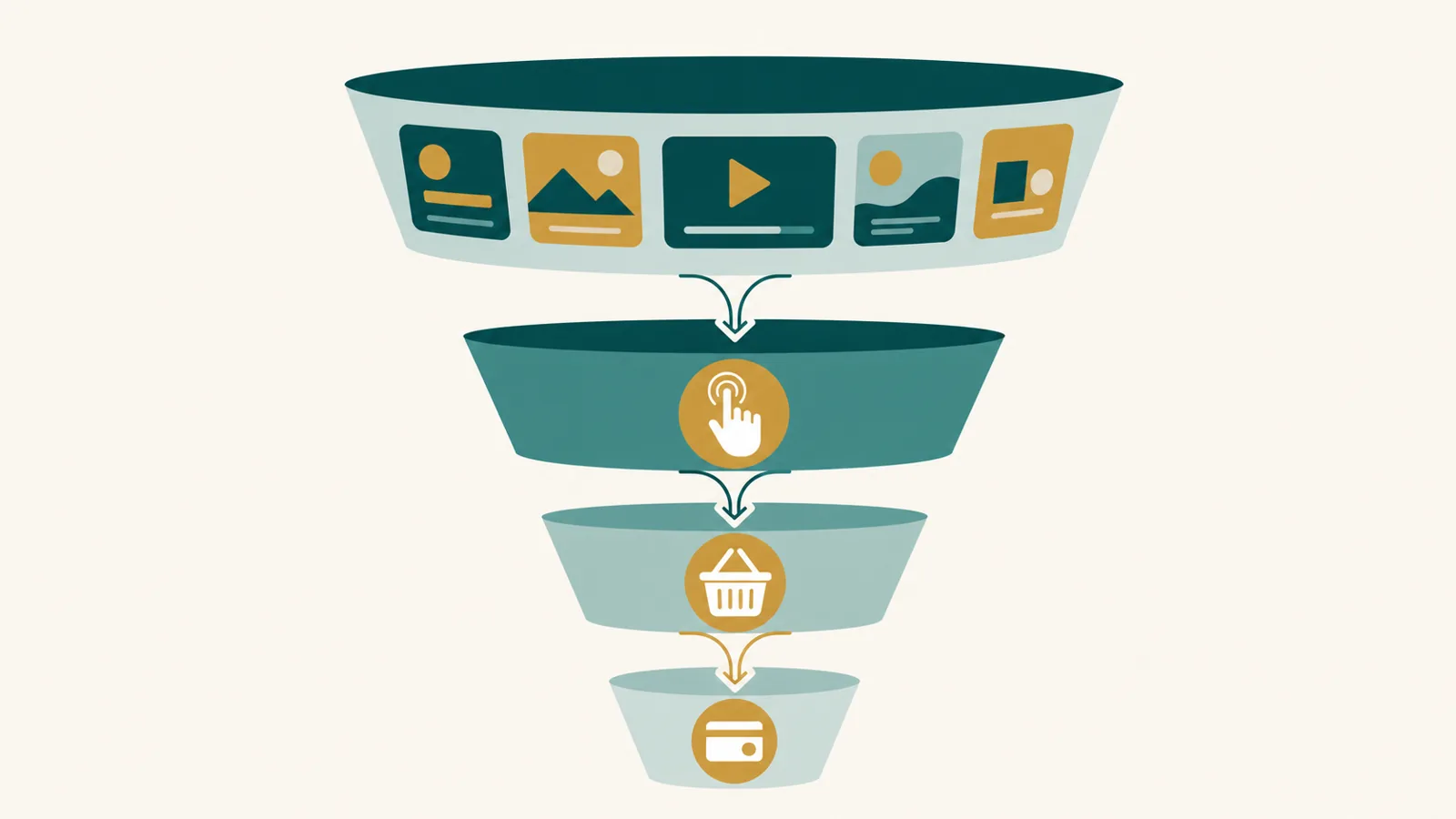
It helps to separate three different numbers that often get lumped together in a single campaign summary: impressions, clicks, and actual sales. Impressions tell a brand how many times an ad was shown, which is a vanity figure on its own. Clicks show how many shoppers were curious enough to tap through. Sales, tracked against those clicks, are the only number that tells a brand whether the spend was worth it.
A campaign can look impressive on impressions and clicks while quietly losing money if the cost per click is too high relative to the product's margin. Say a brand sells a product with a slim per-unit margin; every extra fils spent winning an auction eats directly into that margin, and a campaign needs a conversion rate high enough to cover it. That arithmetic needs doing before a campaign launches, not after the invoice arrives.
A few questions deserve regular attention once a campaign is live.
- Which specific keywords are driving actual purchases, rather than just clicks?
- Does sponsored spend correlate with a rise in the product's organic ranking over time, or does visibility disappear the moment the ad budget is paused?
- Are new customers discovering the brand through the sponsored listing, or is the ad mostly reaching shoppers who would have bought the product anyway?
- How does performance change around promotional periods, such as Ramadan or back-to-school, when overall shopper traffic on grocery apps tends to rise?
Answering these honestly sometimes means admitting a campaign is not working and pulling the budget rather than letting it run out of habit. That discipline matters more in retail media than in most traditional advertising, because the platform makes it easy to see, in near real time, exactly what a brand is getting for its money.
What should brand owners watch for as retail media grows?
A few practical trends deserve attention as UAE grocery apps continue building out their advertising products. Expect sponsored placement to spread beyond search results into more parts of the shopping journey, including checkout screens and post-purchase recommendation emails. Expect the platforms to keep refining their bidding tools, giving brands more control over exactly when and where an ad appears. And expect smaller, category-specific delivery apps to build lighter versions of the same tools, since none of them want to fall behind on a revenue stream their bigger competitors have already proven works.
None of this changes the underlying fact that a good product, an accurate listing, and a fair price still do the heavy lifting. Retail media can put a brand in front of more shoppers, but it cannot make a weak listing convert or a poor product get repeat purchases. The brands that do well here treat paid placement as an accelerant on top of solid fundamentals, not a substitute for them.
Key takeaways
- Retail media UAE refers to paid, sponsored placement sold directly by grocery and marketplace apps such as Noon, Amazon.ae, and delivery platforms.
- Sponsored products on Noon and Amazon work on an auction model, priced per click, and depend heavily on the quality of the underlying product listing.
- The digital shelf now runs two parallel rankings at once, organic and paid, and winning one does not guarantee winning the other.
- Smaller brands can compete by targeting specific long-tail keywords, sharpening listing content, and focusing budget on higher-margin SKUs rather than trying to outbid larger competitors.
- A distributor that manages physical distribution and e-commerce listings together can align Arabic content, stock availability, and ad spend, which reduces wasted clicks.
- Useful retail media decisions can be made from a platform's own performance dashboard and a brand's own sales data, without any outside research reports.
Retail media inside UAE grocery apps is not a passing trend; it is how paid visibility works now on a digital shelf. Brands that understand the mechanics, keep their listings sharp, and spend deliberately rather than defensively tend to get more from every dirham. If you want to talk through how your listings and sponsored placement look across the UAE's grocery apps, talk to our team, or browse more distribution and market context on the Bagason blog. You can also learn more about how we work across modern trade, HORECA, and e-commerce on our homepage.
Frequently asked questions
What is retail media in simple terms?
Retail media is advertising sold directly by a retailer inside its own store, whether that store is physical or an app. On a UAE grocery app, this means a brand pays the platform, such as Noon or Amazon.ae, to show its product in a sponsored slot on a search page or category listing, ahead of where it would rank organically.
How do sponsored products work on Noon and Amazon in the UAE?
Brands bid on keywords or categories, and the platform runs an automatic auction each time a shopper searches a matching term. The highest qualifying bid wins the sponsored slot, and the brand only pays once a shopper clicks the ad, not simply for it being shown.
Can small or new brands compete with big advertisers on grocery apps?
Yes, though not by trying to outbid large competitors on broad category terms. Smaller brands tend to do better by bidding on specific, less contested keywords, sharpening their product listings first, and directing a limited budget toward their highest-margin products rather than spreading it thin.
Does a strong sponsored campaign guarantee better organic ranking too?
Not directly. Organic ranking on most UAE grocery apps is still driven mainly by sales history, reviews, and listing quality. A sponsored campaign can help build the sales that eventually support organic ranking, but paying for a sponsored slot does not change where a listing sits in the unpaid results on its own.
Is retail media only relevant for e-commerce, or does it affect physical retail too?
It affects both. Shoppers move between an app and a physical store within the same day, so visibility built online often shows up as a sale in a supermarket aisle later, and vice versa. Coordinating in-store activations with sponsored digital placement tends to work better than running the two separately.
What is the first step for a brand new to grocery app advertising in the UAE?
Start with the product listing itself: clean images, accurate Arabic and English descriptions, and correct pack details. A sponsored ad only sends more shoppers to look at that listing; it cannot fix a weak one. Once the listing is solid, a small, well-targeted keyword campaign is a reasonable next step.