Open any cupboard in a Dubai apartment block and you can read the whole neighbourhood. There's the sack of basmati that gets refilled before it ever runs out, a tin of ghee gone soft in the heat, a jar of dried limes rattling like wooden beads, a bag of red lentils for the Friday soup, and somewhere near the back, a half-finished tub of tahini with oil pooled stubbornly on top. One shelf might hold za'atar from a Lebanese baqala, Iranian saffron in a screw-top vial, Filipino soy sauce, Indian turmeric and a Pakistani chilli blend, all bought within a few hundred metres of each other. That cupboard is the most honest map of the country there is.
Stocking a kitchen here is not the same exercise it is in London or Manila or Kerala. The UAE pulls cooks from dozens of food cultures into the same buildings, the same hypermarket aisles, the same 45-degree afternoons. A staple list that works has to serve machboos and mujadara and biryani and a quick pasta on a Tuesday, and it has to survive a summer that turns flour rancid and ground cumin to dust-flat powder in weeks. This is a guide to the UAE pantry essentials that actually earn their shelf space, organised the way a real kitchen runs: by what you cook, how you store it, and where it comes from.
Why the UAE pantry is its own discipline
The Emirates kitchen sits at a genuine crossroads, and that changes the maths of what you keep. In most countries you stock for one cuisine with the odd guest appearance from another. Here, a single household routinely cooks across five or six traditions in a week. An Emirati family makes machboos and harees and balaleet. A Levantine one leans on tabbouleh, fattoush, kibbeh and a constant rotation of mezze. South Asian kitchens run on basmati, dal, garam masala and ghee. Iranian cooks reach for saffron, barberries, dried limes and tahdig. Filipino homes want soy, vinegar, garlic and rice three times a day. Stack those needs in one cupboard and the staple list balloons well past what any one of those cuisines would call complete.
That breadth is the first thing that makes Emirati kitchen staples a category of their own. The overlap is real and useful: rice, onions, garlic, tomato, cumin, coriander and a good oil sit at the centre of nearly every one of these cuisines. Build that shared core well and you're halfway to dinner in any direction. The edges are where the personality lives, and that's where a Gulf cupboard quietly accumulates dried limes, pomegranate molasses, sumac, cardamom and rose water that a temperate-climate kitchen would never bother with.
The second variable is the one nobody mentions on a recipe card: climate. From May to September, outdoor temperatures sit in the mid-40s, and coastal humidity in Dubai, Sharjah and Abu Dhabi pushes 60 to 90 per cent. That environment is actively hostile to a pantry. Wheat flour develops off-flavours and attracts weevils. Nuts and seeds, rich in oils, turn rancid in a fraction of the time they would in a cooler kitchen. Ground spices, already fragile, bleed their volatile aromatics into the warm air and go flat. Sugar clumps into bricks, salt cakes, and anything in a paper bag invites pantry moths. In the Gulf, stocking and storage are not two separate jobs. What you buy is dictated by how you can keep it, and a smart shopping list is written with the cupboard temperature in mind. That principle, pantry storage UAE heat humidity as a design constraint, runs through everything below.
The foundation: grains and rice that anchor Gulf cooking
Almost every meal in this region is built on or around a grain. Get the grain shelf right and the rest of the pantry has something to lean on.
Basmati, the non-negotiable
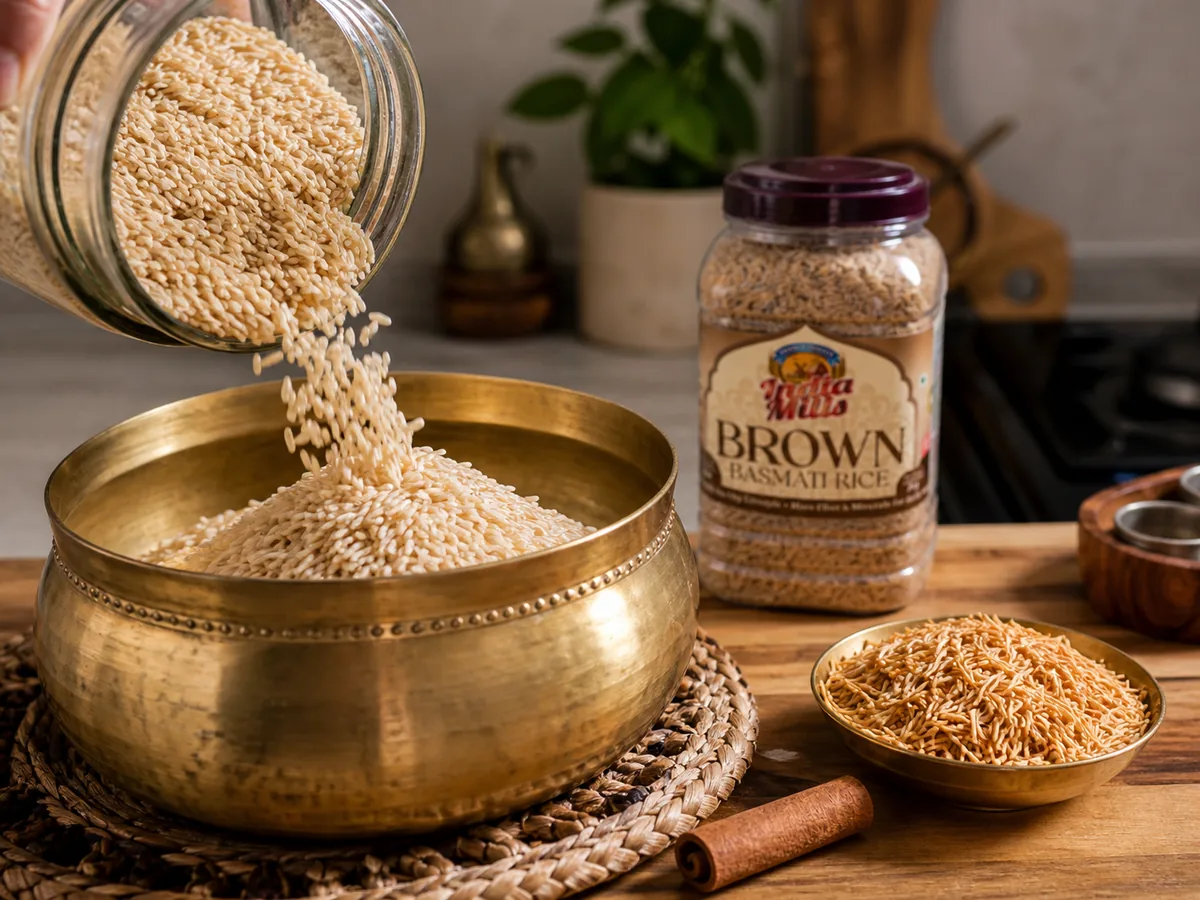
There is no honest Gulf pantry without basmati, and not just any basmati. Machboos, biryani, kabsa and Iranian-style rice all demand long, separate grains that stay distinct rather than collapsing into a sticky mass. That texture comes from two things: the grain itself and its age. Good basmati is a long-grain rice that elongates further when cooked, sometimes to two and a half times its raw length, and the best of it is aged. Ageing the paddy for one to two years before milling drives down moisture, firms up the starch and lets each grain cook fluffy and independent, soaking up stock and spice without turning to porridge. This is why experienced cooks hunt for the best basmati rice UAE shelves can offer in aged, premium grades rather than reaching for the cheapest sack.
For everyday machboos, a solid aged basmati at a sensible price is the workhorse. For an Eid biryani or a dish you're proud to put in front of guests, the extra-long aged grades are worth it, parboiled or raw depending on your method. Rinse until the water runs clear to wash off surface starch, then soak for 20 to 30 minutes so the grains hydrate evenly and don't crack. A 5kg bag is a reasonable baseline for a small household; families buy in 10 to 20kg sacks and never regret it.
Burghul, freekeh and the wheat family
Cracked and processed wheat is the Levantine half of the grain shelf. Burghul (bulgur) is parboiled, dried and cracked wheat, sold in fine and coarse grades. Fine burghul is the backbone of tabbouleh, where it's soaked rather than boiled and folded through mountains of parsley, mint, tomato and lemon. Coarse burghul carries kibbeh, pilafs and the comforting burghul-and-tomato dishes that fill weeknight tables. It cooks fast, holds fibre well and keeps for months if it stays dry.
Freekeh is the one to know if you don't already. It's young green wheat that's roasted and rubbed, giving it a smoky, nutty depth unlike anything else on the shelf. It works as a pilaf base, bulks out soups and stews, and stands in for rice when you want something with more chew and a higher protein and fibre count. Keep a bag alongside your burghul and you cover most of the Levantine grain repertoire. Round it out with semolina for harees-adjacent dishes and for sweets like basbousa.
Couscous, vermicelli and quick carbs
Two small items punch above their weight. Toasted vermicelli (sha'ariya) is what turns plain rice into the classic Gulf and Levantine rice-and-vermicelli base: you fry the thin noodles in a little ghee or oil until golden, then cook the rice on top so it picks up that toasty, slightly sweet note. It also makes a fast sweet vermicelli pudding. Couscous, technically tiny steamed semolina pasta, rehydrates in minutes under a lid and gives you a North African and Levantine carb with almost no effort. Both store indefinitely when dry, which makes them ideal insurance for a busy week.
One storage rule governs this whole section. Rice and wheat are weevil magnets in Gulf summers. Decant everything into airtight glass or clip-lock containers, never leave grains in their paper or woven sacks once opened, and tuck a couple of bay leaves into each container as a natural deterrent. Keep the containers off cupboard walls that bake against an exterior or a south-facing window, and well away from the heat of the oven. Done right, a grain shelf survives the summer untouched.
Pulses and legumes: the protein backbone
If grains are the foundation, lentils and pulses UAE kitchens rely on are the protein backbone, especially in a region where vegetarian South Asian cooking and meat-light Levantine and Emirati dishes both lean hard on them. They're cheap, they store for a year or more, and they turn a thin week into a full plate.
Chickpeas are the workhorse. Soaked and simmered, they become hummus, the smooth, tahini-rich dip that anchors any mezze; they bulk out stews, go into falafel, and roast into a snack. Red lentils are the fast track to comfort: they break down in 20 minutes into the silky base of shorbat adas, the lemony red-lentil soup that appears on iftar tables across the Gulf the moment Ramadan begins. Green and brown lentils are the ones that hold their shape, which is exactly what you want for mujadara, the humble, deeply satisfying dish of lentils and rice crowned with sweet caramelised onions. Keep all three and you can cover soup, salad, dip and main course from one shelf.
The dried-versus-canned question is worth answering honestly rather than dogmatically. Dried pulses are cheaper per portion, give you control over texture, and reward an overnight soak with creamier results and better digestibility, soaking and rinsing also cuts down the compounds that cause bloating. For chickpeas destined for proper hummus, dried and soaked is genuinely better, firmer, sweeter, less tinny. But canned pulses earn permanent space too. A tin of chickpeas and a tin of cooked brown lentils mean a weeknight curry or a quick salad is 15 minutes away, not three hours. Stock both: dried for the dishes you plan, canned for the nights you don't. Either way, a bag of dried split peas and some white beans round out the legume drawer and open up everything from harees to a quick fasolia stew.
The spice cabinet, organised by blend and origin
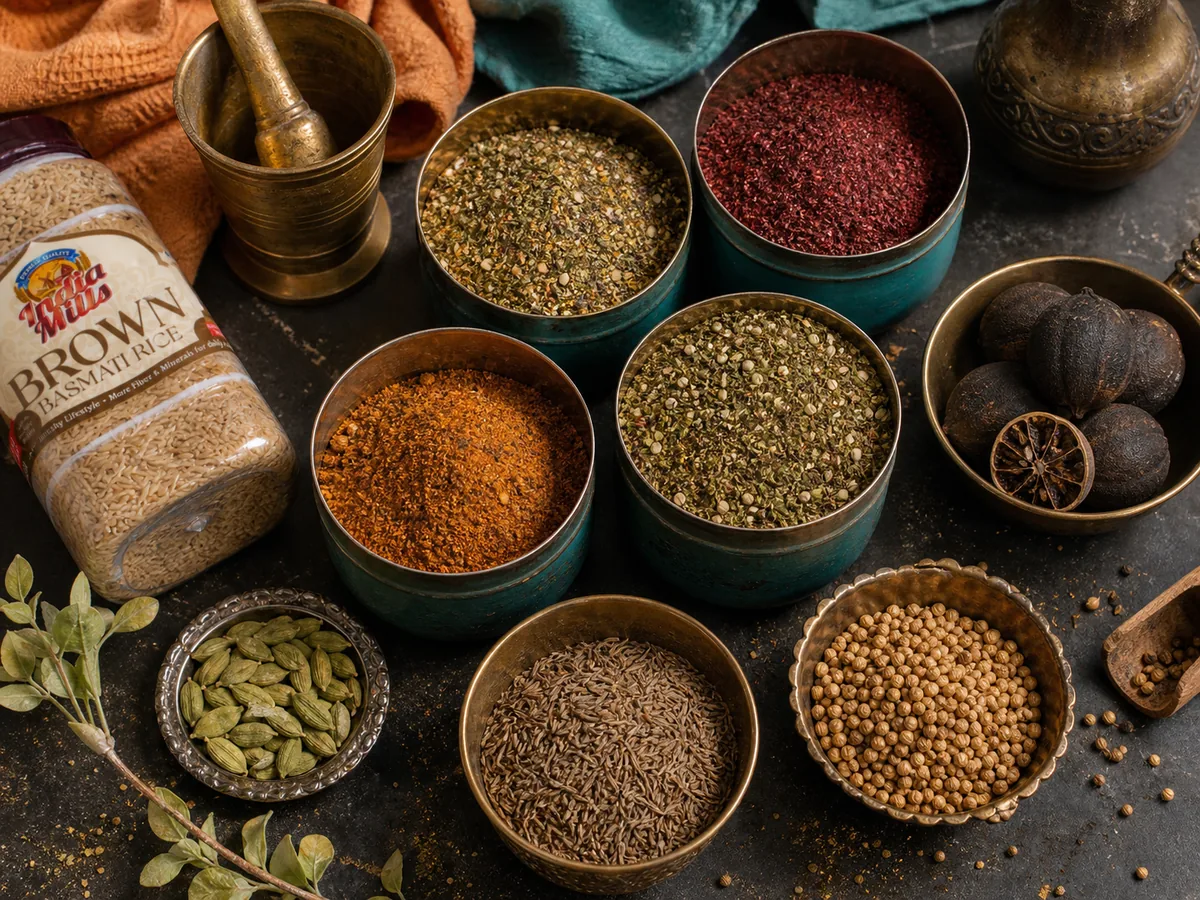
This is where a Gulf pantry stops being generic and starts having an accent. An organised Arabic spices list isn't a single drawer of jars; it's a small set of regional blends plus a core of single spices, each chosen and stored with the climate in mind. Sort them by origin and the whole cabinet makes sense.
Emirati and Gulf blends: bzar and loomi
Two ingredients carry the unmistakable flavour of Gulf cooking. The first is the baharat bzar spice blend, the Emirati seven-spice mix that perfumes machboos, stews and rice. Bzar (also spelled bizar) typically layers black pepper, cumin, coriander, cinnamon, cloves, cardamom, dried red chilli and turmeric, sometimes with dried rose or nutmeg, toasted and ground together. It's warm, savoury and slightly sweet, and a spoonful is what makes a Gulf rice dish taste like home rather than like a generic pilaf. You can buy it ready-blended, which is convenient, or toast and grind your own in small batches for a fresher hit.
The second is loomi, the dried lime that gives Gulf food its haunting sour-bitter backbone. Limes are boiled in brine and dried in the sun until they're hard, dark and hollow-sounding. Whole loomi, pierced and dropped into machboos, biryani or a meat stew, releases a deep, fermented citrus tang you can't get from fresh lemon, fish out the spent limes before serving, or eat the soft flesh if you love the intensity. Ground loomi powder stirs into rubs, soups and rice for a quicker, more even sourness. Buy whole limes for the long haul; they keep for ages in a sealed jar. Grind small amounts as needed, because once powdered, loomi fades faster, the same fate that meets every ground spice in this heat.
Levantine staples: za'atar, sumac, baharat
The Levantine corner of the cabinet brings brightness and tang. Za'atar is both a wild herb and the iconic blend built around it: dried thyme and oregano, toasted sesame seeds, sumac and salt. Mixed with olive oil it becomes the spread for man'ousheh flatbread; dusted over labneh, eggs, roast vegetables or warm bread, it does quiet work all day long. Sumac on its own is a deep-red ground berry with a clean, lemony sourness that lifts fattoush, grilled meats and a plate of hummus without the wetness of fresh citrus. And Levantine baharat, a warm all-purpose mix of black pepper, allspice, cinnamon, cloves, nutmeg and coriander, seasons everything from rice and meatballs to stuffed vegetables. These three turn a plain dish Levantine in seconds.
The single spices every cook reaches for
Beneath the blends sits a universal core that every cuisine in this country draws from: cumin, coriander, turmeric, cardamom and cinnamon, with black pepper, cloves, chilli and bay close behind. Cumin and coriander are the savoury foundation of curries, stews and spice rubs. Turmeric brings colour, earthiness and its much-studied anti-inflammatory compound curcumin. Green cardamom perfumes both rice and coffee, the single thread that runs from a pot of machboos to a cup of gahwa. Cinnamon bridges sweet and savoury across all of it. These are the spices you reach for without thinking, so they're the ones most worth buying well.
Here the climate dictates form. Buy whole spices wherever you can, cumin seed, coriander seed, whole cardamom pods, cinnamon sticks, peppercorns, cloves, and grind in small amounts. Whole spices keep their volatile aromatic oils locked inside a protective shell, so they survive UAE humidity for a year or more, while the same spices ground lose their punch in a couple of months as the heat drives those oils off. A cheap spice grinder or a heavy mortar pays for itself fast. The buying tip that follows is simple and saves money: purchase smaller, sealed quantities more often rather than giant bulk jars that go flat long before you finish them. A spice that smells of nothing is worse than no spice at all, because it fills the dish with dust and none of the flavour you bought it for. Keep the jars out of the light, sealed tight, and away from the steam of the stove.
The breadth of this cabinet is exactly why the UAE has such a deep bench of trusted spice and pantry brands on its shelves, and why a distributor like Bagason works to keep that range of %the pantry, spice, snack and hydration brands we move across the Gulf% stocked consistently across the Gulf, so the bzar, loomi and cardamom you reached for last month are there again next month at the same quality. Building this cabinet once and maintaining it well is one of the highest-leverage things a Gulf cook can do.
Oils, fats and the liquid pantry
Fats and flavouring liquids are the connective tissue of Middle Eastern pantry staples, the bottles that carry a dish from raw ingredients to something with depth. Three fats cover most cooking. Extra-virgin olive oil is for the Levantine end of the kitchen: dressing fattoush and tabbouleh, finishing hummus, blending into za'atar, drizzling over labneh. Keep it for low heat and raw uses, where its fruity, peppery character actually shows, and store it cool and dark, because heat and light turn good olive oil rancid faster than anything. A neutral oil, sunflower, canola or a light vegetable blend, handles the high-heat work: frying onions for the base of a stew, deep-frying falafel and samosas, searing. And ghee, clarified butter, is the soul of South Asian and Gulf rice cooking, frying vermicelli, enriching biryani, finishing dal. Ghee is shelf-stable thanks to the removal of milk solids, but it still softens and can turn in extreme heat, so a cool cupboard or the fridge keeps it honest.
Around the oils sits a row of flavour bottles that define the region's cooking. Tahini, ground sesame paste, is the base of hummus, the dip baba ganoush, and the sauce that goes over falafel and shawarma; it's also rich in calcium and healthy fats. Pomegranate molasses, thick, dark and tart-sweet, brings sourness and shine to muhammara, dressings and braises. Rose water and orange-blossom water perfume sweets, milk puddings and the occasional savoury dish with a few careful drops. Date syrup (dibs), pressed from the country's own fruit, doubles as a sugar alternative and a drizzle for bread and yoghurt. And a couple of vinegars, white and a good red or grape, round out the acid options for pickling and dressing.
Two storage habits keep this shelf working. Tahini separates as the heavier paste settles under its oil, expected, not spoilage. Stir it back together thoroughly before each use, or store the jar upside down for a while so gravity does the mixing; once opened, many cooks keep tahini in the fridge to slow separation and stop the oil going rancid. And every oil in the cupboard is on a clock in this climate: buy bottle sizes you'll actually finish in a couple of months, keep them sealed, cool and out of the light, and never store oil in the warm cupboard above the stove. Rancid oil is the silent way a pantry lets a good dish down, and in a Gulf summer it arrives sooner than you'd think. These habits, more than any single ingredient, are what separate a cupboard that works year-round from one that quietly spoils, the same care that keeps the wider supply of trusted pantry brands worth %how we get staples onto shelves region-wide% reliable from shelf to kitchen.
<
Emirati and Gulf blends: bzar and loomi
Two ingredients carry the flavour signature of the Emirates more than any others. The first is bzar, the Emirati seven-spice blend, a warm, slightly smoky mix built around cumin, coriander, cinnamon, cloves, cardamom, dried chilli and turmeric, with the exact ratio guarded family to family. A spoonful of bzar is what gives machboos its depth, the spiced rice-and-meat dish that is to the Emirates what biryani is to Hyderabad. Buy it ready-blended from a trusted brand or a good baqala if you are starting out; toast and grind your own once you know what you are chasing.
The second is loomi, the dried lime, sometimes labelled black lime or noomi basra. These are limes that have been boiled in salt water and dried whole until they rattle, going from green to a deep, hollow brown. They carry a sour, fermented, almost smoky bitterness that no fresh citrus can imitate, and they are the soul of Gulf stews and rice. Use them two ways. Whole, pierced once or twice and dropped into a simmering pot of machboos or a fish stew, they perfume the whole dish and are fished out before serving. Ground to a fine powder, they become a seasoning you can stir into soups, sprinkle over grilled fish or whisk into a marinade. Keep loomi whole in a sealed jar for the longest life; grind small amounts as you need them, because the powder loses its edge within weeks in this climate.
Levantine staples: za'atar, sumac and baharat
The Levantine corner of the drawer brings brightness and herb. Za'atar is the green, nutty blend of wild thyme, toasted sesame, sumac and salt that you fold into olive oil for breakfast manakish, dust over labneh, or rub on chicken before roasting. A good za'atar smells of the hillside, not of dust, so buy it fresh and in modest quantity. Sumac is the dried, ground berry that gives a clean, lemony tartness without the liquid of a squeezed lemon, indispensable over fattoush, grilled meats and a plate of sliced onions. Baharat, literally just the word for spices, is the all-purpose Levantine warm blend, heavier on black pepper, allspice, cinnamon and nutmeg than its Gulf cousin bzar, and it seasons everything from kibbeh to stuffed vegetables.
The single spices every cook reaches for
Underneath the blends sits the universal core, the half-dozen single spices that almost every dish in every one of these cuisines leans on. Cumin and coriander, ground and whole. Turmeric for colour and earth. Cardamom, green pods that scent rice, coffee and karak alike. Cinnamon, both stick and ground. Black pepper, chilli and a good flaky salt round out the must-haves, with saffron and dried rose as the affordable luxuries that lift a special dish.
Buy whole wherever you can. This is the single most important spice-buying rule in the Emirates. Whole cumin seed, whole coriander, cinnamon sticks and cardamom pods hold their volatile oils, and therefore their flavour, for many months even through a humid summer. The moment a spice is ground, its surface area explodes and it starts trading aroma for the air around it; in 40-degree heat that decline is brutal. Grind small batches in a cheap electric mill or a mortar as you cook, and the difference in your food is immediate. For the ground spices you do buy, the buying tip that matters most is to purchase smaller, sealed quantities more often rather than a catering-size jar that goes flat and dusty long before you reach the bottom. A spice you replace every few months always tastes better than a bargain bulk tub you bought once.
This is exactly where a reliable distribution network shows its value. The consistency of the cumin, cardamom and chilli on the shelf, batch after batch, comes from brands and importers working to keep quality steady across the Gulf. You can read more about how that supply reaches kitchens across the region in %the markets and emirates we cover%.
Oils, fats and the liquid pantry
Fat is flavour, and a Gulf kitchen wants more than one kind. Keep at least three. A bottle of extra-virgin olive oil, ideally a fruity, peppery one, for Levantine dressings, drizzling over hummus and finishing a plate of grilled vegetables; this is a flavour, not a cooking medium, so don't waste it in a hot pan. A neutral oil with a high smoke point, sunflower or a light vegetable blend, for the actual frying and high-heat work, from samosas to shallow-fried fish. And ghee, the clarified butter that gives South Asian and Gulf rice dishes their nutty richness; a spoonful stirred through finished basmati or used to fry the onions for biryani is non-negotiable for those cuisines, and it keeps beautifully without refrigeration.
The liquid pantry beyond oil is where Middle Eastern cooking finds its signature notes. Tahini, the smooth sesame paste, is the base of hummus, the dressing for falafel and the body of countless sauces. Pomegranate molasses, thick, dark and sharply sweet-sour, is the secret behind a proper muhammara and the dressing that makes a fattoush sing. Date syrup, locally produced and abundant, doubles as a sugar alternative and a drizzle over fresh laban or porridge. Rose water and orange-blossom water perfume sweets, milk puddings and the syrup that soaks knafeh and basbousa, so a small bottle of each goes a long way. Add a couple of vinegars, a white wine or apple cider for dressings and a sharper one for pickling, and your liquid shelf can build flavour in any direction.
Storage is the catch with this shelf. Heat is the enemy of every oil and paste here. Tahini separates as it sits, the oil rising to the top; store it somewhere cool, give it a vigorous stir before each use, and once opened, keep it in the fridge in summer to slow the separation and stop it turning rancid. Olive oil hates light and heat in equal measure, so a dark cupboard well away from the hob, never the shelf above it, keeps it fresh for months. Buy oils in sizes you will finish within a couple of months rather than the giant tin that goes stale halfway down.
Tinned, jarred and preserved: the speed layer
Every well-run pantry has a fast lane, the shelf you raid when there is no plan and forty minutes before everyone is hungry. In the Emirates, where long working days and long commutes are the norm, this layer is not laziness; it is survival cooking done well.
The backbone of a twenty-minute meal lives in tins. Tinned tomatoes, whole or chopped, become the base of a quick shakshuka, a pasta sauce or a chickpea stew. Tomato paste, that concentrated tube or tin of deep red, adds body and colour to rice, stews and sauces with a single spoonful. Tinned chickpeas and white beans, as covered above, turn into salad or stew in minutes. And tinned tuna, in oil or water, is the protein you reach for when there is nothing fresh, flaked into a salad, a sandwich or a quick pasta. With these four and an onion, you are never truly without dinner.
The preserved shelf is what turns a bare fridge into a generous table. Preserved lemons, salted and softened until the rind is edible, add a deep, mellow citrus to tagines, rice and dressings that fresh lemon cannot reach. Good olives, green and black, and a jar of mukhallal, the mixed Arabic pickles of turnip, cucumber and chilli stained pink with beetroot, are the instant accompaniment to any spread; a few of these and some bread already feels like a meal. Keep a tub of labneh or a long-life dairy that plays the same role, thickened, tangy and ready to anchor a mezze with a swirl of olive oil and za'atar. Between the tins and the jars, a half-empty fridge becomes a full plate.
Dates, nuts and the sweet pantry
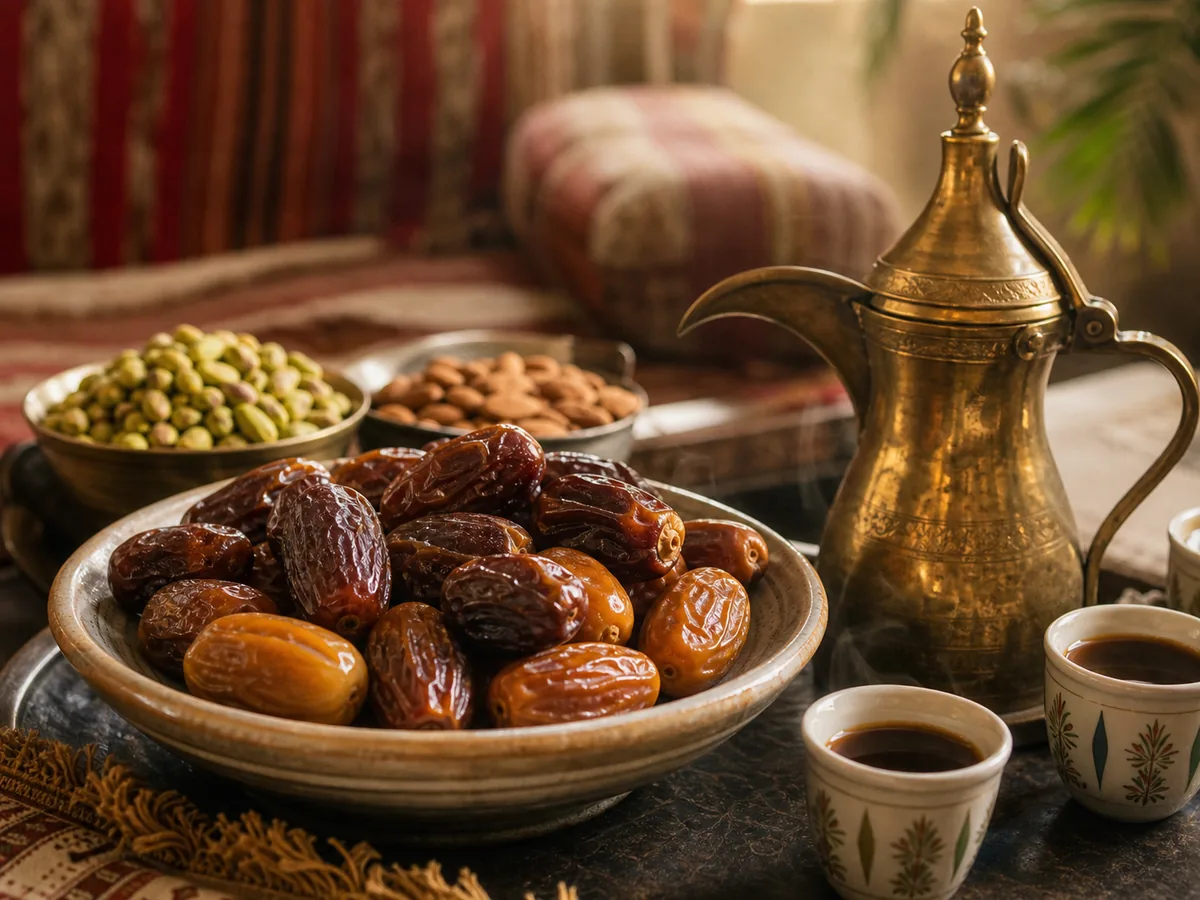
No Emirati pantry is complete without dates, and not as an occasional treat but as everyday food. Khalas, prized for its caramel sweetness and served with Arabic coffee. Fard, darker and softer, an everyday favourite from Oman and the Emirates. Medjool, large and almost toffee-like, the date you offer a guest or send as a gift. Keep a mix: a box of everyday dates for the family and a finer box reserved for visitors and for Ramadan, when breaking the fast with dates and water is the first act of every iftar. Dates need no special storage, a cool cupboard suits them, though in peak summer the fridge keeps softer varieties from fermenting at the edges.
Date syrup belongs here too, doubling as the region's native sweetener, drizzled over fresh bread and laban or stirred into a marinade for a glossy, deep sweetness that refined sugar can't match.
Nuts and seeds finish the sweet and the savoury alike. Pistachios for crowning knafeh and ma'amoul, almonds slivered over rice and sweets, pine nuts toasted golden for kibbeh and topping a plate of hummus, and sesame seeds for tahini, breads and the brittle sweetness of halva. The warning that comes with all of them is the same: nut oils turn rancid fast in Gulf heat, faster than almost anything else in your cupboard. A bag of pine nuts left in a warm cabinet can go bitter within weeks. The fix is simple and worth the habit, store nuts and seeds in the fridge or, better, the freezer in sealed bags or jars. They thaw in minutes, toast straight from frozen, and taste fresh for the better part of a year.
Hydration and the drinks shelf
The drinks shelf in an Emirates home is part pantry, part culture. Arabic coffee, gahwa, lightly roasted and brewed with cardamom and sometimes saffron, is the centre of majlis hospitality, poured in small cups from a dallah and never refused on a first round. Keep the lightly roasted beans or ground gahwa, plenty of green cardamom and a pinch of saffron, and you can offer the welcome that runs through Gulf social life.
Tea sits right beside it. Loose black tea for the strong, sugared cups of an afternoon visit, green tea for after a heavy meal, and the makings of karak, the spiced, milky tea that is practically a national drink. Karak wants strong black tea, evaporated milk, sugar, crushed cardamom and a thread of saffron, simmered together until it is the colour of dark caramel; the ingredients keep indefinitely on the shelf, so a karak craving is always answerable.
In this climate, a hydration layer is not optional. Heat and dry air pull fluid out of you all day, indoors and out, and a pantry that ignores that is missing something basic. Bottled and sparkling water for the household, laban, the salted drinking yoghurt that cools a spiced meal and settles the stomach, and a box of electrolyte sachets for the days of real exertion, the long drive, the summer match, the dawn-to-dusk Ramadan fast. The same care that goes into stocking grains and spices belongs to keeping the household properly watered, and the hydration aisle has grown to meet exactly that need. It sits alongside the pantry, not apart from it: cooking and drinking are one system in a place this hot.
Stocking by household: the starter, the family and the entertainer
A single shopping list cannot serve everyone, and the fastest way to waste money and cupboard space is to stock as though every household were the same. Three tiers cover almost every reader.
The new-arrival starter pantry
A new expat in a studio or a shared flat does not need a villa's worth of provisions. The first trip should be small and high-leverage: a bag of good basmati, a tin of olive oil, a small bottle of neutral oil, salt, and the core single spices, cumin, coriander, turmeric, cinnamon, cardamom and black pepper. Add red lentils and a couple of tins of chickpeas, a tin of tomatoes and some tomato paste, a jar of tahini, a packet of dates and a box of tea. That single trip, easily managed at any hypermarket or a well-stocked baqala, is enough to cook a dozen different meals and start learning the local flavours without a cupboard full of jars you won't touch for a year.
The family pantry
A household cooking three meals a day scales the same list up and broadens it. Buy rice and flour in larger sacks, decanted into airtight containers; deepen the pulses to include green and brown lentils and white beans; widen the spice drawer to the full blend set, bzar, baharat, za'atar, sumac and a jar of loomi; and keep ghee, a wider tinned-goods shelf and a steady supply of nuts and dates. The family pantry is built on rotation: things move fast, so the discipline is buying in sensible bulk and using it before the heat does its work.
The majlis and entertaining pantry
The household that hosts, and in the Gulf that is most of them, keeps a deeper bench for the table that fills without warning. Extra dates of a finer grade, a full coffee-and-karak kit ready at all times, generous stocks of nuts for crowning sweets, the makings of a mezze spread on standby, preserved lemons, olives, pickles, tahini, pomegranate molasses, and enough rice and meat staples to turn a casual visit into a full machboos at short notice. Hospitality here is measured in readiness, and the entertainer's pantry is stocked so the answer to unexpected guests is always yes.
Layered across all three tiers is the annual rhythm of Ramadan and Eid. The weeks before the holy month see demand surge and shelves thin, so the seasoned household deepens its core staples ahead of time: more rice, more pulses, more dates, more ghee and more vermicelli for the sweet and savoury dishes that define iftar. Stocking a few weeks early means iftar cooking never stalls on a missing bag of rice, and the season stays about the table rather than the queue.
Storing a pantry that survives a Gulf summer
You can buy the finest staples in the Emirates and still lose them to the climate if you store them like a cook in a cooler country. The Gulf summer is an active adversary, and the pantry has to be built to withstand it.
Think in heat-and-humidity zones. The most vulnerable items, flour, ground spices and all nuts and seeds, belong in the fridge or freezer through the hot months. Cold storage stops flour going stale and weevil-ridden, keeps ground spice from fading and, above all, stops nut oils turning rancid. Everything else lives in airtight glass or clip-lock containers, never the paper bag or loosely folded packet it came in; in coastal humidity, an open paper bag is an invitation to weevils and damp. Decant rice and pulses the day you bring them home, and tuck a bay leaf or two into the rice container, an old kitchen trick that genuinely deters the weevils that thrive in a warm Emirates cupboard.
Placement matters as much as the container. The single worst spot in any Gulf kitchen is the cupboard directly above the oven, where every cooking session bakes whatever you have stored there; reserve it for tins and bottles that don't care, and keep grains, spices and oils on cooler walls away from the hob and any window that catches afternoon sun. Practical guidance on managing pantry storage in UAE heat and humidity comes down to those two instincts: seal it, and keep it cool.
The last discipline is rotation. Run the pantry first-in, first-out, bringing older stock to the front and labelling containers with the date you opened them. Watch the shelf life of the things that fade or spoil fastest, opened tahini, oils and any ground spice, and trust your nose; a flat, dusty smell from a spice or a sharp, paint-like note from an oil means it has given up, however far from a printed date it sits. A pantry that rotates is a pantry that always tastes fresh, and in this climate that habit is the difference between cooking from a living cupboard and cooking from a stale one.
Where the staples come from: brands, baqala and the bigger supply chain
Knowing what to stock is half the work. Knowing where to get it, reliably and at the right price, is the other half, and the Emirates gives the home cook an unusually rich map to work from.
The big hypermarkets are where most households do the bulk run: sacks of rice and flour, the wide tinned-goods and dairy shelves, the long hydration aisle and the recognised brands, all under one cool roof. The baqala, the corner grocery on every residential street, is the daily lifeline, open late, walking distance, and stocked with the bread, laban, eggs, dates and single spices you forgot or ran out of, often with a personal touch the hypermarket can't match. Online grocery has become a genuine third option, delivering the heavy and the heat-sensitive to your door, which in July is no small mercy. And the specialist stores, Iranian grocers for the best loomi and saffron, South Asian shops for fresh whole spices, atta and authentic ghee, are where the serious cook goes for the ingredients that define a dish. Each does something the others can't, and the practical answer to where to buy pantry staples across Dubai and the wider Emirates is to use all four, matched to what you need.
Behind every one of those shelves sits a supply chain most shoppers never see. The reason the basmati, the bzar, the tahini and the electrolyte sachets are there, in consistent quality, the same brand month after month, is the network of importers and distributors that move trusted products into the Gulf and keep them stocked across hundreds of retailers. A distributor like Bagason works at exactly this layer, connecting established pantry brands across pantry essentials, spices, snacks and hydration to shelves throughout the UAE and the wider GCC, so the staples in your cupboard stay reliable and available through the seasons. Brands looking to reach Gulf shoppers at that scale can explore working together through %bring your brand to UAE shoppers%.
Build the pantry in tiers, store it for the climate, and lean on the full map of where to shop, and you end up with a cupboard that cooks for every kitchen the Emirates contains, Emirati, Levantine, South Asian and beyond, on any night of the year and for any table that fills without warning.
]]><![CDATA[Frequently Asked Questions
What are the absolute essential UAE pantry staples for a first grocery trip?
Start with a bag of aged basmati rice, extra-virgin olive oil, a neutral frying oil, and the core single spices: cumin, coriander, turmeric, cinnamon, cardamom and black pepper. Add red lentils, tinned chickpeas, tinned tomatoes, tomato paste, tahini, a packet of dates and tea. That one trip, easily done at any hypermarket or baqala, cooks a dozen different meals and starts you on the region's flavours without overbuying jars you won't use.
How do I stop spices and flour going stale in the UAE heat and humidity?
Buy whole spices over ground wherever possible, as whole seeds and pods hold their flavour for months even in summer. Store flour, ground spices and all nuts in the fridge or freezer through the hot months. Keep everything else in airtight glass or clip-lock containers, never the original paper bag, and keep them on cool walls away from the hob. Never use the cupboard directly above the oven, which bakes whatever you store there.
What is loomi and why is it essential in Gulf cooking?
Loomi, also called black lime or noomi basra, is a lime boiled in salt water and dried whole until it turns deep brown and hollow. It carries a sour, fermented, slightly smoky bitterness no fresh citrus can match, and it is the soul of Emirati machboos and Gulf stews. Use it whole, pierced and dropped into a simmering pot then removed before serving, or ground to a powder stirred into soups and marinades. Store it whole for the longest life.
How should I deepen my pantry before Ramadan in the UAE?
Shelves thin and demand surges in the weeks before Ramadan, so stock your core staples a few weeks ahead. Deepen rice, lentils and pulses, ghee, dates and vermicelli, the ingredients behind iftar's sweet and savoury dishes. Keep a finer grade of dates reserved for breaking the fast and for guests. Buying early means iftar cooking never stalls on a missing bag of rice, and the season stays about the table rather than the queue.
Where is the best place to buy pantry staples in Dubai and the UAE?
Use all four channels by strength. Hypermarkets handle the bulk run of rice, flour, tins and hydration under one roof. The neighbourhood baqala is your daily lifeline for bread, laban, dates and forgotten single spices. Online grocery delivers heavy and heat-sensitive items in summer. Specialist Iranian and South Asian stores are where you find the best loomi, saffron, whole spices and authentic ghee. Match the shop to what you actually need that day.
Do I really need a hydration shelf alongside my pantry in the Gulf?
Yes. The UAE climate pulls fluid out of you all day, indoors and out, so hydration is a genuine pantry category, not an afterthought. Keep bottled and sparkling water, laban to cool spiced meals, and a box of electrolyte sachets for high-exertion days, long summer drives and the dawn-to-dusk Ramadan fast. Cooking and drinking are one system in a place this hot, so stock the drinks shelf with the same care you give grains and spices.
]]> <div class="bgn-blog-cta" style="margin-top:36px;padding:24px 26px;border-radius:14px;background:#f5f2ee;border:1px solid rgba(0,0,0,0.07);border-left:4px solid #CA7345;"><p style="margin:0 0 10px;font-weight:700;color:#1a6985;font-size:1.02rem;">Distribution solutions from Bagason Group</p><p style="margin:0 0 12px;color:#555;font-size:0.92rem;">Bagason Group distributes 700+ products to 30,000+ retail outlets across the UAE and GCC. Explore the pages most relevant to this article:</p><ul style="margin:0;padding-left:1.1rem;line-height:1.9;"><li><a href="/fmcg-distributor-uae">FMCG Distributor UAE</a></li><li><a href="/fmcg-distributor-abu-dhabi">FMCG Distributor in Abu Dhabi</a></li><li><a href="/fmcg-distributor-sharjah">FMCG Distributor in Sharjah</a></li><li><a href="/fmcg-distributor-dubai">FMCG Distributor in Dubai</a></li></ul></div><div class="bgn-author-eeat" style="margin-top:28px;padding:20px 24px;border-radius:14px;display:flex;gap:16px;align-items:flex-start;background:#fff;border:1px solid rgba(0,0,0,0.08);"><div style="flex:0 0 52px;height:52px;border-radius:50%;background:linear-gradient(135deg,#1a6985,#CA7345);display:flex;align-items:center;justify-content:center;color:#fff;font-weight:800;font-size:1.1rem;">BG</div><div><p style="margin:0;font-weight:700;color:#2b2b2b;">Bagason Editorial Team</p><p style="margin:2px 0 8px;font-size:0.82rem;color:#888;text-transform:uppercase;letter-spacing:0.05em;">FMCG Distribution Editorial Desk · Bagason Group, Dubai</p><p style="margin:0;font-size:0.92rem;color:#555;line-height:1.6;">Written by the editorial desk of <a href="/about-us" style="color:#1a6985;font-weight:600;text-decoration:none;">Bagason Group</a>, a Dubai-based FMCG distributor operating since 2007 with 700+ products, 30,000+ retail outlets and coverage across all seven emirates and the GCC. Learn more about <a href="/what-we-do" style="color:#1a6985;font-weight:600;text-decoration:none;">how we distribute</a>.</p></div></div>