Plant based food labels are showing up in more UAE aisles every season, from chilled dairy alternatives to snack bars and ready meals. For a shopper standing in a Carrefour or a Lulu aisle, three words often sit side by side on a shelf: vegan, plant based, dairy free. They look interchangeable. They are not. Each term carries a distinct meaning, a distinct set of ingredients it rules out, and a distinct set of assumptions a buyer might wrongly make.
This matters for two reasons. Shoppers increasingly read ingredient panels before they read price tags, especially in categories like milk alternatives, spreads, and snacks. And brand owners who want to use these words on pack need to understand exactly what each one commits them to, because a loose claim on a label is a claim a regulator, a retailer, or a customer can hold you to later.
We work across warehousing, distribution, and retail merchandising for both our own brands and partner brands sold across the UAE, so we see these claims from the label-design stage through to the shelf. What follows is a plain explanation of what vegan, plant based, and dairy free actually mean, how they differ from related terms like lactose free, what a vegan logo does and does not cover, and how a brand should think about substantiating any of these words before printing them on packaging.
What Plant Based Food Labels Promise
"Plant based" is a description of composition. It tells a shopper that the product's ingredients are derived from plants rather than animals: grains, legumes, nuts, seeds, vegetables, and their processed forms like oat drink, almond paste, or pea protein isolate. That is the whole promise. It is a statement about where the ingredients came from, not a statement about how the product was made in a factory, not a statement about allergens, and not a statement about nutrition.
Here's the thing: plant based does not automatically mean vegan, and it does not automatically mean free from dairy traces. A product can be formulated entirely from plant ingredients and still carry a "may contain milk" warning if it shares a production line with a dairy product. A plant-based label describes the recipe, not the facility.
For distributors and retailers, this composition-only meaning is the safest way to read the phrase. When a listing agent or category buyer sees "plant based" on incoming stock, the correct question is: which ingredients specifically, and what does the supporting documentation from the manufacturer say about the production line. The phrase alone answers only the first half of that question.
What a Vegan Claim in the UAE Must Back Up
A vegan claim on UAE packaging is a narrower, stricter promise than plant based. Vegan means no animal-derived ingredients at all, and that list runs longer than most shoppers assume. It rules out the obvious items: milk, eggs, honey, gelatine. It also rules out less obvious ones, including certain colourings and glazing agents derived from insects or animal by-products, some vitamin D3 sourced from lanolin, and certain refining aids used in sugar processing.
Vegan is an ingredient-level claim, not a facility-level guarantee, in most of the frameworks brands rely on. A product can be formulated with zero animal ingredients and still be produced on shared equipment that also runs dairy or egg-based lines. That is why a responsible vegan claim is almost always paired with an allergen statement covering cross-contact risk. The word "vegan" tells you about the recipe. The allergen line tells you about the factory.
Brands selling into the UAE need a documented ingredient trail for every component, including minor ones like flavourings, emulsifiers, and processing aids, before that word goes on a box. Retail buyers who list a new SKU with a vegan claim will typically ask for that documentation as part of onboarding, not after a complaint arrives.
Dairy Free vs Lactose Free: Two Different Promises
Of all the pairs shoppers confuse, dairy free vs lactose free causes the most real-world mix-ups, because the two terms sound like synonyms and are not. Dairy free means the product contains no milk-derived ingredients whatsoever: no milk, no whey, no casein, no butterfat, no milk solids of any kind. Lactose free means something narrower. It means the lactose sugar naturally present in milk has been removed or broken down, usually through added lactase enzyme, but the product may still contain milk proteins.
So a lactose-free milk drink can still contain dairy. It is milk with the sugar addressed, not milk with the dairy removed. A dairy-free product, by contrast, has no milk components at all and is built from plant sources like oat, soy, coconut, or almond instead. For a shopper managing a milk protein allergy rather than lactose intolerance, this distinction is not a technicality. Reaching for "lactose free" when the concern is a milk protein, rather than milk sugar, would not address what they are trying to avoid.
On pack, this means the two phrases are not interchangeable substitutes for each other, and a brand should never print one when the formulation only supports the other. A retailer's own compliance team will usually catch this kind of mismatch during listing review, but it is far cheaper to get the wording right before print than to reprint packaging after a query from a buyer or a customer.
What a Vegan Logo Certifies
People often assume a vegan logo covers more ground than it does. Various third-party vegan trademark symbols exist internationally, and when one appears on a product, it typically signals that the brand has submitted its formulation and process to an external body for review against that body's own defined standard. Different vegan logo schemes use different criteria, different renewal cycles, and different scope. Some cover only the recipe. Others also look at manufacturing practices around cross-contact.
These logos do not make a health or nutrition promise. A vegan mark says an external party has reviewed the ingredient list against a vegan standard, nothing more. It says nothing about calories, sugar content, or any other nutritional characteristic, and it should never be read that way. A vegan product can sit anywhere on the nutrition spectrum, the same as any other category of packaged food.
For a distributor or retailer evaluating a new SKU, the useful exercise is to trace a logo back to the specific scheme behind it and read that scheme's stated scope, rather than treating any vegan mark as an interchangeable stamp of approval. Two products can each carry a vegan logo from two different schemes and be certified against meaningfully different criteria.
The Plant-Based Labelling Rules Brands Are Expected to Follow
Plant based labelling rules for food labels in the UAE sit inside a broader framework overseen by bodies including Dubai Municipality, the Abu Dhabi Quality and Conformity Council, and, at federal and GCC level, standards issued through MOIAT and the GSO system. These frameworks require accurate ingredient declarations, clear allergen statements, and labelling that does not mislead a consumer about composition, whatever specific marketing phrase a brand chooses to use.
In practice, this means a plant-based claim has to be traceable to the actual ingredient list on the same pack. If a product description leans on "plant based" language but the ingredient panel includes a dairy-derived stabiliser, that mismatch is exactly the kind of gap these labelling frameworks exist to catch. Arabic-language labelling requirements apply here too. The claim, the ingredient list, and any allergen statement need to say the same thing in both English and Arabic, rather than being accurate in one language and approximate in the other.
For a brand entering the UAE market, this is where local labelling review earns its keep. A formulation approved for a home market does not automatically clear these requirements, particularly around Arabic translation of technical ingredient names and the placement of allergen warnings. Getting this reviewed before goods clear customs avoids delays at the port and avoids relabelling costs once stock is already in a warehouse.
What Changes When a Product Also Ships Across the GCC
A brand distributed only within the UAE has one set of labelling expectations to satisfy. A brand that also moves through Saudi Arabia, Oman, Kuwait, Bahrain, and Qatar, as many of the products we distribute do, has to account for the fact that GCC member states share a common standards framework through the GSO system while still applying their own local checks at the point of entry. A plant-based or vegan claim accepted at a UAE port is not automatically waved through at a Saudi or Omani one without its own review.
In practice, this means the label artwork, the Arabic wording, and the supporting ingredient documentation need to be built once, correctly, rather than patched market by market. A brand that treats its UAE label as the template and assumes every GCC market will accept it as-is often discovers the gap only when a shipment is held at a border for a query on wording or an allergen statement. Building the label to the strictest applicable standard across the destination markets, from the start, avoids that delay entirely.
This is also where a distribution partner earns its keep beyond the warehouse and the delivery van. Knowing which markets require additional review for a plant-based or vegan claim, and which will accept documentation already prepared for a neighbouring market, saves weeks at the customs stage. It is unglamorous work, but it is the difference between stock moving and stock sitting in a bonded area while paperwork catches up. A single missing translation on an ingredient line can hold an entire container at the border, regardless of how sound the underlying formulation is.
Common Label Mistakes We See When Stock Arrives at the Warehouse
Years of receiving inbound stock from multiple countries of origin surface the same handful of labelling mistakes on plant-based and vegan products, again and again. They are rarely exotic. Most come from a brand reusing artwork built for a different market without checking whether every claim still applies.
- A "vegan" claim printed on artwork before a minor ingredient change, such as a new glazing agent or colour source, was checked against the vegan standard the brand was relying on.
- English and Arabic ingredient panels that say slightly different things, usually because the Arabic translation was done once and never updated when the English formulation changed.
- A "dairy free" claim on a product that in fact only qualifies as "lactose free," because the two terms were used loosely during the original label design.
- Vegan logos carried over from an export market without checking whether that specific scheme has any recognition or relevance in the destination market.
- Missing or outdated "may contain" statements after a manufacturer changes production lines or adds a new SKU to a shared facility, without updating every affected label.
Each of these is fixable before goods ship, and each becomes considerably more expensive to fix after a container has already landed and stock is sitting on a warehouse rack waiting for a listing decision. A short pre-shipment label review, checked against both the ingredient declaration and the destination market's rules, catches the majority of these before they become a warehouse problem. It also leaves time to correct the Arabic text alongside the English, rather than treating translation as an afterthought once artwork is already at the printer.
Why "May Contain" Statements Still Matter on These Products
A shopper who sees "plant based" or "vegan" on the front of pack and skips straight past the small print at the bottom is missing half the label. "May contain milk" or "may contain egg" statements exist specifically for situations where a formulation itself has none of that ingredient, but the factory running the line also processes products that do. These precautionary statements are not marketing hedges. They reflect a real, assessed risk of trace cross-contact.
This is one reason plant based and vegan claims sit differently from each other on the same product. A plant-based item with no animal ingredients at all can still carry a "may contain milk" line if it shares equipment with a dairy product, and that does not contradict the plant-based claim on the front. It adds information the front-of-pack claim was never designed to cover. Brands that leave this statement off, when the manufacturing reality calls for it, are taking on a real risk with allergic consumers, not a cosmetic shortcut.
Distributors handling multiple SKUs across shared logistics infrastructure see this issue from a different angle too. Warehousing and van-sales operations that move dairy, egg, and plant-based products through the same facility need clean batch and lot tracking so that any cross-contact risk identified by a manufacturer is reflected accurately from factory to shelf, not lost somewhere in transit.
How Retail Buyers Should Vet a New Claim Before Listing
When a category buyer or a listing team reviews a new plant-based, vegan, or dairy-free product, the review should not stop at reading the front-of-pack copy. A few practical checks make the difference between a claim that holds up and one that creates a problem later.
- Request the full ingredient declaration, including minor components like emulsifiers, flavourings, and colourings, and check each one against the specific claim on pack.
- Ask whether the claim has any third-party backing, and if so, request the name of the specific scheme and its stated scope, rather than accepting a logo at face value.
- Confirm the allergen statement, including any "may contain" wording, is consistent with the manufacturer's own facility risk assessment.
- Check that Arabic and English label text say the same thing, particularly around ingredient names and allergen wording.
- Compare "dairy free" and "lactose free" wording against the actual formulation, since the two are not interchangeable.
These checks take time up front. They save a great deal more time later, when a mislabelled claim means a product recall, a retailer delisting, or a customer complaint that reaches a regulator before it reaches the brand. A buyer who folds this review into the standard onboarding checklist rarely has to revisit it once the SKU is already on shelf.
Where the Plant-Based Category Is Heading Next
The plant-based aisle in the UAE has grown from a narrow shelf of specialty milk alternatives into a wider mix of snacks, spreads, and ready meals sitting alongside conventional products rather than segregated in a corner. That shift has brought more brands, more label language, and, inevitably, more inconsistency in how terms get used. A brand entering this space today is competing on taste, yes, but also on how accurately its label communicates what the product is.
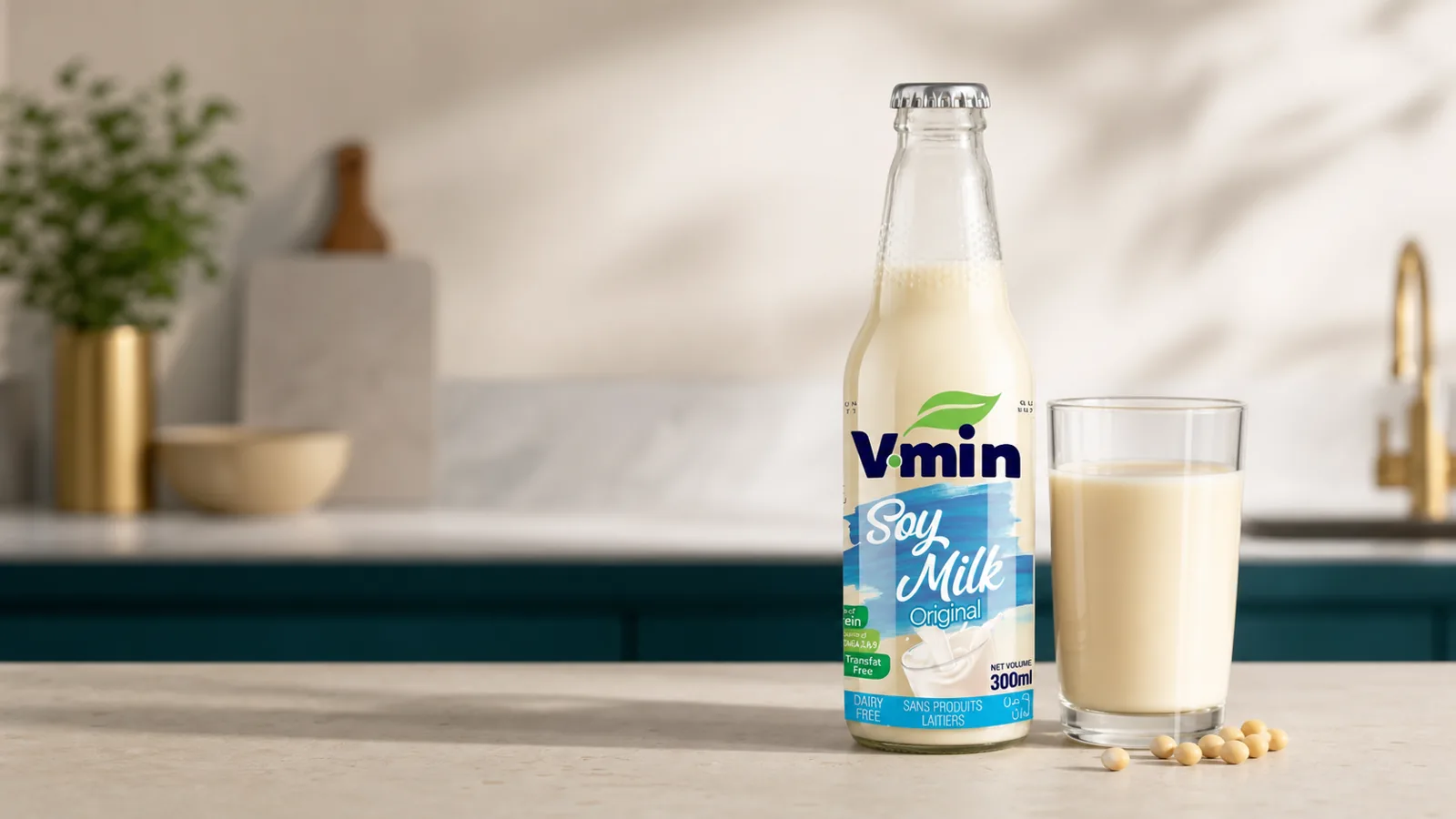
Within our own portfolio, a brand like V-Min sits inside this shifting category landscape, and it is a useful example of why label literacy matters on both sides of the counter. We are not asserting any certification status for V-Min or any product here. The point is a broader one: as more brands enter this space, the words on the front of pack need to match the ingredient list on the back, whichever brand is printing them.
What's more, retailers themselves are becoming more attentive to this gap. Modern trade buyers increasingly ask brands to substantiate plant based, vegan, or dairy free claims as a condition of listing, not as an afterthought. That shift benefits brands that have already done the documentation work and puts pressure on those that have treated these words as free marketing real estate.
Plant-Based Claims on E-commerce and Quick Commerce Listings
A physical shelf label is only half the picture now. A growing share of plant-based and vegan purchases in the UAE happen through Amazon.ae, Noon, and quick-commerce apps, where the shopper never sees the physical pack before checkout. That raises the stakes on the digital listing itself, because the product title, the bullet points, and the listed ingredients are doing the job the front-of-pack claim would normally do in a store aisle.
A listing that says "plant based" in the title but does not carry the same ingredient declaration as the physical pack creates a mismatch the moment a customer receives the item and checks the box against what they read online. Marketplace platforms are also running their own checks on dietary and allergen claims. An inconsistency between listing copy and physical packaging can escalate all the way to a takedown or a suspended listing, well beyond a customer complaint.
For brands selling through both retail and e-commerce channels, this means the same discipline applied to physical packaging needs to extend to every digital listing, updated at the same time the physical label changes. If a vegan claim changes on pack after a formulation tweak, every marketplace listing carrying that product needs the same update, not only the shelf version.
A Practical Checklist Before a Claim Goes on Pack
Before any of these four words, plant based, vegan, dairy free, or lactose free, goes to print, a brand should be able to answer each of the following without hesitation.
- Does the full ingredient list, including trace additives, actually support the claim being made?
- Has the production line been assessed for cross-contact risk, and does the allergen statement reflect that assessment accurately?
- If a vegan logo is used, is it traceable to a named scheme with a documented scope, rather than a generic graphic?
- Is the Arabic label text consistent with the English text, particularly on ingredient and allergen wording?
- Has the claim been checked against the specific requirements of the market it is entering, rather than copied from packaging designed for a different country?
Sound complicated? It is more paperwork than most brands expect, but the process itself is straightforward once the documentation exists. The harder part is building that documentation early, rather than reconstructing it after a retailer or regulator asks a question the brand cannot immediately answer.
What HORECA Buyers Need That Retail Shoppers Do Not
Hotels, restaurants, catering companies, and cloud kitchens buy plant-based and vegan ingredients differently than a retail shopper does, and the label needs to work harder for them. A chef building a menu around a dairy-free or vegan dish needs more than a front-of-pack phrase. They are building a written declaration for their own guests, often for a banquet order or a hotel menu that lists every dish's dietary status against a set of standard categories.
That means a HORECA buyer needs the full ingredient breakdown, the allergen statement, and, where relevant, the specific vegan or dairy-free scope of any certification mark. The marketing phrase on the case label is a starting point, not the answer. A caterer serving a mixed banquet with vegan, dairy-free, and standard menu items side by side is relying on that documentation to keep dishes correctly labelled at the point of service, where a mistake reaches a guest directly rather than sitting on a shelf waiting to be picked up or left behind.
For a distributor, this means the paperwork trail that supports a plant-based or vegan claim needs to be available on request, not buried in a supplier's original country-of-origin documentation. A sales team fielding a call from a hotel purchasing manager should be able to produce the ingredient declaration and allergen statement for a case of product within the same working day, not after a week of chasing a manufacturer.
Key Takeaways
- Plant based describes ingredient origin only. It does not automatically mean vegan or free of dairy traces.
- A vegan claim rules out all animal-derived ingredients but is usually paired with a separate allergen statement covering shared-line cross-contact.
- Dairy free means no milk components at all. Lactose free means the milk sugar has been addressed, but milk protein may remain.
- A vegan logo reflects one specific external scheme's criteria. It is not a nutrition or health claim, and different schemes cover different scope.
- UAE labelling frameworks require ingredient accuracy and consistent Arabic and English text, regardless of which marketing phrase a brand chooses.
- "May contain" statements remain necessary even on plant-based or vegan products if a shared production line carries cross-contact risk.
Reading a label carefully takes a minute. Building plant based food labels that hold up under review takes considerably longer, and that is where the real value sits. The brands that get this right treat their label copy as a living document, updated the moment a supplier changes an ingredient, a facility adds a new line, or a claim moves into a new export market, rather than a fixed piece of artwork approved once and left untouched for years. Brands that treat plant based, vegan, and dairy free as precise technical claims, not interchangeable marketing words, are the ones whose packaging survives a retailer audit without a reprint or a delisting notice. If your team is bringing a plant-based or dairy-free product into the UAE and wants a straight conversation about labelling, listing, and distribution, you can browse more of our thinking on the Bagason blog or reach out directly through our contact page. You can also learn more about how we work across the supply chain on our homepage.
Frequently asked questions
Does "plant based" automatically mean a product is vegan?
Not necessarily. Plant based describes where the ingredients come from, not whether every trace of animal material has been excluded. A product can be made entirely from plant ingredients and still carry a "may contain milk or egg" warning if it shares a production line with a dairy or egg product. Vegan is a separate, stricter claim that covers the full ingredient list.
What is the real difference between dairy free and lactose free?
Dairy free means the product has no milk-derived ingredients at all, including milk protein. Lactose free means the lactose sugar in milk has been removed or broken down, usually with an added enzyme, but milk protein may still be present. The two terms address different concerns and are not interchangeable on a label.
What does a vegan logo on a package actually certify?
A vegan logo shows that a specific external scheme has reviewed the product's ingredients against that scheme's own defined vegan standard. Different schemes cover different scope, and some also assess manufacturing practices around cross-contact while others focus on the recipe alone. It is not a nutrition or health claim.
Why do plant-based products still carry "may contain" allergen warnings?
These warnings reflect production-line risk, not the recipe itself. A plant-based or vegan product can be free of animal ingredients on paper and still be made on shared equipment that also processes dairy, egg, or nuts. The allergen statement exists to flag that trace cross-contact risk separately from the ingredient claim on the front of pack.
Do plant-based labelling rules differ across UAE and GCC markets?
Yes, in practical terms. GCC states share a common standards framework, but each market applies its own review at the point of entry. A label accepted in the UAE is not automatically cleared for Saudi Arabia, Oman, Kuwait, Bahrain, or Qatar without its own check, so brands exporting across the region need documentation built to the strictest applicable standard from the start.
Should a retail buyer accept a vegan or dairy-free claim without further checks?
A careful buyer usually asks for the full ingredient declaration and the allergen statement before listing a new SKU, rather than accepting the front-of-pack claim alone. This confirms the claim matches the actual formulation and that Arabic and English label text agree, which protects both the retailer and the shopper.