By eleven in the morning in late June, the air over Dubai Marina shimmers like the surface of a hot pan, and the sensible thing is to stay indoors until the sun loses its temper. Yet the doorbell still rings. A cousin passing through Deira drops by unannounced. The neighbours from two villas down text that they will swing past after Maghrib prayers. A WhatsApp group decides, at four in the afternoon, that everyone should gather at your place tonight because your majlis has the best air conditioning on the street. This is Gulf hospitality in high summer, and it does not pause because the thermometer reads 46 degrees. What changes is not whether you host, but how. The kitchen stops being a place where you stand over a flame and becomes a staging area where you assemble, chill, pour and present. The host who has stocked well in advance answers the door relaxed, with a tray of something cold already in hand. The host who has not is the one apologising and scrolling for a grocery delivery slot that says ninety minutes.
This guide is about being the first host. It is a practical, deeply stocked approach to summer entertaining pantry staples UAE households actually rely on, built around the reality of the season: brutal heat, sticky coastal humidity, drop-in guests, and a calendar that runs from Eid al-Adha lunches through long, late-evening gatherings that only start once the worst of the day has burned off. Get the cupboard, the fridge and the drinks shelf right once, and you can feed six people or twenty without leaving the house at noon. The whole point is to buy deep and buy smart, so that hospitality becomes a matter of opening a few jars rather than starting a shopping expedition every time the doorbell goes.
Why Summer Entertaining in the Gulf Is Its Own Discipline
Hosting in a temperate climate and hosting in the Gulf in August are not the same skill. In a mild country you can preheat an oven, roast for an hour, and the kitchen warms pleasantly. Do that here in peak summer and you turn your home into a sauna, fight your air conditioning to a draw, and arrive at the table sweating before a single guest does. The smart summer host inverts the logic: the less you cook, the better the gathering. Cold, assembled, make-ahead food is not a compromise in a Gulf July. It is the superior strategy, and it always has been.
The heat-and-humidity math behind a no-cook summer menu
Peak UAE summer regularly pushes past 45 degrees in the shade, and along the coast from Abu Dhabi up through Dubai to Sharjah and Ras Al Khaimah, the humidity climbs with it. Relative humidity above 70 per cent is common on a July night near the water, and when the air is that saturated, sweat cannot evaporate, so your body cannot cool itself the way it does in the dry desert interior. The 2026 season is forecast to arrive early and run hot, which only sharpens the calculation. That combination of heat and moisture does two things to your hosting plan. First, it makes any time spent at a hot stove genuinely unpleasant, for you and for the room. Second, and more seriously, it shortens the safe life of food left out at room temperature, because warm, humid air is exactly what bacteria want.
So the menu reorganises itself around cold and assembled dishes. Think marinated salads that improve as they sit, dips built from yoghurt and pulses, platters of cured and pickled things, chilled grains and noodles, fruit cut at the last minute. The oven stays off, or fires up only briefly in the cool of the morning for one make-ahead component. Everything else is a matter of combining good ingredients you already own. This is where a serious pantry earns its keep: when the cooking is reduced to assembly, the quality of what you have on the shelf becomes the quality of the meal.
Reading the Gulf entertaining calendar: Eid, late summer evenings and weekend majlis
The summer hosting calendar in the Emirates has a distinct shape, and stocking well means stocking for its peaks. Eid al-Adha lands in the hot months and brings the biggest family meals of the season, often a generous lunch with extended family, where meat is central but the supporting cast of rice, salads, breads and sweets does the heavy lifting around it. Then there is the everyday rhythm of the majlis, the reception room where Gulf hospitality has always happened, where guests may arrive with little warning and the unwritten rule is that no one leaves without being fed and watered. And there are the late-evening gatherings that define a Gulf summer socially: people simply do not gather outdoors at six in the evening when it is still 44 degrees. They come at nine, ten, eleven, once the sun is long down and the air has dropped to something survivable, and they stay late.
Each of these patterns rewards a deep pantry over a daily grocery run. Nobody wants to drive to a hypermarket at midday in peak heat, and delivery slots tighten exactly when everyone else has the same idea. The household that has bought its staples in volume, ahead of demand, is the one that can say yes to a last-minute Thursday-night gathering without flinching. The discipline of summer entertaining, then, is mostly the discipline of preparation: read your own calendar, anticipate the drop-ins, and have the cupboard ready before the season peaks.
A Short History of Cooling the Body in Gulf Kitchens
The instinct to eat and drink your way to a lower body temperature is not a modern wellness trend in this region. It is ancient, practical knowledge, refined over centuries in a climate that has always been merciless in summer. Long before refrigeration, kitchens across the Gulf, the Levant and the wider Arab world developed an entire repertoire of cooling foods and drinks. Understanding that lineage makes the modern pantry feel less like a shopping list and more like an inheritance.
From sharbat and qamar al-din to the bottled cordials on every baqala shelf
Sharbat, the sweet, fragrant cordials scented with rose, lemon, tamarind or fruit, are some of the oldest cooling drinks in the Arab world. Diluted with cold water, they were the original way to make plain water inviting and to deliver a quick lift of sugar to a body wilting in the heat. Rose-scented syrup in particular runs deep through Gulf and South Asian summer drinking, and you can taste that heritage today in a glass of pink, milky cooler at any Ramadan table. Qamar al-din, the burnished apricot leather pressed into sheets, is another piece of this history: dried in the sun when apricots glut in season, then soaked back into a thick, tangy nectar months later, most famously to break the fast in Ramadan. These were preservation technologies as much as treats, ways of capturing fruit at its peak and carrying its sugars and acids through the long hot months.
That tradition flows directly into the bottles lined up on every baqala shelf today. Vimto, the dark, spiced berry cordial, became a genuine Gulf summer and Ramadan icon, poured long and cold across the region in quantities that spike dramatically every holy month. Rooh Afza, the brilliant-red rose syrup beloved across South Asia and the Gulf, does the same job sharbat always did, stirred into chilled water or milk for an instant cooling drink. These are not foreign impositions on local taste; they are the industrial, shelf-stable descendants of a cooling-cordial culture that predates them by centuries. Stocking a couple of bottles is stocking a piece of the region's summer memory, ready to dilute at a moment's notice when guests arrive.
Why fermented and cultured dairy earned a permanent place in the Gulf fridge
If cordials are the sweet side of cooling, cultured dairy is the savoury backbone. Laban, the salted, slightly sour cultured milk or thinned yoghurt drink, and ayran, its close Turkish and Levantine cousin, have been beating the heat in Bedouin and regional kitchens for generations. The logic is sound long before anyone measured it in a lab: yoghurt-based drinks deliver fluid, a little salt, protein and live cultures, which together rehydrate and settle the stomach better than a sugary fizzy drink does on a scorching day. They were portable, they kept reasonably well in the form of strained labneh and dried yoghurt balls, and they tasted of relief.
That is why the Gulf fridge today almost always holds a carton of laban or ayran, and a tub of yoghurt destined to become labneh, raita or a salted mint lassi. Cultured dairy is the region's everyday electrolyte fix, the thing you reach for after a walk from the car park to the front door has left you damp. For a summer host, it is also one of the most useful ingredients in the kitchen, because the same tub of thick yoghurt becomes a cooling drink, a dip, a salad dressing and a dessert base depending on what you add to it. Few things earn their fridge space as efficiently.
Building the Summer Pantry: The Non-Negotiable Staples
A summer pantry built for entertaining is not glamorous, but it is the engine room of every easy gathering you will host. The principle is simple: keep on hand the shelf-stable building blocks that combine, with only a short fresh top-up, into a full table. When the bones of the meal already live in your cupboard, hosting stops being a project and becomes an afternoon's pleasant assembly. These are the GCC kitchen essentials that do the most work for the least effort.
Grains, pulses and tinned proteins that assemble into a meal in minutes
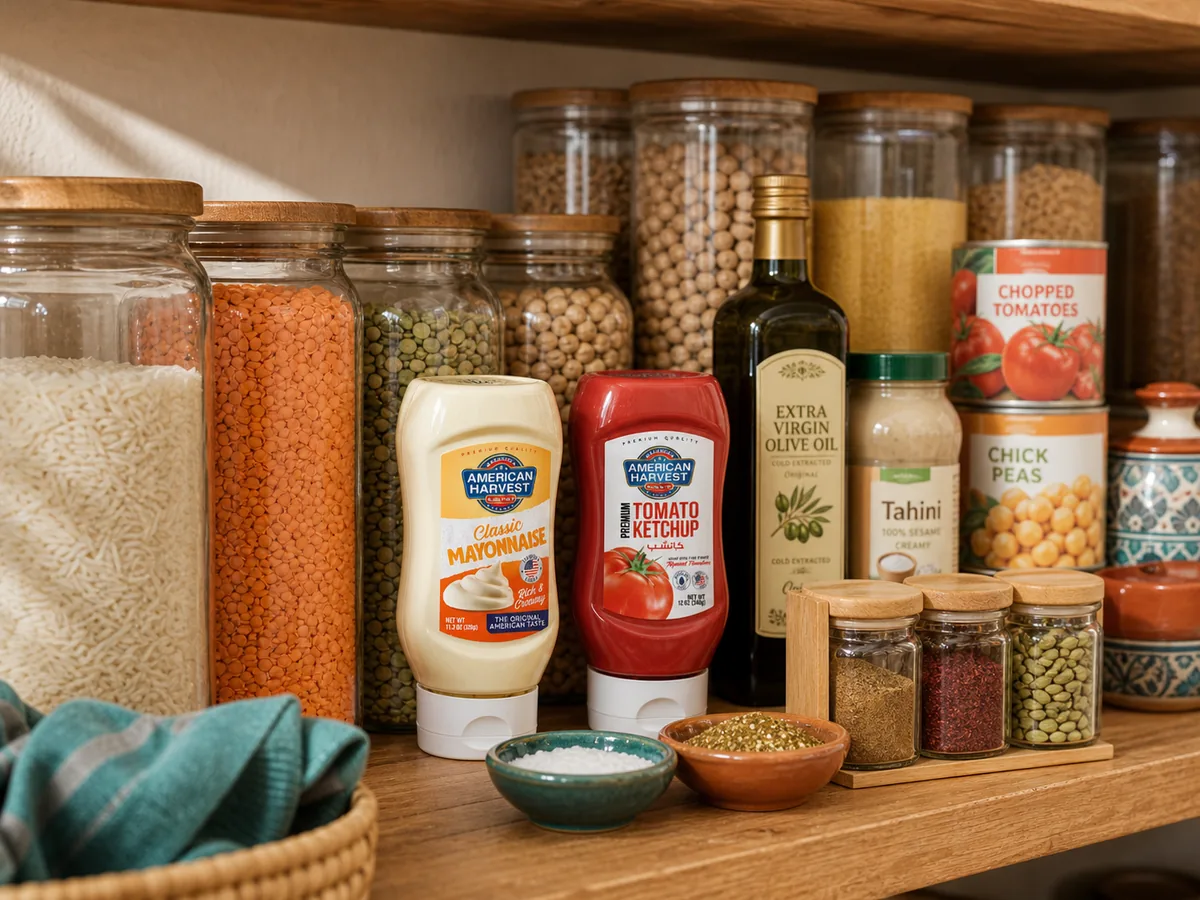
Start with the carbohydrates that anchor a Gulf table. Basmati rice is non-negotiable, and parboiled rice alongside it gives you a forgiving, separate-grained option for biryani-style dishes and big-batch cooking that holds well. Keep couscous and bulgur too, because both rehydrate or steam in minutes with no real cooking, which makes them ideal summer bases. Bulgur soaked in cold water and lemon becomes tabbouleh; couscous fluffed with olive oil and herbs becomes a chilled salad that feeds a crowd from almost nothing.
Then the pulses, which are the quiet heroes of fast hot-weather entertaining. Chickpeas and lentils in both dry and tinned forms cover every situation: dry for when you have planned ahead and want to cook a big batch cheaply, tinned for when guests are an hour away and you need hummus, a chickpea salad or a lentil dip right now. A few tins of chickpeas, a jar of tahini and a lemon are quite literally hummus in five minutes, and hummus is the most reliable crowd-pleaser in the regional repertoire. Red lentils collapse into a smooth dip or soup base; brown and green lentils hold their shape for a pomegranate-flecked salad. Round out the shelf with good tinned tomatoes for the cooked components you do make ahead, and tinned proteins such as tuna and beans that turn a salad into a meal without a stove. These best pantry staples for hot weather share one quality: they go from cupboard to plate without ever heating the kitchen for long.
Spices, oils and acids: the flavour backbone that survives the heat
A tight, well-chosen spice rack is what separates a bland summer spread from one guests remember. You do not need fifty jars; you need the right dozen kept fresh. Cumin, coriander, sumac, za'atar, paprika, turmeric, cardamom, cinnamon and a good chilli cover most of what a Gulf and Levantine summer table demands. Sumac and za'atar in particular are heat-season workhorses, their tart, herby brightness lifting labneh, salads and breads without any cooking at all. Dukkah, the Egyptian blend of toasted nuts, seeds and spices, deserves a permanent jar; scattered over a dip with good olive oil it turns three ingredients into something that looks considered.
Oils and acids are the other half of the flavour backbone. A decent extra virgin olive oil is the single most-used ingredient in a no-cook summer kitchen, dressing every salad and finishing every dip, so buy a quality one and a more neutral oil for volume. Acids are what make hot-weather food taste alive: keep lemons fresh, but back them with a good vinegar or two, because acidity cuts through richness, brightens heavy dips and, not incidentally, helps season food so you reach for less salt. Tahini sits in this group as both fat and flavour, the base of dressings and dips across the region. With a strong spice rack, a fine oil and a couple of acids, almost anything you assemble from the pantry tastes finished rather than thrown together.
Humidity-proof storage so your pantry lasts the whole summer
Buying deep only pays off if your stock survives the season, and Gulf summer humidity is the enemy of a well-stocked cupboard. Moisture in the air is what turns crisp things soft, clumps your salt and spices, and accelerates the slow turn of fats toward rancidity. The defence is straightforward but worth taking seriously. Decant flour, rice, pulses, sugar and spices into airtight containers the moment they come home, rather than leaving them in their porous paper and cardboard, which draw in humidity and invite pantry pests in a warm kitchen.
Treat your fats with particular care, because they are the things most likely to spoil quietly. Nuts, seeds, dukkah, wholegrain flours and good oils all go rancid faster in heat, and rancidity is a flavour you will taste across a whole dish before you can name it. Keep nuts and seeds in the fridge or even the freezer through the hottest months, store oils away from the window and the hob, and buy them in sizes you will actually finish rather than enormous tins that turn before you reach the bottom. Finally, rotate. Bring older stock to the front, label the month you opened things, and run a quick monthly check so nothing lurks at the back going off. A pantry managed this way will carry you confidently from the first hot week through to autumn, ready for every drop-in guest the season sends. Sourcing those staples from trusted, well-distributed brands matters here too, because a product that has been stored and shipped properly before it reaches you starts its shelf life in far better shape, and you can explore the kind of dependable pantry and spice ranges that make this possible through %the brands behind your favourite Gulf pantry staples%.
The Cooling-Drinks Station: Beyond Just Water
If there is one area where a Gulf summer host should over-invest, it is drinks. In this heat, what you pour matters as much as what you serve, and a thoughtful drinks station does more than quench thirst; it genuinely helps your guests cope with the temperature. The smart approach is to build the offering in tiers, so there is something for everyone and a real hydration strategy underneath the hospitality. Cooling drinks for UAE summer fall naturally into three groups: the genuine hydration heroes, the nostalgic cordials, and the cultured-dairy classics.
Hydration heroes: infused water, coconut water and watermelon coolers
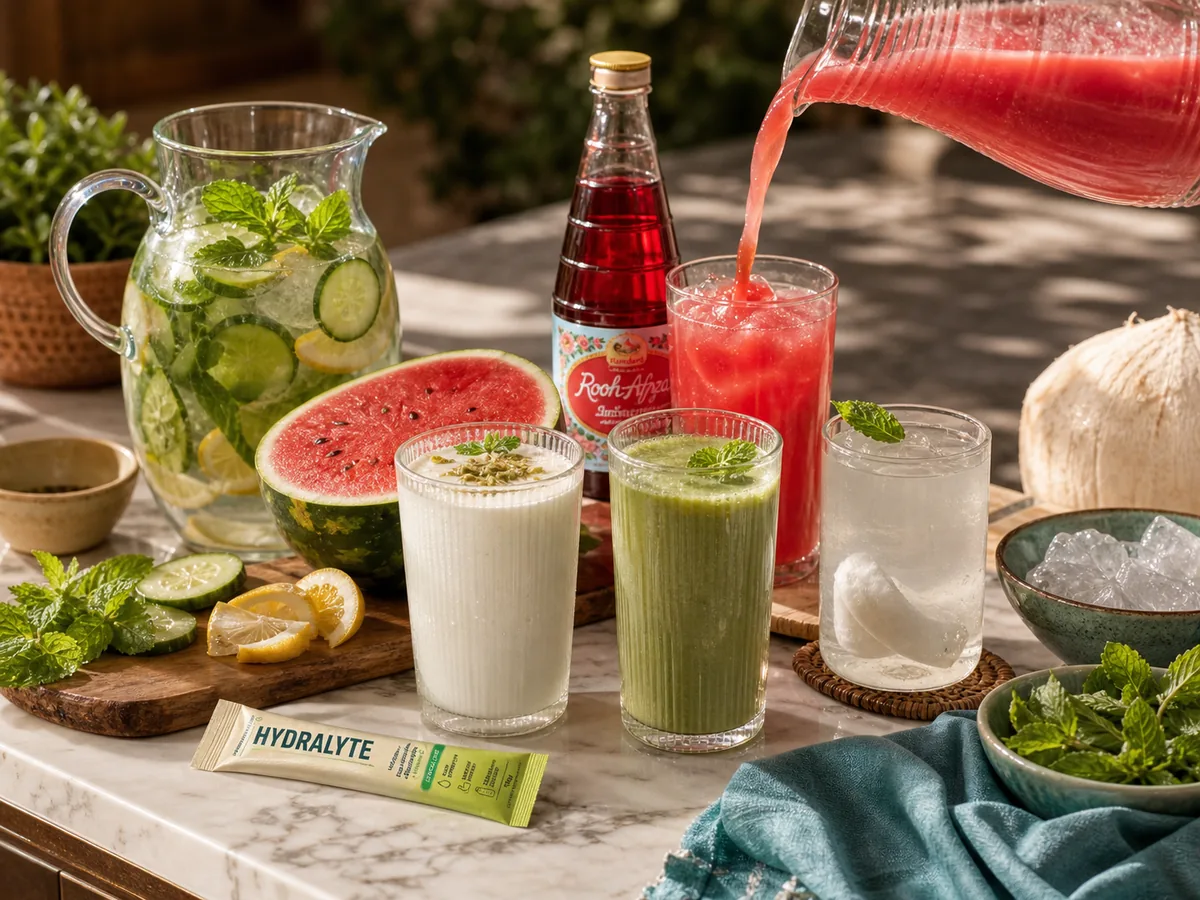
Plain water is the foundation, but few people drink enough of it when it is dull, so make it inviting. A large jug of cold water infused with mint, sliced lemon and ribbons of cucumber disappears far faster than the same water served plain, and it costs almost nothing from the pantry and the crisper drawer. Set it out the moment guests arrive, before anything sweet, because the first job of the drinks station in 45-degree heat is rehydration, not indulgence.
Coconut water is the next layer, and it earns its place on merit. It delivers potassium and other natural electrolytes that help the body hold on to fluid, which is exactly what you need on a humid day when you are losing salts through sweat. Watermelon is the other great summer rehydrator, roughly 92 per cent water by weight and naturally sweet, so a jug of blended watermelon, a squeeze of lime and a tiny pinch of salt makes a cooler that rehydrates a guest faster and more pleasantly than a sugary soda ever could. That pinch of salt is the quiet trick: a little sodium alongside the fluid and the fruit sugars helps the body absorb and retain water rather than flushing it straight through, which is why a salted watermelon or citrus cooler genuinely outperforms a can of fizzy drink on the hottest days. Build this hydration tier first, and your guests will feel lighter and brighter for it.
Nostalgia in a glass: Vimto, Rooh Afza and rose sharbat done right
Once hydration is handled, you can lean into pleasure and memory, and nothing does that in a Gulf summer like the classic cordials. Vimto and Rooh Afza summer drinks carry a weight of association no new product can match; for many across the Emirates they taste of Ramadan evenings and childhood gatherings. The key with both is restraint and cold. Diluted long, well over ice, with plenty of chilled water, they are refreshing; poured thick and syrupy they are cloying and do little to cool anyone down. A good rule is to make them more dilute than the bottle suggests and serve them genuinely cold, garnished with mint or a wheel of lemon so they feel composed rather than merely sweet.
Rose sharbat done well sits in the same family and deserves a place at any majlis. Stirred into icy water it is a clear, perfumed cooler; stirred into cold milk it becomes the pink, fragrant drink that signals celebration across the region. Keep the sweetness in check, serve everything over plenty of ice, and these nostalgic cordials become the drinks guests remember, without leaving them sluggish. The skill is balance: enough sweetness to delight, enough dilution and chill to genuinely refresh.
Laban, ayran and lassi: the savoury cooling drinks Gulf hosts swear by
The third tier is the one experienced Gulf hosts never skip, because it does something the sweet drinks cannot. Laban and ayran, the salted cultured-milk drinks, and a salted mint lassi blended from thick yoghurt, cold water, a little salt and a handful of mint, are savoury, protein-rich and genuinely restorative. After a heavy Eid lunch or alongside spiced food, a cold salted lassi settles the stomach and cools the palate in a way no cordial manages. The salt and the live cultures, with the fluid, make these closer to a natural rehydration drink than a treat.
For a host, they are also effortless to scale. A large jug of ayran is yoghurt, cold water, salt and a whisk; a batch of mint lassi is the same with herbs and a blender. Set them out beside the sweet coolers and the infused water, and your drinks station now covers every need at the table: pure hydration, nostalgic indulgence and savoury restoration. That range is what separates a host who hands out warm bottles from the fridge door from one whose guests linger, because there is always something cold and right for the moment. Building a drinks shelf this considered is its own small act of hospitality, and it leans heavily on the hydration and dairy ranges that keep Gulf fridges stocked through the worst of the heat, the kind of reliable supply chain explained in %what Bagason does across the FMCG supply chain%.
Building the Summer Pantry: The Non-Negotiable Staples
A deep pantry is the difference between hosting with ease and dreading the doorbell. When the afternoon hits 46C and the car feels like a tandoor the moment you open the door, the last thing any Gulf host wants is a midday dash to the hypermarket for a forgotten bag of rice. The smart play is to build a shelf-stable core once, top it up with a short fresh shop, and assemble meals from there. These are the summer entertaining pantry staples UAE kitchens lean on hardest, and getting them right means almost every gathering can come together without lighting the stove.
Grains, pulses and tinned proteins that assemble into a meal in minutes
Start with rice, because no Gulf table feels complete without it. Keep two types on hand: a long-grain basmati for biryani, machboos and pilaf, and a parboiled or easy-cook variety that holds its shape in cold rice salads. A bag of each, stored properly, carries you through weeks of hosting. Couscous and bulgur earn their shelf space for a different reason entirely. Couscous swells in five minutes off boiled water you can cool quickly, and bulgur is the backbone of tabbouleh, the salad that anchors half the mezze spreads in the region. Both turn a fresh-herb haul into a platter without a single burner running for more than a kettle's worth of time.
Pulses do the heaviest lifting in a no-cook summer. Tinned chickpeas blitz straight into hummus; drained and tossed with lemon, parsley and pomegranate seeds, they become a salad that feeds a crowd. Tinned white beans, brown lentils and black-eyed peas all rinse, dress and serve cold. Keep the dry versions too for the cooler evenings when you do feel like a slow-simmered dal or a pot of foul medames bubbling for an Eid breakfast. Tinned tuna, sardines and a tin or two of cooked corn round out the protein shelf, ready to scatter across a salad or build a quick sandwich filling for guests who turn up hungry after the heat breaks.
Round the grain shelf out with good tinned tomatoes, which are non-negotiable. Whole peeled and chopped tomatoes form the base of a shakshuka for late-evening guests, a quick sauce, or a chilled gazpacho-style soup that suits the climate far better than anything served hot. A jar of passata and a tube of tomato paste give you depth without effort.
Spices, oils and acids: the flavour backbone that survives the heat
A tight, well-chosen spice rack outperforms a sprawling one, especially in the humidity, where half-used jars go stale and clump. Keep the Gulf workhorses fresh and in rotation: cumin, coriander, turmeric, a good baharat blend, sumac for that tart red dusting over fattoush and hummus, and za'atar for flatbreads and labneh. Dried mint deserves its own jar because it lifts laban, soups and salads when fresh runs out. A jar of whole cardamom and a stick or two of cinnamon keep your Arabic coffee and rice dishes properly perfumed. Chilli flakes and a smoky paprika cover the heat-seekers at the table.
Oils and acids are the dressing on everything you assemble. A solid extra-virgin olive oil for finishing and dressing, plus a neutral oil for cooking, covers the fats. On the acid side, keep lemon (fresh always, but bottled juice as backup), a good red wine or apple cider vinegar, and pomegranate molasses, that thick, tangy-sweet syrup that makes a salad dressing sing and glazes a tray of vegetables in seconds. Tahini sits between pantry and fridge in importance: it builds hummus, thins into a dressing with lemon and water, and turns into a quick sauce for grilled or raw vegetables. Add a jar of marinated olives, some capers and a tub of good sea salt, and the flavour backbone of a dozen dishes is already in the cupboard.
Humidity-proof storage so your pantry lasts the whole summer
Gulf humidity is the silent enemy of a stocked pantry. Coastal homes in Dubai, Sharjah and Abu Dhabi pull moisture into open packets within days, and warm cupboards turn nuts and flours rancid faster than most people expect. The fix is simple and cheap: airtight glass or hard-plastic containers for everything decanted from its original bag. Flour, rice, pulses, sugar, oats and spices all belong in sealed jars the moment the packet is opened. Keep nuts, seeds and any wholegrain flour in the fridge or freezer through the hottest months, because their natural oils turn quickly at room temperature in this climate.
Store oils away from the window and the cooker, where light and heat speed up spoilage. Rotate stock the way a baqala does, newest to the back, oldest to the front, so nothing sits forgotten until it turns. A quick monthly check of best-before dates keeps the whole system honest. Treat your pantry as a working store cupboard rather than a graveyard, and it carries you cleanly from the first heatwave to the first cool night of autumn.
The Cooling-Drinks Station: Beyond Just Water
Drinks are where Gulf hosting earns its reputation. A jug of water alone never feels like hospitality here, and on a genuine 45C day, plain water often is not even the most effective way to keep guests comfortable. A proper cooling-drinks station works in tiers: hydration heroes that genuinely rehydrate, nostalgic cordials that carry decades of memory, and cultured dairy drinks that cool and nourish at once. Set them out together and you have covered every guest from the toddler to the grandmother fasting through a late Eid afternoon. Building a strong line-up of cooling drinks for UAE summer is the single highest-impact move a host can make.
Hydration heroes: infused water, coconut water and watermelon coolers
Begin with water made worth drinking. A large jug filled with cold water, sliced cucumber, a handful of mint and a few rounds of lemon transforms the most ordinary drink into something guests actually reach for. Vary it with orange and rosemary, or strawberry and basil, and you have an elegant, zero-sugar welcome that costs almost nothing. Coconut water is the natural electrolyte star of the GCC summer, rich in potassium and light enough to drink by the litre; serve it straight over ice or split it half-and-half with fresh lime for something brighter.
Watermelon is the season's gift. Blitz the flesh with a squeeze of lime and a tiny pinch of salt, strain if you like it smooth, and you have a watermelon cooler that does real rehydration work, watermelon coconut water electrolytes being one of the most effective natural combinations for heavy, sweaty Gulf afternoons. The fruit is more than ninety per cent water, naturally sweet, and pairs beautifully with mint or a crumble of feta on the side as a grazing bite. Freeze watermelon cubes to use as ice that does not water down the glass, and the drink stays as good at the bottom as it was at the top.
Nostalgia in a glass: Vimto and Rooh Afza done right
No Gulf summer drinks story is complete without the two cordials that define it. Vimto and Rooh Afza summer drinks are woven into the fabric of the region, and getting them right is mostly about restraint. Both are concentrates, and the common mistake is pouring them too strong and too sweet. Dilute long and cold: a modest splash of cordial to a tall glass, topped with chilled water or soda, plenty of ice, and a few mint leaves or a wedge of lemon. Vimto, the deep purple berry-and-spice cordial that became a Ramadan and Eid icon across the Emirates and the wider Gulf, mixes beautifully with sparkling water for a fizzy version that feels celebratory.
Rooh Afza, the rose-red syrup beloved across South Asian and Arab households alike, shines stirred into cold milk for a creamy, rose-scented cooler, or into water with chia seeds and basil seeds for the falooda-style drinks that vanish fast at a summer majlis. A homemade rose sharbat, rosewater, a little sugar syrup and cold water over ice, gives the same nostalgic hit with a lighter, cleaner finish. Set these out in glass jugs with the dilution already done, so guests pour a perfectly balanced glass rather than a syrupy one.
Laban, ayran and lassi: the savoury cooling drinks Gulf hosts swear by
For all the colour of the cordials, the cultured-dairy drinks are the ones seasoned Gulf hosts trust most on a brutal afternoon. Laban and ayran cooling drinks are the everyday electrolyte fix of the region for good reason: the salt, the protein and the live cultures together settle the stomach, replace what sweat strips out, and cool from the inside in a way sugar never can. Ayran is the simplest, plain yoghurt whisked with cold water and a pinch of salt, sometimes a little dried mint, poured frothy over ice. Laban, the cultured buttermilk on every baqala fridge shelf, needs nothing but a cold glass.
A salted mint lassi pushes the same idea sweeter or savoury depending on the table: yoghurt, cold water, a handful of mint, a pinch of salt or a spoon of sugar, blitzed until frothy. For a richer version, a mango lassi made with tinned alphonso pulp from the pantry bridges drink and dessert in one glass. These cultured drinks pair naturally with spiced, salty food, cutting through the heat of a biryani or the richness of a mezze spread, which is exactly why they belong on the same table as the crowd-pleasers below.
Easy Crowd-Pleasers That Need No Oven
The format that has taken over Gulf summer hosting is the assembled spread: lots of small things, almost nothing cooked, built to graze over a long evening rather than served as plated courses. It suits the climate, it suits drop-in hospitality, and it leans almost entirely on a well-stocked cupboard. These are the easy crowd-pleasers for gatherings that let a host stay cool, relaxed and out of the kitchen while guests help themselves.
The Gulf grazing table: dips, olives, dukkah and labneh
The grazing table is the centrepiece of 2026 summer hosting, and it is forgiving by design. Build it in layers. Start with dips, the part that does the most work for the least effort. Hummus from tinned chickpeas, mutabbal from a jar of roasted aubergine or a quick blitz, and whipped feta loosened with yoghurt and olive oil cover three textures in minutes. Labneh, that thick strained yoghurt at the heart of Levantine and Gulf tables, gets a drizzle of olive oil and a heavy dusting of za'atar or a scatter of dukkah, the toasted nut-and-seed blend that adds crunch and warmth to everything it touches.
Around the dips, arrange the things that need no cooking at all: marinated olives, jarred artichokes and sundried tomatoes, cubes of halloumi and feta, a wedge of a harder cheese, crackers, flatbread torn into shards, and bowls of toasted nuts. Add colour and freshness with cucumber spears, cherry tomatoes, radishes and grapes. Grazing table ideas UAE hosts return to year after year share one trait: most of the board comes straight from the pantry and fridge, with only the fresh produce bought that morning. The whole thing assembles in twenty minutes and holds beautifully across a long, slow evening.
Big-batch salads and mezze that hold up on a buffet
Where the grazing board handles the nibbling, big-batch salads turn the spread into a meal. Fattoush and tabbouleh are the obvious heroes, both built on pantry grains, dried herbs and store-cupboard acids, finished with whatever fresh herbs and vegetables you picked up. A chickpea and pomegranate salad, tinned chickpeas, parsley, spring onion, pomegranate seeds and a pomegranate-molasses dressing, holds its texture for hours on a buffet without wilting, which matters when food sits out in the warmth. A cold couscous bowl studded with dried apricots, toasted almonds and herbs scales up endlessly and only improves as the flavours settle.
Round out the mezze with the classics that define the regional table: hummus and mutabbal already on the board, plus a tray of stuffed vine leaves from a tin, a bowl of muhammara, and a platter of sliced tomatoes with sumac and onion. These no-cook recipes hot weather Gulf kitchens rely on share a quiet advantage over hot dishes: assembled cold food is both safer in the heat and more pleasant to eat when nobody wants anything steaming. Dress salads just before serving so they stay crisp, and keep a second batch of dressing aside to refresh anything that has been out a while.
Snacks and Sweet Bites for Drop-In Guests
Gulf hospitality runs on the unannounced visit. Someone passes by after Maghrib, a neighbour drops in, family arrives an hour earlier than expected, and a good host is never caught empty-handed. The answer is an always-ready snack drawer that needs zero preparation, the quiet insurance policy behind every relaxed majlis. This is the heart of majlis hosting food ideas: keep the cupboard ready, and you are never scrambling.
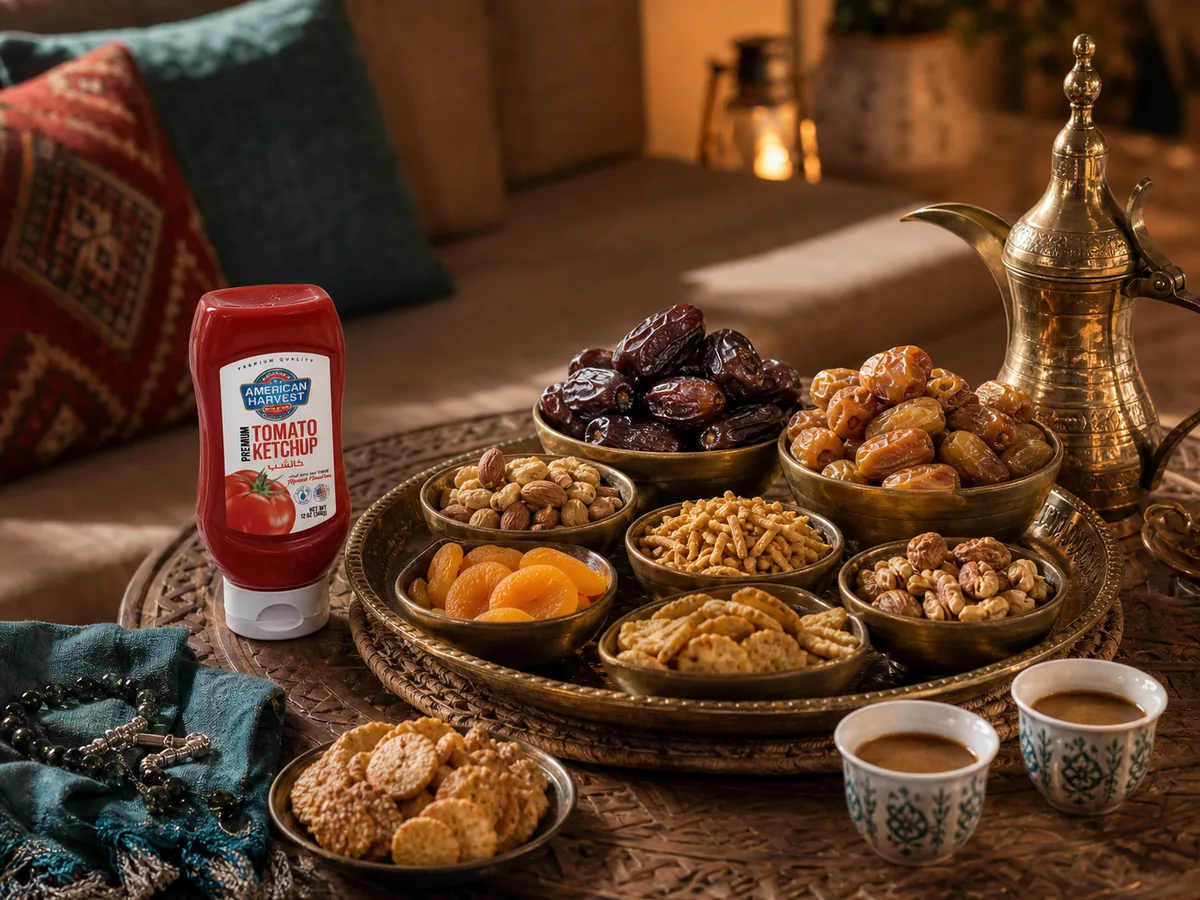
Stock the savoury side first, because it is what most guests reach for with coffee. Dates are essential, ideally a few varieties, served alongside Arabic coffee in the traditional way. Keep bowls' worth of mixed nuts, both salted and plain, and a selection of namkeen, the spiced Indian-subcontinent snack mixes that are a baqala staple across the Emirates. Add good crackers, a bag or two of quality crisps, and a jar of popcorn kernels that pop into a warm, shareable bowl in three minutes. Pretzels, roasted chickpeas and spiced seeds round out the savoury drawer with things that keep for months in sealed jars.
For something sweet without turning on the oven, lean on chilled fruit first: a platter of watermelon, melon, grapes and chilled mango is the lightest, most heat-appropriate dessert there is. Beyond fruit, keep the ingredients for quick assembled sweets. Rose-and-cardamom yoghurt cups, layered with crushed pistachio and a drizzle of honey, come together in minutes. Kunafa-inspired no-bake cups, built from toasted vermicelli, cream cheese and a rosewater syrup, give the flavour of the classic without the heat of baking. A bowl of dried fruit, dates stuffed with almonds, and a few squares of good dark chocolate served cold finish a majlis spread that feels generous without weighing anyone down.
Presentation matters more than effort here. Small bowls, a proper date platter, nuts in separate dishes rather than one big bowl, and sweets cut into bite-size portions all signal care and keep the grazing light. In the heat, lighter sweets win every time; nobody wants something heavy and rich when it is still thirty-plus degrees at ten in the evening. Keep the portions small, the flavours fresh, and the coffee hot, and a drop-in guest leaves feeling properly looked after.
A No-Cook Summer Menu You Can Build From the Pantry
Here is how it all comes together into one gathering, start to finish, with barely a burner involved. This is the proof of the buy-deep-once approach: nearly every component traces back to a stocked cupboard plus a short fresh-produce run the morning of. %where we reach shoppers across the UAE and wider GCC% shows the breadth of pantry, spice, snack and hydration ranges this kind of menu draws on, and it is worth a look when you plan your own seasonal stock-up.
The menu: a cooling-drinks welcome (a jug of cucumber-mint water, a jug of diluted Vimto, and cold laban on ice); a grazing board (hummus, whipped feta, labneh with za'atar, olives, dukkah, crackers and crudités); two big salads (fattoush and a chickpea-pomegranate salad); one chilled main (a cold couscous bowl with apricots, almonds and herbs, or a cold poached-chicken and tabbouleh platter); and a light dessert (chilled watermelon and melon with rose-cardamom yoghurt cups). It feeds a crowd, it photographs beautifully on the table, and it keeps the host out of a hot kitchen.
The make-ahead timeline: what to prep the night before
The night before, do the work that holds: soak and cook nothing you do not have to, but make the hummus, whip the feta, and stir the labneh with its oil and za'atar, then refrigerate covered. Cook the couscous, dress it lightly and chill it. Make the pomegranate-molasses dressing and the fattoush dressing in jars. Toast the nuts for the salads and the board. Dilute the cordials into their jugs and chill. Cut hardy vegetables like cucumber and carrot. The morning of, you are left with the fast, fresh jobs: chop tomatoes and herbs, assemble the salads, plate the board, slice the fruit, and fill the water jugs with ice. Thirty to forty minutes of morning assembly turns a night's quiet prep into a full spread, and the guest sees only the finished table.
Scaling the same menu from six guests to twenty
The beauty of an assembled menu is how cleanly it scales. For six, one batch of each component fills the table. For twenty, you are not cooking three times as hard, you are simply doubling or tripling the same recipes and adding a second board at the other end of the table so nobody queues. Salads scale linearly; just keep dressing them in batches so the last servings are as crisp as the first. Drinks scale by the jug, so make extra cordial concentrate and laban available in the fridge to refill. The only real change at scale is logistics: more bowls, a second serving point, and a cooler box of ice on standby. The recipes stay identical, which is exactly why a pantry-led menu beats anything that needs hot, timed cooking when the guest count is uncertain.
Nutrition and Food Safety When It Is 45C Outside
A buffet in Gulf summer heat carries real food-safety stakes, and a good host plans for them quietly rather than learning the hard way. The standard two-hour rule for food left at room temperature shrinks dramatically when the ambient temperature climbs above 32C, which an outdoor or even a warm indoor majlis easily reaches. In genuine extreme heat, treat one hour as the outer limit for anything perishable sitting out. After that, refrigerate it or let it go.
Keeping a buffet safe in extreme heat and humidity
The practical defences are simple. Keep dairy-based dips, labneh, yoghurt drinks and any protein on a bed of ice, nesting the serving bowls into a larger tray of crushed ice so they stay cold from below. Serve in small batches and refill from the fridge rather than setting out everything at once, so most of the food stays cold in reserve while only a portion sits exposed. This is where assembled cold dishes hold a clear edge over lukewarm cooked ones: a chickpea salad or a fresh dip starts cold and stays manageable, whereas a tray of cooked rice or meat that has cooled to room temperature sits squarely in the danger zone where bacteria multiply fastest. Wash hands and serving utensils, keep raw and ready-to-eat separate, and discard rather than re-chill anything that has been warm too long. Humidity makes spoilage faster and harder to spot, so when in doubt, throw it out.
Hydration, electrolytes and balancing sugar across the spread
The nutrition side of summer hosting is mostly about helping guests feel light rather than sluggish. Heavy sugar loads from cordials and sodas spike and crash, and they do less for genuine rehydration than people assume. Balance the drinks station so the hydration heroes, infused water, coconut water, watermelon coolers and salted laban, sit front and centre, with the sweet cordials as a treat rather than the only option. A pinch of salt and a squeeze of citrus in a water-based drink does more for someone who has been out in the heat than a sugary fizz alone, which is the quiet logic behind why hydration drinks UAE heat calls for lean on salt and fruit rather than sugar.
On the food side, the pulse-and-salad backbone of this menu does the nutritional heavy lifting: fibre and protein from chickpeas and lentils, water and potassium from watermelon and cucumber, healthy fats from olive oil, nuts and tahini. Keep the genuinely heavy, rich dishes to a minimum and let the fresh, cold, plant-forward food lead. Guests eat well, stay hydrated, and leave feeling refreshed rather than overfed, which is the whole point of getting summer entertaining right in this climate.
Smart Stocking: Buying Deep, Buying Once for the Season
The economics of a deep pantry favour the planner. The smartest Gulf shoppers buy their summer staples in advance, during the windows when prices fall hardest. Ramadan promotions are the obvious one: pantry staples, rice, oil, pulses, dates, and the full range of cordials and drinks see their deepest discounts in the run-up to and through the holy month, and a well-timed stock-up then carries a household well into summer. Seasonal back-to-school and mid-year sales offer a second window. The principle is to buy multipacks of long-life items, rice, tinned goods, oil, drinks concentrates, when they are cheap, and store them properly, rather than paying full price in small quantities through peak demand.
Where to buy: hypermarket bulk, baqala top-ups and seasonal promos
The Gulf shopper has a clear two-tier system, and using both well is the key to stocking pantry for summer Dubai households swear by. The hypermarket is for the bulk run: the big bags of rice, the cases of tinned tomatoes and pulses, the multipacks of cordial, the long-life cartons of coconut water and laban, all bought deep when the promotion is on. The baqala, the neighbourhood grocery on nearly every Emirates street corner, is for the top-up: the fresh herbs, the bread, the bag of mint, the carton of yoghurt, the last-minute drinks for guests who turned up unexpectedly. Lean on the hypermarket to build the base cheaply and the baqala to keep it fresh, and you rarely pay a premium or run short at the wrong moment. Watch the weekly promo leaflets and the app offers, and time the big shops to land when the best pantry staples for hot weather are at their lowest prices.
Brands and distribution: how the right products reach Gulf shelves
Behind every well-stocked baqala fridge and hypermarket aisle sits a distribution network most shoppers never see. The reason the cordial you grew up with, the tahini your mother used, and the snack mixes from back home are all reliably on the shelf through peak summer demand is that distributors keep them flowing. Bagason's work sits exactly here, connecting trusted brands across pantry essentials, spices, snacks and hydration to the Gulf shoppers who depend on them, so that a household stocking for a summer of entertaining finds what it needs in stock rather than out. Reliable distribution is the invisible half of a deep pantry: the staples only stay affordable and available because the supply behind them is steady. For brand owners who want their products on those Gulf shelves through the seasons that matter most, %partner with us to stock your shelves for the season% explains how that partnership works.
Your Summer Entertaining Checklist
Everything above condenses into one working checklist you can keep on the fridge door and tick through before each season and each gathering. Build it once, refill it as you go, and hosting through the hottest months stops being a scramble.
The staples cupboard: basmati and parboiled rice; couscous and bulgur; tinned chickpeas, white beans and lentils (plus dry for the cooler evenings); tinned tomatoes, passata and tomato paste; tinned tuna and sardines; tahini; extra-virgin and neutral oils; vinegar and pomegranate molasses; the core spice rack of cumin, coriander, turmeric, baharat, sumac, za'atar, dried mint, cardamom and cinnamon; olives, capers and good salt.
The cooling-drinks shelf: Vimto and Rooh Afza concentrates; rosewater for sharbat; long-life coconut water; cartons of laban and the yoghurt for ayran and lassi; lemons, limes, cucumber and mint for infusions; chia and basil seeds for falooda-style drinks; plenty of ice and a few trays of frozen watermelon cubes.
The grazing-board kit: jarred artichokes, sundried tomatoes and vine leaves; marinated olives; dukkah; crackers and flatbread; halloumi, feta and a hard cheese; nuts for toasting; honey; and the fresh crudités you buy the morning of.
The always-ready snack drawer: dates in two or three varieties; mixed nuts, salted and plain; namkeen and crisps; popcorn kernels; dried fruit; dark chocolate; and the Arabic coffee and cardamom to serve alongside.
Keep those four lists stocked, lean on the make-ahead timeline, and the hottest months of the Gulf calendar turn into the easiest hosting of the year. The heat sets the rules, but a deep pantry, a tiered drinks station and a table of cold, fresh, generous food mean you host on your own terms, calm in the kitchen while the gathering takes care of itself. Explore the pantry, spice, snack and hydration ranges that make it possible, stock smart once, and let summer entertaining become the part of the season you look forward to most.
Frequently Asked Questions
What are the most essential summer entertaining pantry staples for a UAE home?
Build around shelf-stable basics that assemble fast: basmati and parboiled rice, couscous and bulgur, tinned chickpeas and lentils, tinned tomatoes, tahini, olive oil, pomegranate molasses, and a tight spice rack of cumin, sumac, za'atar and baharat. Add cordials, coconut water and laban for drinks. These few categories let you build a full no-cook spread for guests with only a short fresh-produce top-up from the baqala the morning of.
What are the best cooling drinks to serve guests during a Gulf summer?
Work in tiers. For genuine rehydration, serve cucumber-mint infused water, coconut water and watermelon coolers with a pinch of salt. For nostalgia, dilute Vimto and Rooh Afza long and cold over ice. For everyday cooling, pour laban, ayran or salted mint lassi, which replace the salts and protein lost to sweat far better than sugary sodas. A mix of all three keeps every guest comfortable through a 45C-plus afternoon.
How do I keep a buffet safe when it is over 45C in the UAE?
The standard two-hour rule shrinks to roughly one hour in extreme Gulf heat. Nest dairy dips, yoghurt drinks and proteins in trays of crushed ice, serve in small batches, and refill from the fridge rather than setting everything out at once. Favour cold assembled dishes over lukewarm cooked food, which sits in the bacterial danger zone. When humidity makes spoilage hard to spot, discard anything that has been warm too long rather than re-chilling it.
When is the best time to stock up on pantry staples and drinks in the UAE?
Ramadan promotions bring the deepest discounts of the year on rice, oil, pulses, dates, cordials and long-life drinks, so the run-up to and through the holy month is the prime window. Mid-year and back-to-school sales offer a second chance. Buy multipacks of long-life items then, store them in airtight containers against humidity, and rotate stock oldest-to-front so you carry a cheap, deep pantry right through the peak summer entertaining season.
What no-cook dishes work best for a summer majlis or gathering?
A Gulf grazing table leads: hummus, mutabbal, whipped feta and labneh with za'atar, plus olives, dukkah, crackers and crudités, almost all from the pantry. Add big-batch salads like fattoush, tabbouleh and a chickpea-pomegranate salad that hold up on a buffet. Finish with chilled fruit and rose-cardamom yoghurt cups. Everything assembles cold in under an hour, scales easily from six guests to twenty, and keeps the host out of a hot kitchen.
How should I store pantry staples to survive Gulf humidity?
Decant everything from open packets into airtight glass or hard-plastic containers the moment they are opened, including flour, rice, pulses, sugar and spices. Keep nuts, seeds and wholegrain flours in the fridge or freezer through summer, since their oils turn rancid quickly in coastal warmth. Store oils away from light and the cooker, check best-before dates monthly, and rotate newest-to-back like a baqala so nothing sits forgotten and spoils before you use it.