The Critical Role of Cold Chain in UAE FMCG Distribution
When ambient temperatures in the UAE routinely exceed 45°C during summer months, the cold chain is not just a logistics feature — it is the foundation on which product quality and consumer safety rest. A single break in temperature control during storage, transport, or delivery can render products unsellable, unsafe, or both.
For brands entrusting their products to a UAE distributor, understanding what a robust cold chain looks like — and knowing which questions to ask — is essential to protecting both quality and reputation.
Understanding Temperature Zones in FMCG Warehousing
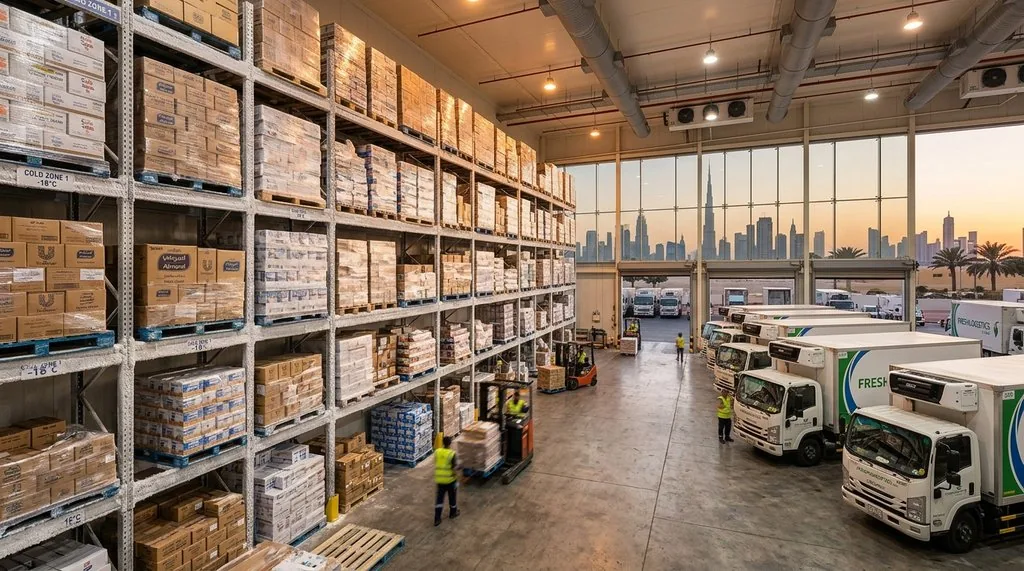
A professional FMCG warehouse in the UAE maintains distinct temperature zones for different product categories. Ambient storage, typically maintained at 25°C or below even when outside temperatures soar past 45°C, handles dry goods like canned foods, rice, pasta, snacks, and household products. These products do not require refrigeration but will degrade if stored in unconditioned spaces during summer.
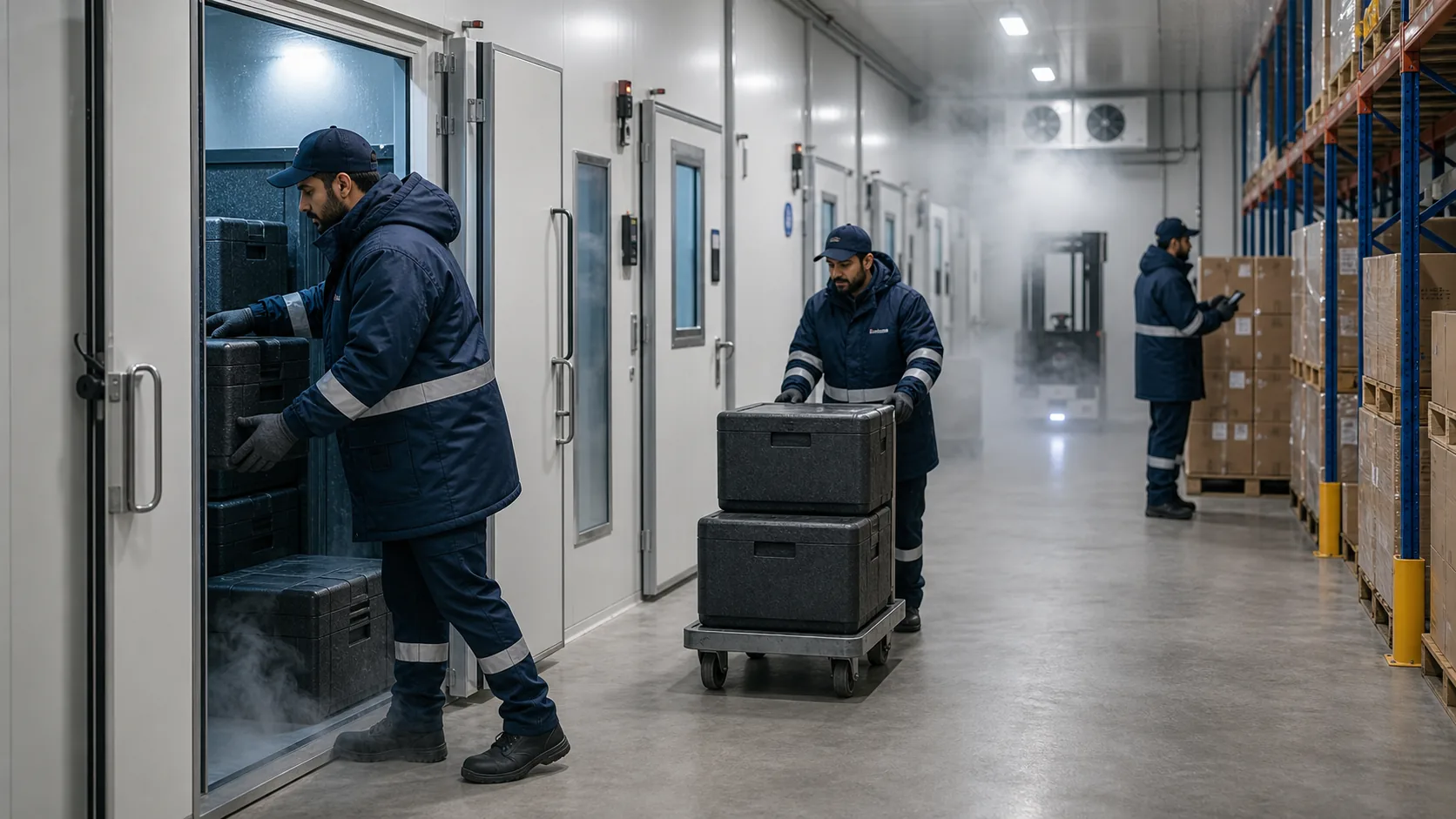
Chilled storage, maintained between 2°C and 8°C, handles dairy products, fresh juices, certain sauces, and other items requiring refrigeration. Frozen storage at -18°C or below handles ice cream, frozen meat, frozen vegetables, and ready meals. Each zone requires its own climate control systems, monitoring protocols, and handling procedures.
The Loading Dock: Where Cold Chains Break
The most vulnerable point in the cold chain is not the warehouse or the delivery truck — it is the transition between them. Loading docks in the UAE represent a critical juncture where products move from a controlled environment into extreme heat, even if only briefly. A pallet of dairy products sitting on an uncovered dock for 15 minutes in July can experience temperature excursions that compromise quality.
Best-practice distributors mitigate this through covered and enclosed loading bays that shield products from direct sun, rapid loading procedures with pre-cooled vehicles staged at dock doors, temperature monitoring at the point of transfer, and strict protocols that prevent products from dwelling on docks between warehouse pick and vehicle loading. At Bagason Group, our warehouse operations are designed to minimise exposure during these critical transition points, maintaining the integrity of temperature-sensitive products throughout the handling chain.
Temperature-Controlled Delivery Fleet
Getting products from warehouse to retailer in the UAE summer requires vehicles with reliable refrigeration units, insulated cargo compartments, temperature logging devices that record conditions throughout the journey, and route planning that minimises door openings and delivery times. Multi-temperature vehicles — with separate compartments for ambient, chilled, and frozen products — are increasingly common among leading distributors, allowing a single delivery run to service a retailer's complete order.
HACCP and Compliance Standards
HACCP (Hazard Analysis and Critical Control Points) certification is the international benchmark for food safety management, and it is a requirement for any serious food distribution operation in the UAE. A HACCP-compliant distributor has identified every point in their operation where food safety could be compromised, established controls and monitoring procedures at each point, documented corrective actions for when standards are not met, and maintains records that demonstrate ongoing compliance.
Beyond HACCP, Dubai Municipality and other local authorities conduct regular inspections of food handling facilities, and products can be recalled if temperature abuse is detected at any point in the supply chain.
What Brands Should Ask Their Distributor
When evaluating a distributor's cold chain capability, ask specific questions. What are the temperature specifications for each storage zone, and how are they monitored? What happens when a temperature excursion is detected — what is the escalation and corrective action procedure? Can you provide temperature logs for the last three months? What percentage of your delivery fleet is temperature-controlled? How do you handle product returns where temperature abuse is suspected?
A distributor who can answer these questions confidently and provide supporting documentation is one you can trust with your brand's reputation. If you need a distribution partner with proven cold chain capabilities in the UAE, we are happy to walk you through our facilities and protocols.
Frequently Asked Questions
Q: What temperature should a food warehouse maintain in the UAE during summer?
A: Ambient zones should remain at or below 25°C regardless of external conditions. Chilled zones maintain 2-8°C and frozen zones at -18°C or below. Temperature monitoring should be continuous with alarm systems for excursions beyond these ranges.
Q: Does the UAE have specific cold chain regulations for food distribution?
A: Yes. Dubai Municipality, ADFSA in Abu Dhabi, and other local authorities enforce food safety regulations that include temperature control requirements for storage and transport. These align with international Codex Alimentarius standards and require documented temperature monitoring throughout the supply chain.
Q: How can brands verify that their distributor maintains proper cold chain?
A: Request temperature monitoring records, HACCP certification documents, and third-party audit reports. The most reliable verification is an unannounced visit to the warehouse facility, where you can observe actual storage conditions and handling practices firsthand.
Sources and References
This article draws on publicly available government data, industry body reports, and Bagason Group operational experience. All figures are estimates and should be treated as directional.
- UAE Ministry of Economy — National economic indicators and trade data
- Dubai Chambers — Dubai Economic Report
- UAE Federal Competitiveness and Statistics Centre (FCSA) — Consumer spending and trade statistics
- Gulfood — Industry Insights and Market Reports
- UAE Ministry of Human Resources (MOHRE) — Labour and workplace regulations
- Bagason Group — Internal distribution operations and market coverage data