The UAE is one of the world's fastest-growing grocery e-commerce markets. Online food and grocery penetration in the UAE reached 12–15% of total grocery spend in 2025 — well ahead of most Western European markets — driven by high smartphone penetration, a young and tech-literate population, and the explosive growth of on-demand delivery platforms like Talabat*, Noon* Food, Careem Groceries, and Amazon Fresh UAE.
For FMCG brands and their UAE distributors, this shift demands fundamentally new operational capabilities and commercial strategies.
The UAE Grocery E-Commerce Landscape
Online grocery in the UAE operates across three distinct models:
- On-demand delivery (30-minute): Talabat Mart, Careem Groceries, and InstaShop* operate dark stores stocked with 2,000–5,000 high-velocity SKUs, delivering to consumers in 15–45 minutes. These platforms have reshaped impulse purchase behaviour in the UAE.
- Scheduled delivery: Noon Food, Amazon Fresh UAE, and Kibsons operate larger assortments with scheduled delivery windows. These serve planned shopping occasions and have higher average basket values.
- Click-and-collect / retailer online: Carrefour* UAE, LuLu, and Spinneys* all operate their own e-commerce platforms with click-and-collect and home delivery. These are extensions of the retailer's physical store assortment.
What E-Commerce Demands From FMCG Distributors
Traditional FMCG distribution — full pallet deliveries to retailer warehouses on weekly schedules — is the wrong model for e-commerce fulfilment. Platforms like Talabat Mart and Amazon Fresh require:
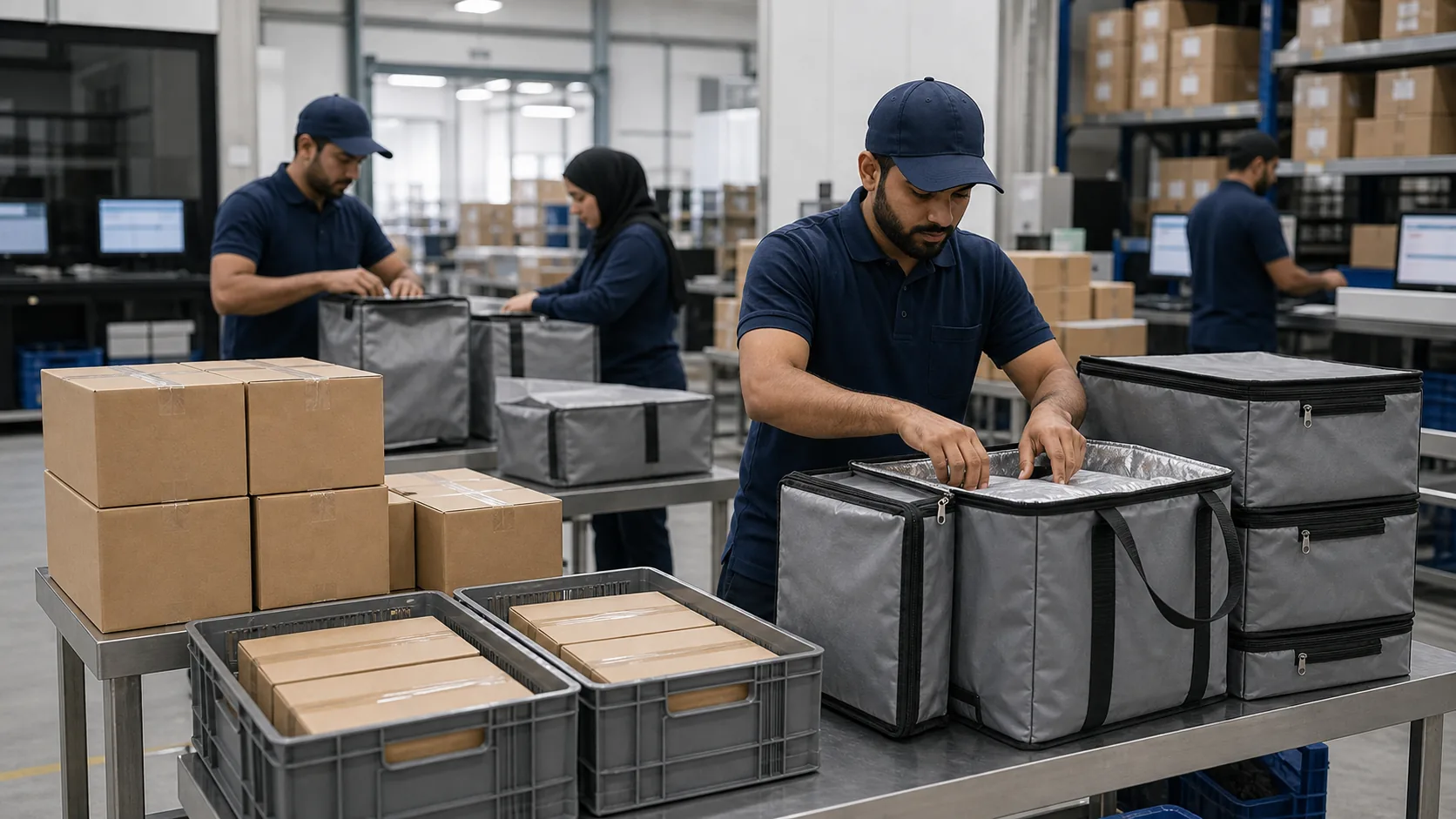
- Case-level and each-level picking: Dark stores receive case quantities, not pallets. Some platforms require individual unit picking for vendor-managed inventory models.
- High SKU accuracy: E-commerce platforms have zero tolerance for substituted or missing items — each SKU must be managed to 99%+ accuracy
- Rapid replenishment: Dark stores may need daily or twice-daily replenishment for high-velocity SKUs
- Digital product content: High-resolution product images, complete nutritional information, and detailed product descriptions must be provided to the platform in structured digital format
- Platform-specific compliance: Each platform has its own supplier compliance standards, onboarding requirements, and performance KPIs (order fill rate, on-time delivery, return rate)
The Digital Shelf — A New Brand Battleground
In physical retail, brands compete for physical shelf space. In e-commerce, they compete for digital shelf prominence — search ranking, sponsored placement, and review ratings on the platform. UAE FMCG brands that succeed online typically invest in:
- Product content optimisation: Professional photography, keyword-rich product titles and descriptions, complete attribute data
- Sponsored product advertising: Talabat and Noon offer paid prominence — brands that invest in platform advertising see 3–5× higher visibility
- Review generation: Platforms algorithmically favour products with higher review counts and ratings. A product with 50+ reviews ranks significantly higher than an identical product with 5 reviews.
- Promotional mechanics: Bundle offers, platform-exclusive deals, and flash promotions drive trial and basket size
How Bagason Group Supports E-Commerce Distribution
Bagason Group's distribution infrastructure is built for both traditional and e-commerce channels:
- Active supply relationships with Talabat Mart, Amazon Fresh UAE, and Noon Food
- Case-level picking capability from our Al Quoz distribution centre
- Digital product content management for platform listing optimisation
- Sales performance reporting covering both offline and online sell-through
For international FMCG brands, having a distribution partner with established e-commerce channel relationships is no longer optional — it is table stakes for UAE market success. Find out how we can place your brand across UAE's fastest-growing food retail channels.
Sources and References
This article draws on publicly available government data, industry body reports, and Bagason Group operational experience. All figures are estimates and should be treated as directional.
- UAE Ministry of Economy — National economic indicators and trade data
- Dubai Chambers — Dubai Economic Report
- UAE Federal Competitiveness and Statistics Centre (FCSA) — Consumer spending and trade statistics
- Gulfood — Industry Insights and Market Reports
- UAE Ministry of Human Resources (MOHRE) — Labour and workplace regulations
- Bagason Group — Internal distribution operations and market coverage data