A food recall in the UAE rarely starts with a dramatic phone call. It usually starts with an email from a supplier, a query from a retailer's quality team, or a notice referencing a specific batch number. What happens in the next few hours decides whether a distributor pulls the right cartons from the right van in time, or spends the rest of the week guessing. A food recall UAE authorities are satisfied with rests less on the announcement and more on the trace work already finished before anyone outside the company even knows there's a problem.
We covered the registration side of bringing a new food product into the UAE in an earlier piece: the documents, the label review, the approval flow that gets a SKU cleared for sale, the onboarding step. This one picks up after a product is already on shelf, moving through vans and modern trade backrooms across all seven emirates. It's about the systems that let a distributor answer one question fast: where, exactly, is every unit from a given batch right now?
At Bagason, that question sits behind our barcode and batch traceability setup inside Odoo, the ERP we run across warehousing, sales and distribution. What follows is how the federal ZAD layer fits alongside emirate-level rules, how batch codes and lot tracking work in a live warehouse, and what a mock recall drill looks like when we run one ourselves.
This is not theoretical for a distributor carrying roughly 700 SKUs across 17 brands sourced from 16 countries. A recall notice doesn't care how many other products are moving through the same warehouse that week. Trace speed depends entirely on whether the underlying data was captured correctly at receipt, months or years before anyone needed it for this exact purpose.
What a food recall in the UAE actually triggers, and who can call one
A recall is a request, sometimes a directive, to remove a specific product from sale and from consumers' hands. It can originate from a few different places. A manufacturer might identify a quality issue in its own production run and voluntarily notify every market it ships to, the UAE included. A regulator, whether at emirate level or federally through the Ministry of Climate Change and Environment, can also issue a recall or a market withdrawal notice after its own review. Retailers add a third layer: a modern trade chain's quality team can ask a supplier to pull stock from its own shelves even before a formal regulatory notice lands.
Whichever channel it arrives through, a recall notice references a product, usually a batch or lot identifier, and expects a response measured in hours rather than days. So what does a UAE food recall ask a distributor to do? Three things, generally: confirm how much of the affected batch is on hand and where, stop any further movement of it, and account for whatever has already left the warehouse toward retailers, HORECA accounts or van routes.
That last part is where most of the real work sits. A warehouse hold is straightforward. Tracing units that already reached 35,000 baqalas, a hypermarket chain or a hotel kitchen is not, unless the systems to do it were built in long before the notice ever arrived.
How common is any of this in practice? Recalls affecting a given SKU are the exception rather than the rule across a normal trading year, which is exactly why readiness gets neglected. A distributor can go a long stretch without a real notice and start treating the plan as paperwork rather than a working process. The gap shows up on the day a notice lands, and a food recall UAE regulators or a retailer expect answered within hours leaves no room to build the process from scratch at that point.
The federal ZAD layer, and where it sits above emirate registration
Food regulation in the UAE runs on two levels at once, and it helps to keep them separate in your head. Emirate-level authorities, Dubai Municipality among them, register individual products and run day-to-day market inspection within their own jurisdiction. Sitting above that is a federal layer, coordinated through the Ministry of Climate Change and Environment, which runs the ZAD food registration system used to register products at a national level and to circulate food safety notices, including recalls, across all seven emirates at once.
Why does this matter for traceability specifically? Because a recall notice doesn't respect emirate boundaries. A batch flagged through the federal ZAD channel can apply to product sitting in a Dubai warehouse, on an Abu Dhabi retailer's shelf and on a van route through Sharjah, all at the same time. A distributor whose trace systems are organised by emirate, rather than by product and batch, ends up running the same search three or four times instead of once.
Why a distributor watches ZAD notices, not just its own product files
Registering a product is a one-time event per SKU. Watching for recall and safety notices is ongoing, and it doesn't only concern products a distributor sources itself. A principal brand's own factory, shipping into several GCC markets, can trigger a notice that reaches the UAE through the federal system before a distributor's own quality team hears about it directly from the manufacturer. Building a habit of checking the federal channel, rather than waiting for a supplier to call, closes that gap.
Here's the thing: registration and recall monitoring use the same underlying idea, a product identified precisely enough that a regulator, an importer and a retailer are all talking about the exact same thing. The federal ZAD food registration record is what makes that shared identity possible in the first place. Everything downstream, batch tracking, warehouse holds, retailer notifications, depends on that same product identity staying consistent from the day it's registered to the day, if it ever comes to that, a batch needs pulling.
Batch tracking FMCG distributors rely on to make a trace possible
A recall notice is only as useful as the batch or lot identifier attached to it. Batch tracking FMCG operations depend on isn't a nice-to-have layered on top of ordinary warehousing. It's the thing that turns "pull this product" into "pull these 340 cartons, from this production run, currently split across two warehouse locations and four van loads."
Consider what happens without it. A recall notice references a batch. Without batch-level records, the only honest answer a distributor can give is "somewhere in everything we've sold of this SKU since it launched." That answer satisfies nobody: not the regulator, not the retailer, and not the brand owner watching their own product get pulled wholesale rather than by the specific run that's affected.
What a batch or lot code needs to carry
A workable batch code identifies a single production run from a single manufacturing site, distinct from every other run of the same SKU. For an imported product, that usually means the code printed by the factory carries through unchanged into the distributor's own systems rather than being replaced or simplified at receipt. Some practical requirements follow from that:
- The batch code on the physical carton must match, character for character, the batch code entered into the warehouse system at goods receipt.
- A single purchase order can, and often does, contain more than one batch. Each batch needs its own line in the system, not a single record covering the whole shipment.
- Batch identity has to survive repackaging. If cartons get broken down into smaller units for van sales or e-commerce fulfilment, the batch reference needs to travel with each resulting unit, not get lost at the point of repack.
- Where a product changes hands between a distributor's own warehouse and a third-party fulfilment centre, the batch reference has to be part of what's handed over, not just the SKU and quantity.
Miss any of these and the trace chain has a gap in it. A gap doesn't necessarily mean the units can't be found. It usually means finding them takes hours of manual cross-referencing instead of one query against a system that already carries the answer.
How the scan trail works in a Bagason warehouse
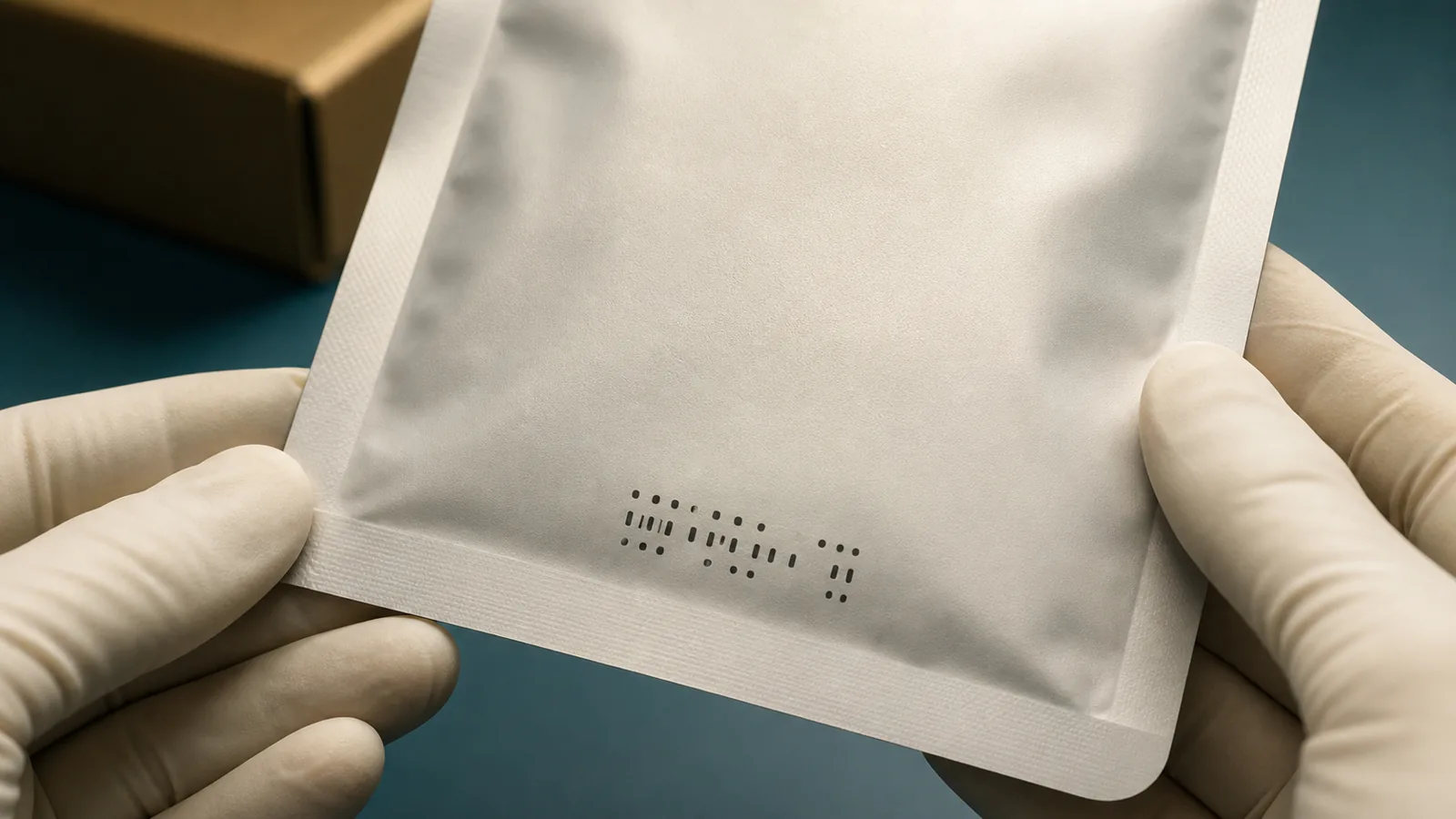
Every carton entering our Jebel Ali-area warehousing gets scanned at receipt, and that scan captures the batch code alongside the SKU, quantity and supplier reference. From there, our Odoo setup carries that batch identity through put-away, picking and dispatch, so a pallet's location inside roughly 6,000 pallet positions is known at any point, and so is which sales order or van route a given batch left on.
FIFO stock rotation runs on top of that same batch data. Pickers aren't choosing stock by instinct or by whatever's nearest the door. The system directs them to the oldest eligible batch first, which keeps stock moving in the right order and, as a side effect, keeps batch records current rather than stale. A warehouse that rotates stock properly is also, without extra effort, a warehouse that always knows which batch is closest to the front of the queue.
What our merchandisers and van sales teams see on the ground reflects the same discipline. A van loaded for a baqala route carries a manifest tied to specific batches, not just SKUs and case counts. If a batch ever needed pulling mid-route, that manifest is what tells us which vans, on which day, are carrying it.
Food traceability across the UAE supply chain, from container to counter
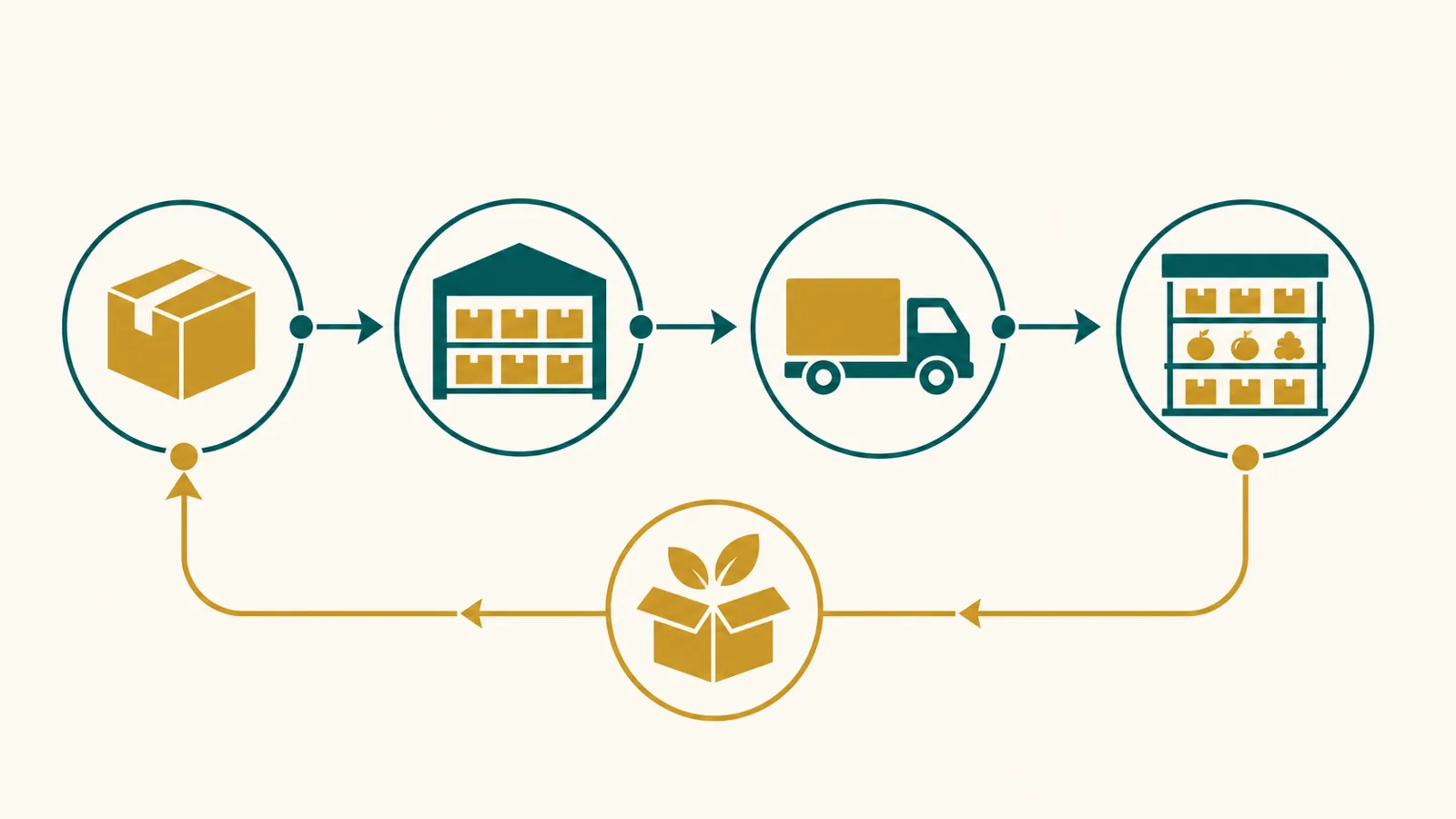
Food traceability UAE distributors build isn't one system. It's two directions of the same chain meeting in the middle, at the warehouse. Upstream traceability answers "where did this batch come from and what happened to it before it reached us." Downstream traceability answers "where did it go after it left our hands." A distributor needs both working, because a recall can require either question answered depending on where the issue originated.
Upstream: what you need from a factory
Upstream traceability starts with documentation that travels with the shipment, not paperwork filed separately and reconciled later. At minimum, that means the manufacturer's batch or lot reference, the production site if a brand runs more than one factory, and any certificate of analysis or quality documentation tied to that specific run rather than the product generally.
A useful habit here is asking a new supplier, before the first shipment ever lands, how batch identity is structured on their side. Does one batch number cover a full day's production, or a single line run? Does the code embed the production site, or only the date? Knowing the answer before goods arrive means the warehouse team isn't decoding an unfamiliar batch format for the first time under pressure, mid-recall.
Downstream: which van, which route, which shelf
Downstream traceability is the harder half, because it involves more parties and more movement. From our warehouse, a batch can travel to a modern trade distribution centre, directly onto a van for baqala delivery, into a HORECA account's kitchen store, or through an e-commerce fulfilment flow for a quick commerce order. Each of those paths needs a record that ties the batch to the specific outlet, route or order it reached.
Retailers vary in how much of this they hold on their own systems. A large modern trade chain typically has its own goods-receipt and stock records tied to supplier batch data. A smaller baqala generally doesn't, which means the distributor's own van manifest is often the only record connecting a batch to that specific shop. That is a large part of why van sales route data matters for more than delivery efficiency alone: it is frequently the only downstream trace record that exists for traditional trade.
Building a product recall plan before you need one
A product recall plan written after a notice has already landed is not a plan. It's a scramble with a deadline attached. Building one in advance means the roles, the steps and the communication templates already exist, and the only thing that changes from drill to real event is the specific product and batch involved.
Who sits on a recall team
A workable recall team is small enough to move fast and specific enough that nobody is guessing who owns which decision. In practice that usually means a warehouse or logistics lead who can execute a physical hold and pull, a quality or compliance lead who liaises with the regulator and the brand owner, a sales or key accounts lead who notifies retail and HORECA customers, and someone senior enough to sign off on the final communication and confirm closure. Customer service needs a seat too, since consumer-facing queries tend to arrive the moment a recall becomes public.
Naming these roles in advance matters more than it sounds. During an actual recall, the question "whose job is this" costs time nobody has. A plan that already answers it lets people start working the moment a notice arrives instead of convening a meeting first.
What the written plan should specify
A recall plan doesn't need to be long, but it does need to cover a specific set of decisions in advance rather than leaving them to be worked out live. At minimum:
- How a recall notice gets logged and who is notified first, regardless of which channel it arrives through.
- The steps to place an immediate hold on remaining warehouse stock of the affected batch.
- How downstream customers, modern trade, HORECA, van routes and e-commerce partners, get notified, and in what order.
- What information a retailer or customer needs from the distributor to identify affected stock on their own end.
- How returned or recovered stock gets segregated, recorded and eventually disposed of or returned to the brand owner.
- Who signs off that the recall is closed, and what evidence supports that sign-off.
This does not replace the brand owner's or the regulator's own recall procedures. It's the distributor's own operating layer underneath those, the part that turns an instruction into action across a warehouse, a van fleet and a retail network.
Inside a mock recall: running the drill
A recall plan that's never been tested is a document, not a capability. We run mock recall exercises periodically, treating them the same way a fire drill gets treated: scheduled, taken seriously, and judged on how close the result comes to what a real event would demand.
The steps we walk through
A mock recall starts by picking a real batch, already fully worked through the warehouse and out to customers, and treating it as though a genuine notice just arrived for it. From there the drill runs through the same steps a real recall would:
- Log the "notice" and confirm the affected batch identifier against warehouse records.
- Query the system for remaining on-hand quantity of that batch and its warehouse location.
- Pull the dispatch history for that batch: which sales orders, which van routes, which delivery dates.
- Draft the customer notification that would go to every downstream party who received that batch.
- Time the whole exercise, from the moment the batch is picked to the moment a full trace report exists.
The exercise stops short of contacting real customers or pulling live stock. What it does confirm is whether the systems and the people can produce an accurate, complete trace inside a timeframe that would satisfy a regulator or a retailer, using nothing but the records that already exist day to day.
What a good drill actually proves
The point of a mock recall isn't the drill itself. It's finding out, in a low-stakes setting, whether the batch data entered every single day at receipt, pick and dispatch adds up to something usable under pressure. So what does a good outcome look like? A trace report that accounts for every unit of the batch, warehouse stock plus everything dispatched, with no unexplained gap between what came in and what the records show going out.
Where a drill exposes a weakness, that is the useful part, not a failure. A batch that got repackaged for an e-commerce order without carrying its reference forward, a van manifest that recorded the SKU but not the batch, a retailer notification template that was still generic from years ago: all of these show up in a drill long before they'd show up in an actual recall, when there's far less room to fix them quietly.
Judging the drill without inventing numbers
It's tempting to set a fixed target, trace this batch in under some number of hours, and call the drill a pass or fail against it. In practice, the more useful measure is comparative: did this drill take less time than the last one, and can the team point to exactly where the delay sat if it didn't. A distributor running its first mock recall should expect the process to feel slower and more manual than it will after a few repetitions, once gaps get closed and the trace becomes closer to a single lookup instead of several.
What matters more than any single timing is whether the drill produces a complete answer. A fast trace that misses a van route because a manifest wasn't checked is worse than a slower one that accounts for every unit. Completeness first, speed second, and speed tends to follow once completeness stops requiring manual cross-checking across separate spreadsheets.
The gaps that slow a real recall down
Most of the friction in a real recall traces back to a small set of recurring gaps, and nearly all of them are visible ahead of time if anyone looks.
- Batch data that stops at receipt. The code gets scanned in, but isn't carried through picking, dispatch or repackaging, so downstream trace has nothing to work with.
- Retailer records that don't reference batch. A retailer's own goods-receipt system tracks SKU and quantity but not batch, leaving the distributor's own manifest as the only trace source.
- Van manifests treated as delivery paperwork only. If a manifest isn't also treated as a traceability record, nobody thinks to check it during a recall until well after other options have been exhausted.
- No single owner for the recall plan. A document that sits in a shared drive without a named owner tends to be out of date by the time anyone opens it.
- Communication templates that don't exist yet. Drafting a retailer notification from scratch during an actual event costs time that a pre-approved template would save.
What connects these gaps is that on their own, each one is minor. They only bite at the exact moment a real recall makes them matter, which is why finding them through a drill costs so much less than finding them live.
There's a broader pattern behind most of these gaps too. Each one starts as a shortcut taken somewhere in the middle of an ordinary working day: a batch code skipped because the shift was busy, a manifest field left blank because nobody asked for it that week. Those shortcuts rarely cause a visible problem on the day they happen. They surface later, usually at the least convenient moment, which is why a periodic drill earns its keep even in a quiet year with no real recall at all.
What a brand owner or retailer should ask a distributor about recall readiness
Brand owners choosing a UAE distribution partner rarely ask about recall readiness directly. That is a missed opportunity. It's a fair, specific question, and the answer tells you a good deal about how a distributor runs its warehouse day to day, not just how it presents itself in a pitch.
Worth asking: does batch identity carry through from receipt to dispatch, or only get recorded at goods-in? Can the distributor produce a full trace, warehouse stock plus everything already delivered, for a named batch on request, and roughly how long does that take? Is there a written recall plan with named roles, and has it ever been tested for real? A distributor that can answer these plainly, with specifics rather than general reassurance, is one that has already done the work rather than planning to do it if the day ever comes.
Retailers ask a related but narrower question: can a supplier tell them, quickly, whether stock on their own shelves belongs to an affected batch. That depends on the retailer's own goods-receipt records referencing batch data too, which is one more reason the conversation about traceability works best as a shared one between distributor and retailer, not something either party assumes the other has covered.
The same conversation is worth having across channels beyond modern trade. A HORECA account managing a hotel kitchen store or a cloud kitchen supplier deals with the same batch identity question, just with fewer formal systems behind it. A quick commerce partner fulfilling orders from a dark store has its own stock records that may or may not carry batch references through to the final delivery. A distributor's recall plan needs to account for every one of these channels individually, because a one-size answer built around a single retail format tends to break down the moment a different channel is the one holding the affected stock.
Key takeaways
- A food recall UAE distributors respond to can originate from a manufacturer, a regulator at emirate or federal level, or a retailer's own quality team.
- The federal ZAD system, run through the Ministry of Climate Change and Environment, sits above emirate-level registration and is where recall and safety notices circulate across all seven emirates.
- Batch tracking FMCG distributors rely on has to survive receipt, picking, dispatch and any repackaging, or the trace chain has a gap in it.
- Food traceability runs in two directions: upstream to the factory, and downstream through vans, retailers and e-commerce fulfilment.
- A product recall plan needs named roles and a specific set of steps decided in advance, not worked out during a live event.
- Running a mock recall periodically is the only way to know whether daily batch data adds up to a usable trace under pressure.
Recall readiness isn't a document that sits in a folder waiting for a bad day. It's the same batch discipline that runs every shift in a warehouse, tested often enough that nobody's finding out for the first time, during an actual notice, whether it holds up. Distributors that treat traceability as a daily habit rather than a compliance checkbox tend to answer a recall notice in hours. Distributors that don't tend to spend days finding out what they don't know.
If you're a brand owner weighing what real traceability looks like behind a distribution partner's warehouse doors, or a retailer wanting to understand how batch data should flow between your systems and a supplier's, talk to our team about how we run this day to day. You can find more on how sourcing, warehousing and distribution fit together across our homepage, and more on the regulatory side of bringing food products into the UAE on our distribution insights blog.
Frequently asked questions
What counts as a food recall in the UAE?
A food recall is a request to remove a specific product, usually a named batch or lot, from sale and from consumers who already bought it. It can come from the manufacturer, from a regulator at emirate or federal level, or from a retailer's own quality team acting before any formal notice is issued.
Who is responsible for a food recall UAE regulators are involved in: the brand or the distributor?
Responsibility is usually shared. The brand owner or manufacturer typically directs the recall and communicates with regulators about the cause, while the distributor executes the physical side: holding warehouse stock, tracing what already shipped, and notifying retailers, HORECA accounts and van routes it supplies.
What is the ZAD system, and how is it different from Dubai Municipality registration?
ZAD is the federal food registration platform run through the Ministry of Climate Change and Environment, sitting above emirate-level authorities like Dubai Municipality. Emirate bodies register products and inspect markets locally, while the federal layer registers products nationally and is a channel for food safety and recall notices across all seven emirates.
How does batch tracking actually work for an FMCG distributor?
Each carton is scanned at receipt, capturing its batch code alongside the SKU and quantity. That batch identity then needs to carry through warehouse put-away, picking, dispatch and any repackaging, so a distributor can say precisely which stock, and which outlets or van routes, relate to a specific batch.
What should a written product recall plan include?
It should name who logs a notice, who orders a warehouse hold, who notifies retailers and HORECA and van customers, and who signs off closure. It should also set out what information customers need to identify affected stock and how recovered product gets segregated and recorded.
Why run a mock recall if a real one has never happened?
A recall plan that has never been tested is just a document. A mock recall, tracing a real batch already in the system as though a notice had arrived for it, is the only way to find gaps in batch data or manifests before a genuine notice makes those gaps costly.