The culinary and retail landscape of the United Arab Emirates is one of the most sophisticated and demanding in the world. With over 90 percent of food products imported, the operational success of every hotel, restaurant, and supermarket depends entirely on the invisible infrastructure of the supply chain. In this environment, food logistics UAE is not merely a support function but the primary driver of commercial viability. For procurement managers and supply chain directors, the ability to move goods from a port or warehouse to a kitchen or retail shelf with absolute precision is what separates market leaders from those struggling with stockouts and wastage. Bagason Middle East operates at the heart of this complex network, managing the flow of goods to over 8,000 partners across the country. The scale of the industry is immense, with the UAE food and beverage market continuing to expand as the population nears 10 million and tourism figures exceed pre-pandemic levels. This growth places unprecedented pressure on the distribution network, requiring a level of efficiency that can only be achieved through a combination of local expertise, robust infrastructure, and advanced planning.
Introduction: Why logistics is the operational backbone of the UAE food industry
In the context of the Middle Eastern market, logistics serves as the critical bridge between global production and local consumption. For a procurement head at a five star hotel in Dubai or a purchasing director for a major supermarket chain, the primary concern is the reliability of the food supply chain logistics. A delay of even a few hours can result in the loss of perishable goods or the inability to fulfill a menu, directly impacting the bottom line. The UAE climate presents a unique challenge where the ambient temperature can exceed 45 degrees Celsius for several months of the year, making the margin for error in logistics virtually non-existent. Efficiency in this sector is defined by the ability to maintain the integrity of the product while navigating one of the most competitive business environments globally. FMCG logistics Dubai has evolved to become a benchmark for regional standards, incorporating rapid transit times and high-density warehousing. When a distributor manages over 700 SKUs, the complexity of the operation increases exponentially. Every individual product has its own storage requirements, shelf-life constraints, and delivery priorities. Successful logistics management ensures that these variables are balanced so that the end user receives a product that is safe, fresh, and ready for use. This operational backbone is what allows the UAE to maintain its status as a global gastronomic hub, supporting everything from high-volume catering for international events to the daily needs of local neighbourhood grocery stores.
The structure of UAE food distribution — seven emirates, geography challenges, urban vs rural routes
The geography of the United Arab Emirates requires a nuanced approach to distribution. While the country is relatively compact, covering approximately 83,600 square kilometres, the distribution of the population and the nature of the terrain create distinct logistical profiles. The urban centres of Dubai and Abu Dhabi represent the highest density of delivery points, characterised by high-traffic corridors and complex delivery windows. In contrast, reaching the Northern Emirates of Sharjah, Ajman, Umm Al Quwain, Ras Al Khaimah, and Fujairah involves longer transit times and different infrastructure considerations. A robust food delivery network UAE must account for the specific requirements of each emirate. For instance, Fujairah, located on the eastern coast, requires crossing the Hajar Mountains, which adds variables to fuel consumption and vehicle wear. In Abu Dhabi, the vastness of the Western Region, including areas like Liwa and Ruwais, demands a different strategy compared to the island-based city centre. Urban routes are often restricted by municipal regulations regarding the size of vehicles and the hours during which deliveries can be made. This necessitates a fleet that is versatile, ranging from heavy-duty trucks for bulk warehouse transfers to smaller, agile vans for city centre retail outlets. Rural routes, while less congested, require higher levels of route planning to ensure that the cost of delivery does not outweigh the value of the goods being transported. A distributor with a truly national reach must be able to guarantee the same level of service in a remote desert resort as they do in a downtown skyscraper.
The vansales model — how it works, why it dominates FMCG last-mile in the UAE
The vansales model is a cornerstone of the FMCG sector in the Middle East, particularly for the last mile food delivery UAE. Unlike the traditional "pre-order and deliver" system, vansales involves vehicles that are stocked with a range of products and driven by representatives who manage both the sale and the immediate delivery. This model is exceptionally effective for the UAE retail landscape, which is comprised of thousands of small to medium-sized grocery stores and independent outlets. The primary advantage of vansales distribution UAE is the immediacy it offers. Retailers can restock their shelves based on real-time inventory levels, and the distributor can respond to immediate market demands. This system reduces the lead time from order to delivery to almost zero, which is vital for high-turnover products. For the distributor, it provides a wealth of market data, as the sales staff are on the ground every day, observing consumer trends and competitor activity. Managing a large-scale vansales operation requires meticulous stock management. Each van essentially becomes a mobile micro-warehouse. This requires the sales representative to be highly skilled in inventory forecasting to ensure they have the right mix of the 700+ SKUs to meet the needs of their specific route. The dominance of this model in the UAE is a reflection of the market's need for flexibility and the high density of traditional trade outlets that do not have the warehouse space to hold large amounts of inventory.
Warehousing fundamentals — temperature management in a 45°C climate, receiving, put-away, dispatch
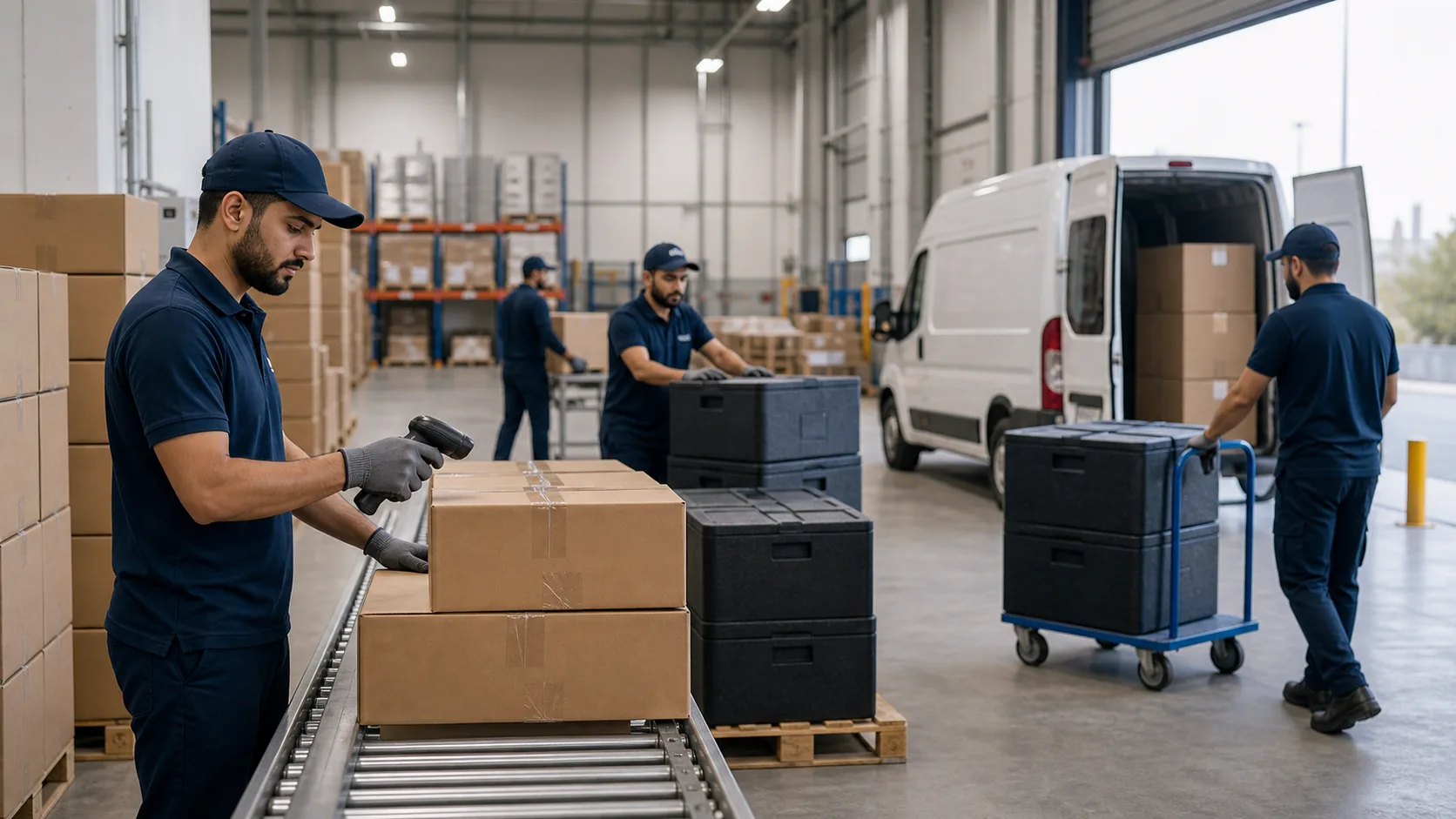
Warehousing in the UAE is a feat of engineering and operational discipline. With external temperatures frequently reaching 45 degrees Celsius and humidity levels often exceeding 90 percent, the warehouse logistics food must be designed for total climate control. A breakdown in the HVAC system for even a short period can jeopardise millions of dirhams worth of inventory. Efficient warehousing begins with the receiving process. Goods arriving from ports must be moved into a temperature-controlled environment immediately to prevent thermal shock. This requires rapid unloading and high-speed industrial doors that minimise the exchange of air between the loading dock and the storage area. The put-away process is equally critical. In a high-volume facility, the placement of goods is determined by their turnover rate and their specific storage requirements. Chilled items, frozen goods, and ambient products must be segregated into their respective zones with constant monitoring. Modern warehouses in the UAE use thermal mapping to ensure that there are no "hot spots" within the storage racks. Dispatching goods involves a staged approach where orders are picked and consolidated in a cold-staging area before being loaded onto refrigerated vehicles. This ensures that the product temperature remains stable throughout the entire internal handling process. For a distributor like Bagason Middle East, maintaining two large-scale warehouses involves a continuous cycle of audits and equipment maintenance to ensure that the 8,000+ partners receive products that have never deviated from their required temperature range.
Route optimisation — fuel, traffic, delivery windows, vehicle utilisation
In the logistics industry, time is the most expensive commodity. Route optimisation distribution is the science of planning delivery paths that maximise vehicle utilisation while minimising fuel consumption and transit time. In the UAE, this is complicated by the unique traffic patterns of the E11 and E311 highways, which are the main arteries connecting the emirates. During peak hours, congestion can add significant delays, which is why many distributors opt for early morning or late-night delivery schedules. Route optimisation is not just about finding the shortest distance; it is about finding the most efficient sequence of stops. This involves accounting for the delivery windows of each customer. Hotels and large malls often have very specific times when they will accept deliveries, and missing these windows can result in the vehicle being turned away, leading to a failed delivery and a wasted trip. Advanced software is used to analyse historical traffic data, vehicle capacity, and customer locations to create the most effective daily schedules. By reducing the number of kilometres driven, distributors can significantly lower their carbon footprint and operational costs. Furthermore, high vehicle utilisation ensures that the fleet is working at maximum capacity, reducing the need for additional vehicles and drivers. For procurement managers, knowing that a distributor uses professional route planning gives them confidence that their orders will arrive on time, every time, regardless of the challenges on the road.
Cold chain integrity — refrigerated vehicles, temperature logging, UAE climate risks
The cold chain is the most vulnerable part of the food supply chain in the UAE. It refers to the uninterrupted series of storage and distribution activities which maintain a given temperature range. Cold chain logistics UAE requires a heavy investment in specialised equipment. Refrigerated vehicles, or reefers, must be equipped with high-performance cooling units that can maintain sub-zero temperatures even when the rear doors are opened frequently for deliveries. The integrity of the cold chain is verified through continuous temperature logging. Modern delivery vehicles are fitted with sensors that record the internal temperature at regular intervals, providing a documented "temperature trail" from the warehouse to the customer. This data is essential for food safety compliance and provides peace of mind to F&B directors who are responsible for the quality of the food served in their establishments. The risks in the UAE are exacerbated by the heat, which can cause refrigeration units to work harder and fail more frequently if not properly maintained. A single failure in a refrigerated truck can lead to the spoilage of a full load of premium products. Therefore, a strict preventative maintenance schedule for the fleet is a non-negotiable part of the logistics operation. Protecting the cold chain also involves training drivers on best practices, such as minimising door-opening times and ensuring that the cooling unit is running during the entire loading and unloading process.
Digital tools in food logistics — route apps, proof-of-delivery, order management integration
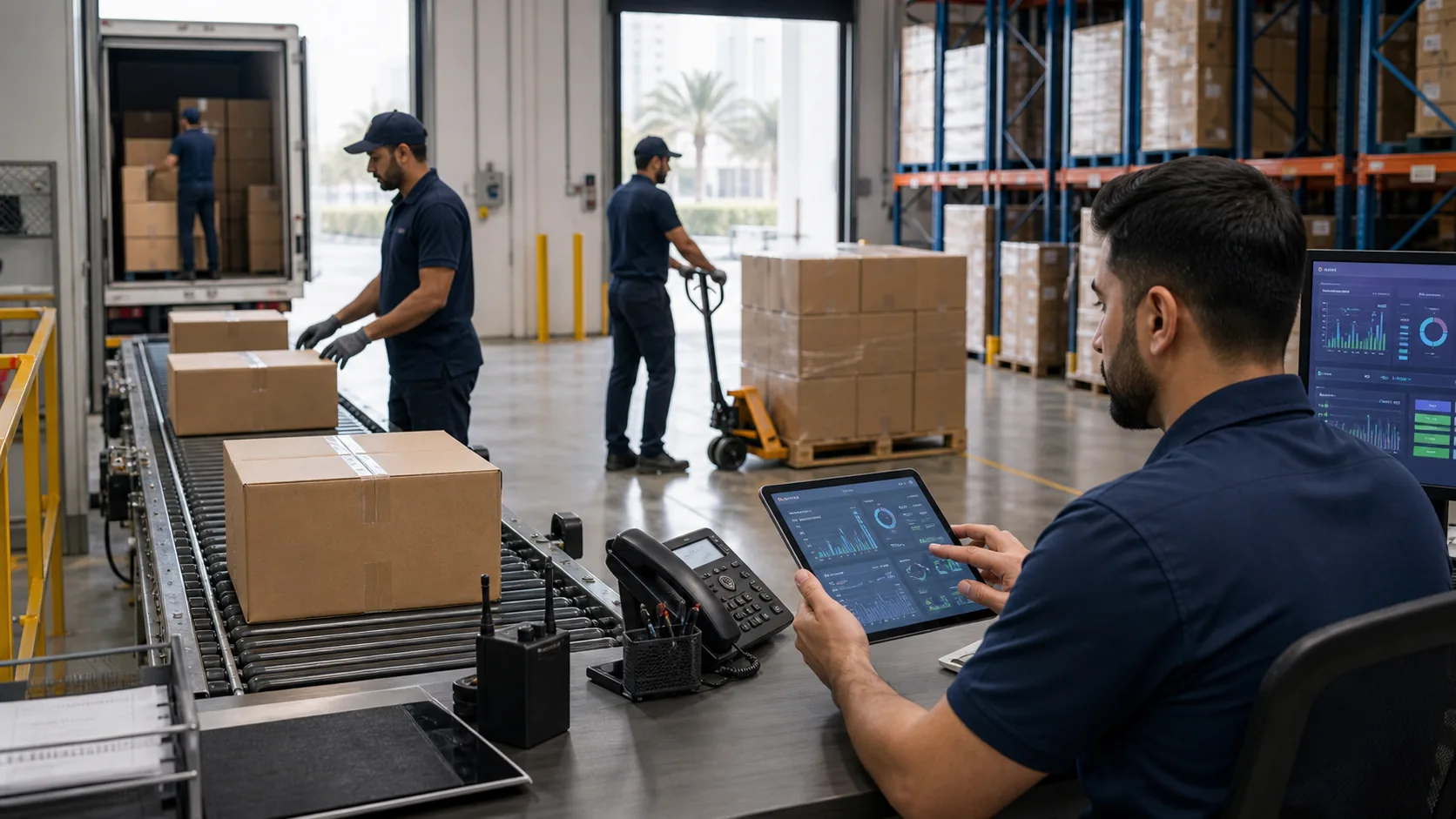
The transition from manual processes to digital solutions has revolutionised the way food is distributed in the Middle East. Digital tools provide the visibility and data needed to manage a large-scale operation with precision. Route apps allow drivers to receive real-time updates to their schedules, navigate around traffic accidents, and communicate directly with the dispatch centre. One of the most significant advancements is the implementation of digital proof-of-delivery (POD). Instead of paper invoices that can be lost or damaged, drivers use handheld devices to capture signatures and even photographs of the delivered goods. This information is instantly uploaded to the central system, allowing the finance and customer service teams to see the status of every delivery in real time. Integration between the distributor's order management system and the customer's procurement platform further enhances efficiency. This reduces manual data entry, minimises errors, and speeds up the entire replenishment cycle. For a distributor managing 700+ SKUs, digital inventory management is essential for tracking batch numbers and expiry dates, ensuring that the oldest stock is sold first to reduce wastage. This level of digitisation is what allows Bagason Middle East to maintain such a high level of accuracy across its vast partner network. For trade buyers, these tools mean more transparent billing, faster resolution of discrepancies, and better overall service quality.
On-time in-full (OTIF) as the key performance metric for trade buyers
For any professional involved in F&B procurement, the ultimate measure of a distributor's logistics capability is the On-Time In-Full (OTIF) metric. This KPI tracks whether a delivery was made within the agreed timeframe and whether all the items ordered were delivered in the correct quantities. Achieving a high OTIF score requires every part of the logistics chain to work in perfect harmony, from the warehouse pickers to the route planners and the final delivery drivers. In the fast-paced UAE market, where menus change frequently and storage space is at a premium, an incomplete or late delivery can cause significant operational disruption. A distributor that consistently hits high OTIF targets allows its partners to maintain leaner inventory levels, which improves their cash flow and reduces the risk of product expiry. Buyers look for distributors who not only promise high OTIF rates but also have the data and reporting capabilities to prove it. This metric is the true test of a distributor's reliability and is often the primary factor in long-term contract negotiations. In an industry where a missed delivery can mean a lost customer for a restaurant or hotel, the value of a partner who can guarantee OTIF performance cannot be overstated. It is the gold standard of the food logistics UAE sector, reflecting a commitment to operational excellence and customer satisfaction.
Closing: How logistics capability should factor into distributor selection
Selecting a food distribution partner is one of the most important decisions a supply chain director or procurement manager will make. While product range and pricing are undoubtedly important, the logistics capability of the distributor is what determines the long-term success of the partnership. A distributor may offer the best global brands, but if those products cannot be delivered reliably, at the correct temperature, and within the required timeframes, they are of no value to the buyer. When evaluating potential partners, it is essential to look beyond the sales pitch and examine their infrastructure. This includes the size and condition of their refrigerated fleet, the sophistication of their warehousing operations, and their investment in digital tools for route optimisation and tracking. A distributor with a proven track record of serving 8,000+ partners across all seven emirates demonstrates a level of scale and stability that is vital in a volatile market. The ability to handle the extreme UAE climate and navigate the complex urban and rural routes of the country is a specialised skill set that is built over years of experience. Ultimately, the right distributor is one that acts as a seamless extension of the buyer's own supply chain, providing the reliability and efficiency needed to keep the food industry running smoothly. In the competitive landscape of the UAE, where excellence is the minimum requirement, choosing a partner with superior logistics capability is the most effective way to ensure operational success and high-quality service for the end consumer.
Sources and References
This article draws on publicly available government data, industry body reports, and Bagason Group operational experience. All figures are estimates and should be treated as directional.
- UAE Ministry of Economy — National economic indicators and trade data
- Dubai Chambers — Dubai Economic Report
- UAE Federal Competitiveness and Statistics Centre (FCSA) — Consumer spending and trade statistics
- Gulfood — Industry Insights and Market Reports
- UAE Ministry of Human Resources (MOHRE) — Labour and workplace regulations
- Bagason Group — Internal distribution operations and market coverage data