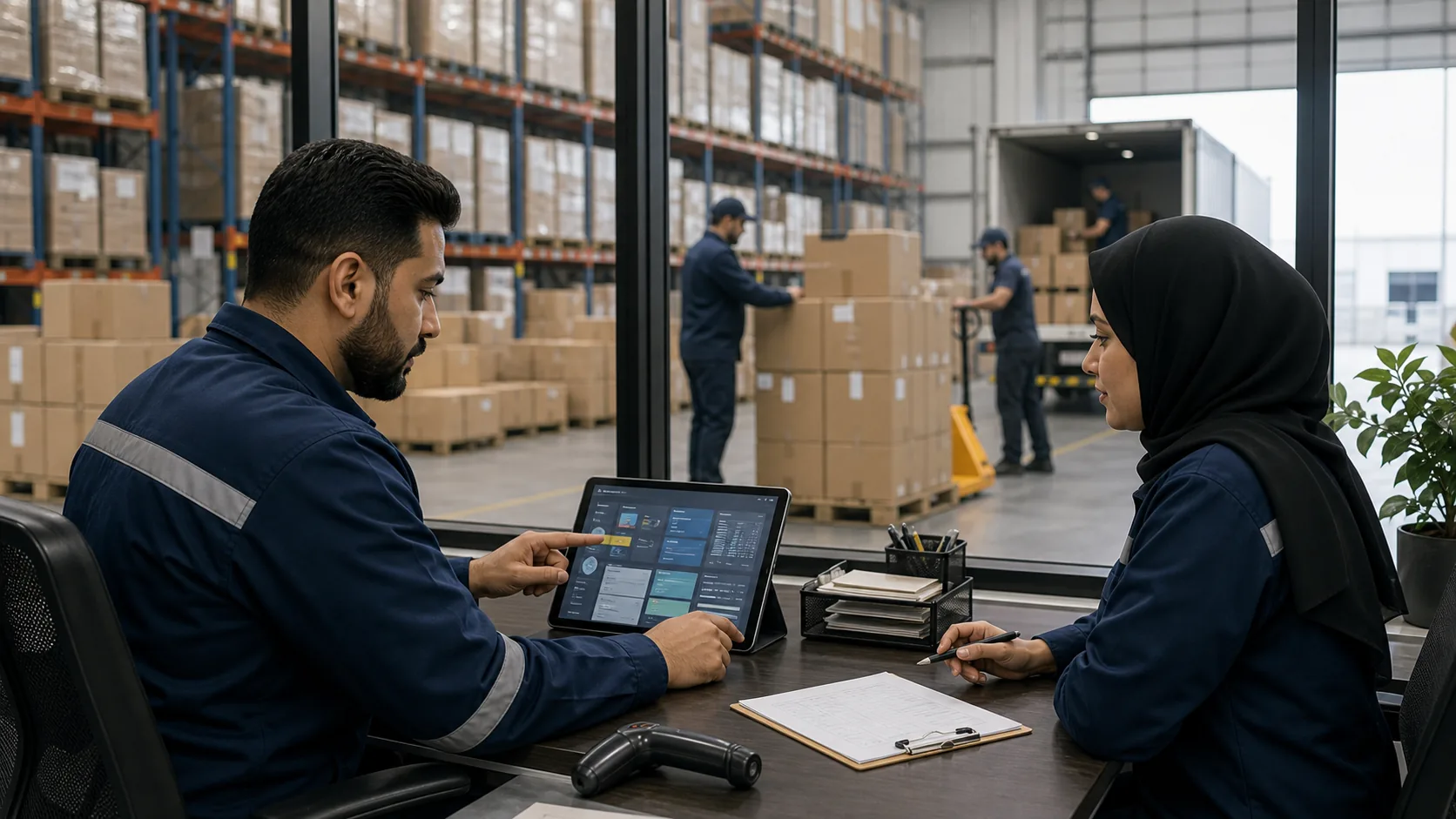
In the highly competitive landscape of the United Arab Emirates, effective inventory management food distribution is not merely a back-office function but the primary driver of profitability and operational resilience. For a distributor managing a diverse portfolio, such as the 700+ SKUs handled by Bagason Middle East, maintaining a 99% or higher inventory accuracy rate is foundational. In the FMCG sector, where margins are often thin and product lifecycles are dictated by strict expiration dates, even a 1% discrepancy in stock levels can lead to significant financial leakage through missed sales or unnecessary write-offs. Achieving this level of precision requires a rigorous approach to food stock control UAE, integrating physical discipline with advanced digital tracking to ensure that the virtual record perfectly matches the physical reality of the warehouse floor.
FEFO vs FIFO: Why Food Distribution Requires First Expired First Out
While many industries rely on First In, First Out (FIFO) as a standard accounting and movement principle, the food and beverage sector necessitates a more nuanced approach known as FEFO stock rotation (First Expired, First Out). The distinction is critical: FIFO assumes the oldest stock should move first, but in food distribution, products arriving later may occasionally have shorter shelf lives due to production batch variations or transit delays. FEFO stock rotation prioritises the dispatch of items with the earliest expiration dates, regardless of when they entered the warehouse. This is the only reliable method for food waste management warehouse operations, ensuring that products reach the 8,000+ retail and hospitality partners across the UAE with maximum residual shelf life. Implementing FEFO requires granular data capture at the point of receiving, typically involving the scanning of batch codes and expiry dates into a centralised system to automate picking priority.
Warehouse Slotting and Layout Strategy for Maximum Throughput
The physical arrangement of a facility directly impacts pick accuracy and labour efficiency. Warehouse management FMCG involves strategic "slotting," where high-velocity SKUs are positioned in the most accessible "golden zone" locations to minimise travel time for pickers. For a UAE distributor, this means categorising 700+ SKUs based on their movement frequency. Heavy, fast-moving items should be placed near dispatch bays on lower levels to reduce fork-lift travel and prevent worker fatigue. Conversely, slower-moving specialty items can occupy higher or more distant racking. Effective slotting reduces the risk of picking errors, which is vital for maintaining stock accuracy food distribution. When a warehouse layout is optimised, the throughput increases, allowing for faster turnaround times that are essential for meeting the "just-in-time" delivery expectations of modern hotels and restaurants in Dubai and the Northern Emirates.
Demand Forecasting in the UAE Context
Demand forecasting food UAE presents unique challenges due to the region's distinct cultural and seasonal calendar. A robust food inventory system UAE must account for massive fluctuations during Ramadan, where the demand for specific categories like dates, cooking oils, and beverages can spike by 300% or more. Similarly, the "summer exodus" sees a shift in consumption patterns as residents travel, while the school year and major international events like the Dubai Shopping Festival or Expo-scale conventions create predictable but intense demand surges. Accurate inventory control FMCG requires historical data analysis combined with market intelligence to prevent stockouts during peak periods while avoiding the "bullwhip effect" that leads to overstocking when demand subsides. For a distributor like Bagason Middle East, this means maintaining a dynamic safety stock level that adjusts based on the specific month and scheduled regional events.
The Financial Cost of Poor Inventory Management
The financial implications of inventory mismanagement are immediate and severe. In the UAE food sector, the cost of a stockout is not just a lost sale; it often results in the permanent loss of a customer to a more reliable competitor. Conversely, poor inventory control leads to high "shrinkage" through expiry. Typical FMCG write-off percentages for poorly managed warehouses can reach 3% to 5% of total stock value, which can represent millions of Dirhams for a large-scale operation. Beyond physical waste, there is the "hidden" cost of tied-up capital. Overstocking non-essential items reduces liquidity, preventing the business from investing in new brands or warehouse technology. Professional inventory management food distribution ensures that capital is deployed efficiently, with high stock-turn ratios that support healthy cash flow and business growth.
Technology and WMS: What Good Looks Like for a UAE Distributor
In a modern supply chain, manual spreadsheets are no longer sufficient for managing complex FMCG portfolios. A high-performance Warehouse Management System (WMS) is the backbone of an effective food inventory system UAE. "What good looks like" involves a system that provides real-time visibility across multiple warehouses, integrating with handheld RF scanners to record every movement from receiving and put-away to picking and loading. Key features should include automated FEFO alerts, real-time cycle counting capabilities, and seamless integration with van sales operations. Technology enables stock accuracy food distribution by eliminating human error in data entry. For B2B partners, this technology manifests as more reliable delivery windows and fewer "short-shipped" orders, directly building long-term commercial trust.
Traceability Requirements Under UAE Food Safety Regulations
UAE municipality and federal food safety regulations mandate strict traceability for all food items. A professional distributor must be able to perform a "one-step back, one-step forward" trace on any batch within hours. This means knowing exactly which supplier a specific batch came from and which of the 8,000+ partners it was delivered to. Effective inventory control FMCG includes the digital logging of HACCP-relevant data, such as temperature logs during storage and transit. Failure to maintain these records can result in heavy fines or the suspension of trade licences. By integrating traceability into the standard inventory workflow, companies like Bagason Middle East ensure they are always audit-ready while providing an essential layer of safety for the end consumer.
Seasonal Stock Planning for a 700+ SKU Portfolio
Managing a portfolio of 700+ SKUs requires a tiered approach to inventory planning. Category A items (high volume, high value) require daily monitoring and frequent replenishment, whereas Category C items (low volume) can be managed with higher safety stocks to reduce ordering frequency. Seasonal planning in the UAE must also consider the "lead time" for imported goods. Given that much of the FMCG stock in the UAE is imported, procurement heads must factor in 30 to 60 days for shipping and customs clearance. Effective warehouse management FMCG involves synchronising these long lead times with the local peaks in demand, such as ensuring that festive stocks arrive at least 45 days before the start of the season to allow for distribution to retail shelves.
How Professional Inventory Management Builds Customer Confidence
Ultimately, the goal of inventory management food distribution is to provide an invisible but infallible service to the customer. When a procurement head at a major hotel group or a category manager at a retail chain places an order, they are buying "certainty" as much as they are buying products. Professional food stock control UAE ensures that when a product is listed as "available," it is physically present and has the required shelf life. This reliability is what allows hospitality partners to plan their menus and retailers to maintain their shelf presence without fear of disruption. By investing in the systems, people, and processes required for elite-level inventory control, UAE distributors transform their supply chain from a cost centre into a powerful competitive advantage that drives long-term partnership and market share.
Sources and References
This article draws on publicly available government data, industry body reports, and Bagason Group operational experience. All figures are estimates and should be treated as directional.
- UAE Ministry of Economy — National economic indicators and trade data
- Dubai Chambers — Dubai Economic Report
- UAE Federal Competitiveness and Statistics Centre (FCSA) — Consumer spending and trade statistics
- Gulfood — Industry Insights and Market Reports
- UAE Ministry of Human Resources (MOHRE) — Labour and workplace regulations
- Bagason Group — Internal distribution operations and market coverage data