Walk any large-format store in Dubai or Abu Dhabi on a Thursday evening and you will see it: a sampling table by the entrance, a stack of cartons on a gondola end, a display built around a festive theme weeks before the holiday itself. That is in-store activation FMCG at work, and for brand owners selling through UAE retail, it is often the difference between a shelf listing that sits quietly and one that moves. This article breaks down how sampling, end-of-aisle displays and festive placement fit together as a working system, not a set of one-off events.
Bagason runs activations across modern trade, traditional trade and horeca in all seven emirates, so what follows comes from what our merchandisers see week to week, not from a slide deck. We will cover sampling economics, how gondola end space gets negotiated and used on the ground, festive timing around Diwali and UAE National Day, staffing standards, and the parts of an activation budget that most often go to waste.
What does in-store activation FMCG actually cover?
In-store activation FMCG is any paid or negotiated presence a brand builds inside a store to change shopper behavior at the point of decision. That includes product sampling, secondary displays away from the regular shelf, temporary price signage, shelf talkers, and themed builds tied to a season or holiday. It sits apart from the permanent planogram, which decides where a SKU lives on the regular shelf day to day.
Retailers sell this space because it is finite and valuable. A store only has so many end caps, so much entrance floor, so many hours of promoter time it will allow on a given weekend. Brands compete for that space against every other supplier trying to do the same thing in the same month, which is why timing and category fit matter as much as the size of the budget.
Here's the thing: activation only works when it is tied to a specific commercial goal. Trial for a new SKU needs sampling. Volume on an existing line needs a gondola end and a price cut. Awareness around a cultural moment needs a themed display with strong shelf-edge visibility. Treating all three the same way, with the same tactic, wastes money on at least two of them.
How does the UAE retail calendar shape activation planning?
UAE shopper traffic does not move evenly across the year, and an activation plan that ignores this ends up fighting the calendar instead of using it. Ramadan reshapes shopping hours and basket composition for a full month, with evening and late-night traffic replacing the usual daytime pattern. Back-to-school in late August pulls families into stores with a different mission than a normal weekend. National Day in early December and the holiday season that follows push both gifting purchases and hosting-related grocery baskets. Diwali sits inside that same autumn-to-winter stretch for many households across the country. Each of these windows calls for a different activation mix. A brand chasing trial for a new snack line does better running sampling outside Ramadan, when normal daytime footfall supports a tasting table. A brand with a gifting-format product does better saving its best gondola end bookings for the six weeks around National Day and Diwali, rather than spreading the same budget evenly across the year.
Planning against this calendar also means booking early. Retailers allocate their best secondary display locations for National Day and Diwali months in advance, and the category buyers who control that allocation are fielding requests from every brand in the category at the same time. A brand that starts the conversation in October for a December build is competing for space that a faster-moving competitor may have already claimed in August.
What product sampling UAE stores respond to
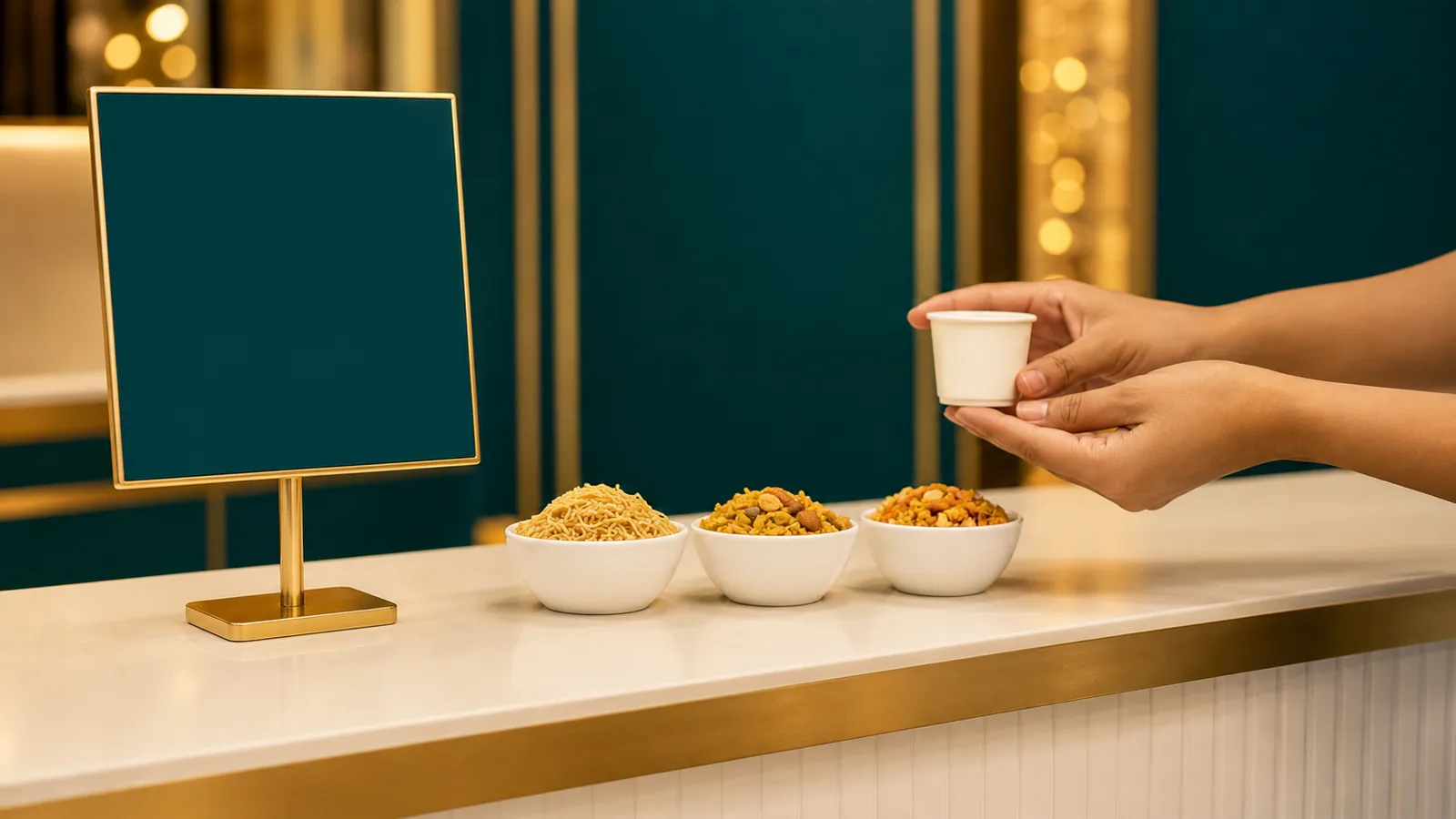
Sampling that UAE retailers allow falls into two broad formats: demonstrator-led tasting at a table, and hand-to-hand distribution near the category aisle without a table at all. The choice between them depends on the product and the store. A snack or a ready-to-eat item benefits from a table where a promoter can prepare and hand out small portions. A packaged staple, a beverage, or a household item is often better served by aisle sampling, where a promoter hands over a full or trial-size unit to a shopper walking past the fixture.
The economics come down to cost per trial against expected conversion. A weekend sampling slot at a large hypermarket in Dubai typically runs a set promoter day rate plus the cost of product consumed, and a well-run table can reach several hundred shoppers across a Friday and Saturday. Not every sample converts to a purchase that day, and that is expected. What matters is the smaller share who do buy, plus the larger share who now recognize the pack the next time they pass it on shelf.
A few things separate sampling that earns its budget from sampling that does not.
- Placement close to the actual shelf location, so a converted shopper can walk five steps and buy, not search the store.
- A promoter trained on the product story in under thirty seconds, not a scripted pitch nobody finishes hearing.
- Portion sizes calibrated to the product, generous enough to register flavor or texture, small enough to control cost per contact.
- A restock plan so the table never runs empty during peak footfall hours, which in most UAE hypermarkets fall between five and nine in the evening and across the full Friday-Saturday weekend.
Sampling works best as a launch or re-launch tool rather than a permanent fixture. Run it hard for a defined window around a listing, then move the budget to sustaining tactics like a gondola end booking or improved everyday shelf blocking.
Channel matters here too. Sampling inside a hypermarket reaches a broad, mixed shopper base in a single location, which suits a mass-market snack or beverage. Sampling built around traditional trade works differently: instead of one table in one large store, it means smaller demonstrations across a cluster of baqalas serviced by the same van sales route, timed to when the route representative is already visiting. Horeca sampling looks different again, often a chef-facing tasting session rather than a consumer-facing table, aimed at getting a product onto a menu rather than into a shopping basket that day.
How does a gondola end display earn its space?
A gondola end display sits at the end of an aisle, facing the main store traffic rather than the aisle itself. It is the single most requested piece of secondary display in modern trade because shoppers pass it whether or not they intend to shop that category, which makes it a strong tool for impulse purchase and for pushing volume on an item that already sells on the regular shelf.
Retailers price and allocate gondola ends on a calendar, usually monthly, and the good slots near store entrances or high-traffic junctions get booked out early. Getting one usually means working through the category buyer, not the store manager, and bringing a plan that ties the display to a specific promotional mechanic: a temporary price reduction, a multi-buy, or a bundled offer with a related item. A display that just restates the regular price rarely earns repeat bookings, because the retailer measures uplift against the cost of giving up that space to someone else.
Build quality matters more than most brands assume. A gondola end that looks thin, half-stocked, or crooked signals a weak brand regardless of what is inside the packs. The stronger builds we see share a few habits: full-height stacking where the category allows it, clear pricing signage visible from four or five meters away, and a facing count high enough that the display still looks full after the first hour of shopping traffic.
On the flip side, over-building a gondola end for a slow-moving SKU just ties up stock that should be turning through the regular shelf. Match the display size to a realistic sell-through estimate for the promotional window, usually one to two weeks in a hypermarket and closer to a month in smaller-format stores where footfall is lower.
How do you negotiate display space with a category buyer?
The category buyer, not the branch manager, controls which gondola ends and secondary display bays a brand gets across a retail group's stores. Building that relationship takes more than a single pitch meeting. Buyers want to see a promotional calendar in advance, a clear mechanic for each slot, and evidence from past bookings that the brand delivers what it promised in terms of stock availability and build quality. A brand that shows up asking for space without any of that context is asking the buyer to take on risk with no track record to justify it.
Bring three things to that conversation: a proposed date range tied to a real event or promotional window, a promotional mechanic already worked out with the trade marketing team, and a commitment on fill rate so the buyer knows stock will actually be there for the full booking. Buyers also respond well to brands that ask for a smaller number of well-chosen locations rather than every store in the group at once, since a concentrated first booking is easier to execute cleanly and easier to point to as a track record for the next request.
Category reviews, which most retail groups run once or twice a year, are also where activation performance feeds back into the wider negotiation. A brand that has run clean, well-stocked gondola ends across the previous cycle walks into that review with more credibility on shelf space, ranging and terms than one that has not been present at all.
Building a festive retail display shoppers notice
A festive display works differently from a standard gondola end because the shopper is not comparing price against a competitor SKU. They are buying into a moment: Diwali, UAE National Day, Ramadan, or the December holiday season. The display needs to look like it belongs to that occasion, not like a regular promotion wearing seasonal wrapping paper. Color, signage and the physical layout all carry weight here in a way they do not for an everyday secondary display.
Timing is the part most brands get wrong. A festive build that goes up the week of the event has already missed most of the shopping trip planning that happens ten to fourteen days earlier. For Diwali, that means displays should be live and fully stocked from the start of the two weeks before the date, since gifting and hosting purchases both spike well ahead of the actual evening. National Day in December follows a similar pattern, with flag-themed and gifting-format products moving from late November.
What a strong festive build includes
- A clear visual theme that reads from a distance, not just small icons on the shelf edge.
- Gift-ready formats or bundles where the category supports them, since festive shopping often means buying for someone else, not just the household.
- Stock depth planned for a compressed selling window, since most festive volume concentrates into ten to fourteen days rather than spreading across a month.
- Signage in both English and Arabic, matched to the store's typical customer mix.
Coordinating the build across every relevant store is the operational challenge. A brand running fifty or a hundred festive displays across the UAE needs a single execution standard, photo confirmation from the field, and a fast fix process for stores where the build does not match the plan on the first visit. This is where a distribution partner earns its keep: someone has to drive to each store, check the display, and correct it before the shopper traffic peaks.
Who staffs an activation, and what should they know?
Promoters and merchandisers are the visible face of any activation, and their training determines whether a well-planned display or sampling table performs on the day. A promoter needs three things before a shift starts: the product story in plain language, the price and offer mechanic for that specific store, and clear instructions on portion size or unit handout limits. Merchandisers who build and maintain gondola ends and festive displays need a different skill set again, closer to visual merchandising than to sales.
Consistency across stores is harder than it sounds. A brand with activations running in twenty stores across Dubai, Sharjah and Abu Dhabi on the same weekend needs a way to check that every table looks the same and every display follows the same layout, without a manager physically present at each one. Photo reporting from the field, checked against a reference layout, is the most reliable way we have found to hold that line.
Staffing cost is often the largest single line in an activation budget, ahead of the product given away in sampling or the fee paid for the display space itself. Getting the ratio right, enough promoter hours to cover peak traffic without paying for idle time in the slow midweek hours, is where most of the margin in a field marketing program either gets protected or lost.
Why does the playbook change by channel?
Modern trade, traditional trade and horeca are not three versions of the same activation. They are three different problems. A modern trade hypermarket gives a brand one big location with high, predictable footfall and a formal buying process through the category team. The activation itself, whether sampling or a gondola end, is concentrated in a single site and easy to check with one store visit. Traditional trade flips that. Instead of one location with heavy footfall, a brand is working across hundreds of independent baqalas, each with modest daily traffic, reached through the van sales route rather than a central buying office. Activation in that channel looks like better shelf-edge signage at the point of sale, small counter displays the shop owner is willing to keep near the till, and sampling timed to when the van sales representative is already on site restocking the shop.
Horeca activation is different again. The audience is not a household shopper walking a store aisle but a chef, a purchasing manager, or a food and beverage director deciding what goes on a menu or into a catering order. Sampling here means a tasting session with the kitchen team, not a table facing store traffic, and the win is a menu listing or a standing order rather than a single basket sale. Building a program that treats all three channels the same way, using hypermarket-style tactics in a baqala or a restaurant kitchen, wastes effort on two of the three.
How do you measure whether an activation sold anything?
The honest answer is that measurement in physical retail is harder than in e-commerce, where every click is logged. Still, there are practical ways to read whether a sampling table, a gondola end or a festive display did its job.
- Compare sell-out at the activated store against a matched control store with no activation, over the same date range.
- Track stock replenishment frequency during the activation window. A gondola end that needs restocking twice a day is working; one that needs restocking once a week is not.
- Ask the retailer for point-of-sale data on the specific SKUs and dates, where the retailer relationship allows it.
- Watch repeat listing requests. If a category buyer offers the same brand another slot the following quarter, that is a signal the previous one performed.
None of these methods is perfect on its own, which is why most experienced teams triangulate two or three of them rather than relying on a single number. What's more, the same activation can perform differently store to store depending on local footfall and competitor activity that week, so judging a program on one location is a mistake worth avoiding.
Baseline sales matter as much as activation-week sales. A brand that only looks at what sold during the promotional window, without comparing it against the weeks before and after, risks counting demand it would have captured anyway as new incremental volume. The cleaner read comes from looking at the full arc: the weeks leading into the activation, the activation window itself, and the weeks after it ends, to see whether the display created a lasting shift in shelf performance or just pulled forward purchases that would have happened regardless.
Setting expectations before the activation starts
The most useful step happens before the display goes up, not after it comes down. Agree on what success looks like with the internal stakeholder or the brand principal before the booking is confirmed: a sell-through target, a trial rate for sampling, or a repeat booking from the retailer. Without that agreement, every result after the fact gets interpreted differently depending on who is reading it, and the same numbers can be called either a win or a disappointment.
Where does activation budget usually go to waste?
A few patterns repeat often enough across brands and categories that they are worth naming directly.
- Booking a gondola end without a promotional mechanic behind it, so the display looks the same as everyday shelf and earns no incremental attention.
- Running sampling in a location too far from the actual shelf fixture, so converted shoppers cannot find the product to buy it.
- Building a festive display that goes live too close to the holiday, missing the bulk of pre-event shopping trips.
- Under-resourcing restock, so a strong display sits half-empty during the exact hours it should be full.
- Treating every store the same, when footfall patterns and shopper profile differ meaningfully between a Dubai Marina hypermarket and a Sharjah neighborhood supermarket.
Fixing these does not require a bigger budget. It requires matching the tactic to the goal, planning the calendar around actual shopping behavior rather than the retail calendar alone, and putting people on the ground who check the work rather than assuming a plan executed as written.
Another quiet source of waste is poor communication between the brand's head office and the field team executing the activation. A display brief written weeks in advance, then handed to a merchandiser without a walkthrough, tends to drift from the original design by the time it reaches the third or fourth store on the route. Small gaps compound: a missing shelf talker here, a wrong facing count there, until the display in store fifteen looks nothing like the one approved by the brand manager. A short briefing call before the rollout, and a reference photo every merchandiser can check their build against, closes most of that gap before it starts.
How Bagason runs shopper marketing UAE programs for partner brands
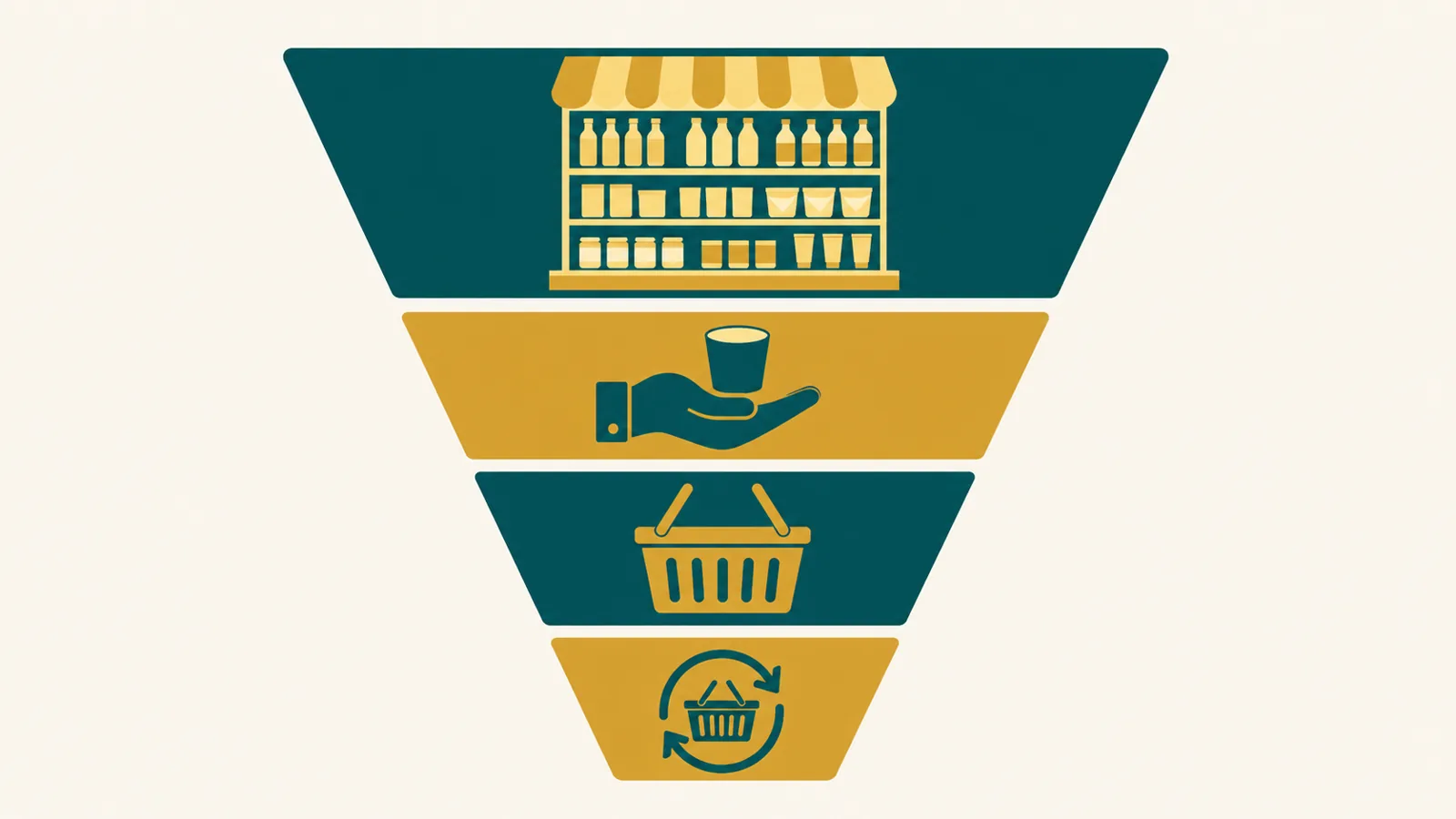
Bagason's marketing pillar sits alongside sales and distribution rather than as a separate function bolted on afterward, which matters because the same field team that handles van sales and merchandising in traditional trade also executes activations. That means a sampling table, a gondola end build, or a festive display is being run by people who already know the store, the buyer, and the shelf layout, not by an outside agency parachuted in for the weekend. Across modern trade accounts like the large hypermarket groups, traditional trade through van sales to independent baqalas, and horeca, the activation calendar gets planned against the actual retail calendar for the UAE: Ramadan, Eid, Diwali, National Day, and the December holiday period, alongside routine monthly promotional slots. For brand owners working with us on owned lines like American Harvest or Tropico, or through distribution partnerships with brands like Bikaji or Wai Wai, activation planning happens as one conversation with the same team handling the listing, the pricing, and the shelf placement. That coordination is what keeps a sampling push, a gondola end booking and a festive build pointed at the same commercial goal instead of working against each other.
Key takeaways
- In-store activation FMCG covers sampling, secondary displays and festive builds, each suited to a different commercial goal: trial, volume, or occasion-driven demand.
- Product sampling UAE stores respond to works best placed close to the shelf, staffed with well-briefed promoters, and run as a defined-window launch tool.
- A gondola end earns repeat bookings when it carries a real promotional mechanic and a build quality that looks full through the whole activation window.
- Festive retail display timing matters more than most brands assume: builds need to go live ten to fourteen days ahead of Diwali or National Day, not the week of.
- Shopper marketing UAE programs perform best when the same team plans sampling, display and festive activity together, rather than treating each as a separate booking.
Every piece of this sounds simple enough on paper. It gets complicated the moment a brand tries to run it across forty or a hundred stores at once, on a UAE-wide calendar, with staff who need to be trained, checked and corrected in the field every single week. If you want to talk through what an activation calendar could look like for your brand across UAE retail, talk to our team. You can also browse more distribution and shopper-marketing context on our blog, or learn more about how our three pillars work together on the Bagason homepage.
Frequently asked questions
What is in-store activation FMCG, in plain terms?
It is any temporary presence a brand builds inside a store beyond its normal shelf spot, aimed at changing shopper behavior on the day. That covers product sampling, gondola end and secondary displays, seasonal or festive builds, and shelf-edge signage tied to a specific promotion or event.
How far in advance should a festive retail display be booked?
Best practice is to confirm the booking with the category buyer one to two months ahead, then have the physical build live and fully stocked ten to fourteen days before the event itself. Diwali and National Day both see shopping trips concentrate well ahead of the actual date, so a display that appears the week of the event misses much of that window.
Is product sampling worth the cost for an established brand, or only for new launches?
Sampling earns its keep fastest around a launch or re-launch, when trial is the actual goal. For an established line, the same budget usually performs better on a gondola end or improved everyday shelf blocking, since most regular shoppers already know the product and do not need a taste to be convinced.
Who decides which stores get a gondola end display?
The category buyer at the retail group's head office, not the individual store manager, controls that allocation. Getting a slot means bringing a promotional calendar, a clear mechanic, and a track record of good stock availability from previous bookings, not just asking at the store level.
Does in-store activation work the same way for traditional trade as for hypermarkets?
No. A hypermarket activation concentrates in one high-footfall location managed through a formal buying process. Traditional trade activation is spread across many independent baqalas with modest daily traffic, usually delivered through the van sales route rather than a central booking, with smaller counter displays and point-of-sale signage instead of a large gondola end build.
How do you know if an in-store activation actually worked?
Compare sell-out at the activated store against a similar store without the activation, watch how often the display needs restocking, and where possible ask the retailer for point-of-sale data on the specific dates. A repeat booking offer from the same category buyer is also a practical signal that the previous activation performed.