Getting a new SKU listed in a UAE supermarket chain feels like the finish line. It isn't. A listing only guarantees a barcode in the system and, usually, one facing on the bottom or top shelf where almost nobody looks. What happens next — how many facings that product holds, where it sits in the planogram, and whether it survives the next category review — decides whether the listing turns into real sell-through or quietly gets delisted in six months.
Brands that plan for the planogram, not just the listing, get better shelf positions faster and hold onto them longer. This is what that planning actually looks like on the ground in UAE modern trade.
Why Getting Listed Isn't the Same as Getting Seen
A listing is a commercial agreement between a brand (or its distributor) and a retailer's buying team. It says the product is approved for sale in that chain, at that price, under those trade terms. It says nothing about where the product physically sits on the shelf, how many units face outward, or how long it stays there once a shopper walks past.
Shelf presence is decided separately, by the category manager building the planogram — the fixture-by-fixture map of exactly which SKU goes where, at what height, and with how many facings. New entrants routinely get listed and then placed at the bottom shelf with a single facing, which caps their visible rate of sale before the product has any real chance to prove itself. Retailers aren't being difficult here; they're protecting proven performers with more space until a new SKU earns the right to more.
That's the gap brands need to plan around: the listing gets you in the store, the planogram decides whether anyone notices you're there.
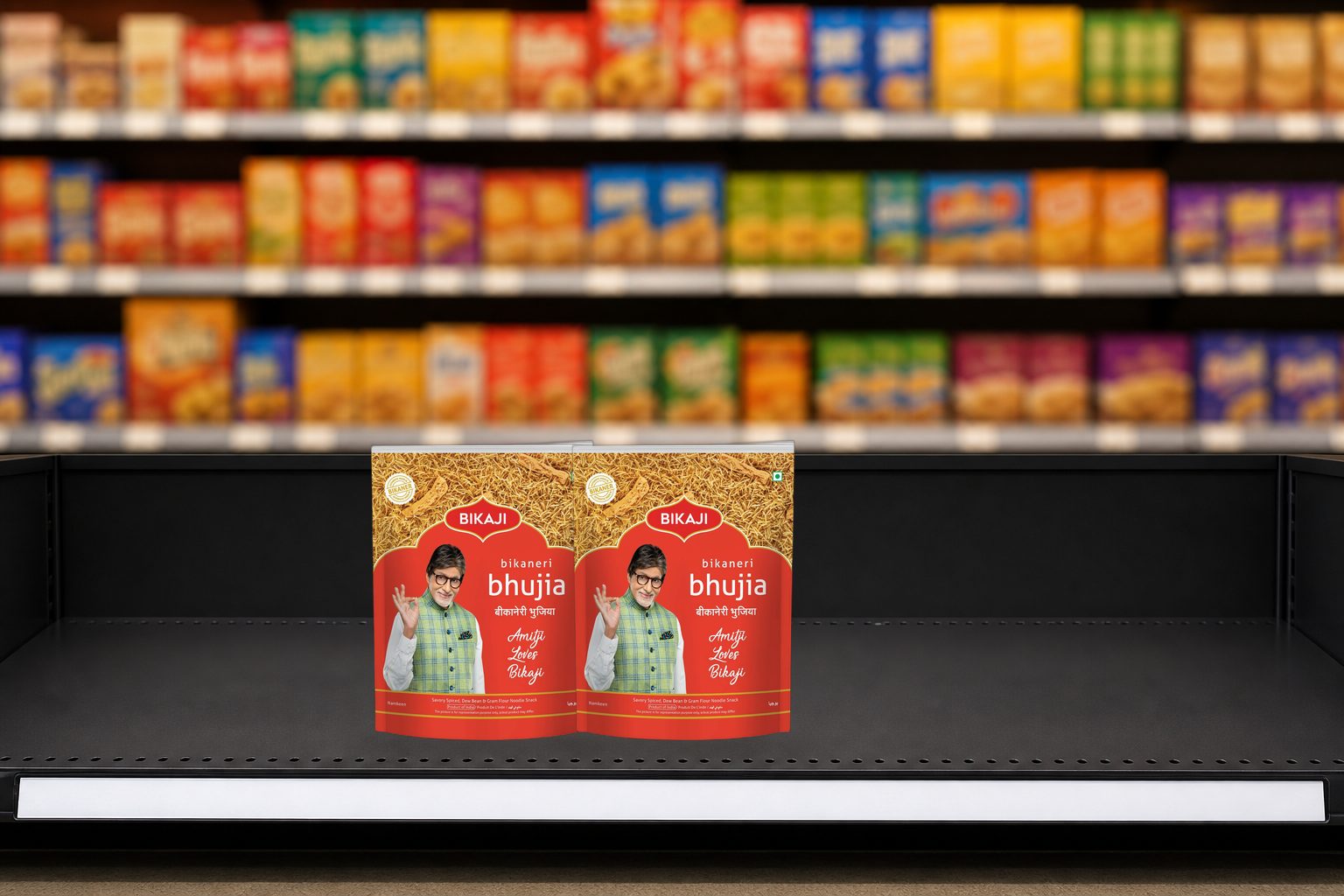
How UAE Category Managers Build a Planogram
Most modern trade chains in the UAE run planogram reviews on a fixed cycle — typically quarterly, sometimes twice a year for slower-moving categories. Ahead of each review, the category manager (often working with a category captain, usually the largest or most influential brand in that category) pulls sales-per-facing data for every SKU on the fixture and reallocates space accordingly.
The logic is close to a return-on-space calculation: total category sales divided across total linear shelf length, benchmarked against each SKU's actual rate of sale. A product selling well per facing gets more facings at the next review. A product underperforming its allocated space gets cut, sometimes down to zero. New SKUs enter this system with no track record, which is exactly why they start small.
The Facings Math Retailers Actually Use
Retailers rarely give a new SKU more than two to three facings at launch, and one facing is common in tighter categories like spices, snacks, or condiments where dozens of SKUs compete for the same fixture. Below two facings, a product effectively disappears against neighbours with four, six, or eight — shoppers scan shelves in blocks of colour and size, and a single facing reads as background noise.
Facings also interact with replenishment. A single facing with slow store-level restocking means the product is invisible (or out of stock) for large stretches of the week, which then shows up in the sales-per-facing data as poor performance — even if the underlying product is selling fine whenever it's actually on the shelf. This is why out-of-stock control at store level matters as much as the initial facings negotiation.
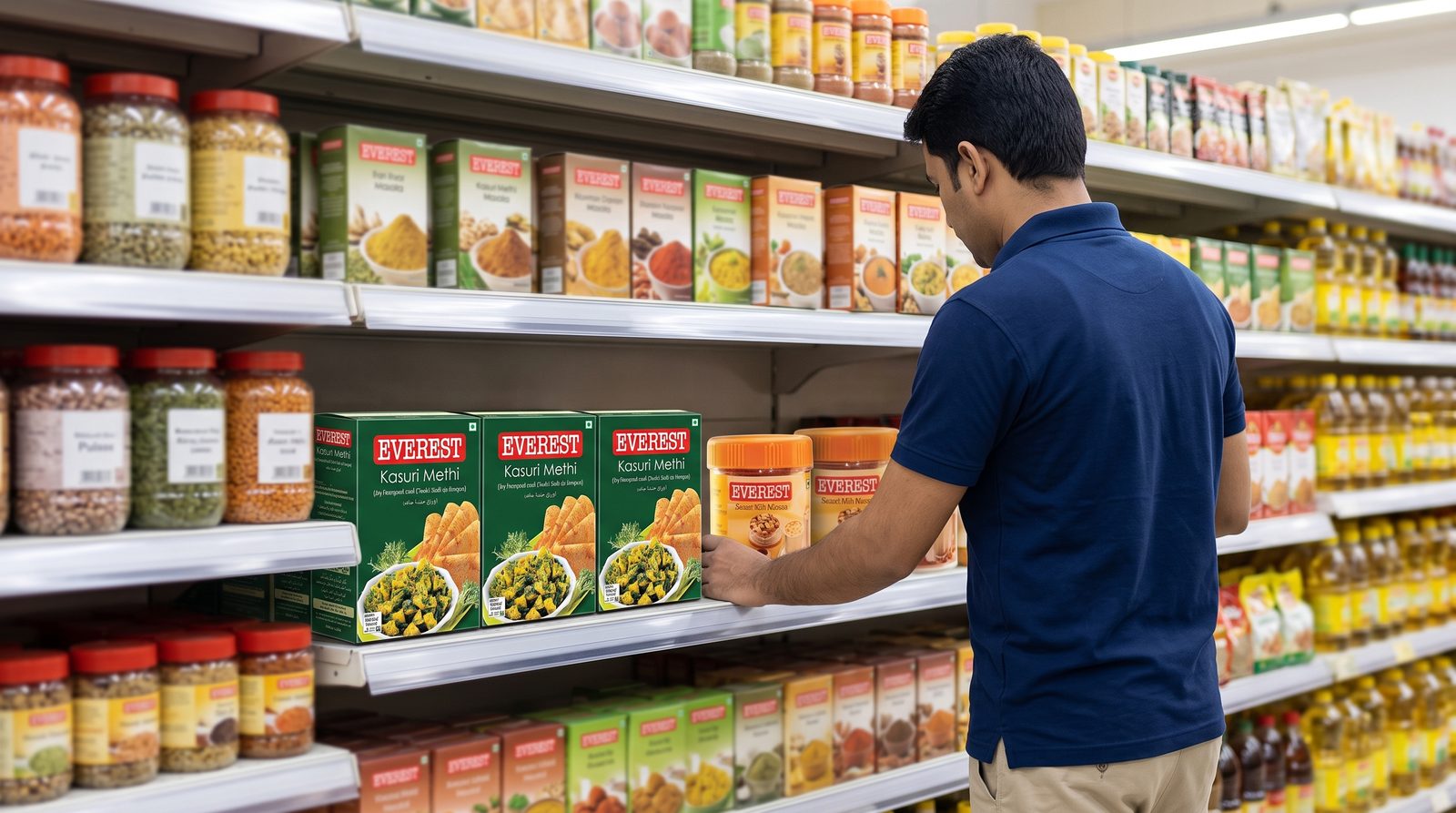
What New Brands Can Control Before the Planogram Review
Brands have real leverage before a category review, even with zero UAE sales history:
- Pack format consistency. Case sizes and unit dimensions that match standard shelf depth and fixture height reduce the chance a buyer places the product somewhere awkward simply because it doesn't fit the existing layout.
- Clean master data. Accurate GS1 barcodes, correct case pack quantities, and complete product images in the retailer's system prevent listing delays that push a brand past a planogram deadline and into a three-month wait for the next cycle.
- Velocity proof from other markets. Sell-through data from GCC or export markets, even modest volumes, gives a buyer something to benchmark against instead of guessing.
- A defined block, not scattered SKUs. Proposing three or four SKUs together as a coherent block (same brand, adjacent flavours or variants) is easier for a category manager to place than ten SKUs spread thin with one facing each.
Negotiating More Facings as a New Entrant
The realistic path to more shelf space is sequential, not a single negotiation. Most brands start with a trial block at minimum facings, paired with a secondary display or an end-cap for a defined promotional window to generate the first burst of sell-through data. That data then becomes the evidence used at the next planogram review to argue for expanded facings on the strongest one or two SKUs, rather than defending the full original range.
Timing the ask matters as much as the argument. Bring facings data to a category manager mid-cycle and it sits in a folder until the next scheduled review. Bring it two to three weeks ahead of the review, formatted the way the retailer already reports sales internally, and it has a real chance of shaping the next planogram. Understanding the mechanics of the underlying supermarket listing process and how trade promotions are structured helps brands time that ask correctly.
Common Planogram Mistakes New Brands Make in the UAE
The same errors show up repeatedly with brands entering the UAE for the first time:
- Launching too many SKUs at once. Ten new SKUs at one facing each rarely outperform three SKUs at two facings each. Concentrated space builds a visible block; scattered space builds noise.
- Ignoring shelf depth in pack design. A pack that's slightly too deep or tall for the standard fixture either gets tucked out of sight or bumped down a shelf tier during the next reset.
- Underestimating bilingual label visibility. Arabic-English labelling that reads clearly at a glance, rather than as an afterthought sticker, performs better in a crowded facing where shoppers decide in under two seconds.
- Treating the first planogram placement as permanent. It isn't. Every review cycle is a fresh negotiation, and brands that don't show up with updated sales data tend to lose facings to whoever does.

Working With a Distribution Partner on Shelf Strategy
Planogram negotiation is easier with a distributor who already has a standing relationship with the retailer's category team, existing merchandising coverage to catch out-of-stocks between resets, and enough SKUs on shelf across the portfolio to make the case for more space credible. This is a core part of what a brand representation partner does in the UAE: not just securing the initial listing, but managing the ongoing planogram compliance audits, restocking cadence, and facings renegotiation that determine whether a launch actually converts into sustained sell-through.
A brand entering the UAE on its own is negotiating facings once a year, if that. A brand working through an established distributor is negotiating continuously, backed by data from every review cycle and every store visit in between.
Getting the Shelf, Not Just the Listing
Winning a listing proves a retailer will stock a product. Winning facings proves shoppers will actually see it. The brands that treat these as two separate battles — and prepare specifically for the second one, with pack formats, velocity data, and a sequential facings strategy — are the ones still on shelf a year after launch, not the ones quietly delisted at the first review nobody warned them about.