The landscape of the future food distribution Middle East is currently undergoing a radical structural realignment. Driven by a combination of rapid urbanisation, a burgeoning tourism sector, and a strategic national focus on self-sufficiency, the region is no longer merely a transit hub but a sophisticated consumer market. Senior executives across the GCC must now navigate a complex intersection of geopolitical shifts and rapid technological adoption. The traditional model of moving goods from point A to point B is being replaced by a multi-layered ecosystem where data is as valuable as the physical inventory. As the region prepares for significant population growth and a continued influx of international brands, the infrastructure supporting the food logistics trends UAE must evolve to maintain competitiveness and operational resilience.
1. Introduction: The structural forces reshaping food distribution in the Middle East right now
The Middle East, and specifically the UAE, serves as a global case study for rapid economic transformation. Several macro-economic forces are currently converging to reshape the FMCG landscape. Firstly, the demographic profile of the region is shifting. With a high percentage of young, tech-savvy consumers, the demand for diverse, high-quality, and sustainably sourced products is reaching record levels. Secondly, the post-pandemic emphasis on food security UAE has moved from a policy discussion to a multi-billion dollar investment reality. This has forced distributors to rethink inventory buffers and domestic sourcing strategies.
Furthermore, the FMCG innovation GCC is being propelled by the sheer scale of the hospitality sector in cities like Dubai and Riyadh. With tens of thousands of establishments requiring daily deliveries, the pressure on the supply chain is immense. Distributors are no longer just wholesalers; they are critical partners in the regional quest for economic diversification. The integration of the Middle East into global trade corridors also means that local distributors must adhere to international standards of efficiency and transparency. These structural forces are not temporary fluctuations but permanent shifts that require a five-year strategic horizon for any serious market participant.
2. Digital transformation — ERP integration, API connectivity with retailers, data-driven operations
The era of manual ledger entries and fragmented communication is over. The digital supply chain UAE is now defined by seamless integration between distributors, principals, and retailers. Modern Enterprise Resource Planning (ERP) systems are the backbone of this transformation, allowing for real-world visibility into every SKU. For a distributor managing over 700 SKUs, the ability to synchronise data across multiple warehouses is a prerequisite for survival. The focus has shifted towards API connectivity, which allows for automated stock replenishment and real-time pricing updates between a distributor and major retail chains like Carrefour* or Lulu.
This connectivity reduces the margin for human error and significantly accelerates the order-to-cash cycle. Bagason Middle East and other leading players are increasingly leveraging these digital tools to create a more transparent flow of information. Data-driven operations allow executives to identify bottlenecks in the food logistics trends UAE before they result in stockouts or service failures. By moving away from legacy systems and embracing cloud-based architectures, distributors can now offer their brand partners detailed analytics on market penetration and consumer preferences, transforming the distributor into a strategic data consultant.
3. E-commerce and direct-to-consumer channels — how they are changing the distributor's role
The rise of e-commerce food distribution UAE has fundamentally altered the traditional three-tier distribution model. While B2B remains the core volume driver, the explosion of quick-commerce platforms and direct-to-consumer (DTC) brands has forced distributors to become more agile. The distributor's role is expanding to include last-mile logistics support and specialised fulfilment services for online platforms. This shift requires a different approach to warehouse management, moving from pallet-level movement to piece-picking and high-velocity small-order processing.
Moreover, the digitisation of the consumer journey means that brand visibility is now managed across both physical shelves and digital storefronts. Distributors must ensure that their product data is accurate, consistent, and optimised for search engines on various retail apps. This omnichannel reality means that future food distribution Middle East will be characterised by a hybrid model where the distributor acts as a central hub for multiple sales channels. The ability to manage inventory for both a supermarket chain and a rapid-delivery app simultaneously is a complex task that defines the modern, high-performance distribution firm.
4. Warehouse automation — ASRS, robotic picking, RFID, what is now affordable for mid-sized distributors
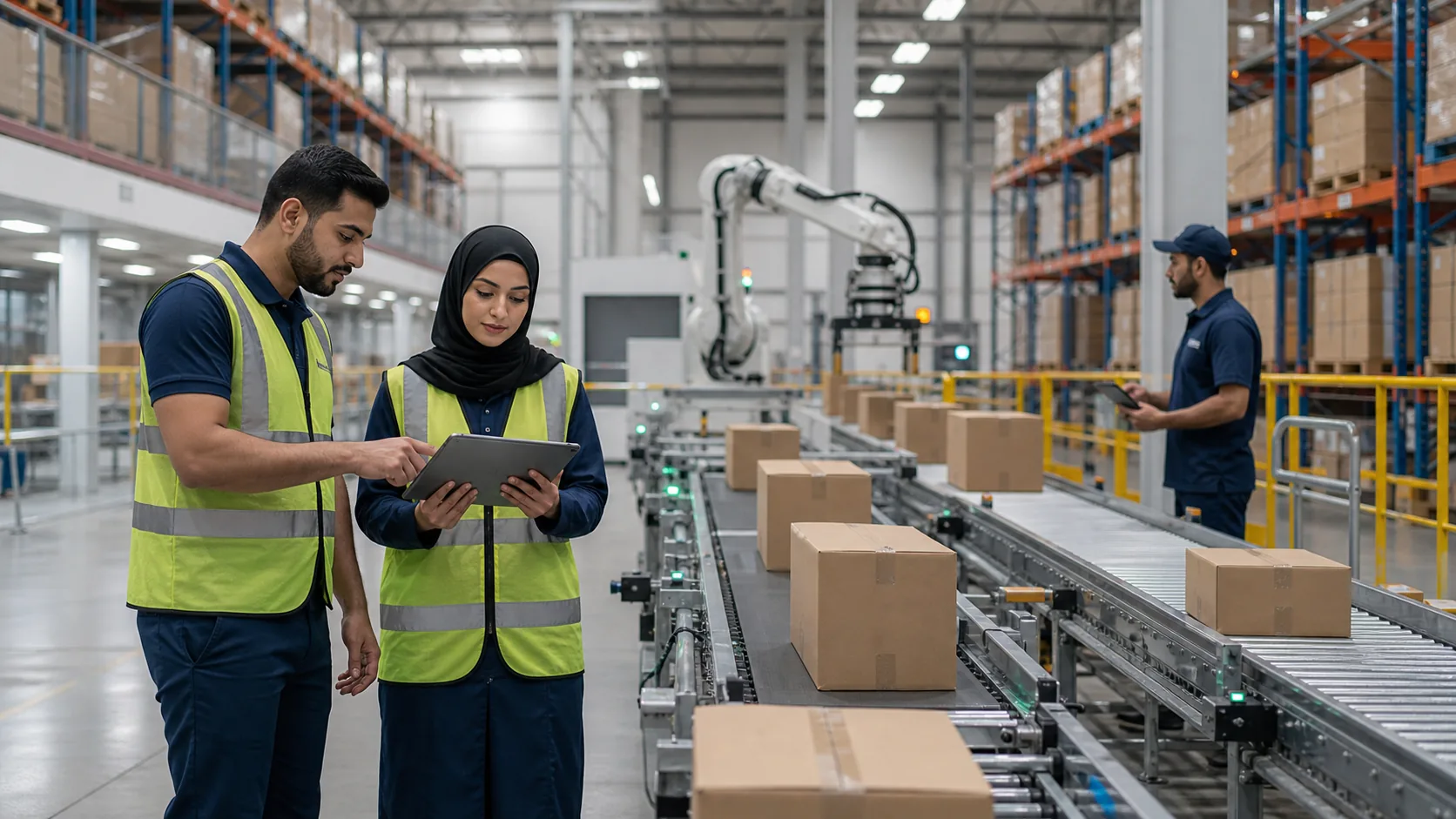
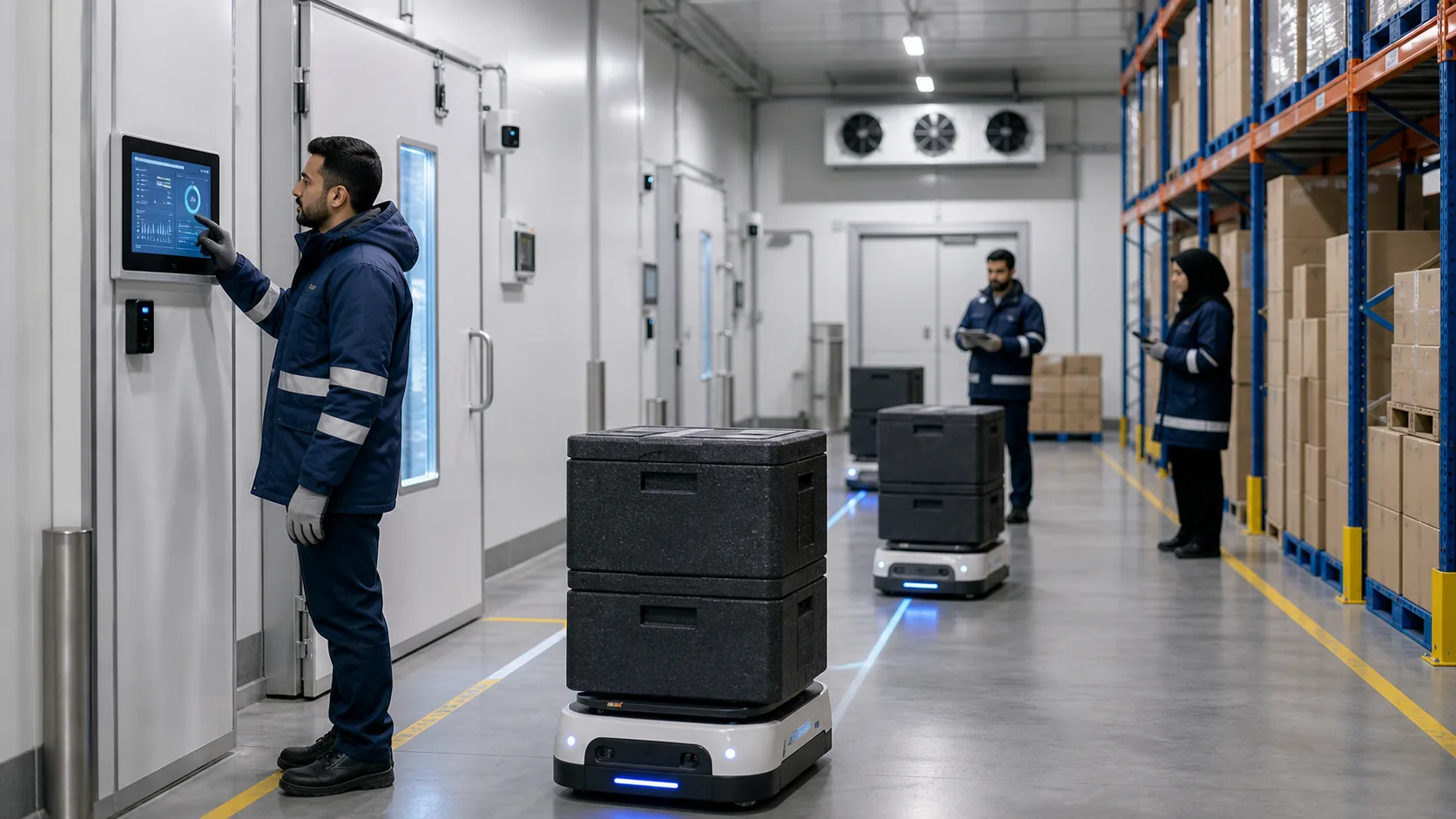
In a region where real estate and cooling costs for warehouses are significant, warehouse automation FMCG has become a strategic necessity rather than a luxury. Automated Storage and Retrieval Systems (ASRS) are now becoming more accessible for mid-sized distributors, allowing for higher storage density and reduced labour costs. These systems are particularly effective in the UAE, where the climate necessitates expensive temperature-controlled environments. By maximising vertical space, distributors can significantly lower their cost-per-pallet stored.
Beyond ASRS, the adoption of RFID (Radio Frequency Identification) at the case and pallet level is revolutionising tracking and tracing capabilities. Robotic picking arms and autonomous mobile robots (AMRs) are also entering the local market, offering a way to mitigate labour shortages and increase picking accuracy. These technologies allow for 24/7 operations, which is essential for meeting the demanding delivery windows of the Dubai food service industry. For Bagason Middle East, investing in these scalable automation solutions ensures that the supply chain can handle increasing volumes without a proportional increase in overhead, maintaining a lean and efficient operation.
5. AI in demand planning and inventory forecasting
Artificial Intelligence is the most potent tool currently available for addressing the volatility of the food market. AI demand planning food allows distributors to move from historical, reactive forecasting to predictive models that account for hundreds of variables, including seasonal trends, regional events, and even weather patterns. In the GCC, where religious holidays and major international events like COP or Dubai Expo significantly impact consumption, AI provides a level of precision that traditional methods cannot match.
By accurately predicting demand, distributors can optimise their stock levels, reducing the capital tied up in excess inventory while simultaneously lowering the risk of stockouts. This is particularly vital for perishable goods where shelf life is a constant concern. Predictive analytics also help in identifying slow-moving items early, allowing for proactive marketing or discounting strategies. The integration of AI into food distribution technology UAE is transforming the supply chain from a cost centre into a source of competitive advantage, enabling better cash flow management and improved service levels for retail partners.
6. Food security and supply chain resilience — UAE import dependence, strategic reserves, route diversification
The issue of food security UAE remains a top-tier priority for the federal government. With the region importing approximately 80 to 90 percent of its food requirements, the resilience of the distribution network is a matter of national importance. The government's National Food Security Strategy 2051 aims to make the UAE the world's most food-secure nation, and distributors play a pivotal role in this vision. This involves maintaining strategic reserves of essential commodities and developing robust, diversified supply routes to mitigate the risk of global trade disruptions.
Distributors are increasingly working with local producers to supplement international imports, fostering a more resilient domestic ecosystem. FMCG innovation GCC is also seeing the development of more sophisticated cold-chain technologies that extend the shelf life of products, further enhancing food security. By diversifying sourcing origins and investing in multi-modal logistics, distributors can ensure a consistent supply of food products even in the face of geopolitical or environmental shocks. Resilience is no longer just about recovery; it is about building a system that is inherently stable and capable of adapting to a rapidly changing global environment.
7. Sustainability regulations — UAE net-zero 2050, sectoral roadmaps, packaging regulations
Sustainability is no longer an optional corporate social responsibility initiative; it is a regulatory requirement. With the UAE's commitment to the Net-Zero 2050 Charter, the food distribution sector is facing new mandates to reduce its carbon footprint. This includes the implementation of stricter packaging regulations, particularly concerning single-use plastics, and a push towards more energy-efficient logistics. Distributors are now evaluating the feasibility of electric vehicle (EV) fleets for last-mile delivery and solar-powered cooling systems for their warehouses.
Furthermore, the future food distribution Middle East will be shaped by the circular economy, where waste reduction is integrated into the business model. This involves better management of food waste through AI-driven forecasting and the adoption of biodegradable or recyclable packaging materials. Strategic directors must now incorporate ESG (Environmental, Social, and Governance) metrics into their long-term planning, as both investors and consumers are increasingly demanding transparency regarding the environmental impact of the products they purchase. Compliance with these evolving regulations is essential for maintaining a licence to operate in the modern UAE market.
8. The future role of the food distributor — value-added services, data services, omnichannel capability
The traditional wholesaler model is being superseded by the concept of the Value-Added Distributor. In the future, the success of a firm will be measured by the services it provides beyond simple logistics. This includes market entry consultancy for international brands, specialised marketing support, and the provision of granular market data to principals. As food distribution technology UAE becomes more standardised, the differentiator will be the ability to interpret data and provide actionable insights that drive brand growth.
Omnichannel capability is another cornerstone of the future distributor's role. This means having the infrastructure to serve traditional retail, modern trade, e-commerce platforms, and HORECA (Hotel, Restaurant, and Cafe) sectors with equal efficiency. By offering a comprehensive suite of services, from regulatory compliance and label translation to sophisticated digital marketing, distributors become indispensable partners to the brands they represent. Bagason Middle East is already moving in this direction, positioning itself as a strategic bridge that connects global food innovation with the unique requirements of the Middle Eastern consumer.
9. Closing: How Bagason is investing for the future
As we look towards the next decade, the commitment to innovation and operational excellence will define the leaders in the regional FMCG sector. Bagason Middle East is proactively investing in the technologies and infrastructure required to lead this transformation. With two strategically located warehouses and a robust portfolio of over 700 SKUs, the company is focusing on deep digital supply chain UAE integration and the adoption of advanced warehouse automation FMCG. By prioritising data-driven decision-making and sustainable practices, the firm is ensuring it remains at the forefront of the industry.
The future of the food distribution industry in the UAE is one of immense opportunity for those willing to embrace change. Through strategic partnerships, technological investment, and a relentless focus on service quality, the company continues to support over 8,000 partners across the region. As the Middle East continues its journey towards becoming a global leader in food security and innovation, the role of a reliable and forward-thinking distributor has never been more vital. By aligning our strategies with national visions and consumer trends, we are not just participating in the market; we are helping to build the future of food in the Middle East.
Sources and References
This article draws on publicly available government data, industry body reports, and Bagason Group operational experience. All figures are estimates and should be treated as directional.
- UAE Ministry of Economy — National economic indicators and trade data
- Dubai Chambers — Dubai Economic Report
- UAE Federal Competitiveness and Statistics Centre (FCSA) — Consumer spending and trade statistics
- Gulfood — Industry Insights and Market Reports
- UAE Ministry of Human Resources (MOHRE) — Labour and workplace regulations
- Bagason Group — Internal distribution operations and market coverage data