The moment the evening air turns crisp enough for a light jacket, most UAE kitchens start reaching for the same thing: a pot of something hot and spiced. A good masala chai recipe is usually the first one out, followed by kahwa, karak, and whatever spiced infusion the household grew up on. This guide walks through all four, with one full recipe you can lean on all season and enough variations to keep winter evenings interesting.
Cooler months in Dubai, Abu Dhabi and Sharjah are short, but residents make the most of them. Balconies get used again. Windows open in the morning. And kitchens fill with the smell of cardamom, ginger and cloves simmering in milk. Whether you grew up on chai, kahwa, or something else entirely, this is the season to try them all.
What makes a masala chai recipe worth repeating
A masala chai recipe earns a permanent spot on the stove for a few reasons. It uses ingredients most households already keep on hand: black tea, milk, and a handful of whole spices. It comes together in under fifteen minutes. And it adapts to whoever is drinking it, stronger for some, milkier or less sweet for others.
The word "masala" means a mix of spices, so there is no single correct version. Families in Punjab lean on fennel and black pepper. Kerala households favour more ginger. Mumbai street vendors often add a pinch of nutmeg. What stays constant is the method: simmer, don't just boil, and let the spices infuse properly rather than flash through the pot.
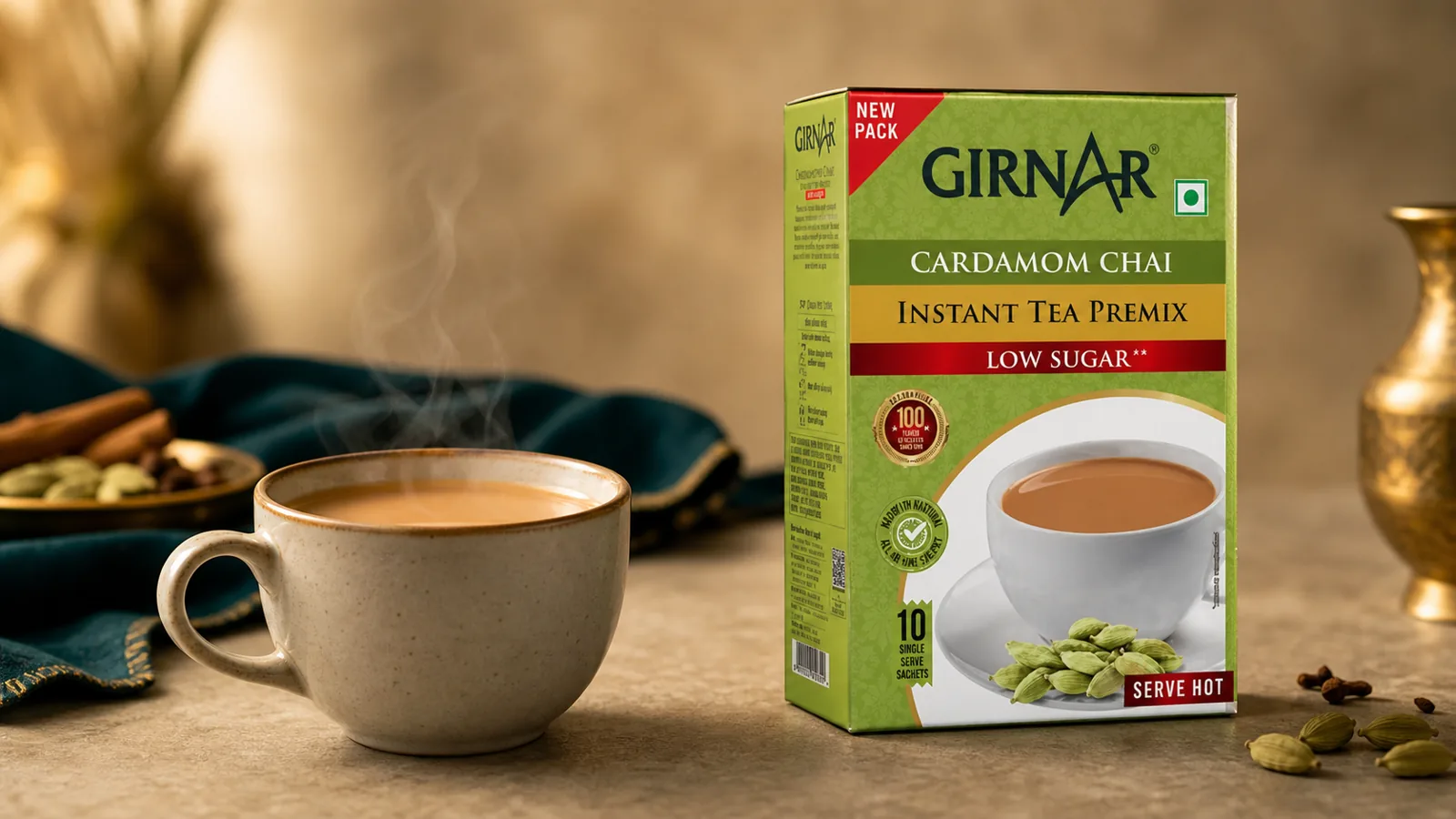
For a household that wants a reliable base without measuring spices every morning, a ready masala chai premix such as Girnar is a common shortcut in many UAE homes, especially on weekday mornings when nobody has ten minutes to spare. Good to have both routes on hand: the from-scratch method for weekends and gatherings, and a premix for the rush of a Monday commute.
The only masala chai recipe you need this season
This version makes four small cups, the size most people drink at a sitting. It holds up whether you like your chai strong and dark or lighter and sweeter. Adjust the water-to-milk ratio to taste; some households go half and half, others prefer mostly milk.
Ingredients
- 2 cups water
- 1.5 cups whole milk (or your preferred milk)
- 3 teaspoons loose black tea (or 3 tea bags)
- 4 green cardamom pods, lightly crushed
- 1-inch piece of fresh ginger, crushed or grated
- 4 whole cloves
- 1 small cinnamon stick
- 2-3 teaspoons sugar or jaggery, or to taste
- A pinch of black pepper (optional)
Method
- Bring the water to a boil in a small saucepan.
- Add the crushed cardamom, ginger, cloves, and cinnamon stick. Let it boil for 2 minutes so the spices open up.
- Add the tea and let it boil for another minute until the water turns a deep reddish-brown.
- Pour in the milk and bring the whole pot back to a gentle boil, watching closely so it doesn't rise and spill over.
- Lower the heat and simmer for 3-4 minutes, stirring occasionally.
- Add sugar or jaggery, stir until dissolved, then simmer for one more minute.
- Strain into cups and serve while it's still steaming.
A few small habits change the result more than people expect. Crushing the cardamom pods instead of using them whole releases far more flavour. Simmering rather than boiling hard keeps the milk from separating. And straining twice, once through a fine sieve and once more if needed, gives you a cleaner cup without bits of spice floating on top.
Kahwa: Arabic winter tea with its own character
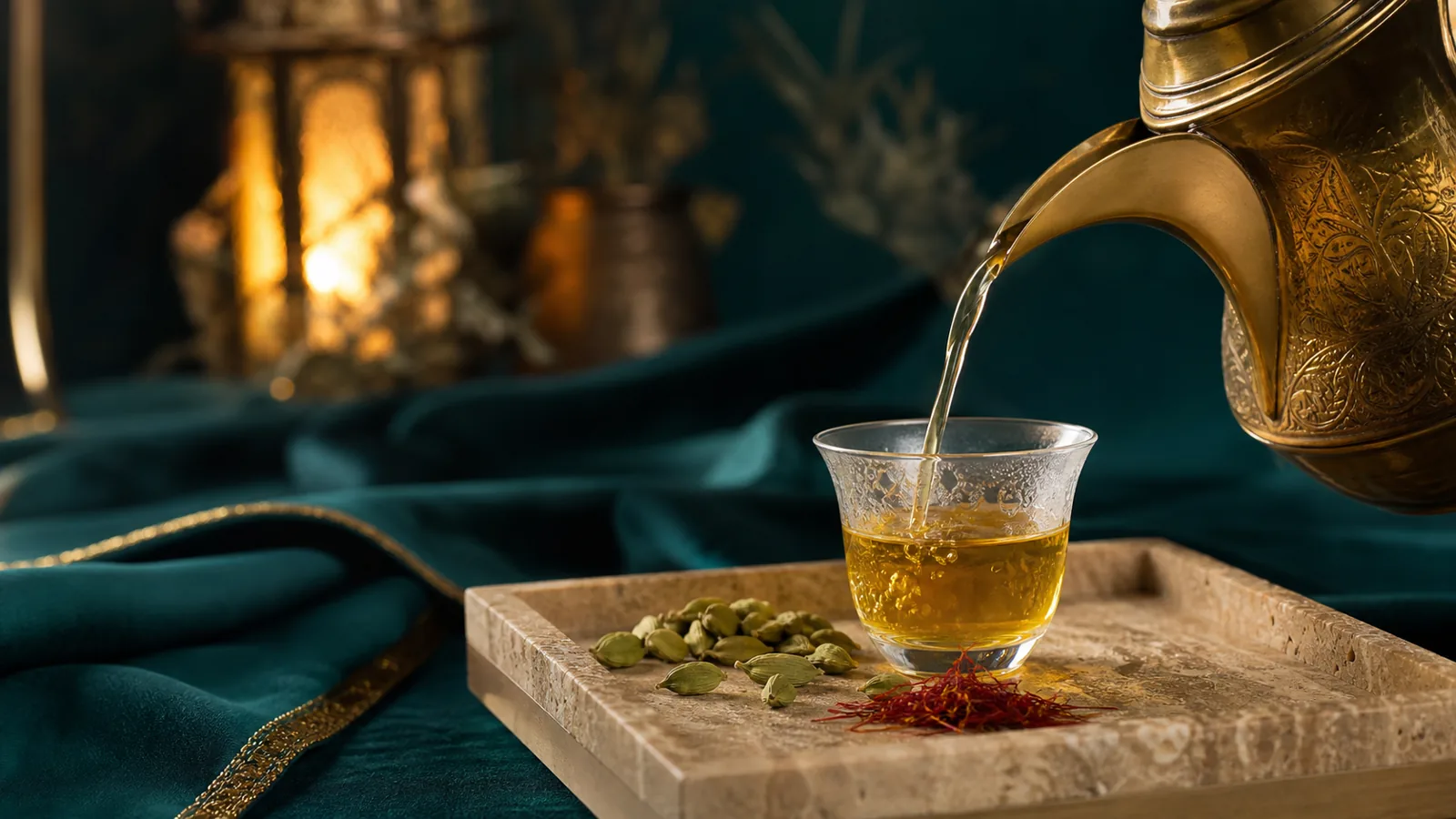
Where masala chai leans on milk and black tea, a kahwa recipe goes the opposite direction. This is a clear, green or black tea infused with cardamom and saffron, sometimes with a touch of rose water, and served without milk at all. It's the tea you'll find in a majlis, at a family gathering, or offered the moment guests walk through the door across the Gulf.
Kahwa is less about a strict method and more about balance. Too much saffron and it turns bitter. Too little cardamom and it tastes flat. The classic approach steeps loose tea leaves with green cardamom and a few saffron threads in hot water for several minutes, then strains and serves it in small cups, often alongside dates.
Some households add a sliver of dried rose petal or a drop of rose water at the end for fragrance. Others keep it plain, letting the cardamom and saffron do all the work. Either way, kahwa is meant to be sipped slowly, not gulped, which makes it a natural choice for evening conversation rather than a quick morning cup.
Karak at home: getting the UAE cafe style right
Ask most residents what getting it right at home means and they'll describe the same challenge: getting that thick, strongly brewed, deeply sweet cup that tastes like it came from a corner cafe rather than a kitchen. The difference usually comes down to two things: tea strength and reduction time.
Karak uses more tea per cup than a typical morning chai, and it simmers for longer, reducing the liquid until it thickens slightly. Evaporated milk is the traditional choice here rather than fresh milk, since it gives that characteristic richness without needing to add extra cream.
A basic approach: boil water with strong black tea and crushed cardamom for several minutes longer than you would for chai, add evaporated milk, then simmer until the mixture darkens and thickens. Sweeten generously; karak is meant to be sweeter than most other spiced teas. Strain well before serving, ideally into small glasses rather than mugs, which is part of the ritual as much as the taste.
Karak at home also rewards patience. Rushing the simmering step is the most common reason a homemade batch tastes thin compared to the cafe version. Give it the extra few minutes and the difference is noticeable.
Spiced tea recipes beyond chai and kahwa
Once the basics are covered, there's a wider world of spiced tea recipes to explore. This suits households that want variety across a whole season rather than one drink on repeat.
- Ginger and lemongrass tea: simmer crushed ginger and a stalk of bruised lemongrass in water, finish with honey and a squeeze of lime. No milk needed.
- Clove and star anise infusion: a handful of cloves and one whole star anise simmered in water for ten minutes makes a warming, milk-free drink that pairs well with a light dinner.
- Turmeric and black pepper tea: whisk a pinch of turmeric and black pepper into warm milk with a touch of honey, a common evening drink in many South Asian households during the cooler months.
- Cinnamon apple tea: a stick of cinnamon simmered with a few apple slices and cloves, strained and served warm, works well for guests who prefer something less spiced.
Special equipment isn't needed for any of them. A small saucepan and a strainer cover every recipe in this guide, part of why spiced teas remain a weeknight habit rather than an occasion-only treat.
Choosing milk, sweeteners and spice blends
The milk you choose changes the final cup more than most people realise. Whole milk gives the richest, most traditional texture. Low-fat milk works but produces a thinner cup, so some cooks compensate by simmering slightly longer. Plant-based milks such as oat or almond can work for chai and turmeric tea, though they tend to separate if boiled too hard, so a gentler simmer pays off.
On sweeteners, white sugar is the standard, but jaggery brings a rounder, slightly caramel-like flavour that many families prefer for masala chai specifically. Honey works well in milk-free infusions like ginger tea or kahwa variations, but it's best stirred in once the liquid has cooled slightly, since direct boiling can dull its flavour.
Spice blends are personal territory. Some households keep a jar of pre-mixed chai masala on the counter for daily use and reach for whole spices only on weekends. Others never buy a blend at all. Either approach is fine. What matters more is freshness: whole spices lose their punch after several months in the pantry, so buying in smaller quantities more often tends to give a better cup than one large jar that sits half-used for a year.
Serving winter drinks UAE style for guests and gatherings
Winter drinks UAE households serve to guests tend to follow a rhythm: something warm offered within minutes of arrival, dates or nuts alongside, and a second round offered before anyone leaves. Kahwa fits this pattern especially well, since it's light enough to have two or three small cups without feeling heavy before a meal.
For larger gatherings, masala chai scales up easily in a big pot, kept warm on low heat and ladled out as needed. Karak, on the other hand, is usually best made in smaller batches close to serving time, since it can turn overly thick if it sits on the stove too long.
A tray with a small teapot, a plate of dates, and a few pieces of shortbread or nuts covers most winter hosting needs without much effort. If you're planning a bigger get-together and want ideas beyond drinks, our blog has other seasonal recipe guides to browse.
Common mistakes that flatten the flavour
Most disappointing cups come down to a handful of repeat mistakes rather than a bad recipe. Boiling the milk hard is the first one. It splits the fats and leaves a thin film on top instead of the silky texture a good cup should have. A gentle simmer, with the pot watched rather than left alone, solves this almost every time.
Adding tea leaves too early is another. Tea steeped for too long in boiling water turns bitter and masks the spices underneath it, which works against everything the spices are there to do. Adding the tea after the spices have had a minute or two to open up, then pulling it off the heat once the colour deepens, keeps the balance right.
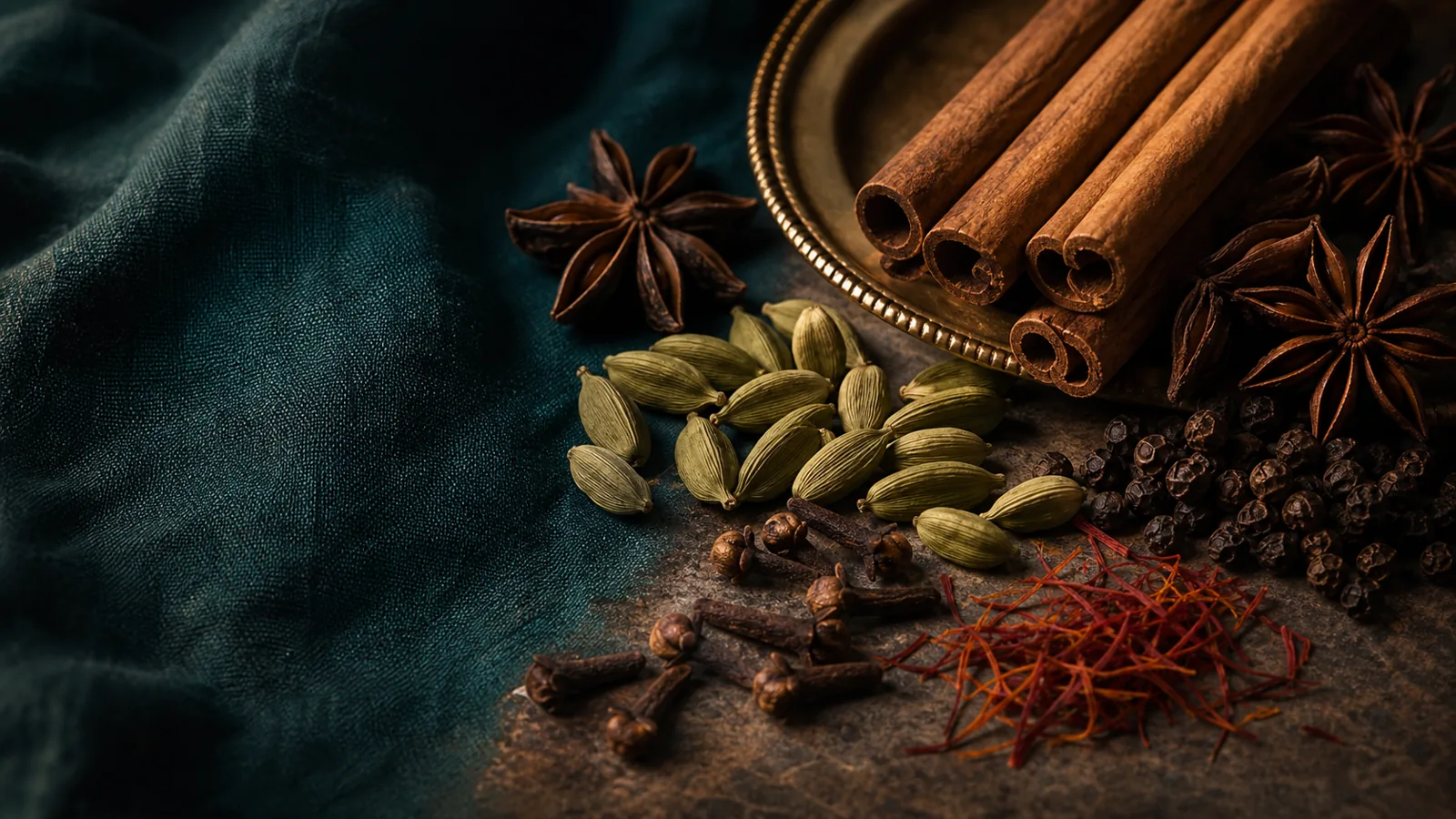
Old spices are a quieter problem. Cardamom pods that have sat in a jar for a year still look fine but carry almost none of their original oil, so the cup tastes watery no matter how long it simmers. Buying whole spices in smaller amounts more often fixes this without costing much extra.
Finally, sweetening too early can throw off the taste test. Sugar or jaggery added before the tea has finished simmering makes it hard to judge how strong the final cup is. Sweeten near the end, taste, then adjust once more before straining.
Make-ahead and iced options for warmer afternoons
Even during the cooler months, UAE afternoons can still turn warm by midday, which is where a make-ahead batch comes in handy. Masala chai concentrate, made by simmering the spice and tea mixture without adding the final milk, keeps well in the refrigerator for two to three days. Reheat a portion with fresh milk whenever you want a cup, rather than remaking the whole recipe from scratch each time.
The same concentrate works cold. Poured over ice with a splash of milk, it turns into an iced spiced tea that suits a sunny afternoon even in December. Kahwa also holds up well chilled, since it has no milk to separate, so leftover kahwa poured over ice with a few extra saffron threads makes a light afternoon drink rather than going to waste.
Karak is the one exception here. Its thicker, sweeter body doesn't reheat as cleanly, so it's best made fresh and finished in one sitting rather than stored for later.
Storing spices and tea for the rest of the season
A little storage care keeps every recipe in this guide tasting the way it should through the cooler months. Whole spices such as cardamom, cloves and cinnamon keep best in an airtight jar away from direct light and heat, ideally not right above the stove where warmth speeds up flavour loss. Ground spices fade faster than whole ones, so grinding small batches as needed, rather than buying pre-ground in bulk, makes a real difference by February.
Loose tea should also live in a sealed container rather than its original paper packaging once opened. Saffron goes into a cup of kahwa in such small amounts that a single packet should last the whole season, so keep it in a small dark glass jar rather than letting it lose its aroma on an open shelf.
Key takeaways
- A masala chai recipe needs whole spices simmered properly, not just boiled quickly, for the best flavour.
- Kahwa is a clear, saffron-and-cardamom tea served without milk, ideal for slow sipping with guests.
- Getting karak right comes down to stronger tea, evaporated milk, and a longer simmer than regular chai.
- Other spiced infusions, like ginger-lemongrass or turmeric-pepper, add variety without new equipment.
- Fresh, properly stored spices matter more to the final taste than any specific brand or blend.
Cooler evenings in the UAE don't last long, so most households make a point of using them well: a pot on the stove, a tray of cups, and whichever of these four drinks fits the moment. Try the full chai recipe above this weekend, then work through kahwa, karak and the smaller infusions as the season goes on. If you'd like to hear more about how Bagason brings brands like these into UAE kitchens, feel free to get in touch or visit our homepage to see the wider range we work with.
Frequently asked questions
What is the difference between masala chai and karak?
Masala chai uses a milder ratio of tea to milk and simmers for a shorter time, giving a lighter, more spiced cup. Karak uses more tea, simmers longer to reduce and thicken the liquid, and relies on evaporated milk with extra sugar for a stronger, sweeter result. Both use similar spices, mainly cardamom, but the technique and strength set them apart.
Can I make kahwa without saffron?
Yes. Saffron adds colour and a light aroma, but kahwa still works well with just cardamom and a good black or green tea. Some households add a small piece of cinnamon or a sliver of dried rose petal instead. The result will taste slightly different but still be recognisably kahwa.
Why does my homemade karak taste thin compared to a cafe?
The most common reason is not simmering long enough. Cafe-style karak reduces for several extra minutes so the tea, milk and sugar concentrate together. Using regular milk instead of evaporated milk also thins the result. Give it more time on low heat and switch to evaporated milk for a closer match.
What type of tea works best for a masala chai recipe?
Strong black tea, such as Assam or a standard CTC blend, holds up best against milk and spices without disappearing into the cup. Loose tea generally gives a fuller flavour than tea bags, though both work. Green tea is better suited to kahwa, which is served without milk.
How do I stop milk from curdling when I add spices?
Curdling usually happens when very acidic additions, like too much fresh ginger, meet milk at a hard boil. Simmering gently rather than boiling hard, and adding ginger in moderation, avoids this in most cases. If it happens occasionally, straining well still gives a smooth cup.
Can these spiced tea recipes be made without dairy?
Several can. Kahwa, ginger-lemongrass tea, and clove and star anise infusions use no milk at all. Masala chai and turmeric tea can be made with oat or almond milk, though a gentler simmer helps prevent separation. Karak is the exception, since its texture depends on evaporated milk.