A single ingredient can turn a routine grocery run into a reading exercise for someone with a food allergy. Allergen labelling in the UAE exists precisely for that moment: the second before a product goes into a trolley, when a shopper needs the label to say, plainly and honestly, what's inside the pack. For a distributor moving hundreds of SKUs through Dubai Municipality registration and onto shelves across the seven emirates, allergen declaration is one line item among many on a label review checklist. For a shopper standing in a supermarket aisle checking a snack for a child with a peanut allergy, it can be the only thing that matters.
This piece looks at the same topic from both directions. First, what UAE food labelling standards require brands and manufacturers to declare on pack, and how that gets checked before a product reaches a shelf. Second, how a shopper reading a label at home or in a store aisle can make sense of what's printed there, including the phrases that trip people up most.
This isn't medical advice, and it isn't meant to be. Reading a label carefully is a skill anyone buying packaged food can build. Diagnosing or managing a specific food allergy is a job for a doctor or allergist, not a label or a blog post, and nothing here should be read as a substitute for that conversation.
What Allergen Labelling in the UAE Actually Requires
Food sold in the UAE follows labelling standards adopted across the Gulf region, commonly referenced in the trade as GSO 9, the regional standard covering how prepackaged food must be labelled. Individual emirates enforce it through their own food control authorities: Dubai Municipality for products sold in Dubai, the Abu Dhabi Agriculture and Food Safety Authority for Abu Dhabi, and equivalent departments elsewhere, all working from the same underlying standard and from the technical regulations MOIAT, the UAE's national standards authority, sets nationally.
The rule at the center of allergen labelling in the UAE is simple to state and harder to execute for the manufacturers who work with it day to day: any ingredient recognised as a major allergen has to be identifiable on the label, in a way an ordinary shopper can find without needing prior knowledge of food chemistry names. That usually means the allergen is called out inside the ingredient list itself, often in bold or a different type style, rather than buried inside a generic term a reader wouldn't recognise.
Two things sit alongside that core rule. The first is a "contains" statement, a short summary line that repeats the major allergens already inside the ingredient list, placed somewhere a shopper can find quickly. The second is a precautionary statement, most often worded as "may contain traces of," which covers a different situation entirely: not an added ingredient, but a risk of cross-contact during manufacturing. Both come back later in this piece, because confusing the two is where a lot of shopping mistakes start.
The rule applies whether a product is made locally in an industrial kitchen in Sharjah or imported in a container through Jebel Ali. Country of origin changes the paperwork trail, not the underlying requirement. A locally manufactured sauce and an imported biscuit line answer to the same expectation once they sit on the same shelf: the label has to name what's inside, and it has to do so in a form a shopper can act on without a magnifying glass or a food science degree.
The Food Allergens List UAE Standards Point To
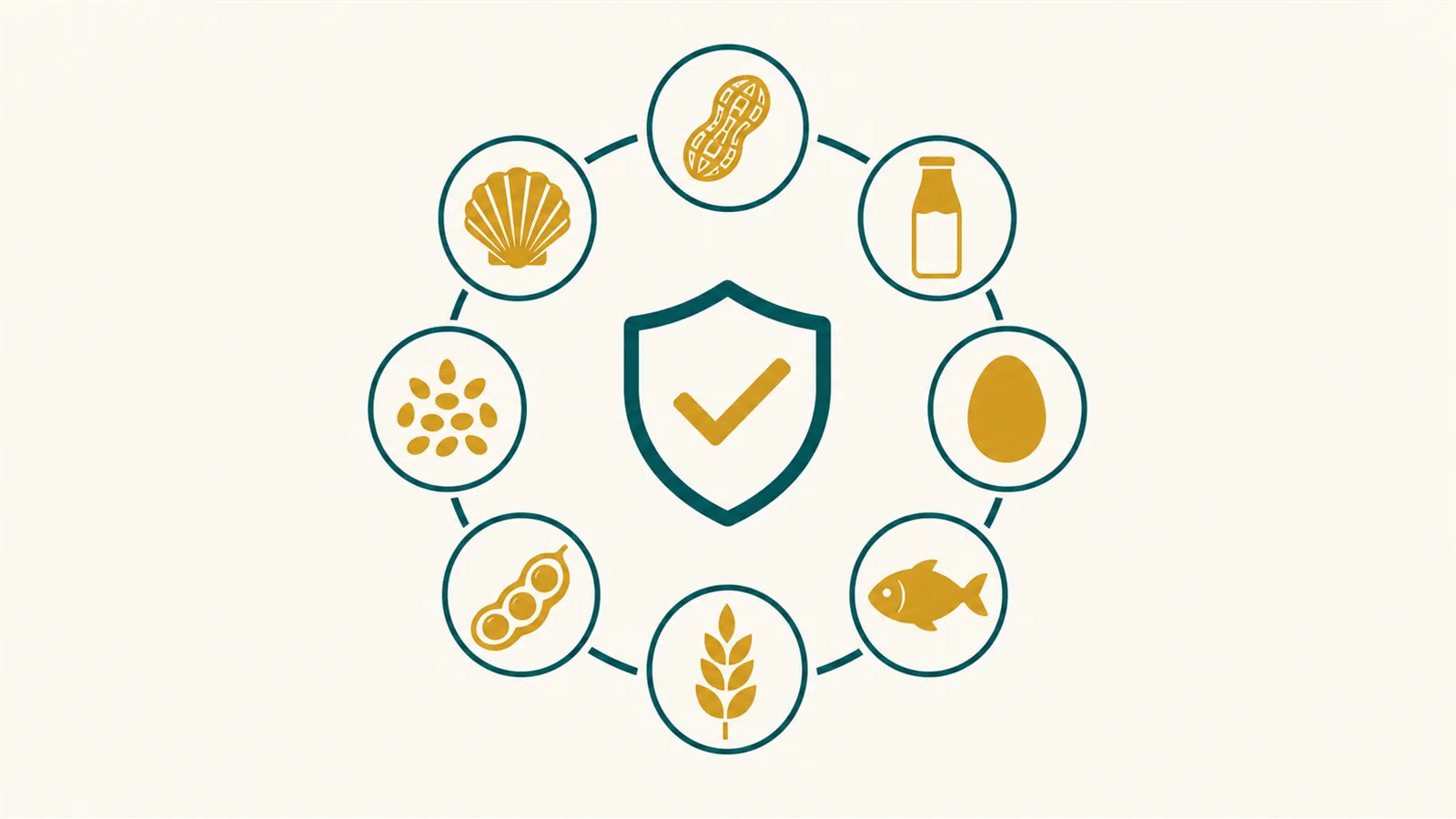
Ask ten people in the trade what counts as a major allergen and most will reel off a fairly similar list, since the categories food regulators focus on have converged internationally over the past couple of decades. UAE labelling rules direct manufacturers to declare an ingredient whenever it falls into one of these recognised categories, regardless of how small the quantity used.
- Cereals containing gluten, including wheat, barley, rye and oats
- Crustaceans and shellfish
- Eggs
- Fish
- Peanuts
- Soybeans
- Milk, including lactose
- Tree nuts, such as almonds, cashews and walnuts
- Sesame seeds
- Mustard
- Celery
- Sulphur dioxide and sulphites above a set concentration
- Lupin
- Molluscs
Not every product carries every category on that list. A juice concentrate might only need to flag sulphites, while a mixed nut snack could carry four or five allergen declarations at once. What stays constant is the expectation: if an ingredient belongs to one of these recognised groups, it has to be named specifically enough that an ordinary shopper recognises it, not folded into a generic term.
This is where sourcing complexity shows up fastest. A recipe built for one market doesn't automatically map onto how the same allergens need naming under Gulf standards. A flavouring listed generically on a label made for a different region might need to be broken down into its allergen components before it can go on a pack destined for a UAE shelf. Brands that manufacture centrally for several regions often keep a version of their recipe documentation built specifically to answer this level of detail.
Why allergen declarations aren't halal, organic or any other claim
Brand owners sometimes assume that a food safety review, once passed, covers everything printed on a pack. It doesn't. Allergen declaration is a food safety and labelling matter, checked against ingredients and how they're named. Halal status, organic status, and any other certification claim are separate accreditation processes entirely, run by different bodies, with their own documentation and their own scope.
A product can carry a fully accurate allergen declaration and still make no claim at all about halal status, or about being organic, or about any other certification. Getting allergen labelling right doesn't imply any of that, and a shopper reading a pack shouldn't assume it either. If a label doesn't carry a specific certification mark or claim, the safest assumption is that the claim hasn't been made, rather than guessing it applies because the rest of the label looks careful and complete.
This distinction matters for brands too. A manufacturer investing time in getting its allergen declarations right shouldn't fold that work into marketing language implying a broader assurance the label doesn't carry. Keep the two workstreams separate: one is allergen and ingredient accuracy, required on every pack regardless of category, and the other is any certification a brand chooses to pursue and prove independently.
How to Read the "Contains" Statement on a Pack
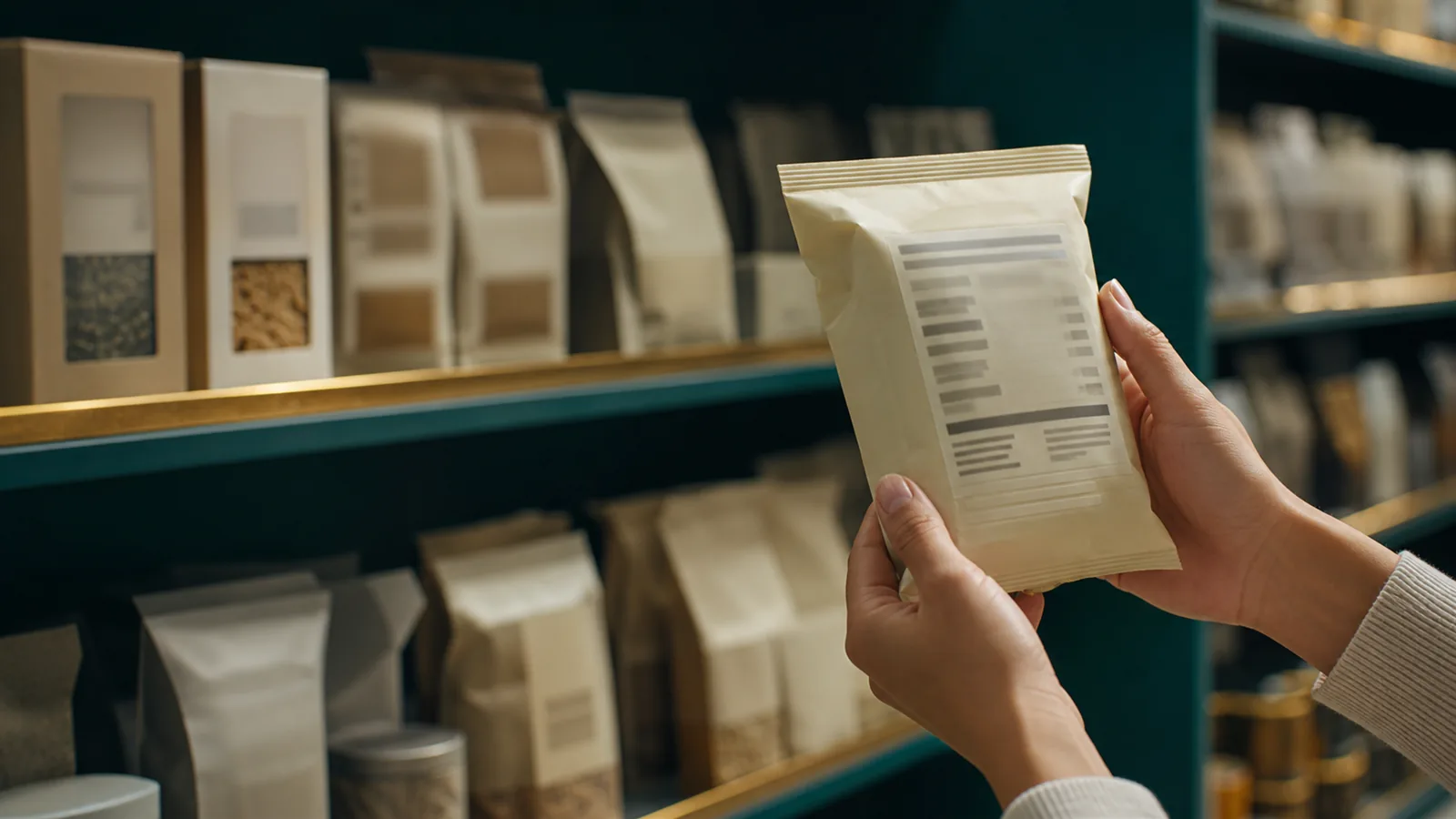
The "contains" statement is the fastest way to check a product, and it helps to know where to look for it before you need it in a hurry. Most brands place it directly under or beside the ingredient list, printed as a short line: "Contains: milk, soy." Some pack designs put it inside a separate information box near the nutrition panel instead.
Either placement is fine. What matters is that the statement only needs to repeat allergens that are deliberately part of the recipe, the ones already sitting inside the ingredient list. It isn't a warning about factory conditions or shared equipment. A separate, differently worded statement covers that, and it's the one shoppers most often mix up with this one.
So why bother with a summary line at all, if the ingredient list already carries the same information? Because scanning a full ingredient list for one specific word takes longer than most shoppers have patience for in a supermarket aisle, especially with a child waiting in the trolley seat. A "contains" statement compresses that search into three seconds.
What Does "May Contain Traces" Actually Mean?
Here's the thing about this phrase: it isn't a legal requirement in the same way the "contains" statement is. It's a precaution a manufacturer adds when there's a real risk that trace amounts of an allergen could end up in a product through shared equipment or a shared production line, not because the allergen is an ingredient in the recipe.
Picture a factory that makes both a plain biscuit and a peanut biscuit on the same line, at different times of day, with cleaning in between. Even careful cleaning doesn't guarantee zero cross-contact at a microscopic level, so the plain biscuit's label carries a line reading something like "may contain traces of peanuts," even though no peanut ingredient appears anywhere in the recipe.
The may contain traces meaning that matters most for a shopper with a diagnosed allergy is this: it's a real risk statement, not boilerplate legal cover a brand adds out of habit. Some manufacturers do overuse it, adding it defensively to nearly every product regardless of actual risk, and that has made some shoppers start to tune it out. Resisting that habit pays off. Treat the statement as accurate information from the people who know their own factory floor, not as noise printed to cover the brand.
What this phrase doesn't tell you is how much of the allergen might be present, or how often the risk actually materialises. It works as a binary flag: risk exists, or it doesn't get printed. For someone managing a serious allergy, that binary is usually reason enough to choose a different product rather than one carrying the caution, and that's a judgment a clinician can help calibrate for an individual's actual sensitivity.
Arabic and English Panels: Why Both Need Reading
Every food product sold in the UAE carries a bilingual label, Arabic alongside English, and the two panels are supposed to say exactly the same thing. In practice, allergen information sometimes reads more completely on one panel than the other, particularly on products imported from a market where Arabic labelling wasn't originally required and gets added later as a sticker or a secondary print run.
For a shopper who reads Arabic more comfortably, or exclusively, checking only the English panel because it happens to be printed first on the pack is a habit worth breaking. The reverse applies too. So what should you do if the two panels disagree with each other? Act on that mismatch rather than shrugging it off as an oversight, and choose a different product if the mismatch touches an allergen you're avoiding.
Regulatory reviewers check for exactly this kind of mismatch before a product is approved for sale, but stickers applied after the fact don't always get the same scrutiny as the original printed panel. Distributors bringing a new SKU into the market spend real time on this comparison, sitting the Arabic and English panels side by side before a product ever reaches a regulator's desk, because a mismatch there is one of the more common reasons a label gets sent back for correction.
How UAE Allergen Declaration Rules Apply to Manufacturers and Distributors
For a brand bringing a product into the UAE, these declaration requirements apply at the recipe level, not just the label design level. Every ingredient supplied by every vendor in a formulation needs to be checked against the food allergens list UAE standards define, before artwork ever gets finalised, because a missed allergen in the recipe becomes a missed declaration on the pack.
At Bagason, this sits inside the same label review we run for any new SKU heading toward Dubai Municipality registration or a modern trade listing. We pull the full ingredient breakdown from the manufacturer, check each component against the recognised allergen categories, and confirm the "contains" statement and any precautionary wording match what's in the recipe rather than a generic template copied from a similar product.
Formulation changes are where this gets tested repeatedly rather than once. A factory switching a flavouring supplier, or changing a stabiliser, can quietly introduce or remove an allergen without touching anything a graphic designer would notice on the artwork. Those allergen declaration rules apply the same way to a reformulated product as to a brand-new one, which is why label information needs to be treated as a living document tied to the current recipe, not a one-time approval frozen at launch.
Retailers add their own layer on top of this. A modern trade buyer checking allergen information as part of onboarding a new SKU is protecting their own shelf as much as the shopper standing in front of it, since a labelling gap that reaches a customer becomes the retailer's problem the moment it's noticed. It's part of why allergen accuracy gets checked well before pricing or promotional conversations even start.
Translation is a technical task, not a courtesy
A weak Arabic translation of an allergen statement is one of the more avoidable errors in this process, and one of the more common. Food terminology has specific, established Arabic wording for each recognised allergen category, and a generic or literal translation can miss that wording even when the intent is right. Treating Arabic label content as a technical translation task, done by someone who works in food labelling regularly, catches this before a regulator does.
What changes force a fresh check
Not every change to a product needs a full label rebuild, but several common ones do. A new flavouring supplier, a switched stabiliser or emulsifier, a different factory line, or a recipe adjustment made to manage cost all warrant a fresh pass against the allergen categories before the next print run goes out. Brands that keep a simple internal checklist for these triggers, tied to their recipe management rather than their design calendar, catch far more of these changes before a pack reaches a shelf.

Shopping With Food Allergies: A Practical Reading Routine
Shopping with food allergies gets easier with a routine, rather than a single rule to remember. Here's a sequence that holds up across most categories, from a bakery item to a packaged sauce.
- Start with the ingredient list, not the front of the pack. Front-of-pack claims describe marketing choices, not allergen safety, and they're not where the regulated information lives.
- Scan for the "contains" statement first, since it's the fastest confirmation of what's deliberately inside the recipe.
- Read the precautionary statement separately, and treat any "may contain" wording as real information about factory risk rather than routine small print.
- Check both language panels if you read one more comfortably than the other, especially on products that look recently relabelled with a sticker.
- Recheck familiar products occasionally, not just new ones. Recipes change more often than packaging does, and a product that was safe last month isn't guaranteed to be safe this month.
That last step trips up more people than any other, understandably. Once a product earns trust, most shoppers stop reading its label at all. A brand that reformulates quietly, perhaps switching a supplier for cost or supply reasons, doesn't always redesign the whole pack to flag the change, so the safer habit is checking the ingredient panel every few months on anything a household buys regularly, rather than assuming last year's read still holds.
Nothing here replaces professional guidance. If you're managing a diagnosed food allergy, particularly for a child, working with a doctor or allergist on which categories matter for that specific diagnosis, and on what to do if a reaction happens, sits outside what any label or shopping routine can cover. Use the label to identify what's inside a product. Use a clinician to decide what that means for the person eating it.
Why the same word doesn't always look the same on two packs
One more habit to build: don't expect allergen information to look identical from brand to brand. One manufacturer bolds allergens directly inside the ingredient list. Another underlines them. A third relies mainly on a boxed "Allergy advice" panel near the nutrition table and leaves the ingredient list in plain type. All three approaches can satisfy the same underlying requirement, since the standard sets out what has to be declared rather than a single fixed layout for how it must look.
That variation is exactly why skimming for a familiar visual pattern, bold red text, a particular icon, a specific box, is a weaker strategy than reading the actual words. A shopper who trains themselves to look for "bold text" specifically will miss an allergen that a brand chose to underline instead, or one buried in a plain-type ingredient line with no visual treatment at all. Read the words. Don't rely on the formatting to do the reading for you.
Eating Out, Loose Foods, and Where Labelling Runs Out
So where does all this leave you the moment you step away from a packaged shelf, into a bakery counter or a restaurant table? Packaged retail food is where allergen labelling rules apply most consistently, and it's also where this piece has focused so far. Away from a sealed pack, the picture gets less uniform. A bakery counter selling loose bread, a deli counter slicing cheese to order, and a restaurant kitchen plating a dish carry no printed ingredient panel the way a supermarket shelf item does.
That doesn't mean no information exists. Many bakeries and foodservice outlets keep allergen information available on request, whether as a printed sheet behind the counter or a note on a menu, and asking directly is a normal, expected question rather than an awkward one. What it does mean is that the reading routine built for packaged food doesn't transfer cleanly to a counter or a restaurant table, and a different, more conversational approach, just asking, tends to work better there.
Quick commerce and online grocery add their own wrinkle. A product page rarely reproduces the full label with the same care a printed pack does, and ingredient photos aren't always current if a recipe has changed since the product photo was taken. Treating an online listing as a starting point rather than a final answer, and checking the physical pack once it arrives, is a reasonable habit for anyone shopping around a specific allergen.
Cloud kitchens sit somewhere between these two worlds. They cook to order like a restaurant, but many operate through a delivery app interface that looks and reads like an online store. That mix means the same rule applies twice over: a menu description on the app is not the same thing as a full ingredient declaration, and asking the kitchen directly, through the app's messaging feature or a phone call, remains the more reliable route for anyone managing a specific allergen.
Where Allergen Information Most Often Goes Wrong
Most allergen labelling problems trace back to a small set of recurring gaps, on both the brand side and the shopper side.
- Generic ingredient names, such as "natural flavouring" or "spice blend," that hide an allergen component rather than naming it directly.
- Sticker labels that don't match the printed panel underneath, especially on products relabelled for the UAE market after manufacture.
- Precautionary statements copied from a similar product rather than checked against the specific line a batch ran on.
- Shoppers reading only the front of pack, where marketing claims live, and skipping the ingredient panel where the regulated information sits.
- Assuming a familiar product hasn't changed, when a supplier switch or recipe tweak happened without any visible change to the packaging design.
- Combo packs and multipacks where one item inside carries a different allergen profile from the others, and the outer wrapping only lists the allergens for the set as a whole.
That last one deserves a moment on its own. A variety box of individually wrapped snacks, for example, might include four flavours sharing most ingredients and a fifth built around tree nuts. If the outer carton's declaration lumps every allergen from every flavour into one combined list without saying which item carries which, a shopper still has to open the individual wrapper and check its own panel before eating. Reading the outer box alone isn't enough for a mixed pack, even when the outer box looks thorough.
Individually, these gaps are minor. Together, they explain most of the moments where a carefully built labelling system still lets something slip past a shopper who's trying to do the right thing.
Distributors sit in a useful position to catch several of these before a product ever reaches a shelf. Checking a label against its actual recipe, in both languages, is exactly the kind of repetitive review that benefits from doing it for a living rather than once. On the flip side, no amount of upstream checking removes the need for a shopper to read the pack in hand, since the version on a shelf today is the only one that matters for a purchase made today.
Key takeaways
- UAE food labelling standards require major allergens to be named specifically inside the ingredient list, not folded into a generic term.
- A "contains" statement summarises allergens that are deliberately part of the recipe, separate from precautionary "may contain" wording.
- "May contain traces" flags a real cross-contact risk from shared equipment, not routine legal boilerplate.
- Arabic and English panels should say the same thing, and a mismatch between them is a signal to act on.
- Recipes change more often than packaging does, so rechecking familiar products occasionally is a reasonable habit.
- Loose food, bakery counters and restaurant meals need to be asked about directly, since they rarely carry a printed ingredient panel.
- Nothing here replaces a doctor or allergist for diagnosing or managing a food allergy.
Getting allergen labelling right takes cooperation between everyone who touches a product before it reaches a trolley: the manufacturer formulating the recipe, the distributor checking the label against a regulator's requirements before it goes to market, the retailer stocking it, and the shopper reading it. Allergen labelling rules in the UAE give that chain a shared standard to work from, but the reading still has to happen at the shelf, every time, by whoever is choosing what goes home. If you're a brand bringing a new product into the UAE and want a second pair of eyes on allergen declarations before submission, talk to our team, or browse more of our label-literacy and compliance coverage on the Bagason Brief. You can also see how labelling fits into the wider port-to-shelf process on our homepage.
Frequently asked questions
What allergens must be declared under UAE food labelling rules?
UAE standards direct manufacturers to name an ingredient specifically whenever it falls into a recognised allergen category: cereals containing gluten, crustaceans, eggs, fish, peanuts, soybeans, milk, tree nuts, sesame, mustard, celery, sulphites above a set level, lupin and molluscs. The requirement applies regardless of how small the quantity is, and the allergen has to appear inside the ingredient list in a way an ordinary shopper can recognise.
What does "may contain traces" mean on a UAE food label?
It's a precautionary statement about cross-contact, not a declaration of an added ingredient. Manufacturers add it when shared equipment or a shared production line creates a real risk that trace amounts of an allergen could end up in a product, even though that allergen isn't part of the recipe. Treat it as genuine risk information rather than routine small print.
Is Arabic labelling required for allergen information in the UAE?
Yes. Every food product sold in the UAE carries a bilingual label, and allergen information needs to appear consistently on both the Arabic and English panels. If the two disagree, particularly on a product carrying an added sticker rather than an originally printed label, treat that mismatch as worth acting on rather than ignoring.
What should I do if a label doesn't mention an allergen I react to?
Read the full ingredient list rather than relying on a front-of-pack claim or a "contains" summary alone, since the summary can miss an ingredient that wasn't recognised as a concern by the brand. If you're still unsure after reading the label carefully, the reliable next step is contacting the manufacturer directly or speaking with your doctor or allergist, not guessing.
Do loose foods and restaurant meals need allergen labels in the UAE?
Packaged retail food is where printed allergen labelling applies most consistently. Loose bakery items, deli counters and restaurant dishes don't carry the same printed ingredient panel, though many outlets keep allergen information available on request. Asking directly at the counter or with the kitchen is the practical routine for these situations.
How is a "contains" statement different from an ingredient list?
The ingredient list is the complete, legally required record of everything in a recipe. The "contains" statement is a shorter summary that repeats only the major allergens already present in that list, placed somewhere easy to spot quickly. It's a convenience for fast scanning, not a replacement for reading the full list when it matters.