A household in Dubai might fill a trolley at a hypermarket once a month, place a weekly order through a grocery app, and solve a last-minute craving with a ten-minute delivery in between. That is not three separate shopping habits. It is one shop split across three channels, and that split is grocery shopping trends UAE in practice, the pattern our distribution team tracks today. At Bagason we supply modern trade, e-commerce and quick commerce from the same Dubai hub, so we see this split from the inside. What leaves our warehouse for a Carrefour pallet looks nothing like what leaves it for a quick-commerce dark store.
This pattern is not tied to one nationality or income group. Families across Dubai, Abu Dhabi and Sharjah run all three habits at once, usually without treating it as a strategy at all. For anyone selling into UAE retail, though, the split is exactly that: three separate decisions about pack size, price and promotion, made three separate times a month.
This piece looks at what the habit means in practice, drawn from what our sales, marketing and warehouse teams see across modern trade, traditional trade, e-commerce and quick commerce every week. Expect detail on pack sizes, promotions, and the growing cost of running out of stock in the wrong channel at the wrong moment.
Grocery Shopping Trends UAE: Why It's Three Baskets, Not One
Ask a shopper in the UAE how they buy groceries and the honest answer usually covers more than one habit. There's the big trip, a hypermarket run for rice, cooking oil, cleaning supplies and anything sold in bulk. There's the routine order, a weekly or fortnightly app-based restock of items the household already knows it needs. And there's the gap-filler, a ten-minute delivery when someone runs out of milk or wants one specific thing for dinner.
None of these habits has replaced the others. Households have instead divided a single monthly grocery budget across three separate buying moments, each doing a different job. The hypermarket handles volume and value. The app handles routine. Quick commerce handles urgency. So which channel matters most to a given household? Usually all three, depending on the day.
For a distributor, the useful question is not which channel is winning. It's what each channel gets used for, because that answers something more practical: which pack size, which price point and which promotion belongs in which basket. Get that wrong and a product can sit on the right shelf in the wrong format, moving slowly for reasons that have nothing to do with the product itself.
This is also why grocery shopping trends UAE, the general version brand owners read about, rarely translate cleanly into a stocking plan. A shift toward more online ordering, for example, does not mean less hypermarket volume. It usually means the same household is now buying in three places instead of one, and expects the right pack size waiting in each.
A distributor sitting across all three channels sees something a single-channel retailer often misses: the same barcode behaving in three different ways depending on where it sells. A cooking oil brand can be a top hypermarket seller and a slow mover online in the same week, not because demand has changed, but because the household buying it online already stocked up during last month's hypermarket trip. Reading one channel's numbers without the other two gives an incomplete picture of what a household actually needs.
The Monthly Hypermarket Run: What It's Actually For
The hypermarket trip is planned, not spontaneous. Someone in the household has usually made a list, checked what is running low, and picked a day with enough time to walk every aisle. Modern trade retailers such as LuLu, Carrefour, Nesto and Choithrams are built for exactly this kind of shop: wide aisles, large formats, and shelf space for the biggest pack a household is willing to carry to the car.
This is where bulk and value packs earn their place. A five-kilogram bag of rice, a carton of long-life milk, a multipack of cooking oil bottles: these are hypermarket items because the trip itself justifies the size. Few households want to carry a five-kilogram bag home from a ten-minute delivery, and few apps make it easy to add one to a small basket in the first place.
Promotions matter here more than in any other channel. End-of-aisle displays, seasonal bundles and multi-buy offers work because a shopper is already walking past the shelf with a trolley and time to spare. Our key account team supplies both owned and partner brands into these accounts, and the pack sizes we push into modern trade are chosen with this single trip in mind, not the weekly reorder or the top-up.
There's a seasonal layer here too. Ramadan and back-to-school periods pull more households into a bigger hypermarket trip than usual, because the shopping list itself grows. A brand that only ships standard online-size packs misses that entire seasonal spike, since the hypermarket shelf is where the bulk formats live.
Merchandising Still Rewards a Physical Aisle
An end-cap, a floor stack near the entrance, or a shelf-talker pointing to a new flavour all depend on someone walking past at a slow enough pace to notice. That pace exists in a hypermarket in a way it rarely does elsewhere. A shopper scrolling an app moves through a screen quickly, and a top-up order is finished before any merchandising has a chance to register. For a new product launch, the hypermarket aisle is often still the first place a household sees it, even if the household later reorders it through an app.
The Weekly App Order: Habit, Not Discovery
Between hypermarket trips, a different pattern takes over. A household reorders through a grocery app on a rough weekly rhythm: the same brands, similar quantities, sometimes the exact same basket with one or two items swapped. This is where online grocery habits UAE shoppers have built over recent years show up most plainly, less browsing, more repeating.
Standard pack sizes do well here, the kind a household already trusts and does not need to reconsider each time. Search and reorder features on grocery apps reward brands a shopper already recognises, which means the weekly channel rewards consistency over novelty.
This is not much of a discovery channel for most shoppers, even though brand owners sometimes treat it that way. A shopper who has settled on a brand for cooking oil or breakfast cereal tends to keep clicking the same product line, week after week. New products usually need a push from the hypermarket shelf or an in-store sampling activation before they earn a place in that weekly online basket.
Delivery timing matters too. A weekly order that arrives a day late rarely causes a household to switch brands outright, but it does push them toward a top-up purchase to cover the gap, and that top-up purchase happens in a different channel entirely, often at a different pack size and a different price.
Repeat-order settings on grocery apps push this habit further. Once a household has a saved basket or a favourites list, changing brands takes an extra step most shoppers skip unless something forces the choice, a stock-out, a price jump, or a friend's recommendation. This is why online listings live and die on the accuracy of their product information: a shopper checking a saved basket rarely rereads the full description, so getting the pack size, image and price right the first time matters more online than it does on a shelf a shopper can pick up and examine directly.
The Ten-Minute Top-Up: Quick Commerce as a Convenience Valve
Somewhere between the hypermarket trip and the weekly order sits the moment nobody plans for: dinner is short one ingredient, the children want a specific snack, or a guest is arriving in twenty minutes. This is quick commerce top-up shopping, delivered through apps in ten to twenty minutes from a dark store close to home.
Before those apps existed, the UAE already had a ten-minute channel. It was the baqala on the corner, open late, stocked with exactly the small, high-turn items a household needed between bigger shops. Quick commerce has not replaced the baqala so much as added a second version of the same convenience valve, one on a phone screen and one behind a counter.
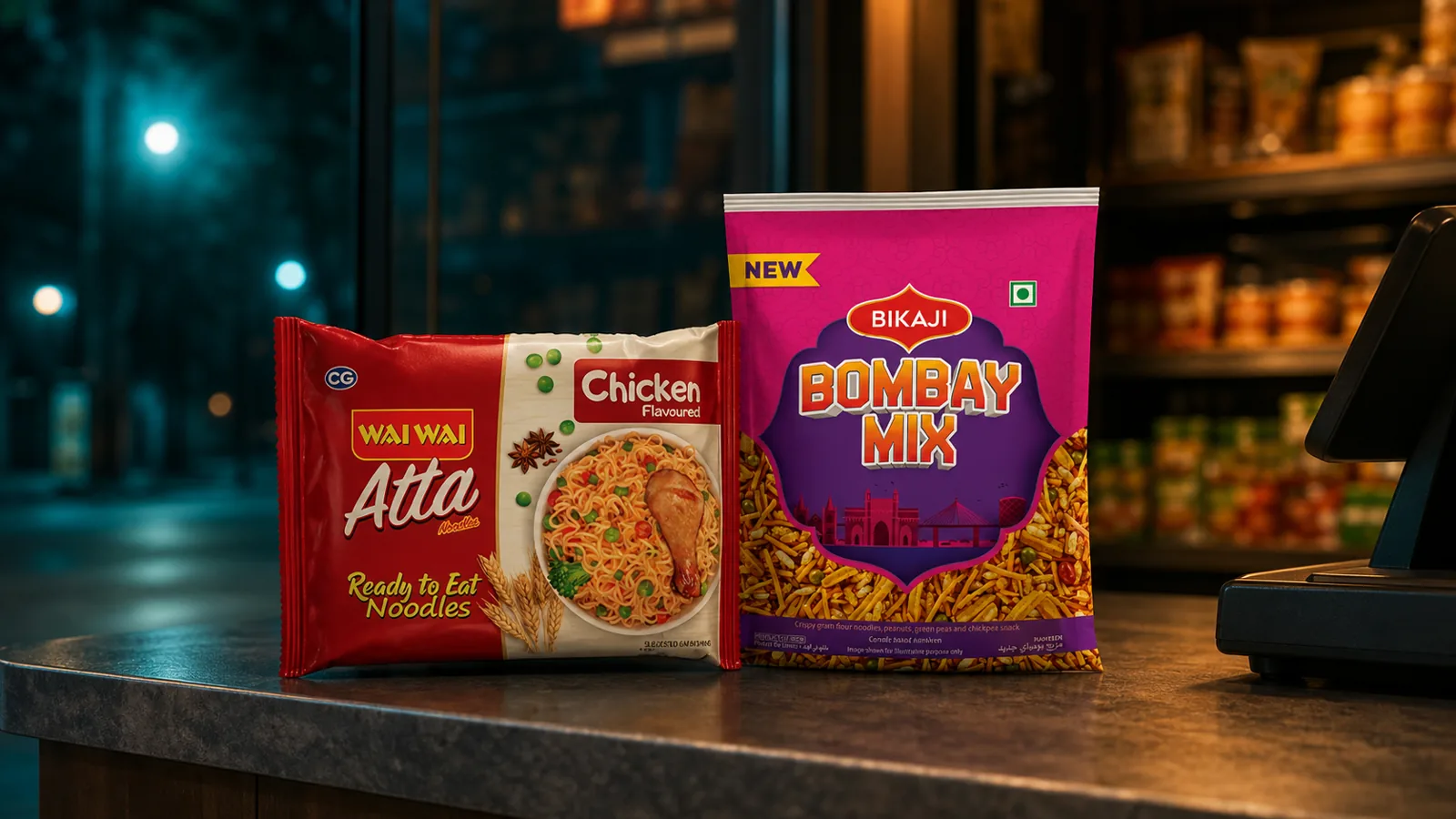
Basket sizes here are small, and pack sizes need to match: single cans, small packets, individual bottles rather than multipacks. A shopper reaching for a top-up wants one item solved quickly, not a bulk decision. Price sensitivity works differently too. Someone paying a delivery fee for speed is rarely comparing unit prices the way they would while standing in front of a hypermarket shelf.
What does a shopper want in those ten minutes? Mostly, just for the item to be there. Out of every channel Bagason supplies, this is the one where being visible and in stock at the right moment matters more than the price on the label.
Assortment in a dark store is also narrower than in a hypermarket, by necessity. A quick-commerce operator stocks the handful of SKUs per category that cover most top-up occasions, not the full range a supermarket shelf can carry. That means a brand competing for dark-store space is competing for one of a small number of slots, and a pack size that does not fit the top-up occasion, too large, too slow-moving, priced awkwardly against the format's near neighbours, is an easy one to leave off the list entirely.
Basket Splitting Grocery Habits and What They Do to Pack Sizes
Basket splitting grocery behaviour is, in practical terms, a packaging problem before it is a marketing one. A brand owner who wants a presence across all three channels usually needs at least two, often three, distinct pack formats: a bulk or family size for the hypermarket, a standard size for the weekly online reorder, and a small or single-serve size for quick commerce and baqala counters.
This is a bigger task than it sounds. Each format needs its own barcode, its own carton configuration for the warehouse, and its own place in the pricing structure so the smaller pack does not look like poor value next to the larger one. Get this wrong in either direction, a top-up pack priced too close to the bulk pack's per-unit cost, or a bulk pack too large for most households to store comfortably, and a brand can quietly lose a channel without anyone noticing why sales there have gone flat.
We see this across both our owned brands and the partner brands we distribute. A brand like Bikaji or Wai Wai needs a different case configuration for a modern trade pallet than for a quick-commerce dark store shelf, and getting the smaller format into the right channel often matters as much as the flavour range or the artwork on the box.
There is a cost side to this too, one that brand owners new to the UAE sometimes underestimate. Every additional pack format means an additional stock-keeping unit to forecast, warehouse, and reconcile against orders, and an additional carton size to fit onto a pallet efficiently. A brand adding a third format purely to chase a channel should weigh that against the extra planning it creates, because a format that sells slowly in every channel is worse than one strong format that covers two of the three well.
Hypermarket vs Online UAE: Same Household, Different Basket
Put the three habits side by side and the contrast in hypermarket vs online UAE buying becomes plain. The hypermarket basket is large, planned and price-conscious. The weekly app basket is smaller, habitual and loyal to known brands. The top-up basket is tiny, urgent and mostly indifferent to price.
A brand that only exists in one format is, in effect, available to just one of these three buying moments. A biscuit brand sold solely in a family-size box will struggle in the top-up channel, however well it performs at the hypermarket. A brand with only a large format misses the weekly reorder shopper who wants a size they can finish before the next order lands.
Margin structures shift across the same three baskets too. Hypermarkets typically negotiate listing fees, promotional funding and volume terms as part of doing business at scale. Online marketplaces charge their own commission and advertising fees on top. Quick-commerce operators often add a further margin for the convenience they provide. A brand pricing one pack size to work across all three ends up either too expensive in one channel or too thin in another, which is exactly why separate formats, priced to their own channel's economics, tend to perform better than a single size stretched across all of them.
Registration and Labelling Behind Every New Pack Size
Adding a pack size in the UAE is not just a warehouse decision. A new format usually needs its own product registration with the relevant authority, such as Dubai Municipality, along with Arabic-label sign-off before it can reach a shelf, an online listing or a dark-store slot. That process takes planning time, which is one reason distributors get involved in pack-size decisions early rather than after a brand has already committed to a size overseas.
How Promotions Behave Differently Across Channels
A multi-buy offer that works well on a hypermarket shelf can fall flat online and mean almost nothing in a ten-minute delivery app. The hypermarket shopper, already committed to a bigger trip, responds to "buy two, get one" because it fits the trip already under way. The weekly app shopper responds better to a straightforward discount code or a small reward tied to their regular reorder.
Does a multi-buy offer even register with a shopper who is not planning to browse? Rarely. The top-up shopper barely notices promotions at all. What matters more here is that the item is visible near the top of a search, since there is little time to scroll far in a ten-minute delivery window.
This is one reason a single promotional calendar rarely works across all three channels at once. A campaign built for modern trade shelf displays needs a different version, sometimes a different offer structure entirely, to make sense inside an app or a dark store.
Timing differs too. A hypermarket promotion is usually locked in weeks ahead as part of a retailer's calendar. An online discount code can launch the same afternoon it is approved. Quick commerce sits somewhere in between, often tied to a specific dark store's stock levels rather than a national campaign.
Bundling behaves differently as well. A hypermarket bundle across two or three of our owned brands, say a breakfast bundle pairing American Harvest with Tropico, works because a shopper on a bigger trip is open to adding a related item to the trolley. That same bundle rarely converts in a ten-minute app, where a shopper has already decided on one specific item and is unlikely to add a second on impulse mid-order.
Availability: Why an Out-of-Stock Moment Costs More Than It Used To
When a household relied on one monthly trip, running out of a brand for a week or two rarely cost a sale. The shopper picked it up on the next hypermarket visit, more or less on schedule. Basket splitting has removed a lot of that patience.
If a household's weekly app order goes out on a Tuesday and a brand is unavailable that day, the shopper does not wait a month. They choose an alternative, and that alternative can keep the spot on future orders too. The same applies, more sharply, to the ten-minute channel: a shopper who cannot find an item in the time it takes to check a couple of apps will choose whatever is in stock nearby instead.
This is exactly why replenishment planning has become a bigger part of distribution work than it used to be. In our Jebel Ali warehouse, batch and barcode tracking through our Odoo ERP system, paired with first-in-first-out stock rotation, gives us visibility into what is moving through each channel, so we can flag a coverage gap before a retailer's shelf, an online listing or a dark-store slot runs empty.
Forecasting also has to run per channel rather than as one blended number. A brand that sells five hundred cases a month across modern trade, online and quick commerce combined is not selling five hundred cases evenly. The hypermarket volume tends to move in clusters around the trip cycle, the online volume in a steadier weekly rhythm, and the top-up volume in short, unpredictable bursts tied to whatever is happening in a household that day. Planning stock against the combined total, without separating the three patterns, tends to leave one channel short right when the other two look fine on paper.
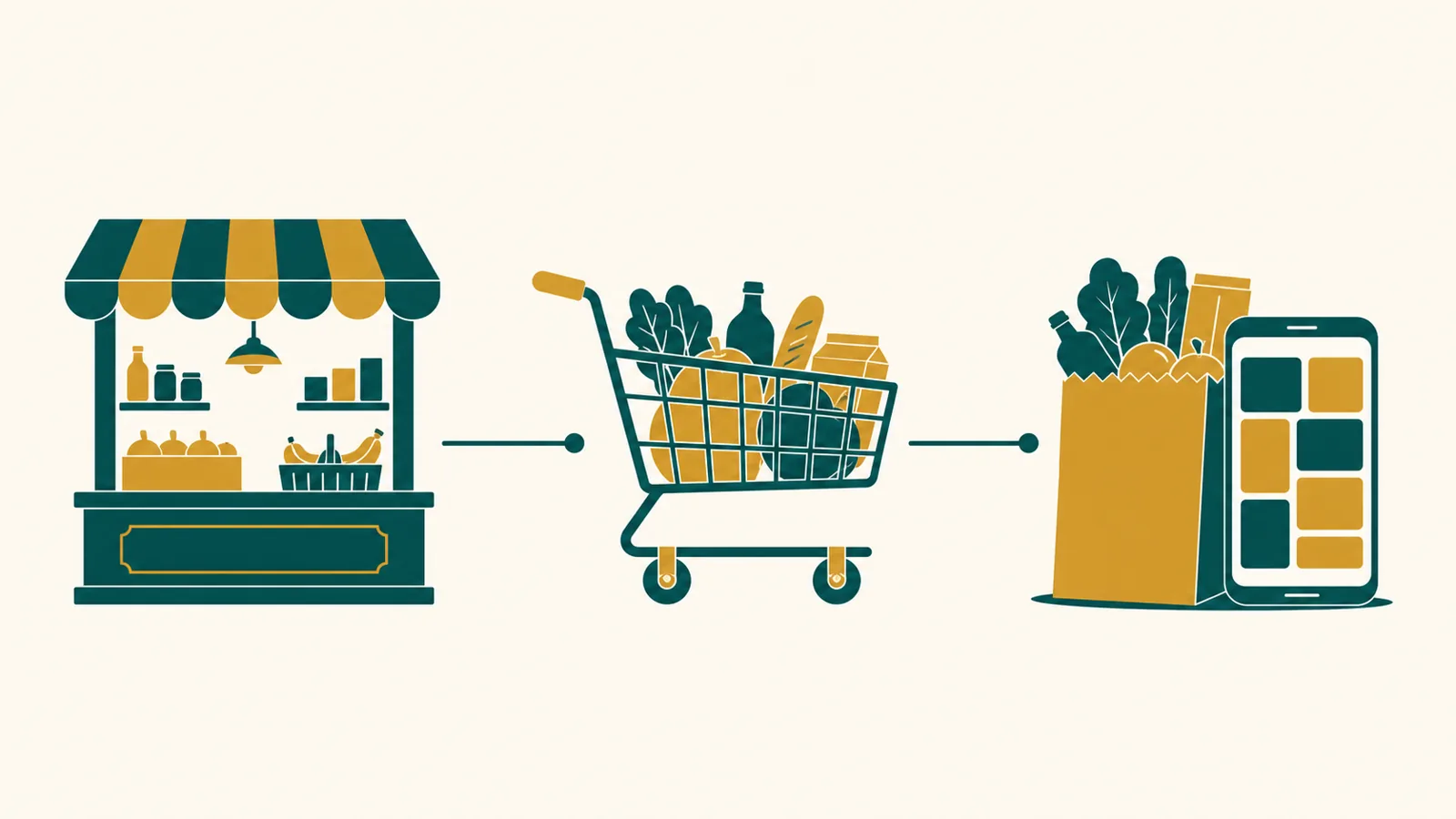
Our GPS-tracked delivery fleet and roughly six thousand pallet positions exist for this reason as much as for volume. Getting a case to a baqala counter, a modern trade backroom and a quick-commerce dark store on three different schedules, without any of them running short, is as much a routing and inventory problem as a delivery one.
Where HORECA and Traditional Trade Fit Into the Split
The three-channel household habit is not the whole picture. Hotels, restaurants, catering companies and cloud kitchens buy on their own schedule entirely, often daily, and their volumes do not move with a household's monthly or weekly rhythm at all. Where does that leave a hotel kitchen or a catering company inside this split? Largely outside it, running on its own supply cycle.
Traditional trade sits closer to the household pattern, but with a twist. The UAE's baqalas, more than thirty thousand of them, still handle a meaningful share of the ten-minute top-up job, particularly for shoppers who prefer walking to a counter over waiting for an app delivery, or who need something at an hour when a dark store nearby is thin on stock.
Our van sales network reaches these baqalas directly, on routes built around the same urgency logic as quick commerce: small, frequent drops rather than large, infrequent ones. A baqala owner restocking twice a week needs the same small-format thinking a quick-commerce dark store does, just delivered by a driver instead of a rider.
HORECA buying works on yet another logic again. A hotel kitchen or catering operation orders on its own schedule against a menu and covers, not against a household's monthly rhythm, and it usually wants foodservice-appropriate case sizes rather than retail packs at all. A caterer preparing meals for a large event has no use for a household-size pack of oil or rice; a case built for kitchen use, sized for a professional pantry, serves that account far better than any of the three household formats discussed above. Brands that only think in retail pack sizes tend to miss this channel altogether, even though it can be a meaningful volume driver in its own right.
What This Means for Brands Selling Into the UAE
A brand entering or growing in the UAE cannot treat this market as a single retail channel with several storefronts. Modern trade, e-commerce, quick commerce, and traditional trade through the country's baqalas each reward a different pack size, a different promotional structure and a different level of stock discipline.
Our three pillars, marketing, sales and distribution, exist because these decisions rarely work well in isolation. A pack-size call made without input from the sales team ends up mismatched to the channel it is meant to serve. A promotion planned without distribution input can outrun the stock needed to support it once shoppers respond.
This doesn't mean chasing every channel with a different SKU on day one. Most brands start with one or two formats, prove them in modern trade, and expand into online and quick-commerce packs once the core range is established. The order matters less than recognising early that grocery shopping trends UAE-wide now call for more than one pack decision.
A practical starting point looks something like this:
- Confirm which channel the core pack size already performs in, and treat that as the anchor format rather than redesigning it.
- Add a smaller, single-use format once the core listing is stable, sized and priced for quick commerce and baqala counters rather than scaled down from the bulk pack.
- Register and label each new format early, since Arabic-label sign-off and product registration take time that is easy to underestimate.
- Forecast each channel's demand separately instead of relying on one combined monthly number.
If you are weighing how to structure pack sizes or promotions across UAE retail channels, our team can walk through what we are seeing across modern trade, e-commerce and quick commerce this quarter. Reach us through our contact page, or read more channel breakdowns on the Bagason Brief.
Key takeaways
- UAE households increasingly split one grocery budget across three buying moments: a monthly hypermarket trip, a weekly app reorder, and a ten-minute top-up.
- Each channel rewards a different pack size: bulk and family packs for hypermarkets, standard packs for weekly online orders, and single-serve or small packs for quick commerce and baqala counters.
- Promotions need a different structure per channel; a multi-buy offer that works in a hypermarket rarely moves a top-up shopper.
- Stock-outs cost more than they used to, since app and quick-commerce shoppers switch brands immediately rather than waiting for the next hypermarket trip.
- HORECA buyers and traditional trade baqalas run on their own patterns, alongside the household split, and need their own pack and delivery logic.
- Brands covering all three household channels need distribution and warehousing built to track stock, batches and routing separately for each one.
The three-channel habit looks less like a passing shift and more like how UAE households will keep buying groceries for a while yet. It rewards brands that plan pack sizes and stock levels channel by channel, rather than treating the UAE as one market with one basket. Talk to us if you want to work through how your current pack lineup fits across modern trade, online and quick commerce here.
Frequently asked questions
Why do UAE shoppers use three different grocery channels instead of one?
Most households split one grocery budget across three moments rather than one shop. A monthly hypermarket trip covers bulk and value items, a weekly app order handles routine restocking, and a quick delivery fills gaps between the two. Each moment has a different job, which is why one channel rarely replaces the others.
What is quick commerce top-up shopping?
Quick commerce top-up shopping means ordering one or two items through an app for delivery within roughly ten to twenty minutes, usually from a dark store close to home. It covers moments like running out of milk mid-week or needing one ingredient for dinner, rather than a full grocery restock.
Are hypermarkets still relevant with online grocery growing in the UAE?
Yes. Hypermarkets remain the main channel for bulk and value packs, seasonal shopping and physical browsing, none of which a ten-minute delivery app is built to replace. Households tend to add online and quick-commerce ordering alongside hypermarket trips rather than instead of them.
Why do brands need different pack sizes for different UAE grocery channels?
A pack size that suits a planned hypermarket trip rarely suits a rushed top-up order or a habitual weekly reorder. Bulk packs work in hypermarkets, standard packs suit online reorders, and small or single-serve packs fit quick commerce and baqala counters, so brands covering all three usually need more than one format.
How does basket splitting affect grocery promotions in the UAE?
Basket splitting means a single promotion rarely performs the same way in every channel. Multi-buy offers suit a planned hypermarket trip, discount codes suit a weekly online reorder, and top-up shoppers mostly respond to an item simply being visible and in stock rather than to a discount.
What happens when a product goes out of stock in one grocery channel?
Unlike a monthly hypermarket habit, weekly app and quick-commerce shoppers rarely wait for a product to come back. They tend to pick an available alternative immediately, and that alternative can keep the spot on future orders. This makes channel-level stock visibility more important than it used to be.