Walk down any beverage aisle in a Dubai hypermarket and you will see three bottles that look almost the same but carry noticeably different labels: one says "100% juice," the next says "nectar," and a third just says "drink." Beverage labelling UAE rules exist for exactly this reason, so shoppers and buyers can tell the categories apart at a glance rather than guessing from the picture on the front. For anyone who orders, stocks, or simply reads labels before buying, knowing what those words legally mean saves guesswork at the shelf.
This guide is written for retail buyers, foodservice operators, and label-literate shoppers who want a plain explanation of how beverage categories, ingredient lists, and serving sizes work on drinks sold in the UAE. It does not rank products or say one option is better for you than another. It explains what the words on the label are required to mean, so you can read any bottle, carton, or can with more confidence. Once the underlying vocabulary is clear, a shelf full of near-identical bottles stops looking confusing and starts looking organized.
Beverage labelling UAE requirements sit inside a wider food-labelling framework, but drinks carry a few category rules that packaged snacks or dry goods do not. Juice, nectar, and functional drinks each answer to a slightly different composition test. A label that mixes up the wording for one category with another would not clear a compliance check before it reached a shelf in the first place, which is the detail to keep in mind going forward: the front-of-pack word is not decoration. It is a declaration.
What Beverage Labelling UAE Rules Cover
Packaged drinks sold in the UAE fall under the same general food labelling framework that covers other packaged foods, with beverage-specific detail layered on top through GCC standardization body (GSO) technical regulations and enforcement by bodies such as the Emirates Authority for Standardization and Metrology (ESMA) and the Ministry of Industry and Advanced Technology (MOIAT). Municipal food-control departments in each emirate also inspect labels at the point of sale, and imported drinks go through product registration before they are cleared to enter the market at all.
At a minimum, a beverage label sold in the UAE is expected to carry the product name, a full ingredient list in descending order by weight, net content, a production and expiry date format, storage instructions, country of origin, and the name of the importer or distributor. Bilingual Arabic-English text is a standing requirement, which is why every can and bottle on a UAE shelf carries two full sets of text rather than a sticker translation. A nutrition table, expressed per 100ml at minimum, rounds out the mandatory fields.
None of this tells a shopper whether a drink suits their taste or budget. What it does is standardize the vocabulary, so "juice," "nectar," and "drink" cannot be used loosely on the front of a pack. Learning that vocabulary first pays off, since all three words describe drinks that can look, and even taste, fairly similar in the bottle.
For a distributor bringing a beverage brand into the UAE, this layer of rules is one of the first things checked before a container is even booked. Getting the category wording wrong on a label is not a small fix once stock has landed; it usually means a relabel or a returned shipment. That is one reason label accuracy gets treated as seriously as cold-chain handling or shelf-life dating on the distribution side of the business.
100% Juice vs Nectar vs Juice Drink: How the Front Label Tells Them Apart
The three most common front-of-pack words on the beverage shelf are "juice," "nectar," and "drink," and each one describes a different composition rule rather than a marketing flourish.
- 100% juice means the product is made entirely from fruit, with no added water and no added sugar in the base recipe. A "100% juice" label is a statement about composition, not about taste or origin.
- Nectar is a category for fruits that are naturally too pulpy, sour, or thick to drink as a straight juice, such as mango, guava, or apricot. Nectar is fruit juice or puree diluted with water, often with a small amount of added sugar, and the label is required to state the minimum fruit content as a percentage.
- Juice drink (sometimes labelled "fruit drink" or simply "drink") is the lowest-fruit-content tier. It contains water, some proportion of fruit juice or concentrate, and typically more added sugar or sweetener than a nectar. The fruit percentage is usually printed in smaller type near the ingredient panel.
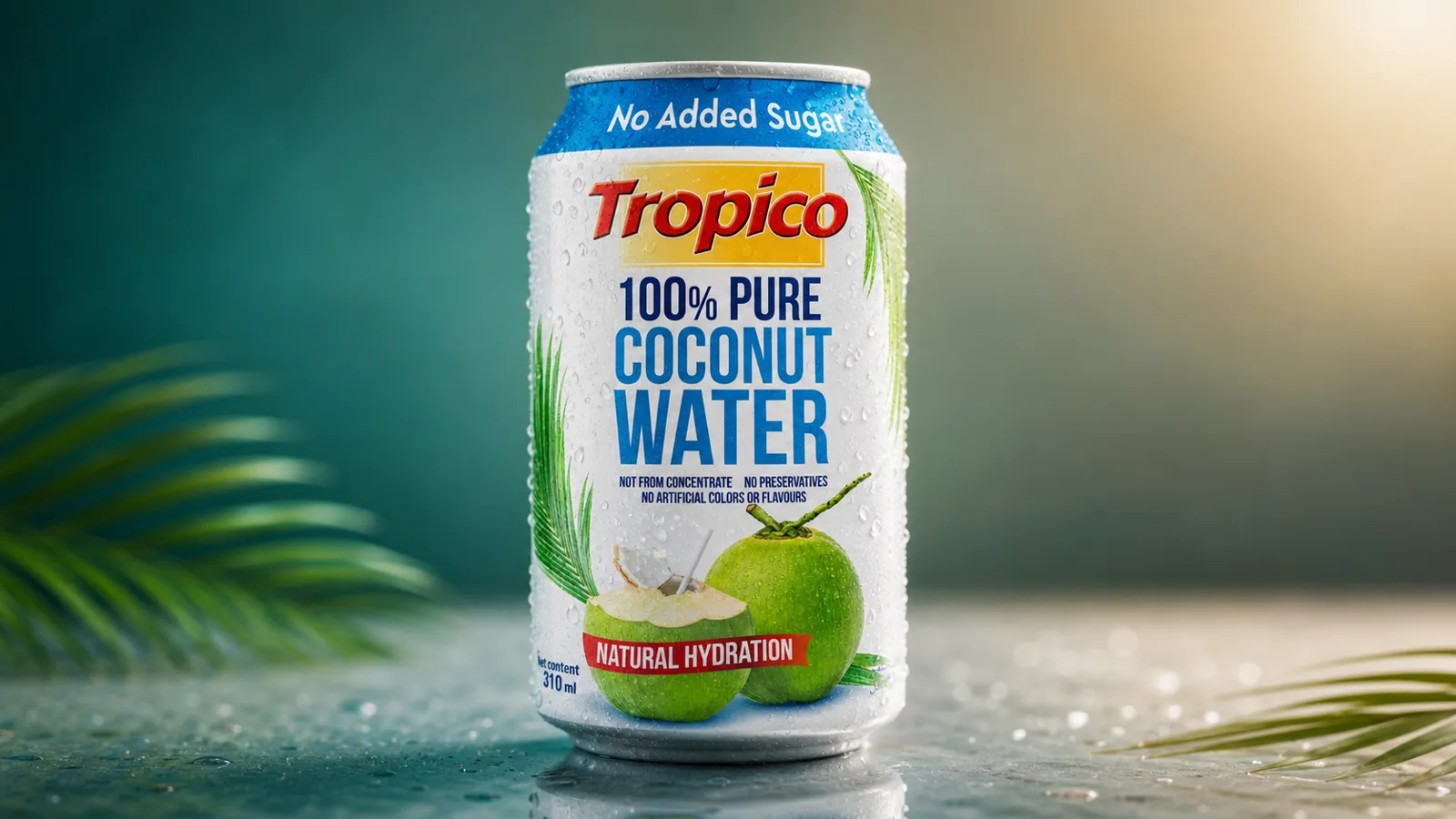
Take Tropico as a shelf example. Depending on the specific variant, a Tropico bottle may be labelled as a juice, a nectar, or a juice drink, and the front pack wording reflects which of those three composition tiers that particular product sits in. Reading the word next to "juice" on the front, then checking the fruit-content percentage on the back, tells you which tier you are holding before you look at price or flavour at all.
Here's the thing: a nectar isn't a lesser version of a juice, and a juice drink isn't automatically "worse." They're different products built to different recipes, often because a fruit like guava cannot be sold as a pourable 100% juice without dilution. The label is doing its job when it lets you tell the three apart in five seconds.
The fruit-content percentage is where this distinction becomes concrete rather than descriptive. A guava nectar might state a minimum fruit content in the region typical for that fruit category, while a mango nectar sits at a different minimum because mango pulp behaves differently once diluted. These minimums are set by category, not chosen freely by a brand, which is why two nectars from different manufacturers, made from the same fruit, tend to land close to the same percentage even when the packaging looks completely different.
Multi-fruit blends add one more layer to check. When a label lists several fruits, the ingredient order and the percentage breakdown (sometimes shown as a small pie or bar chart near the ingredient panel) tell you which fruit dominates the recipe. A "mixed berry" drink that lists apple juice first, with berries further down the list, is telling you plainly that apple is doing most of the volume. That isn't a trick; it's the ingredient list working exactly as intended, provided you read past the front-of-pack name.
Reading the Drink Ingredient List: Order, Percentages, and What Counts as an Additive
A drink ingredient list follows the same rule as any packaged food: ingredients are listed in descending order by weight, with the largest component first. For most juices and nectars, that means water or reconstituted juice concentrate appears near the top, followed by sugar (if any), then flavourings, acidity regulators, and preservatives toward the bottom.
A few line items show up often enough on beverage labels that it helps to know what they are:
- Reconstituted from concentrate means the juice was concentrated for shipping, then mixed back with water at the bottling stage. It is a standard, declared production method, not a shortcut hidden from the shopper.
- Acidity regulators (such as citric acid) balance tartness and are common across nearly every fruit-based drink, including 100% juice.
- Stabilizers and pulp regulators keep fruit solids evenly suspended in the liquid rather than settling at the bottom of the bottle.
- Natural or nature-identical flavouring tops up a fruit's aroma, since some of it is naturally lost during pasteurization and packaging.
For functional and electrolyte drinks, the drink ingredient list also carries mineral salts (sodium, potassium, or magnesium compounds) and sometimes vitamins, listed by their compound name rather than a marketing name. A label might read "potassium citrate" rather than "potassium," for instance. These compound names don't indicate anything unusual; they are how food regulation requires an ingredient to be named on the pack, regardless of category.
Preservatives draw more attention from shoppers than almost any other line item, so it helps to know what the common ones do. Potassium sorbate and sodium benzoate, both frequent entries on juice and drink labels, work by slowing microbial growth once a bottle is opened or once it sits at room temperature during transport and shelf life. Ascorbic acid, listed high on many juice ingredient panels, doubles as both a processing aid and a naturally occurring compound in citrus fruit, which is part of why it appears on labels for products that also market themselves as free of "artificial" additives elsewhere on the pack.
Build one more habit: check the ingredient list against the front-of-pack name for any flavour claim. A "strawberry" drink that lists "flavouring" rather than actual strawberry juice or puree is still allowed to use the fruit name on the front, provided the ingredient panel discloses the flavouring honestly and, where required, notes that the flavour is not derived from real fruit content at a meaningful level. That single cross-check, front name against back panel, resolves more label confusion than any other single habit on this list.
What "No Added Sugar" Means on a Label
"No added sugar" is one of the most misread phrases on a beverage label, so here is precisely what it does and does not mean. No added sugar meaning, in practical terms, is this: no sugar, syrup, honey, or concentrated fruit juice used as a sweetener was mixed into the product during manufacturing. It describes the manufacturing process rather than the total sugar content.
A "no added sugar" fruit juice can still show a meaningful sugar figure on the nutrition table, because fruit itself contains natural sugars such as fructose. A 100% orange juice with no added sugar still lists sugar under the nutrition information, sourced entirely from the oranges. That single distinction, added versus naturally occurring, is the whole difference between "no added sugar" and "sugar-free" or "zero sugar," which are separate claims governed by their own thresholds.
A related phrase, "reduced sugar," means the product has a set percentage less sugar than a standard reference version of the same drink, not that it contains no sugar at all. When a label carries any of these sugar-related claims, checking the nutrition table's "of which sugars" line against the ingredient list is the fastest way to see exactly what the claim is describing.
Here's a short way to keep the terms straight:
- No added sugar: nothing added as a sweetener; sugar shown is from the fruit itself.
- Reduced sugar: a defined percentage lower than the standard recipe, sugar may still be present.
- Sugar-free / zero sugar — sugar content falls under a specific low threshold set by the regulation, whether or not any was ever added.
Confusion usually shows up around fruit juice specifically, since fruit itself is naturally sweet. A pomegranate juice with no added sugar can still show a higher sugar figure per 100ml than a "reduced sugar" juice drink that did contain added sweetener before its recipe was adjusted down. Comparing sugar claims across categories, rather than within the same category, is where the no added sugar meaning gets lost the fastest. The claim only tells you about the manufacturing step, not about which of two different drinks has less sugar overall.
Sweeteners add another wrinkle. Some functional and diet-positioned drinks use non-sugar sweeteners such as stevia extract, sucralose, or acesulfame potassium instead of sugar, and these are declared in the ingredient list by name. A drink can be "no added sugar" and still taste sweet because of one of these sweeteners, which is a separate ingredient category from sugar entirely and carries its own naming rule on the label rather than being folded into the sugar figure.
Serving Sizes and Why the Numbers Look Different Bottle to Bottle
Nutrition tables on beverage labels are required to show values "per 100ml," which lets you compare any two drinks side by side regardless of bottle size. Many labels add a second column, "per serving," based on a stated serving size that the manufacturer sets, commonly 200ml or 250ml for juices, or the full container for a small single-serve bottle.
This is where two bottles of the same drink, in different pack sizes, can look inconsistent at first glance. A 200ml juice box and a 1-litre carton of the identical recipe will show the same "per 100ml" figures, but the "per serving" figures differ because the stated serving sizes differ. Reading the per-100ml column first, then treating the per-serving column as a convenience figure, avoids that confusion.
For functional and electrolyte drinks in particular, serving size matters for the mineral content lines as much as for sugar or calories. A rehydration-style drink is often sold in a defined single-serve sachet or bottle specifically because the mineral formulation is measured against that whole container, not against 100ml. Checking whether a mineral or vitamin percentage is stated per 100ml or per full container tells you whether you are looking at a fraction of the dose or the whole thing.
Calorie figures follow the same logic and cause the same confusion when shoppers skip straight to the front of a bottle. A "low calorie" callout on the front pack is a claim about the per-100ml or per-serving figure defined by regulation. Check the actual number on the nutrition table rather than taking the front-pack wording as the full picture. Two drinks can both carry a "low calorie" claim while differing meaningfully in their actual calorie count, simply because one is calculated per 100ml and the other per a larger stated serving.
Pack format plays a role here too. Multipacks of small juice boxes, common in the school-lunch and foodservice segments, usually state the serving size as one full box rather than 100ml, since the box itself is the unit a child or a canteen serves. A 1-litre family carton of the same brand and recipe reverts to the 100ml-based comparison figures. Neither format is misleading on its own. The mismatch only becomes confusing when a shopper compares the "per serving" number on a small box directly against the "per serving" number on a large carton without checking that the two serving sizes are not the same volume.
Functional and Electrolyte Drink Labels: What the Front Says vs What the Back Confirms
Functional drinks, a category that includes electrolyte and rehydration-style beverages, vitamin waters, and fortified drinks, carry an extra layer on the label beyond the standard juice and nectar rules: a declaration of any added vitamins or minerals, usually as a percentage of the Nutrient Reference Value (NRV) per serving.
A functional drink label typically separates into two zones. The front carries the product name and category description, such as "electrolyte drink" or "vitamin-fortified water." The back carries the full ingredient list plus a supplementary table listing each added vitamin or mineral by name, the amount per serving, and the %NRV. That %NRV column is a standardized reference figure set by food regulation, used consistently across every fortified product on the shelf, not a claim written by the brand.
Hydralyte is a useful example of how this format looks in practice on the UAE shelf: the label states the electrolyte category on the front, then lists the specific mineral salts and their quantities on the back nutrition panel, the same structural format used across the functional-drink category generally. V-Min, positioned in the same functional space, follows the same layout logic: front-of-pack naming, back-of-pack compound-by-compound declaration.
What a functional drink label is required to avoid is any claim implying the product treats, prevents, or cures a condition. A label can state what is inside and in what quantity. It cannot state what that quantity does inside the body beyond what is permitted under the applicable nutrition and health claims regulation, which is a narrow, pre-approved list. If a claim on a functional drink sounds like a medical promise, it has gone further than a compliant label is meant to go, and it deserves a healthy degree of skepticism.
Electrolyte and rehydration-style drinks also tend to carry an osmolarity or formulation note somewhere on the pack, usually in smaller type near the directions for use. This is a technical descriptor of how the drink's mineral and sugar concentration compares with body fluid, and it is printed as a formulation fact rather than a promise. Reading it alongside the ingredient list, rather than the front-pack name alone, gives a fuller picture of what the product contains before it reaches the mineral and vitamin table.
Vitamin-fortified waters and juices sit in a related but distinct spot on the shelf. A juice fortified with vitamin C, for example, still follows the juice-category composition rules described earlier for its base recipe, then adds the vitamin declaration on top as a supplementary line. The two systems, category composition and vitamin fortification, are declared separately on the same label, which is why a fortified juice panel can look busier than a plain one without the underlying juice recipe having changed at all.
Juice Label Claims Worth a Second Look
Beyond the fruit-content tier and the sugar wording, a handful of other juice label claims turn up often enough to deserve a plain explanation.
- "Cold-pressed" describes an extraction method (mechanical pressure rather than heat-based extraction), not a fruit-content percentage or a shelf-life claim on its own.
- "Not from concentrate" means the juice was bottled directly after pressing rather than concentrated and reconstituted, which is a production-method claim rather than a nutrition claim.
- "100% natural" refers to the absence of artificial additives in that specific formulation. It sits alongside, not in place of, the composition-tier wording (juice, nectar, drink) described earlier.
- Percentage callouts on the front, such as "40% mango," restate the fruit-content figure that also appears in the ingredient declaration, usually because the category (nectar or juice drink) requires that figure to be disclosed prominently.
These phrases don't substitute for reading the ingredient list and the fruit-content percentage. Each describes one attribute of the product, and a careful shopper checks the claim against the panel underneath it rather than reading the front pack in isolation.
Arabic-English Bilingual Labelling and Why the Shelf Looks the Way It Does
Every packaged beverage sold in the UAE carries Arabic and English text covering the same required information: ingredients, net content, dates, storage, and origin. This is a standing requirement across the market rather than a brand choice, which is why locally produced and imported drinks alike carry the same bilingual layout regardless of where the product was originally formulated.
For an importer or distributor, this means labelling compliance work happens before a product ever reaches a UAE shelf, covering translation accuracy, correct placement of mandatory fields, and date-coding formats accepted by municipal authorities. For a shopper, the practical takeaway is simpler: whichever language you read, the ingredient list, fruit-content percentage, and nutrition table say the same thing in both.
Common Label-Reading Mistakes to Avoid
A handful of habits account for most of the confusion shoppers and even trained retail staff run into at the beverage shelf. None of them are complicated once named.
- Reading the front pack only. The front carries the category word and any front-facing claim, but the ingredient list and nutrition table on the back confirm what that claim actually means in this specific product.
- Comparing "per serving" figures across different pack sizes. A 200ml box and a 1-litre carton of the same recipe can show different per-serving numbers while sharing identical per-100ml figures.
- Assuming "no added sugar" means low sugar overall. As covered above, the claim is about the manufacturing process, not the total sugar figure from the fruit itself.
- Treating "natural" as a composition-tier word. "100% natural" and similar phrases describe the absence of certain additives. They do not replace the juice, nectar, or drink designation, which is the actual composition tier.
- Skipping the fruit-content percentage on multi-fruit blends. The first-listed fruit in a blend usually dominates the recipe by volume, even when a different fruit gets top billing on the front pack design.
Retail and foodservice buyers run into a related version of this same set of mistakes at the ordering stage, usually when comparing a new supplier's beverage line against an existing one on the shelf. Matching category wording, fruit-content percentage, and serving-size basis across two products before assuming they are directly comparable avoids a mismatch that only becomes visible once stock is already on the shelf and a customer asks a question the label should have already answered.
A Practical Checklist for Reading Any Beverage Label
Faced with an unfamiliar bottle or carton, a quick five-step read gets you the information that matters most:
- Check the front-of-pack word: juice, nectar, or drink, and note which composition tier it signals.
- Find the fruit-content percentage, usually near the ingredient list or on the front for nectars and drinks.
- Scan the ingredient list top to bottom; the first ingredient is the largest component by weight.
- Compare the "per 100ml" nutrition figures rather than relying on the "per serving" column alone.
- For functional or fortified drinks, check whether vitamin or mineral %NRV figures are stated per 100ml or per full container.
That five-step habit works the same way whether the bottle in your hand is a mango nectar, a 100% apple juice, or an electrolyte drink from the pharmacy aisle.
Key takeaways
- "Juice," "nectar," and "drink" are defined composition tiers, not interchangeable marketing words.
- "No added sugar" describes the manufacturing process, not the total sugar figure on the nutrition table.
- Nutrition figures are most comparable per 100ml; serving-size columns vary by manufacturer and pack size.
- Functional and electrolyte drinks add a vitamin/mineral declaration with %NRV values, standardized across the category.
- Bilingual Arabic-English labelling is a standing UAE requirement, with identical information in both languages.
Reading a beverage label well is a five-minute skill, not a specialist one. Once the vocabulary is clear, the rest of the label mostly explains itself. For retailers and foodservice buyers sourcing across juice, nectar, and functional-drink categories, that same vocabulary is what keeps a shelf assortment consistent and a listing description accurate from the first order onward. Bagason's distribution team works across all three categories daily, from import documentation through to shelf-ready stock, and the Bagason Brief covers more of this ground for buyers who want the detail behind what is printed on the pack. Questions about a specific category or listing are welcome any time through our contact page.
Frequently asked questions
What is the difference between juice, nectar, and a juice drink in the UAE?
These are three separate composition tiers, not marketing words. "100% juice" contains only fruit with no added water. "Nectar" is fruit juice or puree diluted with water, often for fruits too thick to drink straight, with a minimum fruit percentage stated on the label. A "juice drink" has the lowest fruit content of the three, with more water and typically more added sweetener.
Does "no added sugar" mean a drink has no sugar at all?
No. It means no sugar, syrup, or concentrated juice was added during manufacturing. A juice can still show sugar on its nutrition table because fruit naturally contains sugar. To check total sugar content, look at the "of which sugars" line on the nutrition panel rather than relying on the front-pack claim alone.
Why do two bottles of the same juice show different nutrition numbers?
Nutrition tables are required to show figures per 100ml, which stays consistent across pack sizes. Many labels also add a "per serving" column, and the stated serving size can differ between a small box and a large carton of the identical recipe. Comparing the per-100ml figures avoids this confusion.
What should I look for on a functional or electrolyte drink label?
Check the ingredient list for the specific mineral compounds used, then look at the supplementary table listing each vitamin or mineral with its amount and %NRV per serving. Confirm whether that figure is stated per 100ml or per full container, since single-serve formats are often measured against the whole pack rather than 100ml.
Why is every beverage label in the UAE written in Arabic and English?
Bilingual labelling is a standing requirement for packaged food and drink sold across the UAE, covering ingredients, dates, storage, origin, and other mandatory fields. Both languages carry identical information, so a shopper reading either one gets the same facts about the product.
Are terms like "cold-pressed" or "100% natural" the same as the juice, nectar, or drink category?
No. Those phrases describe an extraction method or additive profile, not the composition tier. A cold-pressed drink can still be labelled as a nectar or a juice drink depending on its fruit content and dilution. Always check the category word alongside any additional front-pack claim.