Kids food labels tell you far more than a nutrition score ever could, once you know where to look. Walk down the snack aisle at any Carrefour or LuLu in the UAE and you'll find shelves stacked with biscuits, puffs, bars, and juice pouches aimed squarely at children. Every one of them carries a label written in a set format, and most parents skim past the parts that matter most.
This isn't a ranking of good snacks versus bad ones. It's a walkthrough of what the label is legally required to tell you, how to read it in under thirty seconds, and where parents most often get tripped up. We work in FMCG distribution across the UAE, moving packaged food from the port to the shelf, so we see labels from the compliance side as often as the shopping-cart side. That view is worth sharing.
What's actually on a UAE snack label
Every packaged food sold in the UAE follows a labelling standard set out through the GCC Standardization Organization (GSO) and enforced locally by Dubai Municipality, MOIAT, and the relevant emirate-level food control authority. The label must appear in Arabic, with English commonly added alongside it. That single rule already tells you something: nothing on the front or back of the pack is decorative. Every line exists because a regulator required it.
A compliant label needs the product name, a full ingredient list in descending order by weight, a net quantity, a production and expiry date format, storage instructions, the name and address of the manufacturer or importer, a nutrition declaration, and any allergen statement that applies. For imported products, an importer sticker usually sits over or beside the original label, since the country of origin's label alone doesn't always satisfy local requirements.
The production and expiry dates follow a fixed day-month-year format, and storage instructions tell you whether a product needs refrigeration after opening or can sit in a pantry through Dubai's summer heat without issue. Import stickers, when present, usually cover the manufacturer's original label rather than replace it, so both versions of the ingredient list can sometimes be visible on the same pack if you look closely at the edges.Here's the thing: this format wasn't designed with a parent standing in a supermarket aisle at 6pm in mind. Regulators built it for traceability, recall management, and cross-border trade consistency. Reading it well means translating a regulatory document into a two-minute decision.
The nutrition table: what the numbers next to the ingredient list mean
Below or beside the ingredient list sits a grid of numbers most parents glance at and move past. That table is not optional filler. Regulators require it to show energy, total fat, saturates, total carbohydrate, sugars, protein, and sodium, almost always presented per 100g and often per serving alongside it.
Energy is usually shown in kilojoules and kilocalories together. Total fat and saturates tell you the fat profile, useful mainly when comparing two similar products rather than in isolation. Total carbohydrate includes both starches and sugars, so the "of which sugars" line underneath it is the one to circle back to after you've already scanned the ingredient list for sugar-family names.
Sodium deserves a second look too, particularly on savoury snacks like flavoured crisps, crackers, and salted popcorn aimed at kids. A single packet can carry a meaningful share of a child's daily sodium intake, and the number is easy to miss because parents tend to associate salt concerns with adult food rather than snacks marketed with cartoon characters on the front.
Comparing this table side by side across two or three similar products, right there on the shelf, is often the fastest way to make a decision once you already understand what each line represents. It takes seconds once the habit is built.
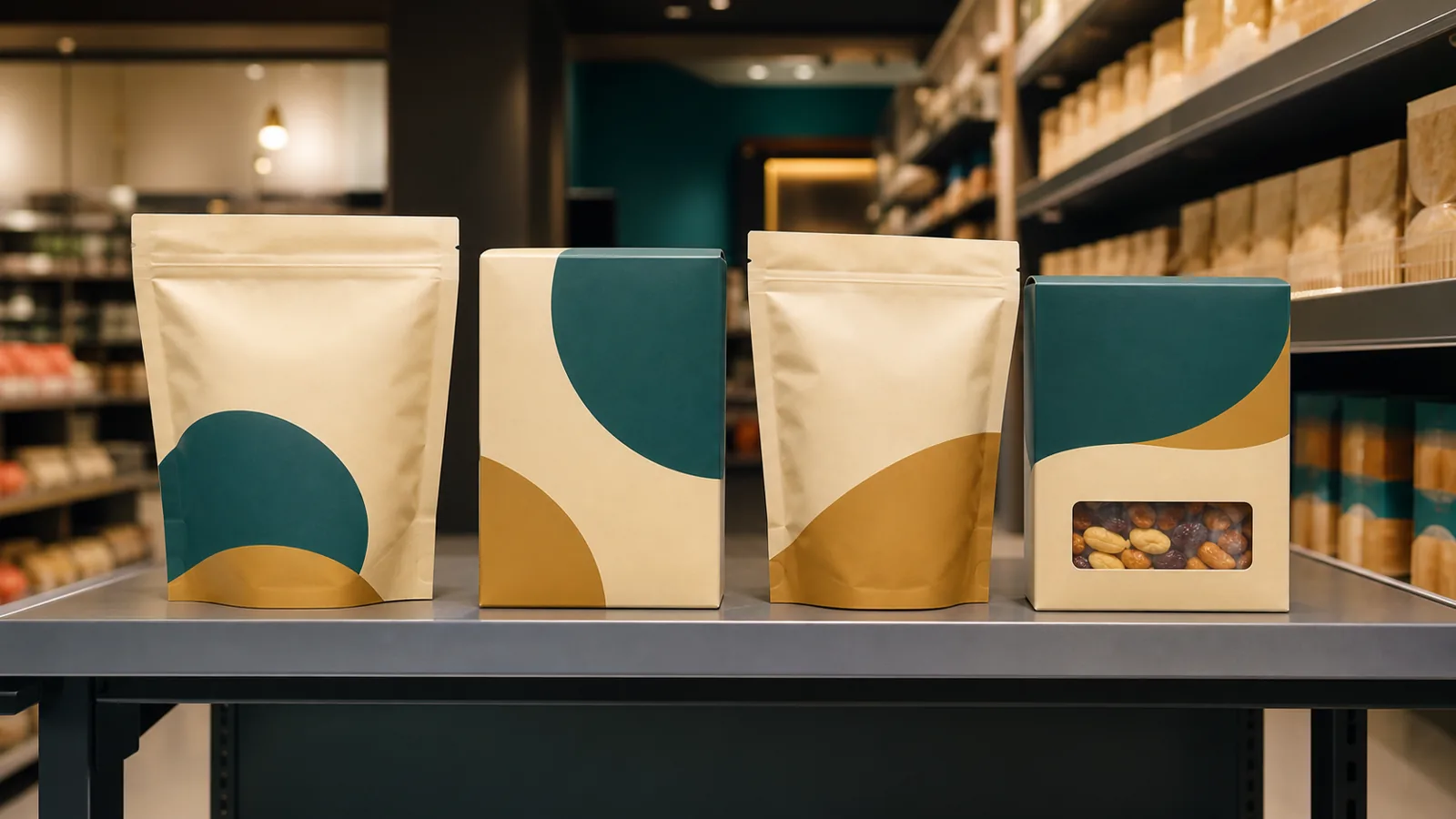
Reading labels for kids food: start with the ingredient list, not the front of the pack
The front of a snack pack is marketing. The ingredient list is the legal record. Under GSO labelling rules, as under most international food law, ingredients are listed in descending order of weight at the point of manufacture. Whatever is listed first makes up the largest share of the product. Whatever sits last is present in the smallest amount.
When you're reading labels for kids food, train your eye on the first three ingredients before anything else. If a fruit snack lists "sugar" or "glucose syrup" ahead of the fruit it's named after, that tells you something the packaging art doesn't. Take a mango-flavoured fruit strip as an example: if the front shows a cartoon mango and the ingredient list opens with sugar, glucose syrup, then mango puree, the product is mostly a sugar base with fruit added for flavour and colour, not the other way round.
A few practical habits help here:
- Read the first three ingredients before checking anything else on the pack.
- Compare the ingredient order against the product's name and imagery. A mismatch is a signal to look closer, not a reason to panic.
- Check whether a whole grain, nut, or fruit is named specifically ("oat flour", "almond") or only implied by a flavour description ("oat-flavoured").
- Note where "flavouring" appears. A flavour can be added even when the actual ingredient it names is present in a tiny amount, or not present as a whole food at all.
This isn't about labelling any single product as good or bad. It's about knowing what you're buying, not just what the packaging suggests.
Sugar on kids labels: the many names it goes by
Sugar rarely appears just once under the word "sugar." Formulators use a wide range of ingredients that all function as sweeteners, and each one gets its own line in the ingredient list. That's standard food-science practice, not an attempt to hide anything, but it does mean a product can contain several sweetening ingredients without "sugar" itself appearing anywhere near the top.
Common names for sugar on kids labels in the UAE market include:
- Sucrose, glucose, fructose, dextrose, maltose
- Glucose syrup, corn syrup, high-fructose corn syrup
- Invert sugar syrup
- Fruit juice concentrate or fruit puree concentrate
- Honey, agave syrup, date syrup, maple syrup
- Malt extract, maltodextrin (a starch derivative, but often used alongside sweeteners)
- Brown sugar, cane sugar, coconut sugar, palm sugar
Scan the whole ingredient list for these terms instead of trusting that "sugar" alone will show up. A cereal bar might list oats first, then three or four sweetening ingredients scattered through the rest of the list. Individually, none of them sits near the top. Added together, they can outweigh the oats.
The nutrition table gives you a second checkpoint. Look for the line marked "of which sugars" under total carbohydrates or total sugars. That single number tells you how much sugar is in the product per 100g and per serving, regardless of how many different names appear in the ingredient list. Comparing that number across two similar snacks, side by side on the shelf, is often faster than parsing ingredient names.
Portion sizes: what "per serving" actually means
Nutrition tables on UAE snack labels typically show values per 100g and per serving. The serving size is set by the manufacturer, not by a child's actual appetite, and it doesn't always match what's inside the pack.
A box of individually wrapped biscuits might list a serving as two biscuits, while the box itself contains six or eight. A juice pouch might state values per 100ml when the pouch holds 200ml, meaning the numbers on the label need doubling to reflect what a child drinks in one sitting. This is one of the most common places parents miscalculate, because they read the per-serving column and assume it describes the whole pack.
A quick check before buying:
- Find the stated serving size in grams or millilitres.
- Compare it to the net quantity printed elsewhere on the pack.
- Work out how many servings the pack contains.
- Multiply the per-serving sugar, fat, or calorie figures if your child is likely to eat the whole pack in one sitting.
This matters more for snacks aimed at kids than for adult products, because a single-serve description on the label often doesn't match single-serve behaviour at the school gate or in the car on the way home.
Multipack items add another layer to the picture. A box of six juice pouches will show nutrition values for one pouch, not the box. If a child drinks two pouches across a school day, whatever the label states per serving needs to be doubled to reflect what gets consumed. The same applies to snack bars sold in multipacks of five or six, where the "per bar" figure is the one printed, and the total pack figure has to be worked out separately if you're weighing a full pack against a full day's intake.
Where UAE labels help is in printing the net quantity in grams or millilitres right on the front or side of the pack. Cross-referencing that number against the serving size stated in the nutrition table takes a few seconds and removes most of the guesswork.
Allergen lines: what the label is required to flag
Allergen labelling is one of the more tightly regulated parts of the pack, and for good reason. UAE food regulations require major allergens to be identified on the pack, whether they're a direct ingredient or present as a derivative buried inside a compound ingredient. Common allergens you'll see flagged on children's snack labels include milk, eggs, peanuts, tree nuts, soy, wheat and other gluten-containing cereals, and sesame. The list can run longer on multi-ingredient products, such as a biscuit with a chocolate coating or a nut-based filling, where more than one allergen applies to different parts of the same pack.
Look for two separate things on the pack. First, a bolded or highlighted mention of the allergen within the ingredient list itself, often shown in a different font weight so it stands out from surrounding text. Second, a separate statement such as "Contains: milk, wheat" or "May contain traces of nuts," usually printed directly below the ingredient list.
The distinction between these two statements matters. "Contains" means the allergen is a deliberate ingredient. "May contain" is a precautionary statement covering shared production lines or shared facilities, where cross-contact is possible but not guaranteed on every unit. For a household managing a nut allergy or a wheat sensitivity, that second line is often the one that decides whether a snack goes in the trolley.
Because many kids' snacks are manufactured on shared lines, "may contain" statements show up more often on nut-free-marketed products than parents expect. Reading past the front-of-pack claim and down to this line is a habit to build into every shopping trip, not just the first one. It costs a few extra seconds, and for a household managing more than one allergy, that small habit can matter more than any other line on the pack.
A school snack label check you can do in under a minute
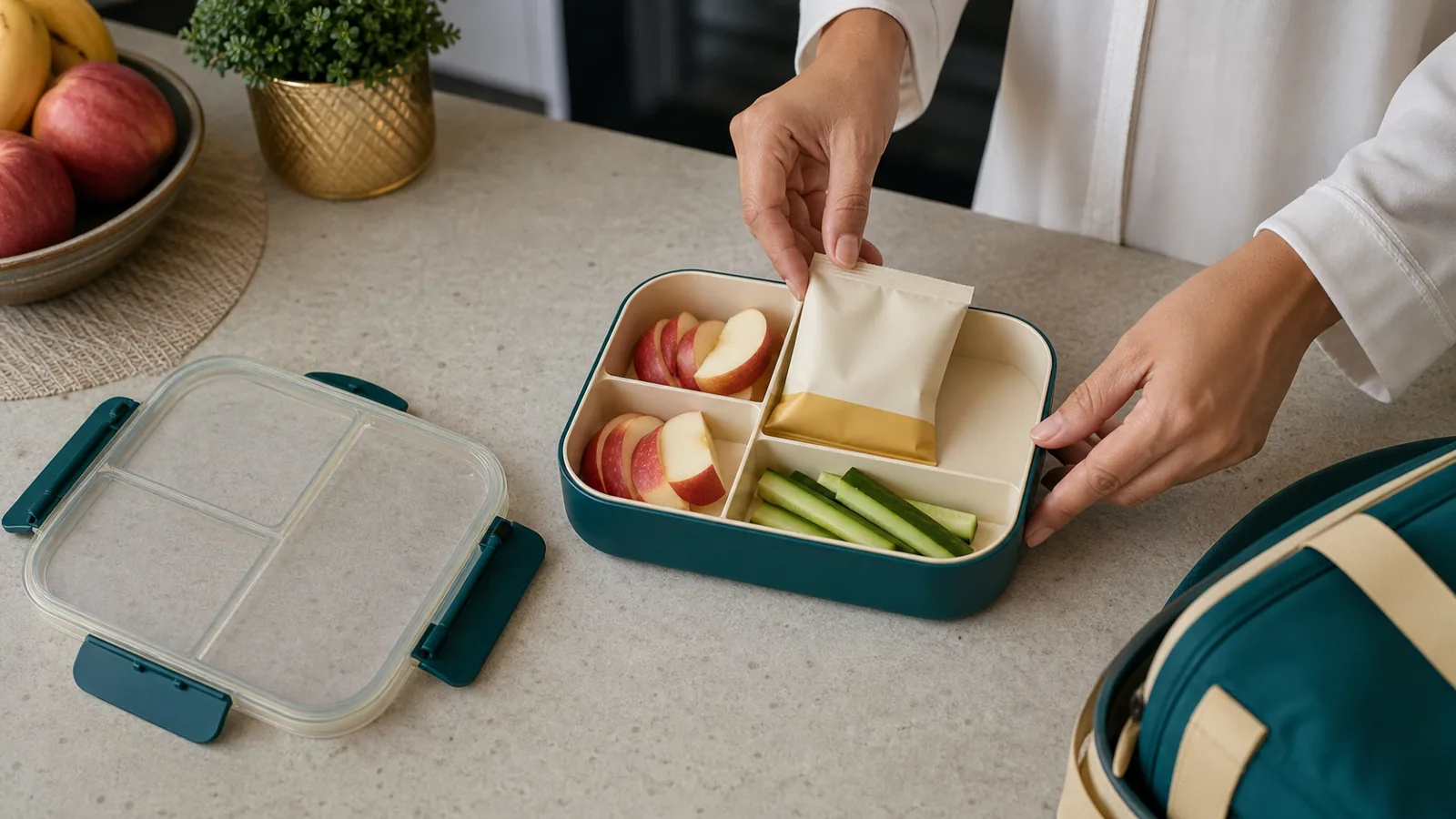
Parents packing lunchboxes for UAE schools are often working against the clock, so the checklist needs to be fast. Here's a school snack label check quick enough to run while you're still standing at the shelf:
- Flip the pack and find the ingredient list first, not the nutrition table.
- Scan the first three ingredients for whether they match what the front of the pack implies.
- Run your eye down the rest of the list for the sugar-family names covered above.
- Check the "Contains" and "May contain" allergen lines against your school's specific restrictions (many UAE schools now flag nut-free or egg-free zones).
- Look at the serving size against the pack size, so you know what a full pack represents.
- Confirm the expiry date format matches what you expect and that the pack is within a reasonable window before the printed date.
Six checks, done in that order, take less time than reading a single paragraph of marketing copy on the front of the box. With practice, most parents can do this scan in fifteen to twenty seconds per product.
Some UAE schools now publish their own snack policies, listing restricted ingredients or banned categories for lunchboxes, separate from what any label discloses. Where a school policy exists, treat it as an additional filter layered on top of the label check, not a replacement for it. A snack can meet every UAE labelling requirement and still fall outside what a specific school allows on campus, so keep both references in mind instead of assuming compliance with one covers the other.
For parents managing more than one child, each with different preferences or restrictions, building a short mental shortlist of label-checked snacks that work for the household saves time on repeat trips. Once a handful of products have been checked against ingredient order, sugar names, and allergen statements, restocking becomes a matter of recognising the pack rather than rereading the label every single week. Even so, a fresh glance every few months helps, since recipes do get reformulated.
How labels vary between local, regional, and imported snack brands
Not every kids' snack brand formats its label the same way, even within the same supermarket aisle. Imported products often carry a sticker layer added by the importer to meet GSO requirements, sitting alongside the original manufacturer's label from the country of origin. That can mean two ingredient lists on one pack: the original and the localised translation. When the two don't match exactly in ingredient order, trust the localised sticker, since it's the version verified against UAE requirements.
Regional and India-linked brands distributed across the GCC, along with globally distributed children's snack and nutrition brands like Slurrp Farm or Mille, each follow their own house style for how the ingredient list, allergen statement, and nutrition table are laid out on the pack, even while meeting the same regulatory minimums. Some print the nutrition table as a full grid with columns for per-100g and per-serving values. Others compress it into a narrower single-column format to fit smaller pack sizes such as single biscuit packs or juice pouches. This variation says nothing about a product's composition. It reflects packaging design choices, pack-size constraints, and which template the brand's regulatory team is working from.
What stays constant, whatever the layout, is the requirement: ingredient list in descending order, allergen disclosure, a nutrition declaration, and bilingual text. Once you know what to look for, the format differences stop being confusing and start being just noise you can read past.
Pack sizing also shifts how labels get presented. A single-serve juice pouch or a small biscuit twin-pack has far less surface area for text than a family-size box, so manufacturers often shrink the font or compress the nutrition grid into fewer columns to fit everything on. This is a design constraint, not an attempt to obscure anything, but it does mean smaller packs sometimes need a closer look, or a quick photo zoomed in on a phone, to read comfortably in-store.
Why front-of-pack claims are not a substitute for the label itself
Packaging design and label content answer two different questions. The front of the pack is built to catch a child's eye and a parent's attention in about two seconds, usually with bright colours, a mascot, or a bold claim like "no artificial flavours" or "made with whole grains." The label content on the back exists to satisfy a legal requirement, and it answers a much narrower question: what exactly is in this pack, in what order, and in what amount.
Take a claim like "no added sugar." Under most labelling frameworks, that phrase refers specifically to sugars added during processing, not to sugars already present in fruit concentrate, honey, or other ingredients already in the product. A snack can carry that claim on the front and still contain a meaningful amount of sugar from a concentrated fruit source listed further down the ingredient panel. The claim isn't false. It's just narrower than it sounds.
Similarly, "made with real fruit" tells you a fruit ingredient is present somewhere in the formulation. It doesn't tell you the fruit's position in the ingredient order, and it says nothing about how much sugar sits alongside it. These claims are regulated in their own right and generally have to be accurate, but accurate and complete are not the same thing. The ingredient list and nutrition table are where the complete picture lives.
A useful habit: treat every front-of-pack claim as a prompt to check the back, not as the final word. If a pack says "reduced sugar," compare its "of which sugars" figure against a similar product from the same range or a competing brand, rather than accepting the claim at face value.
Common label reading mistakes worth avoiding
A few patterns show up again and again when parents scan kids food labels quickly.
The first is trusting front-of-pack claims over the back-of-pack ingredient list. Words like "made with real fruit" or "no artificial colours" describe something true but narrow. They don't tell you where sugar sits in the ingredient order, and they aren't required to.
The second is reading only the "per 100g" column and skipping the "per serving" column, or vice versa. Both numbers matter, for different reasons. The 100g figure lets you compare two products of different pack sizes on equal footing. The per-serving figure tells you what a single portion, as defined by the manufacturer, contains.
The third mistake is assuming an ingredient name you don't recognise must be artificial or concerning. Some scientific-sounding names on a label, like ascorbic acid or tocopherol, are the technical terms for vitamin C and vitamin E used as preservatives. Not every unfamiliar word signals something to avoid. When in doubt, the ingredient's function is usually printed in brackets right beside its name, such as "citric acid (acidity regulator)."
Finally, some parents check the label once when a product is new to their routine and then stop checking on repeat purchases. Formulations do change over time, sometimes with a small "new recipe" flag on the front, sometimes without one. A label checked once deserves a second look every few months too.
Building this into a regular shopping habit
This doesn't require a nutrition qualification. It requires knowing which three or four lines on a pack carry the information that matters, and reading them in the same order every time. Ingredient list first. Sugar-family names next. Serving size against pack size after that. Allergen statement last, checked against whatever restrictions apply to your household or your child's school. Over a few weeks of shopping this way, the scan gets faster, and you start recognising which brands in your regular rotation format their labels well and which ones make you hunt for the fine print. That's useful information in itself, independent of any single product's ingredient list.
For families new to the UAE, or anyone shopping for a child with a specific allergy, spend one slower trip working through this checklist properly before falling back into a faster routine. The habit compounds. Once you know where "Contains: milk, wheat" sits on a pack and what serving size means in practice, you're reading every label in the aisle faster than you were a month before.
Key takeaways
- Ingredient lists are ordered by weight: the first three ingredients tell you the most about what a snack is.
- Added sugar goes by many names, including glucose syrup, dextrose, invert sugar, and fruit juice concentrate, so scan the full list rather than looking for the word "sugar" alone.
- Serving size is set by the manufacturer and often doesn't match a full pack, so check net quantity against stated servings before comparing nutrition numbers.
- "Contains" and "may contain" are two different allergen statements: one is a deliberate ingredient, the other a precaution against shared production lines.
- UAE labels follow GSO standards with bilingual Arabic-English text, so imported products often carry an added importer sticker alongside the original label.
- Label formats vary by brand and pack size, but the required content, ingredient order, allergens, and nutrition declaration, stays consistent across the aisle.
Reading kids food labels well is a skill that gets faster with repetition, not a one-time research project. Start with the ingredient list, keep an eye on where sugar hides, and treat the allergen line as non-negotiable. Add the nutrition table and the serving size to that routine, and a full label check takes less time than choosing which checkout lane looks shorter. For distributors and brand owners, that same label discipline runs upstream of the shelf, from customs clearance through to the sticker applied in a Dubai Municipality-compliant warehouse. Getting the ingredient order, the allergen statement, and the bilingual text right on every SKU before it reaches a store shelf is its own quiet discipline, one that shoppers rarely see but rely on every time they flip a pack over. If you want to see how that process works from the distribution side, our blog covers more of what happens between the port and the shelf, and you're welcome to get in touch if you'd like to talk specifics. You can also learn more about how Bagason moves packaged food across the UAE on our homepage.
Frequently asked questions
What should I look at first when reading kids food labels?
Start with the ingredient list rather than the nutrition table or front-of-pack claims. Ingredients are listed in descending order by weight, so the first three tell you the most about what a snack is made of. Once you've scanned those, move to the "of which sugars" line and the allergen statement below the ingredient list.
How do I spot added sugar if the label doesn't say "sugar"?
Sugar appears under many names, including glucose syrup, dextrose, invert sugar, fruit juice concentrate, honey, and malt extract. Scan the full ingredient list for these terms rather than looking for the word "sugar" alone, then check the "of which sugars" figure in the nutrition table to see the total amount per 100g and per serving.
What's the difference between "contains" and "may contain" on an allergen line?
"Contains" means the allergen is a deliberate ingredient in the recipe. "May contain," sometimes written as "may contain traces of," is a precaution covering shared production lines or facilities, where cross-contact is possible but not present in every batch. Both lines matter for a household managing a food allergy.
Does the serving size on the label match a full snack pack?
Not always. Manufacturers set the serving size, and it can represent part of a pack rather than the whole thing, especially in multipacks of biscuits or juice pouches. Check the net quantity printed on the pack against the stated serving size to work out how many servings the pack contains.
Are UAE snack labels required to be in English?
UAE labelling rules, based on GCC Standardization Organization requirements, require Arabic on the pack, with English commonly included alongside it. Imported products often carry an additional importer sticker to meet local requirements, sometimes sitting next to the manufacturer's original label from the country of origin.
Why do front-of-pack claims like "no added sugar" sometimes still show sugar-family ingredients?
Claims like "no added sugar" typically refer only to sugars added during processing, not sugars already present in ingredients such as fruit juice concentrate or honey. The claim can be accurate on its own terms while the ingredient list still shows a sweetening ingredient further down the panel, so it's worth checking both.