Walk down a supermarket aisle in Dubai and the packaging starts talking before you've picked anything up. Green leaves, kraft-brown cardboard, a hand-drawn font, the word "natural" sitting next to a photo of a farm nobody involved in making the product has ever visited. Organic food labelling UAE rules exist precisely because that visual language is powerful and, on its own, proves nothing at all. A leaf on a label is a design choice. A certification mark is a regulated claim with a paper trail behind it, and the two are not the same thing.
This piece is about telling those two things apart: what "organic," "natural" and "clean label" are allowed to mean on a UAE shelf, who checks that meaning before a product gets there, and what a shopper can reasonably read into a pack without a food science degree. Nothing here claims that any Bagason-distributed or Bagason-owned brand carries an organic, natural, or clean-label certification. This is a literacy piece, not a product claim.
Consider it a companion to the label-reading habits worth building for any packaged food: check the specific word, check who stands behind it, and treat a picture of a farm as decoration rather than documentation.
The categories overlap in a shopper's mind more than they overlap on paper. Someone reaching for a pack marked "natural" is often, without fully meaning to, expecting the same assurance an organic certificate would provide. Separating those expectations is most of what this piece is for.
What Organic Food Labelling UAE Rules Actually Cover
"Organic" is not a marketing adjective under UAE food regulation. It's a defined production and certification term, tied to how an ingredient was grown or reared, not how a finished product looks or tastes. A product can only carry the word as a certified claim once an accredited certification body has verified the full chain behind it, from farm practice through to packaging, against a recognised organic standard.
In the UAE, that verification sits with accredited certification bodies operating under the national accreditation framework overseen by the Emirates International Accreditation Centre, alongside the food safety and labelling oversight that Dubai Municipality and the Ministry of Climate Change and Environment apply more broadly to packaged food. For an imported product, the exporting country's own organic certification scheme typically has to be recognised or accepted before that claim can travel onto a UAE label as anything more than a marketing word with no regulatory weight behind it.
The organic logo UAE shoppers sometimes spot on a pack is not one single universal mark. Depending on where a product was grown and certified, it might carry a national organic seal from the country of origin, a private certifier's mark, or in some cases a locally issued certification specific to the emirate or authority that reviewed it. What every legitimate version has in common is a certificate number or a certifying body's name printed somewhere on or near the mark, because the logo by itself, without that reference, is just an image.
That distinction matters more than it sounds. A leaf-shaped icon printed in green ink is a design decision, not a regulatory one. A certification mark tied to an accredited body's registry is a claim that can be checked against a real document. Nothing in this piece asserts that any specific Bagason brand carries either kind of mark, and a shopper's safest habit is to treat an unlabelled leaf graphic as exactly that: a graphic.
It helps to keep the emirate-level detail in view too. Registration and label review for packaged food entering the UAE runs largely through Dubai Municipality for products sold in Dubai, with equivalent food control departments doing the same job in Abu Dhabi, Sharjah and the other emirates, all working from shared national technical regulations. A certification claim that clears review in one emirate is expected to hold up the same way anywhere else in the country, because the underlying standard doesn't change at the border between emirates. What can change is how quickly a specific submission gets processed, depending on the volume a particular authority is handling and how complete the certifying documentation is when it's first submitted.
Is "Natural" a Regulated Word or Just a Vibe?
Here's the gap that trips up more shoppers than almost any other word on a pack. "Organic" has a certification process behind it. "Natural" mostly doesn't, at least not in the same formal sense, which is exactly why it shows up on so many more packs.
Natural food claims in most markets, the UAE included, function closer to a general description than a certified status. A brand using the word is usually signalling something about minimal processing, or the absence of certain synthetic additives, rather than making a claim that's been independently verified against a fixed legal definition the way an organic certificate is. That doesn't make the word meaningless. It does make it looser, and loose is exactly where marketing language tends to expand to fill the space regulation leaves open.
So what should a shopper check when a pack says "natural"? Skip the word on the front entirely and go straight to the ingredient list on the back. If a "natural" snack lists three recognisable ingredients and nothing else, the label and the front-of-pack word are telling the same story. If the ingredient list runs to fifteen items including several with names only a chemist would recognise on sight, the front-of-pack word is doing more marketing work than the ingredient panel is backing up.
Why "natural" and "organic" aren't interchangeable
A product can reasonably use the word "natural" while having no organic certification at all, and that's not a contradiction. It means the two words answer different questions. "Natural" gestures at how something was processed or what wasn't added to it. "Organic," as a certified claim, answers a question about how the underlying ingredients were farmed, checked and documented from source. Treating the two as synonyms is one of the more common label-reading mistakes, and it's an easy one to fix once the distinction is named.
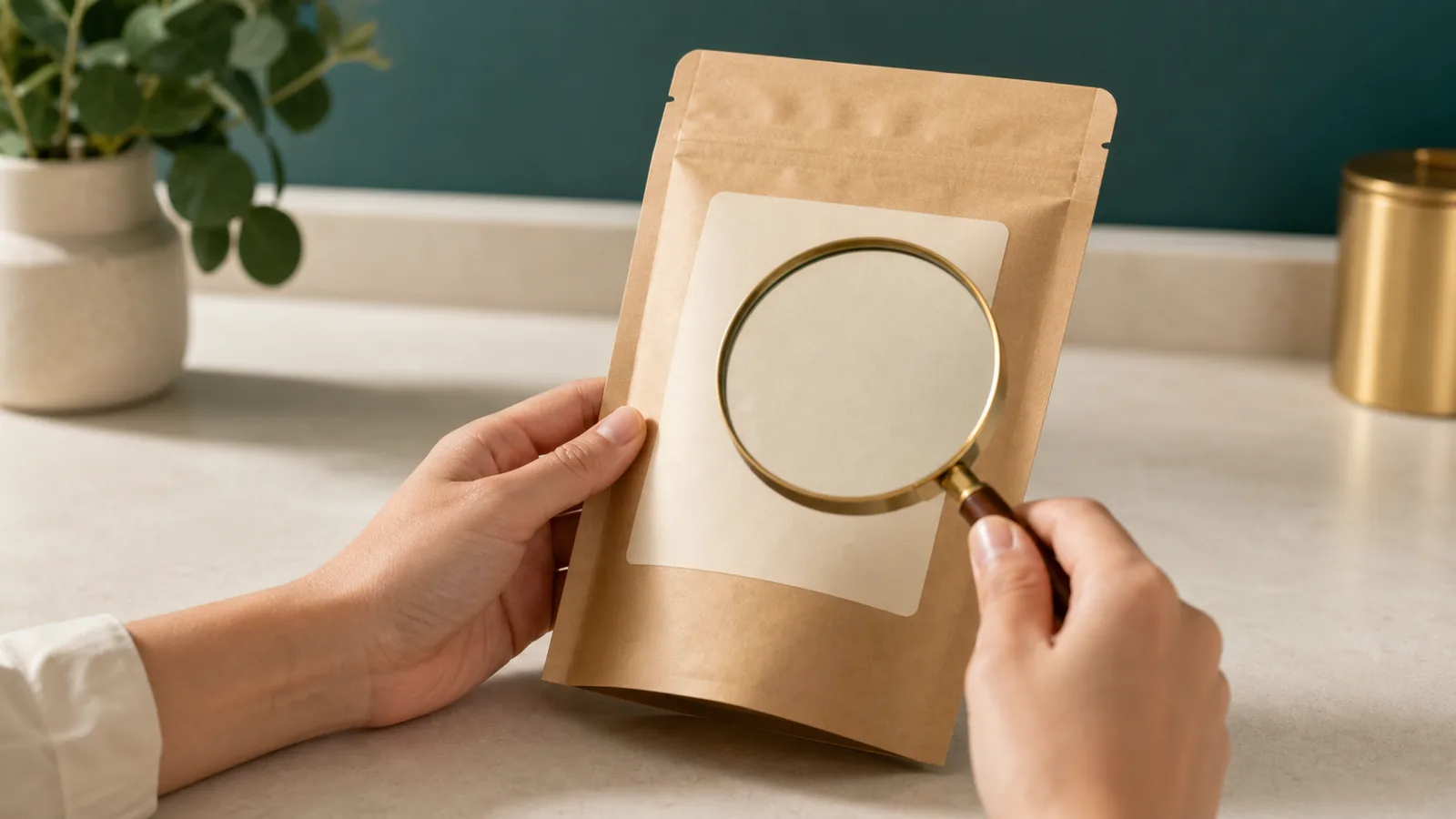
There's a related habit to flag here: the word "premium" often travels next to "natural" on a pack, and shoppers sometimes read the two as confirming each other. They don't. "Premium" is a pricing and positioning word with no ingredient meaning attached at all, while "natural" at least gestures, loosely, at something about processing. Seeing both words together on the same panel tells you about the brand's market position, not about what's inside the pack.
What Does "Clean Label" Actually Mean on a Pack?
Clean label meaning is worth spelling out, because unlike "organic," the phrase carries no fixed regulatory definition in the UAE or most other markets. It's an industry term, adopted by manufacturers to describe a general direction, usually shorter ingredient lists, fewer additives with unfamiliar chemical names, and ingredients a shopper might recognise from a home kitchen rather than a laboratory.
Because "clean label" has no certifying body checking it against a fixed standard, two products can both use the phrase while looking markedly different on the ingredient panel. One brand's idea of clean might mean removing a handful of specific preservatives. Another's might mean a much broader reformulation. Neither interpretation is wrong, exactly, because there's no regulator's rulebook either one is required to match.
That's not a criticism of the phrase, just a description of what it is: a positioning choice, not a certification. The practical response for a shopper is the same one that works for "natural": read the ingredient list itself rather than the phrase describing it. A short, recognisable ingredient list is a short, recognisable ingredient list whether or not the word "clean" appears anywhere on the front of the pack.
Greenwashing Food Labels: How Styling Can Outrun Substance
Greenwashing food labels describes a specific gap: packaging design suggesting an environmental or wholesome quality the product hasn't earned through any certified process. It isn't usually outright false advertising. It's closer to visual suggestion doing work that a specific, checkable claim would otherwise have to do.
A few patterns show up often enough to call out directly. Earthy colour palettes, kraft-paper textures, and illustrated farm scenes are design choices available to any brand regardless of how an ingredient was sourced. A phrase like "made with real ingredients" sounds reassuring while asserting almost nothing checkable, since most packaged food is made with some combination of real ingredients by definition. And a small, unaccredited leaf icon sitting near the product name, with no certifying body named anywhere on the pack, is styling rather than a claim a shopper could verify against a registry.
That doesn't mean every earth-toned package is misleading. Plenty of brands use a calm, natural-feeling design because it suits the product and the audience buying it, nothing more sinister than that. The point isn't to distrust every green label on sight. It's to stop treating colour and texture as evidence, and start looking for the specific word, mark, or certifying body name that would back up whatever impression the packaging is creating.
A short checklist for reading past the styling
- Is there an actual certification mark with a certifying body's name, or just a leaf-style graphic with no reference attached?
- Does the ingredient list match the impression the front of the pack creates, or does it run longer and more technical than expected?
- Is the word doing regulatory work ("organic," backed by a certificate) or descriptive work ("natural," "clean," used loosely)?
- Would the claim survive being printed in plain black text on a white background, without the supporting colour palette and imagery?
Store brands and private label carry the same rules
A retailer's own store-brand line answers to exactly the same certification and labelling expectations as any national brand sitting next to it on the shelf. A supermarket private-label range using "natural" or "organic" wording on its packaging has to back that wording the same way an established manufacturer would, through the same certifying-body reference or the same plain, honest ingredient description if no certification exists. Shoppers sometimes assume a retailer's own name on a pack carries an implicit guarantee beyond what's printed. It doesn't. The label still has to say what it says on its own terms, store brand or not.
How Certification Actually Gets Verified Before a Claim Reaches a Shelf
For a claim like organic certification to legitimately reach a UAE shelf, there's usually a documented chain behind it rather than a single approval step. An accredited certifying body inspects and verifies practices at the source, whether that's a farm, a processing facility, or both, against a recognised organic standard. That certification then needs to be recognised as valid for the market the product is entering, which for imported goods often means checking that the exporting country's organic scheme has appropriate standing.
Distributors bringing a product into the UAE sit inside this chain at the label-review stage, well before a product reaches Dubai Municipality registration or a retail buyer's onboarding checklist. Any claim printed on a pack gets checked against the documentation supporting it: does a certificate exist, does it cover the specific product and batch in question, and does the certifying body's name and reference appear on the pack in a way a regulator, retailer or shopper could trace back if they needed to.
That review exists for a reason beyond ticking a compliance box. A certification claim that can't be traced back to a real document is a liability sitting on a label, waiting for a retailer's compliance team or a regulator's spot check to notice the gap. Getting this right at the label-review stage, before print, is considerably less costly than a recall or a rejected shipment discovered after a product has already reached shelf.
Why a brand might use qualitative wording instead of a certification claim
Not every brand pursuing higher-quality sourcing or gentler processing chooses to seek formal certification, and that's a legitimate business decision rather than a shortcut. Certification carries real cost and ongoing audit requirements, and a smaller brand or a specific product line might reasonably describe its sourcing in plain, honest, qualitative language instead: naming a specific practice, describing a process step, or listing ingredients transparently, without reaching for a certified term the product hasn't gone through the process to earn.
That approach, done honestly, is arguably more useful to a shopper than a vague front-of-pack word would be anyway. A label that says exactly what's inside and how it was made, without borrowing the visual or verbal shorthand of a certification it doesn't hold, gives a reader something concrete to evaluate. The problem isn't choosing not to certify. The problem is styling a pack to imply certification while skipping the process that would back the claim up.
What happens when a claim doesn't hold up
When a regulator or a retailer's compliance review finds a certification claim that can't be traced to a real certificate, the usual outcome is corrective: the artwork gets sent back, the claim gets removed or the wording gets adjusted, and the product doesn't move forward to shelf until the label matches the documentation. A shipment already in transit can face delay while the paperwork gets sorted out, which is a cost most brands would rather avoid by getting the certificate and the artwork checked against each other before printing begins.
This is a fairly ordinary, procedural outcome rather than a dramatic one. It matters mainly because it explains why label review happens early and often, not as a single sign-off near the end of a product launch. A caught mismatch at the design stage costs a revision. The same mismatch caught after a container has already landed costs considerably more, in time if nothing else.
Reading a Pack Without the Marketing Doing the Reading for You
So how does a shopper put all this into practice, standing in front of a shelf? Start by separating the front of the pack from the back. The front is where design and positioning live: colour, imagery, evocative words. The back, specifically the ingredient list and any certification marks with a traceable reference, is where the checkable information sits.
A short routine holds up across most categories:
- Look for a specific certification mark with a certifying body named or referenced, not just an unattributed leaf or seedling graphic.
- Read the ingredient list itself rather than trusting a front-of-pack word like "natural" or "clean" to summarise it accurately.
- Treat unverifiable phrases such as "made with real ingredients" as descriptive language, not as a claim that's been checked by anyone.
- Notice when a pack's colour palette and imagery are doing more communicating than any specific word or mark on it.
- Remember that "natural" and "organic" answer different questions, and neither one implies the other.
This doesn't require distrust as a default setting. Most brands describe their products reasonably. It just helps to know which words are backed by a checkable process and which ones are doing softer, descriptive work, so a shopper's expectations match what the pack is asserting rather than what its styling suggests.
What This Means for Brands Bringing Products Into the UAE
For a brand preparing a label for the UAE market, the practical guidance is straightforward even if the underlying claims and documentation aren't always simple. If a product does hold organic certification, the mark and the certifying reference need to appear accurately, matching what the certificate covers rather than a broader impression the marketing team would prefer to create.
If a product doesn't hold that certification, describing its sourcing or processing in specific, honest, qualitative terms is a stronger label than reaching for design cues that echo a certification the product hasn't earned. A phrase describing an actual practice, a specific ingredient choice, or a genuine processing detail tends to hold up better under a retailer's or regulator's scrutiny than a word chosen mainly for its visual and emotional resonance.
At Bagason, this sits inside the same label review we apply to any new SKU heading toward Dubai Municipality registration or a modern trade listing. We check whether a certification claim on an incoming product is backed by an actual certificate, confirm the reference is printed accurately, and flag design language that risks implying more than the documentation supports, before that pack ever reaches a retail shelf or a shopper's trolley. That review doesn't result in a certification claim for any Bagason-owned or Bagason-distributed brand; it's a compliance check applied to the products and partner brands passing through our label review, not a status we're asserting for our own house brands.
Where retailers add another layer of scrutiny
Modern trade buyers reviewing a new SKU for listing increasingly ask for the documentation behind an organic or natural claim before agreeing to stock it, not just the artwork carrying the claim. That's protective for the retailer as much as the shopper, since an unsupported claim discovered after listing becomes a problem the retailer has to answer for on their own shelf. Brands that keep certification paperwork organised and current, tied to the actual batch and product line rather than a general company-level document, move through that review noticeably faster.
Where This Gets Genuinely Confusing, Even for Careful Shoppers
A few situations sit in real grey areas, better named honestly than glossed over. A product can be grown using organic practices at the farm level while the finished, packaged item still lacks certification, often because certifying the full chain through processing and packaging costs more than a smaller operation can absorb. In that case, a brand describing its farming practice in plain language, without using the certified word, is being accurate rather than evasive.

Multi-ingredient products add another layer. A packaged item combining several components, say a mixed snack or a sauce with multiple sourced ingredients, might have some elements certified organic and others not. A label describing this accurately usually specifies which ingredients the certification applies to, rather than letting one certified component imply the whole product carries the same status. Reading that fine print carefully, rather than assuming a single certification mark covers everything in the pack, is worth the extra few seconds.
And imported products sometimes carry a certification mark that's entirely legitimate in its country of origin but not automatically equivalent to a locally recognised UAE standard. That's a technical, cross-border recognition question rather than a sign the brand is doing anything wrong, and it's one more reason a certifying body's name and reference matter more than the visual mark itself, since the name is what a regulator or an interested shopper could check against a registry.
Claims that travel across the GCC don't always travel the same way twice
Bagason's distribution reach extends beyond the UAE into Saudi Arabia, Oman, Kuwait, Bahrain and Qatar, and certification recognition is one of the details that doesn't automatically copy across a border. A certifying body accepted for a UAE label review isn't automatically accepted the same way in every neighbouring market, even where the broader regional labelling standard is shared. A brand planning a GCC-wide launch benefits from checking certification recognition market by market rather than assuming a single approval clears every shelf in the region at once.
This is a paperwork detail more than a dramatic difference in practice, but it's exactly the kind of detail that catches out a brand moving quickly from one market to the next. Building that check into a launch timeline, rather than discovering the gap after artwork is already printed for five markets, is one of the more practical habits a growing brand can adopt.
Key Takeaways
- Organic food labelling UAE rules treat "organic" as a certified production claim, verified through an accredited certifying body, not a marketing adjective.
- The organic logo UAE shoppers see should carry a certifying body's name or reference; an unattributed leaf graphic alone is design, not documentation.
- Natural food claims generally describe processing or ingredient choices in looser, uncertified language, and shouldn't be read as equivalent to organic certification.
- Clean label meaning varies by brand, since no single regulator defines the phrase; the ingredient list itself is the more reliable check.
- Greenwashing food labels lean on colour, texture and imagery to suggest a quality the product hasn't been certified to hold.
- Distributors and retailers check certification documentation at the label-review and listing stage, before a claim reaches a shelf.
- No claim in this piece applies to any Bagason-owned or Bagason-distributed brand; this is a label-literacy guide, not a certification statement.
Reading past the styling on a pack is a habit, not a one-time skill, and it gets easier once the specific words are separated from the specific documentation that should sit behind them. A leaf on a pack is a design choice until a certifying body's name gives it something to stand on. If you're a brand preparing organic, natural or clean-label claims for a UAE launch and want a second check on the documentation before print, talk to our team, or read more of our label-literacy coverage on the Bagason Brief. You can see how label review fits into our wider port-to-shelf process on our homepage.
Frequently asked questions
What does organic food labelling in the UAE actually require?
It requires that the word "organic" only appear as a claim once an accredited certifying body has verified the production chain behind it, from farming practice through processing, against a recognised organic standard. The certificate reference or certifying body's name should appear on or near any organic mark on the pack, so the claim can be traced back to real documentation rather than standing on the word alone.
Is "natural" the same thing as "organic" on a food label?
No. "Organic" is a certified production claim with an accredited body standing behind it. "Natural" is a looser, mostly uncertified description that usually points to minimal processing or the absence of certain additives. A product can reasonably use "natural" without holding any organic certification, and the two words should not be read as interchangeable.
What does an organic logo on a UAE pack actually mean?
It should mean a certifying body has verified the product against a recognised organic standard, and that reference, a certificate number or the certifying body's name, should be printed on or near the mark. A leaf-style graphic with no such reference attached is a design element, not a verifiable certification, and shouldn't be read as proof on its own.
What does "clean label" mean if there's no official definition?
It's an industry term describing a general direction toward shorter ingredient lists and fewer unfamiliar additives, without a fixed regulatory definition behind it in the UAE or most markets. Because no certifying body checks the phrase against a set standard, two "clean label" products can differ noticeably. Reading the ingredient list itself is the more reliable check than trusting the phrase.
How can a shopper spot greenwashing on food packaging?
Look past colour palettes, kraft-paper textures and farm imagery, since any brand can use those regardless of actual sourcing. Check instead for a specific certification mark with a traceable certifying body's name, and read the ingredient list to see whether it matches the impression the front of the pack creates. Vague phrases like "made with real ingredients" assert little that's checkable.
Does Bagason certify any of its brands as organic or natural?
No. This article is an educational explainer of how organic, natural and clean-label claims work under UAE labelling practice. It does not assert that any Bagason-owned or Bagason-distributed brand carries an organic, natural, or clean-label certification, and no such claim should be inferred from this content.