Stand at a LuLu shelf long enough and you'll see it: a shopper picks up two boxes of the same cereal, turns each one over, then puts the bigger one back down without buying either. Our merchandising team sees this hesitation constantly during in-store visits. It usually comes down to one small number most shoppers never learned to read. That number is the unit price, what a product costs per kilo or per litre rather than per pack, and unit price grocery shopping simply means checking it before anything else. Get that habit right and a confusing wall of pack sizes turns into a fair fight between products.
We watch this from the distribution side of the aisle. Bagason moves close to 700 SKUs across roughly 17 brands into UAE modern trade, traditional trade and e-commerce, and our field team spends real time in the exact stores where these comparisons happen. What follows isn't a lecture on frugality. It's a practical walkthrough of how to read a shelf label properly, how to run a price per kg comparison in your head in a few seconds, and how to compare grocery prices UAE retailers show you without falling for a pack size that's built to confuse rather than inform.
This isn't about scrimping or treating grocery shopping as a chore. Some of the best value in a UAE supermarket sits in a mid-size pack, not the biggest one on the shelf. The only way to know that is checking the one number that matters.
What unit price grocery shopping actually means
A pack price tells you what one box, bottle or bag costs at the till. A unit price tells you what a standard amount inside that pack, usually a kilogram, a litre, or sometimes a hundred grams, costs regardless of how big the pack is. Two numbers, two different jobs, and only one of them lets you compare products honestly.
Here's why this matters more than it sounds. A 500g bag of rice at AED 12 and a 1kg bag at AED 22 look like the smaller bag is the better deal because the sticker price is lower. Run the maths and the smaller bag actually costs AED 24 per kilo, while the larger one costs AED 22 per kilo. The bigger pack wins on unit price even though its sticker price looks scarier at first glance. Multiply that pattern across a full trolley and the gap between what you think you're saving and what you're actually paying can be significant.
Why pack price alone misleads almost everyone
Our merchandisers stock shelves across dozens of UAE stores every week, and pack sizes within a single category rarely line up neatly. One brand's "family pack" might weigh 750g, another's 900g, a third's a full kilo, all sitting side by side with different sticker prices and no obvious way to compare them at a glance unless you know what to look for. Retailers aren't hiding anything here. Manufacturing runs, import container sizes and regional packaging standards all produce different pack weights for entirely ordinary reasons. The confusion is a side effect, not a plot.
The one number that cuts through all of it
Unit price strips pack size out of the equation entirely. Once you know the price per kilo, per litre or per hundred grams, a 340g jar and a 500g jar of the same product become directly comparable, no mental gymnastics required. This is the single habit that does more for your grocery budget than any coupon or loyalty card ever will.
Where to find the unit price on a UAE shelf label
Most UAE supermarkets already print the shelf label unit price directly on the shelf-edge tag, usually in smaller type below or beside the main pack price. It's easy to walk past without noticing, especially in a busy aisle, but once you know where to look, checking it takes about two seconds.
Reading a shelf-edge tag properly
A typical shelf tag in a modern trade store shows the product name, the pack price in large type, and then a smaller line reading something like "AED per kg" or "AED per 100g", followed by the actual unit figure. Weight-based products usually show a per-kg or per-100g rate, liquids show a per-litre rate, and some categories, tissues or nappies for instance, show a per-piece rate instead. The unit shown can shift between categories, so check what's being measured before comparing two products, not just the number itself.
Not every store prints this consistently, and a smaller independent grocer or baqala may not print it at all. When the tag doesn't show it, the pack itself almost always does: net weight or volume is printed on the front or back of nearly every packaged product sold in the UAE, which gives you everything needed to work the number out yourself.
What to do when the label doesn't help
- Check the pack for its net weight or volume in grams, kilograms, millilitres or litres. This is required information on packaged goods and it's almost always there.
- Note the pack price from the shelf tag or the item itself.
- Divide price by weight (converted to kilos) or price by volume (converted to litres) to get your own unit figure.
- Round to two decimal places and compare like for like across every pack size you're weighing up.
How to run a price per kg comparison without a calculator
A full price per kg comparison sounds like homework, but the version that matters in a real aisle takes seconds once you've done it a few times. You don't need exact decimals. You need a number close enough to tell you which pack costs less for the same amount of product.
The quick trick for round numbers
Start with pack sizes that divide cleanly. A 250g pack and a 500g pack of the same item are easy: double the 250g price and compare it directly with the 500g price. If doubling the small pack's price gives you a bigger number than the large pack costs, the large pack is the better deal per kilo. This works the same way for litres with juices, oils and cleaning products.
The slightly harder version, still doable in your head
Odd pack sizes need one extra step. Say a product comes in 340g and 750g sizes. Divide the small pack's price by 340, then multiply by 1,000 to get a per-kilo figure. Do the same for the 750g pack, dividing its price by 750 and multiplying by 1,000. Whichever number comes out lower is the better value per kilo, full stop, regardless of which pack has the lower price tag on the shelf.
Sound complicated? It isn't, once you've run it twice. Most shoppers who make this a habit stop needing the maths altogether within a few weeks. They start recognising which pack sizes in their regular categories tend to run cheaper per kilo and shop from memory more than arithmetic.
A worked example from a real category
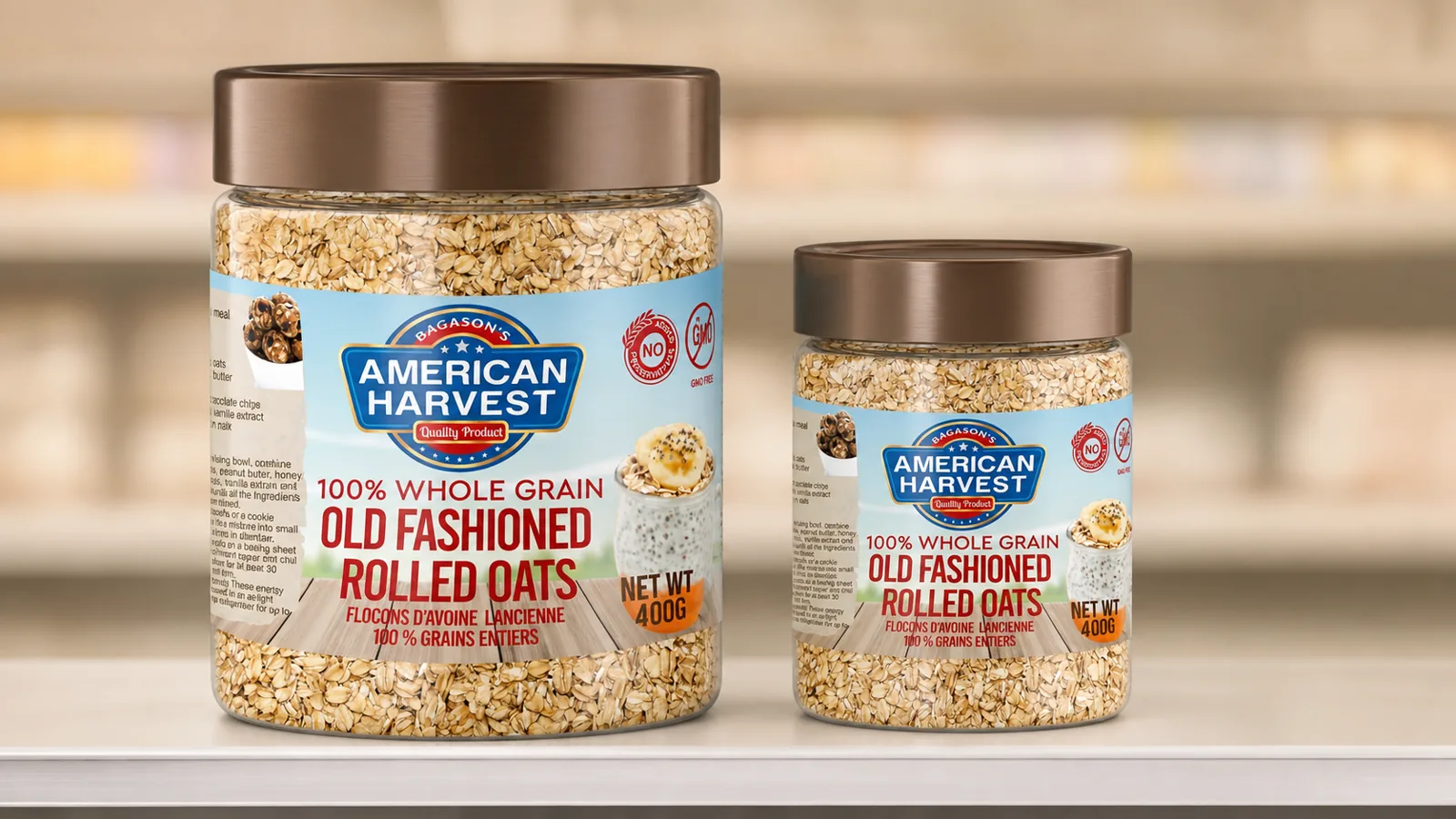
Take a breakfast cereal as an illustration, with figures invented purely to show the method. A 375g box at AED 15 works out to AED 40 per kilo. A 750g box of the exact same product at AED 27 works out to AED 36 per kilo. The larger box costs almost double at the till, yet it saves you money per kilo once you do the division. That's the whole point of comparing cost per kilo instead of cost per pack: the sticker price and the real cost per unit can point in completely different directions, and only the second one tells you the truth.
A second example, this time by the litre
Liquids work the same way, just with litres instead of kilos. Say a 750ml bottle of cooking oil costs AED 18, and a 2-litre bottle of the identical oil costs AED 42. The small bottle works out to AED 24 per litre. The 2-litre bottle works out to AED 21 per litre. Three dirhams per litre doesn't sound like much until you notice that a household buying oil every month for a year is paying for a habit, not a single purchase, and the gap compounds every time the smaller bottle gets picked out of convenience rather than comparison.
Comparing brands honestly when pack sizes don't match
Unit pricing earns its keep most when you're weighing up two different brands rather than two sizes of the same product. This is where pack size differences get used, sometimes deliberately, to make a straight price comparison harder than it needs to be.
Why brands rarely share the exact same pack weight
Two competing pasta brands on the same shelf might sit at 400g and 500g respectively, both looking similar in price at a glance. Without converting to a common unit, a shopper often assumes the cheaper sticker price is the better deal, when the smaller pack could easily be the more expensive option per kilo. This isn't unique to any one category. Snacks, spreads, cooking oils and cleaning products all show this pattern regularly, and it's rarely intentional deception so much as different manufacturing standards producing different pack weights across brands and countries of origin.
A simple rule for cross-brand comparisons
Whenever two products you're comparing don't share an identical pack size, convert both to the same unit before deciding anything. Working out the cost per kilo, or per litre for liquids, removes the pack-size variable entirely and leaves you comparing what matters: which product costs less for the same real amount of food, drink or household product.
A category where this catches shoppers out often
Cooking oil, rice and laundry detergent are three categories where cross-brand pack sizes rarely match. One brand's rice bag might sit at 5kg, a competitor's at 4.5kg or 5.5kg, all priced within a dirham or two of each other on the sticker. A shopper picking by sticker price alone in this category is picking close to at random, since the actual per-kilo gap between two bags priced almost identically can still run to a meaningful percentage once the different weights are accounted for.
Unit pricing across UAE retail channels
Where you shop changes how easy this comparison is to make, so it helps to know what to expect before you're standing in the aisle trying to work it out under time pressure.
Modern trade: hypermarkets and supermarkets
Large chains such as LuLu, Carrefour, Nesto and Choithrams generally print unit-price information on the shelf-edge tag consistently across most categories, since it's built into how their labelling systems work. This is the easiest environment to compare grocery prices UAE-wide, mostly because the infrastructure for showing the number is already there. Even so, it pays to double-check the unit shown, since a per-100g figure and a per-kg figure look similar at a glance but differ by a factor of ten. A shopper moving quickly through a busy aisle around a weekend shop is exactly the shopper most likely to miss that distinction. Slow down for it on the categories where it matters most.
Traditional trade: baqalas and independent grocers
Smaller independent stores, reached through van sales across the wider network of neighbourhood outlets, don't always print a unit price on their shelf tags or even use shelf tags in the same structured way. The pack itself becomes your reference point here: check the net weight or volume printed on the label and do the maths yourself if the comparison matters to you. Prices in this channel also tend to move on their own schedule rather than a chain-wide promotional calendar, so a comparison done once should be repeated every few visits, not assumed to hold.
E-commerce and quick commerce
Online grocery platforms and quick-commerce apps vary in how consistently they display unit price. Some list it directly under the pack price on the product page, others only show the total pack cost and leave the conversion to you. When it's missing, the product description almost always includes net weight or volume, so the information is there even when the app doesn't do the division for you.
Why the channel mix matters more than any single store
Most UAE households now split their shopping across more than one channel in a normal month, a hypermarket run, a top-up at the neighbourhood store, an occasional quick-commerce order. Unit pricing is the thread that ties the comparison together across all of them. A pack that looks like decent value in a quick-commerce app might not hold up once you check the same product's unit price at a hypermarket a few days later, and vice versa, which is exactly why the habit needs to travel with you between channels rather than living in just one of them.
When a promotion isn't actually a discount per unit
Promotions are where unit price comparisons matter most, and where they get skipped most often. A shopper who trusts a bright yellow "special offer" sticker without checking the unit figure underneath is exactly the shopper a poorly structured promotion is built to catch.
Bundle deals that change the pack, not just the price
"Buy two, get a third half price" and similar bundle offers can reduce your cost per kilo, but only if you check. Sometimes a promotional bundle pairs a full-size pack with a smaller bonus pack at a combined price that works out worse per kilo than buying the regular pack twice at its normal shelf price. The only way to know which is true is running the same division you'd run on any other comparison: total price across the whole bundle, divided by the total weight or volume across the whole bundle.
"New bigger pack" claims worth a second look
A pack labelled as bigger or offering "extra free" sometimes does deliver a genuinely lower unit price, and sometimes the price has moved up enough alongside the size increase that the unit price barely changes, or occasionally moves the wrong way. Checking the unit figure takes the guesswork out of a claim that's designed to sound generous on the front of the pack.
Multi-buy offers across different pack sizes
Some multi-buy promotions apply only to one specific pack size within a range, while a neighbouring size on the same shelf sits at full price. If the promoted size isn't the better unit price once you run the numbers, the offer's headline saving can shrink or vanish once you compare it honestly against the non-promoted alternative sitting right beside it.
Common mismatches that trip up even careful shoppers
A handful of unit mismatches catch out shoppers who are otherwise doing everything right. Knowing these in advance saves a wrong comparison at the shelf.
Grams versus kilograms, millilitres versus litres
The most common slip is comparing a per-100g price on one label against a per-kg price on another without noticing the units don't match. A quick scan of the small print before comparing two numbers avoids this entirely. Build that scan into the habit alongside the division itself.
Count packs versus weight packs
Some categories, teabags, biscuits sold by count, capsules, price by the piece rather than by weight. Comparing a per-piece price against a per-kg price on a similar-looking product from a different brand tells you nothing useful. Match the measurement type first, then compare.
Concentrated versus ready-to-use products
Certain cleaning products, cordials and some beverages come in concentrated form meant to be diluted before use. A per-litre unit price on a concentrate looks expensive next to a ready-to-drink product's per-litre price, until you account for how many litres of finished product the concentrate makes once diluted. This one needs an extra mental step beyond a straight unit-price comparison, so pause on it rather than assuming the concentrate is the pricier option by default.
Family packs versus single-serve formats
A large family-format pack and a set of single-serve pouches of the same product almost never share a unit price, and the gap runs in a predictable direction. The single-serve format usually carries a higher price per kilo or per litre, since each smaller unit needs its own wrapper, seal and portion control, and that packaging cost gets spread across less product per piece. Neither format is wrong. A household buying for convenience, lunchboxes, travel, portion discipline, is paying for something real beyond the product itself, but it helps to know that trade-off is happening rather than assume the smaller units are just a shrunk-down version of the same value.

Building a smart grocery shopping UAE routine around unit price
Turning this into an accounting exercise defeats the point. A few habits, repeated on autopilot, do most of the work.
A short checklist worth keeping in your head
- Check the shelf tag or pack label for a unit price before comparing two products, and confirm both show the same unit, kg to kg or litre to litre, not one in grams and one in kilos.
- When the tag doesn't show a unit price, use the net weight or volume printed on the pack and do the division yourself. It takes seconds once it's a habit.
- Treat promotional stickers as a starting point for checking, not a reason to skip checking. A genuine deal survives the unit-price test; a weak one usually doesn't.
- Compare pack sizes within a category periodically rather than assuming last month's best-value size is still the best-value size this month, since pricing and pack weights both shift over time.
- Keep an eye on which channel, hypermarket, neighbourhood store or app, tends to offer the better unit price for the products your household buys regularly, and shop that mix deliberately rather than by habit alone.
Why this habit compounds over a full trolley
A single unit-price check saves a small amount on one item. Run the same check across a full weekly shop, cereal, rice, cooking oil, cleaning products, snacks, and the saving across the whole trolley adds up to something worth the extra few minutes at the shelf. What's more, the habit gets faster every time you use it, since most shoppers start recognising familiar pack sizes and rough unit prices from memory after a few weeks of paying attention.
What this means from the distribution side
We build pack sizes, cartons and pricing structures across a wide range of formats, from a compact single-serve size through to a large family pack, for the brands we distribute and the ones we own outright. A shopper checking unit price isn't working against that system. If anything, a shopper who compares fairly rewards well-priced pack sizes and pushes back gently on ones that lean on sticker-price tricks instead of real value. That's a healthier dynamic for the whole category over time.
Brand owners thinking about pack architecture for the UAE market should read this the same way: a range of sizes only works commercially if the unit price tells a coherent story across it: larger packs meaningfully cheaper per kilo than smaller ones, promotional bundles that hold up under a quick division, multi-buys that make sense once a shopper checks. Our team sees which pack strategies earn repeat purchase and which get quietly abandoned once shoppers start comparing, and it almost always tracks back to whether the unit price behaves the way a shopper expects it to.
Key takeaways
- Unit price grocery shopping means comparing cost per kilo, litre or hundred grams rather than the pack price alone, since pack sizes within a category rarely line up neatly.
- Most UAE hypermarkets and supermarkets print a shelf label unit price on the shelf-edge tag; smaller stores and some apps may not, so check the net weight or volume on the pack itself and do the division yourself.
- A price per kg comparison takes seconds once it's a habit: divide price by weight in kilos, or price by volume in litres, and compare only figures using the same unit.
- Promotions, bundles and "bigger pack" claims don't always improve unit price, and checking the number underneath the sticker is the only way to know for sure.
- Watch for mismatched units, grams against kilos, per-piece against per-weight, concentrate against ready-to-use, since these trip up even careful shoppers.
- Smart grocery shopping UAE households practise blends channels, modern trade, baqalas and quick-commerce apps, and unit price is the one number that stays comparable across all of them.
Reading the unit price properly turns a confusing shelf of different pack sizes into a fair, quick comparison, and it takes only a small habit change to get there. Bagason sits on the distribution side of that same shelf every week, building pack sizes and pricing across modern trade, traditional trade, HORECA and e-commerce for both our own brands and the ones we distribute. If you're a brand owner thinking through pack architecture or pricing for the UAE market, our team is worth a conversation. Our blog covers more of the pricing and shelf detail behind this piece, and our home page has the wider picture of how we move products from port to shelf across the UAE and the GCC.
Frequently asked questions
What does unit price mean when grocery shopping in the UAE?
Unit price is the cost of a standard measure inside a pack, usually per kilogram, per litre or per hundred grams, rather than the total pack price. It strips out pack size so a 340g jar and a 900g jar of the same product become directly comparable. Most UAE hypermarkets print this figure in smaller type on the shelf-edge tag, just below the main price.
Where do I find the unit price if the shelf tag doesn't show it?
Check the pack itself. Net weight or volume, in grams, kilograms, millilitres or litres, is printed on nearly every packaged product sold in the UAE. Divide the price by the weight in kilos, or by the volume in litres, to get your own figure. Smaller independent stores are the most likely to skip a printed unit price, so this step matters most there.
Is the bigger pack always the better value per kilo?
Not always. A larger pack often costs less per kilo, but not automatically, and promotional pricing sometimes flips the pattern entirely. The only reliable way to know is running the division yourself: price divided by weight or volume, compared across every pack size on the shelf, rather than assuming size alone settles the question.
Do promotions and bundle deals always improve the unit price?
Not always. Some bundles pair a full-size pack with a smaller bonus pack at a combined price that works out worse per kilo than buying the regular pack twice at full price. Checking the total bundle price against the total bundle weight or volume before deciding is the only way to know whether a promotion is a genuine saving.
Why do two brands of the same product rarely share the same pack weight?
Different manufacturing standards, import container sizes and regional packaging conventions mean competing brands often land on slightly different weights, such as 400g against 500g. This isn't usually deliberate. It just means a straight sticker-price comparison between two brands can mislead unless both prices are converted to the same unit first.
Does unit pricing work the same way across hypermarkets, baqalas and grocery apps?
The principle is identical everywhere: convert price to a common unit before comparing. What differs is how easy the information is to find. Large hypermarket chains tend to print it consistently on shelf tags, while independent stores and some grocery apps may only show the total pack price, leaving the net weight or volume on the label as your reference point.