Walk the aisles of a Dubai hypermarket on a Thursday evening and you can watch the country's food habits play out in real time. One trolley is stacked with rice sacks and lentils. Another has three kinds of instant noodles and a tray of eggs. A third carries dates, laban and a family-size tray of kebab. UAE grocery shopping habits are not one habit at all. They are dozens of habits, running side by side, shaped by where people grew up, what they can afford this month, and how much time they have between work and the next school run.
That mix is exactly why grocery in this country is so hard to plan for and so interesting to study. The vast majority of UAE residents were born somewhere else, and most of them kept at least some of their home cooking habits when they arrived. Add a resident population with steady incomes, long summers that push people toward air-conditioned hypermarkets, and a religious calendar that changes what a normal week's shopping looks like once a year, and you get a market where "the average shopper" barely exists.
This piece looks at UAE grocery shopping habits from the ground up: what different communities usually look for, how baskets shift during Ramadan, the push and pull between value and premium, and the channel mix that decides where all of this actually gets bought. We work across this landscape every day at Bagason, moving product from the port to shelves in all seven emirates, so this is written from what our sales and merchandising teams actually see, not from a spreadsheet.
Why UAE grocery shopping habits defy a single pattern
Most retail writing about "the UAE shopper" tries to average a population that has almost nothing to average. A household from Kerala buying weekly groceries in Sharjah has different staples, spice tolerance and pack-size logic than a household from Manchester doing a fortnightly Waitrose-style run in Dubai Marina. Both are UAE residents. Neither one represents the other.
What actually holds this market together is not a shared basket. It is a shared set of pressures: heat that keeps outdoor cooking rare and indoor stocking common, rents and school fees that make grocery budgeting a real discipline for most families, and a retail landscape dense enough that almost everyone has a hypermarket, a supermarket, a baqala and a grocery app within reach. Those pressures shape behaviour even when tastes differ completely.
So when we talk about UAE grocery shopping habits, the useful lens is not "what do people buy" but "how do different communities and price points arrive at their own version of a full pantry." That is what the rest of this piece tries to map, respectfully and without flattening anyone into a stereotype. These are tendencies our teams observe across tens of thousands of outlets, not rules that apply to every household in a given group.
Worth saying clearly: none of the patterns below describe every household in a given community. They describe tendencies our sales and merchandising teams see repeated often enough to plan around, the way a store manager learns which shelf sells out first on a Thursday without needing a report to tell them. Individual families vary widely within every group mentioned here, and that variation is exactly why a distributor's job is never done store by store, let alone country-wide.
What South Asian households tend to look for
South Asian residents, from India, Pakistani, Bangladeshi and Sri Lankan backgrounds, make up a large share of the UAE's population, and their grocery patterns show up plainly on shelf. A handful of tendencies stand out.
- Bulk staples over small packs. Rice, atta, lentils and cooking oil are often bought in large formats, sometimes 5kg or 10kg at a time, especially in larger or joint households.
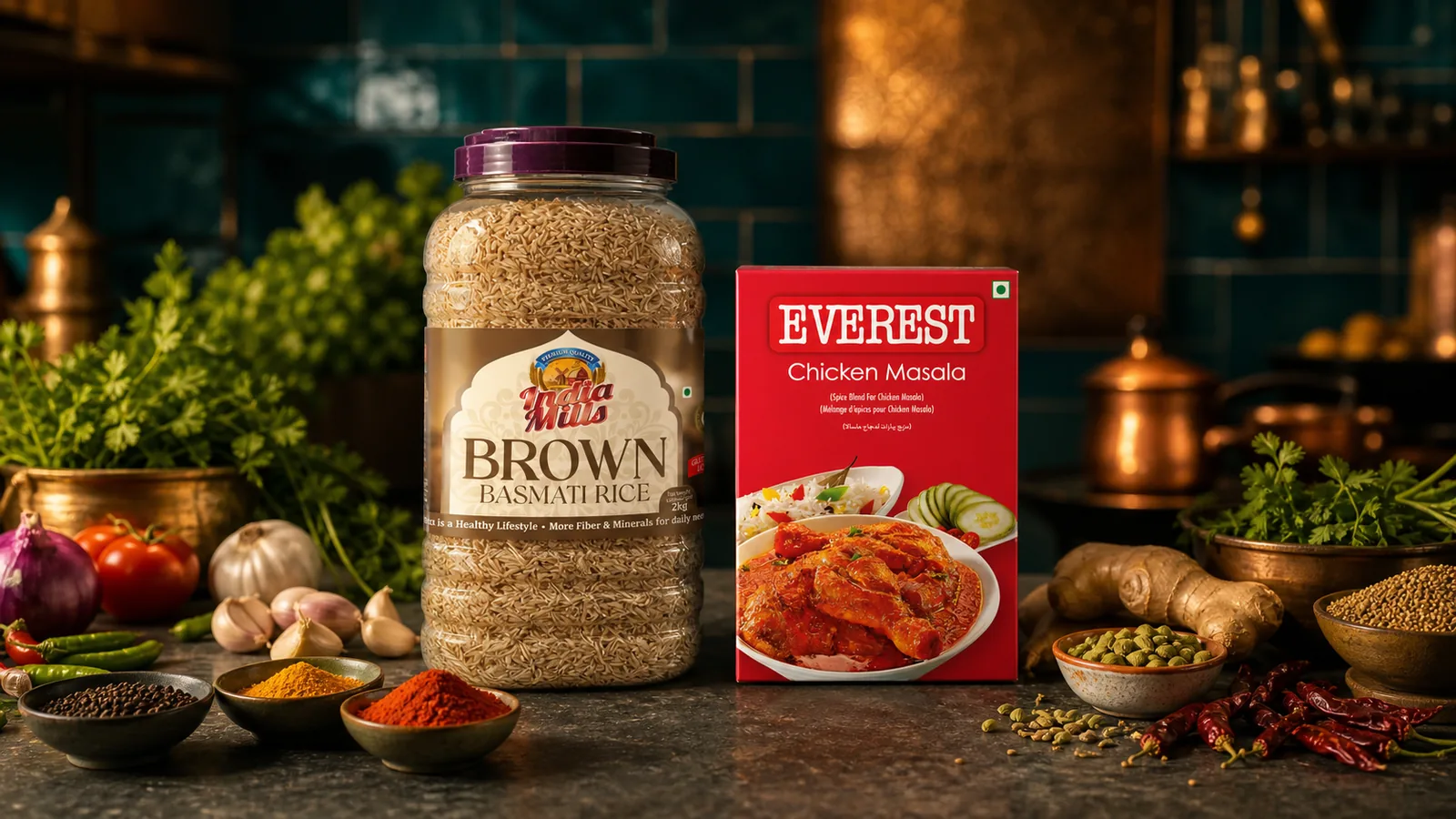
- Spice depth. Whole and ground spice ranges, pickles and ready masalas see steady, repeat purchase, and shoppers are often loyal to a specific regional brand from home.
- Familiar snack and beverage brands. Products like Bikaji namkeen, Girnar tea and Wai Wai instant noodles carry strong recognition because they mirror what's available back home, which matters when a shopper is deciding between an unfamiliar local option and a trusted name.
- Value-pack thinking. Price-per-kilo comparisons are common, and promotions on staple categories move volume fast.
Here's the thing: this is not a "budget-only" segment. Many South Asian households spend confidently on quality staples and specific brands they trust, while trimming elsewhere. The spending pattern is deliberate, not simply thrifty.
Generational differences show up here too. Older South Asian households, especially those who moved to the UAE decades ago, often cook almost entirely from scratch and buy accordingly: whole spices, fresh vegetables, dried lentils in variety. Younger households, particularly second-generation residents raised partly or fully in the UAE, mix that same base with more ready sauces, pre-mixed masalas and quicker weeknight formats. Both still lean on the same core brands and build different recipes around them.
What Filipino shoppers tend to prioritise
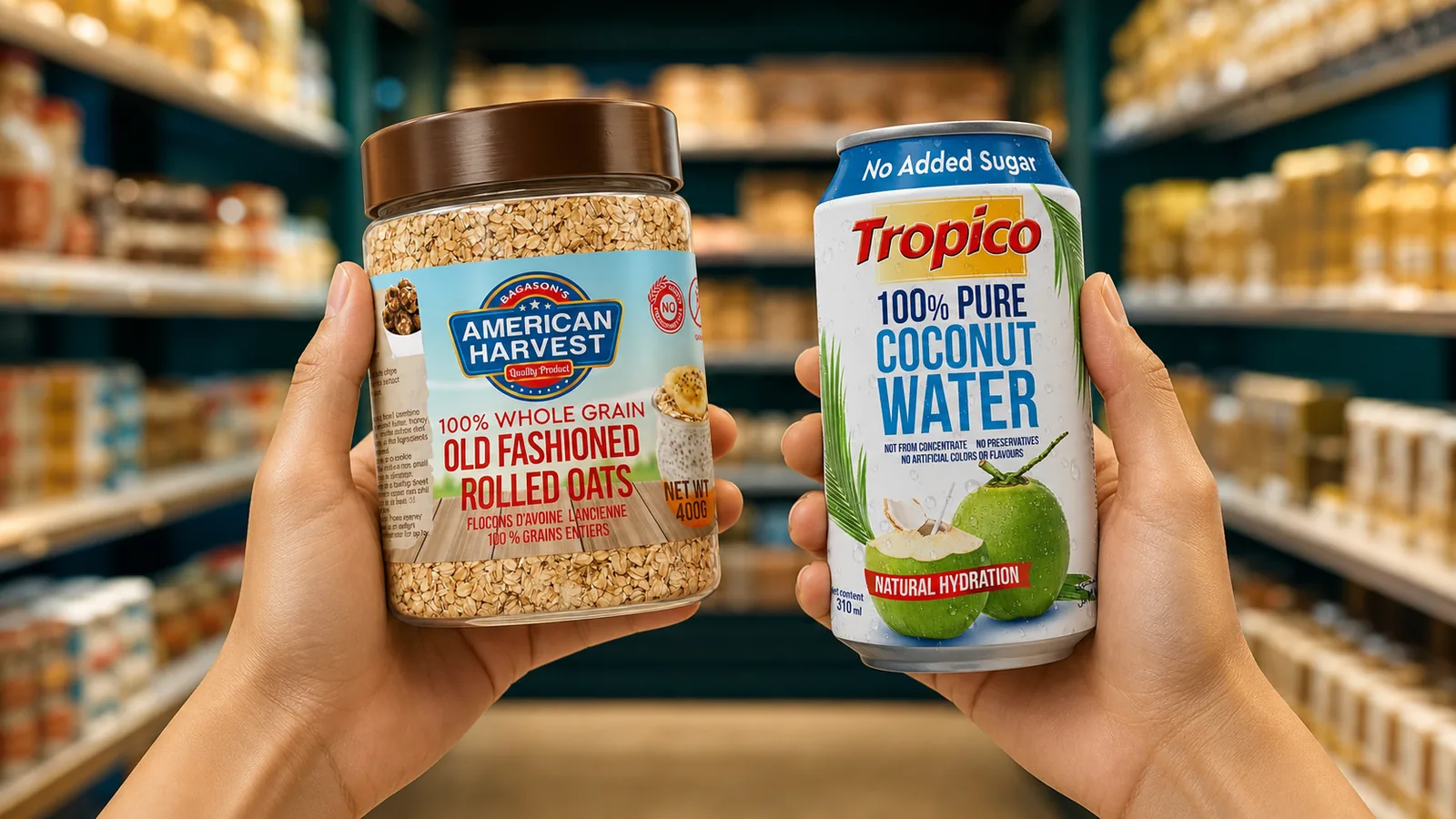
The Filipino community in the UAE is large and urban, and food tends to sit at the centre of how people socialise, which shows up in grocery habits too. Comfort and home-flavour products carry real weight: soy sauce, vinegar, instant sinigang or tinola mixes, and specific snack brands that are hard to substitute with a local equivalent.
Community grocery stores and dedicated Filipino sections within larger supermarkets do brisk business because they stock these specific items in one place. Balikbayan-style bulk buying, where a shopper stocks up heavily around payday or before a trip home, is also a recognisable pattern. On the everyday side, ready-to-cook and semi-prepared items get real traction among Filipino shoppers balancing shift work with cooking for a household or a shared flat.
Sharing food is part of the culture too. Grocery runs before a gathering, a birthday, or a Sunday potluck run noticeably larger than a routine weekly shop, with an emphasis on dishes that travel well and reheat easily.
Household structure matters a lot in this segment. A shared flat of colleagues shops differently from a single-income family with school-age children: the shared flat usually splits costs on staples and buys smaller individual snack items, while the family household buys in bulk for growing appetites and packed lunches. Either way, shoppers tend to shop with real intention, comparing prices across two or three stores rather than settling for whichever is closest.
How Arab households, Emirati and expat, tend to shop
Arab shoppers, both Emirati nationals and Arab expat communities from across the region, bring their own logic to the basket. Hosting culture plays a large role: majlis gatherings, family lunches and religious occasions all call for family-size and premium formats rather than single-serve packs.
Dates, nuts, laban, and traditional bread categories see consistent year-round demand, with volume spikes around specific occasions. Many Arab households also look for products that suit dietary preferences rooted in religion and culture, and retailers generally carry clear labelling so shoppers can make that choice for themselves. Fresh and chilled categories, meat, dairy, produce, usually get more attention per trip than in some other segments, with shoppers willing to visit more than one store to get the cut, brand or freshness level they want.
Brand loyalty in this segment often runs deep once it's established. A household that settles on a preferred tea, ghee or rice brand will often stay with it for years, which is part of why long-standing distributed brands hold their shelf space so consistently across UAE supermarkets.
Emirati households specifically often favour larger format shopping trips, usually to a hypermarket or a trusted local supermarket chain, and plan those trips around the week ahead rather than day by day. Modern trade, the big organised retail chains, sees strong, consistent loyalty here, partly because of quality control and partly because these stores carry the breadth of fresh and traditional categories a larger household needs in one visit.
What Western expat baskets tend to include
Western expat households, from the UK, Europe, North America, Australia and beyond, tend to shop in a way that looks closer to a European or North American basket than to their South Asian or Filipino neighbours. Weekly or twice-weekly trips are common, often to a supermarket rather than a hypermarket, with a preference for smaller, fresher purchases over large pantry stock-ups.
Categories that get more attention in this segment include imported cheeses, wine-adjacent mixers and soft drinks, breakfast cereals, and ready meals for busy weeknights. Interest in newer product formats, plant-based alternatives, specialty coffee, artisanal bread, runs higher here too, though this is a preference pattern rather than a claim about any nutritional benefit of those products.
Online grocery apps see heavy use in this segment, partly because time is tight for dual-income households and partly because many arrived already used to app-based shopping from home. That said, this group still makes regular in-person trips for produce and meat, where shoppers want to see and choose the item themselves.
Price sensitivity in this segment shows up differently than in others. Rather than trading down on staples, Western expat households more often adjust by shopping smaller and more frequently, buying just enough for a few days rather than stocking a full pantry. That habit reduces waste at home but means more trips overall, and it puts pressure on stores and apps to keep fresh categories reliably available week to week.
Ramadan grocery shopping: the one shift almost everyone makes
If there is a single moment when the whole country's food shopping changes at once, it's Ramadan. This is when Ramadan grocery shopping does more than add volume: it restructures the whole shopping trip.
A few patterns repeat every year:
- The pre-Ramadan stock-up. The week or two before the holy month sees a sharp rise in bulk purchases of dates, flour, rice, dairy, juices and cooking staples, as households prepare for daily iftar and suhoor meals.
- Category shifts within the same household. Snacking patterns move toward dates, dried fruit and traditional sweets rather than everyday snack formats. Beverage purchases skew toward juices, laban and traditional drinks served at iftar tables.
- Family and community-size packs. Iftar is often shared, with family, neighbours or coworkers, so pack sizes trend larger even in households that normally buy small formats.
- A late-evening shopping window. Store traffic patterns shift later into the night, after iftar, as people run errands once the fast is broken.
What's notable is how consistent this pattern is across nationalities. A South Asian household, an Emirati household and an Arab expat household will each fill their trolley with different specific items, but the shift toward bulk, shared-format and evening shopping shows up in nearly all of them. For distributors and brands, Ramadan is less about one product spiking and more about the entire rhythm of the week changing for a full month.
Ramadan grocery shopping also has a spillover effect on households that aren't fasting themselves. Non-Muslim colleagues, neighbours and friends often get invited to iftar at some point during the month, and many pick up a box of dates or a dessert to bring along, adding a small but real bump in demand for those categories well beyond the households actually observing the fast. It's a reminder that in a country this mixed, a cultural or religious occasion rarely stays contained to one community's shopping list.
How household size and living arrangement shape the basket
Nationality is one lens on how people shop for food here. Household structure is another, and it cuts across every one of the UAE food shopper segments described above. A bachelor sharing a two-bedroom flat with three colleagues shops nothing like a family of five in a Sharjah villa, even if both are, say, Filipino or Pakistani households.
Shared accommodation usually favours smaller, individually owned items: a person's own jar of coffee, their own snack stash, a shared basics list for milk and bread split by app. Family households buy at the other extreme, in bulk, with an eye on the month ahead rather than the week. Villa households with domestic help also tend to buy differently again, often larger cleaning and household-goods quantities alongside the food shop, since one trip serves the whole home rather than one person's needs.
Cooking frequency plays into this too. Households that cook most nights build a genuine pantry: oils, spices, a rotating vegetable stock, backup proteins in the freezer. Households leaning more on delivery and semi-prepared food still buy groceries, but the basket skews toward breakfast items, snacks and a smaller set of staples used more as backup than as a daily cooking base.
Value versus premium: the same shopper does both
One of the more interesting things our sales teams see on the ground is that value and premium buying are not opposite ends of a spectrum occupied by different shoppers. They're often two behaviours inside the same trolley.
A household will buy the value pack of rice, oil and cleaning basics, then spend up on a specific imported cheese, a premium chocolate, or a branded tea they consider worth it. This isn't contradictory. It's how most people actually budget: hold the line on categories that feel interchangeable, spend where the brand or quality difference is something they can taste or feel.
Several factors tend to drive where that line falls:
- Category visibility. Shoppers trade down fastest on categories where they can't easily tell the difference between brands, like basic pantry staples, and trade down slowest on categories tied to taste, ritual or a specific memory of home.
- Occasion. Everyday shopping skews toward value; a guest coming over, a festival, or a payday week nudges the same household toward premium formats.
- Promotion timing. A well-timed offer can pull a shopper who normally buys premium into a value pack, and vice versa, especially around month-end when many households are paid.
For brands and distributors, this means a single household is rarely "a value customer" or "a premium customer." Most are both, depending on the category and the week.
Take a fairly typical Dubai household as an example. They might buy the store's own-label pasta, tissues and dish soap without a second thought, then pick a specific imported chocolate brand for the kids and a particular coffee they've bought for years. Swap out the pasta brand and they likely won't notice for weeks. Swap the coffee and they will notice on day one. That's the line distributors have to read correctly, category by category.
Online versus in-store grocery UAE: how the trip itself has split
Layered on top of all these community and value patterns is a channel question: online versus in-store grocery shopping in the UAE. The two are no longer separate camps of shoppers. Most households now use a mix of the two, splitting the same monthly budget across different trip types.
A pattern our merchandising teams see repeated across income levels and nationalities looks roughly like this:
- The monthly hypermarket run. A larger trip, often to a Carrefour, LuLu or Nesto-type store, for bulk staples, cleaning supplies and pantry restocking. This trip is usually planned in advance and done in person, partly for price comparison and partly because it's easier to judge weight, freshness and pack size when the item is in hand.
- The weekly app order. A grocery or quick-commerce app fills in the gaps between hypermarket runs, fresh produce, dairy, bread, and anything that ran out sooner than expected.
- The baqala top-up. The neighbourhood baqala or small grocery store still plays a real role for the last-minute item: a missing spice, a cold drink, bread for tomorrow's breakfast. It's the trip nobody plans and everybody makes.
Rather than online replacing in-store, or the other way round, food shopping here has settled into this three-layer pattern. Each layer serves a different need, and expecting one channel to fully replace another misreads how people actually shop here.
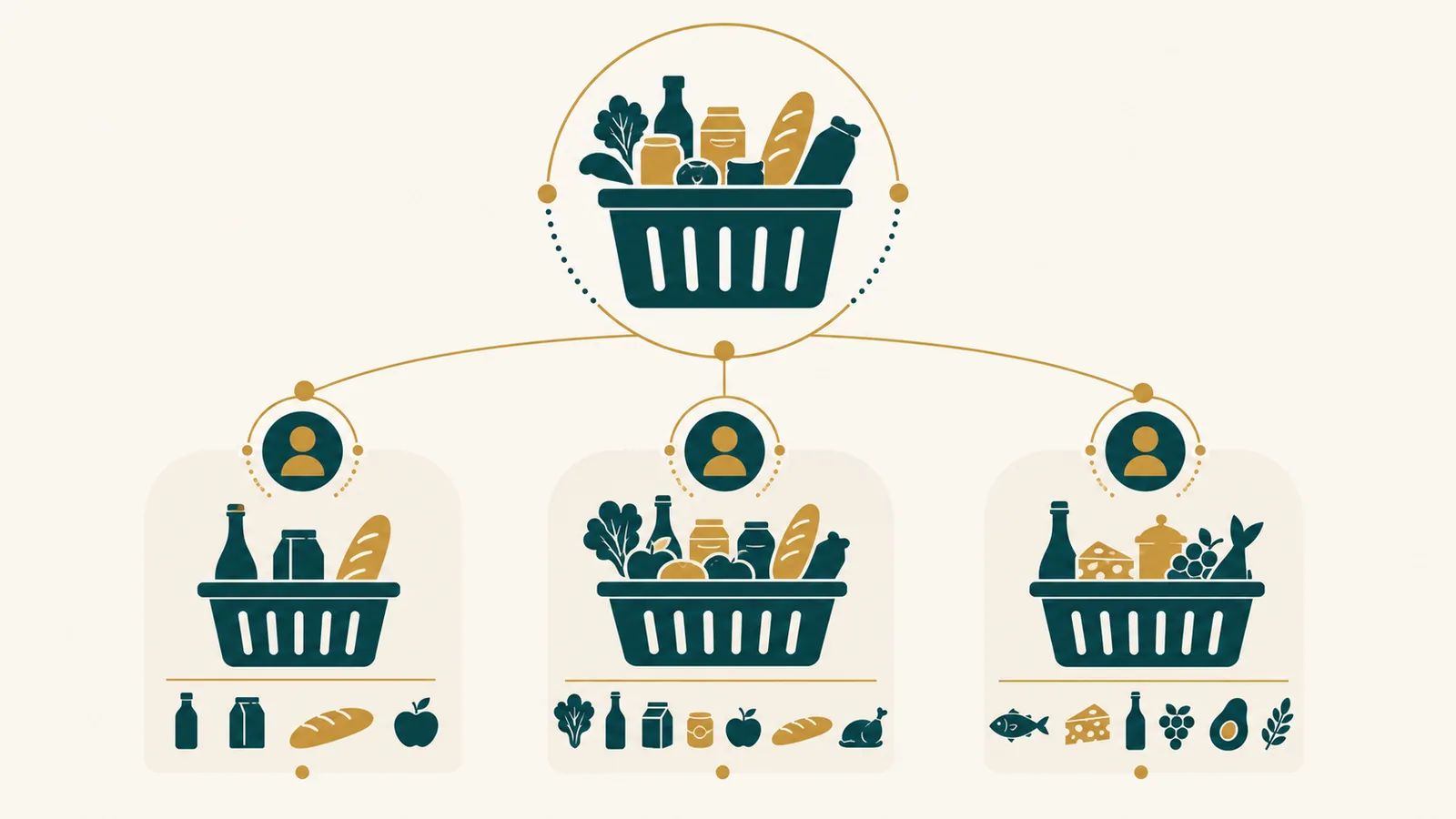
What varies by community is the weight each layer carries, not whether it exists. A South Asian household might lean harder on the monthly hypermarket run for bulk staples, while a Western expat household leans harder on the weekly app for fresh items. The baqala top-up, though, shows up almost everywhere. It's the one layer that seems to belong to no single community and all of them at once.
Expat grocery basket UAE: what stays the same across a posting
One more thread to pull on: how an expat grocery basket in the UAE changes, or doesn't, over time. Newly arrived residents often shop cautiously at first, buying smaller quantities of unfamiliar local brands while they work out what suits their household. Within a few months, most settle into a repeat basket built around a handful of trusted staples, whether that's a specific rice brand, a familiar snack, or a preferred cooking oil.
What tends to persist longest is taste, not price sensitivity. Even expats who become fully settled and confident with UAE retail keep buying the home-flavour products that were part of their original basket. This is a large part of why distributed brands with strong recognition among specific communities, whether that's a South Asian tea brand or a Southeast Asian noodle brand, hold shelf space for years rather than getting displaced by newer entrants.
There's also a second-generation effect here. Children who grow up in the UAE, regardless of their parents' nationality, often develop a wider palate than their parents did at the same age, simply from being surrounded by more cuisines at school and among friends. That doesn't erase the home-flavour anchor in the family basket, but it does add breadth around it: a household might keep its core staples exactly as they've always been while adding categories the kids picked up from classmates. Over a generation, that quietly reshapes what "normal" even means for a UAE pantry.
What this means for brands and retailers on the ground
None of this is abstract for the people who actually stock the shelf. Understanding these patterns at the community level changes real decisions: which pack size to lead with in a given store, how much Ramadan stock to pre-position weeks in advance, and which promotions actually move volume versus which ones just discount a sale that was going to happen anyway.
A distributor working across modern trade, traditional trade and e-commerce at once has to hold several different shopper pictures in mind simultaneously, often for the same store. A single LuLu branch in a mixed neighbourhood might need bulk rice pallets, a strong dates and dried fruit display before Ramadan, a chilled cabinet stocked for weekend hosting, and an online fulfilment slot ready for the weekly app order, all from the same warehouse run. Getting that mix wrong in either direction, understocking a fast-moving staple or overstocking a slow one, shows up quickly in waste and lost sales.
So what does this look like in practice? It means merchandising the same category differently store by store, not running one national plan and hoping it fits every neighbourhood. A baqala on the edge of an industrial area sees a different mix than a supermarket inside a family compound five minutes away, even if both sit under the same brand's distribution route. Field sales teams who actually walk these outlets, rather than reading a dashboard from an office, tend to catch these differences first.
How do you actually plan around all of this? Mostly by staying close to the outlet, not the average. A distributor with GPS-tracked vans and warehouse visibility can shift stock toward whichever community, channel or occasion is driving demand that week, rather than waiting a full sales cycle to react. That responsiveness matters more in a market this mixed than in one where every store looks roughly the same.
Key takeaways
- UAE grocery shopping habits are shaped more by community, occasion and channel than by any single "average shopper" profile.
- South Asian, Filipino, Arab and Western expat households each bring distinct tendencies around staples, pack size, brand loyalty and fresh versus pantry balance.
- Ramadan grocery shopping restructures the whole trip across nearly every community, not just one product category.
- Value and premium buying usually coexist inside the same household, split by category rather than by shopper type.
- Online versus in-store grocery UAE shopping has settled into a three-layer pattern: monthly hypermarket, weekly app, baqala top-up.
- Expat grocery baskets in the UAE tend to keep their original home-flavour anchors long after a household has otherwise settled in.
Grocery in this country rewards anyone willing to look past the average and pay attention to the specific household in front of them. That's the view we work from every day, moving product from the port to the shelf for all seven emirates. If you want to talk through what any of this means for a specific brand or category, our team is easy to reach through our contact page. For more on how retail behaviour here keeps shifting, the rest of our blog covers related ground, and you can always learn more about how we work on our homepage.
Frequently asked questions
What are the biggest UAE grocery shopping habits to know as a brand or retailer?
The main pattern is that there's no single "UAE shopper." Households from different backgrounds carry different staples, pack-size preferences and brand loyalties, while most people also split their shopping across a monthly hypermarket run, a weekly app order and neighbourhood baqala top-ups. Any plan built around one average shopper will miss most of the market.
How does Ramadan grocery shopping change what people buy?
Ramadan shifts the whole trip, not just one category. Households across most communities stock up before the month begins, buy more dates, dried fruit and traditional drinks, choose larger shared pack sizes for iftar, and shop later into the evening once the daily fast ends. The pattern repeats across nationalities even though the specific items differ.
Do UAE shoppers prefer value brands or premium products?
Usually both, in the same trolley. Most households trade down on everyday staples where brands feel interchangeable, then spend up on a handful of categories that matter to them, a particular tea, chocolate or imported item. It's less about one shopper type and more about which category is being bought.
Is online or in-store grocery shopping more common in the UAE?
Neither has replaced the other. Most households now combine a planned monthly hypermarket visit for bulk staples, a weekly grocery app order for fresh top-ups, and occasional baqala visits for last-minute items. The three channels serve different needs rather than competing for the same trip.
What does an expat grocery basket in the UAE usually include?
It typically combines a few trusted home-flavour staples, brought over from wherever the household is originally from, with local UAE retail habits picked up over time. Even expats who have lived here for years tend to keep the specific brands and products tied to home, while adjusting everything else around them.
How do UAE food shopper segments differ by community?
Broadly, South Asian households often buy bulk staples and specific regional brands, Filipino households prioritise home-flavour and community-store items, Arab and Emirati households favour family-size and premium formats for hosting, and Western expat households tend to shop smaller and more frequently. These are general tendencies, not rules that apply to every household.