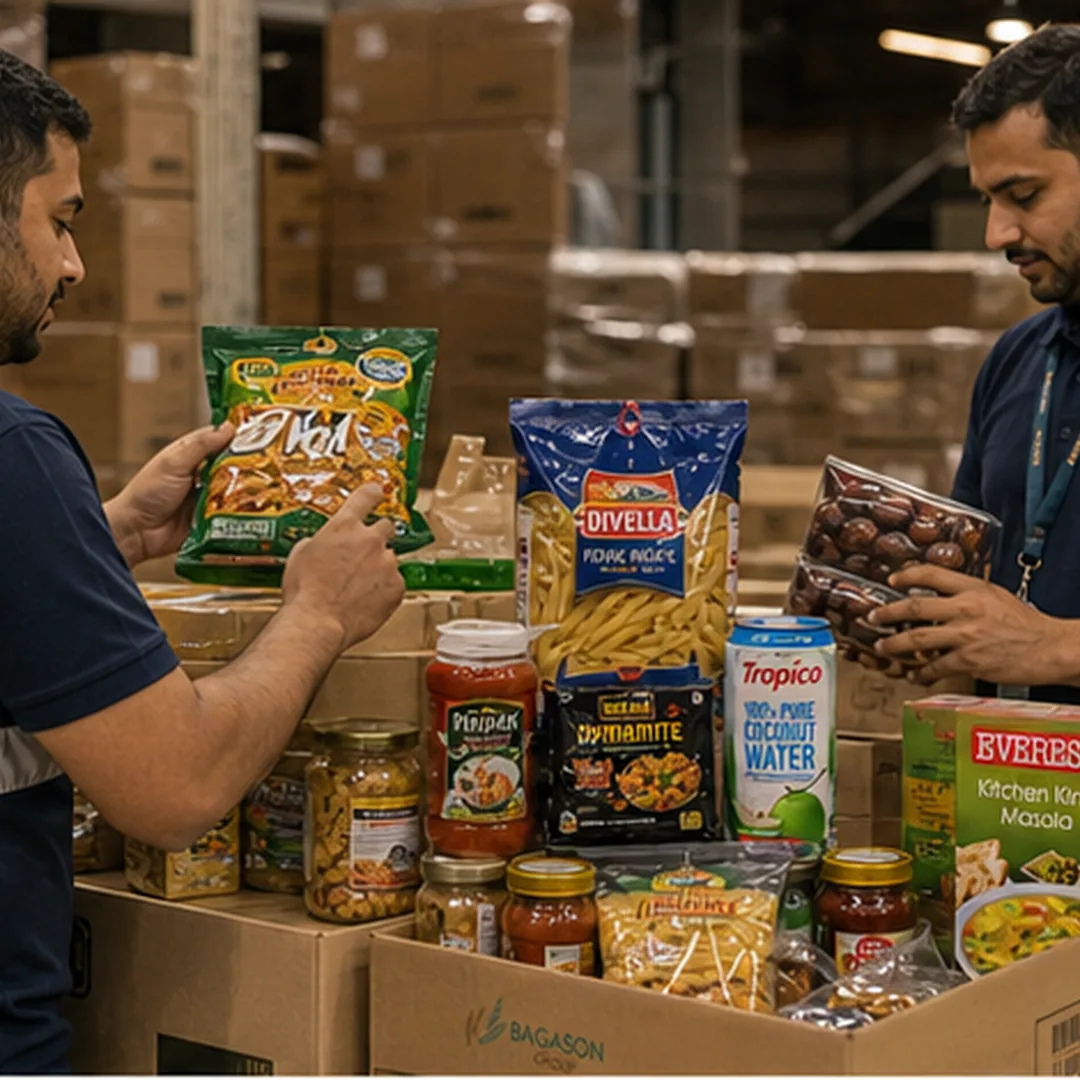
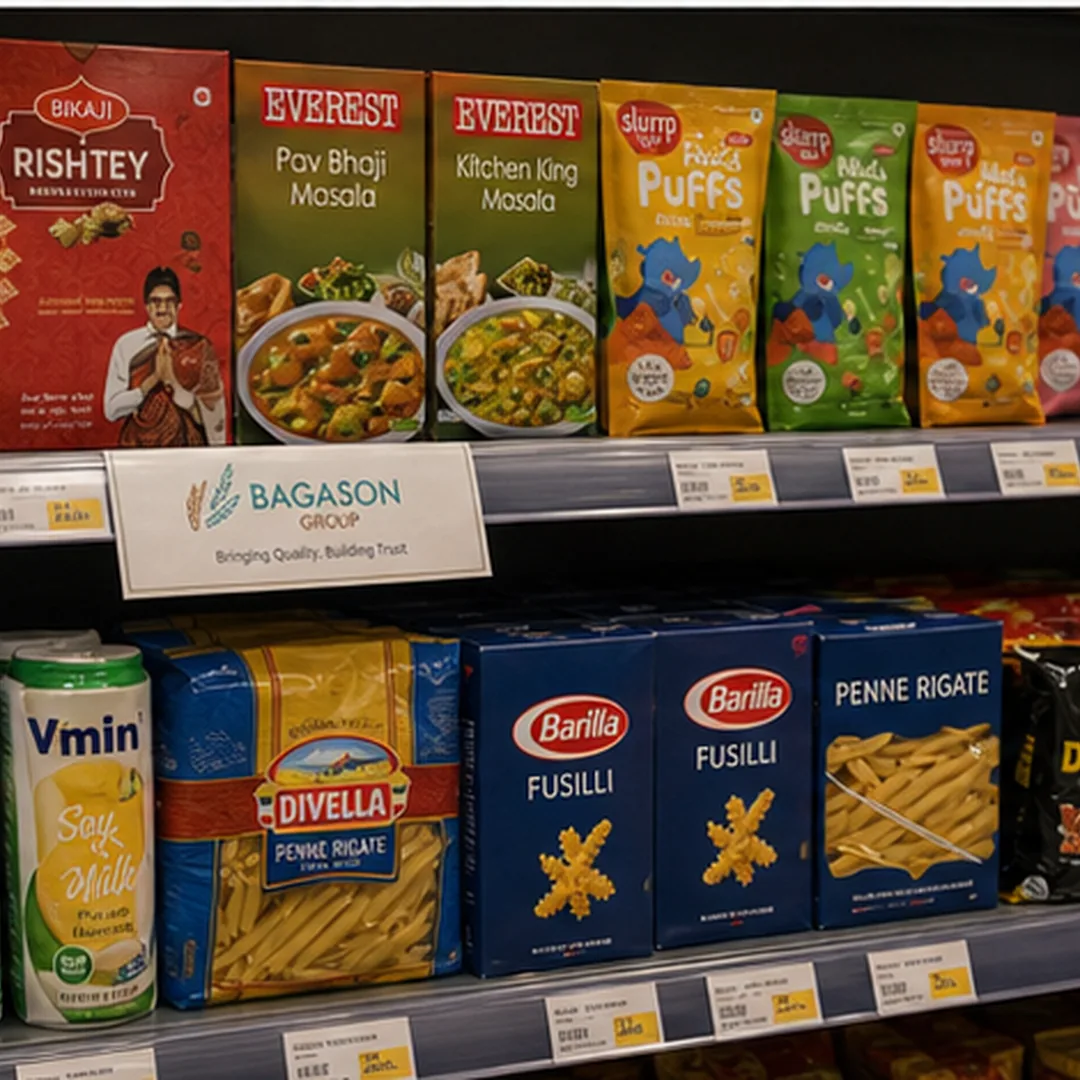
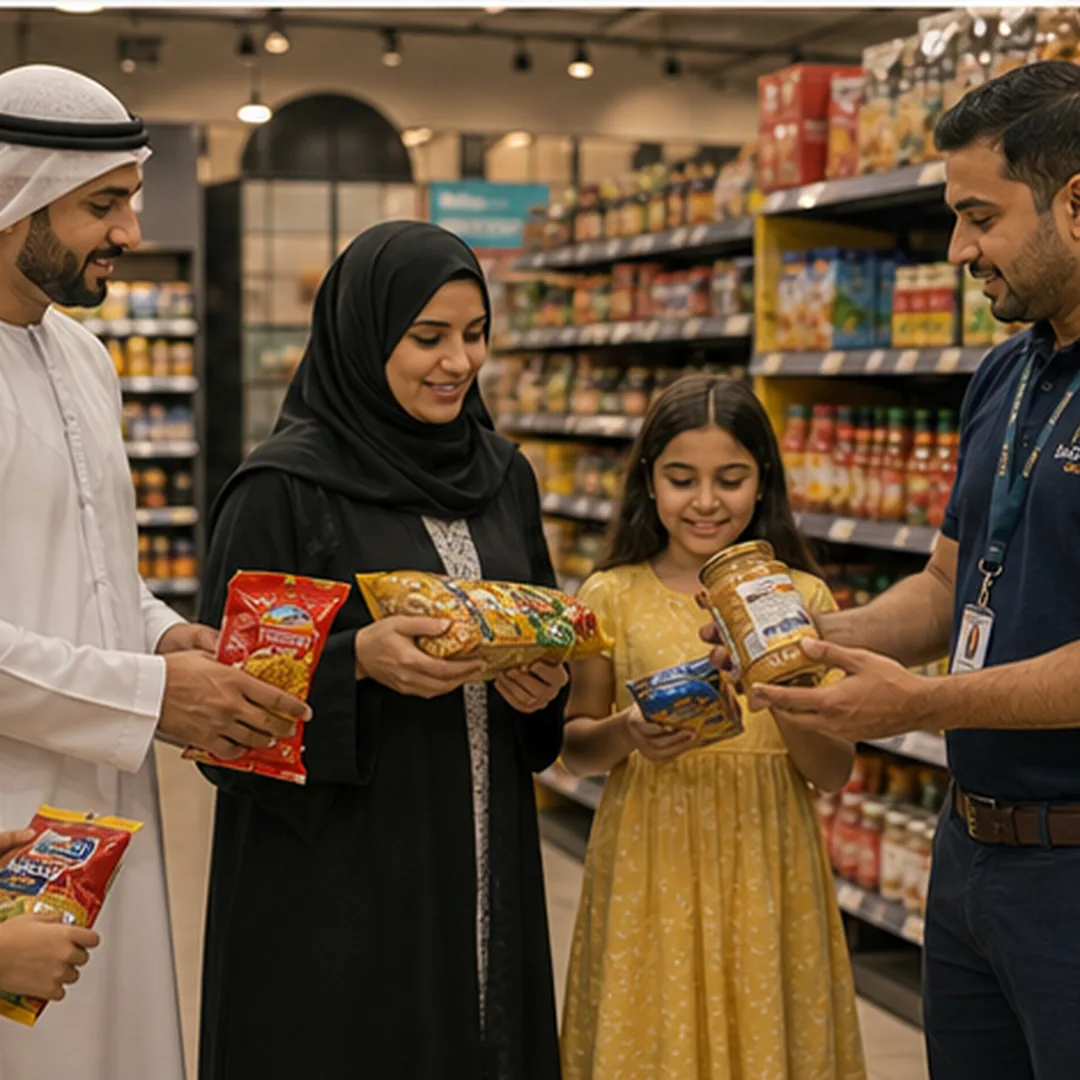
Few markets in the world are as gloriously varied at the dinner table as the United Arab Emirates. With residents drawn from more than two hundred nationalities, the demand for ethnic food in the UAE is not a niche category at all — it is the everyday reality of a country where a single supermarket aisle might hold South Indian spice blends, Filipino noodles, Levantine pulses, Italian pantry staples and Japanese sauces side by side. Serving this mosaic of communities well takes far more than putting imported packs on a shelf.
Behind every bag of basmati and every jar of pickle sits a distribution chain that has to understand culture, cuisine and consumption habits as precisely as it understands cold chain and customs paperwork. The world foods category in the UAE rewards what a distributor actually doess who treat food as identity, not just inventory. It is a category where commercial success and cultural fluency are inseparable, and where the distributor that listens most closely to communities tends to win the shelf.
This article looks at why ethnic and world foods matter so much in this market, what makes them uniquely demanding to source, import and distribute, and how the right approach turns a fragmented, complex category into a dependable service that keeps the UAE's many communities supplied with the foods they grew up with.
Why ethnic food matters so much in the UAE
For an expatriate population that often lives thousands of kilometres from home, familiar food is comfort, memory and belonging. A particular brand of tea, a specific cut of rice, the exact masala used in a grandmother's recipe — these are not interchangeable. Shoppers will travel across town and pay a premium to find the authentic product rather than a near-substitute. This emotional loyalty makes the expat food market in the UAE both lucrative and unforgiving: get the product right and you win a household for years; get it wrong and the customer simply never comes back.
That loyalty also explains why the category is so fragmented. Demand splinters across dozens of cuisines, and within each cuisine across regions, brands and price points. A distributor serving this market cannot rely on a handful of fast movers. It has to manage a long tail of products, each meaningful to a particular community, and keep that long tail in stock. A South Indian household may insist on a specific variety of parboiled rice that a North Indian family would never buy; a Sri Lankan shopper looks for a different chilli profile than a Bangladeshi one; the coconut milk a Thai cook trusts differs from the brand a Keralite reaches for by habit. These are not subtle distinctions to the people making the purchase — they are the whole point.
The scale of this demand is easy to underestimate. Because the UAE population is largely expatriate and concentrated in cities, the cuisines of South Asia, Southeast Asia, the Levant, the wider Arab world, the Philippines, Africa and Europe are not minority interests served by a few specialist shops — they are mainstream grocery demand filling the aisles of major retailers every day. Treating world foods as a fringe category badly misreads where this market's everyday eating actually happens.
Reading communities, not just categories
The distributors who do well in world foods treat demographic and neighbourhood knowledge as a core asset. Where a particular nationality concentrates, the right assortment shifts accordingly, and so does pack format: bulk staples for large family households, smaller single-serve packs for the many residents living in shared accommodation. Understanding who lives where, how they cook and how often they shop is as important to assortment planning as any sales report. A planogram that works in one emirate's residential district can be quite wrong a short drive away, simply because the community it serves is different.
Sourcing authenticity at scale
Authentic world foods in the UAE begin at origin. Asian food distribution in the UAE, for example, means working with producers across the Indian subcontinent, Southeast Asia and the Far East, often dealing with seasonal harvests, variable pack formats and regulatory requirements that differ from one corridor to the next. Indian food in the UAE alone spans staples like rice, lentils, flours and spices, plus a vast range of ready-to-eat and snack products that each carry their own shelf-life and storage demands.
Sourcing authentically also means resisting the temptation to dilute. Shoppers notice when a recipe changes or a familiar pack is swapped for a cheaper lookalike. Curating %the brands we bring to market% with genuine provenance is therefore central to credibility in this category. The distributor becomes a guardian of authenticity, vetting suppliers, checking specifications and ensuring that what reaches the shelf is the real thing. A range built on heritage staples — such as %our Indian-heritage grocery range% — earns trust precisely because it does not compromise on the characteristics communities recognise.
Scale brings its own tension. Securing reliable volumes of an authentic product — without compromising on the very characteristics that make it authentic — requires long relationships with producers at origin and a willingness to manage the friction those relationships involve. Harvest timing for spices and pulses can swing availability and price; pack sizes that suit a domestic market may need adapting for UAE retail; documentation has to satisfy both the exporting country and the importing one. A distributor that has built trusted sourcing corridors over years can absorb these shocks; one that buys opportunistically on the spot market cannot, and the inconsistency shows up on the shelf as gaps and substitutions that erode shopper trust.
The long tail and the working capital it demands
Keeping a long tail of slow-but-meaningful lines in stock costs money. Each speciality product ties up working capital and shelf space while selling far more slowly than a mainstream staple, yet dropping it disappoints the very community whose loyalty makes the category worthwhile. The economics only work when the distributor takes a portfolio view, letting fast movers carry the cost of the tail because together they make a store a destination for a whole cuisine. A small grocer could never finance that breadth alone, which is exactly why a specialist distributor matters here.
Compliance, labelling and food safety
Imported foods entering the UAE must satisfy strict requirements around labelling, halal certification where applicable, ingredient declarations, shelf-life on arrival and Arabic labelling rules. Each product line has to clear these gates before it can be listed. For a portfolio that spans many origins and cuisines, this compliance workload is substantial and continuous — regulations evolve, and a lapse can mean a whole consignment held at the border.
Cold chain adds another layer. Many ethnic specialities are temperature-sensitive, and the UAE climate is unforgiving, with summer temperatures regularly exceeding 45°C. Maintaining product integrity from port to warehouse to store requires disciplined handling, the right storage infrastructure and last-mile delivery that does not break the chain. Frozen parathas, chilled paneer, fresh curry leaves and temperature-sensitive sauces all demand careful handling that ambient logistics simply cannot provide. A single break in the cold chain can spoil a product invisibly, so that it fails only once it reaches the shopper's kitchen — the most damaging place of all for a brand's reputation.
Why compliance is a competitive advantage, not just a cost
It is tempting to see labelling and certification as red tape, but in this category they are a moat. A distributor that has invested in the systems and relationships to clear every line cleanly — correct Arabic labels, valid halal certification, accurate ingredient declarations, healthy shelf-life on arrival — can list products quickly and reliably, while a less disciplined competitor gets consignments stuck at the border. For a brand owner choosing a partner, a proven compliance track record is one of the strongest signals that their products will actually reach the shelf on time and stay there.
Getting world foods onto the right shelves
Distribution in this category is as much about placement as it is about logistics. The communities that buy a given product cluster in particular neighbourhoods, shop in particular formats and respond to particular cues. Reaching them means matching the right assortment to the right outlet — a hypermarket in one emirate, a neighbourhood grocery in another, a speciality store serving a specific nationality. This is where %our reach across all seven emirates% becomes decisive: only a distributor present in every emirate and across modern trade, traditional trade, HoReCa and quick commerce can place world foods where the people who want them actually shop.
Good placement also depends on merchandising that respects the category. Ethnic foods often sell best when grouped by cuisine and supported by knowledgeable in-store presence. A distributor that understands the cuisine can advise retailers on assortment, planogram and seasonality — for example, ramping up specific lines ahead of festivals and religious occasions that drive sharp, predictable demand spikes. The same product can succeed or fail on the same shelf depending on whether it sits among the cuisine its buyers expect or marooned in a generic international aisle.
Modern trade, traditional trade and quick commerce
Each channel reaches these communities differently. Large hypermarkets carry the breadth that lets a shopper do a full ethnic grocery run in one trip, and they reward distributors who can keep a wide assortment reliably in stock. The independent grocers and baqalas that anchor residential neighbourhoods are often closer to a community's daily rhythm and depend on distributor field teams to keep the right lines facing. Quick commerce, meanwhile, has opened a new front: shoppers ordering a forgotten spice or a last-minute staple to the door, which only works if the speciality long tail is genuinely available in the fulfilment network rather than just in the big stores.
Festivals, seasonality and the HoReCa channel
The calendar shapes this category more than almost any other. Demand for specific staples and speciality items surges around Ramadan, Diwali, Onam, Eid and countless other occasions, each tied to particular communities and particular dishes. A distributor that maps these calendars can position stock weeks ahead, brief retailers on display timing and avoid the twin failures of running out at the peak or being left with seasonal stock once the moment passes. Beyond retail, the HoReCa channel matters enormously here: the UAE's thousands of ethnic restaurants, cafés and cloud kitchens are major buyers of authentic ingredients in catering formats, and serving them well requires its own assortment, pack sizes and delivery rhythm.
Building partnerships that serve communities
None of this works as a transaction. The distributors that sustain a world-foods business build lasting relationships in three directions at once: upstream with producers who guard the authenticity of a cuisine, sideways with retailers who need help serving a particular community, and ultimately with the shoppers whose loyalty is earned one consistent purchase at a time. A brand owner looking to enter or grow in this market is really choosing how well their product will be understood, not just how it will be moved.
That is why many producers prefer to %partner with us to reach these communities% rather than attempt the market alone. A local partner who already knows which communities cluster where, which festivals move which lines, and how to clear every compliance gate cleanly can shorten the path from origin to shelf dramatically — and avoid the expensive missteps that come from treating the UAE as a single, uniform market rather than the patchwork of cuisines it really is. Many of the practical questions that come up at this stage are addressed among the %questions buyers and brands often ask% for brands and buyers.
A closer look at the major cuisines
Although it is convenient to talk about world foods as a single category, in practice it is a collection of very different sub-markets, each with its own staples, loyalties and rhythms. Understanding them individually is what separates a distributor who genuinely serves these communities from one who merely stocks imported packs. The differences are not cosmetic — they shape assortment, pack format, sourcing corridors and even merchandising layout.
South Asian foods
South Asian cuisine is arguably the backbone of the UAE's world-foods demand, reflecting the large communities from India, Pakistan, Bangladesh, Sri Lanka and Nepal. The breadth here is enormous: dozens of varieties of rice, an extensive range of lentils and pulses, countless flours, whole and ground spices, pickles, chutneys, snacks and ready-to-eat lines. Regional distinctions run deep — the rice, spice blends and cooking fats favoured in the south differ markedly from those of the north, and a distributor who treats "Indian food" as one undifferentiated block will inevitably disappoint half its customers. Getting this sub-market right means carrying genuine regional depth, not just a token shelf of the best-known brands.
Southeast Asian and Far Eastern foods
The Filipino community is among the largest in the country, and Filipino cuisine brings its own distinctive staples — particular noodles, sauces, canned goods and snacks that loyal shoppers seek out by brand. Alongside it sit Thai, Vietnamese, Chinese, Korean and Japanese lines, spanning everything from coconut milk and fish sauce to instant noodles, soy and speciality condiments. These cuisines often share ingredients on paper but differ sharply in the specific brands and flavour profiles their communities trust, which again rewards depth over a generic "Asian" assortment.
Levantine, Arab and Mediterranean foods
The wider Arab world and the Levant contribute another rich layer of demand — pulses, grains, olive oils, tahini, spice mixes, dried fruits and a host of pantry staples that are central to everyday cooking for many residents and deeply familiar to the region itself. European lines, particularly Italian pasta, sauces, oils and pantry goods, round out a category that genuinely spans the globe. The common thread across all of these is that authenticity and provenance are non-negotiable to the shoppers who buy them.
The economics behind the long tail
It is worth being clear-eyed about why this category is hard to run profitably. A mainstream grocery staple sells quickly, turns its shelf space many times over and is easy to forecast. A speciality ethnic line meaningful to a smaller community may sell slowly, tie up capital for longer and be harder to predict — yet dropping it disappoints exactly the shoppers whose loyalty makes the whole category worthwhile. The distributor is therefore constantly balancing breadth against efficiency.
The way this balance is struck is through a portfolio view. The fast-moving staples generate the volume and cash flow that make it viable to carry the slower long tail, and together they make a store a credible destination for an entire cuisine rather than a place that stocks only the obvious lines. A shopper who can reliably find both the everyday staples and the harder-to-source speciality items will do their full grocery shop there, which is worth far more over time than the margin on any single fast-moving pack. This is the commercial logic that a specialist distributor brings, and it is one a small independent importer rarely has the scale to sustain.
Why availability beats almost everything else
In this category, consistent availability is the single most powerful driver of loyalty. A shopper who finds their preferred brand in stock week after week stops shopping around; one who is repeatedly let down by gaps and substitutions quickly learns to look elsewhere, and may not come back even once the line returns. As a rule of thumb, the cost of a stockout in world foods is far higher than the carrying cost of holding enough stock to prevent it, because the lost customer often takes their entire basket — staples and all — to a competitor. Protecting availability across the long tail is therefore not a cost centre but a retention strategy.
Technology and data in serving diverse communities
Behind the cultural fluency this category demands sits a growing role for data. Knowing which lines sell where, how demand shifts around festivals, which communities are concentrated in which neighbourhoods, and how quickly each speciality item turns over allows assortment and stock decisions to be made on evidence rather than instinct alone. The distributors who combine deep cultural knowledge with disciplined use of sell-through data are best placed to keep the right products in the right outlets without drowning in dead stock.
This matters most for the long tail, where intuition alone struggles. Data reveals which slow movers genuinely earn their place because they bring in a loyal community, and which are simply underperforming and tying up capital. It also sharpens festival planning, turning a rough sense that "demand rises around Ramadan" into a concrete, line-by-line view of what to position, where and when. Used well, technology does not replace the human understanding of cuisine and community — it amplifies it, letting a distributor serve a fragmented market with both heart and precision.
Common mistakes in serving diverse communities
Several recurring errors trip up distributors and retailers who approach this category without enough understanding. The most fundamental is treating a broad cuisine as a single homogeneous block — stocking a generic "Indian" or "Asian" assortment that ignores the regional, brand and price-point distinctions the communities themselves care about deeply. A shelf that looks comprehensive to an outsider can feel thin and disappointing to the shopper it is meant to serve, because the specific items they reach for by habit are simply not there.
A second mistake is chasing margin by substituting cheaper lookalikes for trusted brands or recipes. Shoppers in this category notice immediately, and the short-term gain is dwarfed by the long-term loss of trust. A third is misjudging pack format — offering only bulk sizes in neighbourhoods full of single residents, or only small packs where large family households want value formats. A fourth is failing to plan for festival peaks, leaving shelves empty at the exact moment demand is highest and loyalty is most at stake. Each of these errors stems from the same root cause: treating the category as inventory to be moved rather than identity to be served.
The cost of getting it wrong
The penalty for these mistakes is unusually steep in world foods because the customer relationship is so personal. A shopper let down on a staple they cannot easily find elsewhere does not simply buy a different brand that day — they often switch their entire grocery loyalty to wherever they can reliably find it. Because the basket tends to move as a whole, a single persistent gap in the long tail can quietly drain a store of an entire community's custom. This is why the discipline of breadth, authenticity and availability is not a nice-to-have in this category but the very foundation of competing in it at all.
How world foods connect to the wider UAE retail landscape
It would be a mistake to think of ethnic and world foods as a self-contained corner of the grocery business. In a market as diverse as the UAE, these lines are interwoven with mainstream retail at every level — sharing aisles, suppliers, logistics networks and shoppers with the rest of the grocery basket. The same household that buys regional staples for its traditional cooking also buys international snacks, mainstream dairy and household goods, often in a single trip. Serving world foods well is therefore part of serving the whole shopper, not a separate exercise.
This integration is precisely why a distributor with broad reach and a full-service model is well placed in the category. The infrastructure that moves mainstream goods reliably across all seven emirates — warehousing, cold chain, last-mile delivery, merchandising — is the same infrastructure that world foods depend on, with the added layer of cultural understanding on top. A distributor that already operates at national scale across modern trade, traditional trade, HoReCa and quick commerce can fold the long tail of speciality lines into existing routes and outlets rather than building a parallel operation from scratch. That efficiency is part of what makes serving a fragmented category viable.
Why national coverage changes the equation
Coverage is decisive in this category for a simple reason: the communities a given product serves are spread unevenly across the country, clustering in particular neighbourhoods and emirates. A distributor confined to one region can only reach a fraction of the households that want a given line, and the slow movers in particular need the broadest possible footprint to find enough buyers to justify carrying them. National reach turns a long-tail product that would languish in a single market into one that sells steadily across many — which is what makes carrying the breadth communities expect commercially sustainable in the first place.
The future of ethnic and world foods in the UAE
The direction of travel is towards even greater diversity and sophistication. As communities grow and new ones arrive, the range of cuisines in demand keeps widening, and shoppers increasingly expect not just the staples of their own heritage but the convenience formats, premium tiers and speciality items they would find back home. Quick commerce is reshaping expectations further, normalising the idea that even a niche ethnic staple should be available to the door within a short window rather than requiring a special trip across town.
For distributors, this means the bar keeps rising on three fronts at once: deeper assortment to match growing diversity, tighter availability to match rising convenience expectations, and the same unwavering commitment to authenticity and compliance that has always underpinned the category. The operations that thrive will be those that treat cultural fluency and logistical excellence as a single capability rather than two separate ones — understanding the communities they serve as intimately as they understand their own supply chain. That combination is hard to build and harder to imitate, which is exactly why it is so valuable in a market where food is, for so many residents, a daily connection to home.
The role of a specialist distributor
Bringing world foods to a market this diverse is precisely %what we do as a distributor%: importing and listing, warehousing and cold chain, merchandising and route-to-market strategy, all tuned to the cultural realities of who is buying and why. The distributor connects producers who understand a cuisine with retailers who need to serve a community, and absorbs the complexity in between. It carries the inventory risk of a long tail, the compliance burden of many origins and the working capital that lets a small speciality store stock products it could never import itself.
Done well, ethnic food distribution in the UAE is a quiet act of service. It means a family far from home can find the rice, the spice and the brand they grew up with, on a shelf within reach of where they live. For the communities that make up this country, that continuity matters — and the distribution chain that delivers it, invisibly and reliably, is what keeps the UAE's wonderfully varied table well stocked.
What brands and retailers should look for in a partner
For a producer or retailer weighing how to compete in world foods, the choice of distribution partner is the decision that shapes everything else. The right partner is not simply the one with the lowest rate per case; it is the one that understands the communities the product serves, can place it in the outlets where those communities actually shop, and can keep it reliably in stock across the long tail. A partner who treats the UAE as one uniform market, or who sees ethnic food as a generic category, will struggle to deliver the consistency this market demands.
It is worth asking pointed questions. Does the partner have genuine reach across all seven emirates and across every channel — modern trade, traditional trade, HoReCa and quick commerce — or only a partial footprint? Does it have established, trusted sourcing corridors at origin, or does it buy opportunistically when prices suit? Can it clear the full range of labelling, halal and shelf-life compliance gates cleanly and reliably? Does it understand the festival calendars and neighbourhood demographics that drive demand in this category? Clear, concrete answers signal a partner that can serve communities properly; vague ones signal trouble ahead.
Above all, the right partner treats authenticity and availability as non-negotiable, because those are the two things shoppers in this category will not forgive a brand for losing. A distributor that protects provenance, holds the breadth communities expect, and keeps the right products on the right shelves week after week is doing far more than logistics. It is quietly upholding a connection between people and the food of their heritage — and in a country built on that diversity, there are few more valuable services a distribution business can provide.
Frequently Asked Questions
What counts as ethnic or world food in the UAE?
It broadly covers food and grocery products associated with specific national or regional cuisines — such as Indian, Filipino, Levantine, Italian or Far Eastern lines — sold to the communities that traditionally consume them. In a country as diverse as the UAE, these categories together represent a very large share of everyday grocery demand rather than a small niche. Because the population is largely expatriate and city-based, world foods sit at the centre of mainstream retail, not at its edge.
Why is authenticity so important in this category?
Shoppers buying food from their home cuisine are often deeply loyal to specific brands and recipes. A near-substitute will not satisfy them, and a single disappointing experience can lose a household for good. Distributors that protect provenance and resist diluting products earn lasting trust. This is why curating a genuine, well-sourced range matters far more than simply stocking the cheapest available lookalike.
What makes distributing world foods more complex than other categories?
The demand is fragmented across many cuisines, regions and price points, creating a long tail of products that must all stay in stock. On top of that, imported lines carry strict labelling, halal, shelf-life and cold-chain requirements that vary by origin, making sourcing and compliance an ongoing challenge. Holding that long tail also ties up working capital and shelf space, which only pays off when the distributor takes a portfolio view across fast and slow movers.
How does festival timing affect ethnic food demand?
Many communities drive sharp, predictable demand spikes around festivals and religious occasions, when specific staples and speciality items sell rapidly. A distributor that understands these calendars can plan stock and merchandising in advance so retailers are never caught short. Mapping events such as Ramadan, Diwali, Onam and Eid lets stock be positioned weeks ahead, avoiding both stockouts at the peak and leftover seasonal stock afterwards.
What are the main compliance requirements for importing ethnic foods?
Imported foods must meet UAE requirements around Arabic labelling, ingredient declarations, halal certification where applicable, and adequate shelf-life on arrival. Each product line has to clear these gates before it can be listed, and the rules evolve over time. A lapse can mean a whole consignment held at the border, so disciplined compliance is essential. A proven compliance track record is also one of the clearest signals of a reliable distribution partner.
How is cold chain handled for temperature-sensitive ethnic foods?
Frozen, chilled and other temperature-sensitive specialities must stay within their required temperature band from port through warehouse to store and final delivery. In the UAE's heat, any break in that chain can spoil a product invisibly, so it fails only once it reaches the shopper's kitchen. Disciplined handling, proper temperature-controlled storage and unbroken last-mile delivery are therefore essential, and ambient logistics simply cannot substitute for them in this category.
Which retail channels serve ethnic food communities best?
No single channel covers everyone. Hypermarkets offer the breadth for a full ethnic grocery run, neighbourhood grocers and baqalas stay close to a community's daily rhythm, and quick commerce now lets shoppers order forgotten staples to the door. The HoReCa channel — restaurants, cafés and cloud kitchens — is also a major buyer of authentic ingredients in catering formats. Reaching all of them requires presence across every emirate and every format at once.
Why do pack formats vary so much in this category?
Household structure and living arrangements shape how people buy. Large family households often want bulk staples, while the many residents living in shared accommodation prefer smaller single-serve packs. Food-service buyers need larger catering formats again. Matching pack size to how a particular community actually shops and cooks is a core part of assortment planning, not an afterthought.
How can a food producer enter the UAE world-foods market?
The most reliable route is usually to work with a local distributor that already understands which communities cluster where, which festivals move which lines, and how to clear every compliance gate cleanly. A specialist partner can shorten the path from origin to shelf and avoid costly missteps that come from treating the UAE as a single uniform market. This lets a producer focus on protecting the authenticity of their product while the partner handles import, listing, storage and route-to-market.