A shopper opens a grocery app, searches for the brand they always buy, and the screen shows one word: unavailable. No aisle to wander, no store associate to ask, no shelf gap to notice on the way to the till. The app simply offers a different pack instead, and more often than not the order goes through anyway, just not for your brand. This is the real face of what on-shelf availability FMCG teams worry about today, and it is a quieter, harder problem than the empty shelf it replaced.
We watch this from the distribution side most days. Bagason moves close to 700 SKUs across 17 brands through UAE modern trade, traditional baqalas and the e-commerce and quick commerce channels, and our fill rate numbers get scrutinised by buyers on Amazon.ae, Noon and Talabat as closely as they do by a Carrefour category manager. What follows is what we see happen when a product goes missing from a screen instead of a shelf: why an out of stock online grocery listing does more damage than a physical gap, how substitution logic decides who benefits when it happens, and what a distributor can do about it before a shopper ever notices.
This isn't a pitch for a single fix. On-shelf availability is a mix of forecasting discipline, warehouse routine and a genuine partnership between brand and distributor. Most of the failures we see trace back to one of those three breaking down quietly, over weeks, before anyone flags it.
What on-shelf availability FMCG teams track actually means online
On-shelf availability started as a physical retail metric: the percentage of time a SKU is present and purchasable on the shelf it is meant to occupy. It sounds simple until you try to measure it. A store might show full inventory in its system while the actual shelf sits empty because a backroom pallet never made it to the fixture. Online, the same idea takes a stricter form, since a platform's inventory feed either shows a product as buyable or it does not. There is no ambiguous middle ground where a shopper might dig behind other packs and find the one you need.
That binary nature is what makes the on-shelf availability metric FMCG brands measure online so unforgiving. A physical shelf gap might still convert some shoppers who search a little harder or ask staff for help. A digital "out of stock" flag converts almost nobody, because the platform has already presented an alternative before the shopper finishes reading the label. The metric that mattered in a hypermarket aisle now behaves completely differently once the aisle is a scrollable feed.
Three inventories, one shopper
A single UAE household might buy the same brand from three different places in a month: a Carrefour hypermarket, a quick commerce app for a quick top-up, and a marketplace listing for a bulk pack. Each of those channels runs its own inventory feed, its own reorder logic and, often, its own warehouse allocation. A brand can be perfectly stocked in modern trade and simultaneously invisible on a dark store's app, and neither team may notice for days unless someone is watching all three feeds at once.
Consider a household that buys a cooking oil brand every few weeks. On a Tuesday, the family's regular quick commerce app shows the brand as unavailable, so they accept the suggested alternative without much thought. The following weekend, the same household walks past a full shelf of that same brand at their local hypermarket, never realising the app-only gap ever happened. From the brand's own reporting, modern trade sales look steady, so nobody flags a problem. Meanwhile, the app has already logged one successful substitution and quietly nudged its ranking in that shopper's future searches toward the competitor. Multiply that pattern across a few thousand similar households over a few weeks, and a channel-specific gap that never shows up in a blended sales report can still be reshaping which brand a shopper reaches for by habit.
Why an out of stock online grocery listing costs more than a missed sale
Here's the thing about a missed online sale: it rarely stays a single missed sale. When a shopper searches for a brand and the listing shows unavailable, the platform's own algorithm usually starts working against that brand immediately, nudging a competitor's pack higher in search results because it converts and the missing one does not. A short stockout can quietly cost a brand search ranking that takes weeks to rebuild, long after the actual inventory gap has closed.
There's also a loyalty cost that is harder to see in a weekly sales report. A shopper who substitutes once, tries the alternative, and finds it acceptable has a real reason to repeat that choice next time, even after the original brand comes back in stock. Physical retail gives a brand some grace here, since habit and shelf memory pull a shopper back to the same spot. A grocery app has no shelf memory. It remembers only what worked last time, and if a substitute worked, the app is inclined to suggest it again.
The stockout that never shows up in a distributor's own numbers
A distributor can look flawless on its own warehouse dashboard and still be invisible to a shopper, because the gap often sits between the warehouse and the platform's live feed rather than in the warehouse itself. Stock might be sitting on a pallet in Jebel Ali while the platform's system still shows zero, because an update batch ran late or a SKU mapping broke after a pack redesign. From a shopper's screen, that is indistinguishable from a genuine stockout, and it converts exactly the same way: to a competitor.
- A true stockout: the warehouse genuinely has no saleable units of that SKU.
- A feed lag: stock exists, but the platform's system has not caught up with the warehouse's.
- A mapping break: a barcode, pack size or variant change confuses the platform's catalogue, and the "in stock" item on the shelf no longer matches what shoppers search for online.
Each of those three problems needs a different fix, and treating them as the same issue is one of the most common mistakes we see brands make when they ask "why does the app say we're out of stock?"
How substitution grocery apps quietly decide who wins the sale
Every major grocery app now runs some form of substitution logic, whether shown openly as "similar items" or applied silently through search ranking. The mechanics vary by platform, but the underlying pattern is consistent: when a searched SKU is unavailable, the app surfaces a same-category alternative it believes is likely to convert, based on price band, pack size and past purchase patterns for that shopper or that basket type.
What does this mean for a brand that gets substituted? It means the app is, in effect, running a live taste test on your behalf, except the outcome favours whichever brand happened to be in stock at that exact moment. Substitution grocery apps are not biased against any particular brand by design. They are simply optimising for a completed order, and an available competitor completes that order more reliably than an absent favourite.
Where substitution hurts most: the impulse and habit categories
Substitution risk is not evenly spread across categories. A shopper buying a specific imported spice blend or a niche regional snack is less likely to accept a substitute, because the purchase is deliberate and specific. A shopper buying a common staple, cooking oil, rice, a everyday snack pack, is far more willing to accept whatever the app offers instead, since one reasonable alternative usually satisfies the actual need behind the order. Brands built on habitual, frequently repurchased categories carry more substitution exposure than brands built on a distinctive, hard-to-replace product.
What a brand can actually influence here
A brand cannot rewrite a platform's substitution algorithm, but it can influence the inputs that algorithm reads. Accurate, complete product listings with clear pack-size and variant data reduce the odds of an accidental mismatch getting flagged as unavailable. Consistent, reliable fill rate history earns a platform's trust over time, and platforms do reward a distributor's track record with better default visibility, even if the exact weighting stays private. Staying in stock, plainly, is still the single biggest lever, since no amount of listing polish beats simply being purchasable when the search happens.
Fill rate distributor scorecards: the number nobody argues with
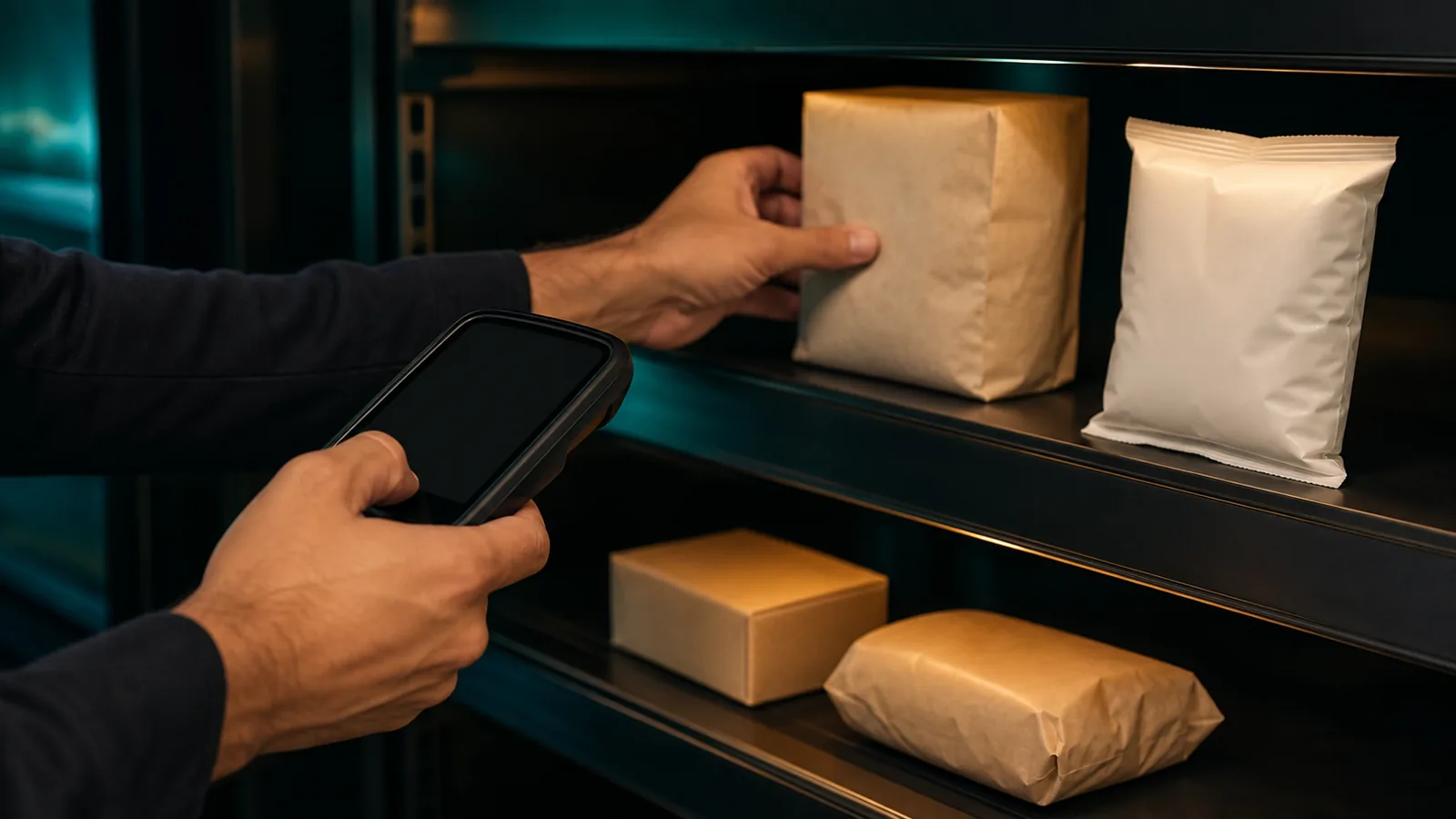
Ask any retail buyer or platform account manager what they track most closely on a distributor relationship, and fill rate comes up before almost anything else. It is the percentage of ordered units a distributor delivers, on time and complete, against what a retailer or platform requested. A fill rate distributor scorecard is unforgiving in a way a conversation about brand quality never is: it is a number, tracked weekly, compared against every other supplier on the same account.
A distributor that consistently delivers a strong fill rate earns something quieter than a good number on a scorecard. It earns trust that shows up as fewer questions during a category review, faster onboarding for a new SKU, and, on digital platforms, better default visibility when a shopper searches a category rather than a specific brand name. A distributor with a patchy fill rate history faces the opposite: closer scrutiny, slower approval for new listings, and less benefit of the doubt when a genuine one-off supply issue does happen.
Why fill rate and on-shelf availability are related but not identical
Fill rate measures what a distributor ships against what was ordered. On-shelf availability measures whether a shopper can buy the product at the moment they look for it. A distributor can hit a strong fill rate on paper while a platform's own systems still show a stockout, because the order-to-shelf chain includes steps a distributor does not fully control, receiving, put-away, catalogue updates, warehouse-to-app synchronisation. That is why a serious distributor tracks both numbers separately rather than assuming a good fill rate automatically means a good shopper experience.
Three battlegrounds: dark stores, marketplaces and the physical aisle
On-shelf availability is not one problem with one fix. It plays out differently across three distinct environments, and a strategy that works in one often needs real adjustment in another.
Dark stores and quick commerce
A dark store holds a narrower assortment than a hypermarket and turns inventory faster, often multiple times a day for its fastest-moving SKUs. That speed cuts both ways. A well-run dark store restocks quickly enough that stockouts stay brief, but a poorly forecast one runs out just as fast, because there is little buffer stock sitting quietly in a backroom. Replenishment cadence into these locations needs to match the actual velocity of the SKU, not a generic weekly schedule built for a slower-moving format.
Marketplaces
A marketplace listing lives or dies on its own catalogue accuracy as much as on physical stock. A brand can have healthy warehouse inventory and still show as unavailable because a listing was suspended for a compliance flag, a variant got merged incorrectly, or an account-level inventory sync simply failed for a day. Marketplace availability needs its own monitoring routine, separate from the warehouse system, because the failure points sit largely outside the warehouse itself.
The physical shelf
Modern trade and traditional trade still carry the most forgiving version of an availability gap, since a shopper physically present in a store has more chances to find a substitute facing, ask a merchandiser, or simply come back another day. That forgiveness is shrinking, though, as more of the same shoppers compare prices and availability on an app before they even leave home. A physical stockout that used to only cost a single missed visit now risks costing a shopper who checked the app first and never walked in at all.

What the cost of a stockout actually adds up to
It helps to separate a stockout's cost into layers, because each layer behaves differently and needs a different response. The first layer is the simplest: the sale that did not happen while the SKU sat unavailable. That number is easy to estimate from a normal sales run rate and is usually the smallest piece of the real damage.
The second layer is the substitution itself, the order that completed with a competitor's pack in the basket instead. That unit is now sitting in a shopper's kitchen, being tried, compared, and possibly kept as a new default. Depending on the category, some share of those substitutions convert into a lasting switch, particularly in categories where one product satisfies the need about as well as another.
The third and least visible layer is ranking and default placement. A platform's search and recommendation logic responds to conversion, and a SKU that repeatedly shows as unavailable during searches tends to drift down in relevance over time, even after stock is restored. Recovering that position usually takes longer than the stockout itself lasted, since a platform needs a run of successful transactions to rebuild the same standing.
Why this makes prevention cheaper than recovery
Once all three layers are counted together, avoiding a stockout is almost always the more efficient path compared with running promotions or discounts later to win back a shopper who has already switched. A modest, well-targeted safety stock buffer costs a predictable amount in working capital. Rebuilding lost ranking and habit after the fact costs an unpredictable amount in marketing spend, discounting and time, with no guarantee the shopper comes back at all.
Safety stock without drowning in working capital
The easy answer to any of this, more stock everywhere, is usually the wrong one. Carrying excess inventory across every SKU and every channel ties up working capital, adds warehousing cost and, for shorter shelf-life categories, raises the risk of stock ageing before it sells. Safety stock has to be targeted, not blanket, and that targeting comes from understanding which SKUs need the buffer and which do not.
Where the buffer earns its keep
The SKUs worth carrying extra safety stock against are usually the ones with the highest substitution risk: habitual, frequently repurchased items in crowded categories, where a competitor's pack sits one tap away. A niche, distinctive product with fewer direct substitutes can often run leaner, since a shopper searching for it specifically is less likely to accept an alternative anyway. Segmenting safety stock by substitution exposure, rather than applying one rule across the whole range, keeps working capital pointed at the SKUs where a stockout actually costs the most.
Forecasting that accounts for channel-specific demand spikes
A SKU's online demand pattern rarely mirrors its physical retail pattern. A payday weekend, a school holiday, or a single viral recipe video can spike quick commerce demand for a specific pack far faster than a hypermarket's steadier footfall would suggest. Forecasting built only on historical modern trade sales misses these spikes entirely, which is one reason a distributor serving both channels needs separate demand signals feeding into replenishment, not a single blended average.
- Track sell-through by channel, not just by total volume, so a dark-store spike does not get diluted into an average that looks calm.
- Set reorder points against actual velocity per location, adjusted for known seasonal or promotional spikes.
- Review substitution-risk SKUs more frequently than low-risk ones, since the cost of a gap is not the same across the range.
What digital shelf availability UAE brands are actually facing on the ground
Digital shelf availability UAE conditions carry a few features that do not show up the same way in every market. The country's grocery mix leans heavily toward a small number of dominant platforms across quick commerce, marketplace and modern trade e-commerce, which means a single feed error or catalogue mismatch with one major platform can affect a meaningful share of a brand's online visibility all at once. There is less room to quietly absorb a bad week with one platform while another compensates.
The market's density also means delivery windows are tight and shopper expectations for rapid availability are high, which raises the operational bar for replenishment into dark stores specifically. A distributor's warehouse being a short drive from most quick commerce dark stores is an advantage many international brands entering the market do not have on day one, and it is part of why local distribution partnerships matter more here than the physical distance alone would suggest.
Language, labelling and catalogue accuracy
Bilingual product information, accurate Arabic-label data feeding into a platform's catalogue, and correct barcode-to-SKU mapping all affect whether a shopper's search surfaces your listing in the first place. A catalogue error here reads to a shopper exactly like a stockout, even when the warehouse is fully stocked, because the product simply does not appear in the results they searched.
A multi-nationality shopper base searches differently
The UAE's grocery shoppers search in a mix of languages, transliterations and brand nicknames, often switching between English and Arabic within the same shopping session. A catalogue entry built only around one exact product name misses the shopper who searches using a regional term, a shortened brand name, or an Arabic spelling variant. Getting this right is less about translation and more about anticipating how a genuinely mixed population types into a search bar, a different exercise from simply listing a product correctly once and leaving it alone.
Building the operating rhythm that keeps a SKU in stock
The fixes above do not work as a one-time project. On-shelf availability holds up only when it is checked on a routine, not revisited after a brand notices sales have quietly dropped. A working rhythm usually includes a few recurring habits, run by whoever owns the account on the distribution side.
Daily and weekly checks that catch problems early
- A daily scan of live availability across each major platform for the highest-velocity SKUs, not a weekly summary that lets a two-day gap go unnoticed.
- A weekly fill rate reconciliation against every retailer and platform account, flagged the moment a number drifts below the agreed target.
- A monthly review of substitution patterns by category, checking whether a specific SKU has been losing search visibility even when technically in stock.
Escalation that actually reaches someone who can fix it
A stockout flagged on a Tuesday and only escalated the following Monday has already cost a week of lost visibility on some platforms. Whoever manages the account, whether that is the brand's own team or the distributor's, needs a clear, short path from "the app shows unavailable" to a warehouse or catalogue team that can act on it, without the issue sitting in a shared inbox for days. This is less about clever technology and more about a distributor being organised enough to notice a small problem before a shopper does.
What to ask your distributor before the next stockout happens
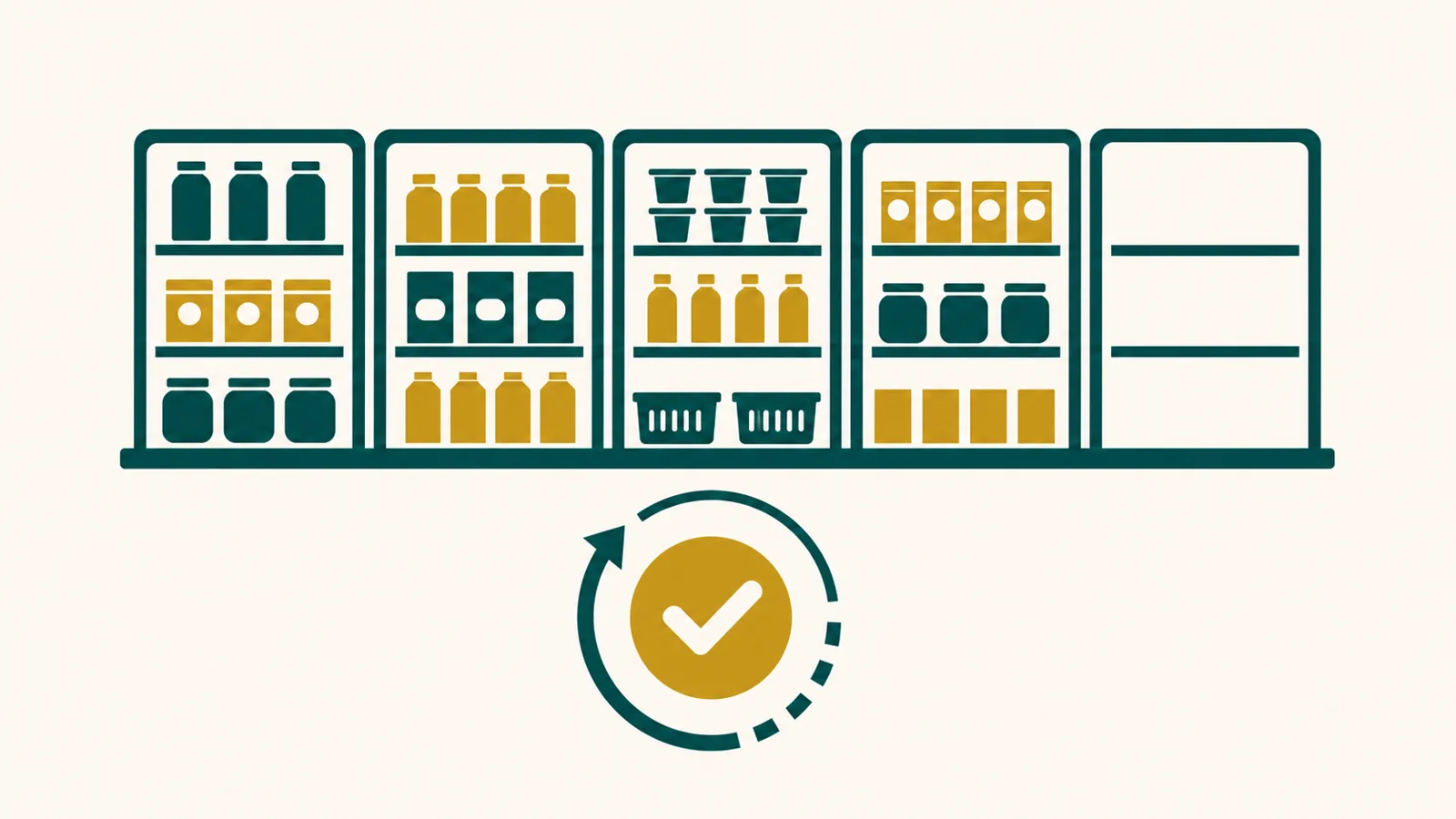
A brand does not need to build its own monitoring infrastructure to manage this well. What it does need is a distribution partner who can answer a few direct questions clearly: what does our fill rate actually look like across each retailer and platform, separately, not blended into one average? How quickly does a warehouse stock update reach each platform's live feed? What SKUs carry the highest substitution risk in our range, and do we hold enough buffer against them specifically?
Distributors already running traceable, batch-tracked inventory through a proper ERP system (ours runs on Odoo with barcode and FIFO discipline) tend to answer those questions with real numbers rather than reassurance. That distinction matters more than it sounds, because a vague "we're on top of it" answer usually means nobody is checking the three failure points closely enough to catch the next gap before it costs a sale.
Key takeaways
- Online out-of-stock behaves differently from a physical shelf gap: it converts almost no shoppers and can quietly damage search ranking.
- Grocery app substitution logic is not biased against any brand, it simply rewards whichever SKU is available at the moment of search.
- Fill rate and on-shelf availability are related but separate measures, and a strong fill rate does not guarantee a shopper sees your product online.
- Dark stores, marketplaces and physical shelves each fail in different ways and need separate monitoring, not one generic routine.
- Safety stock works best when targeted at high substitution-risk SKUs, not spread evenly across the whole range.
- A short, clear escalation path from "flagged as unavailable" to a warehouse or catalogue fix matters more than any single piece of technology.
This does not require a brand to become its own logistics operation. It does require asking sharper questions of whoever manages that shelf, physical or digital, on the brand's behalf. If you want a closer look at how your own fill rate and availability numbers hold up across UAE modern trade, quick commerce and marketplaces, talk to our team. You can also browse more on distribution operations on our blog, or learn more about how we work across all three channels on our homepage.
Frequently asked questions
What does on-shelf availability mean for an online grocery order?
On-shelf availability is whether a shopper can actually buy a specific SKU at the moment they search for it. Online, this is binary: a platform either shows the product as purchasable or it does not, with no in-between state where a shopper might still find it by looking harder, the way they could in a physical aisle.
Why does an online stockout hurt more than a physical shelf gap?
A physical shelf gap still lets some shoppers find a substitute facing, ask staff, or return later. An app has already suggested an alternative before the shopper finishes reading the search results, so almost no demand survives the gap. Repeated stockouts can also push a SKU lower in a platform's own search ranking, which outlasts the stockout itself.
How does substitution actually work inside a grocery app?
Most platforms surface a same-category alternative, based on price band, pack size and past purchase behaviour, whenever a searched item is unavailable. This is not brand bias. The app is simply optimising for a completed order, and an available competitor converts more reliably than an absent favourite.
What is fill rate, and how is it different from on-shelf availability?
Fill rate is the share of ordered units a distributor actually delivers, complete and on time, against what a retailer or platform requested. On-shelf availability is whether a shopper can buy the item at the moment they search. A distributor can post a strong fill rate while a platform's own feed still shows a stockout, because steps like catalogue updates sit outside the distributor's direct control.
How much safety stock should a brand carry to avoid stockouts?
There is no single ratio that fits every SKU. Safety stock works best when it is weighted toward habitual, frequently repurchased items in crowded categories, where a shopper accepts a substitute easily, and kept leaner on distinctive products with fewer real alternatives. Spreading a flat buffer across the whole range usually wastes working capital on SKUs that were never at much risk.
What can a brand ask its distributor to check for digital shelf availability in the UAE?
Ask for fill rate broken out by retailer and platform rather than blended into one figure, how quickly warehouse stock updates reach each platform's live feed, and which SKUs in the range carry the highest substitution risk. A distributor running traceable, batch-tracked inventory should be able to answer with real numbers rather than a general reassurance.