Most distributors track a shipment from the moment it leaves the port to the moment a retailer signs for it. Far fewer track it once it comes back. Reverse logistics FMCG operations, the returns, the damages, the refused deliveries and the online orders customers send back, quietly eat into margin that the sales team worked hard to earn. In a category with tight retail margins and fast-moving stock, the return leg of the journey matters as much as the outbound one.
This is not a topic that gets much attention in trade conversations. Everyone wants to talk about listings, promotions and new distribution. Returns feel like an afterthought, something the warehouse handles quietly at the back of the yard. But talk to anyone running a distribution operation in the UAE and they will tell you the same thing: a returns process that is loose, undocumented or slow will cost you more than a bad pricing decision ever could.
Here's the thing: returns are not a single problem. Trade returns from modern trade accounts behave differently from a damaged carton found on a delivery truck, and both behave differently from a customer sending back a grocery order placed on an app. Each stream needs its own rules, its own paperwork and its own owner. Treat them as one blob and you will lose track of stock, money, or both.
What reverse logistics FMCG covers
Reverse logistics FMCG is the set of processes that move product, information and money backward through the supply chain, from the retailer or the end customer back to the distributor or brand. It covers unsold trade stock returned under agreement, goods damaged in transit or storage, wrong or short deliveries, and consumer returns from e-commerce and quick commerce channels. Each of these has a different cause, a different owner inside the business, and a different fix.
In a Dubai warehouse handling roughly 700 SKUs across owned and distributed brands, the return stream is a fact of daily operations, not an exception. Vans come back from a route with a few rejected cases. A pallet arrives from the port with corner damage. A quick commerce partner flags a customer complaint. None of these events is dramatic on its own. Left unmanaged, together they chip away at gross margin every single month.
What ties the three streams together is documentation. A return without a reason code, a photo, a signature or a system entry is a return nobody can act on later. It sits as an unexplained stock variance, or worse, as a credit issued on trust rather than on evidence.
Where returns concentrate in a UAE FMCG business
Return volume is not spread evenly across a catalogue. In practice, it clusters around a handful of predictable triggers: a new SKU listing that did not sell through as forecast, a promotional period where retailers over-ordered against a discount, a planogram reset that drops slower lines from shelf, and pack sizes that do not survive repeated handling on a delivery route. Knowing where returns concentrate lets a distribution team plan for them instead of reacting to them.
A new listing at a modern trade account, for instance, often carries a higher return risk in its first two or three months. The retailer's buyer has agreed shelf space based on a forecast, and if sell-through runs slower than expected, some of that stock comes back before the review period ends. Building this into the sales forecast, rather than treating every return as a surprise, changes how a distributor prices the risk of a new listing from the start.
Promotions carry a similar pattern. A retailer that orders heavily against a limited-time discount sometimes ends up with more stock than the promotion moved. That overstock frequently reappears as a return request once the promotional period closes. A distributor that tracks promotional sell-in against actual sell-out data, where the retailer shares it, can flag this risk before it becomes a return rather than after.
Trade returns: what a fair FMCG returns policy looks like
A modern trade account will occasionally send stock back. It might be slow-moving, it might have been over-ordered against a promotion forecast, or a planogram reset might have bumped a SKU off shelf. A sound FMCG returns policy sets out, in writing, exactly when this is allowed, how much notice is needed, and what condition the stock must be in.
Without a written policy, every return becomes a negotiation. The retailer's category buyer sends an email, the distributor's sales rep feels pressure to say yes, and stock flows back with no clear terms attached. That is how good relationships turn into ongoing arguments over which side absorbs the cost.
A workable policy usually covers:
- A defined return window from date of delivery, agreed per account or per trade term, not decided case by case.
- A condition standard: saleable, unopened, and with a documented temperature and handling history that supports putting the stock straight back on shelf.
- A restocking or handling charge where the return is a commercial decision by the retailer rather than a distributor error.
- A single point of approval, so a warehouse supervisor cannot wave through a large return without commercial sign-off.
The point of writing this down is not to make life harder for the retailer. It is to remove ambiguity. When both sides know the rule before the return request lands, the conversation moves from negotiation to processing. That alone saves hours of back-and-forth per month across a large account base, and it keeps the sales relationship focused on future orders rather than past disputes.
A trade term agreement should also spell out who inspects returned stock and where. Some distributors let a merchandiser accept a return on the shop floor, sign for it, and load it directly onto a van. Others require every return to pass through the central warehouse before it is accepted into stock or written off. The second approach takes longer but gives finance a single, consistent point of inspection rather than dozens of merchandisers each making their own judgment call on condition.
Handling requests from key accounts differently
A large modern trade account with a national footprint carries more weight in a negotiation than a single independent grocer, and the returns policy should reflect that without becoming inconsistent. A national account might get a longer return window written into its annual trade agreement, agreed once at the start of the year. A smaller account working case by case needs the same underlying rule applied without a formal contract behind it. Consistency in the standard, flexibility in the commercial terms around it, keeps the policy fair without becoming rigid.
How do damaged goods claims work in distribution?
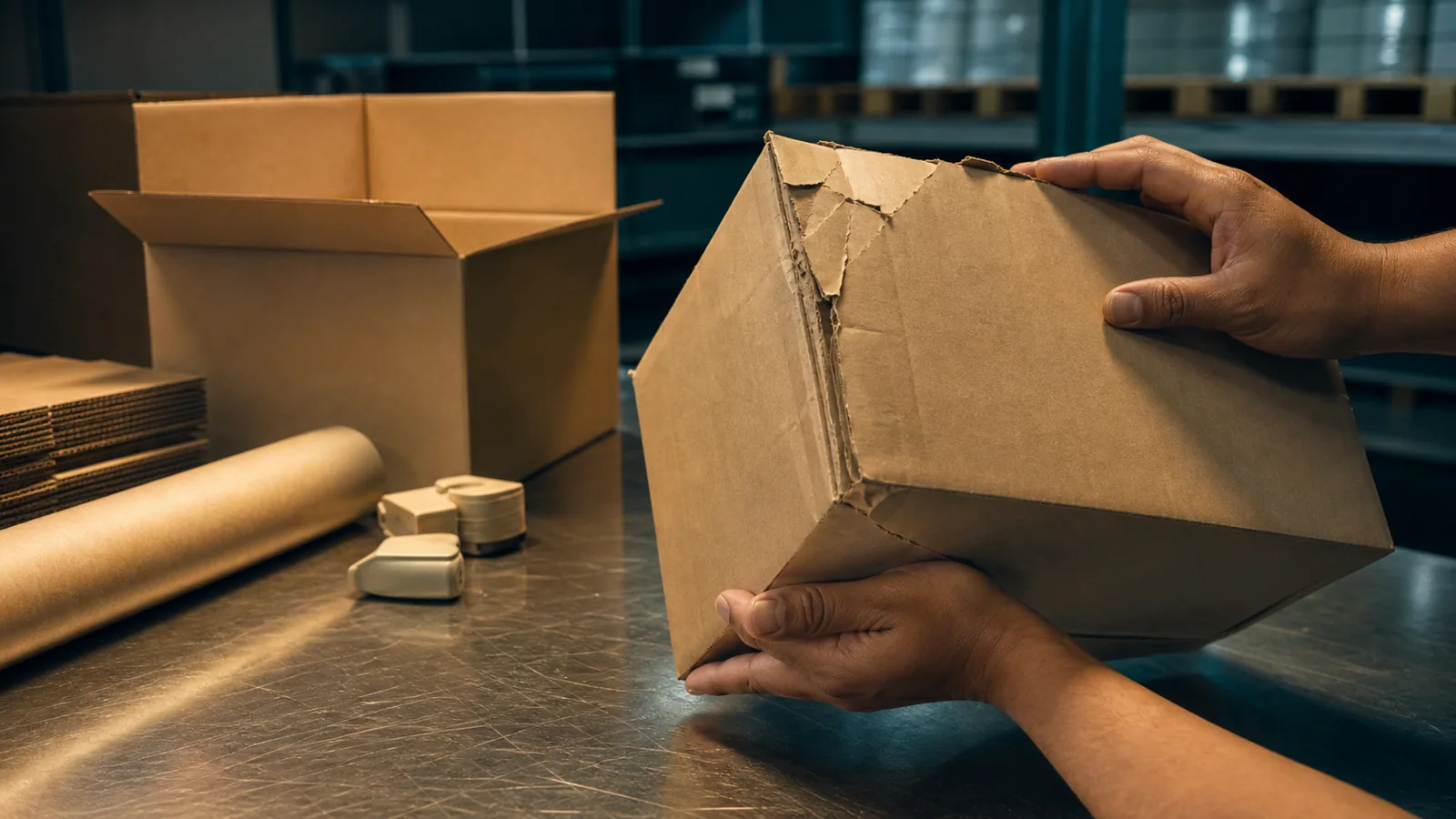
Damage happens across three points: the shipping line or freight forwarder, the distributor's own handling and transport, and the retailer's own store or backroom. Damaged goods claims distribution processes only work if everyone agrees, in advance, at which point liability transfers.
Take a pallet arriving at a Jebel Ali warehouse with crushed corner cartons. If the damage is visible at container unloading, it should be logged there, with photos and a note on the delivery order, before the stock ever moves to a rack. That single step decides whether the claim goes to the shipping line, the insurer, or gets absorbed as an internal write-off. Skip it, and the cost quietly becomes the distributor's problem by default.
Once stock is inside the warehouse, transit damage is a different conversation. A van driver who reports a broken case on return, with a photo taken before offloading, gives the warehouse team something to act on immediately. Say nothing and drop the case in a general returns pile, though, and nobody can say when or how it broke.
A workable damage claims process needs:
- A photo of the damage taken at the point it is discovered, not after the stock has been moved or repacked.
- A reason code entered against the delivery or purchase order, tied to a specific batch or shipment.
- A clear internal owner, so the claim does not sit unassigned between the warehouse team and the purchasing team.
- A time limit for filing, matched to whatever window the carrier or supplier allows in their own terms.
Without this, damaged stock ends up in a corner of the warehouse marked "to be reviewed," and it stays there for weeks. That is dead capital sitting on a pallet, and it is also a stock count that no longer matches what the system says should be on the shelf.
Storage damage versus transport damage
Not all damage happens on the road. Warehousing FMCG stock at scale, with cartons stacked several pallets high in a HACCP-controlled facility, brings its own risk if racking, stacking limits or humidity control slip. A crushed lower carton on a pallet stored too high, or condensation damage from a temperature swing, points to a storage issue rather than a transport one, and the fix is different: a racking review or a stacking-height rule, not a conversation with the freight forwarder.
Distinguishing storage damage from transport damage also matters for the claim itself. A shipping line will not accept liability for damage that clearly happened after goods were signed for and moved into a warehouse rack. Filing that as a transport claim wastes time and usually gets rejected, which is another reason the point-of-discovery photo matters so much: it places the damage in time and location, not just in category.
E-commerce and quick commerce returns bring their own rules
Ecommerce grocery returns UAE volumes have grown as shoppers order groceries and packaged food through apps rather than only visiting a store. This channel behaves nothing like trade returns. A customer who orders through Amazon.ae, Noon, or a quick commerce app is not negotiating a commercial term. They are reporting a problem: wrong item, damaged pack, missed delivery window, or a change of mind on an eligible item.
Each platform sets its own rules for what counts as a valid return and how fast a seller has to respond. A distributor acting as a marketplace vendor does not get to write its own return window here. The platform's policy governs, and missing a response deadline can affect account standing on top of the cost of the return itself.
What a distributor can control is the internal handling once a return notification lands. That means routing it to a specific person or small team, not leaving it in a shared inbox. It means checking the returned item against the original order before crediting anything. And it means a decision, agreed in advance, on whether returned stock from this channel can go back into saleable inventory or must be written off, since food and beverage items returned by a consumer carry a different risk profile than trade stock returned unopened from a retailer's backroom.
Quick commerce adds speed to the mix. Orders move in under an hour, so any return or complaint also needs a fast internal loop, ideally same-day, or the customer experience on the platform suffers and future orders on that listing slow down.
Van sales and HORECA returns need a different rulebook again
Traditional trade, the tens of thousands of small grocers served through daily van sales routes, produces a return pattern of its own. A baqala owner might reject a case because it does not fit current shelf space, or because a competing promotion changed what they wanted to stock that week. A van driver working a fixed route needs a clear, simple rule for what he can accept back on the spot and what needs a call back to the sales office.
Giving every driver full discretion invites inconsistency, with one driver accepting almost anything to keep a shopkeeper happy and another refusing valid returns to protect his daily numbers. A short, printed rule card, covering condition, quantity limits and what paperwork to fill in, standardises this without needing constant supervision from a sales manager riding along on every route.
HORECA accounts, hotels, restaurants, catering operations and cloud kitchens, add a further wrinkle. These buyers often want to change order quantities close to delivery, driven by shifting event bookings or menu changes. A return here is frequently a quantity adjustment rather than a quality issue, and it should be handled through an amended order process agreed with the account, not folded into the same return category as damaged or wrong stock. Mixing the two makes it much harder to see, months later, whether a HORECA account is forecasting poorly or whether product quality is actually the issue.

The credit note process: where returns turn into a margin problem
A return only becomes a financial event once a credit note is raised. This is the step where a returns process either protects margin or quietly gives it away. The credit note process needs to match, line for line, what was actually returned, at what condition, and against which original invoice.
Here's a pattern worth watching for: a retailer requests a credit for ten cases, the warehouse physically receives eight, and finance issues a credit for ten because the paperwork from the retailer said ten. That gap of two cases is a real cost, and it repeats every month if nobody closes the loop between goods-in and finance.
When a return request should be disputed
Not every return request is valid, and a distributor should feel comfortable pushing back on one that is not. If a retailer requests a credit for stock that arrives outside the agreed condition standard, opened, part-consumed, or clearly stored incorrectly on their side, that is grounds to decline the credit or issue a partial one, provided the trade agreement set the standard clearly in the first place.
Disputing a return well means doing it with evidence, not opinion. A photo taken at goods-in showing the actual condition of the returned stock protects both the distributor's margin and the relationship, because it turns a disagreement about who is right into a shared look at what actually came back. Sales teams sometimes worry that disputing a return will damage an account relationship. In practice, an account that sees returns handled fairly and consistently, sometimes in their favour and sometimes not, tends to trust the process more than one where every request gets approved without question.
A tighter credit note process ties three documents together before anything is approved: the original invoice, the goods-received note from the warehouse confirming physical quantity and condition, and the credit note itself. Only when all three agree should a credit go out. Running Odoo ERP with batch and barcode traceability makes this reconciliation far less manual, since a returned batch can be matched against the exact outbound delivery it came from, rather than relying on someone's memory of what shipped.
Timing matters as well. A credit note delayed by weeks leaves both sides with an open balance and confusion over which invoices are settled. A fast, accurate credit note process is one of the more overlooked ways a distributor builds trust with a retail account, arguably as much as fast fulfilment does.
Reconciling returns against the ledger, not just the warehouse
A returns process can look tidy on paper and still leak money if finance never checks it against the general ledger. A monthly reconciliation, comparing total credit notes issued against total returns physically received into the warehouse, catches the gap between the two before it grows into a pattern. Some distributors run this weekly for their largest accounts and monthly for the rest, which keeps the workload manageable while still catching problems early.
This reconciliation also surfaces accounts where returns are consistently running above what the trade agreement allows. That is a conversation for the commercial team to have directly with the buyer, ideally with the data already in hand rather than as an accusation after the fact.
Building a returns process that protects margin without slowing sales
None of this should turn into red tape that makes it harder for a sales rep to keep an account happy. The goal is a process fast enough that a legitimate return is resolved within days, not weeks, while still capturing enough information to know why it happened and who bears the cost.
A workable structure usually has:
- One returns policy per channel: trade, e-commerce, and van/HORECA, since the reasons and remedies differ.
- A single intake point, so returns are not being logged in three different spreadsheets by three different teams.
- Photo and reason-code capture at the moment of discovery, not reconstructed later from memory.
- A weekly review of return volume by SKU and by account, so a pattern (a recurring damage cause, a specific pack size showing up again and again, a delivery route with repeat rejections) gets caught early rather than becoming background noise.
That last point is where returns data earns its keep. A single return is a cost. A pattern of returns is information: about a pack size that does not survive a particular delivery route, about a carton design that crushes under stacking, or about a listing description that sets the wrong customer expectation. Reviewing returns by cause, not just by count, turns a cost centre into a source of operational feedback.
Training the people who touch a return
Policy documents do not process returns. People do, and mostly the people with the least seniority in the building: a van driver, a warehouse picker, a junior merchandiser standing in front of a shopkeeper. If they are not trained on the actual steps, all the paperwork in the world will not help.
Training here does not need to be elaborate. A short session covering three things tends to cover most of the gap: how to take a usable photo of damage, which reason codes exist and when to use each one, and who to call when a situation falls outside the standard rule. Repeating this training every few months, rather than once at onboarding and never again, matters more than the initial session itself, since staff turnover on driver and warehouse roles is often higher than in office functions.
Where a returns process breaks down in practice, it is rarely because the policy was wrong. It is because nobody checked, months later, whether the people executing it still remembered the steps.
Where the reverse leg meets the rest of the supply chain
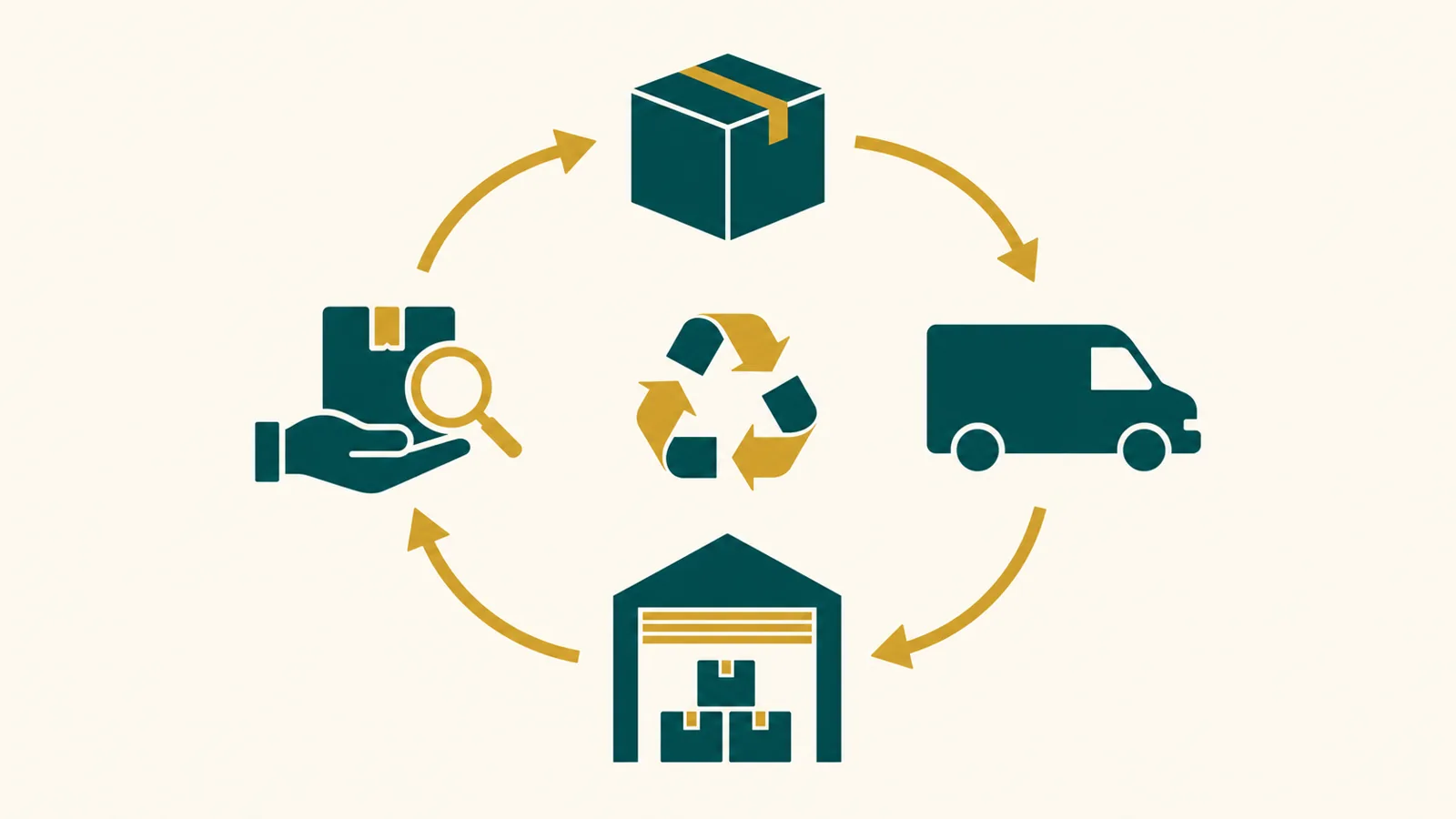
Reverse logistics FMCG cannot sit in isolation from the rest of a distribution operation. The same warehouse team that receives inbound stock, the same fleet that runs delivery routes, and the same ERP system that tracks batch and barcode movement all need to handle the return leg with the same discipline as the forward one. A distributor covering all seven emirates from a single Dubai hub, with GPS-tracked vehicles on the road daily, has the infrastructure to log a rejected case or a damaged pallet in real time rather than after the fact.
That infrastructure only helps if it is used consistently. A driver trained to photograph damage before it moves is worth more than any policy document sitting in a folder. A warehouse team that logs a reason code every time, even for a small return, builds a dataset that eventually shows exactly where the margin leaks are.
Brand owners working with a distribution partner should ask directly how returns, damages and e-commerce claims are handled before signing a distribution agreement. The answer says a lot about how the rest of the operation runs, and it is usually a better indicator of operational maturity than a warehouse tour or a slide deck of coverage numbers, because it forces a distributor to explain a process they cannot dress up after the fact. If you want to talk through how a returns process would work for your brand in the UAE market, our team is glad to walk through it, get in touch through our contact page.
Key takeaways
- Reverse logistics FMCG covers three distinct streams: trade returns, damaged goods claims, and e-commerce/consumer returns, and each needs its own rules.
- A written FMCG returns policy removes negotiation from every single case and sets clear condition and timing standards.
- Damaged goods claims distribution processes work only when liability transfer points are agreed and every claim is photographed and logged at the point of discovery.
- Ecommerce grocery returns UAE volumes follow platform rules, not the distributor's own terms, and need a fast, dedicated internal response.
- The credit note process is where poor returns handling becomes a real financial loss, and it should be reconciled against physical goods received, not paperwork alone.
- Reviewing returns by cause, not just by volume, turns a cost centre into useful operational feedback.
Returns will never disappear from an FMCG supply chain, and they should not be treated as a sign that something has gone wrong. What separates a distributor that protects margin from one that slowly bleeds it is whether the reverse journey gets the same attention, documentation and ownership as the outbound one. For more on how we manage distribution operations across the UAE, visit our blog or learn more about Bagason on our homepage.
Frequently asked questions
What is reverse logistics in FMCG distribution?
Reverse logistics FMCG covers every process that moves goods, information and money backward through the supply chain: trade returns from retailers, damaged goods claims, wrong or short deliveries, and consumer returns from e-commerce or quick commerce orders. Each stream has its own cause and needs its own documented process rather than one generic returns bucket.
How long should a retailer have to return unsold stock?
There is no single industry standard window. A workable FMCG returns policy sets a specific number of days from delivery, agreed per account or written into the annual trade term, along with a clear condition standard. What matters most is that both sides agree the window in advance, so a return request is processed against a known rule rather than negotiated case by case.
Who is responsible for damaged goods in a distribution supply chain?
Liability depends on where the damage happened: the shipping line, the distributor's own transport and warehousing, or the retailer's store. Damaged goods claims distribution processes work when the point of discovery is documented with photos and a reason code immediately, since that record decides which party the claim is filed against.
Do e-commerce grocery returns work differently from store returns?
Yes. Ecommerce grocery returns UAE volumes are governed by the marketplace or quick commerce platform's own policy, not the distributor's internal rules. A seller has to respond within the platform's timeframe and check the returned item against the original order before any credit is issued, since a missed deadline can affect account standing on the platform itself.
What should a credit note process check before approving a return?
A sound credit note process matches three records before approval: the original invoice, the warehouse's goods-received note confirming actual quantity and condition, and the credit note itself. Approving a credit based only on the retailer's claimed quantity, without checking what physically arrived back in the warehouse, is one of the most common ways margin quietly disappears.
Can a distributor refuse a return request?
Yes, provided the trade agreement set a clear condition standard in advance. If returned stock arrives opened, part-consumed, or outside the agreed window, a distributor can decline the credit or offer a partial one. Documenting the actual condition with a photo at goods-in supports the decision and keeps the disagreement based on evidence rather than opinion.