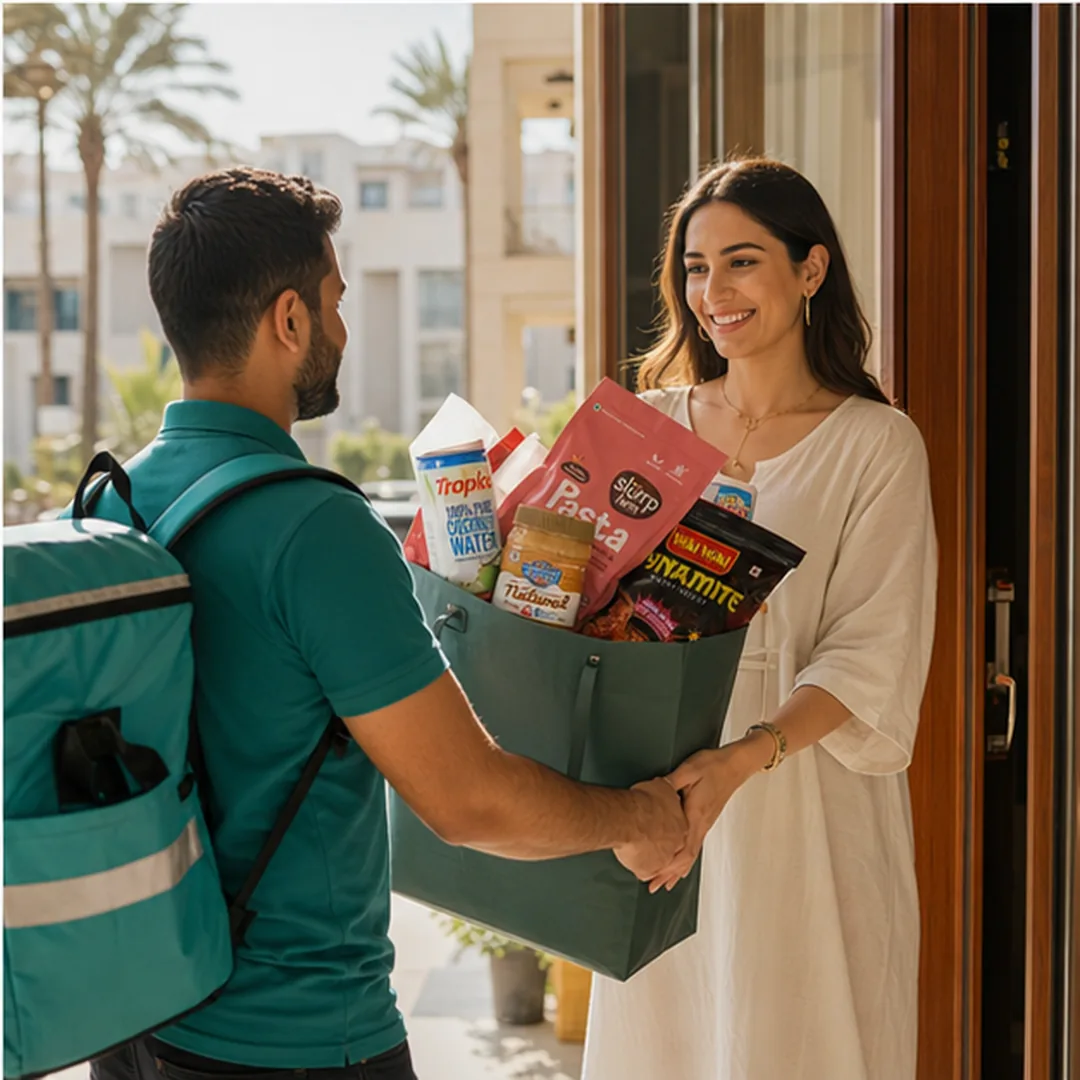
Quick commerce has moved from novelty to expectation in the UAE. A shopper in a Dubai apartment can now open an app, add a carton of juice, a packet of biscuits and a tub of yoghurt to a basket, and have all three arrive at the door in the time it takes to boil a kettle. For the consumer it feels effortless. For the FMCG brands and choosing a UAE distributors who supply that basket, it represents one of the most significant shifts in route-to-market thinking the region has seen in a decade.
The promise of 10-minute grocery rests on a deceptively simple idea: instead of fulfilling orders from a distant warehouse or a busy supermarket, platforms operate compact, strategically placed inventory hubs known as dark stores, each holding a curated range of fast-moving products within a few minutes' ride of the customer. This compresses the distance between stock and shopper to almost nothing, but it also rewrites the rules of forecasting, replenishment, pack sizing and shelf priority. A model built for speed is unforgiving of any partner who cannot keep pace.
This article looks closely at how quick commerce in the UAE is reshaping FMCG distribution in 2026, why dark stores demand a different discipline from traditional retail, and what brands and distributors must do to win in a channel that punishes stock-outs and rewards reliability. It is written from the perspective of distribution itself, so it is candid about where the work is genuinely hard and where the opportunity is real. Whether you are an overseas manufacturer eyeing the Gulf or a regional brand defending its shelf, the same fundamentals apply, and they are changing fast.
What quick commerce actually means in the UAE
Quick commerce, often shortened to q-commerce, refers to the on-demand delivery of everyday goods, typically groceries and convenience items, within an extremely short window, usually advertised as ten to thirty minutes. It sits between traditional online grocery, where a weekly shop arrives in a scheduled slot, and the corner baqala, where the shopper walks in for an immediate need. Quick commerce takes the immediacy of the baqala and delivers it to the door at the speed of an app.
The UAE has proven unusually fertile ground for this model. The population is overwhelmingly urban, concentrated in dense residential clusters in Dubai, Abu Dhabi and Sharjah, with high smartphone penetration and a strong cultural comfort with on-demand services. Apartment living, a young expatriate demographic, intense summer heat that discourages a midday trip to the shops, and a habit of convenience all combine to make instant grocery delivery in Dubai feel less like a luxury and more like a default.
For brands, the channel matters because it captures a particular kind of demand: the unplanned, the urgent and the top-up. A shopper who has run out of milk, needs a snack for guests arriving in an hour, or simply does not want to face the car park in August is a shopper who buys on quick commerce. Being present, available and well-priced in that moment is a genuine growth lever, and being absent is a sale handed straight to a competitor.
How it differs from traditional online grocery
It is worth separating quick commerce from the broader category of online grocery, because the two operate on different logic. Traditional online grocery, fulfilled from a large warehouse or picked from supermarket aisles, optimises for range and basket size: the shopper wants choice and is willing to wait. Quick commerce optimises for speed and certainty: the shopper wants a narrow set of essentials right now and will abandon the order if availability or delivery time disappoints.
That difference cascades through everything. A dark store cannot hold forty thousand products like a hypermarket; it holds a few thousand of the fastest movers. Range becomes a ruthless editorial decision rather than an exercise in completeness. For a brand, this means the question is no longer simply whether to be listed, but whether your product earns one of the limited slots in a model where shelf space is scarcer and more contested than anywhere else in retail.
The dark store: the engine room of 10-minute delivery
The dark store is the physical heart of quick commerce, and understanding it is essential to understanding the channel. A dark store is a small fulfilment unit, often a converted retail space or a purpose-built micro-warehouse, that is closed to the public and exists solely to fulfil online orders. Dark stores in Dubai and the other emirates are positioned by population density and order volume, so that each one sits within a tight delivery radius of the homes it serves.
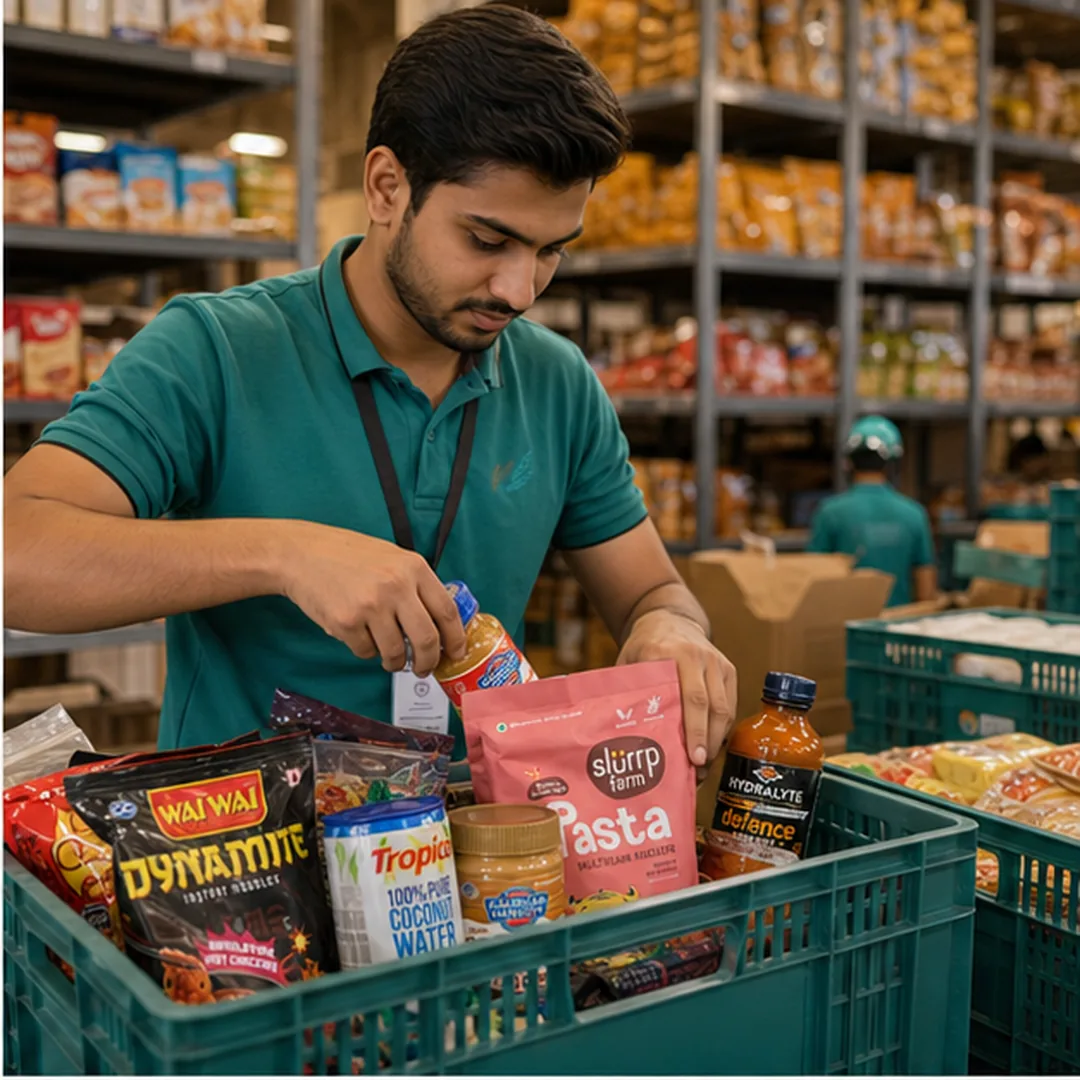
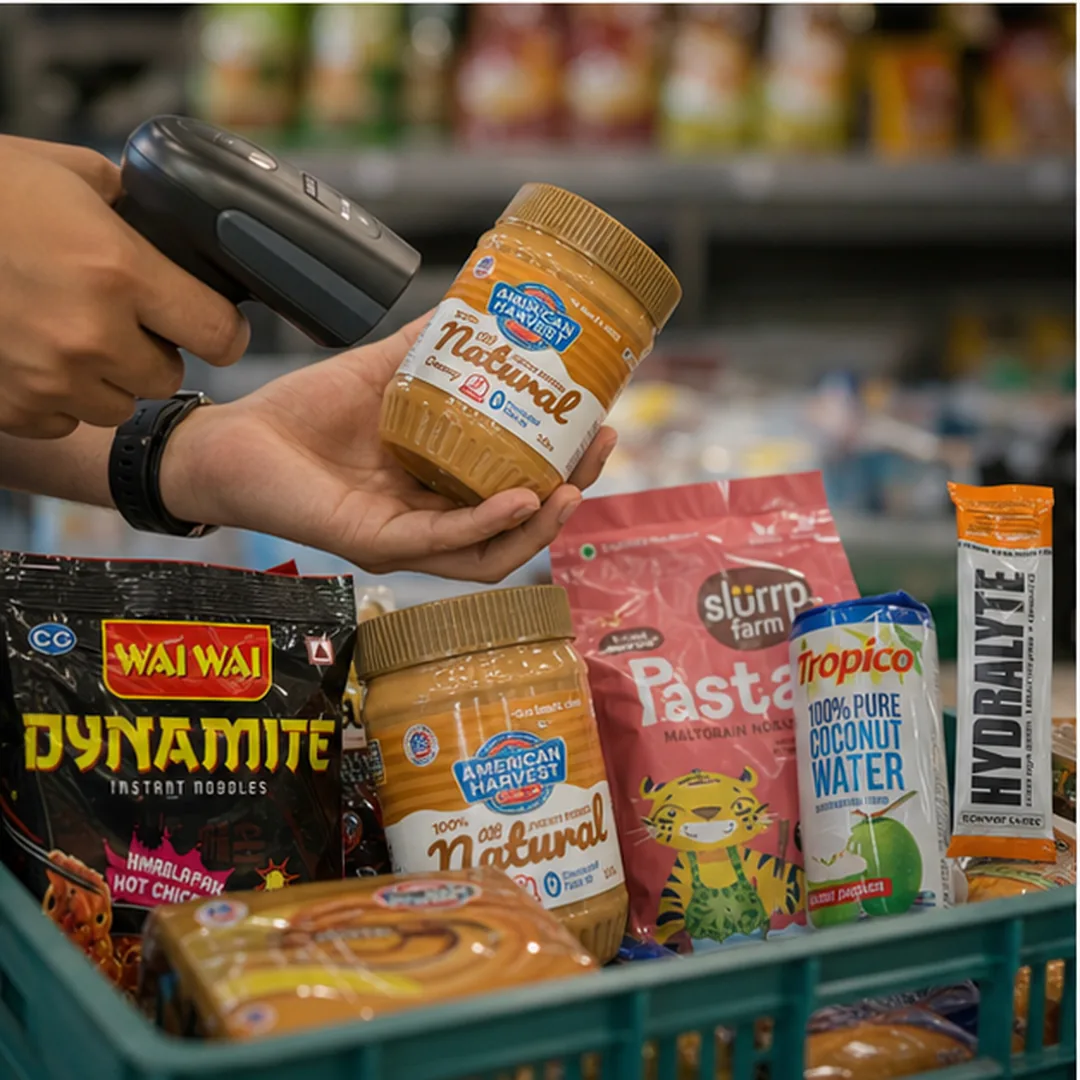
Inside, the layout is engineered for picking speed rather than browsing. Products are arranged by velocity, with the fastest movers nearest the dispatch point, and pickers work to assemble an order in a minute or two before it is handed to a rider waiting outside. Everything about the design serves a single metric: the time from tap to doorstep. This is a fundamentally different building from a supermarket, and supplying it well requires a fundamentally different mindset.
For a distributor, dark store fulfilment introduces a new node in the supply chain. Instead of delivering large drops to a handful of distribution centres or chains, the distributor or platform must keep dozens of small, fast-depleting hubs replenished accurately and frequently. Each hub is a miniature point of sale with its own demand pattern, and a stock-out in one corner of a city is invisible to a shopper in another but devastating to the order it kills. Knowing %how deep a distributor's retail coverage genuinely runs% across every channel becomes the precondition for serving a model this granular.
Why replenishment is the hardest problem
The central operational challenge of quick commerce is replenishment. Because dark stores are small and turnover is fast, the buffer of stock between a sale and an empty slot is thin. A product can sell out in hours during a demand spike, and once it is gone, the order simply routes to a substitute or fails. There is no back-of-store stockroom to raid and no shelf-edge spare to grab; the dark store either has the product or it does not.
This makes accurate, high-frequency replenishment the difference between winning and losing the channel. Consider, as an illustration, a single dark store serving a dense residential district through a hot August weekend. Demand for chilled drinks and ice cream might surge in the late afternoon as families settle in, draining those slots far faster than a flat daily forecast would predict. A distributor working from weekly averages will under-supply that hub and watch sales evaporate, while one feeding live sell-through data into a responsive replenishment plan keeps the slots full and captures the spike. The model rewards distributors who treat every hub as a living, breathing point of sale rather than a box on a delivery run.
Substitution behaviour adds a further layer of complexity. When a shopper's first-choice product is unavailable, the platform offers an alternative, and a meaningful share of shoppers accept it. Over time, repeated stock-outs do not merely cost individual sales; they quietly retrain the shopper to reach for a competitor by default, eroding loyalty that took years and considerable trade investment to build. This is why availability in quick commerce is not just an operational metric but a brand-equity issue. A product that is reliably in stock becomes the habitual choice, while one that is frequently missing teaches the shopper to live without it. The compounding nature of this effect makes consistent replenishment one of the highest-return investments a brand and its distributor can make in the channel.
How quick commerce is reshaping FMCG distribution
The rise of q-commerce is not simply a new channel bolted onto existing operations; it is reshaping the underlying discipline of FMCG distribution in the UAE. The traditional model was built around predictable, scheduled deliveries to known retail formats, with forecasting based on historical patterns and replenishment cycles measured in days or weeks. Quick commerce compresses those cycles, multiplies the number of delivery points, and demands a level of data responsiveness that legacy operations were never designed for.
The most visible change is in the rhythm of supply. Where a distributor once planned a journey to service a hypermarket twice a week, it may now need to feed a network of dark stores daily or even multiple times a day during peak periods. The drops are smaller, more frequent and more sensitive to error, because a missed delivery to a dark store does not just delay a top-up, it empties slots that convert directly into lost orders within hours.
Understanding %how a full-service partner operates across every channel% becomes essential here, because quick commerce exposes the gap between distributors who merely move boxes and those who run an integrated, data-driven operation. A partner equipped for the channel can ingest sell-through signals, prioritise replenishment by hub-level demand, and flag near-expiry or slow-moving stock before it becomes a problem. A partner without that capability simply cannot keep a 10-minute promise alive.
From weighted distribution to availability at the slot
In traditional retail, distribution is often measured by how many stores carry a product and how much they sell, captured in metrics like numeric and weighted distribution. Quick commerce introduces a sharper, more unforgiving measure: availability at the moment of the order. A product can be listed across every dark store in a city and still fail the shopper if a given hub is out of stock when the tap lands. The relevant question shifts from whether you are present to whether you are present, in stock and pickable right now.
This reframes what brands and distributors should optimise for. On-shelf availability has always mattered, but in a model where a stock-out instantly diverts the sale to a substitute or a rival, it becomes the single most valuable currency. The discipline of keeping every slot filled, every hub replenished and every forecast tuned to local demand is the new front line of FMCG execution.
The pressure on pack formats and pricing
Quick commerce also pushes brands to rethink how their products are packed and priced. The channel is built around the single-unit top-up and the small basket, so pack formats that suit a weekly hypermarket shop can sit awkwardly in a dark store. A multipack designed for a family stock-up may move slowly, while a single bottle or a small sharing pack flies. Brands that adapt their range to the channel, offering formats sized for the impulse and convenience occasion, tend to earn more of the scarce slots available.
Pricing carries its own tension. Quick commerce often comes with a convenience premium, whether through delivery fees, minimum baskets or slightly higher unit prices, and shoppers accept this in exchange for speed. Brands need a clear view of where their products sit on that value curve and how promotions translate in a channel where the shopper is deciding in seconds. A distributor who understands the local shopper can advise on which formats and price points will earn their place, and which will quietly stall.
The UAE operating environment: heat, density and diversity
No discussion of quick commerce in the UAE is complete without the operating environment, because it shapes both the demand and the difficulty. The climate alone is a defining factor. UAE summer temperatures regularly exceed 45 degrees with very high humidity on the coast, and that heat does two things at once: it drives demand, as shoppers avoid stepping outside, and it raises the stakes for any product that needs temperature control.
For chilled and frozen lines, the few minutes between a dark store and a doorstep become a genuine cold chain logistics risk. A tub of ice cream or a pack of fresh dairy that survives the dark store freezer can still suffer in a rider's bag on a 48-degree afternoon. Distributors and platforms that take quality seriously design for this, with insulated packaging, refrigerated handling and routing that keeps exposure to a minimum. The shopper who receives a softened, refrozen product once may never order that category from that app again.
The country's labour rules also shape operations. The UAE summer Midday Break Rule bans outdoor work during the hottest hours, roughly from mid-June to mid-September, which affects how riders and loading are scheduled through the peak months. A capable operation plans around these realities, shifting heavy replenishment to cooler hours and protecting both staff and product, rather than treating the constraint as an afterthought.
Density that makes the model work
The flip side of the harsh climate is the urban density that makes quick commerce viable in the first place. The UAE's population is concentrated in compact, high-rise residential clusters, which means a single dark store can serve thousands of households within a short delivery radius. This density is what allows a 10-minute promise to be economically plausible; in a sprawling low-rise market the same model would collapse under delivery cost. The brands and distributors who grasp this geography can position stock where the demand truly clusters rather than spreading it thinly.
A shopper base of many cuisines
The UAE shopper base is among the most diverse in the world, drawn from South Asia, the Arab world, the Philippines, Africa, Europe and beyond, each community bringing its own cuisines, brand loyalties and price expectations. Quick commerce dark stores, with their limited range, must curate for the specific neighbourhood they serve, and the right product mix in one district can differ markedly from another a few kilometres away. Brands with formats and flavours that resonate with these communities, and a distributor who understands which products belong in which hub, hold a real advantage. The portfolio shaped around %the kind of brands already built for the local shopper% reflects exactly this kind of local fluency.
What brands must do to win in quick commerce
For a brand, succeeding in quick commerce is not a matter of simply agreeing to be listed and hoping for the best. The channel demands a deliberate strategy, and the brands that thrive treat it as a distinct discipline rather than an extension of their supermarket presence. The first imperative is availability: because a stock-out is an instant lost sale with no recovery, brands must work with a distributor capable of keeping every relevant hub replenished, and must be willing to prioritise the channel accordingly.
The second imperative is product content and presentation. In a dark store there is no shelf for the shopper to browse and no packaging to catch the eye; the product exists as a photograph, a title and a price on a screen. Strong, accurate digital content, clear images, correct descriptions and the right format information, becomes the equivalent of shelf presence. A brand with poor or missing content is effectively invisible, however good the product on the shelf might be.
The third imperative is range discipline. Because dark stores hold only the fastest movers, brands should lead with their hero products and the formats best suited to the convenience occasion, rather than pushing a full catalogue the channel cannot accommodate. Working with a distributor who can read sell-through data and recommend which lines deserve a slot, and which are better left to other channels, turns scarce shelf space into an asset rather than a constraint.
Treat data as a shared asset
Quick commerce generates a continuous stream of data: what sells, when, in which hub, at what price and against which substitutes. Brands that engage with this data, rather than leaving it to the platform, can fine-tune their range, anticipate demand spikes around weekends, paydays and holidays, and react quickly when a competitor moves. The relationship between brand, distributor and platform works best when sell-through visibility flows freely and decisions are made together, because the channel moves too fast for monthly reviews and stale reports.
Plan for the demand spikes the channel creates
Quick commerce demand is not flat. It surges in the evenings, on weekends, around paydays, and dramatically during the hottest months and major occasions, when stepping outside is least appealing. Brands that plan for these spikes, ensuring stock and replenishment capacity are in place before demand arrives rather than scrambling after it, capture the upside that the channel exists to deliver. A distributor with the forecasting discipline to anticipate these peaks, rather than react to empty slots, is worth a great deal in a model this volatile.
It is worth being concrete about how these spikes behave. A long weekend in the height of summer, a public holiday, or the evenings of Ramadan each produce demand patterns that look nothing like an ordinary Tuesday, and they do so predictably enough that a prepared brand can plan for them well in advance. The brands that lose out are usually not the ones caught by a genuine surprise, but the ones that knew the spike was coming and still arrived under-stocked because their replenishment could not flex in time. Treating the calendar as a forecasting input, and pre-positioning stock in the hubs that will feel the surge most acutely, turns a predictable peak from a risk into an opportunity.
What distributors must build to serve the channel
The demands of quick commerce expose the difference between a warehouse with a delivery van and a genuine route-to-market partner. Serving dark stores well requires capabilities that many traditional operations simply do not have, and building them is now a competitive necessity rather than a nice-to-have. The foundation is systems: live inventory visibility, hub-level demand signals, and replenishment planning that can operate on a daily or intra-day cadence rather than a weekly one.
On top of systems sits logistics designed for frequency and fragility. Replenishing dozens of small hubs accurately, maintaining cold chain integrity in extreme heat, and sequencing deliveries so that no slot sits empty during peak hours is an engineering problem, not a clerical one. The distributors who excel treat last-mile and hub replenishment as disciplines to be optimised continuously, measuring fill rates, delivery success and time-to-replenish with the same rigour a manufacturer applies to a production line.
Equally important is the commercial intelligence to advise brands. A distributor who can tell a brand which formats earn their slot, which hubs in which neighbourhoods suit which products, and how to phase a launch across the network is delivering far more than logistics. Seeing %the way a structured distribution partnership works from the inside% makes clear how systems, field execution and category knowledge combine into a partner that can actually keep a 10-minute promise alive, rather than one that merely moves stock and hopes.
Integrating quick commerce with the wider channel mix
Quick commerce does not exist in isolation. It works alongside modern trade, traditional trade and food service, and the smartest distributors integrate it into a single coherent route-to-market rather than running it as a silo. A brand's visibility in physical stores drives demand that converts on quick commerce, and the data from quick commerce can inform decisions across every other channel. A distributor who can orchestrate the whole mix, ensuring a brand is present and consistent whether the shopper buys in a hypermarket, a baqala, a restaurant or an app, gives that brand a resilience no single channel can offer.
The working-capital reality behind the speed
Beneath the slick app experience sits a demanding working-capital cycle. Distribution is a business of carrying stock, financing inventory across many points, and waiting to be paid, and quick commerce intensifies this because stock is now spread across dozens of small hubs rather than concentrated in one place. A well-capitalised partner can fund the inventory depth and replenishment frequency the channel requires, while a stretched one will run hubs lean and accept the stock-outs that follow. A brand evaluating a distributor for quick commerce should understand this financial dimension, because the speed the shopper sees is paid for by the balance sheet behind it.
Common mistakes brands and distributors make
Quick commerce is unforgiving of error, and the same mistakes recur. The most damaging is treating it as a passive extension of retail: listing a full catalogue, applying supermarket pack formats, and assuming weekly replenishment will suffice. This produces slow-moving slots, frequent stock-outs and a steady leak of sales to better-prepared competitors. The channel demands a tailored approach, and brands that simply port their existing strategy across tend to underperform.
A second common error is neglecting digital content. Because the product lives on a screen, weak images, inaccurate descriptions or missing format details quietly suppress sales in a way that is hard to diagnose. A brand may blame the channel or the distributor when the real culprit is a poorly presented listing that no shopper chooses. Investing in strong content is one of the cheapest and most effective levers available, yet it is routinely overlooked.
On the distribution side, the cardinal mistake is under-investing in replenishment and data. A distributor that services dark stores on a traditional weekly rhythm, without live sell-through visibility, will chronically under- or over-supply hubs, leaving slots empty during spikes and stock stranded during lulls. Quick commerce demands responsiveness, and a partner running on spreadsheets and goodwill cannot deliver it however willing they are. The brands and distributors who win are the ones who respect the channel's particular discipline rather than forcing it into an old mould.
The road ahead: where q-commerce is heading in the GCC
Quick commerce in the UAE shows no sign of slowing, and the model is spreading across the wider GCC, with the same urban density, climate and digital habits driving adoption in neighbouring markets. The GCC comprises the UAE, Saudi Arabia, Qatar, Kuwait, Bahrain and Oman, and q-commerce dynamics in the region share a family resemblance even as each market keeps its own retail texture. For brands with regional ambitions, a partner who understands quick commerce in the UAE is well placed to extend that capability across the Gulf.
Several trends are likely to define the next phase. Range curation will grow more sophisticated as platforms use data to tailor each hub to its neighbourhood with increasing precision. Cold chain handling will improve as operators recognise that quality, not just speed, retains customers. Integration between quick commerce and other channels will deepen, so that a brand's presence becomes seamless across every way a shopper might buy. And the economics will continue to be tested, as platforms and distributors search for the balance between the speed shoppers love and the cost that speed imposes.
What will not change is the fundamental demand the channel serves: the urban UAE shopper's appetite for convenience, immediacy and reliability. Brands that build for that demand, with the right formats, strong content and a distributor capable of keeping every slot filled, will capture a growing share of it. Those who treat quick commerce as a side experiment will find themselves absent at exactly the moment the shopper decides. The brands most often asked about by prospective partners, and the answers that matter most, are gathered in %the questions brands most often ask before they commit% for anyone weighing the channel seriously.
Building a quick-commerce-ready distribution strategy
Pulling the threads together, a brand that wants to win in quick commerce should approach it as a deliberate, well-resourced strategy rather than a box to tick. Start by identifying the hero products and convenience formats best suited to the impulse and top-up occasions the channel serves. Invest in strong, accurate digital content so those products earn attention on a screen rather than a shelf. And above all, partner with a distributor whose systems, logistics and category knowledge can keep every relevant hub replenished and every slot filled, because in a 10-minute model availability is everything.
For distributors, the imperative is to build genuine capability: live inventory and demand visibility, high-frequency replenishment, cold chain discipline tuned to the UAE climate, and the commercial intelligence to guide brands on range, format and timing. Quick commerce rewards operational excellence more ruthlessly than any traditional channel, and the partners who invest in it now will be the ones brands seek out as the model continues to grow.
The shift quick commerce represents is, in the end, a shift in expectation. Shoppers have been shown that groceries can arrive in minutes, and there is no path back to slower habits. The distributors and brands who accept that reality and build for it, rather than wishing the channel away, are the ones who will thrive in the UAE's fast-moving grocery market. If you are ready to make your brand genuinely competitive in this channel, the practical next step is to %start a conversation about getting your brand quick-commerce ready% and turn these principles into a concrete plan for your products across every emirate.
Frequently Asked Questions
What is quick commerce and how does it work in the UAE?
Quick commerce, or q-commerce, is the on-demand delivery of everyday groceries and convenience items within a very short window, usually ten to thirty minutes. In the UAE it works through dark stores, small inventory hubs positioned within a tight radius of dense residential areas, fulfilling app orders that a rider then delivers to the door. The model thrives in the country because of high urban density, smartphone use, hot weather and a strong culture of convenience. It captures unplanned, urgent and top-up demand that a weekly shop or a supermarket trip does not.
What is a dark store and why does it matter for FMCG brands?
A dark store is a compact fulfilment unit closed to the public that exists solely to pick and dispatch online orders quickly. It holds only the fastest-moving products, arranged for picking speed rather than browsing, which makes shelf space far scarcer than in a supermarket. For brands this means earning one of a limited number of slots is a genuine commercial decision, not a formality. Being listed, in stock and well presented in the right dark stores is what converts the channel into sales.
How is quick commerce different from regular online grocery?
Regular online grocery optimises for range and basket size, fulfilling a larger scheduled shop from a warehouse or supermarket, and the shopper accepts a wait in exchange for choice. Quick commerce optimises for speed and certainty, offering a narrow set of essentials delivered almost immediately. That difference forces a much smaller curated range, far more frequent replenishment, and an intense focus on availability at the moment of the order. The two channels serve different shopping occasions and require different distribution disciplines.
Why is replenishment the biggest challenge in quick commerce?
Because dark stores are small and turnover is fast, there is very little buffer between a sale and an empty slot, and a popular product can sell out within hours during a demand spike. Once a slot is empty the order simply routes to a substitute or fails, so there is no recovery as there might be in a store with a back room. This makes accurate, high-frequency, data-driven replenishment the single hardest and most important operational task. Distributors who feed live sell-through data into responsive replenishment keep slots full and capture demand that others lose.
How does the UAE climate affect quick commerce operations?
The extreme heat, with summer temperatures regularly above 45 degrees and high coastal humidity, both drives demand and raises operational risk. It pushes shoppers towards delivery rather than venturing outside, but it also threatens any chilled or frozen product during the short journey from dark store to door. Operators must use insulated packaging, refrigerated handling and careful routing to protect quality, and must work around the summer Midday Break Rule that limits outdoor work in the hottest hours. Quality failures in heat can lose a shopper from a category permanently.
What do brands need to do to succeed in quick commerce?
Brands must prioritise availability by partnering with a distributor able to keep every relevant hub replenished, because a stock-out is an instant lost sale. They should invest in strong digital content, accurate images and descriptions, since the product is chosen from a screen rather than a shelf. They also need range discipline, leading with hero products and convenience-sized formats rather than a full catalogue the channel cannot hold. Engaging actively with sell-through data and planning for predictable demand spikes completes the picture.
Do quick commerce pack sizes differ from supermarket formats?
Yes, the channel is built around single-unit top-ups and small baskets, so large multipacks designed for a weekly family shop often move slowly. Single bottles, small sharing packs and convenience-sized formats tend to perform far better in a dark store. Brands that adapt their range to the impulse and convenience occasion earn more of the scarce slots available. A distributor who knows the local shopper can advise which formats will sell and which are better suited to other channels.
How does quick commerce fit with traditional retail channels?
Quick commerce works best as part of an integrated route-to-market rather than a silo, sitting alongside modern trade, traditional trade and food service. A brand's visibility in physical stores creates demand that converts on quick commerce, while quick commerce data informs decisions across every other channel. A distributor who can orchestrate the whole mix gives a brand consistency and resilience that no single channel offers. The aim is to be present wherever the shopper chooses to buy, with a coherent strategy across all of them.
Is quick commerce growing across the wider GCC?
Yes, the same urban density, climate and digital habits driving quick commerce in the UAE are fuelling adoption across the GCC, which comprises the UAE, Saudi Arabia, Qatar, Kuwait, Bahrain and Oman. The dynamics share a strong family resemblance even though each market keeps its own retail character and shopper mix. For brands with regional ambitions, a distributor experienced in UAE quick commerce is well placed to extend that capability into neighbouring markets. Building the discipline in one market becomes a springboard for the rest of the Gulf.
What should a brand look for in a quick-commerce distribution partner?
Look for live inventory and hub-level demand visibility, high-frequency replenishment capability, and cold chain discipline tuned to the UAE climate. The partner should offer commercial intelligence on range, format and timing, not just logistics, and the financial strength to fund inventory spread across many hubs. Ask how they measure fill rates and replenishment speed, and how they integrate quick commerce with your other channels. A capable partner treats the channel as a distinct discipline and can demonstrate the systems and field execution to keep a 10-minute promise alive.