Plenty of excellent products fail in the UAE not because shoppers reject them, but because they never reliably reach the shelf in the first place. That gap between a good product and a successful brand is almost always a route to market uae problem. The decisions about which channels to serve, who carries the stock, how stores are covered and how orders are fulfilled determine whether a brand grows steadily or stalls after an encouraging launch.
Route-to-market is the operational backbone of any consumer brand. It is easy to underestimate because it is less visible than packaging or advertising, but it is the part of the business that turns demand into actual sales, week after week. In a market as competitive and fast-moving as the UAE, getting it right is rarely optional.
Part of what makes route-to-market so decisive in the UAE is the sheer diversity of the retail landscape packed into a relatively compact geography. A single brand may need to satisfy a global hypermarket chain, a cluster of independent supermarkets, thousands of small neighbourhood groceries, busy food-service operators and an aggressive quick-commerce sector, all at once. Each expects a different service level, a different order pattern and a different commercial conversation. Designing a system that can serve all of them coherently, without the cost spiralling or the service slipping, is precisely the work that separates brands that scale from those that stall.
What route-to-market really means
A clear rtm strategy answers a deceptively simple question: how does your product travel from the point of import to the hands of a shopper, profitably and repeatedly? That covers the channels you sell into, the distributor or distribution model you use, the warehousing and cold chain behind it, the frequency and quality of store coverage, and the merchandising that keeps your product visible and in stock.
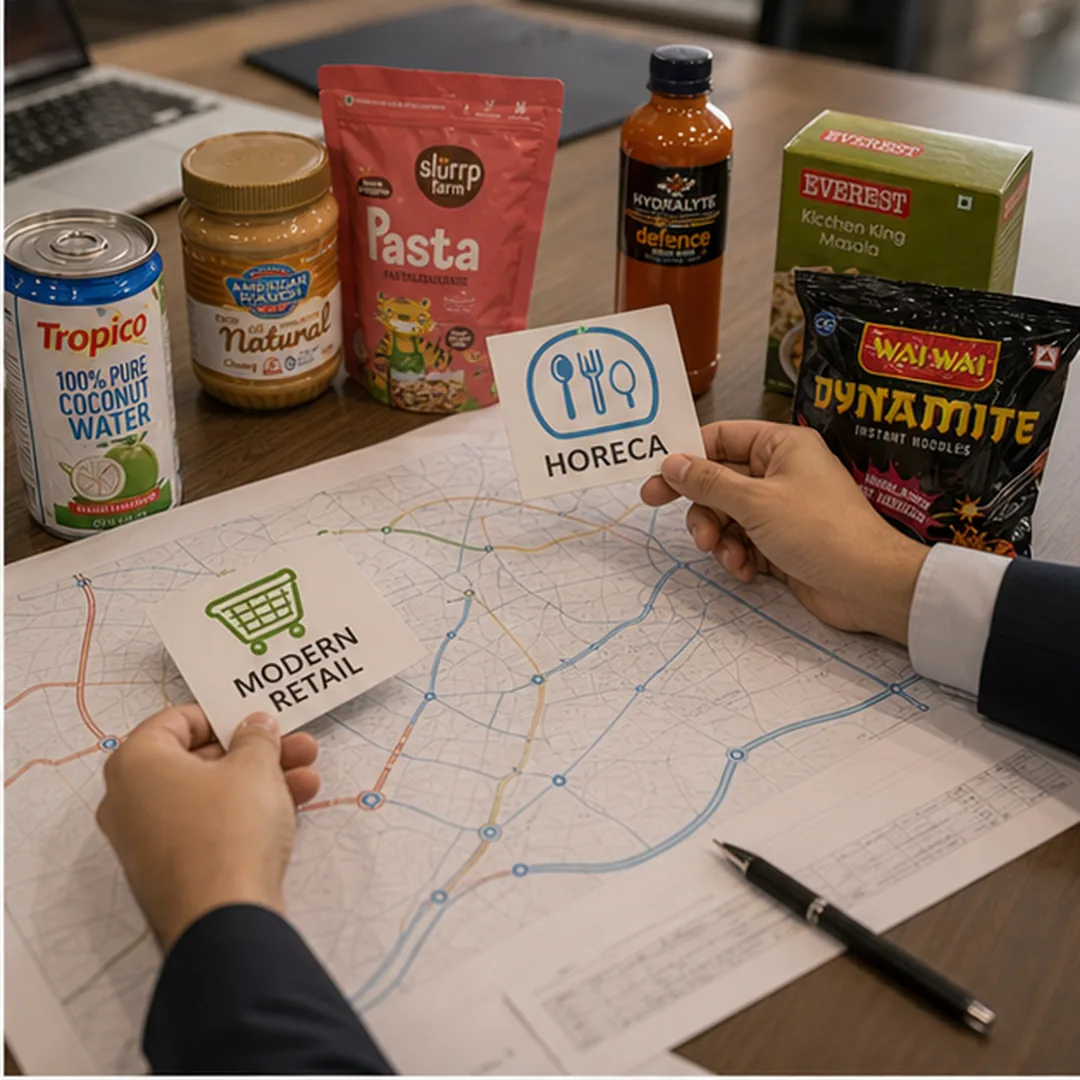
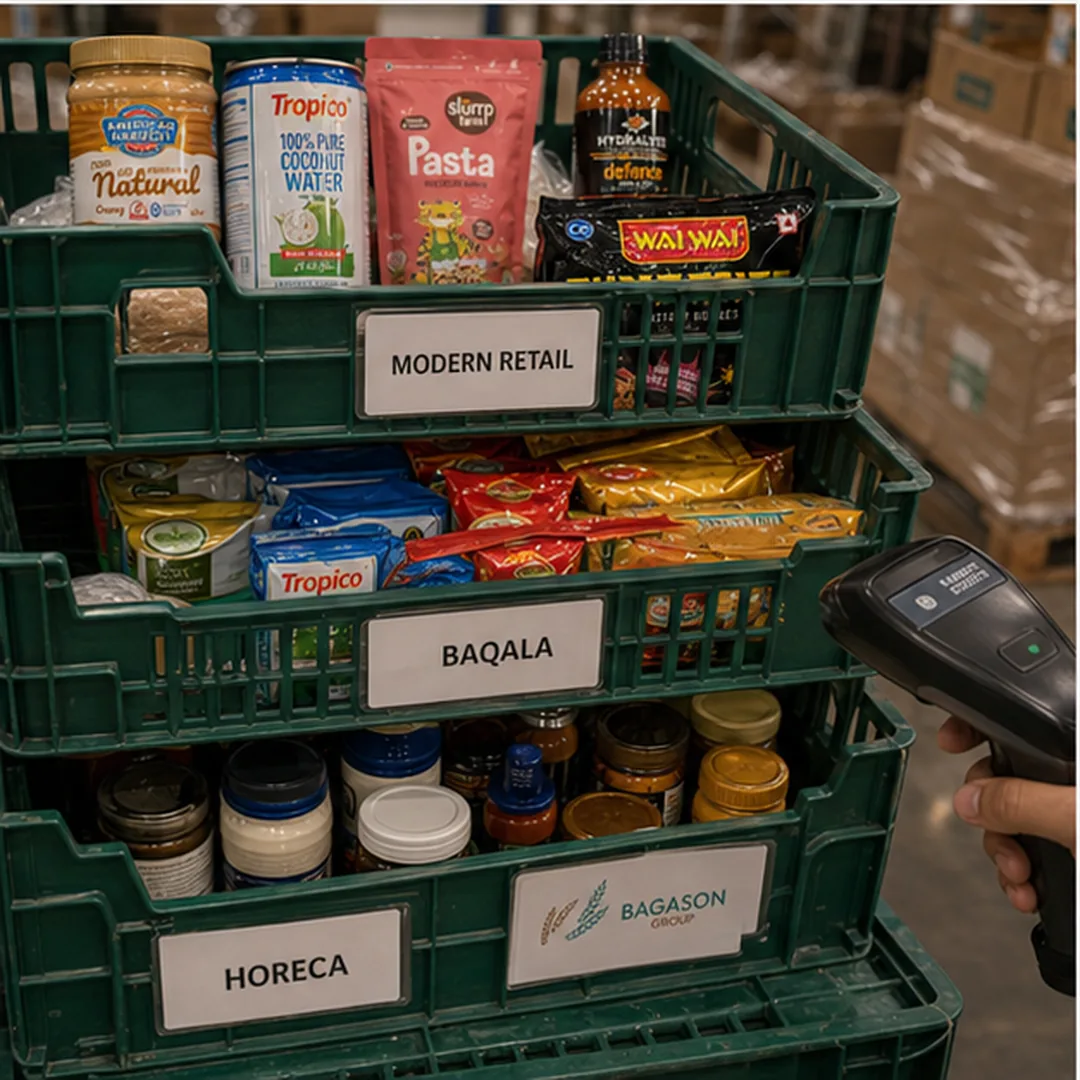
The UAE is not a single, uniform market. It is a layered set of channels, each with its own buying behaviour, margin structure and service expectations. Modern trade hypermarkets and supermarkets, traditional groceries and neighbourhood baqalas, HoReCa distribution and food service, and the fast-growing quick-commerce channel all require different approaches. A plan that wins in one channel can be entirely wrong for another, which is why a credible distribution strategy uae treats channel design as a deliberate choice rather than an afterthought.
Strategy versus logistics
It helps to separate two ideas that are often blurred together. Route-to-market strategy is the set of choices about where and how to compete, which channels to prioritise, what service model to run, how to price across the chain. Logistics is the machinery that executes those choices, the warehouses, fleet, field teams and systems. Both matter, but they fail in different ways. A brand can have flawless logistics behind a poor strategy and still lose, because it is serving the wrong channels brilliantly. Equally, a sound strategy collapses without the logistics to deliver it. The strongest plans design the two together, so the strategy is always grounded in what can actually be executed.
Why the UAE rewards getting it right
The UAE concentrates an unusual amount of retail diversity into a small, affluent and fast-moving market. Shoppers have abundant choice, switching costs are low, and a product that is hard to find is simply replaced by one that is not. That environment magnifies the consequences of route-to-market decisions: a strong plan compounds quickly because availability and visibility reinforce each other, while a weak one unravels just as fast as gaps on the shelf erode the trust the brand was trying to build. The upside of getting it right, and the cost of getting it wrong, are both larger here than in slower, more forgiving markets.
The channels that make up the UAE market
Modern trade offers scale and visibility but demands listing fees, promotional investment and the logistics discipline to keep large stores replenished. Traditional trade is fragmented across thousands of small outlets, rewarding frequent, reliable coverage and the ability to serve small, regular orders. Food service has its own rhythm built around chefs, caterers and operators who value consistency and dependable supply. Quick commerce, meanwhile, prizes speed and availability, punishing any brand that cannot keep stock flowing.
Serving all of these well requires %coverage that spans modern, traditional and food-service channels%, because a brand rarely succeeds by betting on a single channel. The right mix depends on the product, the target shopper and the brand's stage of growth, but the principle holds: each channel needs to be understood and served on its own terms, not treated as a uniform mass.
Choosing where to concentrate is as important as choosing where to be present. A premium imported line might earn its reputation in modern trade and food service before it ever makes sense in the dense traditional-trade network, while an everyday staple might depend on traditional trade and the baqala for the bulk of its volume from the outset. The product's price point, shelf life, pack format and the shopper it is built for all point toward a natural centre of gravity in the channel mix. Identifying that centre, and resisting the urge to chase every channel equally, keeps the early effort focused where it will actually pay back.
Modern trade
Modern trade, the hypermarkets and organised supermarket chains, offers a brand visibility, scale and a credibility halo that smaller outlets cannot match. Winning here means securing listings, investing in promotions and secondary displays, and meeting demanding replenishment and compliance standards. The cost of entry is high and the margin pressure real, but a strong presence in modern trade often underpins a brand's wider reputation. The discipline this channel demands, scheduled deliveries, high fill rates, accurate documentation, is unforgiving, and a brand that cannot meet it consistently risks delisting.
Traditional trade
Traditional trade, the dense network of independent groceries and neighbourhood baqalas, is where a huge share of everyday volume actually moves. This channel is fragmented and high-touch: success depends on frequent visits, reliable small-order fulfilment and the relationships that field teams build outlet by outlet. It is operationally demanding precisely because it cannot be served from a single big delivery; it needs a coverage model designed for many small, regular drops. Brands that crack traditional trade gain breadth and resilience that modern trade alone cannot provide.
Food service and HoReCa
Food service, spanning hotels, restaurants and caterers, runs on consistency and dependability. Operators build menus and guarantee covers around the products they can count on, so a missed delivery is not a minor gap but a genuine operational failure for the customer. This channel values reliable supply, appropriate pack formats and a supplier who understands the rhythm of a professional kitchen. The volumes can be substantial and the relationships sticky, but they are earned through dependability rather than promotion.
Serving food service well also means meeting it on its own commercial terms. Pack sizes designed for the consumer shelf are often wrong for a busy kitchen, which needs bulk or catering formats and predictable, scheduled delivery rather than promotional pulses. The buying conversation is with chefs and procurement managers who care about consistency, food safety and price stability, not shelf appeal. A brand that adapts its formats, service and account management to this rhythm can build a durable, high-volume business that is largely insulated from the promotional churn of retail, but it has to commit to the channel's standards rather than treating it as an extension of the supermarket plan.
Quick commerce
Quick commerce has reshaped expectations in the UAE, with shoppers accustomed to fast delivery from dark stores and app-based grocers. This channel prizes availability above almost everything: if a product is out of stock, the shopper simply selects an alternative within seconds, and the sale is lost without friction. Serving it well demands tight stock flow, accurate digital availability and the ability to replenish quickly. For many brands it is now an essential part of the mix rather than an experimental add-on.
Quick commerce also introduces a digital-shelf dimension that older channels do not have. Product listings, images, descriptions and search visibility within the app all influence whether a shopper finds and chooses a brand, so route-to-market in this channel extends beyond physical stock into how the product is represented online. A brand that keeps its dark-store inventory full but neglects its digital presence is only half-served, and a brand strong on both wins disproportionately in a channel where the shelf is a screen.
How the channels interact
The channels are not silos; they influence one another. A strong presence in modern trade lends credibility that makes traditional-trade outlets more willing to stock a brand. Visibility in quick commerce can drive trial that later shows up as repeat purchase in supermarkets. Conversely, inconsistent pricing or availability in one channel can undermine the brand's standing in another, as shoppers and retailers notice the gaps. Designing the channel mix means thinking about these interactions deliberately, so the channels reinforce rather than cannibalise each other, and the brand presents a coherent face wherever the shopper encounters it.
Choosing the right distribution model
One of the most consequential decisions in any go to market fmcg uae plan is who actually carries and moves the product. A brand can attempt to build its own distribution from scratch, which is slow and capital-intensive, or partner with an established distributor that already has warehousing, fleet, sales coverage and relationships with the trade. For most brands entering or scaling in the UAE, an experienced partner shortens the path to shelf dramatically.
The strength of a distributor lies in the breadth of %the end-to-end capabilities behind getting a brand to shelf% it can put behind a brand: importing and clearance, compliant warehousing and cold chain, listing and merchandising, last-mile logistics and the field teams that visit stores. A partner that can manage the whole journey removes the friction that otherwise traps a new brand in patchy, inconsistent availability.
Build, partner or hybrid
The choice is not strictly binary. Some brands run a hybrid model, using a distributor for the bulk of the trade while keeping a small in-house team focused on key accounts or a specific channel. Building entirely in-house can make sense for a brand with deep pockets and a long horizon, but it carries the full weight of recruiting field teams, securing warehousing and earning trade relationships from a standing start. For most, the speed, reach and de-risking that an established partner provides outweigh the appeal of full control, particularly in the critical early years when consistent availability matters most.
The hidden cost of building from scratch
The appeal of owning distribution is understandable, full control over execution and the customer relationship, but the costs are often underestimated. Building a credible field operation means hiring, training and retaining sales and merchandising teams who know the trade. Warehousing and a delivery fleet require capital and management attention that pull focus away from the product itself. And trade relationships, the trust that gets a brand listed and re-ordered, take years to earn and cannot be bought overnight. For a brand whose real advantage is its product, sinking that energy into building a distribution business from zero is frequently a poor use of scarce resources, especially when established infrastructure can be accessed through a partner.
Matching the model to the brand's stage
The right model shifts as a brand matures. An early-stage entrant usually benefits most from a partner that can deliver immediate reach and proven execution while the brand establishes demand. A larger, more established brand may justify a hybrid arrangement that keeps strategic accounts close while leaning on a partner for breadth. The key is to choose deliberately and revisit the choice as the brand grows, rather than defaulting to whatever was decided at launch long after the brand's needs have changed.
What to look for in a distribution partner
Not all distribution is equal, and choosing a partner is one of the highest-leverage decisions a brand will make. The right partner brings genuine coverage across the channels that matter to the brand, the warehousing and cold-chain infrastructure to handle the product correctly, and field teams with real relationships in the trade. Just as important is alignment: a partner whose portfolio and ambitions fit the brand will give it the attention it needs, rather than letting it sit unattended among hundreds of other lines.
It is worth examining a prospective partner's existing portfolio and infrastructure directly. The %the warehousing, cold-chain and logistics backbone% behind a distributor, its storage, temperature control and logistics reach, tells you whether it can actually sustain your product at scale. Likewise, looking at %the brands we already represent across the market% reveals whether the partner understands categories like yours and has the trade relationships to place them well. A distributor that already succeeds with comparable brands is far more likely to succeed with yours.
- Genuine multi-channel coverage matched to the brand's target shoppers.
- Compliant warehousing and cold-chain capacity for the product type.
- Field teams with established relationships across modern and traditional trade.
- Portfolio fit, so the brand receives real attention rather than neglect.
- Data and visibility systems that turn coverage into manageable insight.
Coverage, consistency and execution
A route-to-market plan only earns its keep through execution. The brands that win are not necessarily those with the most listings on day one; they are the ones whose products are consistently on shelf, correctly priced, well merchandised and never out of stock when a shopper reaches for them. Consistency compounds: reliable availability builds shopper trust, which lifts sell-through, which earns more shelf space and better promotional support over time.
This is why coverage frequency, fill rates and on-shelf availability are the metrics that genuinely matter, more than a headline count of stores entered. A narrow footprint served brilliantly will usually outperform a wide footprint served poorly. Getting this right is the difference between a brand that quietly grows and one that needs constant rescue.
The discipline of on-shelf availability
On-shelf availability is the quiet metric that decides most categories. A product that is listed but frequently absent from the shelf is, from the shopper's point of view, simply not available, and every empty facing is a sale handed to a competitor. Maintaining availability across a wide and varied store base is genuinely hard: it requires accurate forecasting, disciplined replenishment, field teams who actually fix gaps on their visits, and the data to see where availability is slipping before it costs a listing. Brands that obsess over this metric tend to grow; those that treat listings as the finish line tend to stall.
The role of the field team
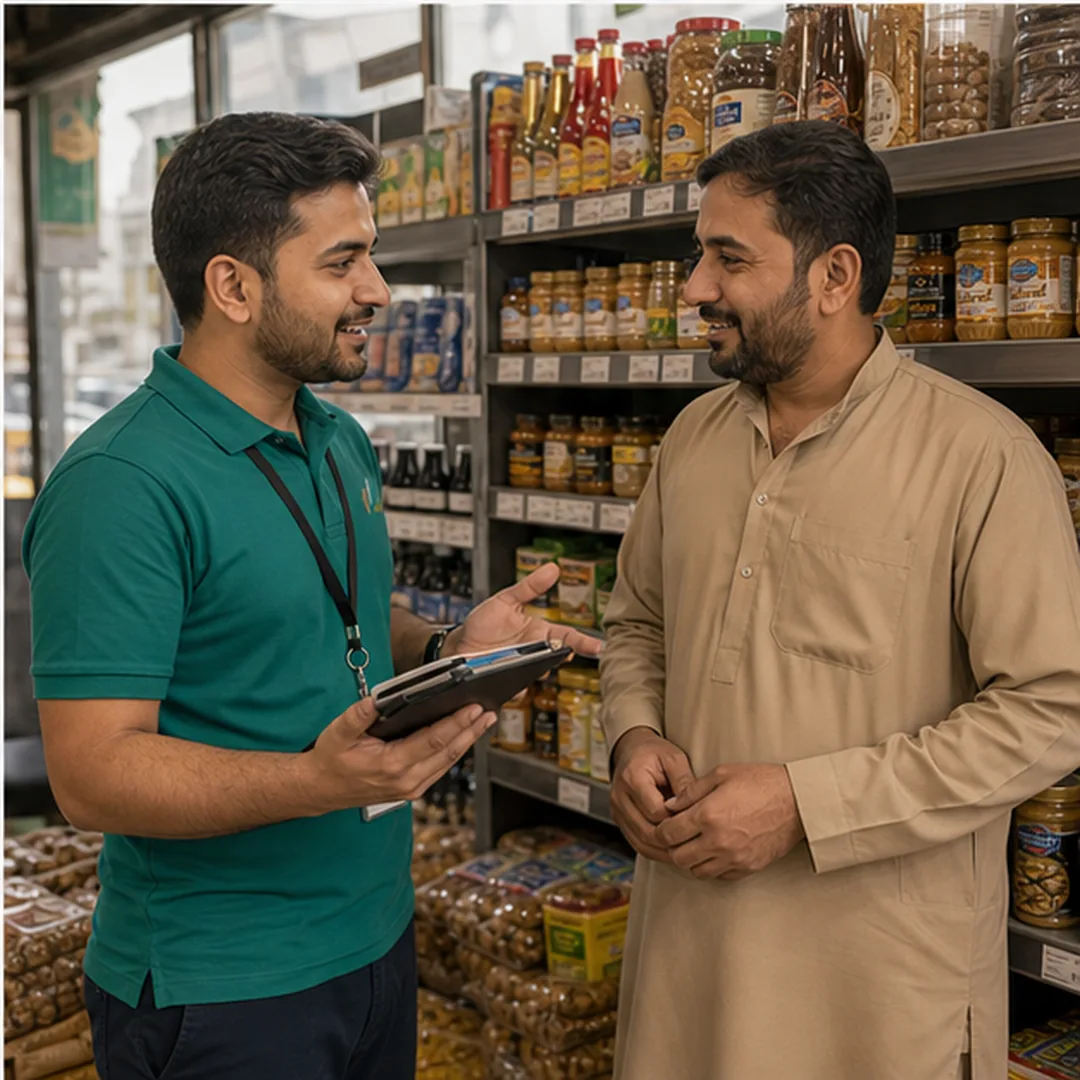
Behind every reliable shelf sits a field operation doing unglamorous, essential work. Merchandisers and salespeople who visit outlets on a dependable cycle are the ones who catch an empty facing, correct a pricing error, place a fresh order before stock runs out, and maintain the relationship that keeps a small grocer loyal to the brand. The quality and frequency of this coverage is often the real differentiator between two brands with identical products and similar listings. A distributor's field strength is therefore not a back-office detail; it is one of the most direct drivers of whether a brand's route-to-market actually works on the ground.
Why breadth without depth fails
It is tempting to measure progress by the number of outlets entered, but a wide footprint that cannot be properly serviced is a liability rather than an asset. Stores that are listed but rarely visited drift into empty shelves, stale stock and frustrated retailers, and a delisting from a neglected outlet is harder to reverse than a fresh entry. Disciplined brands grow their footprint at the pace their service model can actually sustain, ensuring depth of execution keeps up with breadth of distribution. Growth that outruns the ability to serve it is one of the most common ways an early success quietly turns into a stalled brand.
Pricing, margin and the economics of the chain
A route-to-market plan only holds together if the economics work for everyone in the chain. Each step, importer, distributor, retailer, takes a margin, and the final shelf price has to remain competitive while leaving the brand a viable return. Brands that set their landed cost and trade terms without modelling the full chain often discover too late that their product is either priced out of reach or generating no real profit by the time every party is paid.
This is where pricing architecture becomes a strategic exercise rather than an afterthought. Promotional investment, listing fees, slotting costs and the discounts that modern trade expects all have to be built into the plan from the start. A disciplined approach treats price, margin and channel choice as a single connected system: the channels a brand prioritises directly shape the margins available, and the margins available shape which channels are realistic. Getting this arithmetic right protects the brand from the slow erosion that quietly undermines many launches that looked healthy on paper.
Working backwards from the shelf
A practical way to keep the economics honest is to work backwards from the target shelf price rather than forwards from cost. Start with what the shopper will reasonably pay in each priority channel, subtract the retailer's expected margin, then the distributor's, then the cost of promotions and trade investment, and see what landed cost the brand can actually afford. If the numbers do not leave a viable return, the answer is rarely to squeeze every partner; it is usually to rethink the channel mix, the pack architecture or the positioning. This backwards discipline catches unworkable plans before any stock ships.
Pricing consistency across channels
Because the same shopper moves between channels, wild price differences between, say, a hypermarket and a quick-commerce app create confusion and erode trust. Maintaining sensible price coherence across channels, while still respecting each channel's distinct cost structure, is a delicate but important balance. Pack architecture helps here: offering different formats or sizes suited to each channel lets a brand serve different price points without the same item appearing at clashing prices in two places. Thinking this through in advance prevents the channel conflict that can sour relationships with retailers and undermine the brand's perceived value.
Data and visibility drive better decisions
Modern route-to-market is increasingly a data exercise. Knowing which outlets are ordering, which are slipping, where stock is sitting and how sell-through varies by channel turns coverage from guesswork into management. Visibility across orders, deliveries and on-shelf availability lets a brand and its partner spot a developing gap before it becomes a lost listing, redirect stock to where it actually moves, and reward the outlets that perform. Without this feedback loop, even a well-designed plan drifts, because nobody can see clearly enough to correct it.
Common route-to-market mistakes
Several recurring errors trip up brands entering or scaling in the UAE. The most common is chasing breadth too early, securing listings across far more outlets than the brand can actually keep stocked and serviced, which produces a wide footprint riddled with empty shelves. Another is treating all channels the same, applying a modern-trade playbook to traditional trade or quick commerce where it simply does not fit. A third is under-investing in the field operation, assuming that a listing once won will look after itself.
Brands also frequently misjudge the economics, setting prices without modelling the full chain and discovering thin or negative margins once every party is paid. And many neglect data entirely, running on intuition long after the operation has grown too complex to manage by feel. Each of these mistakes is avoidable with deliberate planning, and most stem from treating route-to-market as an afterthought rather than the strategic core it actually is. Many of these questions come up repeatedly, which is why it is worth reviewing %common questions about distribution in the UAE% before committing to an approach.
Compliance, listing and getting to shelf
Before a product can sell, it has to be allowed onto the shelf, and in the UAE that means clearing import, labelling and food-safety requirements and then earning a listing with each retailer. Compliance is not a formality to rush; errors in documentation, labelling or registration can hold stock at the border or stall a listing entirely, costing weeks at exactly the moment momentum matters. An experienced distribution partner adds real value here, because it has navigated these processes repeatedly and knows how to keep a product moving rather than stuck.
Listing itself is a commercial negotiation as much as an administrative one. Retailers weigh the strength of the brand, the support behind it and the space it will compete for against existing lines. A credible route-to-market plan, backed by a partner the retailer trusts, makes that conversation far easier, because the retailer can see the brand will be properly serviced rather than listed and then neglected. Getting onto the shelf and staying there are two distinct challenges, and both depend on the strength of the route-to-market foundation behind the product.
Logistics and the cold chain
For many food categories, the integrity of the supply chain is inseparable from the brand's reputation. Temperature-sensitive products demand a cold chain that holds from import through storage to last-mile delivery, and any break risks both quality and compliance. The logistics backbone, warehousing capacity, fleet, and the systems that coordinate them, determines whether a brand can scale without service slipping. This is rarely visible to the shopper, but it is the unglamorous foundation on which consistent availability ultimately rests, and it is a major reason brands lean on partners with proven infrastructure rather than improvising their own.
Planning route-to-market before you launch
The best time to design route-to-market is before launch, not after the first signs of trouble. That means deciding which channels to prioritise, choosing the distribution model, aligning pricing and margins across the chain, and ensuring the supply side can sustain the demand the brand hopes to create. A market entry uae plan built on these foundations is far more resilient than one assembled reactively.
It also means being realistic about phasing. Few brands can credibly serve every channel from day one, and trying to do so usually spreads resources too thin. A stronger approach often sequences the rollout, establishing a beachhead in the channels best suited to the product, proving consistent availability and sell-through there, then expanding from a position of strength. This phased discipline keeps the operation manageable and builds the track record that opens doors in the more demanding channels later.
Aligning supply with the demand you hope to create
One of the most overlooked aspects of pre-launch planning is making sure the supply side can actually sustain a successful launch. A brand that markets aggressively, wins listings and stimulates trial, only to run out of stock in the first weeks, can squander its best opportunity and teach both shoppers and retailers that it cannot be relied upon. The demand a launch hopes to create has to be matched by stock, warehousing and a replenishment cadence capable of feeding it. Modelling that supply requirement honestly, and securing the capacity before the first order ships, protects the launch from the cruel irony of failing because it succeeded too quickly.
Reviewing and adapting the plan
Route-to-market is not a document filed away after launch; it is a living plan that should be reviewed as the market responds. The channels that perform, the outlets that order, the price points that hold, all generate signals that should feed back into the strategy. A brand that treats its initial plan as fixed will gradually drift out of step with reality, while one that reviews performance regularly can reallocate effort toward what is working and quietly retire what is not. This habit of structured review and adjustment is what turns a sound launch plan into a durable, scaling business over the years that follow.
Ultimately, route-to-market strategy decides whether a brand succeeds because it governs the one thing no amount of marketing can substitute for: being available, reliably and profitably, wherever the shopper chooses to buy. Brands that take it seriously from the outset give themselves the best possible chance to scale. If you are weighing up how to enter or grow in the market, it is worth taking time to %explore how a partnership could work for your brand% before the first order ships.
Frequently Asked Questions
What is route-to-market strategy in simple terms?
It is the plan for how your product travels from import to shopper, profitably and repeatedly. It covers which channels you sell into, the distribution model you use, the warehousing and logistics behind it, and the store coverage and merchandising that keep the product available. In short, it is the operational backbone that turns demand into actual, repeatable sales.
Should I build my own distribution or use a partner?
Building your own distribution is slow and capital-intensive because it means creating warehousing, fleet, sales coverage and trade relationships from scratch. For most brands entering or scaling in the UAE, partnering with an established distributor shortens the path to shelf considerably. Some brands run a hybrid model, using a partner for the bulk of the trade while keeping a small in-house team on key accounts.
Why isn't one channel enough for the UAE?
The UAE is a layered market of distinct channels, modern trade, traditional groceries, food service and quick commerce, each with different buying behaviour, margins and service needs. Most brands need a deliberate channel mix rather than a single bet, because what wins in one channel can fail in another. The right mix depends on the product, the target shopper and the brand's stage of growth.
Which metrics show that route-to-market is working?
On-shelf availability, fill rates and coverage frequency matter more than a raw count of stores entered. Consistent availability builds shopper trust and sell-through, which in turn earns more shelf space and promotional support over time. A narrow footprint served brilliantly usually outperforms a wide footprint served poorly.
How do I choose the right distribution partner?
Look for genuine coverage across the channels that matter to your brand, compliant warehousing and cold-chain infrastructure for your product type, and field teams with real trade relationships. Portfolio fit is equally important, a partner whose existing brands are similar to yours will understand the category and give your product proper attention rather than letting it sit unattended.
What is on-shelf availability and why does it matter so much?
On-shelf availability is the share of time a product is actually present and findable on the shelf where shoppers expect it. It matters because a listed but absent product is, to the shopper, simply unavailable, and every empty facing hands a sale to a competitor. Maintaining it across a wide store base requires forecasting, disciplined replenishment and field teams who fix gaps on their visits.
How does pricing fit into route-to-market?
Pricing and route-to-market are inseparable, because every step in the chain takes a margin and the final shelf price must stay competitive while leaving the brand a viable return. A disciplined approach works backwards from the target shelf price, accounting for retailer and distributor margins plus promotions and trade investment, to confirm the landed cost is actually affordable before any stock ships.
What are the most common route-to-market mistakes?
Chasing breadth too early and leaving shelves empty, treating every channel the same, under-investing in the field operation, misjudging the chain economics, and neglecting data are the recurring errors. Most stem from treating route-to-market as an afterthought rather than the strategic core of the business, and nearly all are avoidable with deliberate planning before launch.
When should I plan my route-to-market strategy?
Before launch, not after problems appear. Designing it early means choosing priority channels, selecting a distribution model, aligning pricing across the chain and ensuring supply can sustain demand. It also helps to phase the rollout, proving consistent availability in the best-suited channels first, then expanding from a position of strength rather than spreading thin from day one.
How does quick commerce change the route-to-market equation?
Quick commerce raises the stakes on availability, because shoppers replace an out-of-stock item with an alternative in seconds and the sale is lost without friction. Serving it well demands tight stock flow, accurate digital availability and rapid replenishment. For many brands it has moved from an experimental add-on to an essential part of the channel mix.