If you search for the top food supply companies in UAE, you will find dozens of names, a handful of directories, and little that actually explains what each company does. Some are general trading houses that move thousands of grocery lines through cash and carry channels. Others focus on hotels and restaurants. A few manufacture what they distribute, and one or two build their own brands alongside the ones they carry. This piece is a category-organised look at the companies that make up UAE food supply, built from each company's own public materials rather than a ranking of who is "best."
We work inside this market every day, moving product from Jebel Ali warehouses onto vans and into modern trade stores across all seven emirates, so we know how varied the term "food supplier" is. A HORECA distributor and a baqala wholesaler are both food suppliers, but they solve different problems for different buyers. Knowing the difference matters more than knowing a name.
Below, you will find a list of food suppliers in UAE grouped by the kind of buyer they mostly serve, followed by a section on how to shortlist one for your own business. Bagason is included in the mix, described only from our own operational facts, alongside independently verified profiles of the others.
What Counts as a Food Supply Company in the UAE?
Before naming names, it helps to define the category. A food supply company in the UAE typically does at least one of three things: it imports and distributes finished food and beverage products on behalf of brand owners, it manufactures products and distributes them directly, or it operates a wholesale or cash-and-carry channel that other businesses buy from. Many of the companies on this list do more than one of these at once.
The UAE's position as a re-export and import hub, combined with strict product registration and labelling rules from bodies like Dubai Municipality and the Emirates Authority for Standardisation and Metrology, means most food supply companies also handle customs clearance, Arabic labelling, and warehousing under controlled conditions. That is a lot of infrastructure sitting behind what looks, from the retail shelf, like a simple delivery.
What should a list like this tell you, then? Not who ranks highest, since no independent, verifiable ranking of UAE food distributors exists. It should tell you what each company is built to do, which channels it reaches, and how it positions itself publicly. That is the structure we have followed here.
One more note before the list itself: the UAE's food import volume runs through a small number of ports and free zones, chiefly Jebel Ali, which means most of the companies below share overlapping infrastructure even when they compete for the same shelf space. A container might clear customs at the same port for three different distributors on the same afternoon. What separates them afterward is what they do with the product once it leaves the bonded warehouse, not how it entered the country.
Who Buys From a UAE Food Supply Company?
Before the list itself, it helps to name the buyers behind it, since the phrase "food supply company" means something different depending on who is asking. A brand owner based outside the country, searching for the top food supply companies in UAE, is usually looking for a partner to register, warehouse, and sell their product locally. Retailers, on the other hand, mostly care about reliable delivery windows and category depth. Restaurant groups want something else again: consistent quality on chilled and frozen lines that arrive daily, not weekly.
Government and semi-government buyers, schools, and catering contractors form a fourth group, often procuring through tender rather than open-market pricing. Each of these buyer types tends to gravitate toward a different category on this list: brand owners toward general trading and combined marketing-distribution groups, retailers toward the same plus fresh produce specialists, and foodservice operators toward the HORECA-focused names. Recognising which buyer you are before you start comparing companies saves a fair amount of wasted outreach.
Full-Service General Trading and FMCG Distribution Groups
This category covers companies built around broad portfolios of grocery and household brands, sold across supermarkets, hypermarkets, and traditional trade. They tend to run their own warehousing and delivery fleets and often operate retail arms alongside distribution.
Scale in this category is usually measured in brand count and warehousing footprint rather than a single headline figure, since the groups involved rarely publish revenue. What is publicly visible is how many countries a group's brands come from, how many storage locations it runs, and which retail chains carry its products. Those three data points tend to tell a buyer more than a company's own marketing copy does.
Al Maya Group
Al Maya Group is a Dubai-based conglomerate founded in 1982, with distribution as one of its core business lines alongside supermarkets, lifestyle retail, and franchising. Its distribution arm, Al Maya Trading, operates from over a million square feet of warehousing and supplies retailers and supermarket chains across the UAE and the wider GCC. According to the company, it has introduced more than 50 international food brands to the region over the years, and its network extends into Oman, Bahrain, Kuwait, and Qatar. The group also runs its own supermarket chain, which gives it visibility into both the supply side and the shelf side of the business.
Al Seer Group
Al Seer Group traces its roots to 1961 and has grown into one of the FMCG distributors serving both the UAE and Oman. Its portfolio spans well over 100 brands, and the group's divisions cover retail, pharmacy, and out-of-home channels rather than groceries alone. Al Seer operates multiple warehouse locations across the two countries and runs a large delivery fleet to support retail, pharmacy, and foodservice accounts. The group has also been developing newer logistics infrastructure through partnerships aimed at modernising food distribution facilities in the UAE.
Foodservice and HORECA-Focused Distributors
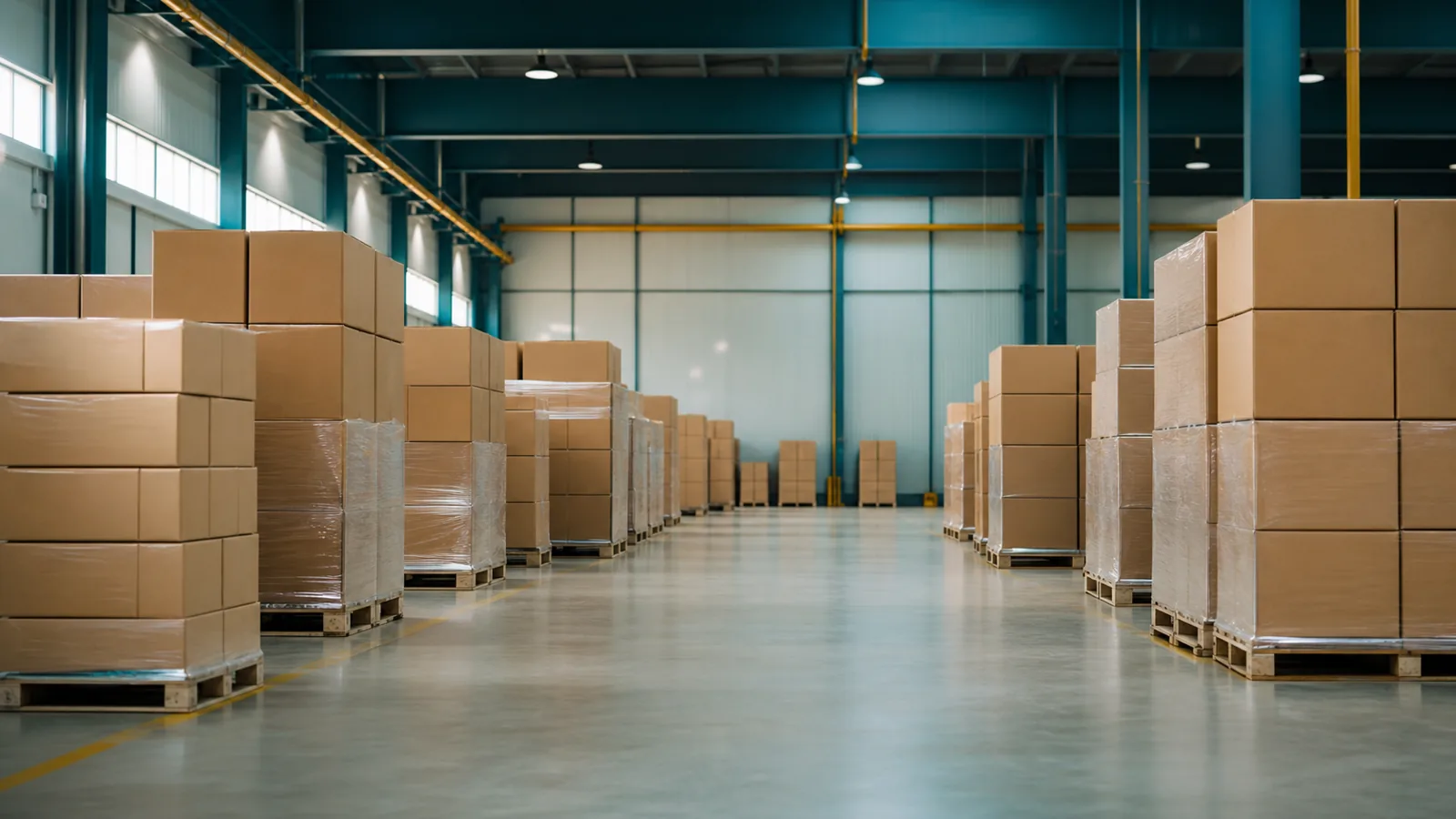
Not every food supply company sells into supermarkets. A separate group of distributors builds its business almost entirely around hotels, restaurants, catering companies, and cloud kitchens, known collectively in the trade as HORECA. These companies tend to carry deep ambient, chilled, and frozen ranges built for professional kitchens rather than home shoppers.
Order patterns in this category look different too. A supermarket reorders on a set schedule tied to shelf capacity, while a restaurant kitchen orders around a menu that can change with the season or a special event. Distributors serving HORECA accounts tend to build shorter delivery windows and smaller minimum order sizes into their model to match that unpredictability.
SAFCO International
SAFCO International General Trading, founded in Dubai in 1994, positions itself as a foodservice distributor, importer, and exporter with a portfolio built around the HORECA channel. The company lists over 25,000 products across roughly 250 distributed brands plus its own in-house labels, and describes an export footprint reaching more than 70 countries. In 2023, Silal, an Abu Dhabi food and agriculture investment platform, acquired a majority stake in SAFCO, a move the companies described as extending Silal's reach across the food value chain.
Bidfood UAE
Bidfood UAE began life as Horeca Trade, established in 2003 by founder Hisham Aljamil to serve foodservice operators directly. In 2005, the business joined Bidcorp, a global foodservice distribution group, and now operates across four Gulf markets: Saudi Arabia, the UAE, Oman, and Bahrain. The company runs multiple distribution centres and demo studios across the region and, according to its own materials, serves thousands of foodservice customers including hotels, restaurants, cafes, quick-service chains, and cloud kitchens. Bidfood also built one of the region's earlier e-distribution ordering platforms for its foodservice customers.
Dairy, Beverage and Manufacturing-Led Distribution
A smaller group of companies distributes what it makes rather than sourcing finished goods from brand owners overseas. These manufacturer-distributors tend to concentrate on categories like dairy, juice, water, and bakery, where local production and cold-chain distribution are closely linked.
National Food Products Company (NFPC)
NFPC traces back to 1971, when its Milco dairy operation began production in Abu Dhabi. The group has since built a portfolio that includes Lacnor, Oasis, and Royal Bakers, alongside a joint dairy venture with the Danish-Swedish cooperative Arla. NFPC runs manufacturing facilities in Abu Dhabi's Khalifa Industrial Zone and describes exports reaching more than 40 countries across the Middle East, Africa, and parts of Asia. Because it manufactures the categories it distributes, NFPC sits closer to the production end of the food supply chain than the trading houses above it on this list.
Fresh Produce and Farm-Supply Distributors
Fresh fruit, vegetables, and increasingly proteins form their own distribution category, separate from packaged grocery. These companies run cold-chain logistics built around rapid daily turnaround rather than the weeks-long shelf life of ambient FMCG, and several have built direct-to-consumer arms alongside their business-to-business supply.
Kibsons International
Kibsons has operated in the UAE fresh food trade since 1980, building a business around fruit, vegetables, meat, and poultry sourced from multiple continents by air, sea, and land. According to the company, its network includes more than 600 suppliers and customers, supported by cold-store facilities, a meat-processing operation, and a refrigerated delivery fleet. Kibsons serves both business accounts and home shoppers through home delivery across the UAE, which places it across both the B2B supply chain and the direct-to-consumer grocery space at once.
Barakat Group
Barakat began trading fresh fruit and vegetables in 1976 and has since split into two arms: Barakat Vegetables & Fruits, which supplies whole fresh produce, and Barakat Quality Plus, which handles juices, cut produce, salads, and prepared items. The company sources from more than 50 countries and operates six refrigerated facilities alongside a fleet of roughly 350 refrigerated vehicles. Barakat's customer base includes hotels, supermarket chains, and airline catering operations, and its reach extends beyond the UAE into Saudi Arabia, Oman, Kuwait, and the Maldives. A consumer-facing delivery platform, launched in 2018, runs alongside its wholesale supply business.
Import, Wholesale and Specialty Trading Houses
A further category of UAE food supply companies grew out of import and wholesale trading rather than retail or foodservice distribution specifically. These businesses often carry a wide spread of categories, from ambient groceries to specialty and licensed beverages, and export as much as they distribute domestically.
Truebell Marketing & Trading
Truebell Marketing & Trading, based in Sharjah, describes itself as operating since the early 1980s as an importer, wholesaler, distributor, and exporter. The company's stated warehousing capacity exceeds 400,000 square feet across frozen, chilled, and ambient storage, and its activities extend into ship supplies, hospitality, and specialty beverage distribution alongside core grocery trading. Truebell also describes an export reach into the wider MENA region and Indian Ocean island markets, which places it among the more diversified trading houses on this list rather than a single-channel distributor.

Brand-Building Distributors With Their Own House of Brands
The last category looks different from the others. Instead of only carrying other companies' brands, some UAE food supply companies also build and market their own, running marketing, sales, and distribution together under one roof. This is where Bagason sits.
Bagason Group
Bagason is a Dubai-based FMCG distributor and marketer founded in 2007, structured around three connected pillars: marketing, sales, and distribution. Marketing covers in-store activations, sampling, point-of-sale support, and e-commerce content and listings. Sales runs through a field team of more than 55 people covering over 35,000 outlets across modern trade, traditional trade, and HORECA. Distribution is where customs clearance, product registration with bodies like Dubai Municipality, Arabic-label compliance, HACCP-standard warehousing across roughly 6,000 pallet positions, and last-mile delivery through a GPS-tracked fleet of more than 30 vehicles all come together.
The company runs both owned brands, including American Harvest, India Mills, Desi Treat, Tropico, Nutrizain, Promolac, and V-Min, and distributed partner brands such as Everest, Bikaji, Wai Wai, Girnar, Hydralyte, Slurrp Farm, Bharat, Cibo di Italia, Kokozo, Mille, and Prome. Across roughly 700 SKUs and around 17 brands sourced from about 16 countries, Bagason reaches all seven emirates from its Dubai hub and exports into Saudi Arabia, Oman, Kuwait, Bahrain, and Qatar. Channels include modern trade accounts like LuLu, Carrefour, Nesto, and Choithrams, traditional trade through more than 30,000 baqalas served by van sales, HORECA accounts, and e-commerce and quick-commerce platforms such as Amazon.ae, Noon, and Talabat. What sets this model apart from a pure distributor is that the marketing and sales functions sit inside the same organisation as the trucks and the warehouse, so a listing decision, a promotional plan, and a delivery schedule can be coordinated by one team instead of three separate vendors.
List of Food Suppliers in UAE, Grouped by Focus
Here is a quick summary of the same companies, organised by the buyer they serve most:
- Modern trade and general grocery: Al Maya Group, Al Seer Group
- Foodservice, hotels and restaurants (HORECA): SAFCO International, Bidfood UAE
- Dairy, beverage and manufactured goods: National Food Products Company (NFPC)
- Fresh produce and cold-chain supply: Kibsons International, Barakat Group
- Wholesale, import and specialty trading: Truebell Marketing & Trading
- Combined brand marketing, sales and distribution: Bagason Group
In practice, several of the best food supply companies in UAE straddle more than one of these categories at once. Al Maya runs both distribution and retail, for instance, while Bidfood stays a pure foodservice specialist. The category a company sits in tells you more about who it is built to serve than any single label could.
Why Location Inside the UAE Still Matters
Buyers often assume location barely matters once a company is licensed nationally. It does, at least at the margins. The food supply companies Dubai buyers deal with day to day are not quite interchangeable with those based in Abu Dhabi or Sharjah, even though all three emirates sit within an hour or two of each other by road. Warehousing tends to cluster around Jebel Ali and the wider Dubai logistics corridor because of proximity to the port and to Al Maktoum Airport, which shortens the path from container yard to shelf.
That said, several companies on this list, including NFPC and Truebell, are headquartered or manufacture outside Dubai and still distribute nationally. Location affects lead time and freight cost more than it affects category range. A Sharjah-based wholesaler can serve a Dubai retailer just as reliably as a Dubai-based one, provided the delivery network reaches that far, which most on this list do.
Fresh produce and cold-chain suppliers feel this more sharply than packaged grocery does. A truck moving chilled vegetables from a farm-supply hub to a hotel kitchen has far less room for delay than a pallet of ambient snacks heading to a supermarket backroom. That is one reason companies like Barakat and Kibsons run their own refrigerated fleets rather than outsourcing the last leg of delivery. For buyers comparing Dubai-based food supply companies against those elsewhere in the country, the real question is turnaround time for the specific category you need, not the address on the company's trade licence.
How to Shortlist a Food Supply Company for Your Business
How do you put a list like this to use? Start by matching the category above to your own channel mix, then narrow from there using a short set of practical questions.
Match the category to your channel
A restaurant group buying frozen and chilled proteins in bulk needs a HORECA specialist, not a modern-trade distributor built around packaged grocery. A new brand trying to get onto supermarket shelves needs a company with existing key-account relationships at the retailers it wants to enter, not just warehouse space. Match the company type to the channel you sell through, since that single filter removes most of the options on any list before you even look at pricing.
Ask about registration and compliance support
Any product new to the UAE market needs registration with the relevant authority, Arabic labelling, and often halal documentation depending on the category. A supplier or distributor that handles this in-house saves weeks compared to one that expects the brand owner to sort it out separately. Ask directly how many product registrations the company processes in a typical month and who owns the paperwork if something is rejected.
It also helps to ask what happens when a registration stalls partway through, since delays are common and rarely explained clearly in advance. A distributor that tracks its own registration pipeline can usually tell you within a day or two where a specific product sits in the process. One that outsources this step to a third party often cannot, and that gap tends to surface only after a brand has already committed shelf space or a launch date around it.
Check the actual channel reach, not just the brand list
A long brand portfolio does not automatically mean broad channel reach. Ask how many outlets the company services directly, whether that includes traditional trade and van sales or only modern trade key accounts, and whether HORECA and e-commerce are handled by the same team or outsourced. Consider this:
- Does the distributor own its delivery fleet, or does it subcontract last-mile logistics?
- Can it show real outlet counts across modern trade, traditional trade, and HORECA, not just brand names?
- Does it operate temperature-controlled warehousing suited to your product category?
- Is there a single point of contact for sales, marketing, and delivery, or are those three separate vendors?
Compare pricing structures, not just headline rates
Two distributors quoting similar per-unit prices can end up costing noticeably different amounts once minimum order quantities, delivery frequency charges, and listing or slotting fees are added. Ask for the full fee schedule up front, including any charges tied to promotional support or category management, and compare total landed cost per outlet rather than the first number on the quote sheet.
Consider export needs if you sell beyond the UAE
If your business plans to reach Saudi Arabia, Oman, Kuwait, Bahrain, or Qatar, check whether a prospective partner already has distribution infrastructure in those markets or whether you would need a separate agreement per country. Several companies on this list, including Al Maya, Al Seer, Bidfood, SAFCO, and Bagason, already operate across more than one GCC market, which can save a brand owner from negotiating five separate regional contracts.
Talk to more than one company before deciding
Here is the thing: pricing, minimum order quantities, and service levels vary enormously between these companies, even within the same category. Speak with at least two or three before committing to a supply agreement, and ask each one for references from brands or retailers similar in size to your own business.
How We Put This List Together
Every company profile above draws only on that company's own published materials: its website, its official social channels, and public announcements about ownership or partnerships. We did not use market-research databases, analyst estimates, or third-party ranking sites to describe any company's position, since those figures are frequently outdated or based on modelling rather than disclosed facts. Where a figure looked like an estimate rather than a company-published number, we left it out rather than repeat it as fact.
Where Bagason Fits Into This List
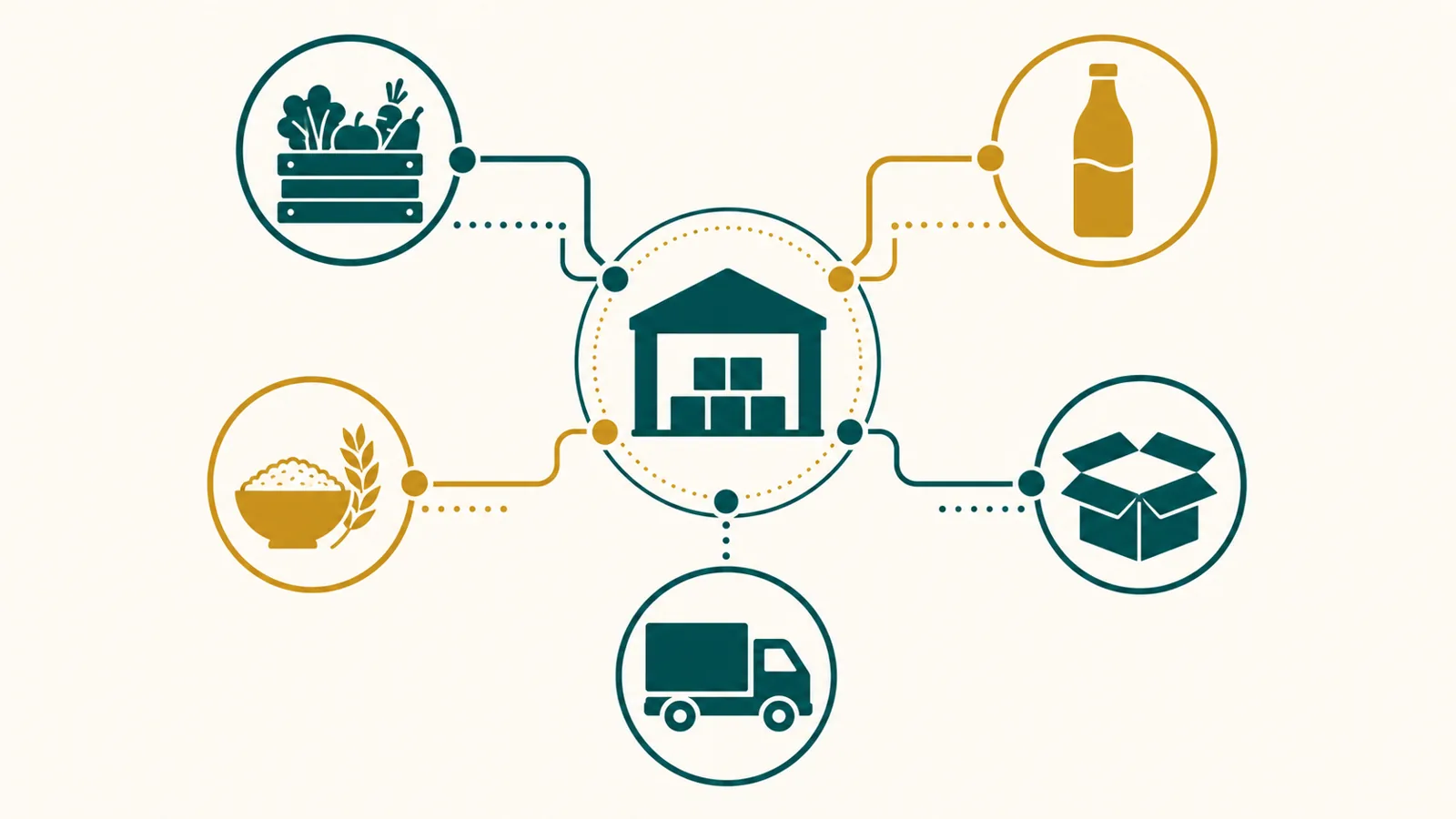
We are not going to claim Bagason belongs among the "top food supply companies in UAE" in some ranked sense, because no honest distributor can make that claim about itself, and no independent body verifies it either. What we can say is where we fit: a Dubai-founded distributor that combines its own owned brands with partner brands under one sales, marketing, and logistics team, reaching modern trade, traditional trade, HORECA, and e-commerce from a single Dubai hub with GCC export capability.
If your brand needs a distributor that also runs in-store activation and e-commerce listing work, rather than only warehousing and delivery, that combined structure may be worth a conversation. If you mainly need pure wholesale volume with no marketing support, one of the general trading groups above might be a closer fit. Either way, understanding what each company does day to day gets you further than any ranking would.
Key Takeaways
- UAE food supply companies fall into a handful of recognisable categories: general trading and modern-trade distribution, HORECA-focused foodservice distribution, manufacturer-led distribution, wholesale and import trading houses, and combined brand-marketing distributors.
- Al Maya Group and Al Seer Group represent the broad, multi-channel general trading model, each running its own warehousing and delivery infrastructure.
- SAFCO International and Bidfood UAE concentrate on hotels, restaurants, and catering rather than retail shelves.
- NFPC manufactures the dairy, juice, and bakery categories it distributes, which sets it apart from pure trading houses.
- Truebell Marketing & Trading built its business on import, wholesale, and export across a wide category range.
- Bagason combines owned and distributed brands with marketing, sales, and distribution inside one team.
- No independent, verifiable ranking of "best" food distributors exists. Match the company type to your channel, then verify compliance support and real outlet reach before signing anything.
The UAE's food supply landscape is wide enough that most brands and buyers will need more than one partner across their category range. Start with the categories above, narrow using the shortlist questions, and talk to a few companies directly rather than relying on any single list, including this one. If you want to walk through where Bagason's model fits your brand or your buying needs, talk to our team, or browse more distribution context on our blog.
Frequently asked questions
What is the biggest food supply company in the UAE?
There is no independently verified ranking that names a single largest food supply company in the UAE, since companies do not publish comparable, audited figures. What can be compared are public facts such as warehousing footprint, brand count, and the channels a company serves, which is why this list is organised by category rather than by size.
How do I find a list of food suppliers in UAE for my product category?
Start by identifying which channel you need: modern trade, traditional trade, HORECA, or fresh produce, since most companies specialise rather than covering everything equally well. From there, shortlist two or three companies from the matching category above and ask each one directly about registration support, delivery reach, and pricing structure before comparing further.
What is the difference between a food distributor and a food supplier in the UAE?
In practice, the terms overlap. "Distributor" usually implies a company that carries other brands' finished products to market, while "supplier" can also cover manufacturers and wholesalers selling their own goods. Most companies on this list do some combination of importing, warehousing, and delivering, regardless of which label they use publicly.
Do UAE food supply companies handle product registration and Arabic labelling?
Many do, though the level of in-house support varies by company. Any packaged food product sold in the UAE needs registration with the relevant authority and Arabic-language labelling before it reaches a shelf. Ask a prospective distributor directly whether they manage this process internally or expect the brand owner to arrange it separately.
Can one company cover both modern trade and HORECA distribution?
Some can, though most UAE food supply companies lean toward one side or the other because the two channels need different warehousing, delivery schedules, and account management. A handful of larger groups run separate divisions for each channel rather than treating them as a single operation.
How often should this kind of company list be updated?
Company positioning, ownership, and partnerships in UAE food distribution change periodically, so a list like this reflects a point in time rather than a permanent status. Always confirm current details directly with a company before entering into a supply agreement, since public materials can lag behind recent changes.