The UAE is one of the most attractive food markets in the region: affluent, diverse, retail-rich and remarkably open to new products from around the world. From premium imported pantry staples to functional beverages and ethnic specialities, shelves across the seven emirates carry an assortment that few markets of comparable size can match. That openness is exactly why so many founders and overseas producers set their sights on the UAE first when they plan a brand launch in the GCC. But to launch a food brand in the UAE successfully takes far more than a good product and an import licence. Plenty of promising brands stall in their first year, not because the product was weak, but because the distribution plan was improvised rather than designed.
This guide sets out a sensible, sequenced approach to getting a new brand from its first shipment to sustained shelf presence. It is written for the brand owner who has a product they believe in and now has to answer the harder question: how does it actually reach the shopper, profitably and at scale? Each step builds on the last, and the running theme is that a new product launch in FMCG is a system, not a single event. Compliance, positioning, partner selection, route to market, listings, in-store execution and measurement are not separate projects to be tackled by different people in isolation. They are links in one chain, and the chain is only as strong as its weakest link.
Treat what follows as a roadmap rather than a checklist. The order matters, because each step depends on the one before it, and the most common mistake in any food brand launch is trying to chase listings before the foundations are in place. A brand that wins a listing it cannot reliably supply, or prices a product the market will not bear, can spend its entire launch budget undoing first impressions rather than building on them. Getting the sequence right is what separates a brand that compounds from one that fizzles, and it is worth slowing down at the start to speed up everything that follows.
Step 1: Get compliance right before anything else
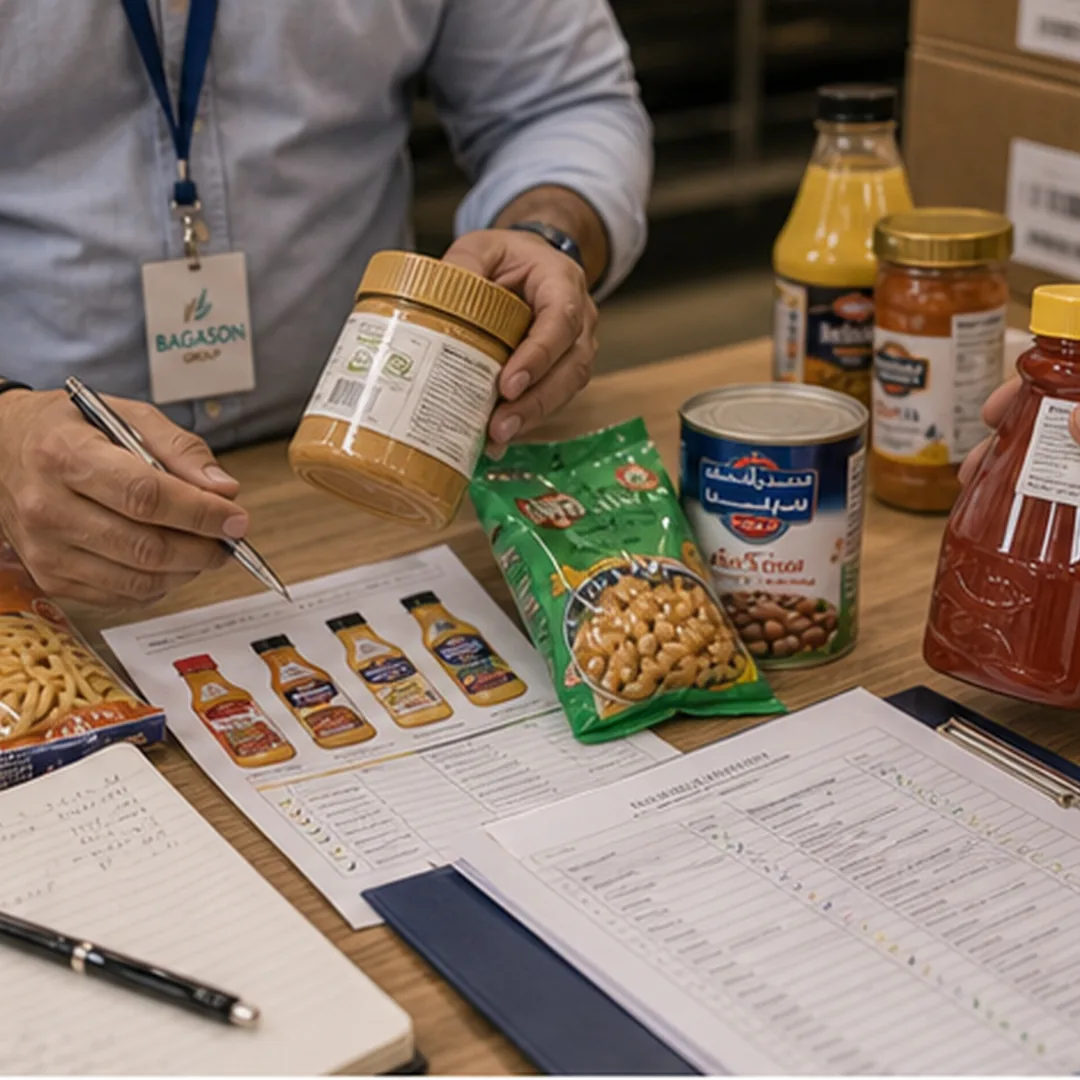
Nothing else can begin until the product can legally enter and be sold in the country. For a food brand in the UAE that means meeting national requirements on UAE food labelling rules, Arabic-language information, ingredient declarations, nutritional values, shelf life on arrival and halal certification where it applies. Each product line has to clear these gates individually, and a rejected consignment at the border can derail a launch before it starts. Resolving compliance first, ideally with a partner who navigates these uae food labelling requirements daily, saves enormous time, cost and reputational damage later.
Compliance is easy to underestimate in its detail. A claim on the front of pack, a missing nutritional declaration, an Arabic translation that does not match the English, or a remaining shelf life judged too short on arrival can each hold a shipment at the port. Authorities apply a minimum-remaining-shelf-life rule, so a product that left the factory with months to spare can still be refused if it spent too long in transit or in a forwarder's warehouse. Getting artwork and documentation approved before the first container sails, rather than discovering a problem after it lands, is one of the clearest dividing lines between a smooth launch and an expensive false start.
Product registration and the paper trail
Beyond the label itself, food products generally need to be registered with the relevant municipal and federal food-safety systems before they can be cleared and listed. The registration file typically draws together the product specification, ingredient and additive details, the artwork, certificates of origin and analysis, and halal documentation where relevant. None of this is insurmountable, but it is unforgiving of gaps: an incomplete file simply sits in a queue. The practical lesson for any food import into the UAE is to assemble the documentation set early, treat it as a living asset that travels with every shipment, and keep it consistent across every product variant in the range.
Why compliance is a competitive advantage, not just a cost
It is easy to view regulation as friction, but the brands that treat compliance as a discipline rather than an obstacle gain a quiet edge. A clean, complete documentation set means faster clearance, fewer surprises at the port and a reputation with the authorities and the trade for being reliable. When a buyer or a distributor knows a brand never causes a hold-up at customs, that brand becomes easier to do business with, and easier to expand. The cost of getting it right once, up front, is far lower than the cost of repeatedly firefighting consignments that should never have shipped in their current state.
Step 2: Understand the market and position the brand
Before committing to volume, a new food brand in the UAE needs a clear-eyed read of where it fits. Who is the target shopper, and which communities will buy it? What do competing products cost, and what makes this one worth choosing? The UAE's population is overwhelmingly expatriate and concentrated in cities, drawing on dozens of nationalities with distinct tastes and price sensitivities. A product may resonate strongly with specific communities, whether South Asian, Levantine, Filipino or Western, or cut across many. Honest positioning at this stage drives every later decision about pricing, channel and assortment.
Good positioning is also about restraint. It is tempting to describe a new product as appealing to everyone, but a brand that tries to be for everyone usually ends up compelling to no one. Defining the primary shopper sharply, and accepting that some segments are secondary, makes the rest of the launch easier, because it tells you which retailers matter most, which price points are credible, and which pack formats and flavours to lead with. The clearer the positioning, the more efficient every dirham of launch spend becomes.
Positioning also has to answer a simple but searching question: what is the reason to switch? In a market as well supplied as the UAE, most shoppers already have a product they buy in any given category. A new entrant is asking them to break a habit, and that requires a tangible reason, whether better quality, a healthier formulation, an authentic regional taste, more convenient packaging, sharper value, or a story the shopper wants to be part of. Naming that reason explicitly, and making sure the pack and the price both reinforce it, is the discipline that turns a list of product features into a proposition that actually moves a hand toward the shelf.
Pricing for the shelf, not the spreadsheet
Pricing deserves particular care, because it is set early and changed only with difficulty. The shelf price a shopper sees has to work backwards through retailer margin, distributor margin, promotional allowances, logistics, duties and the brand's own cost of goods, and still leave a viable return at every stage. Setting an aspirational shelf price without modelling this full chain is a frequent cause of stalled launches: the product either prices itself out of consideration or squeezes the trade so hard that no one is motivated to push it. Building a transparent price-to-shelf model, line by line, is unglamorous work that pays for itself many times over.
Reading the competitive shelf
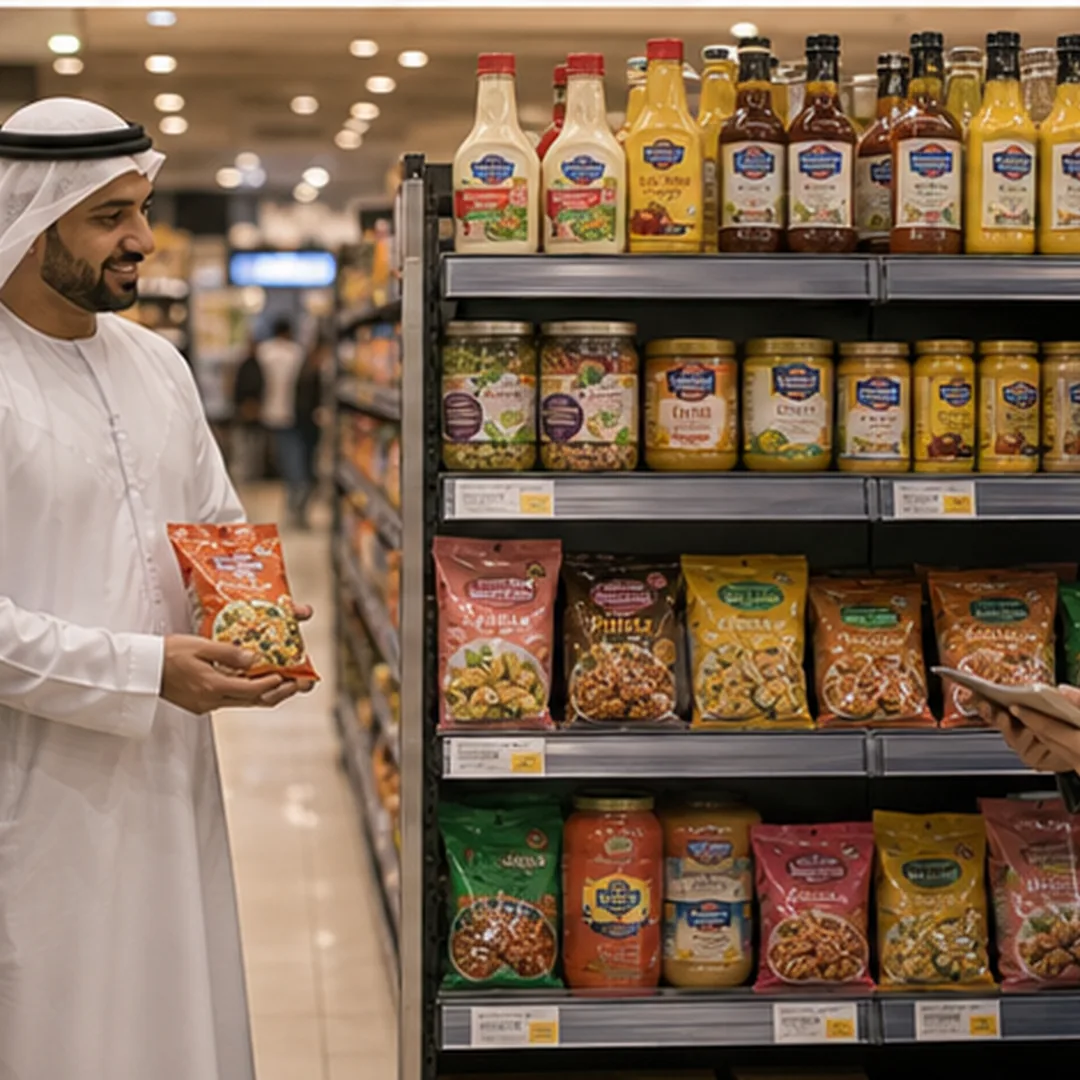
Market understanding is not abstract; it lives on the shelf. Walking the aisles of the hypermarkets and the neighbourhood groceries that the target shopper actually uses reveals more than any deck: what is stocked, at what price, with what facings, and what promotions are running. This is where a brand discovers whether it is entering a crowded category that competes on price, or an underserved niche where it can lead on quality or provenance. A distributor with deep category knowledge can compress months of this fieldwork into an informed view, but the brand owner should still see the shelf for themselves before committing real money to a position.
Step 3: Choose the right distribution partner
This is the decision that shapes the entire launch. A strong distribution partner brings existing retailer relationships, warehousing and cold chain, a field sales force, merchandising teams and the working capital to finance the trade. Trying to build all of that from scratch for a single new brand is slow, capital-intensive and risky. Choosing to %partner with an established distributor% who already has these capabilities lets a brand reach the market in months rather than years, and benefit from credibility the distributor has already earned with retailers. When a buyer trusts the distributor, they give a new line on its books a fairer hearing than they would give a cold approach from an unknown importer.
Not every distributor is the right fit, though. The questions worth asking go beyond size. Does the partner already serve the channels where the target shopper buys? Do they handle the temperature regime the product needs, whether ambient, chilled or frozen? Do they have feet on the ground across the emirates rather than concentration in a single city? And crucially, do they have the bandwidth and the genuine appetite to give a new, small brand the attention it needs, rather than parking it at the bottom of a portfolio of established names? A frank conversation about expectations on both sides at the outset prevents disappointment later.
What a full-service partner actually does
It helps to see the breadth of what a capable distributor handles on a brand's behalf. This is the engine room of any launch, and understanding %the full range of services behind a launch% makes it clear why building it alone is rarely sensible:
- Importing and customs clearance, including the compliance documentation discussed above.
- Warehousing with the right temperature control, and cold-chain integrity from port to shelf.
- A field sales team that calls on retailers and takes orders across channels.
- Merchandising teams that maintain placement, facings, pricing and displays in store.
- Last-mile logistics that deliver reliably to thousands of outlets on schedule.
- Trade financing that carries the receivables while the brand waits to be paid.
A brand owner evaluating partners can also learn a great deal from %the portfolio of brands we already represent%. The calibre and category mix of the names a distributor already carries says a lot about the company a new brand would be keeping, and about the kind of retailers it can open doors to.
Exclusive, shared or hybrid arrangements
How a brand and distributor work together is worth defining clearly. Some brands appoint a single exclusive distributor for the whole country, which keeps the market tidy, aligns incentives and gives the distributor a strong reason to invest. Others split by channel or region, which can broaden reach but risks price conflict and confused accountability if not managed carefully. There is no universally correct answer, but the arrangement should be deliberate, written down, and matched to the brand's stage and ambitions. A clean exclusive relationship is often the simplest foundation for a first launch, with more complex structures introduced only once volume justifies them.
Step 4: Plan the route to market
With a partner in place, the next step is to decide how the product will actually reach buyers. The UAE offers several distinct channels: modern trade hypermarkets and supermarkets, traditional neighbourhood groceries and baqalas, HoReCa and food service, and the fast-growing quick-commerce platforms. Each has its own economics, ordering rhythm, margin expectations and merchandising demands. A focused route to market in the UAE does not try to enter every channel at once. It sequences them, often starting where the target shopper is most concentrated, proving the concept, then expanding deliberately.
Modern trade offers visibility and volume but demands listing fees, promotional commitments and disciplined supply. Traditional trade reaches dense residential neighbourhoods and specific communities at lower entry cost but requires a sales force that can service many small outlets frequently. HoReCa and food service can move significant volume through a smaller number of accounts but often wants different pack formats. Quick commerce reaches shoppers on their phones and rewards availability and sharp imagery. A coherent product launch distribution plan specifies which channels, in what order, at what price and with what initial assortment, and resists the urge to spread thin.
Matching channel to product
The right channel sequence is not the same for every brand; it follows from the product and the shopper. A premium imported delicacy with a high price point may belong first in upmarket supermarkets and specialist grocers where the right shopper browses, before any thought of mass distribution. An everyday staple aimed at a specific community may do far better starting in the traditional trade outlets that community frequents daily. A chilled or frozen line needs channels and partners equipped for the cold chain end to end. Letting the product dictate the channel order, rather than chasing the most prestigious listing first, keeps the launch grounded in where it will genuinely sell.
Coverage across the seven emirates
Geography is its own dimension of the plan. The UAE is not a single uniform market: Dubai and Abu Dhabi behave differently from the northern emirates, and shopper demographics shift from one area to another. A launch can start in the emirates where the target shopper is densest and widen as the brand proves itself, or aim for broad presence from day one if the economics support it. Either way, having %coverage across every emirate% behind the brand means expansion is a matter of switching on outlets rather than building infrastructure each time the brand moves into a new area.
Step 5: Secure listings and plan the first orders
Listings are won, not granted. Securing shelf space involves negotiating trade terms, agreeing planograms, committing to introductory promotions and, in modern trade, often paying listing fees that give the product a fair chance to be discovered. The buyer's question is always the same: why should I give shelf space to this rather than to the proven product already earning its place? A strong story, meaning clear positioning, evidence of demand, a credible support plan and a reliable distributor behind it, answers that question. This is the practical heart of winning uae retail listings, and it is far easier with a partner the buyer already trusts.
The opening order quantities matter just as much as the listing itself. They need to be enough to fill shelves and sustain availability through the critical early weeks, but not so large that slow initial sell-through leaves stock ageing toward its expiry date, a real danger given the remaining-shelf-life rules. A distributor with genuine demand-planning experience helps calibrate this balance, drawing on what comparable products have done in comparable outlets rather than on optimism alone.
Negotiating trade terms that hold up
Trade terms set the economics of the relationship for years, so they reward careful negotiation. Listing fees, margin expectations, promotional calendars, payment terms and any return or write-off arrangements all need to be understood and agreed before the first order, not improvised after a dispute. The aim is not to win every point but to land terms the brand can actually sustain at scale; a generous introductory deal that becomes loss-making at volume helps no one. A distributor who negotiates these terms every week is an invaluable ally here, both because they know what is reasonable and because their relationship with the buyer makes a fair outcome more likely.
Managing the awkward middle period
It is worth planning for the awkward stretch after the first order. A new line has no sales history, so the reorder decision is largely a judgement call. Order too cautiously and the product is out of stock just as trial demand builds; order too confidently and the second shipment arrives before the first has cleared. An out-of-stock in the launch window is especially damaging, because a shopper who reaches for a new product and finds an empty facing rarely comes back to check again. Agreeing in advance how reorders will be triggered, and watching early sell-through closely, prevents a promising start from being undone by a supply gap at exactly the wrong moment.
Step 6: Execute in store and support the launch
Getting listed is only the beginning. Early sales depend heavily on in-store execution: strong shelf placement, full facings, correct pricing, eye-catching displays and consistent restocking. For an unfamiliar brand, the shelf is the first and often only advertisement most shoppers will ever see, so every detail of how the product appears matters. Sampling, introductory offers and clear, legible packaging all help shoppers take the first chance on something they have never tried. This is where the distributor's merchandising teams earn their value, and it is a core part of %how we take brands to market% effectively from day one.
Timing the support matters as much as the support itself. The window in which a new brand can convert curiosity into habit is narrow, so sampling, introductory pricing and prominent displays should land while the product is fresh on shelf and the trade is paying attention, not weeks later once early shoppers have already passed it by. Coordinating that activity with the retailer's own promotional calendar, and making sure stock is in place to meet the demand it creates, turns a launch budget into trial, and trial into repeat purchase, rather than into a brief spike followed by empty facings.
Aligning trade and consumer activity
The strongest launches pull the trade and the shopper in the same direction at the same time. A retailer is far more willing to grant a secondary display or an end-cap if it coincides with consumer activity that will drive footfall to it; a sampling activation works far harder if the product is in stock, well-faced and correctly priced when curious shoppers go looking for it. Treating in-store execution, trade support and any consumer marketing as one coordinated campaign, rather than three disconnected efforts, is what makes a modest launch budget feel much larger than it is.
The discipline of consistent merchandising
Launch energy is easy; consistency is hard. The displays that look immaculate on day one tend to drift over the following weeks as facings empty, prices slip out of date and competitors reclaim prime positions. The brands that win are the ones whose merchandising teams keep returning, week after week, to hold the standard. A regular call cycle that checks availability, restores facings, refreshes displays and feeds intelligence back to the brand is not a glamorous part of a launch, but it is one of the most decisive. This sustained presence is exactly what an established distributor's field force is built to deliver, and it is hard to replicate with ad hoc effort.
Step 7: Measure, learn and scale
A launch is a hypothesis to be tested, not a one-off event. The early weeks generate data on what is selling, where and to whom, and that data is the single most valuable output of the whole exercise. The most useful building blocks of a scale-up decision include:
- Sell-through rates by outlet and channel, to see where the product is genuinely moving rather than merely sitting.
- Repeat-purchase signals, which show whether shoppers come back after trying it, the truest measure of whether a brand has a future.
- Feedback from field and merchandising teams on placement, price, competitor moves and shopper response.
- Stock and supply data, to confirm that availability is keeping pace with demand and not quietly capping sales.
Read together, these signals show whether to widen distribution, adjust pricing, refine the assortment or double down on the channels that are working. A successful brand launch in the GCC is built on this feedback loop, expanding deliberately from a proven base rather than spreading thin too soon. The temptation after an encouraging start is to rush into every channel and every emirate at once; the discipline that actually compounds is to expand only where the evidence already shows the product earning its place.
From UAE proof point to GCC expansion
For many brands, a successful UAE launch is the springboard to the wider Gulf. The GCC comprises the UAE, Saudi Arabia, Qatar, Kuwait, Bahrain and Oman, and a proven UAE performance is powerful evidence when approaching buyers and distributors elsewhere in the region. That said, each market has its own registration rules, channel structures and shopper preferences, so expansion should be treated as a fresh launch in miniature rather than a copy-paste. The UAE's value as a first market lies partly in this: it is demanding enough that succeeding there earns genuine credibility, while being open and well-organised enough to make that success achievable.
Common mistakes that derail launches
It is worth naming the failure patterns explicitly, because most stalled launches repeat a familiar handful. Chasing listings before compliance is settled. Pricing from the spreadsheet rather than the shelf. Choosing a distributor on size alone without checking channel fit or genuine appetite. Ordering on optimism and then running out of stock, or, conversely, over-ordering and watching stock age. Treating the launch as finished once the product is listed, and neglecting the in-store execution that actually drives trial. And expanding too fast on the strength of a flattering first month rather than waiting for repeat-purchase evidence. Each of these is avoidable, and each is far cheaper to prevent than to fix.
Budgeting realistically for the launch
A launch costs more than the product itself, and underbudgeting is a quiet killer. Beyond cost of goods and freight, a brand owner should plan for compliance and registration work, listing fees in modern trade, introductory promotions and price support, sampling and any consumer activity, and the merchandising effort that holds standards on shelf. There is also the working capital tied up in stock and in receivables while the trade pays on its own terms. Mapping these costs honestly before launch, and holding a reserve for the inevitable surprises, keeps a brand from running out of momentum at the very moment early demand is starting to build.
The reassuring part is that partnering with an established distributor converts much of this from fixed cost into shared, variable cost. Rather than funding a warehouse, a fleet and a sales team to serve a single brand, the brand pays for capability it uses through the distributor's existing infrastructure. That keeps the launch lean and the downside contained, which matters enormously for a first-time or smaller brand testing whether the UAE is the right market. A clear-eyed budget, a sensible reserve and a partner who absorbs the heavy fixed costs together make the difference between a launch that can weather a slow start and one that cannot.
A realistic timeline for a launch
It helps to set expectations about pace. Compliance and product registration are the gating items, and depending on the product and the completeness of the documentation, they can take anywhere from several weeks to a few months. Appointing a distributor and agreeing terms can run in parallel with that work. Securing the first listings then depends on the retailer's own review cycles, after which the first orders ship, land and reach the shelf. From a standing start, a focused launch into the first channels is realistically a matter of months rather than weeks, and the brands that try to compress it usually pay for the haste with a compliance hold-up or an under-prepared listing.
The more important point is that the early months on shelf are when the real learning happens, and that learning cannot be rushed. Repeat purchase, the signal that matters most, only emerges once shoppers have had time to try the product, finish it and decide whether to buy again. Building the timeline around that reality, rather than around an arbitrary deadline, is what lets a brand scale on evidence. As a rule of thumb, expect to give a launch a clear run of several months before drawing firm conclusions about whether and how to expand.
Bringing the plan together
The brands that endure in the UAE are rarely the ones that launched fastest; they are the ones that launched in the right order. Compliance settled before a container sailed. Positioning sharp enough to tell every later decision what to do. The right partner alongside them, chosen for fit rather than just scale. A route to market sequenced channel by channel and emirate by emirate. Listings won with a credible story, supported by disciplined first orders and strong in-store execution, and scaled only on the evidence of genuine repeat purchase. None of these steps is glamorous in isolation, but together they form a plan that compounds rather than a gamble that hopes.
For a founder or producer eyeing the UAE, the encouraging truth is that none of this has to be built alone. The infrastructure, relationships and discipline that turn a good product into a lasting food brand already exist in the market; the task is to plug into them in the right sequence. Anyone serious about the opportunity would do well to %speak to our team about your launch% before placing that first order, so the plan is designed from the start rather than reverse-engineered after the first setback. Get the sequence right, choose the partner well, and the UAE rewards a good food brand as generously as any market in the region.
Frequently Asked Questions
What is the first step to launching a food brand in the UAE?
Compliance comes first. The product must meet UAE requirements on labelling, Arabic-language information, ingredient and nutritional declarations, remaining shelf life on arrival and halal certification where applicable, and it generally needs to be registered with the relevant food-safety authorities before it can be cleared and listed. Resolving all of this before anything else prevents consignments being held at the border and a launch stalling at the outset. It is far cheaper to fix artwork and documentation before a container sails than after it lands.
How long does it take to launch a food brand in the UAE?
With compliance and a distribution partner in place, a focused launch into the first channels can take a matter of months rather than years. The timeline depends heavily on how quickly product registration and labelling are completed and on how fast listings are agreed with retailers. Building the warehousing, sales and merchandising capability from scratch instead of partnering with an established distributor is what stretches launches out, sometimes indefinitely. Allow a clear run of several months on shelf before drawing firm conclusions about scale.
Should a new brand enter every retail channel at once?
No. A focused launch usually sequences channels, starting where the target shopper is most concentrated, proving the concept, then expanding. The UAE's modern trade, traditional trade, HoReCa and quick-commerce channels each have different economics and demands, and trying to enter all of them simultaneously spreads resources thin and makes it harder to learn what is actually working. Sequencing lets a brand scale on evidence rather than on hope.
Why is choosing a distribution partner so important?
A distributor brings existing retailer relationships, warehousing, cold chain, field sales, merchandising and the working capital to finance the trade. Partnering with one that already has these capabilities lets a brand reach the market quickly, while benefiting from credibility the distributor has already established with buyers. Crucially, a buyer who trusts the distributor will give a new line a fairer hearing than they would give a cold approach from an unknown importer.
How should a new food brand set its shelf price in the UAE?
Pricing should be modelled backwards from the shelf, not forwards from cost. The price a shopper sees has to absorb retailer margin, distributor margin, promotional allowances, logistics and duties while still leaving the brand a viable return. Setting an aspirational price without modelling this full chain often prices the product out of consideration or squeezes the trade so hard that nobody is motivated to push it. A transparent line-by-line price-to-shelf model is essential before committing.
What does halal certification require for imported food?
Where a product contains ingredients of animal origin or makes a halal claim, it generally needs recognised halal certification, and the certificate must form part of the registration and clearance documentation. Requirements vary by product type, so the safest approach is to confirm exactly what applies to each line early and ensure the certification travels consistently with every shipment. A distributor experienced in food import into the UAE can advise on what each product line specifically requires.
How big should the first order be?
Large enough to fill shelves and sustain availability through the critical early weeks, but not so large that slow initial sell-through leaves stock ageing toward expiry. Because the UAE applies remaining-shelf-life rules, over-ordering carries a real risk of write-offs, while under-ordering risks going out of stock just as trial demand builds. A distributor with genuine demand-planning experience helps calibrate this balance using comparable products and outlets rather than guesswork.
What in-store support helps a new food brand sell?
Strong shelf placement, full facings, correct pricing, eye-catching displays and consistent restocking are the foundation, supported by sampling and introductory offers that encourage shoppers to try something unfamiliar. Timing matters as much as the activity itself: support should land while the product is fresh on shelf and the trade is paying attention, coordinated with the retailer's own promotional calendar and backed by enough stock to meet the demand it creates. This is where a distributor's merchandising teams earn their value.
How do you decide when to scale up a new brand?
Scale-up should be evidence-led, based on sell-through rates by outlet and channel, repeat-purchase signals and feedback from field teams. Repeat purchase is the truest measure of whether a brand has a future, because it shows shoppers are coming back rather than simply trying once. These signals let a brand expand deliberately from a proven base rather than overextending on the strength of a flattering first month.
Can a small or first-time brand realistically launch in the UAE?
Yes. The infrastructure, retailer relationships and operational discipline that a launch needs already exist in the market, so a small or first-time brand does not have to build them alone; it plugs into a distributor that has them. The decisive factors are getting compliance right, positioning the product clearly, choosing a partner with genuine appetite to support a new name, and scaling on evidence. Many enduring brands in the UAE began exactly this way.