Ask most people what a distributor does and the answer is simple: they move goods from A to B. It is an understandable assumption, because delivery is the only part of the job a brand owner or shopper ever actually sees. But asking what a distributor does and stopping at delivery is like describing an iceberg by its tip. The visible van on the road represents perhaps a tenth of the work; the rest sits below the surface, and it is where nearly all the value is created.
For any brand trying to reach customers across a market like the UAE, understanding the true FMCG distributor role is the difference between treating distribution as a freight cost and recognising it as a strategic partnership. A distributor is not a courier with a warehouse attached. It is the commercial engine that turns a product sitting in a factory overseas into a product a shopper can pick off a shelf in Dubai, Sharjah or Fujairah — listed, compliant, stocked, priced, merchandised and supported.
The functions below are what a distributor actually does day to day. Together they explain why a capable distributor can be the single biggest lever on a brand's growth in a new market, and why choosing the right one matters far more than most newcomers expect.
Importing, listing and getting products to market
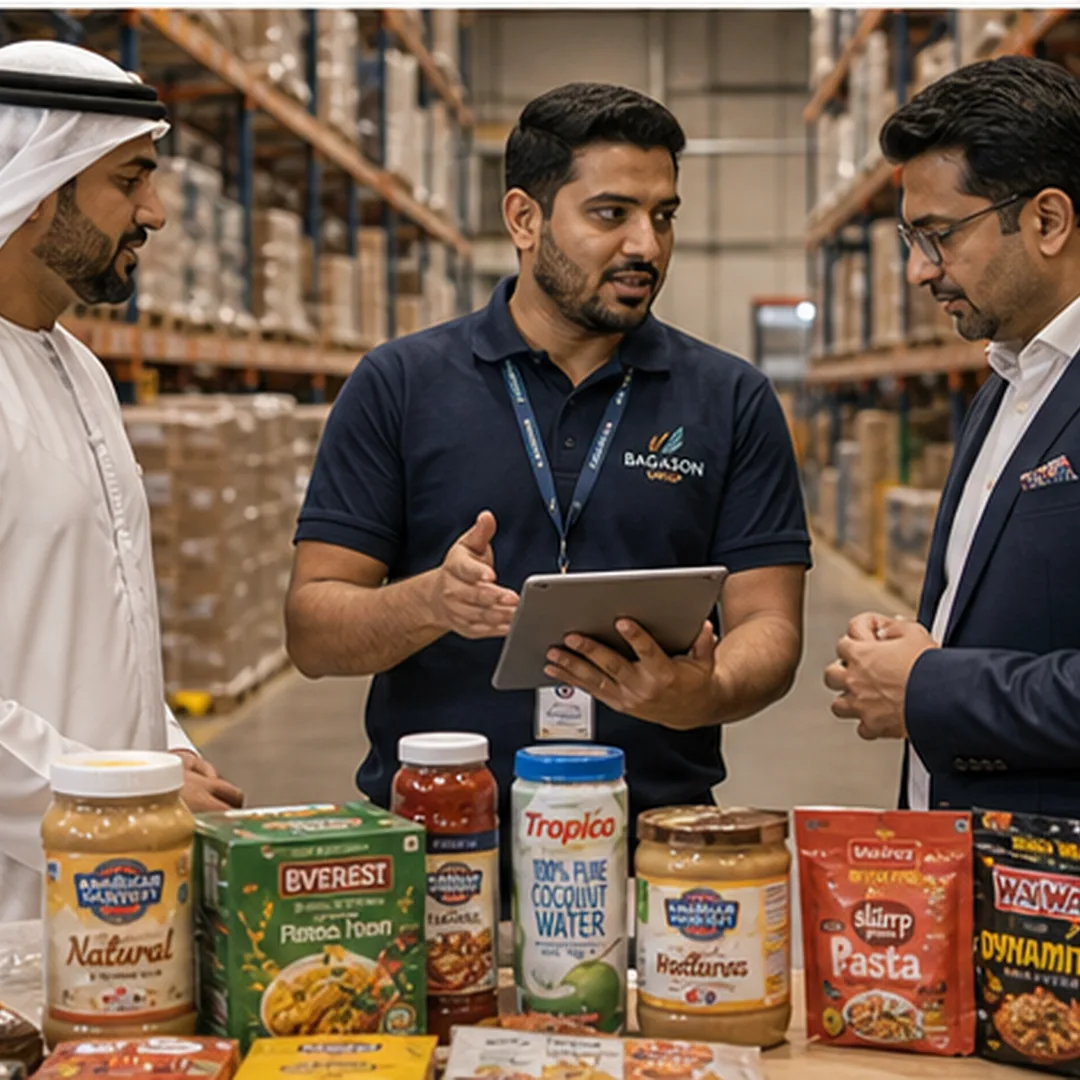
Long before a product reaches a shelf, a distributor handles the unglamorous work of bringing it into the country and making it sellable. That means managing imports and customs, ensuring every line meets the UAE's labelling, halal and food-safety requirements, and then securing listings with retailers. Negotiating a listing is itself a substantial effort: it involves trade terms, planograms, promotional commitments and the relationships that decide whether a new product gets shelf space at all. This is a core part of professional distribution services in the UAE and one that brand owners consistently underestimate.
The relationship dimension is easy to overlook. A retail buyer fields proposals from countless brands every week and gives serious attention to very few. A distributor with a track record of reliable supply, clean compliance and well-executed launches has earned the buyer's trust over years, and that trust transfers, in part, to the new brands it represents. A product introduced by a credible distributor is simply taken more seriously than the same product pitched cold by an unknown importer.
Compliance is not a formality
In the UAE, regulatory compliance is a genuine gatekeeper rather than a box-ticking step. Food labelling rules, halal certification, ingredient declarations, shelf-life requirements and Arabic labelling all have to be right before a product can legally be sold, and getting them wrong can mean a shipment held at the port or rejected outright. A distributor that knows these requirements intimately can guide a brand through them before goods are even shipped, saving weeks of delay and the expense of relabelling or re-exporting. For a brand new to the region, this expertise alone can justify the partnership.
The cost of getting compliance wrong is rarely just the delay. A shipment stranded at the port still accrues storage and demurrage charges, perishable goods inside it may spoil before they clear, and a missed launch window can mean losing a promotional slot that a retailer agreed to months earlier. An experienced distributor heads off all of this by reviewing artwork, certificates and documentation against current regulations before the goods leave the factory. It is unglamorous, detail-obsessed work, but it is precisely the kind of expertise that a brand cannot easily acquire from a distance and learns the hard way if it tries to import alone.
From paperwork to first listing
Importing and listing are often treated as separate steps, but in practice a capable distributor runs them in parallel so that compliant stock arrives just as the first listings go live. Coordinating these timelines — clearing customs, passing inspections, securing shelf space and aligning the first delivery — is a piece of choreography that brand owners rarely appreciate until they watch it done badly. When it works, a product moves from container to shelf seamlessly; when it does not, stock sits in a warehouse waiting for listings that have not been secured, or listings go live with no stock to fill them. Managing that handoff smoothly is one of the quieter skills of professional distribution.
Warehousing, cold chain and inventory
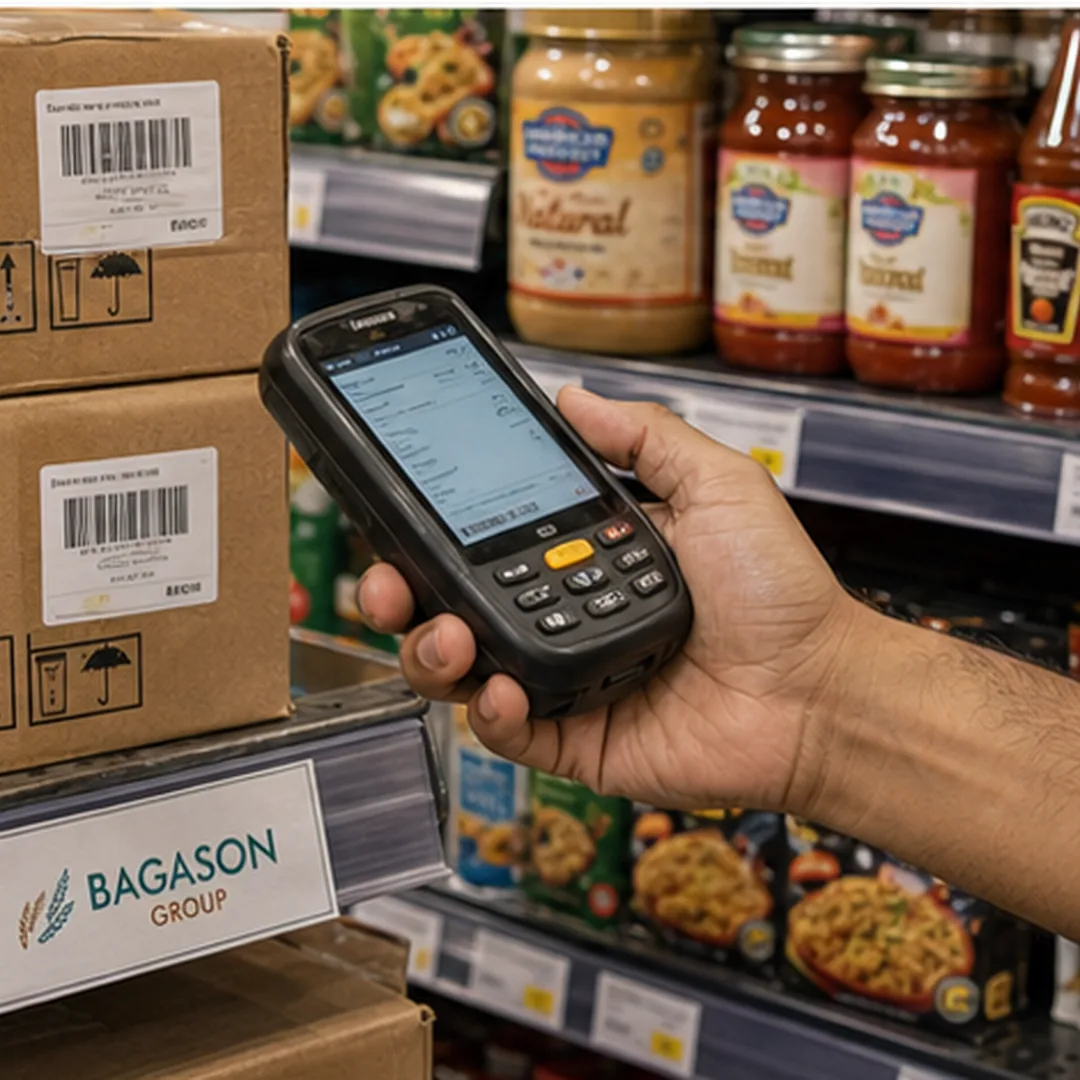
Goods that arrive in bulk have to be stored correctly, tracked accurately and released in the right quantities at the right time. For food and grocery products that often means temperature-controlled storage and an unbroken cold chain from port to shelf. Behind this sits inventory management: knowing what is in stock, what is selling, what is ageing toward expiry and what needs reordering. A distributor absorbs the cost and complexity of holding inventory so that retailers can carry less and brands do not have to build their own warehouses.
This buffering role is quietly essential. Demand is uneven, supply arrives in large infrequent shipments, and retailers want to order little and often. The distributor's warehouse sits in the middle, smoothing the mismatch — holding stock so that a small grocery can reorder a single case the day it sells out, while the brand ships in full containers on its own schedule. Without that buffer, the whole chain would seize up under the cost of either carrying too much or running out constantly.
The cold chain that cannot break
For chilled and frozen lines, the storage challenge becomes a safety and quality obligation. The cold chain — the unbroken sequence of temperature control from the moment goods land to the moment they reach the shelf — cannot be interrupted without risking spoilage and, for some products, food-safety violations. In the UAE's climate, where outdoor temperatures regularly exceed 45°C in summer, even a short lapse in handling can ruin a pallet. Maintaining cold storage, refrigerated transport and disciplined handling at every transfer point is one of the most demanding and least visible things a distributor does.
The weakest link in a cold chain is almost always a transfer point — the moment goods move from a reefer container to the warehouse, from the warehouse to a delivery vehicle, or from the vehicle into a store's chiller. Each of these handovers is an opportunity for the temperature to drift, and protecting against that requires trained staff, the right equipment and a culture that treats the cold chain as non-negotiable. A distributor with this discipline embedded gives a brand confidence that its premium chilled product will reach the shopper exactly as intended, rather than degraded by an invisible lapse somewhere along the way.
Inventory visibility brands could never build alone
Beyond storage, the distributor's inventory systems give a brand a level of visibility it would struggle to achieve on its own. Knowing in near real time what is in stock, what is selling through, what is ageing toward expiry and what needs reordering turns a warehouse from a black box into a living dashboard. That visibility is what allows the distributor to reorder at the right moment, warn a brand about slow-moving lines before they become write-offs, and keep fast movers continuously available. For a brand managing dozens of SKUs across a national market, this inventory intelligence is a service in its own right, quite apart from the physical storage.
Merchandising and in-store execution
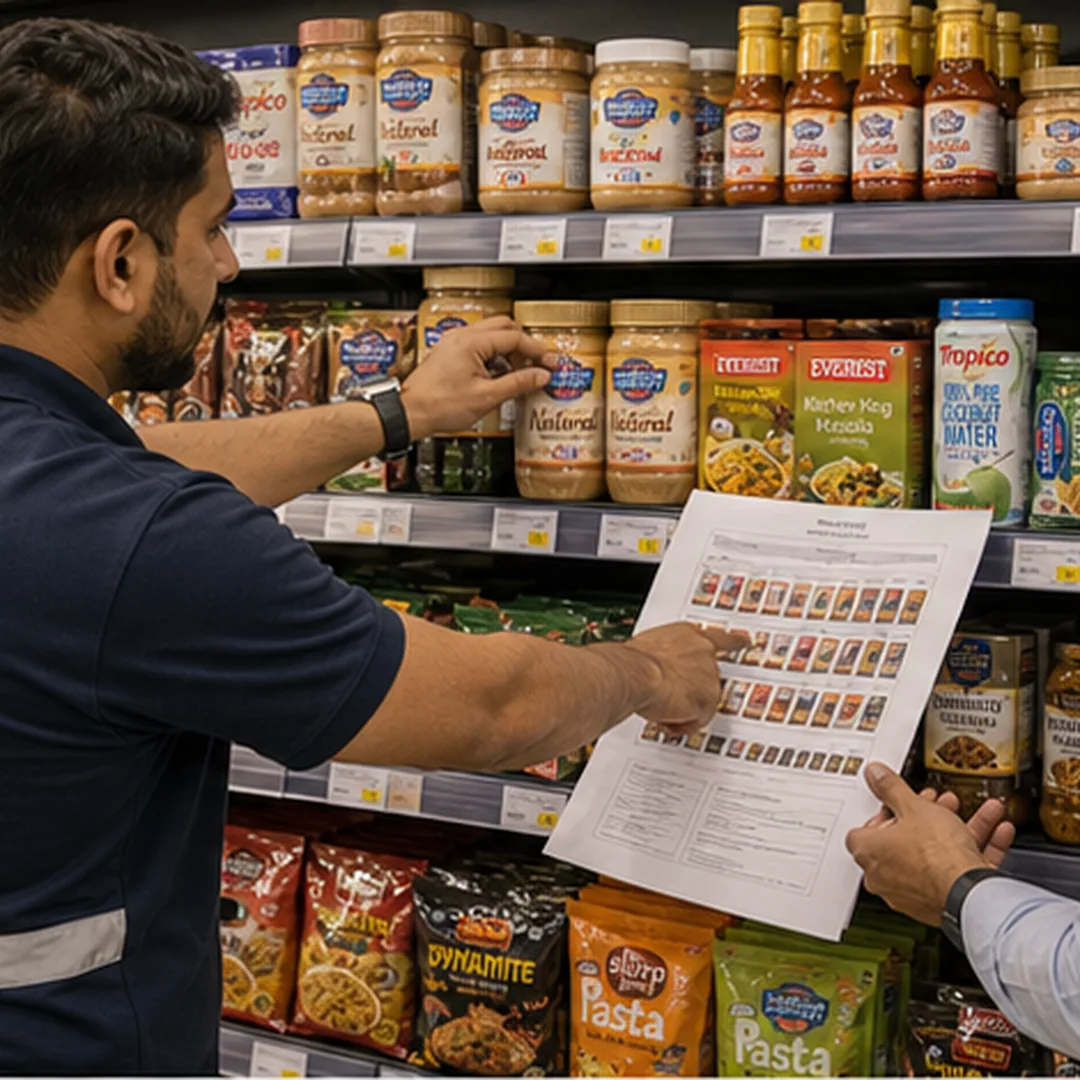
Getting a product listed is not the same as getting it sold. Distributor functions extend onto the shop floor, where merchandising teams ensure products are well placed, fully stocked, correctly priced and attractively presented. They rotate stock to manage shelf life, set up promotional displays, and feed back what is actually happening at the point of sale. A product with poor shelf presence will underperform no matter how good it is, which is why in-store execution is one of the most underrated parts of %the full scope of what we do%.
Why the shelf is where brands are won or lost
Most purchase decisions in grocery are made in seconds, in front of the shelf, by a shopper who did not arrive intending to buy that particular brand. Whether the product is at eye level or on the bottom shelf, whether the facing is full or down to its last dusty unit, whether the price tag is correct and the display intact — these mundane details decide far more sales than the brand's advertising ever will. Merchandising teams that visit outlets regularly to fix exactly these things are doing some of the highest-return work in the entire chain.
Stock rotation belongs here too, and it is more demanding than it looks. Food and grocery lines have to be arranged so that older stock sells before newer stock, expiry dates are checked on every visit, and anything approaching its limit is pulled or pushed before it becomes a write-off. Get this wrong and a retailer is left with unsellable product and a sour view of the brand; get it right, consistently, across hundreds of outlets, and waste falls while availability stays high — a balance that only disciplined, repeated in-store work can hold. The field teams that do this also act as the brand's eyes in stores it would otherwise never see, reporting back on competitor activity, pricing changes and gaps on shelf that no headquarters report would ever surface.
Route-to-market strategy
Perhaps the most strategic function of all is deciding how a product reaches its buyers. A market is not one channel but many — modern trade hypermarkets and supermarkets, traditional neighbourhood groceries and baqalas, HoReCa and food service, and fast-growing quick commerce. Each channel has different economics, different buyers and different requirements. A distributor designs the route-to-market: which channels to enter, in what order, at what price, with what assortment. This strategic layer is what separates a logistics provider from a genuine commercial partner, and it is central to the real value of a distributor.
Channel choice is rarely obvious. A premium imported line might thrive in upscale supermarkets and HoReCa but flounder in price-sensitive traditional trade; a value staple might do exactly the reverse. Entering every channel at once can stretch a young brand too thin, while entering the wrong one first can burn the budget before the product finds its footing. A distributor that knows how each channel behaves in the UAE can sequence the entry sensibly — proving the product where it is most likely to succeed, then expanding from a position of strength.
One country, many markets
The UAE may be a single country, but its channels and emirates behave like distinct markets. Demand in a Dubai hypermarket differs from demand in a Sharjah grocery or a Fujairah convenience store, and quick commerce overlays a fast, real-time layer on top of all of them. Designing a route-to-market that respects these differences — and adjusts assortment and pricing accordingly — is a far more sophisticated task than simply listing a product everywhere and hoping. It is one of the clearest examples of strategy that brands rarely see but always benefit from.
The rise of quick commerce and what it demands
The fast growth of quick commerce has added a demanding new channel to the mix, one that rewards speed and availability above almost everything else. When a shopper expects groceries at the door within the hour, the entire fulfilment model behind that promise depends on stock being in exactly the right place at the right time, with no tolerance for the gaps a traditional channel might forgive. A distributor that can feed dark stores and rapid-delivery operators reliably — with the right assortment, accurate availability and tight replenishment — opens a channel that many brands could never reach on their own. Adapting to this channel is a vivid example of how route-to-market keeps evolving and why a distributor's strategic role is never static.
Traditional trade still matters enormously
For all the attention modern trade and quick commerce attract, traditional trade — the thousands of independent groceries and baqalas dotted across every neighbourhood — remains a vast and vital channel in the UAE. Reaching it is uniquely hard: each outlet orders small quantities, expects credit, sits on a different street and builds its loyalty on personal relationships with the sales representative who calls regularly. No brand could economically service this fragmented base directly. A distributor with established routes and trusted relationships across traditional trade unlocks a channel that, in aggregate, can rival modern trade in volume, and it is one of the strongest reasons brands turn to a distributor in the first place.
Coverage, credit and cash
Reaching a fragmented market also means physically covering it. A serious distributor maintains the fleet, the field sales force and the systems to %reach every emirate in the country%, from a flagship hypermarket to a small grocery on a side street. Alongside that comes the financial role: extending credit to thousands of retail customers, collecting payment, and carrying the working capital that keeps goods flowing. By taking on credit risk and cash management, the distributor lets brands sell into a vast network of outlets they could never service or finance alone.
The financial weight of this is considerable. Retailers expect credit terms, which means the distributor pays for goods long before it is paid for them, financing the gap across thousands of accounts at once. It also takes on the risk that some of those accounts pay late or not at all, and builds the collections discipline to keep that risk contained. For a brand, this is a quietly enormous benefit: it sells to one creditworthy partner instead of chasing payment from a sprawling, unfamiliar retail base.
Physical coverage is a moat
Building the capability to reach every emirate — the depots, the refrigerated vehicles, the routed sales force, the relationships with thousands of independent outlets — takes years and significant investment. It is precisely because this is so hard to build that established coverage is such a powerful asset. A brand that partners with a distributor already operating across the country inherits that network on day one, rather than spending years and a fortune trying to replicate it. This is one of the strongest arguments for working with an established player rather than going it alone.
The working capital nobody sees
The credit function deserves a closer look because its scale is genuinely hard to overstate. At any given moment, a distributor of any size is owed money by a long list of retail customers while having already paid its brand suppliers for the goods now sitting in those customers' stores. That gap — sometimes weeks or months wide, multiplied across thousands of accounts — is financed entirely by the distributor's own working capital. It is, in effect, a large rolling loan extended to the entire retail trade, and it is invisible to everyone except the finance team that manages it. A brand that sells through such a distributor is shielded from this enormous financing burden and the associated risk of bad debt, which it would otherwise have to shoulder itself across an unfamiliar customer base.
Data, feedback and partnership
A distributor sits at the only point in the chain that touches both the brand and the entire retail base. That position generates invaluable data: what is selling where, which promotions worked, how a competitor is moving, where demand is shifting. A good distributor turns this into feedback that helps brands refine pricing, assortment and strategy. For brand owners weighing whether to %discuss working together%, this insight is often as valuable as the logistics itself, because it shortens the painful trial-and-error that every new market entrant would otherwise face alone.
This feedback loop also keeps a brand honest about its own assumptions. A product that the brand believes is premium may be selling fastest on promotion; a flavour the brand expected to lead may be outsold by a variant it nearly cut. Only the distributor, watching real sales across hundreds of outlets, can surface these truths quickly. The brands that listen to that feedback and adapt tend to grow; the ones that ignore it tend to stall. Seeing how this plays out in practice across %the brands we already represent% is often the fastest way for a prospective partner to understand the value on offer.
Turning field intelligence into action
The data a distributor gathers is only valuable if it leads to decisions. Raw observations from the field — a competitor's new pack size, a price move in a particular chain, a sudden gap on a shelf — have to be collected, made sense of and turned into recommendations the brand can act on. A capable distributor does exactly this: it synthesises the noise of hundreds of store visits into a clear picture of how the brand is performing and what should change. Should a slow line be delisted? Is a price adjustment overdue? Is a competitor's promotion eroding share in a specific channel? These are the questions the feedback loop answers, and answering them well is what turns a distributor from a pair of hands into a strategic partner.
The risks a distributor carries on the brand's behalf
Much of a distributor's value lies in the risks it quietly absorbs. There is inventory risk — the danger that stock bought in good faith does not sell and has to be discounted or written off. There is credit risk, the possibility that retail customers pay late or default. There is compliance risk, where a regulatory misstep can halt a whole line. There is operational risk in running a fleet and warehouses in a demanding climate. A brand selling through a distributor offloads a large share of these risks onto a partner equipped to manage them, rather than bearing them alone in an unfamiliar market.
This risk-bearing is not a passive cushion; it is actively managed. A good distributor spreads its credit exposure across many accounts, watches inventory ageing closely, builds compliance checks into its processes and maintains its fleet and cold chain to avoid costly failures. The margin a distributor earns is, in large part, the price of carrying and competently managing all of this risk so that the brand does not have to. Understanding that trade — margin in exchange for risk transfer and capability — is central to grasping why the distributor model endures even as some brands experiment with selling direct.
Managing the brand relationship through good times and bad
A function rarely listed but constantly at work is the management of the relationship itself. A distributor stands between a brand owner who wants growth, retailers who want margin and reliability, and shoppers who want availability and value — and reconciling those competing pressures is delicate, ongoing work. When a launch underperforms, when a retailer demands deeper discounts, when a supply hiccup threatens a key listing, it is the distributor who absorbs the friction and finds a path through. This diplomatic, problem-solving role does not appear on any invoice, yet it is often what keeps a brand's presence in the market stable when things get difficult.
Good distributors also manage expectations honestly. They tell a brand when a target is unrealistic, when a price point will not work in a given channel, or when a product needs reformulating for local tastes before it can succeed. That candour can be uncomfortable, but it is far more valuable than a partner who simply agrees and then underdelivers. The brands that thrive tend to be the ones that treat their distributor as a trusted advisor on the realities of the market, not merely as a supplier to be instructed.
How distributors differ — and how to choose one
Not all distributors are equal, and the gap between a capable one and a weak one is wide. Some are essentially logistics firms that will warehouse and deliver but offer little commercial muscle. Others are full-service partners that import, list, merchandise, finance, advise and grow a brand actively. A brand evaluating its options should look hard at the breadth of channels covered, the strength of retailer relationships, the quality of cold-chain and warehousing infrastructure, the discipline of field merchandising, and the financial stability to carry trade credit reliably.
The right questions reveal a lot. Does the distributor cover every channel a brand needs, or just the easy ones? Can it demonstrate well-executed launches and durable listings? Does it share data and feedback openly, or treat the brand as a passive supplier? Can it finance the trade without straining? Many of these questions are the same ones brands raise when they first explore %stories from across the trade%, and a distributor's willingness to answer them candidly is itself a useful signal of how the partnership will feel once it begins.
Sell direct or use a distributor? The honest trade-off
Some brands, tempted by the margin a distributor earns, wonder whether they could simply sell direct and keep that margin for themselves. It is a fair question, and the honest answer is that going direct is possible but rarely cheaper or easier than it first appears. To replicate what a distributor does, a brand would need to establish a legal import operation, master local compliance, build or rent warehousing and cold storage, run a fleet, recruit and route a field sales and merchandising force, negotiate listings from scratch, and finance trade credit across the entire customer base — all in a foreign market, while still trying to manufacture and market its product.
For a handful of very large brands with deep pockets and long horizons, building this infrastructure can eventually make sense. For the vast majority, the maths and the risk favour partnership. The distributor's margin buys not just delivery but an entire ready-made commercial operation, the local relationships that took years to build, and the absorption of risks the brand is poorly placed to carry. Framed that way, the question shifts from "can we avoid the margin?" to "could we possibly build all of this better, faster and cheaper ourselves?" — and for most brands entering the UAE, the answer is clearly no.
The bigger picture: distribution as growth infrastructure
Step back from the individual functions and a larger truth emerges. A distributor is not a line item in the supply chain; it is the growth infrastructure a brand rents instead of building. Importing expertise, regulatory knowledge, warehousing, cold chain, a national fleet, a field sales and merchandising force, retailer relationships, trade finance and market intelligence — assembling all of that independently would take any brand years and enormous capital, with no guarantee of success. A distributor offers it as a package, immediately, in exchange for a margin.
That is why the most successful brands in the UAE treat their distributor relationship as a genuine partnership rather than a transaction. They share plans, listen to feedback, plan launches jointly and invest in the relationship over time. The brands that get the most out of distribution are the ones that understand what their distributor actually does — and engage with all of it, not just the delivery van.
It also reframes how a brand should evaluate the cost. A distributor's margin can look like a deduction from the brand's revenue, but it is more accurately the rental price of a capability that would cost vastly more to build and run alone — and that capability is what makes the revenue possible in the first place. Seen through that lens, the relationship is less a cost to minimise than an investment to maximise, and the brands that approach it that way consistently extract the most growth from the markets they enter.
So, what does a distributor actually do?
It imports and lists, warehouses and protects the cold chain, manages inventory, merchandises in store, designs the route to market, covers every channel, finances the trade and reads the market back to the brand. Delivery is simply the moment all of that becomes visible. Each of these functions is substantial in its own right; together they form a single integrated capability that very few brands could ever build alone.
The next time a van pulls up to a store, it is worth remembering everything that had to happen first to put the right product on that shelf, at the right price, ready to sell. For brands that want to understand the people behind that work, %the questions brands ask us most% is a good place to start the conversation. Distribution done well is invisible — and that invisibility is precisely the measure of how much value is being created beneath the surface.
Frequently Asked Questions
Is a distributor just a delivery company?
No. Delivery is the most visible part of the job but a small fraction of the actual work. A distributor also handles importing, listing, warehousing, cold chain, inventory, merchandising, route-to-market strategy, credit and market feedback — most of which happens before any van leaves the depot. Treating it as mere freight badly underestimates the value created.
What is route-to-market strategy?
It is the plan for how a product reaches its buyers across different channels — modern trade, traditional trade, HoReCa and quick commerce — each with its own economics and requirements. Designing this strategy, including which channels to enter and in what order, is one of the most strategic functions a distributor performs. It is what distinguishes a commercial partner from a simple freight provider.
Why do brands use distributors instead of selling direct?
Reaching thousands of outlets across a fragmented market requires fleets, field sales teams, warehousing, compliance expertise and significant working capital. A distributor absorbs that cost and risk — including extending credit and managing collections — letting brands access a vast retail network they could not service or finance alone. Building that capability independently would take years and enormous investment.
What value does a distributor add beyond logistics?
Because it touches both the brand and the entire retail base, a distributor generates market intelligence on what is selling, where and how. It also secures listings, executes merchandising in store and shapes pricing and assortment. This insight and execution are often as valuable as the physical movement of goods, because they shorten the trial-and-error of entering a new market.
What does a distributor do with imports and customs?
A distributor manages the import process end to end — customs clearance, duties, and ensuring products meet UAE labelling, halal and food-safety requirements before they can legally be sold. Getting any of this wrong can mean a shipment held at the port or rejected. An experienced distributor guides a brand through these requirements before goods even ship, avoiding costly delays.
How does a distributor handle the cold chain?
For chilled and frozen products, the distributor maintains an unbroken sequence of temperature control from the moment goods land to the moment they reach the shelf, using cold storage and refrigerated transport. In the UAE's climate, where summer temperatures regularly exceed 45°C, even a brief lapse can spoil a pallet. Disciplined handling at every transfer point is essential to protect both quality and food safety.
How do I choose the right distributor for my brand?
Look at the breadth of channels covered, the strength of retailer relationships, the quality of warehousing and cold-chain infrastructure, the discipline of field merchandising, and the financial stability to carry trade credit. Ask whether the distributor shares data openly and can show well-executed launches. A partner willing to answer these questions candidly is usually a better long-term fit than one that treats the brand as a passive supplier.
What is the difference between a logistics provider and a distributor?
A logistics provider typically warehouses and moves goods but offers little commercial involvement. A full-service distributor additionally imports, secures listings, merchandises in store, designs route-to-market, finances the trade and feeds market intelligence back to the brand. The distributor is a commercial partner invested in selling the product, not just moving it.
Does a distributor help with marketing and merchandising?
Yes. Merchandising teams ensure products are well placed, fully stocked, correctly priced and attractively displayed, and they manage stock rotation to reduce waste. They also set up promotional displays and report back on competitor activity and shelf gaps. Because most grocery purchase decisions happen in seconds at the shelf, this in-store execution drives a large share of actual sales.