For an Indian expat living in the UAE, the kitchen is often the most sacred space in the home. It is where the sensory memories of childhood, family gatherings, and regional heritage are most vividly recreated. The aroma of a tempering tadka or the specific fragrance of a slow-simmering curry acts as a bridge between a high-rise apartment in Dubai and a family kitchen back in India. However, maintaining this connection through food presents a unique set of challenges. The ingredients available in local supermarkets may look the same, but the subtle differences in soil, climate, and freshness can often lead to a dish that feels slightly off-balance. For those who take pride in their culinary heritage, the quest for authenticity is not just about nutrition: it is about preserving an emotional lifeline to their roots.
The Centrality of Spice Quality in Indian Gastronomy
The success of Indian cuisine depends more on the quality and profile of spices than on any other component. While the choice of vegetables, lentils, or proteins is important, these ingredients primarily provide texture and a base for the flavour. The soul of the dish resides entirely in the masala. Spices are not merely additives: they are the chemical foundation of the meal, responsible for the depth, heat, aroma, and colour that define regional Indian cooking. When cooking Indian food UAE, expats often find that using generic or improperly stored spices leads to duller flavours, requiring more salt or oil to compensate. High-quality spices contain essential oils that are volatile and sensitive. If these oils are lost during processing or because of poor sourcing, the resulting curry will lack the "hit" that characterises a true home-cooked meal. Authentic flavours require a precise balance of roasting, grinding, and blending that is difficult to replicate manually in a busy modern kitchen.
The Everest Brand Story: A Legacy of Trust
For over fifty years, Everest has remained the benchmark for spice quality in Indian households. From its humble beginnings, it has grown into India's most trusted spice brand, now maintaining a presence in more than 60 countries. The reputation of the Everest brand UAE Bagason is built on a foundation of uncompromising consistency. Whether you are in Mumbai or Abu Dhabi, a packet of Everest masala promises the exact same flavour profile every time. This reliability is vital for expats who need to know that their recipes will turn out correctly without constant adjustment. The brand achieves this through rigorous sourcing from the best spice-growing regions: chillies from Guntur, turmeric from Sangli, and cardamom from the hills of Kerala. By combining traditional wisdom with advanced grinding technology that preserves volatile oils, Everest ensures that the "taste of home" is never diluted by distance.
The Essential Foundation: Everest Garam Masala
Garam Masala is perhaps the most misinterpreted blend in global cooking, often reduced to a generic "spice mix." In a traditional Indian kitchen, it is a "warming" blend designed to elevate the final notes of a dish. Everest garam masala is a sophisticated composition of over 13 ingredients, including black pepper, cinnamon, cloves, black cardamom, and mace. Unlike many home-mixed versions that can be overly dominant in one particular spice, Everest provides a balanced profile where no single ingredient overpowers the others.
Application and Technique
The secret to using garam masala UAE effectively lies in the timing. It should rarely be fried with the onions at the start of cooking. Instead, sprinkle a teaspoon over the dish in the final two minutes of simmering and cover with a lid. This allows the heat to "awaken" the aromatic oils without boiling them away. This technique is particularly effective in North Indian gravies like Matar Paneer or Shahi Tukda, where the spice should be sensed as a lingering fragrance rather than a sharp bite.
The Multipurpose Miracle: Everest Kitchen King Masala
If there is one blend that defines the "restaurant style" taste that many home cooks strive for, it is Kitchen King. This is a multipurpose blend that acts as a flavour enhancer for almost any vegetarian preparation. It contains a complex mix of coriander, cumin, turmeric, and black pepper, but its secret weapon is the inclusion of nutmeg and fenugreek leaves (kasuri methi). These ingredients provide a savory, umami-rich background that transforms a simple potato and cauliflower sabzi into something spectacular. It is particularly effective in paneer dishes and mixed vegetable curries, providing a golden hue and a thick, aromatic gravy that tastes professional yet feels like home.
Bringing Mumbai Streets to Dubai: Everest Pav Bhaji Masala
Pav Bhaji is more than just food: it is a cultural icon of Mumbai's street life. Recreating this in a UAE kitchen requires a specific tartness and a deep red colour that standard chilli powder cannot provide. The pav bhaji masala UAE blend by Everest uses a specific ratio of dried mango powder (amchur) and fennel to give the mash its characteristic tang and digestive qualities.
Pro Tip for Authenticity
When preparing pav bhaji, mash your boiled vegetables (potatoes, cauliflower, peas) until they are completely smooth. In a separate pan, fry finely chopped onions and capsicum in plenty of butter, add ginger-garlic paste, and then add the Everest masala. Frying the masala in butter before adding the vegetable mash ensures that the spices are fully hydrated and cooked, resulting in that vibrant, glossy finish seen at the stalls on Juhu Beach.
South Indian Mastery: Everest Sambhar Masala
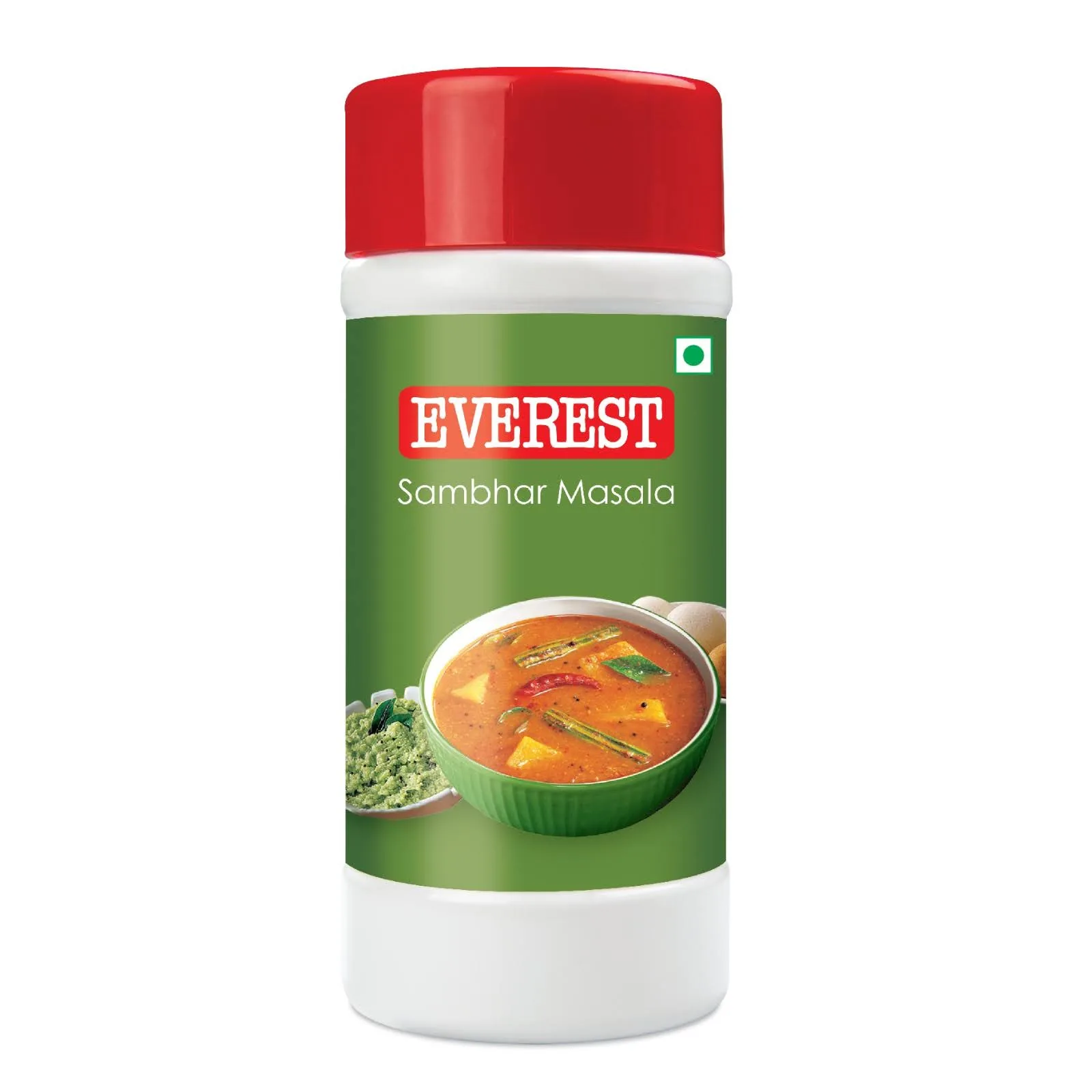
For the South Indian diaspora, sambhar is a daily staple, but achieving the correct balance of lentils, tamarind, and spice is an art form. The sambhar masala UAE blend is crafted to replicate the traditional "hand-pounded" style of spice preparation. It features a heavy base of coriander and cumin, balanced with the earthiness of fenugreek seeds and the heat of red chillies. The inclusion of asafetida (hing) within the blend is crucial, as it provides the savory depth required to balance the sourness of the tamarind. When using this blend, ensure you roast it slightly in the oil with your mustard seeds and curry leaves before adding the dal and vegetables to maximise the aroma.
Perfecting Poultry: Everest Chicken Masala
Non-vegetarian cooking requires spices that can penetrate the proteins and stand up to longer cooking times. Everest Chicken Masala is a robust blend designed to give chicken curries a rich, thick consistency and a deep brown colour. It is not just about heat: it is about the "khada masala" (whole spice) flavour profile that is usually achieved by slow-roasting spices at home. This Everest masala UAE variant works exceptionally well for both "bhuna" style dry preparations and thin, spicy "rassa" gravies. For the best results, use it as a marinade mixed with yoghurt and ginger-garlic paste for at least thirty minutes before cooking. This allows the spices to tenderise the meat while infusing it with flavour to the bone.
North Indian Comfort: Everest Rajma Masala
Rajma Chawal is the ultimate comfort food for many Indian expats. The challenge with Rajma is ensuring the spices don't get "lost" in the heavy, starchy sauce of the kidney beans. Everest Rajma Masala uses a high proportion of dried pomegranate seeds (anardana) and ginger powder. This provides a subtle sourness that cuts through the creaminess of the beans. When cooking Rajma in a pressure cooker, add half the masala during the boiling stage and the other half during the final tempering to ensure layers of flavour.
Building an Everest Spice Pantry in the UAE
Living abroad means you don't always have the luxury of a vast spice cabinet, but you can cover 80% of Indian recipes with just six essential Everest spices UAE. A well-stocked pantry should include:
\-
\
- \Garam Masala:\ For the final aromatic flourish in almost all North Indian dishes.\ \
- \Kitchen King:\ The "joker in the pack" for every everyday vegetable dish.\ \
- \Turmeric Powder (Selam):\ Not just for colour, but for its high curcumin content and earthy base.\ \
- \Kashmirilal Chilli Powder:\ Essential for achieving that deep red colour without excessive, burning heat.\ \
- \Sambhar Masala:\ For breakfast staples and lentil stews.\ \
- \Chicken or Meat Masala:\ To provide the robust foundation needed for protein-heavy meals.\ \
By focusing on these authentic Indian spices Dubai residents can ensure they are prepared for everything from a quick Tuesday night dal to a Sunday feast for friends.
Adapting to the UAE Environment
When Indian cooking abroad UAE, you may notice that local water and even the produce can affect your cooking. UAE water is desalinated, which can sometimes change how lentils soften. Using a pinch of turmeric during the boiling process can help. Furthermore, the onions available in the UAE are often sweeter or have higher water content than Indian red onions. It is vital to fry them for longer, until they are truly dark brown, before adding your spices. This provides the caramelised base that allows the masala to truly shine. For those looking to source the full range of these products, you can find them through Bagason, who ensure that the freshest stock is available across the Emirates. You can learn more about their distribution network and food heritage at https://www.bagason.com for further information on their FMCG portfolio.
Closing: Closing the Distance with Flavour
The distance between the UAE and India is measured in more than just kilometres: it is measured in the familiar sounds, sights, and especially the tastes of home. While we cannot always travel back for a home-cooked meal, we can recreate that experience with precision and care. By choosing spices that carry the legacy of Indian tradition, you are doing more than just seasoning a meal: you are keeping a culture alive in your own kitchen. Whether it is the tang of a perfect sambhar or the warming comfort of a rajma curry, the right spices ensure that no matter where you are in the world, the true taste of home is always just one meal away.