Few things test a food supply chain like the UAE summer. With outdoor temperatures regularly climbing past 45°C for months at a time, and coastal humidity adding further strain, cold chain logistics in the UAE is not a nice-to-have but the backbone of safe, high-quality food distribution. From the moment chilled or frozen goods arrive at port to the instant a shopper takes them from a refrigerated shelf, every link in the chain must hold its temperature. A single lapse can spoil a product, shorten its shelf life management or compromise safety long before it reaches anyone's kitchen.
For a market that imports the overwhelming majority of its food, the cold chain is also a question of national food security and consumer trust. Dairy, meat, frozen ready meals, fresh produce, beverages and pharmaceuticals all depend on temperature-controlled logistics in the UAE working reliably, day after day, through the hottest months of the year. The companies that get this right rarely make headlines; the ones that get it wrong show up as recalls, rejected deliveries and disappointed retail partners.
This article explains how the cold chain works from port to shelf, why the local environment raises the stakes, and what disciplined temperature control looks like in practice. For any brand dealing in dairy, meat, frozen foods, beverages or other temperature-sensitive categories, these fundamentals are central to commercial success in the Emirates.
We have written it with two readers in mind. The first is the overseas brand owner or exporter weighing up whether and how to enter the UAE, who needs to understand what the cold chain will demand before committing to a route to market. The second is the local operator or retail partner who already lives with these pressures and wants a clear, structured way to think about where their own weak points might be. Both will find that the principles are the same; only the vantage point differs.
What the cold chain actually is
The cold chain is the continuous system of refrigerated production, storage and transport that keeps perishable goods within a safe temperature range from origin to point of sale. It spans cold storage at the warehouse, refrigerated transport between facilities and outlets, and chilled or frozen display at retail. Crucially, it is only as strong as its weakest link; a perfectly cold warehouse means little if the delivery van runs warm or the product sits on a sun-baked loading bay for twenty minutes during a busy drop.
It helps to think of the cold chain as a relay race rather than a single sprint. Each handover, from manufacturer to freight forwarder, from port to bonded cold store, from warehouse to vehicle, from vehicle to retailer, is a moment where the baton of temperature integrity can be dropped. Effective cold chain management is largely the discipline of protecting those handovers.
It is also worth distinguishing the cold chain from ordinary logistics in one important respect. In a standard dry supply chain, a delay is usually just a delay; the goods are no worse for having waited a day in a warehouse. In a cold chain, time and temperature are intertwined, and a delay at the wrong moment can permanently destroy value. This is why cold chain professionals talk less about simply moving boxes and more about preserving a condition, a state of safe coldness that must never be allowed to lapse from origin to consumption.
The consequences of failure are not only commercial. Temperature abuse of high-risk foods such as poultry, seafood and soft dairy can create genuine public-health hazards, not merely a loss of quality. That is why the cold chain sits at the intersection of food safety regulation, retailer standards and brand responsibility, and why serious operators treat it with a rigour that can look almost obsessive to outsiders.
The temperature bands that matter
Different products demand different ranges, and confusing them is a common and costly mistake. Broadly, the food cold chain works across three regimes:
- Frozen goods, such as ice cream, frozen vegetables and frozen meat, which must be held deeply frozen and never allowed to partially thaw and refreeze.
- Chilled products, including fresh dairy, deli items and many ready meals, which sit in a tighter band just above freezing.
- Ambient but heat-sensitive goods, such as chocolate, certain beverages and oils, which do not need refrigeration but degrade in extreme heat.
Managing multiple temperature regimes simultaneously, often on the same vehicle and in the same warehouse, is one of the defining challenges of food logistics in Dubai and across the wider Emirates. It demands zoned facilities, multi-temperature vehicles and crews who understand which products tolerate what.
Within each band there is further nuance. Frozen goods, for example, are not simply cold; the speed and stability of freezing affect the size of ice crystals in the product, which in turn affects texture when it is thawed. Ice cream that has partially melted and refrozen develops a grainy, crystalline quality that consumers notice immediately, even if the product is technically still safe. Chilled products, meanwhile, can be ruined by being held too cold as well as too warm, since some fresh items suffer chilling injury near the freezing point. The job of the cold chain is therefore not just to keep things cold but to keep each product in its own correct window.
Why the UAE climate raises the stakes
In a temperate country, a brief gap in refrigeration might be forgiven. In the Gulf, ambient heat accelerates spoilage dramatically, so the margin for error is far smaller. Bacterial growth speeds up sharply as temperatures rise, which means a chilled product left out for an hour in a Dubai car park is in a very different position from the same product left out in a Northern European winter. The so-called last few metres between a chilled vehicle and a cold store become critical moments where temperature can spike if handling is slow or undisciplined.
This environmental pressure shapes everything from warehouse design to delivery scheduling. Pre-cooling vehicles, minimising door-open times, and planning routes to reduce exposure are not optional refinements; they are essential practices baked into every well-run operation. Understanding %how we handle warehousing and distribution end to end% reveals how much operational care sits behind a product that simply looks fresh on shelf.
There is a regulatory dimension too. The UAE summer Midday Break Rule, enforced annually from mid-June to mid-September, bans outdoor work in the sun during the hottest part of the afternoon, roughly between 12:30 and 15:00. For logistics operators this reshapes the working day, pushing loading, unloading and outdoor handling into the cooler morning and evening windows. A cold chain plan that ignores this reality will run into both compliance problems and avoidable heat exposure.
Consider, as an illustrative scenario, a delivery van that must serve a cluster of neighbourhood grocers in inland Abu Dhabi on a day when the outside air sits well above 45°C. Each time the rear doors open, hot, humid air rushes into the chilled compartment, and the refrigeration unit has to work hard to recover the lost cold. If the route is poorly sequenced, with long gaps and many short stops in the early afternoon, the cumulative effect of all those door openings can push the compartment out of range long before the last drop is made. The same van, on the same route, run in the cooler early morning with tightly sequenced stops, may never come close to a temperature excursion. The difference is planning, not equipment.
Humidity compounds the heat. On the coast, very high humidity means that any cold surface, a chilled pallet, the inside of a freezer door, the product itself, attracts condensation the moment it meets warm air. Condensation encourages microbial growth, damages packaging and labels, and can cause frozen items to stick together. A cold chain designed only around temperature, with no thought for moisture, will still run into quality problems in the Gulf summer.
From port to bonded cold store: the first link
Because so much temperature-sensitive food arrives by sea and air, the cold chain in the UAE often begins at the port. Reefer containers must be plugged into power promptly, inspected and moved into bonded cold storage without sitting on the quayside in the heat. Delays in customs clearance are not just administrative inconveniences here; every hour a reefer waits is an hour of risk and a slice of remaining shelf life lost.
This is why coordination between the freight forwarder, the customs broker and the cold store operator matters so much. A consignment that clears smoothly and moves straight into a temperature-controlled environment preserves both quality and the all-important shelf-life runway that retailers expect. The brands behind %the brands whose chilled and frozen ranges we carry% depend on this opening link being managed with the same rigour as the rest of the journey.
Documentation plays a quiet but vital role at this stage. Many imported temperature-sensitive products are expected to arrive with evidence that they were transported under the correct conditions, and a reefer container that has logged its temperature throughout the voyage gives the importer confidence that the goods inside are sound before they are even unpacked. Where that evidence is missing or shows excursions, a responsible importer must decide whether to accept, test or reject the consignment, a decision that is far easier to make well when the data is complete and the criteria are agreed in advance.
Air freight introduces its own version of the same problem. Goods may travel cold in the hold, but they can sit on hot tarmac before loading and after landing. The transition from aircraft to cold store, often through an open-air apron in full sun, is exactly the kind of brief, high-risk gap that careful operators plan around with insulated covers, fast handling and pre-arranged transport waiting at the right temperature.
Cold storage and warehousing
Effective cold storage in the UAE goes well beyond a large freezer. It involves zoned facilities with separate ambient, chilled and frozen areas, continuous temperature monitoring, backup power to protect against outages, and rigorous stock rotation to manage expiry. First-expiry-first-out discipline ensures older stock moves before newer arrivals, reducing waste and protecting freshness across the whole range.
Backup power deserves a special mention. In a climate where a few hours without refrigeration during a summer power cut could ruin an entire frozen inventory, standby generators and rapid failover are not luxuries. A serious cold store treats power resilience as a core part of its risk management, with regular testing rather than equipment that is assumed to work until the day it is suddenly needed. The thermal mass of a full, well-insulated cold room buys some time during an outage, but that buffer shrinks quickly in extreme heat, so the gap between losing mains power and a generator carrying the load needs to be measured in seconds, not minutes.
Traceability and stock integrity
Traceability is equally important. Knowing the batch, source and temperature history of stock means that, in the rare event of a quality issue or recall, affected products can be identified and removed quickly. Modern warehouse systems link each pallet to its arrival temperature, its location in the facility and its movement history, so nothing relies on memory or guesswork.
Good warehousing is therefore as much about information and process as it is about refrigeration. Accurate stock visibility also underpins demand planning, helping ensure that the right quantity of perishable product is held, that fast-moving lines do not run out, and that slow-moving stock is not over-ordered into eventual waste.
The physical layout of a cold store matters more than people often assume. Doorways between temperature zones are points of constant air exchange, so well-designed facilities use air curtains, rapid-action doors and staging areas to limit the warm air that enters every time a forklift passes through. Picking strategies are arranged so that workers spend as little time as possible inside the coldest rooms, both to protect the product from prolonged door openings and to look after the people doing physically demanding work in sub-zero conditions. A cold store that is efficient for its staff is usually also better for its stock.
Receiving and quality checks at the door
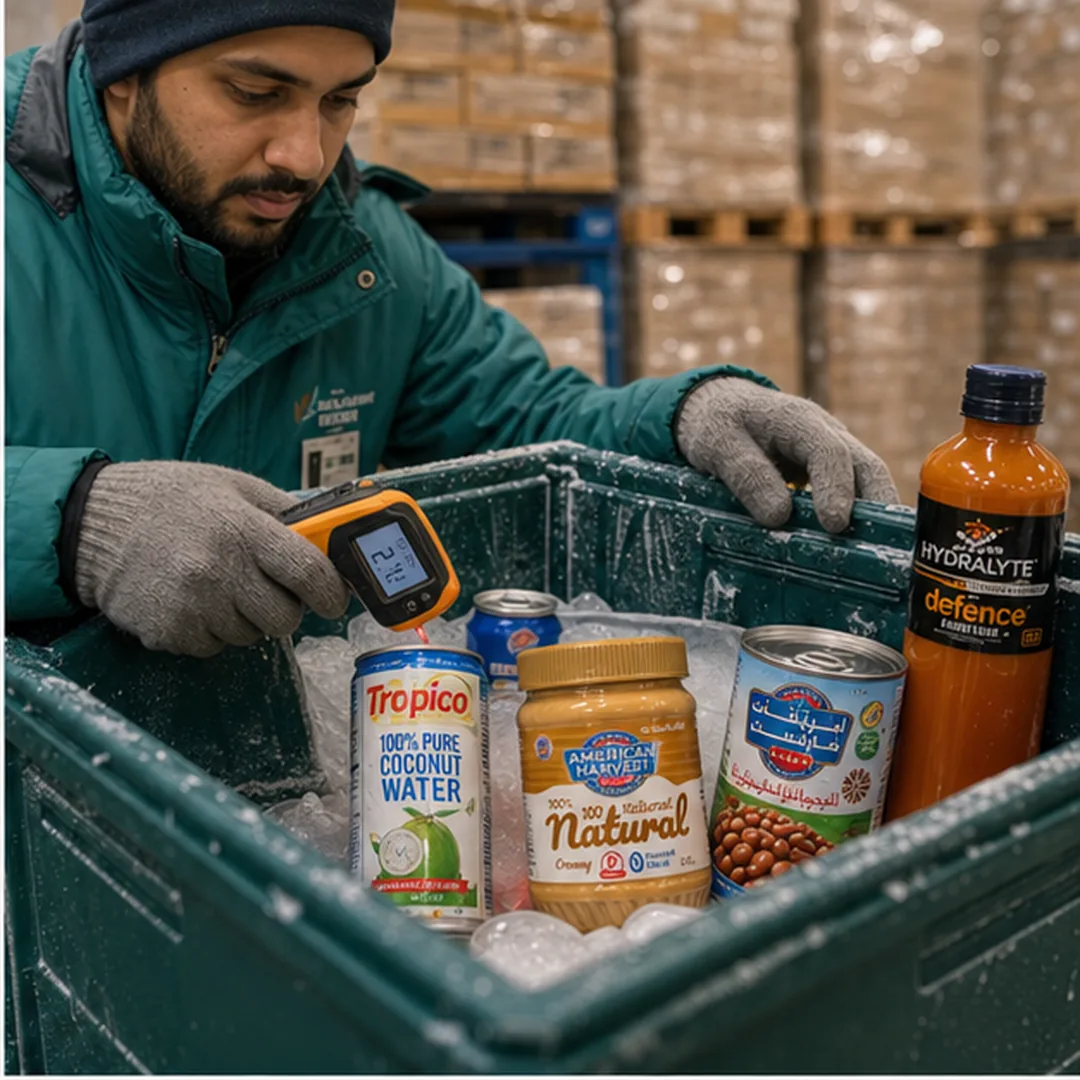
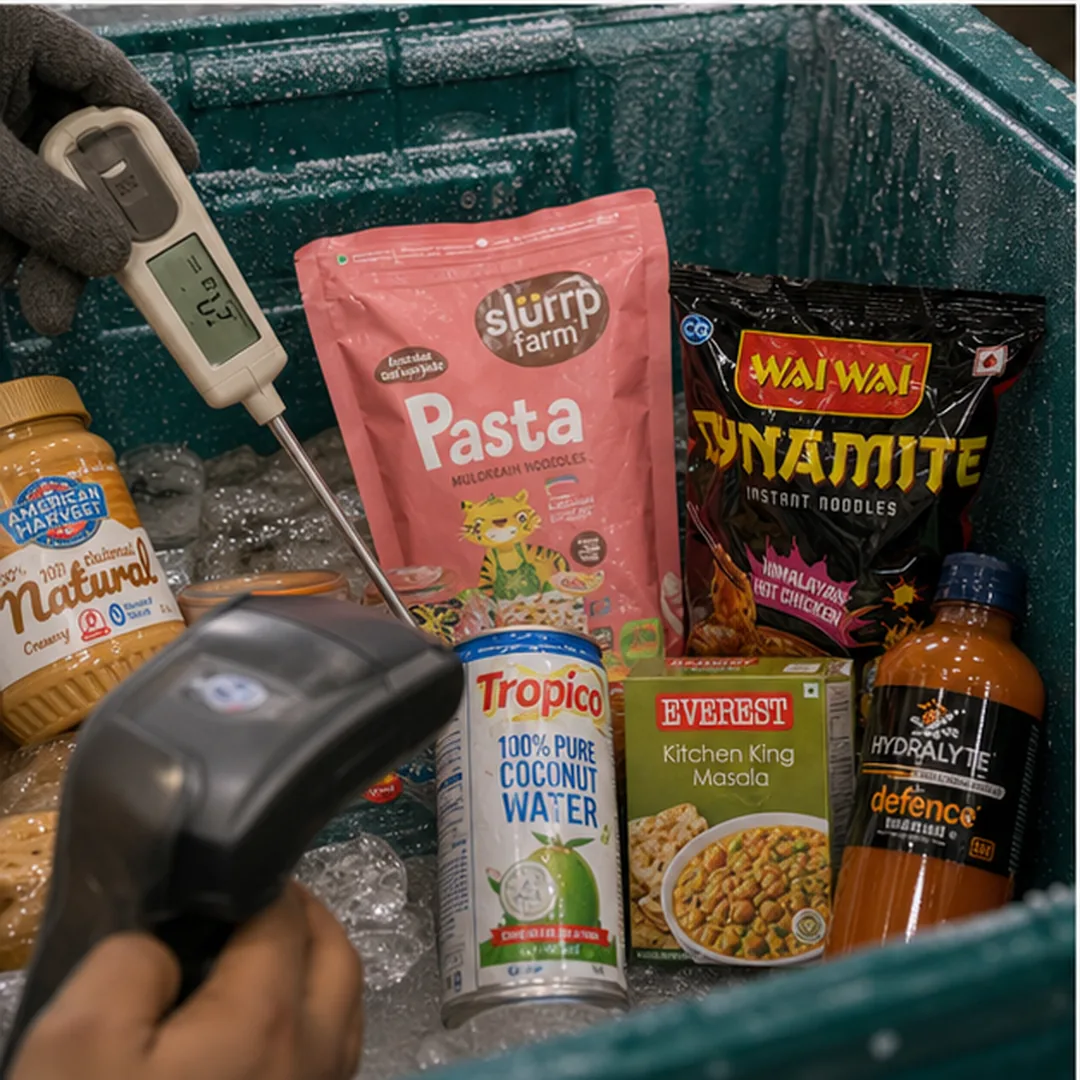
The receiving dock is one of the most important control points in the whole operation. This is where incoming temperature is verified, where the condition of packaging is inspected, and where any consignment that arrives outside specification is flagged before it contaminates the rest of the inventory, either literally or by being mixed into otherwise sound stock. A disciplined goods-in process records the arrival temperature of every delivery, checks it against what the label and documentation promise, and routes anything questionable into a hold area rather than straight onto the racking. Skipping this step to save a few minutes is one of the most common ways a well-run cold store quietly accumulates risk.
Refrigerated transport and last-mile delivery
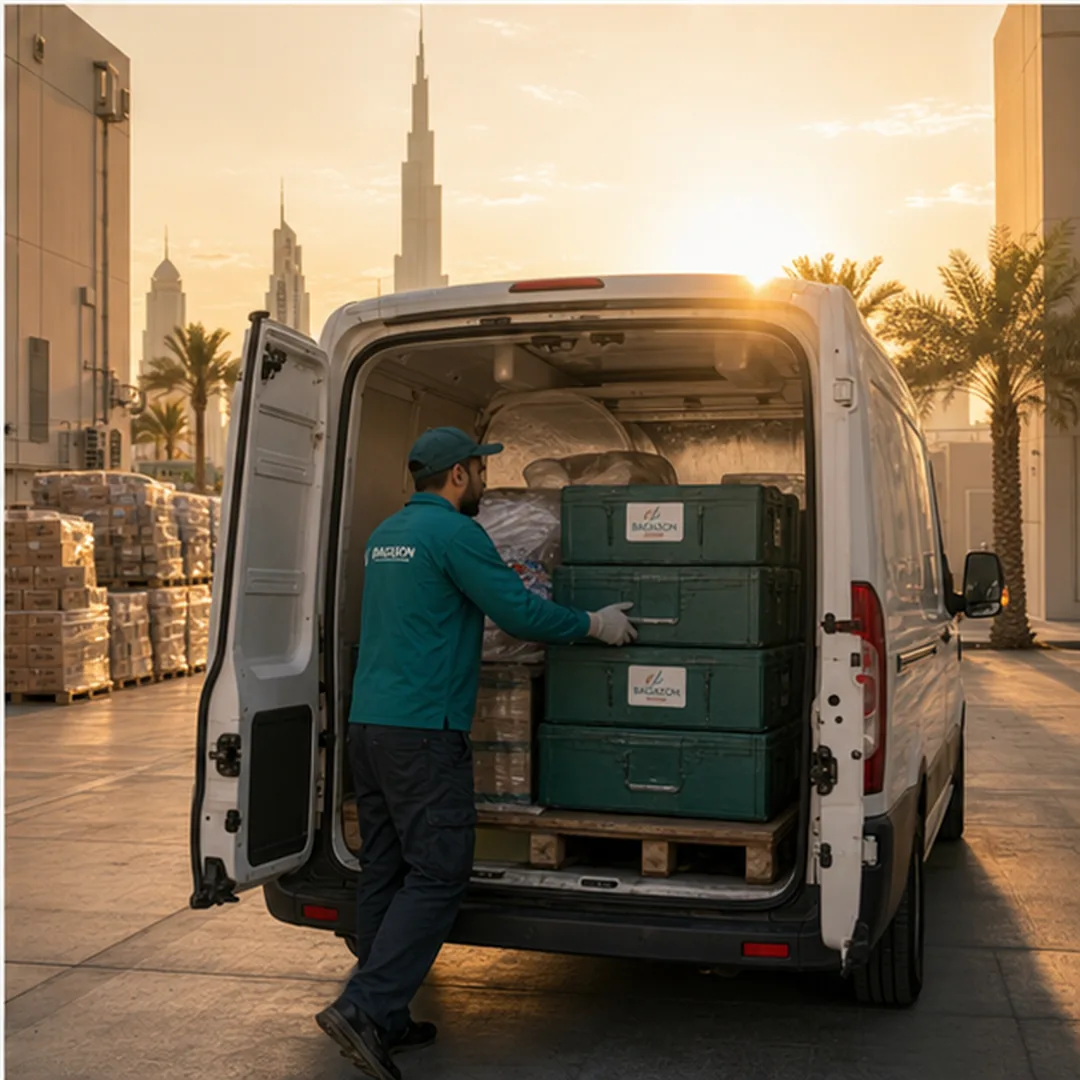
Moving goods is where the cold chain is most exposed. Refrigerated vehicles must maintain temperature across long distances and frequent stops, and the challenge intensifies in chilled distribution across the UAE where a single route may serve dozens of outlets, each requiring a door to open in the heat. Every stop is a small thermal event, and on a long route those events add up.
Well-run operations address this through pre-cooled trucks, temperature logging, efficient route planning and trained drivers who understand that speed and care at the point of delivery protect quality. Serving both bulk deliveries to large hypermarkets and small, frequent drops to neighbourhood baqalas, often within the same run, demands careful planning, which is why %the reach we deliver across the Emirates% depends so heavily on logistics that can flex to each channel.
Designing routes around the heat
Route design in the Gulf is not only about distance and fuel. It is also about thermal exposure. Scheduling the most temperature-sensitive deliveries earlier in the day, sequencing stops to minimise door-open time, and avoiding long midday stretches all reduce risk. Multi-temperature vehicles with separate compartments allow frozen and chilled goods to travel together without compromise, but only if drivers respect the discipline of opening the right compartment for the right product.
The driver is, in many ways, the most underrated link in the entire cold chain. Sophisticated refrigeration and real-time monitoring count for little if the person at the wheel leaves the doors open while completing paperwork, parks in direct sun with the unit switched off to save fuel, or stacks chilled product against a warm cab wall. Investing in driver training, and giving drivers simple tools and clear incentives to protect temperature, often delivers more improvement per dirham than any new piece of hardware.
Serving modern and traditional trade together
The UAE market is unusual in the breadth of channels a distributor must serve at once. In a single run, one operation may deliver full pallets to a large hypermarket with its own receiving cold room, drop a few cases at a mid-sized supermarket, and make tiny deliveries to neighbourhood baqalas that have only a modest display chiller and no back-of-house storage. Each of these has a different risk profile. The hypermarket can absorb product quickly into its own cold chain; the small grocer may leave a delivery on the counter for several minutes during a busy period. A mature distributor tailors pack sizes, delivery frequency and handling instructions to each channel rather than treating them all the same.
Monitoring, compliance and accountability
Modern temperature-controlled logistics relies on continuous monitoring rather than spot checks. Sensors and data loggers record temperatures throughout storage and transit, creating an audit trail that proves the cold chain held. Increasingly this data is available in real time, so an excursion can trigger an alert while there is still time to act, rather than being discovered after the product has already been compromised.
This data matters for regulatory compliance, for retailer confidence, and for the brand's own quality assurance. UAE food safety authorities and retail partners alike expect documented evidence that temperature was maintained, and a distributor that can produce a clean, continuous record is a far more attractive partner than one that asks everyone to take its word for it.
When something does go wrong, that record allows a fast, informed response: isolating affected stock, identifying the failure point, and preventing recurrence. Accountability built on data is what separates a dependable cold chain from one that merely hopes for the best. Many of the practical concerns covered in %questions distributors ask us most often% come back to exactly this point, namely how operators prove, not just promise, that quality has been protected.
It is important, though, not to mistake data for control. A warehouse stuffed with sensors but with no one watching the alerts, and no clear procedure for acting on them, is no safer than one with none at all. The value of monitoring lies entirely in the response it enables. The best operations pair their technology with defined ownership, so that every alert reaches a named person who knows exactly what to do, and with regular reviews of the data to catch slow drifts and recurring weak points before they turn into losses.
Designing for the weakest link
Because the cold chain is only as strong as its most vulnerable point, good operators design specifically around the moments most likely to fail. The handover between transport and storage, the time a vehicle spends with its doors open at a busy delivery, and the gap between a product leaving the back-of-store fridge and reaching the display chiller are all classic risk points. Anticipating them, rather than reacting to spoilage after the fact, is the mark of a mature operation.
Practical measures make a real difference: staging chilled goods so they spend minimal time exposed, scheduling deliveries to avoid the hottest part of the day where possible, and training every person who handles the product, not just drivers, to treat temperature as non-negotiable. Cold chain discipline is ultimately a culture as much as a set of equipment.
That cultural point is easy to underestimate. The most sophisticated cold chain in the world still depends on a forklift operator choosing not to leave a pallet of chilled yoghurt on the dock while answering a phone call, and on a store assistant choosing to put a delivery into the chiller straight away rather than after they have finished serving customers. These small choices, repeated thousands of times a day, are where a cold chain is genuinely kept or lost. Organisations that treat temperature integrity as everyone's responsibility, and that make the right choice the easy choice through good layout and clear routines, consistently outperform those that rely on a written policy nobody really lives by.
Handling exceptions and recalls
Even the best-run cold chain occasionally faces an exception: a vehicle breakdown, a power interruption, or a temperature excursion flagged by a sensor. What matters is having a clear, rehearsed plan for these moments. Affected stock should be quarantined and assessed against defined criteria rather than waved through or discarded on guesswork, and the cause should be investigated so the same failure does not recur.
This same discipline underpins product recalls. When traceability is strong, a distributor can identify exactly which batches are affected, where they were delivered and how to retrieve them quickly. Speed and accuracy in these situations protect both consumers and the brand's reputation, turning a potential crisis into a controlled, professional response rather than a scramble.
Technology in the modern cold chain
The cold chain has quietly become one of the most data-rich parts of food distribution. Internet-connected temperature sensors, GPS-tracked vehicles, warehouse management systems and route-optimisation software now work together to give operators a near-continuous picture of where every consignment is and how cold it is. The value of this technology is not novelty for its own sake; it is the ability to catch problems early and to make planning decisions based on evidence.
Consider, as an illustrative scenario, a chilled dairy route serving forty outlets across two emirates on a single August morning. With real-time monitoring, a dispatcher who sees one compartment drifting warmer than its set point can reroute the vehicle or prioritise its remaining drops before any product is lost. Without that visibility, the same problem would only surface as spoiled stock and an unhappy retailer days later. Technology, used well, turns the cold chain from a black box into a managed system.
Beyond live monitoring, the accumulated data becomes a powerful planning tool over time. Patterns emerge: a particular delivery window that repeatedly runs warm, a route that always struggles in peak summer, a vehicle whose refrigeration recovers slowly and may need servicing. Treated as a feedback loop rather than a compliance archive, this information lets operators tune their network continuously, retiring weak practices and reinforcing the ones that work. The cold chains that improve year on year are almost always the ones that take their own data seriously.
None of this technology removes the need for judgement. Sensors can tell you that a compartment touched a slightly high temperature for ten minutes, but deciding whether the affected product is still fit for sale requires understanding the product, the duration and the degree of the excursion. The strongest operations combine good data with clear, pre-agreed decision rules and experienced people, so that exceptions are handled consistently rather than according to whoever happens to be on shift.
Sustainability and efficiency in the cold chain
Cold chain operations are energy-intensive by nature, and as the sector matures there is growing attention to running them more efficiently. Well-insulated facilities, modern refrigeration, optimised delivery routes and reduced product waste all lower both cost and environmental impact. Efficiency and sustainability tend to move together here: a route that minimises door-open time and mileage saves fuel, protects quality and cuts emissions at once.
Reducing waste is perhaps the most powerful lever of all. Every product that spoils represents not just lost sales but wasted energy, transport and packaging. Tight stock rotation, accurate demand planning and a cold chain that genuinely holds its temperature all mean fewer write-offs, which is good for margins and for the wider goal of a more responsible food system. For brands, partnering with a distributor that takes efficiency seriously is increasingly part of doing business well.
There is a growing expectation, from both consumers and large retail customers, that suppliers can speak credibly about their environmental footprint. A distributor that can show how it consolidates deliveries, optimises routes, maintains efficient refrigeration and minimises spoilage is better placed to support its brand partners on this front. In a category where the cold chain is one of the largest sources of both cost and emissions, getting it right is one of the most meaningful sustainability steps a food business can take, and it happens to align neatly with running a tighter, more profitable operation.
The payoff: quality, trust and less waste
A well-managed cold chain protects more than product; it protects margins, reputation and shopper trust. Fewer rejected deliveries, longer effective shelf life and consistent quality on shelf all flow from getting temperature control right at every step. In a market as demanding as the Emirates, this discipline is a genuine competitive advantage rather than a back-office detail.
For an importer or brand owner weighing up the local market, the message is simple. The cold chain is not the part of the operation to economise on, and it is not something to bolt on at the last minute. It is the foundation on which everything else, from listings to repeat orders, is built. A brand that arrives consistently fresh, in full and on time earns the confidence of category buyers and shoppers alike, while one that turns up with warm, short-dated or damaged stock spends its energy firefighting instead of growing.
The reassuring part is that a strong cold chain is not a matter of luck or of any single expensive machine. It is the cumulative result of sound design, good data, well-trained people and a culture that refuses to treat temperature as negotiable. Each of these is achievable, and together they compound into a genuine and durable advantage in one of the most demanding food markets in the world. If your products depend on chilled or frozen handling, %discuss your chilled and frozen logistics needs% so that your supply chain stays unbroken from port to shelf, and %speak directly with our logistics team% if you want to walk through the specifics of your range before you ship.
Frequently Asked Questions
What is cold chain logistics?
Cold chain logistics is the continuous system of refrigerated storage and transport that keeps perishable goods within a safe temperature range from origin to point of sale. It covers cold storage, refrigerated vehicles and chilled retail display. The whole system is only as reliable as its weakest link, so every handover between stages has to be protected.
Why is the cold chain so important in the UAE specifically?
The UAE's high ambient temperatures, which regularly exceed 45°C in summer, accelerate spoilage, so any break in refrigeration can damage products quickly. Maintaining temperature during loading, transport and delivery is critical to preserving safety, quality and shelf life. Because the country imports most of its food, reliable cold chain logistics is also central to food security and consumer trust.
Which products need cold chain handling?
Dairy, meat and poultry, frozen foods, fresh produce, many beverages and other perishable items require temperature control. Frozen and chilled goods sit in different temperature bands, and some ambient products such as chocolate still degrade in extreme heat. Managing several regimes at once is a key part of effective food logistics in the Gulf.
How does the UAE Midday Break Rule affect cold chain operations?
The Midday Break Rule bans outdoor work in the sun during the hottest part of the afternoon, roughly 12:30 to 15:00, from mid-June to mid-September. Logistics operators respond by shifting loading, unloading and outdoor handling into cooler morning and evening windows. This protects workers and also reduces the heat exposure that products face during handling.
How is cold chain compliance proven?
Continuous temperature monitoring with sensors and data loggers creates an audit trail showing the cold chain was maintained throughout storage and transit. Increasingly this data is available in real time, allowing alerts before a problem becomes a loss. The records support regulatory compliance, build retailer confidence and enable a fast response if a quality issue arises.
What happens when a temperature excursion occurs?
A well-run operation quarantines the affected stock and assesses it against defined criteria rather than guessing or waving it through. The cause is then investigated so the same failure does not recur. Strong traceability means the operator can pinpoint exactly which batches and deliveries are involved, which is essential for a fast and controlled response.
How does cold storage differ from an ordinary warehouse?
Cold storage uses zoned areas for ambient, chilled and frozen goods, continuous temperature monitoring, backup power against outages and strict first-expiry-first-out stock rotation. Power resilience is especially important in the UAE, where a few hours without refrigeration during a summer outage could ruin an entire frozen inventory. Traceability systems link every pallet to its temperature and movement history.
Why is last-mile delivery the riskiest part of the cold chain?
Last-mile delivery involves frequent stops, each opening a door in the heat, often across dozens of outlets on one route. Every stop is a small thermal event, and on a long route those add up. Operators reduce the risk with pre-cooled vehicles, multi-temperature compartments, careful route sequencing and drivers trained to keep door-open time short.
Can a strong cold chain reduce food waste?
Yes. A cold chain that genuinely holds temperature, combined with tight stock rotation and accurate demand planning, means fewer products spoil and fewer write-offs occur. Less waste lowers cost, protects margins and reduces the wasted energy, transport and packaging tied up in spoiled goods. Efficiency and sustainability tend to improve together.
What should a brand look for in a cold chain logistics partner?
Look for zoned cold storage, backup power, multi-temperature transport, real-time monitoring with documented records, strong traceability and a rehearsed plan for exceptions and recalls. The partner should also understand local realities such as port clearance, the Midday Break Rule and the demands of serving both modern and traditional trade. Evidence and process matter more than promises.