Getting food labelling uae requirements right is one of the first and most decisive hurdles any food importer vs distributor faces. A product can be perfectly formulated, competitively priced and backed by a strong brand, yet still sit stuck at the port because a label is missing a single mandatory field. For food and grocery products entering the United Arab Emirates, the label is not a marketing afterthought; it is a regulated document that determines whether your goods clear customs, reach the shelf and stay there.
This guide walks through the practical essentials of compliant labelling for imported food, from Arabic text and mandatory declarations to shelf-life rules and the small details that quietly cause rejections. The aim is to help brand owners and exporters understand what good looks like before the first container ever ships, rather than discovering the rules the expensive way at the border.
Throughout, the emphasis is practical rather than legalistic. Regulations are detailed, occasionally technical and subject to revision, and the precise standard that applies can depend on the exact nature of your product. Rather than attempting to reproduce the rulebook, this article focuses on the patterns of failure we see most often and the habits that prevent them, so that a brand can build labelling discipline into the way it works rather than treating each shipment as a fresh gamble.
It is worth saying upfront that requirements evolve and can differ by product category, so nothing here replaces checking the current rules for your specific product. What does not change is the underlying logic: the authorities want labels that are accurate, complete, honest and readable, in the right languages, matching the registered product. A brand that internalises that logic, rather than treating each requirement as an isolated box to tick, finds compliance far easier to sustain as its range grows and as regulations are updated.
Why food labelling rules matter at the border
The UAE imports the overwhelming majority of its food, so the authorities apply consistent scrutiny to incoming consignments. Labels are checked against registered product information, and any discrepancy between the artwork, the registration record and the physical pack can trigger a hold. A hold is rarely just a paperwork inconvenience: chilled and frozen goods lose shelf life management every day they wait, demurrage charges accumulate, and a delayed first delivery can damage a new listing before it has had a chance to sell.
Because we provide %national coverage across all seven emirates%, we see first-hand how labelling errors ripple through the whole supply chain. A non-compliant batch does not simply fail at the border; it disrupts replenishment, frustrates retail partners and erodes the trust that makes future listings possible. Treating the label as a compliance-critical asset, rather than packaging decoration, saves a great deal of pain later.
The financial picture is worth spelling out, because exporters new to the region sometimes assume a labelling slip is a minor irritation. A held consignment can incur daily storage and demurrage charges, tie up working capital in goods that cannot be sold, and force an urgent and expensive choice between re-labelling under pressure or shipping the stock back. For chilled and frozen lines the clock is even crueller, since shelf life drains away while the dispute is resolved. Set against those costs, the price of careful pre-shipment label validation is trivial, which is exactly why experienced importers treat it as non-negotiable.
There is also a reputational dimension that exporters new to the region sometimes underestimate. Buyers at the major getting onto supermarket shelves and hypermarket groups remember which suppliers caused them problems. A brand that arrives clean, on time and fully compliant builds a reputation as easy to work with, and that reputation translates directly into shelf space and category support over the following seasons.
It helps to understand the regulator's point of view. With such a high proportion of food imported from dozens of countries, each with its own labelling conventions, the authorities cannot simply trust that a foreign label means what a local shopper assumes it means. The label is the mechanism by which a product made anywhere in the world is rendered legible, safe and honest for a UAE consumer. Seen this way, the rules are not arbitrary bureaucracy but a translation layer, and the importer's job is to make that translation complete and accurate before the goods ever arrive.
For a first-time exporter, the most useful mental shift is to stop thinking of the label as the last step in product development and start thinking of it as the first step in market entry. The artwork, the registration and the logistics plan all hang together, and decisions made early, such as which language goes where, how dates are coded, and what claims appear on pack, ripple through every shipment that follows.
Arabic labelling and bilingual requirements
Arabic labelling uae is a foundational expectation. Mandatory information generally needs to appear in Arabic, and in practice most products carry bilingual Arabic and English text so that both regulators and consumers can read the essentials. The Arabic must be an accurate translation, not a rough approximation, and it must be legible: correct font size, sufficient contrast and no text obscured by seams, folds or promotional stickers.
Brands sometimes try to meet this requirement late in the process with an over-sticker applied at the warehouse. That can work as a remedy, but it is far better to design Arabic into the artwork from the outset. A clean, professionally translated pack signals quality to retailers and avoids the cluttered, patched-up look that supermarket category buyers tend to reject.
Getting the translation right
A common pitfall is treating translation as a purely mechanical task. Food terminology, ingredient names, marketing claims and storage instructions all carry nuance, and a literal word-for-word rendering can read awkwardly or, worse, change meaning. Investing in a translator who understands food labelling, and having the Arabic proofed by a native speaker before print, prevents both regulatory issues and the kind of errors that quietly undermine a premium brand in the eyes of Arabic-reading shoppers.
The mechanics of bilingual layout also deserve thought. Arabic reads right to left, which affects how a pack is composed, where panels sit, and how the two languages are balanced visually. Cramming Arabic into whatever space is left over after the English is finished tends to produce small, awkward, hard-to-read text, which is precisely the kind of thing that draws a regulator's attention and signals carelessness to a shopper. Treating both languages as equal citizens of the design from the first sketch produces a cleaner pack and a smoother approval.
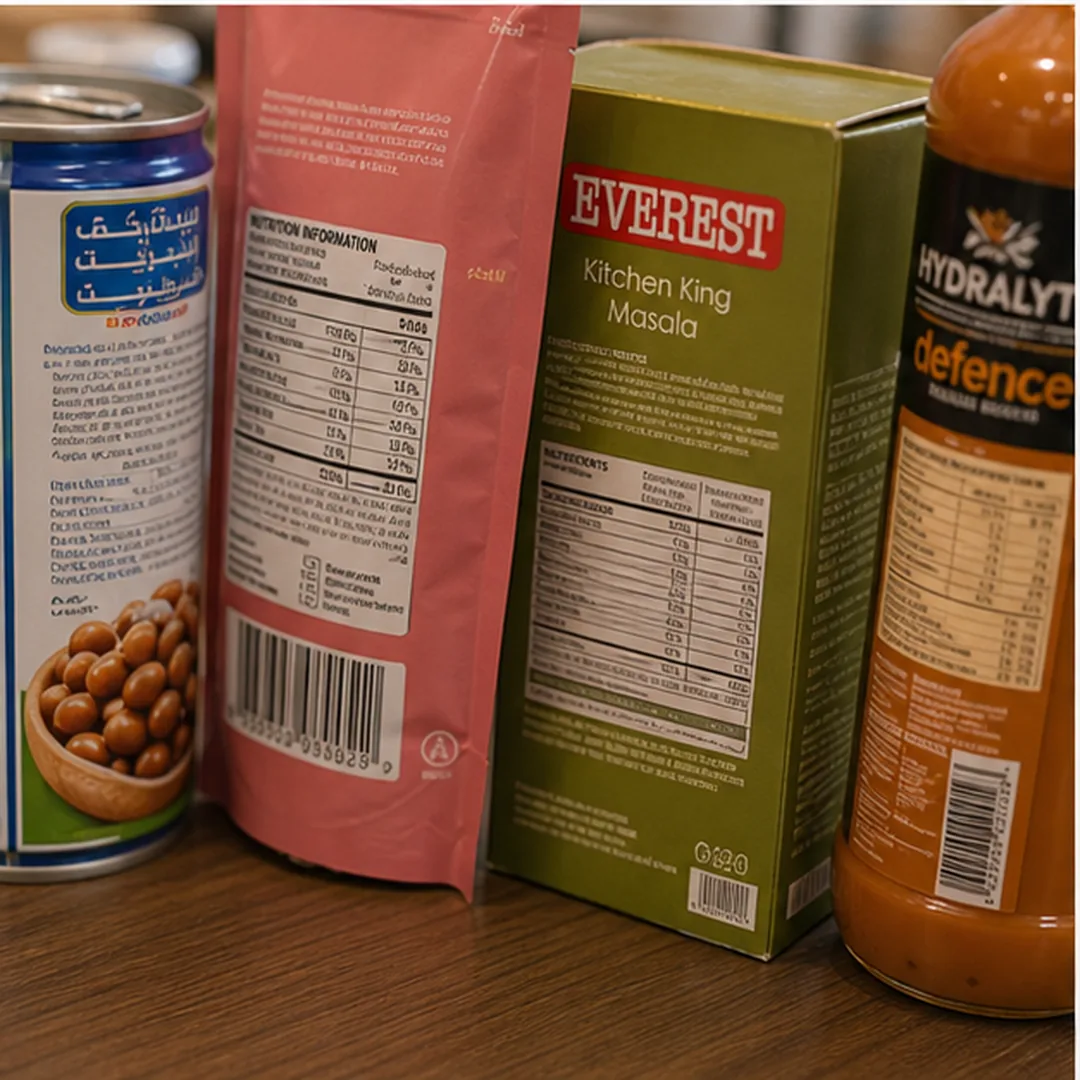
Legibility is not only about size. Contrast between text and background, the avoidance of busy imagery behind important declarations, and keeping mandatory information off seams, folds and curved surfaces all matter. A nutrition panel printed in pale grey on a glossy photographic background may technically contain every required word and still fail because nobody can actually read it. The test a brand should apply is simple: can an ordinary shopper, and an inspector, read every mandatory field easily, in both languages, on the real pack rather than the flat artwork.
The mandatory information your label must carry
While exact wording can vary by product category, the core food label requirements uae consistently expect a defined set of declarations. Most compliant food labels need to clearly present the following:
- Product name and a true description of the food, so it is not misleading.
- Complete ingredient list in descending order of weight, with additives named appropriately.
- Allergen information, declared clearly and consistently.
- Net content or net weight in metric units.
- Production and expiry dates, printed in the accepted format.
- Storage conditions, especially for chilled, frozen and ambient-sensitive goods.
- Country of origin and the name and address of the manufacturer, importer or distributor.
- Nutritional information where required for the category.
The detail that catches many exporters out is consistency. The batch code, dates and net weight on the physical pack must match what is declared and registered. Auditors compare the label, the certificate of origin and the registration entry, so a mismatch in any one of them is enough to stop a shipment. None of these fields is individually difficult; the discipline lies in making sure they all agree, every time, across every variant in the range.
Two fields in particular reward extra attention. The ingredient list must be complete and in descending order of weight, with additives identified properly rather than hidden behind vague catch-all terms; an inspector who sees a generic phrase where a specific additive should be named will ask questions. Allergen declaration is the other. Allergens must be presented clearly and consistently so that a consumer with a serious sensitivity can identify a risk at a glance. This is not merely a labelling formality but a genuine safety obligation, and it is treated as such.
Units are a deceptively common source of error. The UAE works in metric, so net content must be declared in grams, kilograms, millilitres or litres, and a label that carries only imperial units, or that mixes systems confusingly, invites trouble. Exporters who sell primarily into markets that use ounces or pounds sometimes forget to adapt, and the oversight surfaces at the worst possible moment, when the container is already at the port.
Dates, shelf life and storage declarations
Date marking deserves special attention because it intersects with shelf-life rules. Imported products are expected to arrive with a meaningful portion of their shelf life remaining, so a long sea freight transit on a short-life product can leave too little runway to be accepted. Production and expiry dates must be printed clearly, in the correct sequence, and never altered or relabelled after the fact, which is treated as a serious breach.
Storage instructions tie directly into cold-chain integrity. If a label states a temperature requirement, the entire journey, from the exporter's facility through warehousing to last-mile delivery, has to honour it. Many of %the brands we already represent in the market% rely on disciplined cold-chain handling, and the label is the promise that this discipline is being kept.
Storage instructions should also be realistic and specific rather than vague. A phrase such as keep cool is far less useful than a clear temperature range, both for the supply chain that must honour it and for the consumer who takes the product home. Where a product behaves differently once opened, that should be stated too, since the instruction on how to keep an opened jar or carton is part of keeping the consumer safe and the product at its best. The label is, in effect, the handover document between the brand's promise and everyone who subsequently touches the product.
Planning transit around shelf life
As an illustrative rule of thumb, a short-life chilled product that needs four to six weeks of sea transit may simply not be viable to ship that way, because too little of its life remains by the time it clears and reaches the shelf. In such cases brands either move to air freight, reformulate for a longer life, or rethink the route to market entirely. The point is to model shelf life and transit time together, early, rather than discovering at the port that the maths never worked.
Retailers add their own layer to this. Beyond whatever minimum remaining shelf life is required for clearance, most supermarket and hypermarket groups have their own acceptance policies, often expressed as a minimum percentage of total shelf life that must remain on delivery to their distribution centre. A product can clear customs comfortably and still be rejected at a retailer's receiving dock for being too close to its expiry date. Planning therefore has to account not just for the regulatory threshold but for the commercial one, which is frequently stricter.
The format of the date itself matters too. Dates must be printed clearly and in the accepted sequence, and they must be genuinely permanent. Smudged, easily rubbed-off or, worst of all, over-stickered dates are a serious red flag, because altering date marking is treated as one of the gravest breaches in food labelling. The safest practice is to print dates directly and indelibly onto the pack as part of the production line, in a position that is easy to find and impossible to tamper with.
Nutrition, claims and the risk of misleading text
Beyond the basic declarations, labels increasingly carry nutritional panels and on-pack claims, and both are scrutinised. Nutritional information, where required for the category, must be calculated correctly and presented in the expected format and units. An error here is not cosmetic; it changes how a product is understood and can place it in conflict with its registration.
Claims demand even more care. Words such as natural, healthy, high in or free from are not decorative; they are regulated assertions that must be substantiated and used within the bounds the rules allow. A health or nutrition claim that cannot be supported, or that overstates a benefit, exposes the brand to rejection and reputational damage. The safest discipline is to claim only what is true, provable and permitted, and to keep the artwork free of language that could be read as misleading.
Misleading does not always mean an outright false statement. A claim can be technically accurate yet still create a false impression, for example by emphasising the absence of an ingredient that the category never contained anyway, or by using imagery that implies a health benefit the product cannot deliver. Regulators look at the overall impression a pack gives, not just the literal truth of each individual phrase. A useful internal test is to ask whether an ordinary, reasonable shopper would come away with a belief about the product that is not actually justified; if so, the artwork needs rethinking regardless of how defensible each word is in isolation.
Halal and dietary indications
Religious and dietary indications, including halal status, must be genuine and properly evidenced, since shoppers and regulators alike treat them as matters of trust. Halal certification from a recognised body, where it applies to the product, should be reflected accurately on the pack rather than implied loosely. Misrepresenting halal status or other dietary claims is among the most damaging mistakes a brand can make in this market, because it strikes at consumer confidence in a way that is very hard to rebuild.
The same care applies to ingredients that consumers actively avoid for religious or dietary reasons. The presence of any pork-derived ingredient, alcohol used in processing, or animal-derived additives must be declared honestly and clearly, because shoppers rely on the label to make choices that matter deeply to them. A product that turns out to contain something a consumer was trying to avoid, because the label was unclear or incomplete, causes harm that goes well beyond a single sale. Honesty here is both a regulatory requirement and a matter of basic respect for the customer.
Keep the artwork, registration and shipment aligned
A surprising share of rejections come not from a single wrong fact but from drift between documents. Over time, recipes get tweaked, suppliers change, pack weights are adjusted and new variants are added, yet the registration record or the printed artwork lags behind. When an inspector compares the physical pack, the certificate of origin and the registration entry, even a small inconsistency, an outdated address, a superseded net weight, a renamed ingredient, is enough to stop the consignment. Treating artwork, registration and the physical specification as one linked system, updated together, prevents most of these avoidable holds.
Country of origin, manufacturer and importer details
Two pieces of identifying information are easy to treat as boilerplate and yet are scrutinised closely. The first is country of origin, which must be stated truthfully and must agree with the certificate of origin and the rest of the shipping documentation. Where a product is manufactured in one country from ingredients sourced elsewhere, the origin statement needs to reflect the rules accurately rather than whatever is most flattering for marketing. An origin claim that does not match the paperwork is a classic cause of a hold.
The second is the chain of responsible parties: the manufacturer, and the name and address of the importer or distributor within the UAE. This is what allows the authorities and consumers to know who stands behind the product and who to contact if something goes wrong. For imported goods this local contact detail is not optional decoration; it is part of what makes the product traceable and accountable within the country, and an outdated or missing address is enough to cause problems.
Because these details connect the physical pack to the legal and commercial reality of who is importing the product, they are an area where a capable local distributor adds real value. The importer's details have to be correct and current, and where a brand changes its distribution arrangements, the artwork must be updated to match rather than continuing to carry a superseded name on the shelf.
This is also where the relationship between a foreign brand and its local partner becomes most concrete. A distributor that knows the requirements intimately can advise on exactly how origin should be expressed for a given product, ensure the importer details are right, and flag the kind of subtle inconsistency that a brand operating from thousands of kilometres away would never spot. Far from being a formality, these identifying fields are part of the connective tissue that makes a product legitimate, traceable and trusted in the market, and they reward the same attention as the headline declarations.
The most common reasons labels get rejected
It is instructive to look at the failures that recur most often, because they are rarely exotic. The overwhelming majority of labelling rejections fall into a handful of avoidable categories:
- Missing or incomplete Arabic translation of mandatory information.
- Inconsistencies between the pack, the certificate of origin and the registration record.
- Insufficient remaining shelf life on arrival, or unclear date marking.
- Net content not declared in metric units, or declared inconsistently.
- Unsupported or misleading claims, including overstated health benefits.
- Incorrect, vague or missing storage instructions.
- Illegible text, whether through small font, poor contrast or placement on a seam or fold.
- Outdated importer or manufacturer details after a change that was never carried through to the artwork.
What unites this list is that none of these problems is difficult to fix in advance and almost all of them are expensive to fix at the port. The lesson exporters take away once they have been through a hold is always the same: the time to find these issues is on screen, before the print run, not on a held container accruing charges. Building a habit of checking against this kind of list, every time, catches the great majority of problems before they ever leave the factory.
Product registration and the link to labelling
Labelling does not exist in isolation. In the UAE, food products are typically registered before they can be legally sold, and the label is assessed as part of that registration. This means the artwork and the registration record are two sides of the same coin: a change to one almost always requires updating the other. Brands that treat registration and labelling as a single workflow avoid the trap of approving a label that no longer matches the registered specification.
Working through %the full range of services we provide to importers% with an experienced local partner, importers can sequence registration, label approval and first shipment so that each step supports the next. Many of the recurring concerns that surface in %common questions importers ask before they ship% come back to this coordination, because the cost of getting the sequence wrong, in time, money and lost momentum, is so much higher than the cost of planning it properly.
A practical example shows why the order of operations matters. An exporter who prints a large run of packaging before the label has been reviewed against registration requirements is gambling that nothing will need to change. If the authorities then require a wording adjustment, an additional declaration or a corrected translation, that entire print run may be unusable, and the brand faces either expensive reprinting or messy over-stickering. Reviewing and approving the label first, then printing, then shipping, costs a little patience up front and saves a great deal of money and time later.
Registration also has to keep pace with change. When a recipe is reformulated, a supplier of an ingredient changes, a pack size is adjusted or a new flavour is added to the range, the registration record and the artwork both need updating in step. A brand that quietly changes its product but leaves the paperwork untouched is building up a hidden inconsistency that will eventually surface at an inspection. Treating every product change as a trigger to revisit both the label and the registration keeps the two permanently aligned.
Practical steps to stay compliant
The most reliable way to avoid labelling problems is to validate artwork before production, not after. Have a knowledgeable partner review the label against current import food labels expectations, confirm the Arabic translation, and cross-check every declared figure against the actual specification. Keep a controlled master artwork file so that nobody at the print stage substitutes an outdated version.
Version control sounds mundane but is one of the most common points of failure once a brand has more than a handful of products. As ranges grow and artwork is revised over the years, it is alarmingly easy for a print supplier to pull an old file, for a corrected label to be approved but never circulated to the factory, or for two slightly different versions of the same pack to circulate at once. A single, clearly labelled master file for each product, with old versions archived rather than left lying around, removes a whole class of avoidable error. The discipline costs almost nothing and prevents the kind of mistake that is invisible until a container is held.
A simple, repeatable checklist before any print run goes a long way:
- Confirm all mandatory fields are present, accurate and in metric units.
- Verify the Arabic translation is complete, correct and legible.
- Cross-check net weight, dates and batch coding against the registration and certificate of origin.
- Review every on-pack claim for substantiation and permitted use.
- Confirm storage instructions match the actual cold-chain handling plan.
- Lock the approved master artwork so the print supplier cannot use an old file.
It also pays to plan registration and labelling together. Product registration and label approval are linked, and changes to one usually require updating the other. If you are entering the market for the first time, it is worth taking time to %talk to our team about bringing your product into the UAE% so that labelling, registration and logistics are aligned from day one rather than fixed reactively at the port. And when a specific question arises about your category, it is far cheaper to %get in touch with our market entry specialists% before printing than to troubleshoot a held container afterwards.
The payoff: predictable clearance and stronger listings
Compliant labelling is ultimately about predictability. When every pack carries accurate, properly translated, regulation-ready information, shipments clear smoothly, retail partners stay confident, and your brand earns the reputation of being easy to do business with, which is exactly what unlocks more shelf space over time.
The brands that thrive in the UAE are rarely the ones with the flashiest packaging; they are the ones whose products arrive correct, complete and on time, season after season. Labelling discipline is a quiet but powerful part of that reliability. Get it right at source, treat it as a linked system with registration and logistics, and the border stops being a risk and becomes a routine step on the way to the shelf.
None of this requires a brand to become an expert in every clause of UAE food regulation overnight. What it requires is respect for the process, a willingness to validate before printing rather than after, and a reliable local partner who lives with these rules every day and can catch the issues a foreign exporter would never think to look for. With that combination in place, labelling moves from being a recurring source of anxiety to being simply another well-run part of the operation, freeing the brand to focus on what it does best, which is making a product people want to buy.
Frequently Asked Questions
Does every imported food product need Arabic on the label?
In general, mandatory information must be presented in Arabic, and most products carry bilingual Arabic and English text. The Arabic must be an accurate, legible translation rather than a rough rendering. Designing it into the artwork from the start is far better than relying on warehouse over-stickers.
What happens if a label is missing a mandatory field?
Incomplete or inaccurate labels can lead to a consignment being held at the border. For chilled and frozen goods this is particularly costly because shelf life is lost during the delay, and demurrage charges build up. Validating artwork before production is the most reliable way to avoid these holds.
What are the core mandatory fields a UAE food label must carry?
Most compliant labels need the product name and true description, full ingredient list in descending order of weight, allergen information, net weight in metric units, production and expiry dates, storage conditions, country of origin, the manufacturer or importer details, and nutritional information where the category requires it. Exact wording can vary by product type. The key is that every field is accurate and consistent with the registration.
How much shelf life should an imported product have on arrival?
Imported products are expected to arrive with a meaningful portion of their shelf life still remaining. Short-life products shipped by slow sea freight can arrive with too little runway to be accepted. Transit time and product shelf life need to be modelled together early, so a short-life chilled line may require air freight or reformulation.
Can labelling errors be fixed after the goods arrive?
Some issues can be remedied with compliant over-stickering, but this is slower, costlier and less attractive to retailers than getting the label right at source. It also produces a patched-up look that category buyers dislike. The best approach is to review artwork against current requirements before printing and shipping.
How are on-pack claims like "natural" or "high in" regulated?
Words such as natural, healthy, high in and free from are regulated assertions, not decoration. They must be substantiated and used within the bounds the rules allow. A claim that cannot be supported, or that overstates a benefit, can lead to rejection and reputational damage, so it is safest to claim only what is true, provable and permitted.
How is halal status handled on the label?
Halal and other dietary indications must be genuine and properly evidenced, because shoppers and regulators treat them as matters of trust. Where halal applies, certification from a recognised body should be reflected accurately on the pack rather than implied loosely. Misrepresenting halal status is among the most damaging mistakes a brand can make in this market.
How does product registration relate to labelling?
Food products are typically registered before they can be legally sold, and the label is assessed as part of that registration. The artwork and the registration record must match, so a change to one almost always requires updating the other. Treating registration and labelling as a single workflow prevents approving a label that no longer matches the registered specification.
Why do labels that were fine before suddenly get rejected?
Often the cause is drift between documents rather than a single new error. Over time recipes, suppliers, pack weights and addresses change, but the artwork or registration record lags behind. When an inspector compares the pack, the certificate of origin and the registration entry, even a small inconsistency can stop the shipment, so all three should be updated together.
What is the simplest way to avoid labelling delays?
Validate artwork before production, not after. Confirm all mandatory fields, check the Arabic translation, cross-check figures against the registration and certificate of origin, review every claim, and lock the approved master file so no outdated version is printed. Planning registration, labelling and logistics together from day one is the single biggest safeguard against costly holds.